Touring Vietnam is easier than it looks on a map. One railway runs the length of the country, domestic flights are short and cheap, and the backpacker route through Hanoi, Ninh Binh, Hoi An and Ho Chi Minh City is so well travelled that you'll keep bumping into the same people. What catches people out is the weather. The north, the centre and the south each have their own seasons, so a month that's perfect in Hanoi can mean floods in Hoi An.
The sections below cover how long to stay, the regions, what to eat, when to go, getting around and costs, with links to every detailed Vietnam guide and to our trips.
How long do you need in Vietnam?
Aim for two weeks if you want to go from north to south without spending half the trip on buses. With less time, stay in one or two regions. Our Vietnam itinerary guide compares routes of every length and region, and where to go in Vietnam breaks the country down place by place.
Vietnam in 1 week
A week is enough for the north: two nights in Hanoi, a night on a boat in Ha Long Bay or quieter Lan Ha Bay, and two nights among the limestone peaks of Ninh Binh. Alternatively, spend it in the centre around Hoi An, Hue and Da Nang. Don't try to cover the whole country. The 7-day Vietnam itinerary has the day-by-day plan.
Vietnam in 10 days
Ten days fits the north plus Hoi An. The way to do it is to fly from Hai Phong, near the bays, to Da Nang instead of heading back to Hanoi. The 10-day Vietnam itinerary shows how.
Vietnam in 2 weeks
Two weeks is the classic north-to-south trip: Hanoi, a night on the bay, Ninh Binh, the overnight train to the caves of Phong Nha, Hue, Hoi An, then a flight to Ho Chi Minh City and the Mekong Delta. One train and one flight cover the whole length of the country with no backtracking. See the 2-week Vietnam itinerary.
Vietnam in 3 weeks
Three weeks lets you add the far north. That means either the Ha Giang Loop, a motorbike circuit of about 350 km along the Chinese border, or trekking in Sapa's rice terraces, before you head south. You could also add a beach stop such as Phu Quoc. The 3-week Vietnam itinerary sets out the options.
Vietnam in 1 month
A month lets you do all of the above plus slower stops: Da Lat in the highlands, the beaches around Nha Trang or Mui Ne, and a few days on Phu Quoc. It's also long enough to cross into Laos or Cambodia. Our 1-month Vietnam itinerary runs north to south with the Ha Giang Loop built in, and the backpacking Vietnam guide covers a similar route on a tighter budget. Check your visa, because a 45-day visa-free stay covers a month but some passports need the e-visa (see below).
If you'd rather go deep on one region than race the length of the country, our three regional route guides do that: the Northern Vietnam itinerary (Hanoi, Ninh Binh, Lan Ha Bay and Sapa), the Central Vietnam itinerary (Phong Nha, Hue, Hoi An and Da Nang) and the Southern Vietnam itinerary (Saigon, the Mekong Delta and the islands), each set out for 1 week or 10 days.
Vietnam's regions at a glance
Hanoi and the north
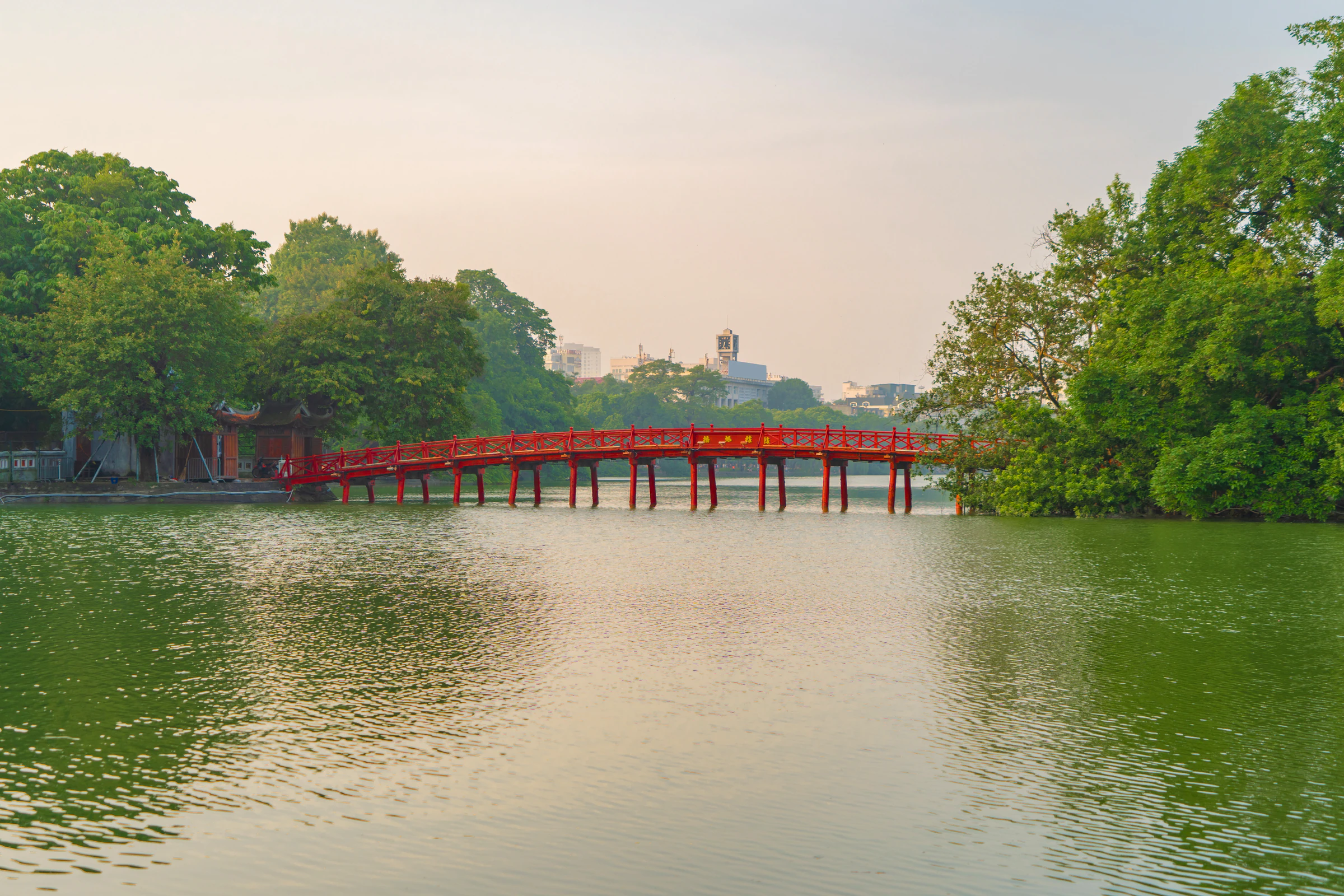
Hanoi is loud, old and full of street food, with the lakes and the Old Quarter at its centre. Two nights is about right. From there, most people head to Ha Long Bay or quieter Lan Ha Bay and to Ninh Binh, where you row between limestone cliffs and rice fields at Tam Coc and Trang An. See the Hanoi guide, hostels in Hanoi, things to do in Hanoi and Hanoi street food. If you're choosing between the two main bays, our Ha Long Bay vs Lan Ha Bay comparison covers the trade-offs.
Sapa and Ha Giang: the far north
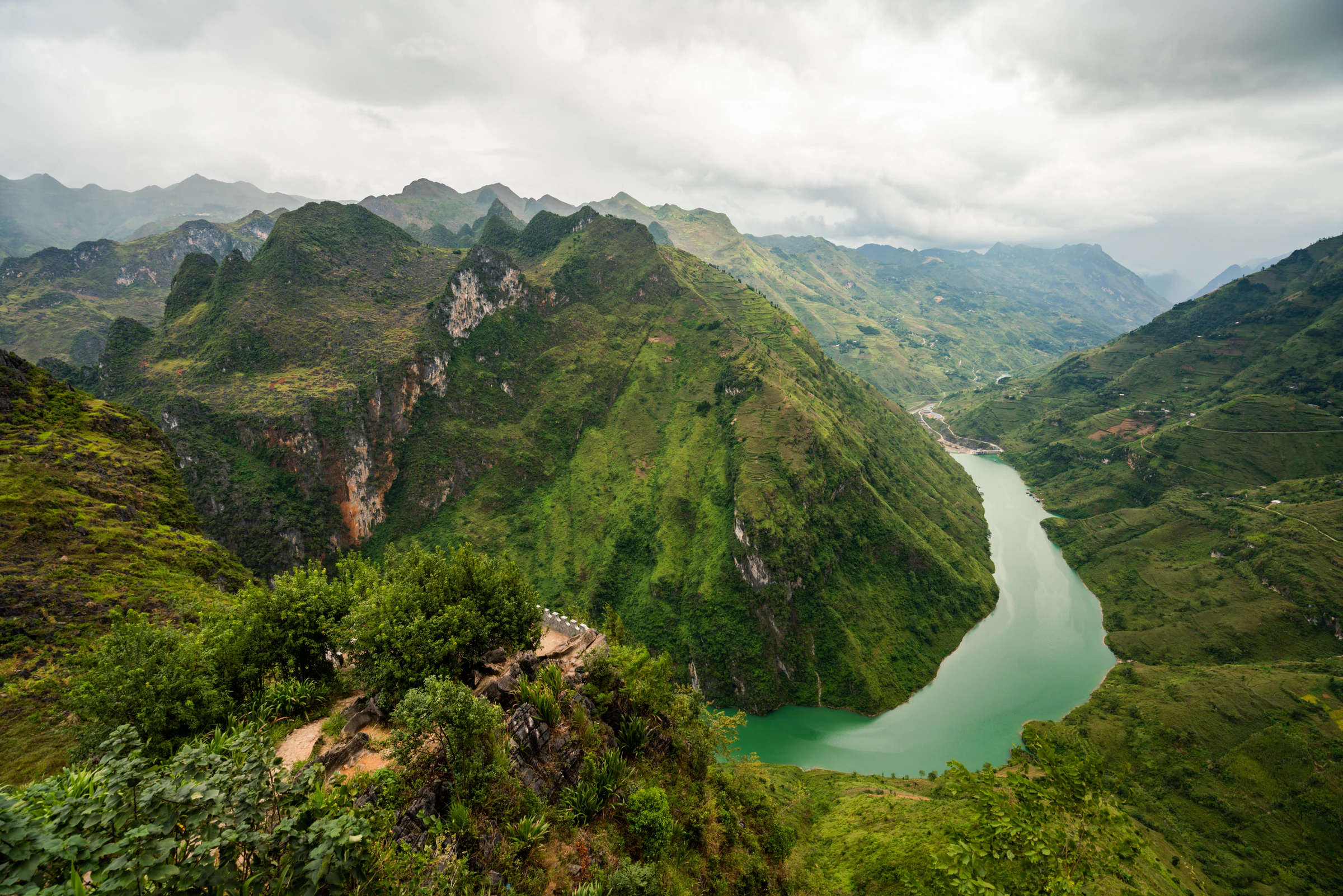
The mountains along the Chinese border are the most dramatic part of Vietnam. Sapa is a hill town among rice terraces, about 5.5 to 7 hours from Hanoi by limousine van or overnight by train to Lao Cai. People go to trek between villages such as Lao Chai and Ta Van, and a cable car goes up Fansipan, the highest mountain in Indochina. Read the Sapa guide, Sapa trekking and Sapa weather.
Ha Giang, about 300 km north of Hanoi, is where the famous motorbike loop starts. Most people ride it over 3 or 4 days on the back of a local "easy rider" and sleep in village homestays. Ha Giang province was merged into Tuyen Quang province in July 2025, so you may see that name on permits and signs. Foreigners need a border-area permit for the northern communes, which tour operators arrange. Start with the Ha Giang guide, then read the Ha Giang Loop guide. Weighing Sapa against Ha Giang for a short trip? Our Sapa vs Ha Giang guide compares them directly.
Central Vietnam: Phong Nha, Hue, Hoi An and Da Nang
Phong Nha is a small town beside a national park full of enormous caves, reached by overnight train to Dong Hoi. Hue was the imperial capital, with a walled citadel and royal tombs, and it hosts the Hue Festival of performing arts, which since 2026 has run through the year with a main arts week in June. The Hai Van Pass road runs from there down to Hoi An, an old trading town where the lanterns come out every evening; on the full-moon night each month, the Old Town switches off its electric street lights, an event our Hoi An lantern festival guide covers in full. Da Nang has the airport, a long city beach and, twice a year, an international fireworks festival every summer (see our Da Nang Fireworks Festival guide).
See the Phong Nha guide, the Hue guide, the Hoi An guide with things to do in Hoi An and Hoi An food, and things to do in Da Nang. If you're deciding between the two coastal towns, Hoi An vs Da Nang lays out the differences.

Ho Chi Minh City, the Mekong and the south
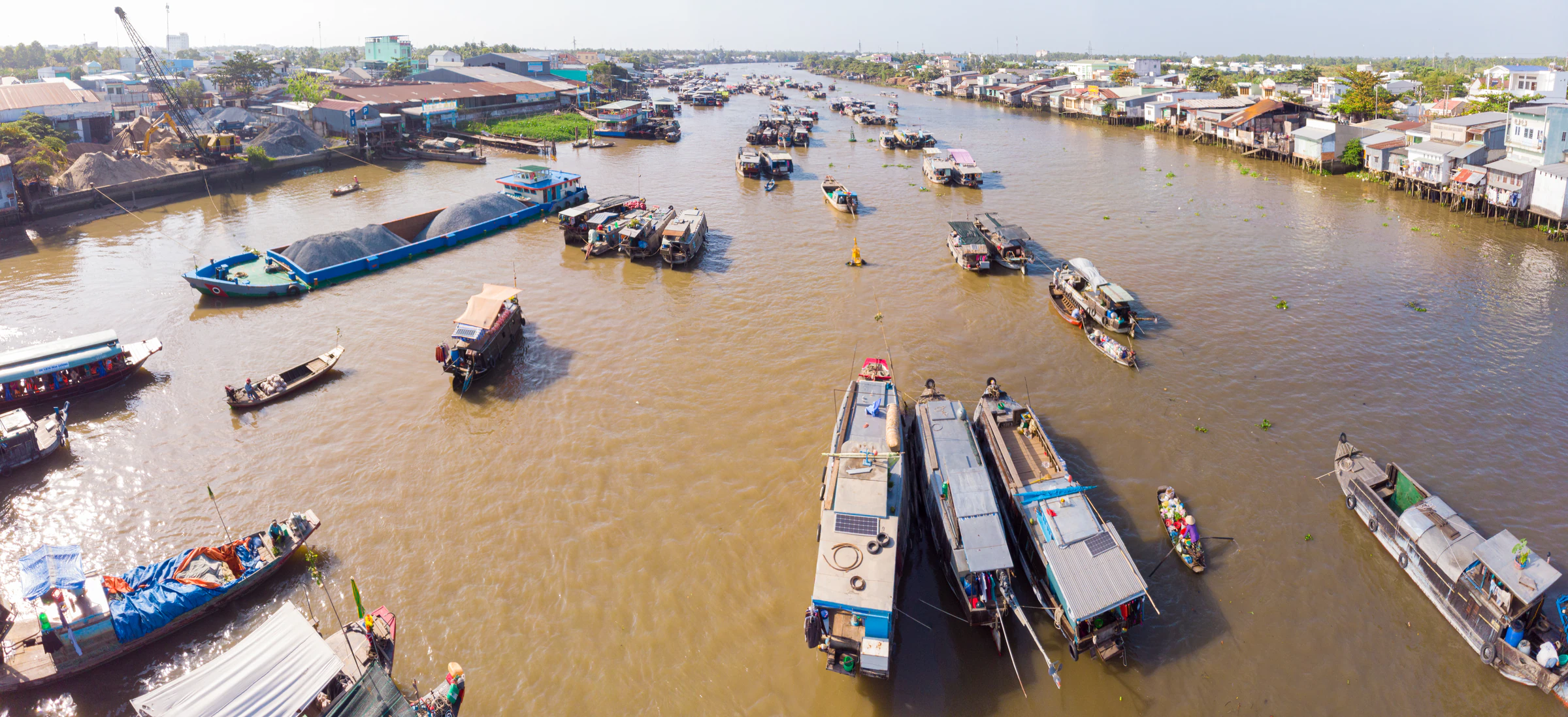
Ho Chi Minh City (still called Saigon by most people) is fast, modern and busy, with the War Remnants Museum, rooftop bars and the Cu Chi tunnels about 35 to 60 km out of town. South of the city, the Mekong Delta is flat country of canals, rivers and orchards; Can Tho's Cai Rang floating market is the best-known market still working. For beaches, Phu Quoc is an island in the Gulf of Thailand, and it has its own 30-day visa waiver if you fly straight in on an international flight (more on that below). See things to do in Ho Chi Minh City, hostels in Saigon, and if you can't decide which of the two big cities to start in, Hanoi vs Ho Chi Minh City.
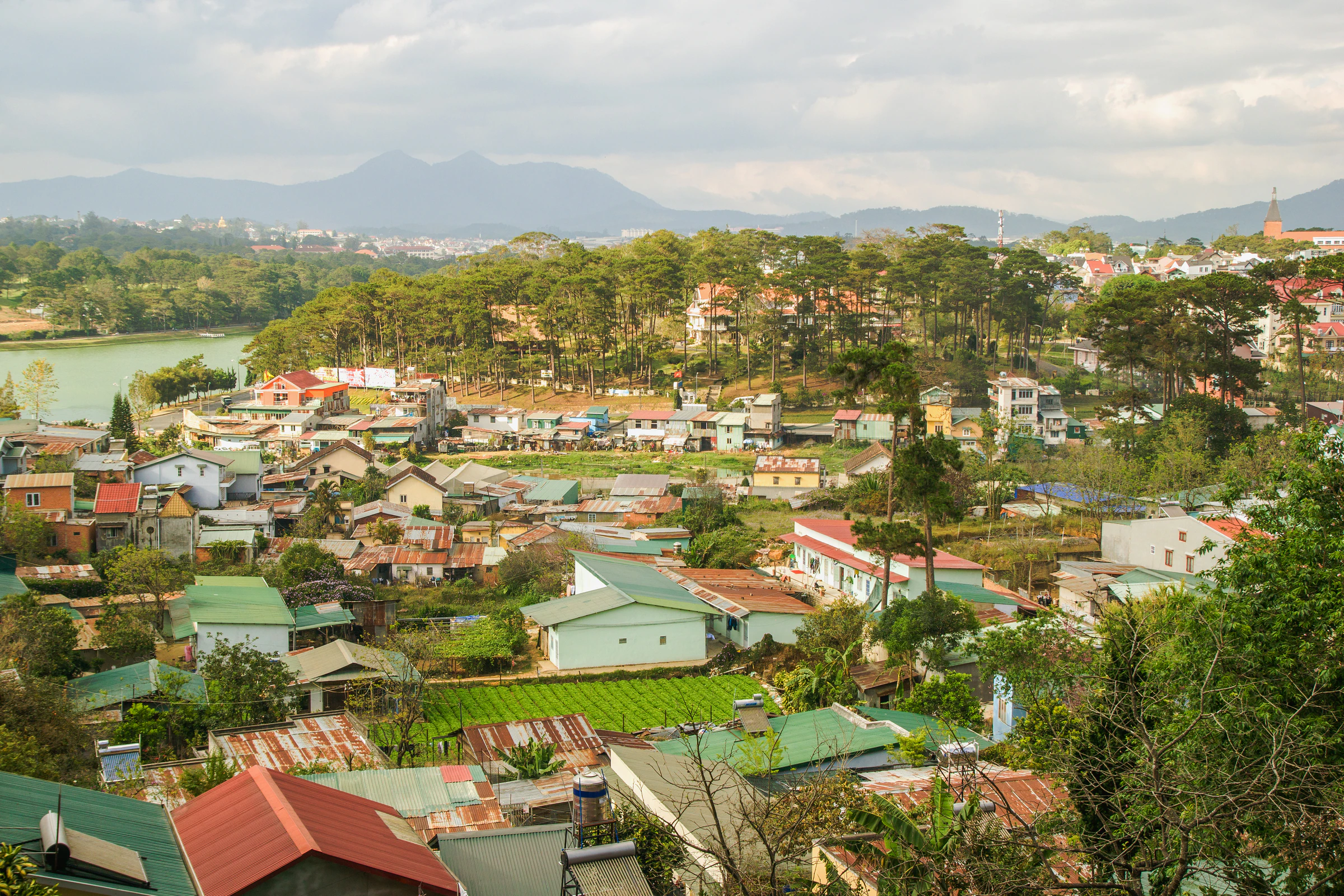
Two more places worth knowing about: Da Lat, about 1,500 m up in the Central Highlands, is cool all year and known for canyoning, and Mui Ne has sand dunes and a kitesurfing season that runs from November to April.

What to eat in Vietnam
Food changes as much as the weather does as you move down the country. Hanoi does pho, bun cha and egg coffee; our Hanoi street food guide names where to try each one. Hoi An has its own dishes, cao lau and white rose dumplings among them, set out in Hoi An food. For the full spread from north to south, including what to order and what to avoid, see Vietnamese food: what to eat in Vietnam.
Best time to visit Vietnam
This is the part that shapes every Vietnam route. Our best time to visit Vietnam guide goes month by month, but here's the short version.
| Region | Best months | Watch out for |
|---|---|---|
| Hanoi and Ninh Binh | October to April | December to February is cold and grey (14 to 20°C, colder at night). June to August is 35°C and humid |
| Ha Long and Lan Ha bays | March to May, September to November | Typhoons about June to October, peaking July to September. Fog January to March |
| Sapa and Ha Giang | September to November | The mountains can drop to about 5°C in December and January. July and August are wettest |
| Phong Nha | February or March to August | Floods and water-cave closures from mid-September to November |
| Hue, Hoi An, Da Nang | February to May | Heavy rain from September to December. Hoi An's floods peak from mid-October to mid-December |
| Ho Chi Minh City and the Mekong | December to April | Rainy season May to November, usually short, heavy afternoon storms |
So for a north-to-south trip, late February to May is the best window. June to August is a decent second choice (hot, with a small typhoon risk in the bays). The worst time for a full-length trip is mid-September to November, when the centre floods.
Plan around Tet, the Lunar New Year. In 2027 it falls on Saturday 6 February. Trains and flights sell out in the fortnight before, and many family restaurants and small shops close for several days. The week after is a good time to travel. Our Tet guide has the dates and what to expect, and our Vietnam festivals calendar lists the rest of the year, including the Mid-Autumn Festival, the Hue Festival and Hoi An's monthly lantern nights.
Getting around Vietnam
Trains. The Reunification Railway runs from Hanoi to Ho Chi Minh City. The useful stretches for travellers are the overnight trains from Hanoi or Ninh Binh to Dong Hoi (for Phong Nha), Hue and Da Nang. A soft-sleeper berth from Hanoi to Da Nang costs roughly 1.1 to 1.3 million dong (about US$42 to US$50). Book on the Vietnam Railways site (dsvn.vn) or through an agent that takes foreign cards, as soon as the timetable period opens.
Flights. Vietjet and Vietnam Airlines fly between Hanoi, Hai Phong, Da Nang, Ho Chi Minh City and Phu Quoc. Flights are short, and they save a whole day on the long jumps.
Buses and limousine vans. Sleeper buses and smaller "limousine" vans cover the routes the train doesn't, such as Hanoi to Sapa or Ha Giang and Hanoi to Ninh Binh.
Grab. Grab works in every city, in English, with a foreign card. Xanh SM, an all-electric taxi and bike app, is often cheaper but less reliable with foreign cards.
Motorbikes. To ride legally you need your home motorbike licence plus a 1968-convention International Driving Permit. A 1949 permit, which is what the US issues, isn't valid in Vietnam. The UK Foreign Office also advises against hiring a bike if you haven't ridden before. On the Ha Giang Loop, riding as a passenger behind an easy rider gets around the licence problem.
How much does Vietnam cost?
Vietnam is one of the cheapest countries in the region for day-to-day spending. At September 2026 rates, US$1 is about 26,000 dong.
| Item | Typical price (dong) |
|---|---|
| Street-food dish (pho, bun cha, banh mi) | 30,000 to 80,000 |
| Local beer | 20,000 to 40,000 |
| Dorm bed in Hanoi | about 120,000 to 350,000 |
| Dorm bed in Hoi An | 200,000 to 350,000 |
| One night on a budget boat in Ha Long Bay (twin share) | about 2.7 to 4.2 million (US$105 to US$160) |
Most backpackers spend about US$30 to US$40 a day including a dorm bed. For food and drinks alone, budget about 400,000 to 600,000 dong a day, a bit more in Hoi An. For where to stay, see hostels in Vietnam.
Visas and entry
British, German, French, Spanish, Italian and Swedish passport holders can stay 45 days without a visa, and Dutch passport holders get 45 days for tourism. Americans, Canadians, Australians, New Zealanders, Irish and Indian citizens need a visa, and the e-visa (up to 90 days, USD 25 for a single entry or USD 50 for multiple entries) is the way to get one. Apply only on the official site, evisa.gov.vn. Phu Quoc has its own rule: fly or sail there directly from outside Vietnam and you get 30 days visa-free whatever your nationality, though that stay doesn't cover onward travel to the mainland.
The full rules are in our Vietnam visa guide, with pages for travellers from the UK, US, Australia, Canada, Europe and India.
Travelling solo in Vietnam
Vietnam is easy to travel alone. The hostel scene is lively, and group tours to the bays, caves and Mekong make it easy to meet people. The main risk is traffic. Cross roads slowly and steadily so scooters can steer around you, and think hard before riding a motorbike yourself. Mountain roads such as the Ha Giang Loop carry real risk, and in March 2026 a young British traveller was fatally injured in a crash while riding as a passenger, after which the province tightened the rules for loop operators. Choose a licensed operator and ask your rider to slow down whenever you want. Leave your vape at home: Vietnam banned e-cigarettes in January 2025, and customs confiscate them on arrival. Our guide to Vietnam safety for solo travellers goes into more detail, and things to do in Vietnam rounds up the experiences worth planning a trip around.
How Vietnam compares
If you're weighing Vietnam against a neighbour before you book, our Laos vs Vietnam guide covers combining the two or picking one, and Vietnam vs Thailand does the same for that pairing. And if you're torn between the two big cities as a single base for a short trip, see Hanoi vs Ho Chi Minh City.
Vietnam group trips for solo travellers
Our Vietnam trips follow the routes above with a small group of solo travellers aged 18 to 40. Your Trip Host is with the group the whole way, and licensed local guides lead the visits. Compare them on our Vietnam group trips page.
For the far north on its own, our Northern Vietnam Mountains trip rides the Ha Giang Loop, then treks into Sapa's rice terraces and village homestays.
For the centre and south without the long haul north, another trip covers Hoi An, Saigon and a homestay night on the Mekong Delta.