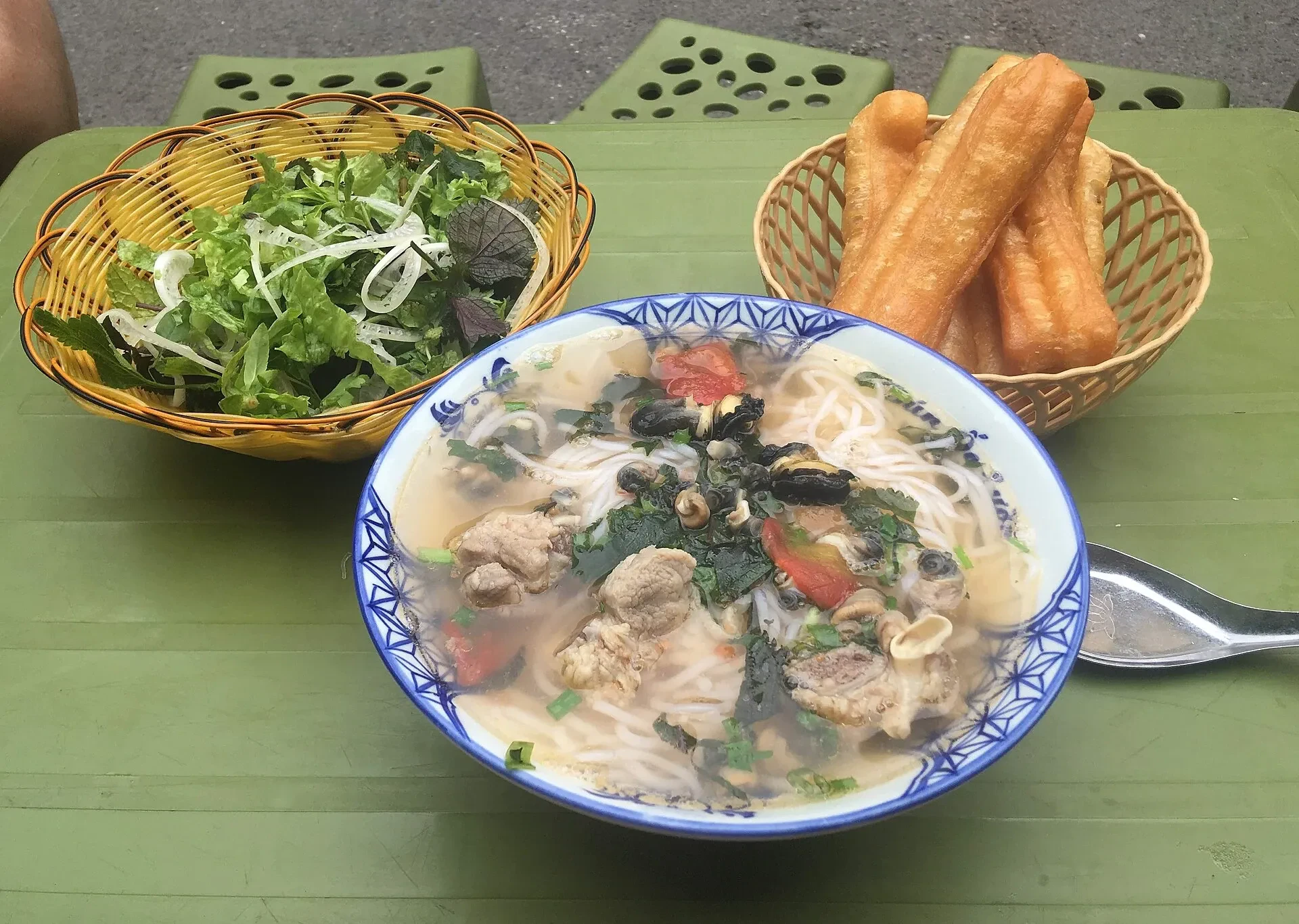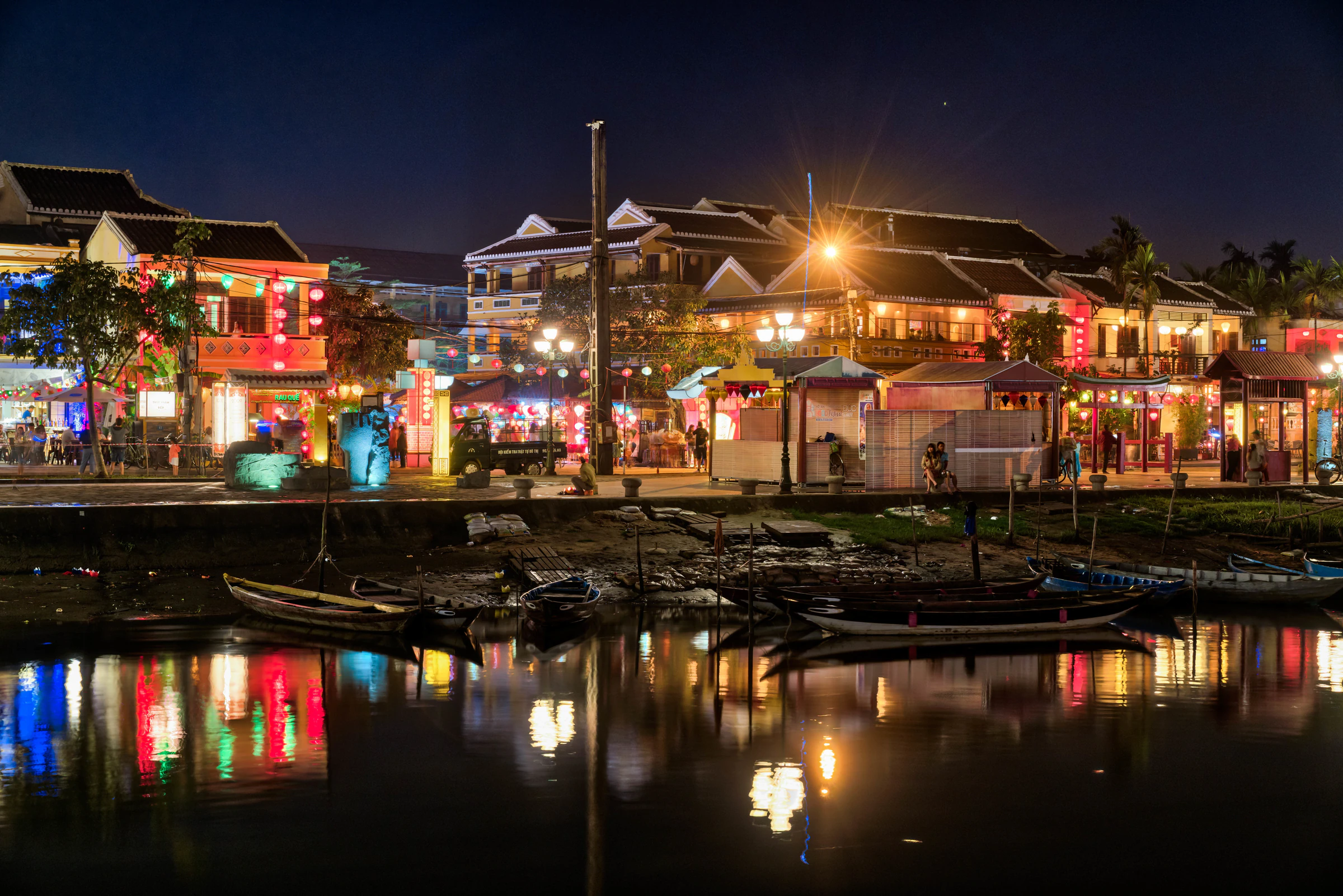
Cao lau, the noodle that only works in Hoi An
Cao lau is Hoi An's signature dish: thick, chewy rice noodles with a faintly smoky, golden colour, topped with pork slices, pork crackling, fresh herbs and a few croutons of fried noodle, in a small amount of dark, savoury broth rather than a full soup. It looks like a cross between a noodle soup and a noodle salad, and you eat it that way, tossed together rather than sipped.
The dish has a well-known local story attached to it: the noodles are said to need mineral water from Hoi An's wells, most famously the centuries-old Ba Le well, to get their texture and colour, along with ash from trees on the nearby Cham Islands. Locals will tell you that's why cao lau made outside Hoi An never tastes quite the same, and why almost the entire town's supply comes from one long-running noodle-making family rather than dozens of small producers. One thing worth knowing before you repeat that story as fact: the family behind most of Hoi An's cao lau noodles has said in interviews that it now draws on its own well rather than the Ba Le well itself, since demand outgrew what one well could supply, though it still chooses water for the same mineral properties. The link between cao lau and local water and wood ash is real; the exact well behind today's noodles has moved on.
Cao lau turns up on menus across the Old Town and at the Central Market. Street stalls and the market charge about 35,000 to 50,000 dong a bowl in 2026 listings, and sit-down restaurants in the Old Town can charge much more.
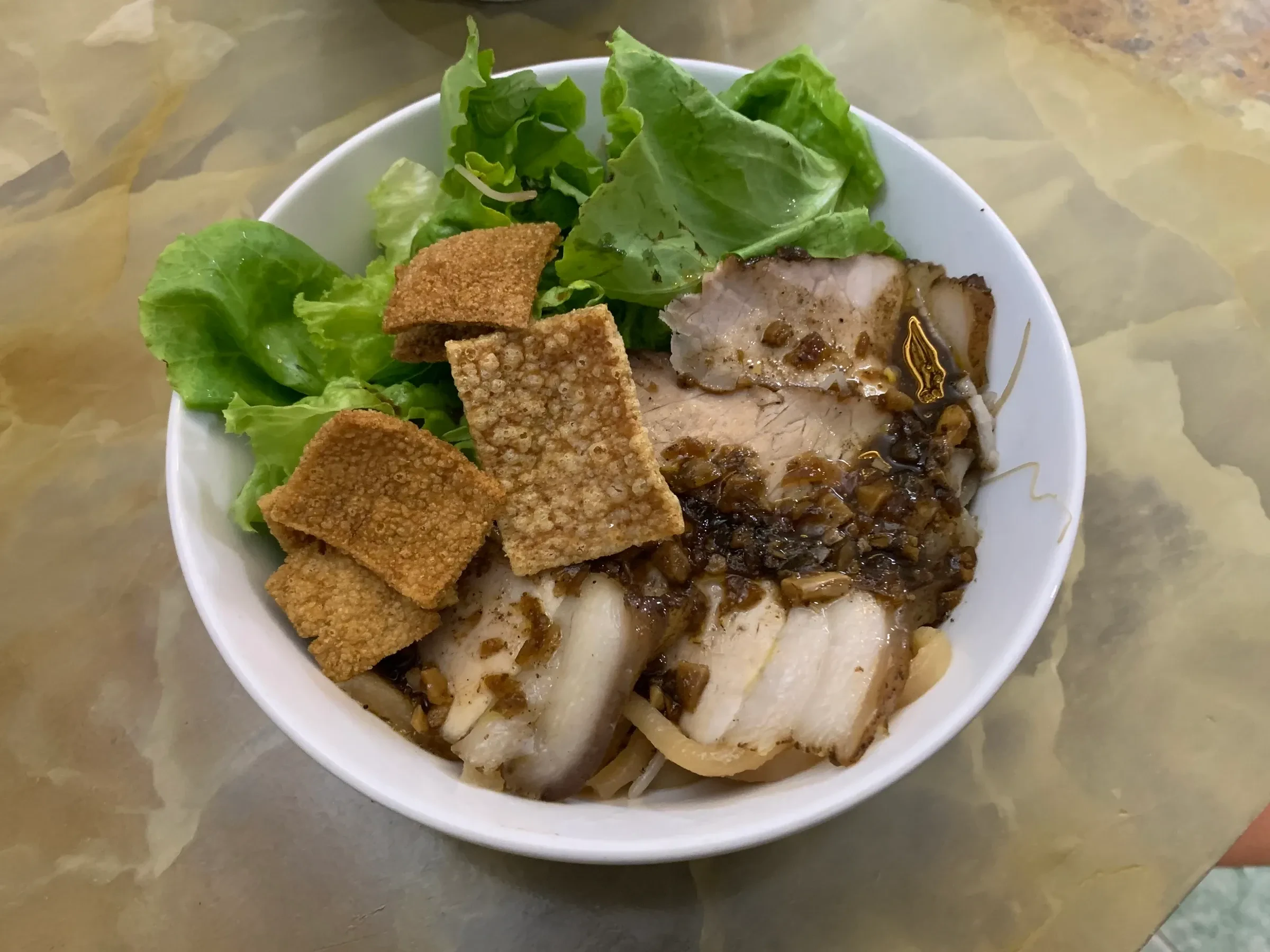
Mi quang, the other noodle bowl of central Vietnam
Mi quang is Quang Nam province's other big noodle dish, as common in Da Nang as here, and Hoi An sits right in its home territory. Turmeric-yellow rice noodles come in a shallow, intensely flavoured broth (there's far less liquid than in a bowl of pho) with shrimp, pork or chicken, a quail egg, herbs, and a scattering of crushed peanuts and rice crackers for crunch. Like cao lau, you mix it together rather than slurp it as a soup. Expect to pay about 30,000 to 45,000 dong for a bowl at a market stall or a plain noodle shop, going by 2026 listings.
Com ga, Hoi An's chicken rice
Com ga is rice cooked in chicken stock and sometimes turmeric, topped with shredded or torn poached chicken, pickled onion, herbs and a chilli sauce on the side. It's simpler than cao lau or mi quang, but it's a genuine local speciality rather than a generic plate of chicken and rice, and it's the easiest thing to order if you want something lighter between bigger meals. A plate typically runs about 30,000 to 55,000 dong in 2026 listings, more if you add extra chicken.
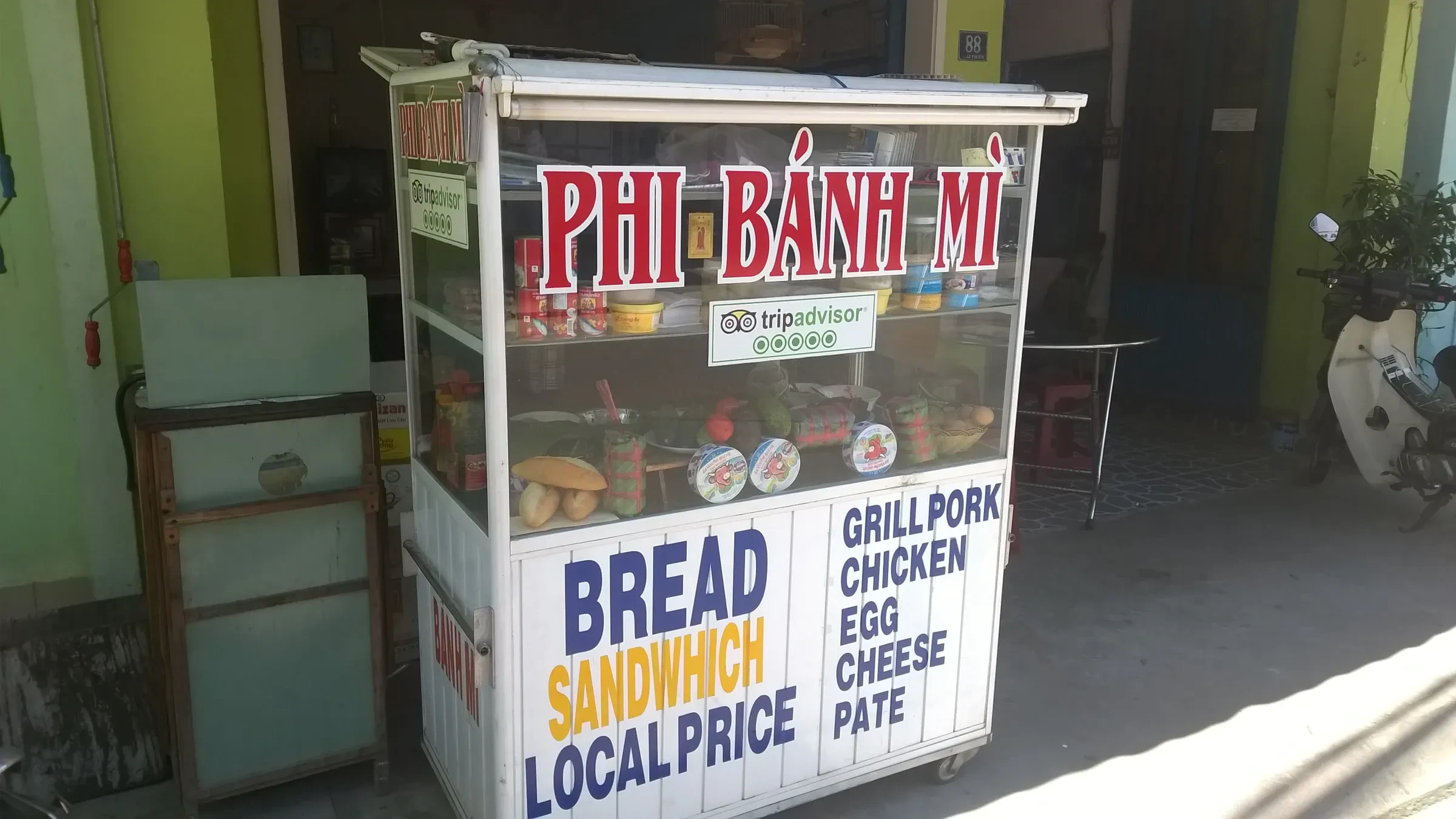
Banh mi Hoi An, and the two stalls everyone queues for
Vietnam's banh mi sandwich, a crusty baguette filled with pate, cold cuts or grilled pork, pickled vegetables, herbs and chilli, has a strong Hoi An chapter of its own. Two long-running stalls in the Old Town, Banh Mi Phuong and Madam Khanh (known locally as the Banh Mi Queen), have been drawing queues for years, and both were still serving in 2026 sources, with sandwiches from about 40,000 dong. The queue at Banh Mi Phuong is longest in the evening. They're named here because they're well established, not because they're the only good banh mi in town. Smaller stalls sell a perfectly good version for less, about 20,000 to 35,000 dong in 2026 listings, without the queue.
White rose dumplings and hoanh thanh, from one family recipe
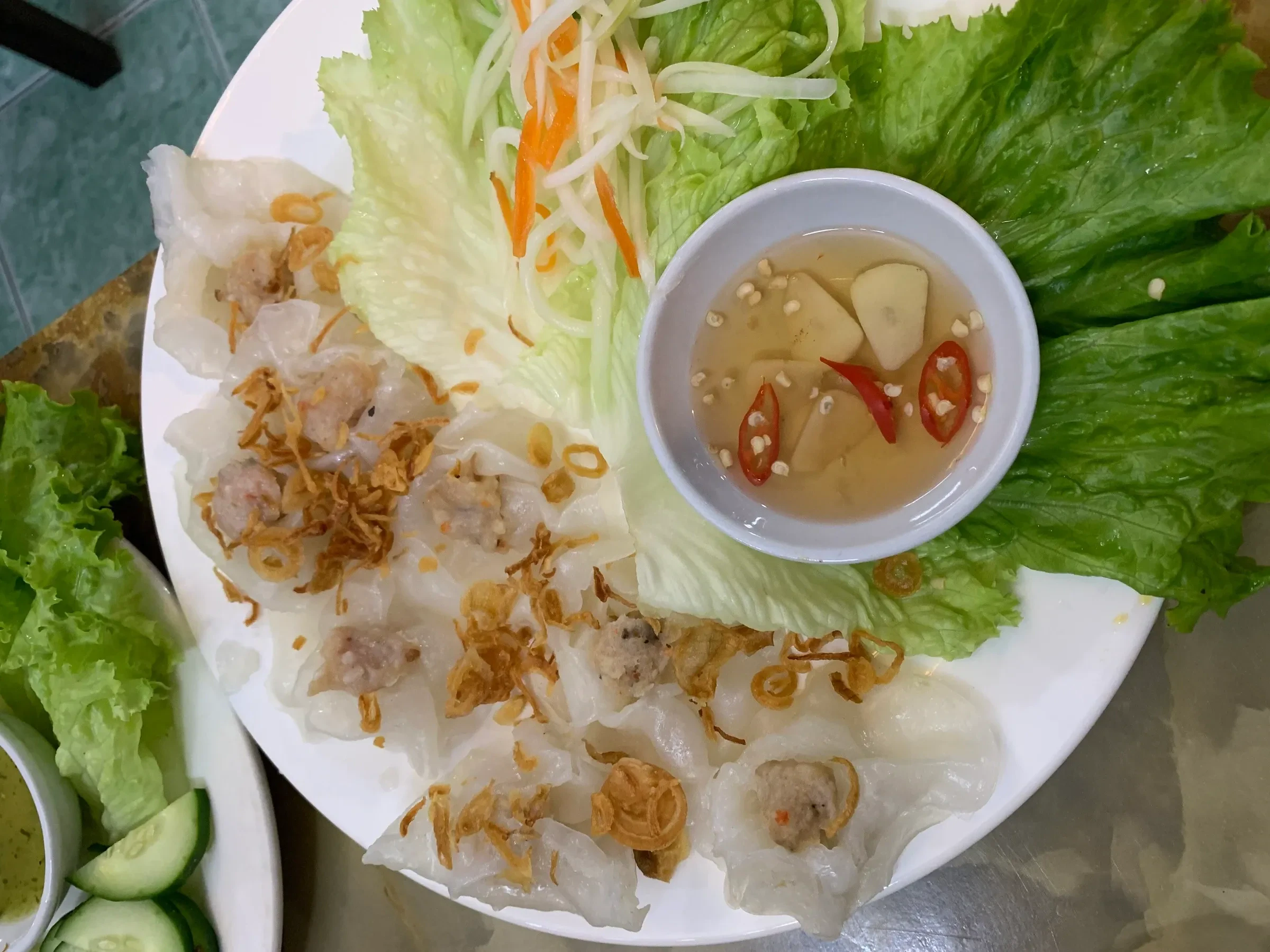
White rose dumplings, banh bao banh vac, are a Hoi An original: small, translucent rice-flour parcels filled with minced shrimp and folded to look faintly like a flower, steamed and served with a light dipping sauce and crispy fried shallots on top. The recipe has stayed inside a single Hoi An family for generations, and most restaurants in town buy their dumplings ready-made from that one source rather than making their own, which is part of why the dish tastes so consistent wherever you order it.
Hoanh thanh, Vietnamese wonton, is made from the same dough and often ordered alongside white rose. Hoi An's version is usually the fried style: crisp, deep-fried wonton wrappers topped with a tomato-based sauce, minced pork or shrimp, and fresh herbs, closer to a savoury tart than a dumpling in soup. A plate of either dish is typically about 30,000 to 50,000 dong in 2026 listings, and most places sell them as a shared plate of both.
Banh xeo and a wander through the Central Market
Banh xeo is a crispy rice-flour pancake, turmeric-yellow and studded with bean sprouts, shrimp and pork, cooked in a small cast-iron pan until the edges crackle. You tear off a piece, wrap it in rice paper or lettuce with herbs, and dip it in a peanut or fish sauce. In Hoi An it's often sold alongside cao lau and mi quang at the same stalls, for around 25,000 to 40,000 dong in 2026 listings.
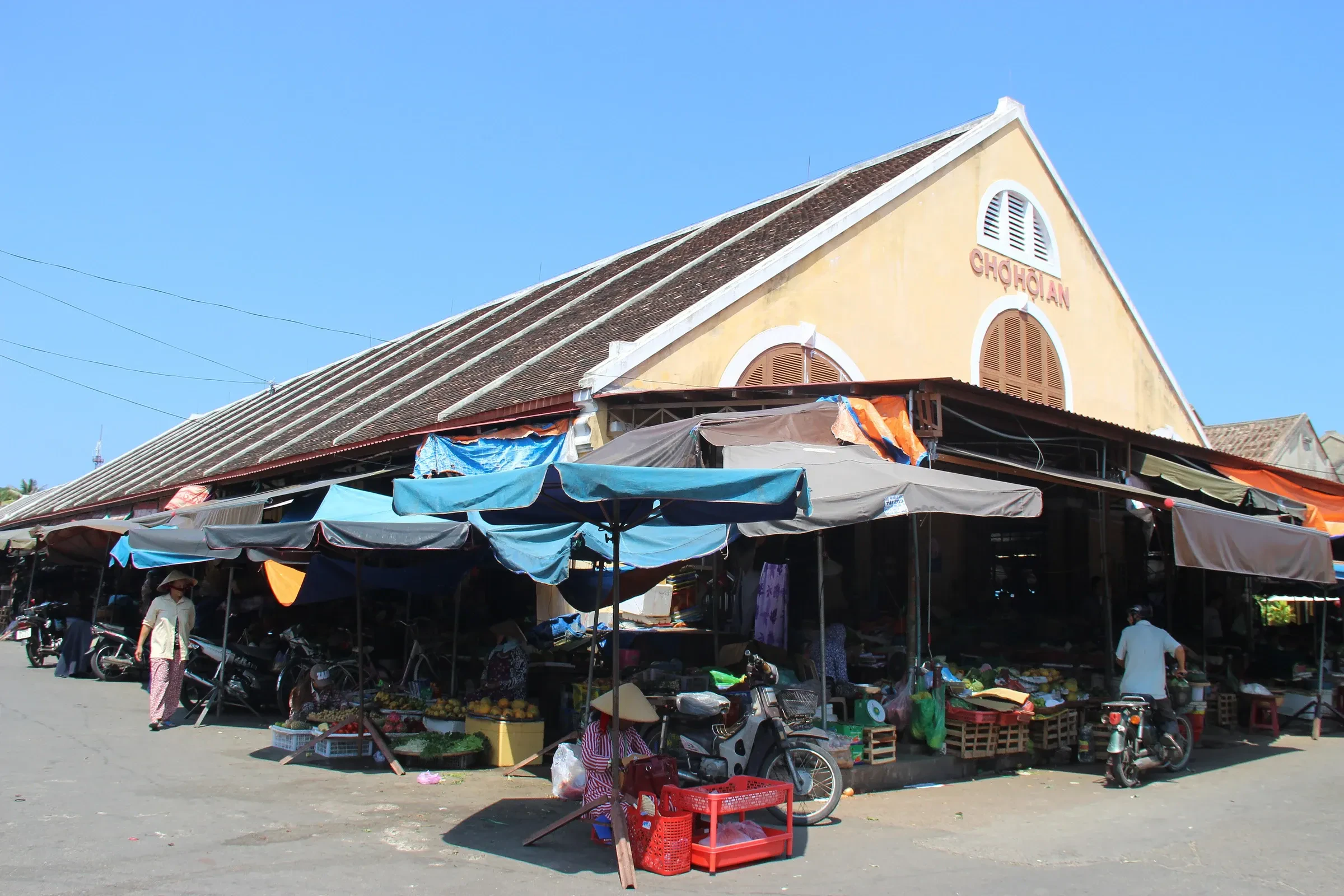
The Central Market, a short walk from the Old Town's ticketed sites, is the best single place to try several of these dishes in one visit. Its food section has stalls turning out cao lau, mi quang, banh xeo and hoanh thanh side by side, mostly for about 25,000 to 50,000 dong a plate, next to the produce and fish stalls that supply the town's restaurants. Go earlier in the day for the freshest stalls and to dodge the busiest tour groups; most wind down by mid-afternoon.
A cooking class, with a stop at Tra Que herb village
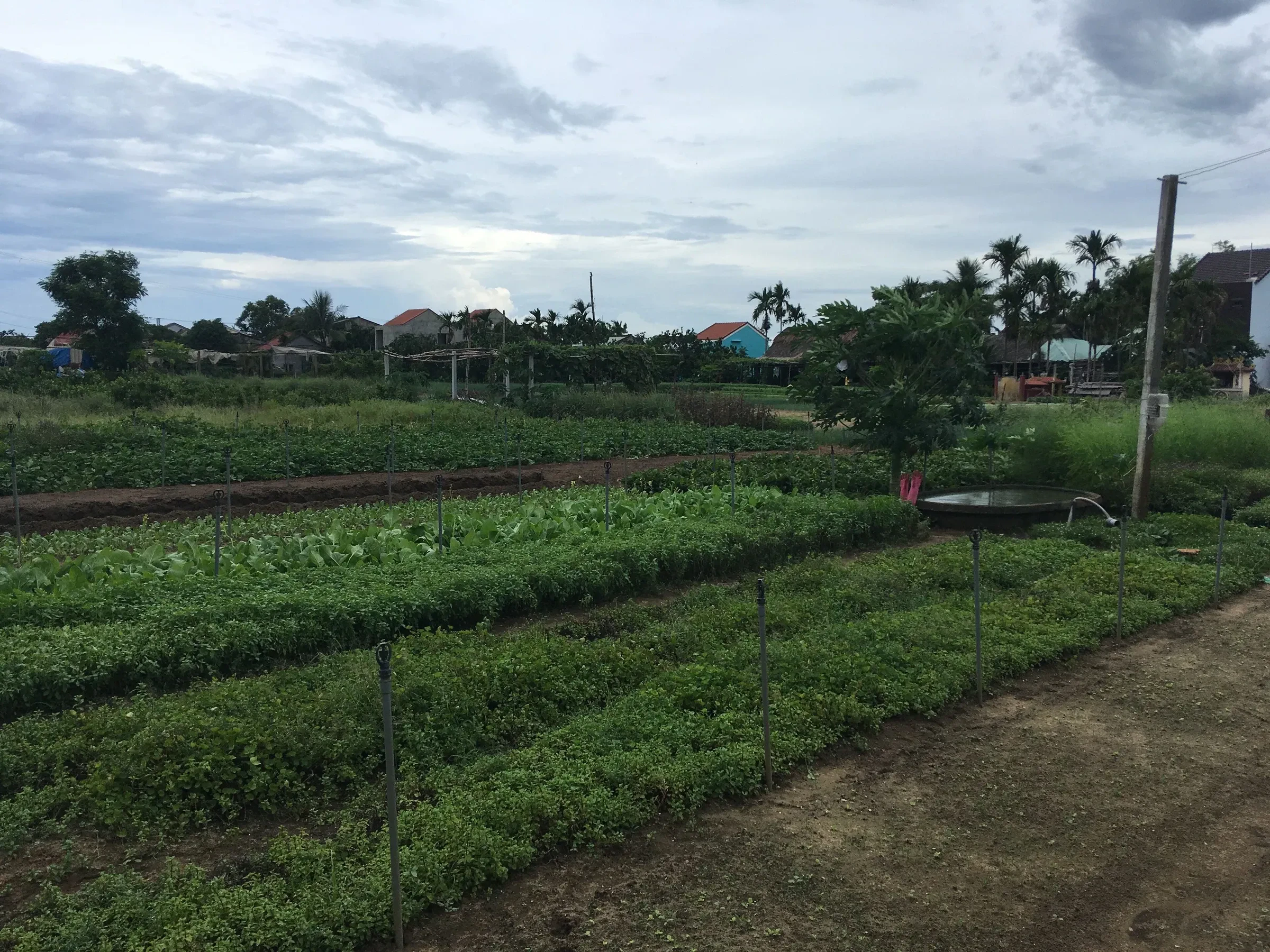
Most Hoi An cooking classes follow a similar shape: a walk or cycle to the Central Market to pick ingredients, a stop at Tra Que herb village or the Cam Thanh coconut forest for a garden or boat element, then a few hours of hands-on cooking, usually three or four dishes that often include cao lau or banh xeo. Prices start from about US$25 to US$35 per person for a half-day class with the market visit, garden stop and lunch included; a full guide to the class and to Tra Que itself is in our things to do in Hoi An guide. It's a genuinely useful way to understand the local ingredients, as long as you pick a school that lets you cook rather than mostly watch.
An Bang beach, for the seafood rather than the noodles
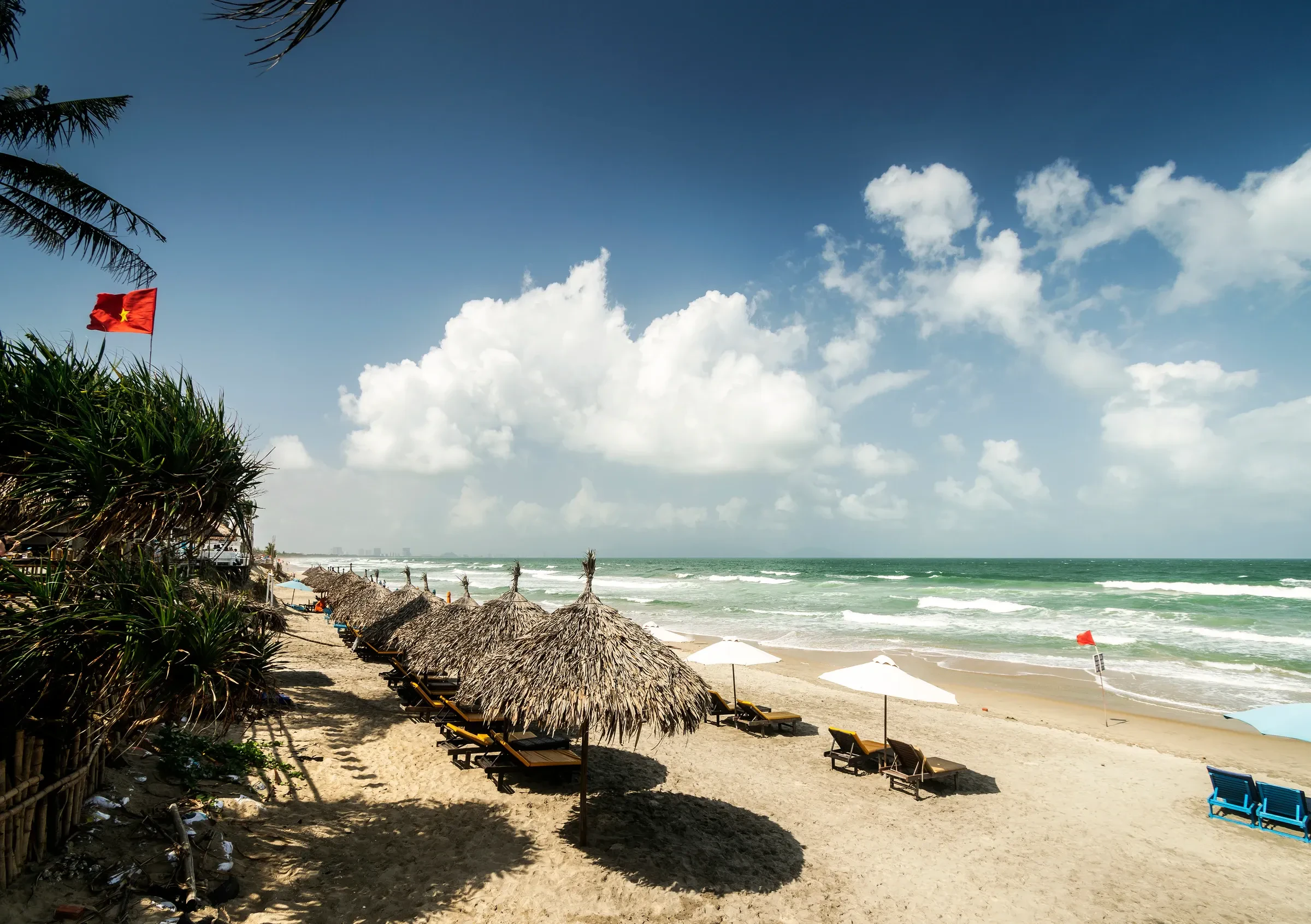
An Bang, the beach a short cycle from the Old Town, is where to go for fresh seafood rather than noodle bowls: grilled squid, prawns and whole fish at the beachfront restaurants, sold by weight or as a fixed plate, typically about 50,000 to 250,000 dong in 2026 listings, depending on what you order and how much of it. It's pricier than the Old Town's noodle shops and market stalls, so treat it as an evening out rather than another quick meal. Our things to do in Hoi An guide covers the beach itself, including how it compares to Cua Dai.
Typical prices, dish by dish
Ranges below come from 2026 guides and listings and vary by stall, so check the price before you order. Restaurants aimed at tourists in the Old Town can cost roughly double what a market stall charges.
| Dish | Typical price (2026 listings) |
|---|---|
| Cao lau (stall or market) | 35,000 to 50,000 dong |
| Mi quang | 30,000 to 45,000 dong |
| Com ga (chicken rice) | 30,000 to 55,000 dong |
| Banh mi (famous stalls from about 40,000) | 20,000 to 50,000 dong |
| White rose or hoanh thanh (shared plate) | 30,000 to 50,000 dong |
| Banh xeo | 25,000 to 40,000 dong |
| Cooking class (half day) | US$25 to US$35 |
| Seafood at An Bang (per dish) | 50,000 to 250,000 dong |
For the wider region and how Hoi An fits into a longer route, see our central Vietnam itinerary, and for a full picture of Vietnamese food from north to south, our Vietnamese food guide.
Keep planning
Read our Hoi An travel guide for the Old Town ticket, tailors and how many days to stay, and things to do in Hoi An for An Bang beach, Tra Que and the cooking class in full. For the route this all sits on, see the central Vietnam itinerary, and for street food further north, our Hanoi street food guide.