Sapa's trekking is really valley walking: paths between rice terraces, through villages of the Hmong, Red Dao and Giay, with a river below and homestays along the way. Nothing here needs technical skill or gear. What it needs is the right route for how much time and how much walking you want, and this guide sets those out.
For everything else about the town, getting there and the weather, see the Sapa travel guide and best time to visit Sapa. This page covers the routes, whether to hire a guide, homestays, fees and packing.

Sapa trekking routes at a glance
| Route | Distance | Time | Difficulty | Good for |
|---|---|---|---|---|
| Cat Cat village | About 4 km from town | 2 to 3 hours round trip | Easy | A short first walk, or if you're tight on time |
| Y Linh Ho, Lao Chai, Ta Van | About 9 to 12 km | 3.5 to 4.5 hours | Easy to moderate | The classic one-day valley trek |
| Ta Phin | About 12 to 15 km from town | Half a day by trail, or a short drive | Easy | Red Dao herbal baths, a quieter village |
| 2 days, 1 night (valley villages, homestay) | About 12 to 15 km a day | 5 to 6 hours a day on the trail | Moderate | A homestay night without a long commitment |
| 3 days, 2 nights (Ta Phin toward Ban Ho) | About 12 to 15 km a day | 5 to 6 hours a day on the trail | Moderate | Quieter trails, more homestay time |
| Fansipan on foot | About 19 km from Tram Ton | 1 long day, or 2 days with a night on the mountain | Hard | The summit, for a proper trekking day, with a required guide |
Distances and times vary by operator and by how many stops you make, so treat these as a guide rather than an exact figure.
Do you need a guide to trek in Sapa in 2026?
For the main valley routes, no. Trails between Sapa and villages such as Lao Chai, Cat Cat and Ta Van are well used, signposted at the main junctions, and walked daily without a guide by independent travellers. Operator and traveller guides from 2026 mention no rule requiring a licensed guide on these routes. The Ha Giang Loop is different: the province tightened its rules for tour operators in April 2026 (see the Ha Giang Loop guide).
That said, most people hire one anyway, and it's worth it. Paths fork and wash out after rain, a local guide keeps you from getting lost or twisting an ankle a long way from help, and hiring a Hmong or Dao guide from the villages keeps the money in the valley rather than with a tour company elsewhere. Guides typically cost roughly 500,000 to 700,000 VND a day, arranged through a homestay, a village cooperative or a trekking agency in Sapa town.
The one route where a guide is required rather than optional is Fansipan on foot. The trek is inside Hoang Lien National Park, and operator guides say you need a park permit as well as a licensed guide, with rangers checking trekkers on the way up. Book it through a licensed operator, not as a solo hike.
The classic one-day trek: Y Linh Ho, Lao Chai, Ta Van
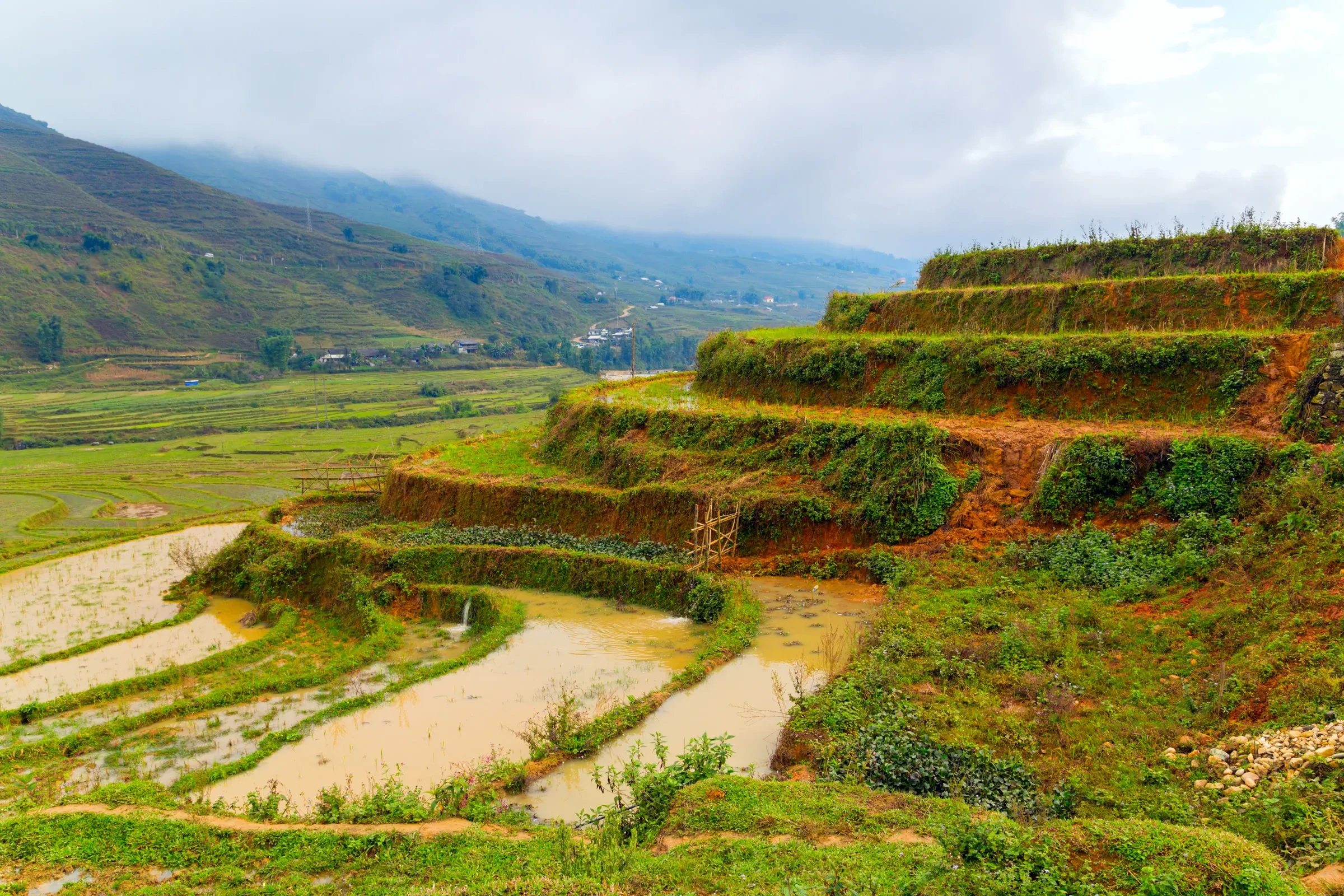
This is the walk most people mean when they say they're "doing a Sapa trek." It drops out of Sapa town into the Muong Hoa valley, running through Y Linh Ho and Lao Chai to Ta Van, mostly downhill or flat, on paths between rice terraces with the Muong Hoa river below. Most people cover it in 3.5 to 4.5 hours, with a stop for lunch, often at a family's house along the way. Entry to the Lao Chai and Ta Van area costs 75,000 VND for adults (50,000 for children in a 2026 listing), paid at a checkpoint.
You can walk back to Sapa by road at the end, arrange a motorbike taxi from Ta Van, or turn the day into an overnight by sleeping in a Ta Van homestay and returning the next morning.
Cat Cat village: the easy first walk
Cat Cat, a Hmong village about 4 km from the town centre, is the shortest walk here and the one most people fit in even if they're only in Sapa for a day. Paths are paved for a lot of the way, there's a waterfall and craft stalls near the village, and it's an easy way to get a first feel for the valley before a longer trek the next day. Entry is about 150,000 VND. It's also the busiest village to visit, so go early or late in the day if you'd rather avoid the crowds.
Ta Phin: Red Dao herbal baths and a quieter village
Ta Phin sits north-east of Sapa, roughly 12 to 15 km away depending on the route, and it's the main village for the Red Dao rather than the Hmong. The trail passes rice paddies, bamboo and smaller Hmong and Dao hamlets on the way. Most people go for the Red Dao herbal bath: a soak in a wooden tub of leaves and roots, said to help with tired muscles after a day's walking, offered by several family-run bathhouses in the village. The trail itself is gentle, much of it on a paved or hard-packed track, and doesn't need trekking boots.
Longer treks: 2 to 3 days with a homestay
If a day trip isn't enough, a couple of longer routes go further into the valley and spend more time in the villages rather than passing through.
- 2 days, 1 night. One common version runs from Sapa through Ham Rong and Hang Da to a homestay around Hau Thao, then on to Giang Ta Chai and Ta Van the next day before heading back. Another links Cat Cat with the smaller settlement of Sa Seng Ho, then Y Linh Ho, Lao Chai and Ta Van, a quieter, more local variation on the classic one-day route. Either way, expect roughly 12 to 15 km a day.
- 3 days, 2 nights. A longer route runs from the Ta Phin trail toward Ban Ho, further from the day-trip crowds, with two homestay nights instead of one. It suits anyone who wants Sapa's scenery without meeting other trekking groups every few minutes.
These longer routes are usually arranged through a trekking agency or a homestay network in Sapa town, since they cross into areas that are harder to navigate on your own and rely on a chain of homestay bookings.
Trekking Fansipan on foot
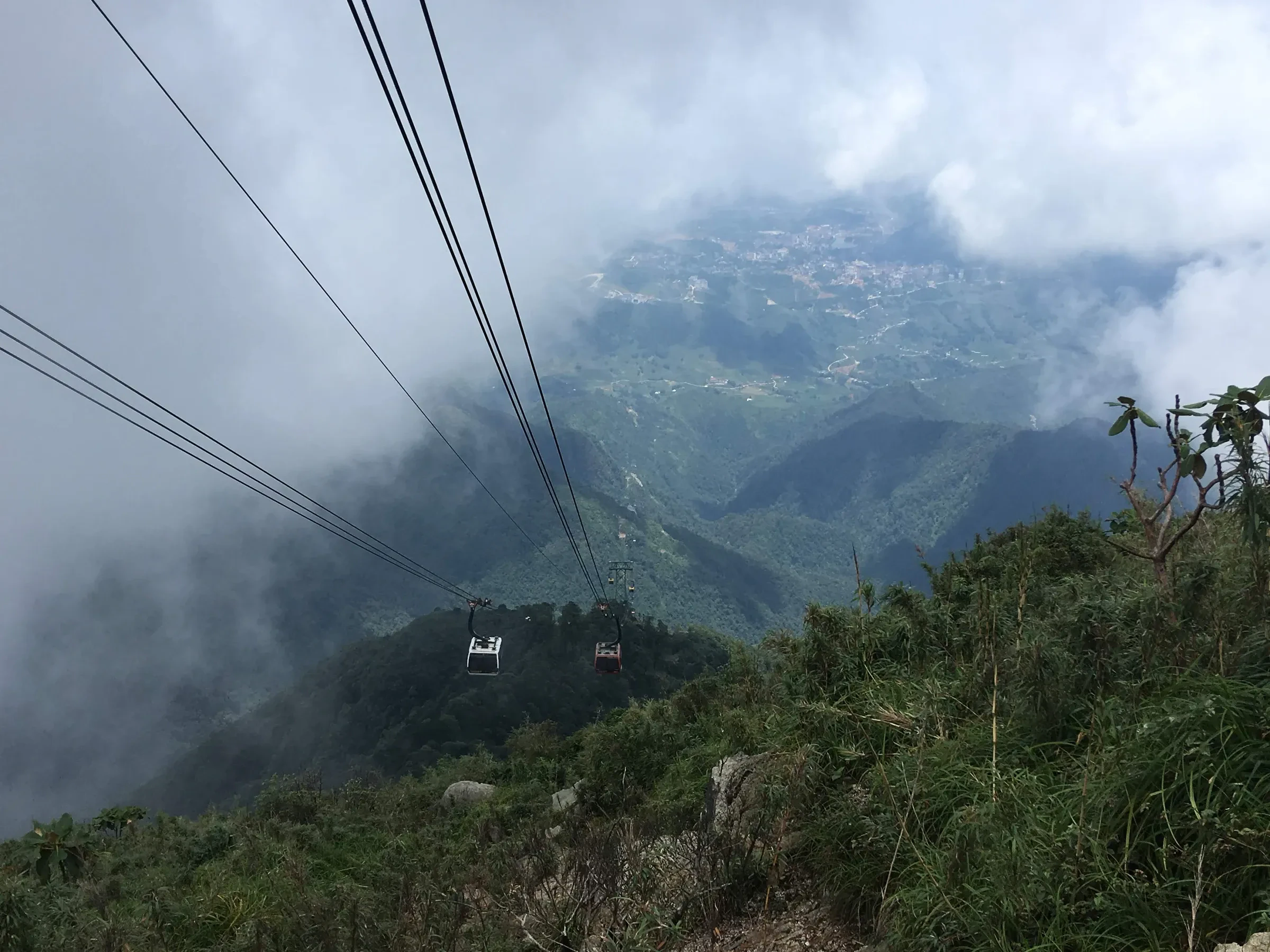
At 3,143 metres, Fansipan is the highest mountain in Vietnam, and most visitors go up by cable car. The on-foot route starts from Tram Ton, about 19 km with around 1,700 metres of climbing, done in one long day or over two with a night on the mountain. It's a hard trek, steep and exposed to weather that can turn quickly, and it's the one Sapa route where a licensed guide is required rather than a nice-to-have. Book it through a licensed operator, and check the best time to visit Sapa guide for when the summit is clearest.
Most visitors go up by cable car instead. The operator, Sun World, lists an adult round trip at 850,000 VND in 2026, and other sources give about 800,000 on weekdays, so check the price when you book. Operating hours differ by weekday, with boarding from about 7:30 or 8am until mid-afternoon on the operator's page, and the last descent around 4 to 5pm.
Visiting Hmong and Dao villages respectfully
The villages you walk through are home to real families, not a backdrop. A few habits go a long way:
- Don't buy from children, and don't give them sweets or money. Vietnamese media have reported children from Mong, Dao and Giay communities selling trinkets on Sapa's streets and pressing tourists for money. Buy crafts and food from adults, or from a village cooperative.
- Ask before photographing people, and accept it if someone says no. Ask a parent before you photograph a child.
- Book adult guides only, through a homestay, a cooperative or a licensed agency.
- Dress modestly for the villages, and ask before stepping inside a home or a sacred site.
The Sapa travel guide covers this in more detail.
When the terraces look their best
The terraces are flooded and being planted in May and June, when water pools in the fields and locals work them by hand. They turn gold as the rice ripens, from late August into October, with the harvest running through September and early October. From December to February nights can fall to around freezing, mornings are often foggy, and fog can limit the view on Fansipan. The best time to visit Sapa guide has the month-by-month detail.
Roads to Sapa can close in heavy rain. A landslide blocked Highway 4D near Ta Phin for about seven hours on 4 May 2026, and Typhoon Bualoi's rains flooded parts of Lao Cai province from 28 to 30 September 2025. Check the forecast before a multi-day trek and keep a spare day at each end.
Homestays on the trail
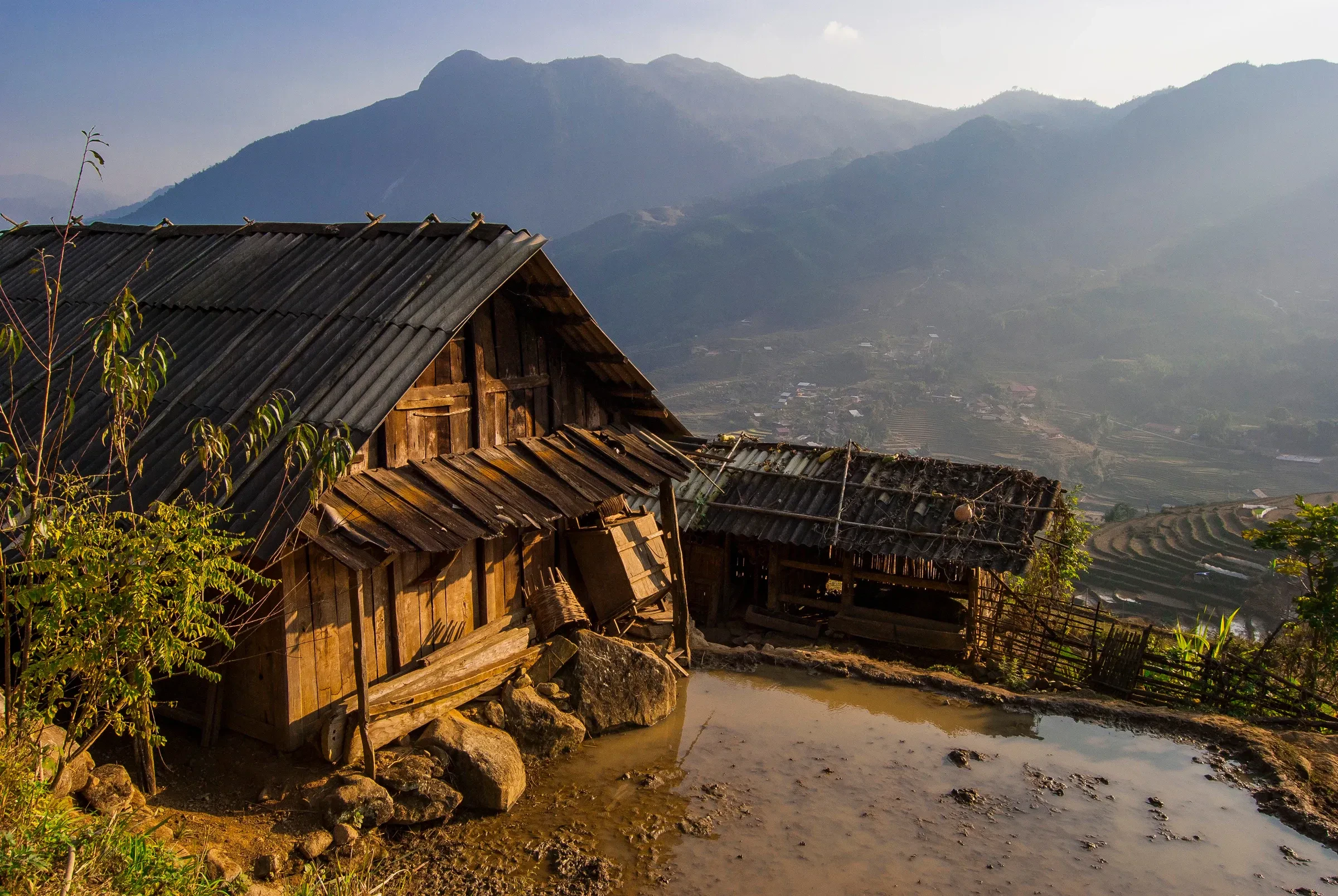
A night in a family homestay is the part most trekkers remember. Rooms are simple, often a shared loft with mattresses and mosquito nets rather than a private room, and dinner is home-cooked with the family, often with rice wine on the table. Homestays cost roughly 250,000 to 800,000 VND a night, usually including dinner and breakfast. We haven't checked which homestays or guides are licensed, so ask how yours is registered. Book ahead in September to November and March to May, when demand for both guides and homestay beds is highest.
How much does a Sapa trek cost?
| Item | VND |
|---|---|
| Lao Chai and Ta Van entry | 75,000 |
| Cat Cat village entry | about 150,000 |
| Giang Ta Chai entry | about 50,000 to 70,000 |
| Fansipan cable car, adult return | about 800,000 to 850,000 |
| Local trekking guide, per day | about 500,000 to 700,000 |
| Village homestay, per night | about 250,000 to 800,000 |
Getting from Hanoi to Sapa
| How | Time | About |
|---|---|---|
| Limousine van | 5.5 to 6 hours | 320,000 to 450,000 VND |
| Sleeper bus (overnight) | 6 to 7 hours | 270,000 to 370,000 VND |
| Night train to Lao Cai, then road | About 8 hours, arriving 5:30 to 6:10am, then about 1 hour by road (40,000 to 50,000 VND) | From about 790,000 VND for a 4-berth cabin |
Times and fares are from vietnamtourism.com's 2026 comparison (updated 30 May 2026). Most vans and buses use the Noi Bai to Lao Cai expressway. The overnight sleeper bus gets in around 4:30 to 5am, before hotel check-in, and the night train is still the classic way to arrive, in time to start walking the same morning. Full transport details, including operators and booking tips, are in the Sapa travel guide.
Before you book, check Vietnam's entry rules in our Vietnam visa guide: British, German, French, Spanish, Italian and Swedish passport holders get 45 days visa-free, and others need an e-visa (US$25 single entry, US$50 multiple entry).
What to pack for a Sapa trek
- Shoes with grip. Trail shoes or light boots handle the clay paths far better than trainers, especially after rain.
- Warm layers. Evenings are cool even in summer, and from November to March you'll want a proper warm jacket for the homestay.
- Rain gear. A light rain jacket year round, and a proper one from May to September.
- Cash. Village checkpoints, guides and homestays run on cash, and there are no ATMs on the trails, only in Sapa town.
- A small daypack, since anything you're not carrying stays behind, whether that's at your hotel in Sapa or with your guide.
The best time to visit Sapa guide has the month-by-month weather to help you pack for the season you're travelling in.
Trek Sapa with a small group
Our Northern Vietnam Mountains trip rides the Ha Giang Loop first, then spends two days trekking into the Muong Hoa valley, with a homestay night in Ta Van led by a local guide. Your Trip Host is with the group throughout.