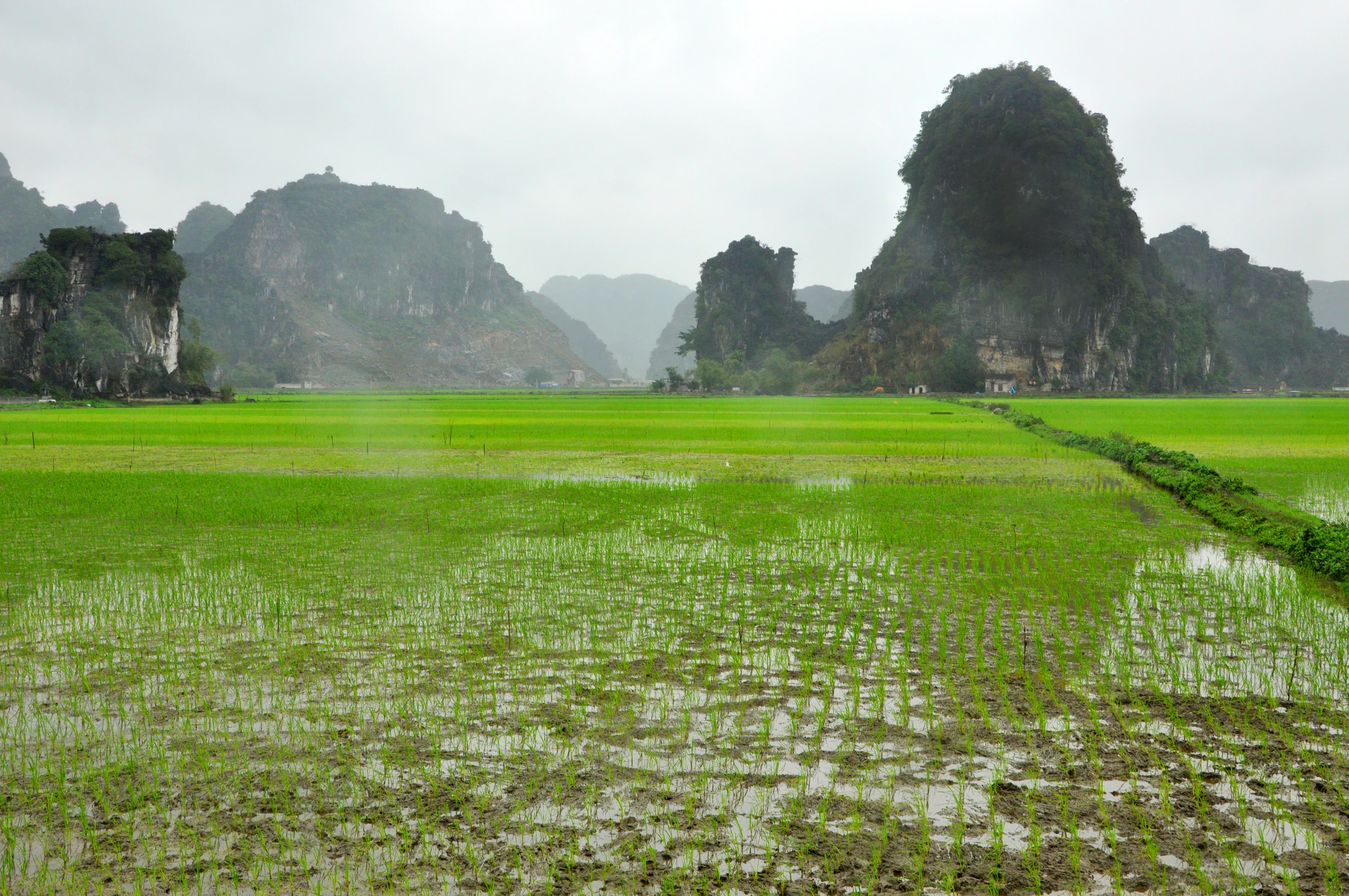
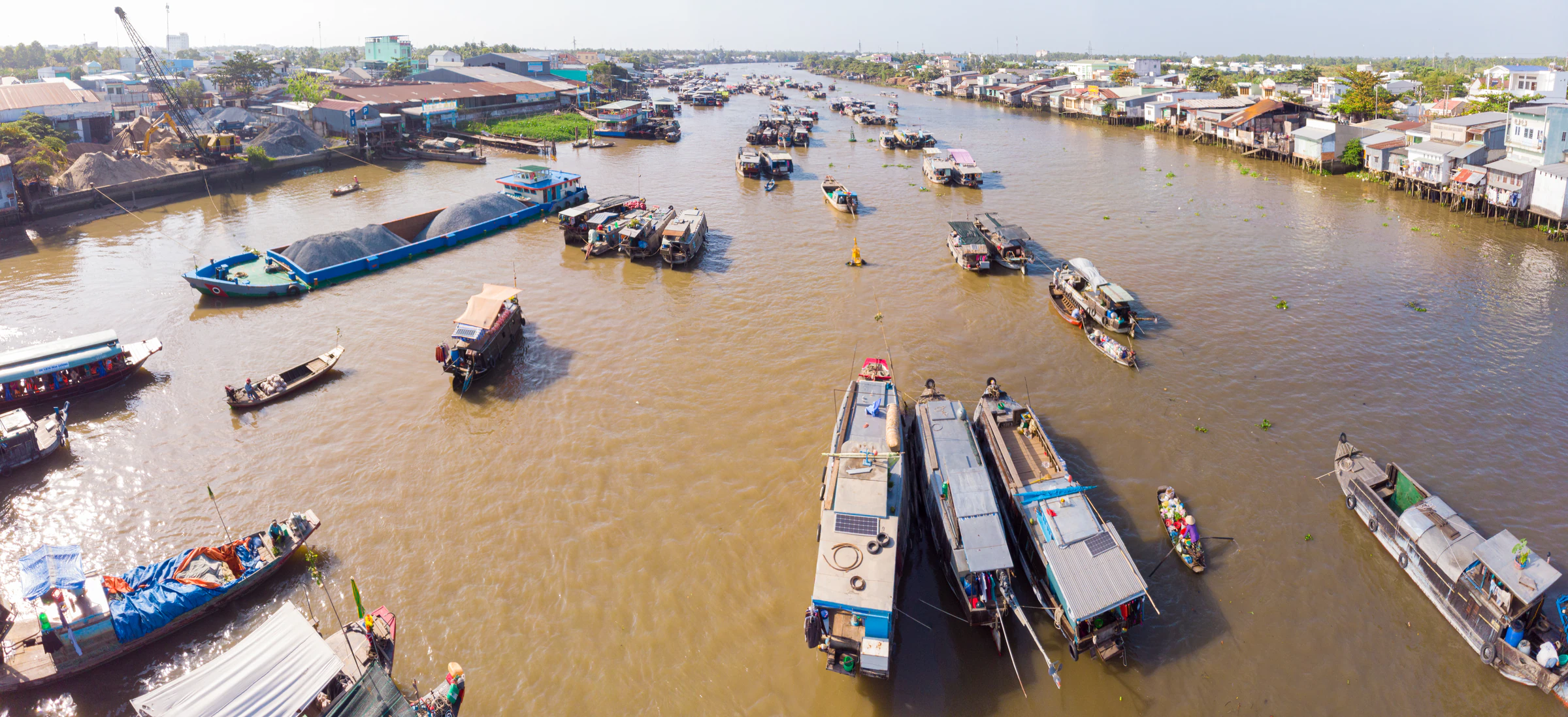
Ha Giang is the part of Vietnam that people come back from talking about. Grey limestone peaks, corn planted on slopes so steep it looks impossible, a green river at the bottom of a canyon, and villages where the weekly market is still the big social event. It's remote, cold in winter and wet in summer, and it takes a full day to reach from Hanoi. For most people that's part of the appeal.
This guide covers the region as a whole: where it is, how to get there, the main places, when to go, the people who live there, the border rules and how many days to give it. The motorbike loop itself has its own detailed guide, the Ha Giang Loop guide, and for the rest of the country start with our Vietnam travel guide.
Where Ha Giang is
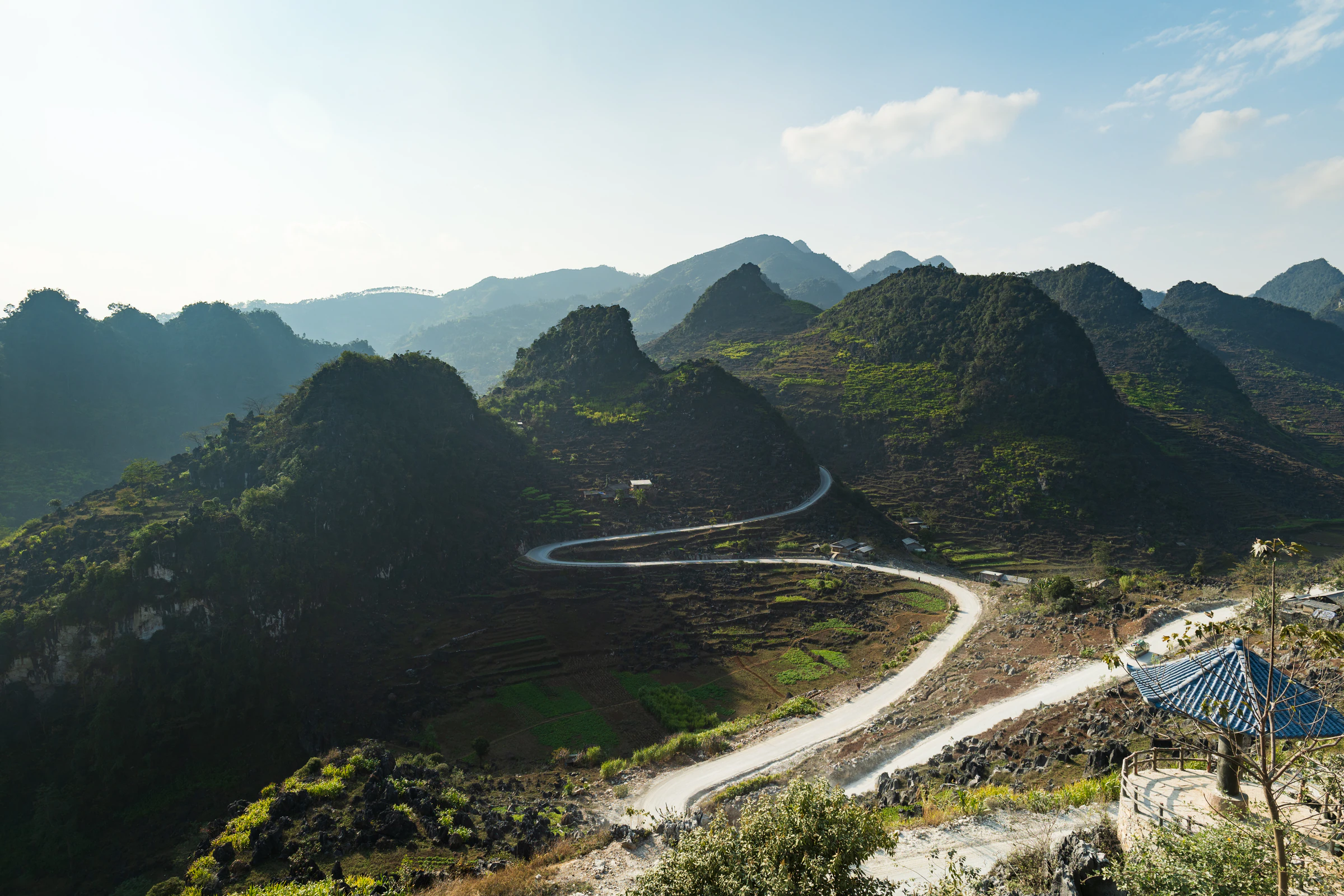
Ha Giang is Vietnam's northernmost region. It runs up to the Chinese border, and Lung Cu, near its top, is the northern tip of the country. The town of Ha Giang sits in a valley on the Lo River in the south of the region. North of it the land rises onto the Dong Van Karst Plateau, a UNESCO Global Geopark since 2010. The geopark covers about 2,356 km² of limestone across Quan Ba, Yen Minh, Dong Van and Meo Vac, which is the area most visitors mean when they say "Ha Giang".
A name change confuses a lot of people. Vietnam merged its provinces in 2025, and since 1 July 2025 Ha Giang province has been part of Tuyen Quang province. Districts were abolished at the same time, so Ha Giang city is now two wards, Ha Giang 1 and Ha Giang 2. In everyday speech, and on every bus ticket, it's still Ha Giang. You'll see "Tuyen Quang" on permits, booking forms and some signs.
Ha Giang and Sapa are both in the far north, but they're in different provinces with no quick road between them. Most people go back through Hanoi to get from one to the other. Our Sapa guide compares the two.
Ha Giang city
Ha Giang city is where almost every trip starts. It's a small, practical town rather than a sight in itself, but it's a pleasant place to spend an evening. Walk along the Lo River, find a bowl of noodles, and take the obligatory photo at the Km 0 milestone. It stands in a small park in the centre, facing 26 March Square, and marks the start of Highway 2 to Hanoi.
The town is where you sort out the practical things:
- Meet your easy rider or tour. Most loop operators and backpacker hostels are here, and many store your big bag while you ride.
- Get the border-area permit. The Immigration Management Office is at 415 Tran Phu Street, in Ha Giang 2 ward. If you're on a tour, the operator applies for you.
- Get cash. There are ATMs up in the mountain towns, but they can be empty. Take out enough in Hanoi or Ha Giang.
One night in town before you head north is worth it, especially if you arrive on the night bus. You start fresh, you meet your rider properly, and you're not setting off on mountain roads after four hours' sleep.
How to get from Hanoi to Ha Giang
It's about 300 km. Part of the way from Hanoi is on expressway, but the last stretch, between Tuyen Quang and Ha Giang, is still being built. Its target opening date is 30 October 2026, though that could slip. Until it opens, the final section is on the old highway, and expect roadworks and diversions for some time after. Journey times in the table may fall once the whole route is open.
| How | Time | About | Good to know |
|---|---|---|---|
| Day limousine van | 5.5 to 6.5 hours | 450,000 to 600,000 dong (US$18 to US$24) | 9 to 11-seat vans with pick-up in Hanoi's Old Quarter. Morning departures arrive early afternoon, so you arrive rested |
| Sleeper bus | 7 to 8 hours | 200,000 to 350,000 dong | Leaves between about 8pm and 10pm and arrives at about 3:30 to 5am. Saves a night's accommodation, but it's hard going if you ride that morning |
| Cabin bus | 7 to 8 hours | 400,000 to 550,000 dong for a shared cabin | Curtained pods instead of open bunks. Many solo travellers prefer them. Private cabins cost more |
| Private car | About 5.5 to 6 hours | About 3.5 to 4.5 million dong per car, one way | Worth it split between three or four people, and you choose your stops |
Buses back to Hanoi run through the afternoon and evening. An early-afternoon van gets you back to the Old Quarter at about 8:30 to 9:30pm. There's no airport or railway in Ha Giang, so it's the road or nothing. If you're spending a few days in the capital first, our Hanoi guide covers where to stay.
The main places in Ha Giang
The famous places sit in a rough circle north of Ha Giang city, and the loop links them. Here's what each one is known for.
Quan Ba and Heaven's Gate
The first big climb out of Ha Giang goes over Bac Sum Pass to Quan Ba. At the top is Heaven's Gate, a viewpoint over a valley with two rounded hills known as the "Fairy Bosom" (Twin Mountains). Nearby, Lung Khuy cave is about 1 km's walk from the car park and costs about 50,000 dong. It's a good first stop if you have time.
Yen Minh
A market town among pine forests, and the usual first night on the loop. It's quieter than Dong Van and a comfortable place to break the journey.
Dong Van
Dong Van is the heart of the plateau. Its small old quarter has traditional houses of clay and stone, and the Sunday morning market draws people from the villages for miles around. It's the obvious place to spend a night, and two if you can. On the way from Yen Minh you pass the H'mong King Palace at Sa Phin, the mansion of the Vuong family who ruled this area in the early 20th century, and Lung Cam, a village of earth-walled houses.
Lung Cu
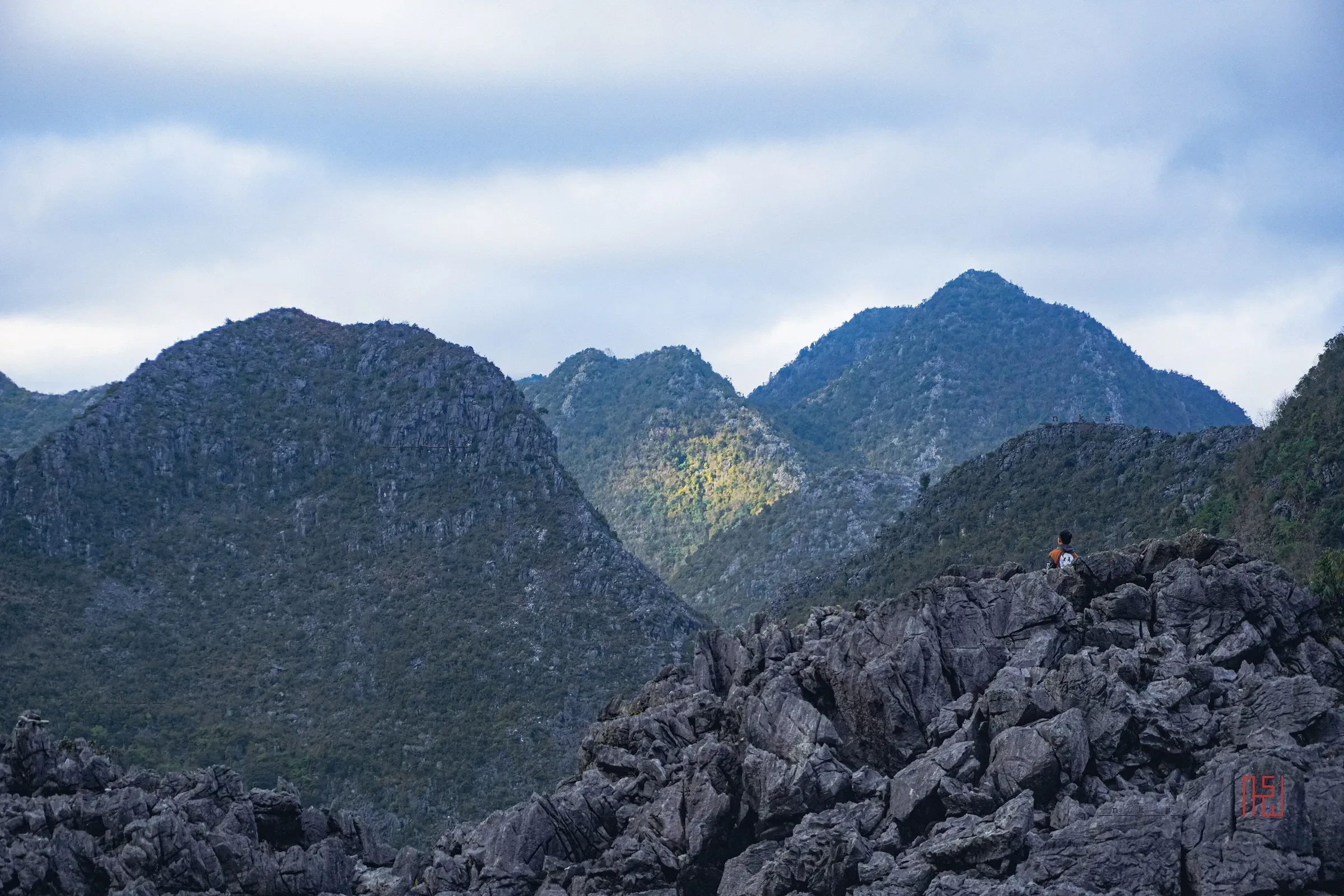
The flag tower at Lung Cu stands on a hill near Vietnam's northernmost point. You climb a long flight of steps for a view across to China. It's open from 8am to 5pm and costs about 25,000 to 30,000 dong, plus a small fee if you take the electric cart up from the car park.
Ma Pi Leng Pass and the Nho Que River
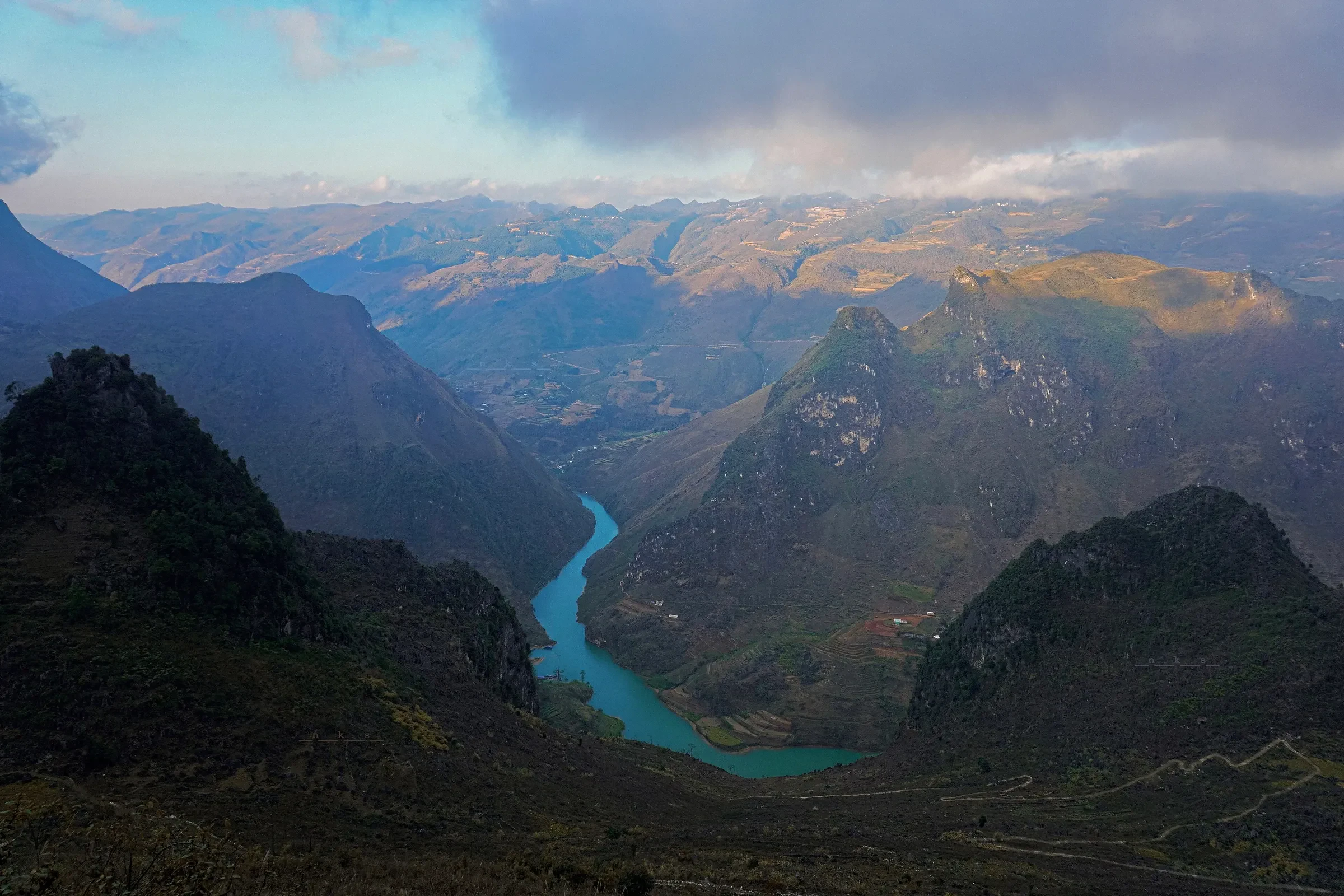
Ma Pi Leng, between Dong Van and Meo Vac, is the view on every Ha Giang poster: a road cut into the cliff high above the green Nho Que River. You can take a boat into Tu San canyon below it, which costs 150,000 dong. The rocky "death rock" photo outcrop below the road has been closed since 1 July 2026 for repairs, with no reopening date found in early October, so don't let anyone take you onto it. The loop guide has the details on the boat.
Meo Vac
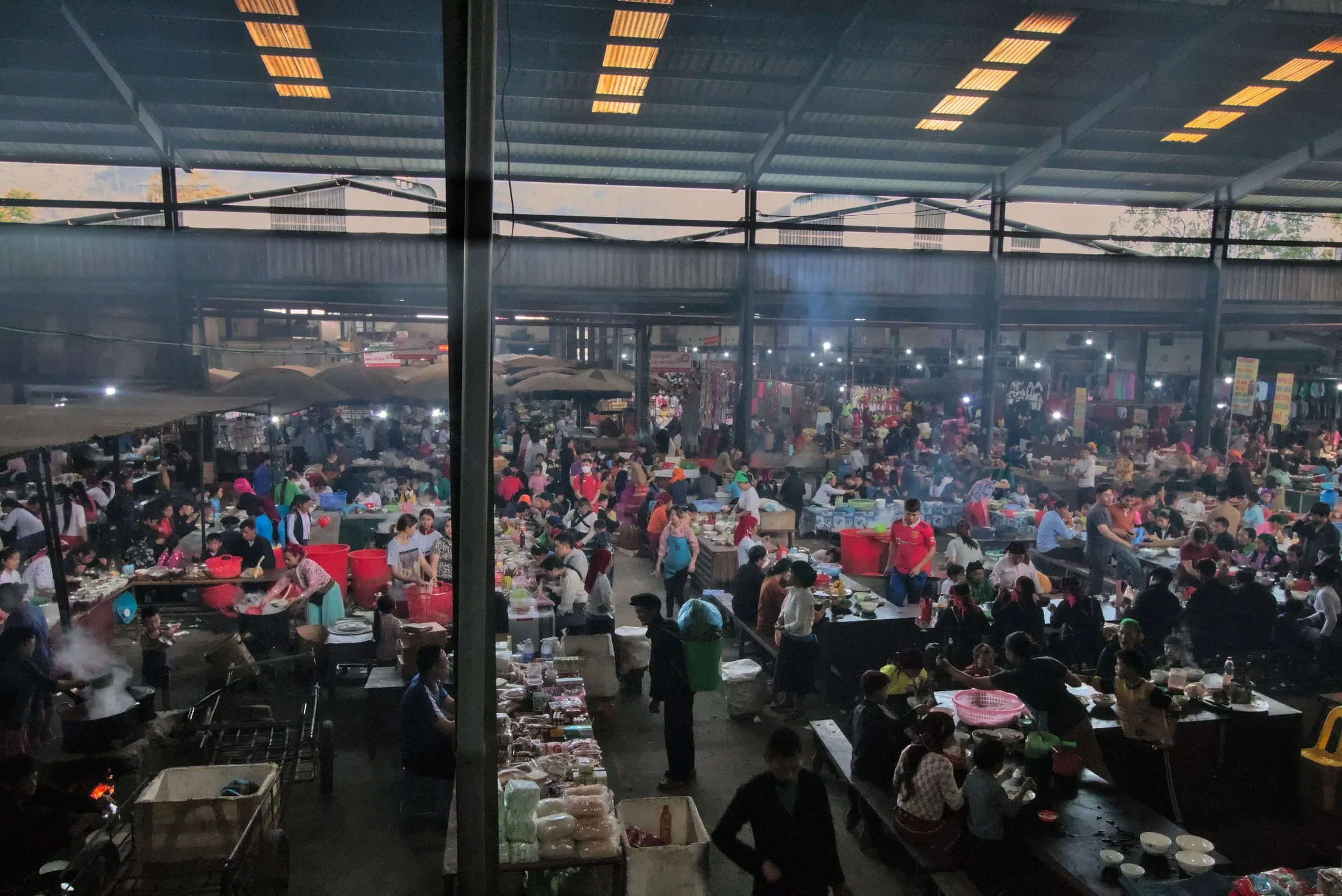
A town in a bowl of mountains on the far side of Ma Pi Leng. Its Sunday market is one of the largest in the region, with cattle trading as well as food and textiles. Nearby Khau Vai holds a "love market" once a year, on the 27th day of the third lunar month, usually around April or May.
Du Gia
Du Gia is a quiet valley village off the main loop, with a waterfall you can swim in and rice fields all around. The road there is rough and slow, but many people say it was their favourite night. Du Gia's market is on Friday mornings.
Hoang Su Phi
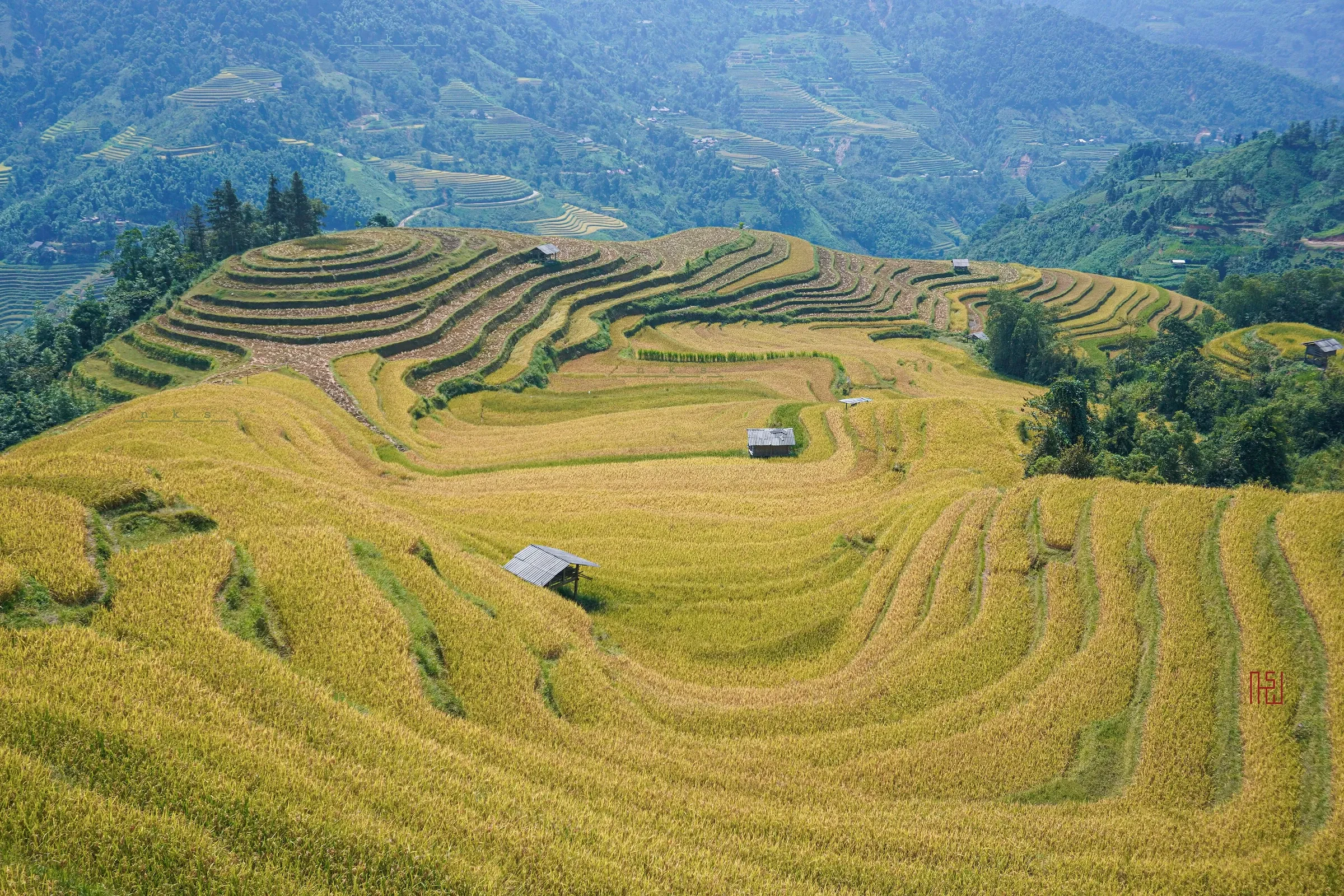
Hoang Su Phi is in the far west of Ha Giang, about 110 km from Ha Giang city and nowhere near the loop. It's the place for rice terraces: the terraced fields here were recognised as a national heritage site in 2012. Villages of the Nung, Dao and La Chi peoples farm them. The terraces are golden from about mid-September to early October, before the harvest, and flooded and shining in the planting season from about April to June. It takes 7 to 8 hours to get there from Hanoi, usually with a change on the way. Treat it as a separate trip of 2 or 3 days, not an add-on to the loop.
Best time to visit Ha Giang
Ha Giang is high and cool, with a wet summer and a cold, often foggy winter.
| Months | Weather | Good to know |
|---|---|---|
| October and November | Dry and clear, about 12 to 22°C by day | The best time. Pink buckwheat flowers from late October, peaking late October to mid-November. The busiest weeks |
| December to February | About 3 to 12°C in the highlands, near freezing at night | Thick morning fog on the passes and ice on some mornings. Peach and plum blossom from January. Tet closes homestays and fills buses for about a week |
| March and April | Mild, with some drizzle | A good shoulder season, with blossom early on and fewer people |
| May to September | Hot in the valleys and wet, with July the wettest | Landslides and rockfalls on mountain roads after heavy rain. Hoang Su Phi's terraces are at their best from the flooding season to the harvest |
Buckwheat flowers. The flowers (tam giac mach) turn the hillsides pink and white from about late October to December. The province's Buckwheat Flower Festival is held in Dong Van each autumn, and the dates change from year to year. In 2026 the opening was moved from 6 November to 25 October, so check the date before you plan around it, and book Dong Van rooms early for that week.
Rice harvest. The Dong Van plateau is mostly corn country. If you want golden rice terraces, go to Hoang Su Phi from mid-September to early October, or see the fields around Du Gia and on the lower roads at the same time of year.
Tet. In 2027, the Lunar New Year falls on Saturday 6 February. Transport sells out and many homestays close for several days, so avoid the week around it. Our Tet guide explains why. For the rest of Vietnam, see the best time to visit Vietnam.
The people of Ha Giang
Ha Giang is one of the most diverse parts of Vietnam. At the last census, the H'mong were the largest group in the old province, about a third of the population. Next came the Tay, the Dao and the Kinh (ethnic Vietnamese), then the Nung, Giay, La Chi, Lo Lo, Pu Peo and others. Up on the plateau, most villages are H'mong. You'll hear their language more than Vietnamese at the Dong Van and Meo Vac markets.
Being a good guest
- Ask before you photograph people, and accept a no. That goes double at markets, where people are working.
- Don't give children sweets, money or pens. It encourages begging and keeps children out of school. If you want to help, stay in family homestays, eat locally and buy crafts directly from the adults who make them.
- Ask before you go into a home or a place of worship, and follow your host's lead at meals.
- Dress modestly in the villages. Cover your shoulders and knees when you're off the bike.
- Go easy with the rice wine. "Happy water" is part of homestay evenings, and you can join in, sip or say no. "Không, cảm ơn" (no, thank you) with a smile works fine.
Market days
| Market | When |
|---|---|
| Dong Van | Sunday morning, about 5am to 1pm, busiest 6am to 10am |
| Meo Vac | Sunday morning |
| Du Gia | Friday morning |
| Lung Phin | Moves on a six-day cycle, sometimes on a Sunday |
To see a Sunday market you need to sleep in Dong Van or Meo Vac on the Saturday night. It's one of the best reasons to take more than three days.
Border-area rules
Much of northern Ha Giang is a border area, and a few rules apply to foreigners.
- You need a border-area permit for the communes along the Chinese border, including Dong Van, Meo Vac, Lung Cu and parts of Ma Pi Leng. It costs roughly 210,000 to 300,000 dong depending on the source (the official fee is US$10) at the Immigration Management Office in Ha Giang, and a tour operator arranges it for you. Police at checkpoints and homestays have been checking for it since about June 2026.
- Carry your passport, with your visa or entry stamp. Homestays in the border communes register you with the police.
- Leave the drone at home. Flying one in Vietnam needs a permit from the Ministry of National Defence, and the border areas are especially sensitive.
- Don't photograph military or border-guard posts, and don't go past any border marker or sign that tells you to stop.
For entry rules, check the Vietnam visa guide before you fly.
How many days do you need in Ha Giang?
- 3 days is the minimum for the loop. It's possible, but usually means a long first day straight off the night bus and skipping Du Gia.
- 4 or 5 days is right for most people. Four riding days covers the whole loop with Du Gia. Add a night in Ha Giang city at the start and you have 5 days from Hanoi and back.
- A week or more lets you slow down, catch a Sunday market, or add Hoang Su Phi.
Short "Ha Giang 2-day tours" and day tours from Ha Giang city exist, but they only reach Quan Ba and Yen Minh. Dong Van and Ma Pi Leng are too far north for a day trip.
Ha Giang itineraries
The loop on its own
Day 1: Hanoi to Ha Giang by day van. Evening by the river and the Km 0 milestone. Day 2: Bac Sum Pass, Heaven's Gate and Lung Khuy cave, then Yen Minh. Day 3: Lung Cam, the H'mong King Palace and Lung Cu, then Dong Van. Day 4: Ma Pi Leng early, the boat on the Nho Que, lunch in Meo Vac, then Du Gia. Day 5: A swim at Du Gia waterfall, back to Ha Giang, and the afternoon van to Hanoi.
For 3 days, drop Du Gia and ride back from Meo Vac on Day 4. The loop guide has distances and riding times for each day.
Ha Giang in 1 week
Follow the 5-day plan, but spend two nights in Dong Van so you can see the Sunday market and walk the old quarter. Then add a spare day at the end, or two slow days in Du Gia. If you're travelling from mid-September to early October, go to Hoang Su Phi for the harvest instead of the extra Dong Van night.
Ha Giang in 10 days
Do the loop over 5 or 6 days, then take 3 days in Hoang Su Phi for the terraces and a village homestay, and a last night in Hanoi. Or combine 5 days in Ha Giang with 3 days in Sapa, going back through Hanoi between the two.
2 weeks in Vietnam with Ha Giang
With two weeks you can do Ha Giang and still see more of the country: 5 days in Ha Giang, then Ninh Binh and a night on Ha Long or Lan Ha Bay, then fly to Da Nang for Hoi An. Our 2-week Vietnam itinerary has the rest of the route.
A month in Vietnam with Ha Giang
A month gives you time for the whole country, and for Ha Giang and Sapa. Start in the north with a week split between the two, then head south through Ninh Binh, Phong Nha, Hue and Hoi An to Ho Chi Minh City and the Mekong Delta. Plan the far north for October to November or March to April, when the mountains are at their best. Our Vietnam itinerary guide and 3-week itinerary show how to fit it together.
The Ha Giang Loop in brief
The loop is the reason most people come. It's a circuit of about 350 km from Ha Giang city through Quan Ba, Yen Minh, Dong Van, Ma Pi Leng and Meo Vac, usually ridden over 3 or 4 days. You can ride pillion behind a local driver (an "easy rider"), ride yourself, or go by car. Most people choose an easy rider. A 3-day easy-rider tour costs about US$150 to US$180, and a 4-day tour about US$190 to US$240 at budget operators (some quote US$280 or more), before the trip from Hanoi.
Only drive yourself if you have a motorbike licence from home plus a 1968-convention International Driving Permit. Permits issued in the US, Canada, Australia, New Zealand, India, Ireland and Spain follow the 1949 convention and don't count. Without both documents you're riding illegally, and your travel insurance probably won't pay out. Helmets are compulsory for every rider and passenger. Roads carry real risk. After a 19-year-old British traveller was fatally injured in a crash while riding as a passenger on 29 March 2026 and died on 2 April, the Tuyen Quang tourism department announced new rules in mid-April 2026: firms without a licence may not organise or sell motorbike tours, bikes must be maintained, and operators must provide helmets and protective gear. The rules don't cap riders' hours or group sizes, so the operator you choose still decides most of how safe the loop is.
The Ha Giang Loop guide covers the route day by day, safety, the 2026 rules, costs, packing and how to choose an operator. For tours, see our Ha Giang Loop tours page.
Travel to Ha Giang with a group
Our Vietnam Ha Giang Loop Tour is five days from Hanoi and back, for solo travellers aged 18 to 40. Everyone rides behind their own licensed easy rider, booked through a licensed operator, with a licensed local guide and your Trip Host riding with the group the whole way. Groups are never more than 12. It runs in the dry, clear months and never in the May to September wet season.
If you want more riding, our Ha Giang & Cao Bang trip covers the same loop, then keeps going east past Bao Lac into Cao Bang for Nguom Ngao Cave and Ban Gioc, Vietnam's largest waterfall, over seven days from Hanoi and back.
Vietnam North to South starts in Hanoi, so you can ride the loop first and then join the group for 15 days from Hanoi to the Mekong Delta.