People who ride the Ha Giang Loop tend to talk about it for years afterwards. It's also the part of a Vietnam trip where things most often go wrong, so this guide spends as long on the dull but important things (licences, operators, safety) as it does on the views.
The route
7 stops
- Minibus
- Motorbike
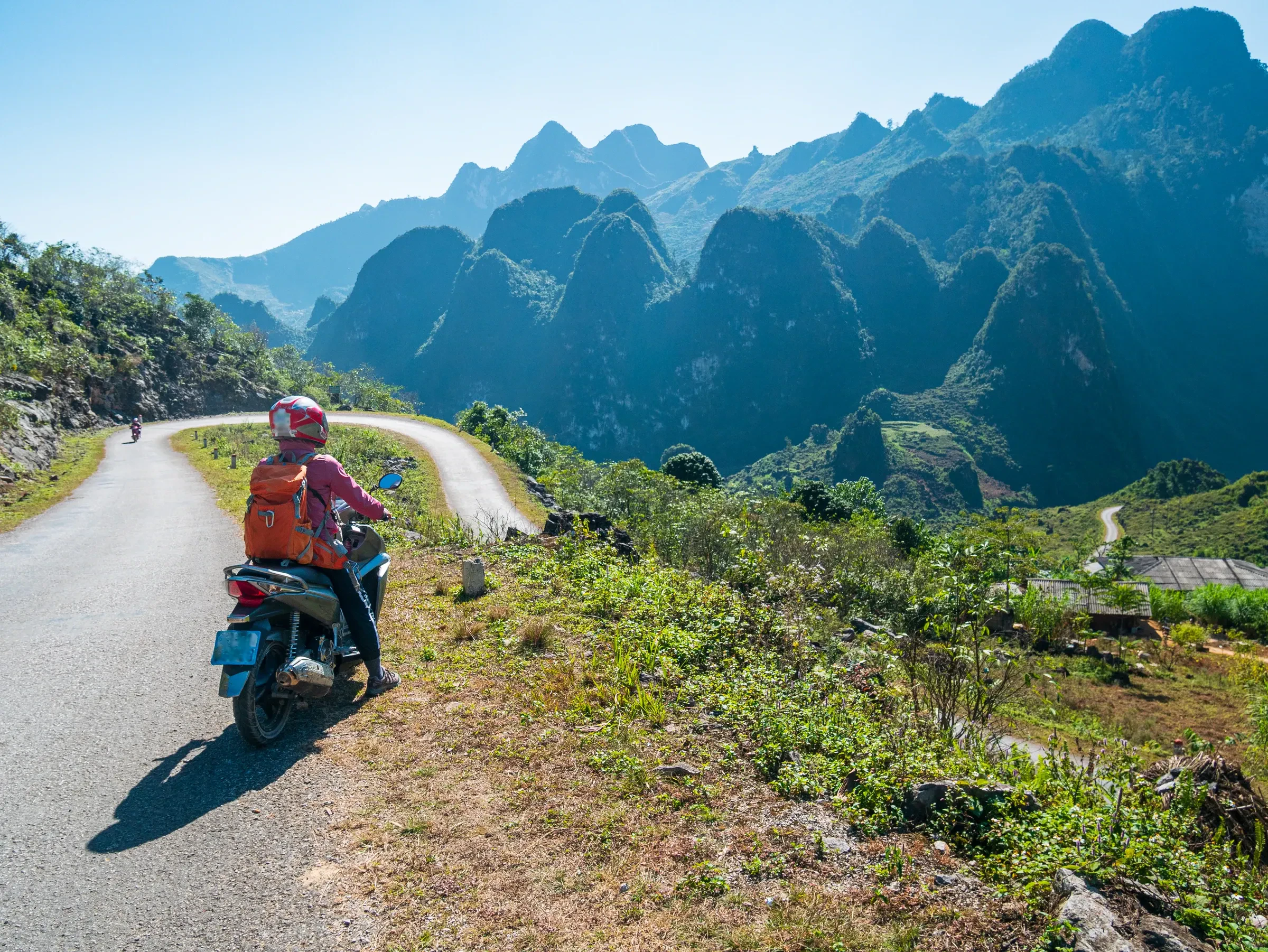
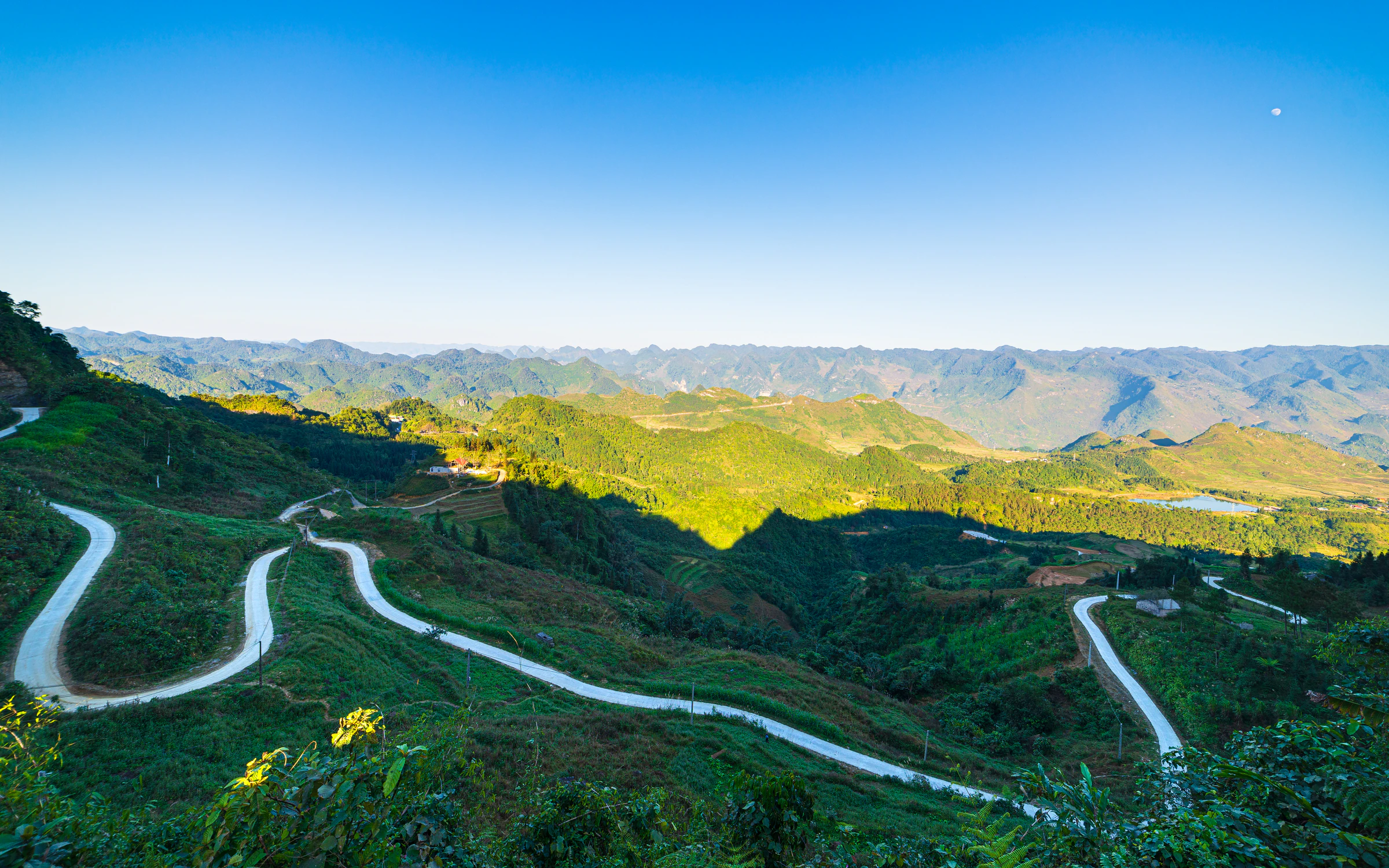
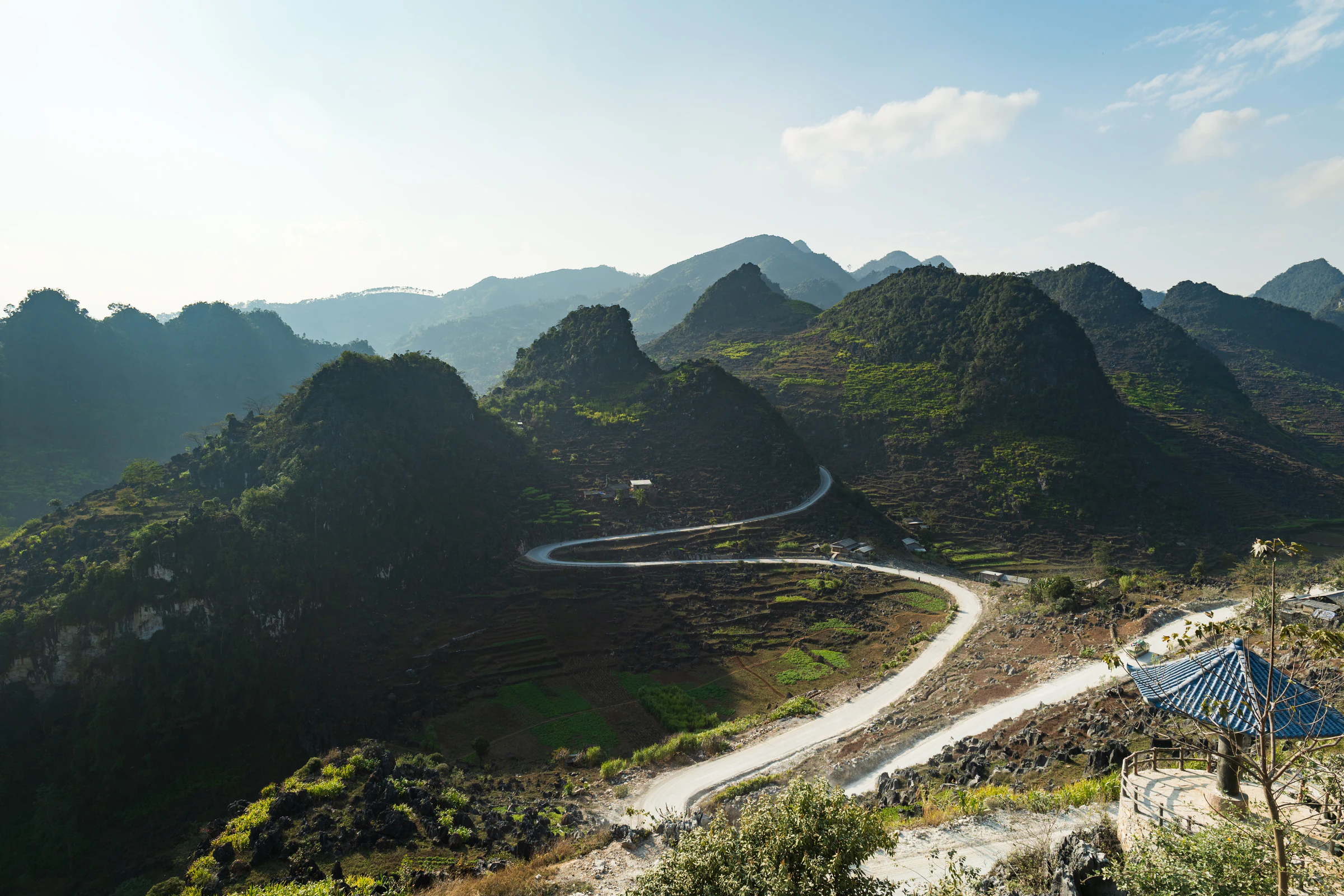
Much of the route follows road QL4C, the "Happiness Road", built between 1959 and 1965 by volunteers from 16 ethnic groups, with the section over Ma Pi Leng Pass alone taking about two years. It runs through the Dong Van Karst Plateau, a UNESCO Global Geopark of grey limestone peaks, terraced corn fields and deep river canyons.
One name to know: Ha Giang stopped being its own province when Vietnam merged provinces on 1 July 2025, and it's now part of Tuyen Quang province. Everyone still calls the town and the loop Ha Giang, but you'll see "Tuyen Quang" on permits and some signs.
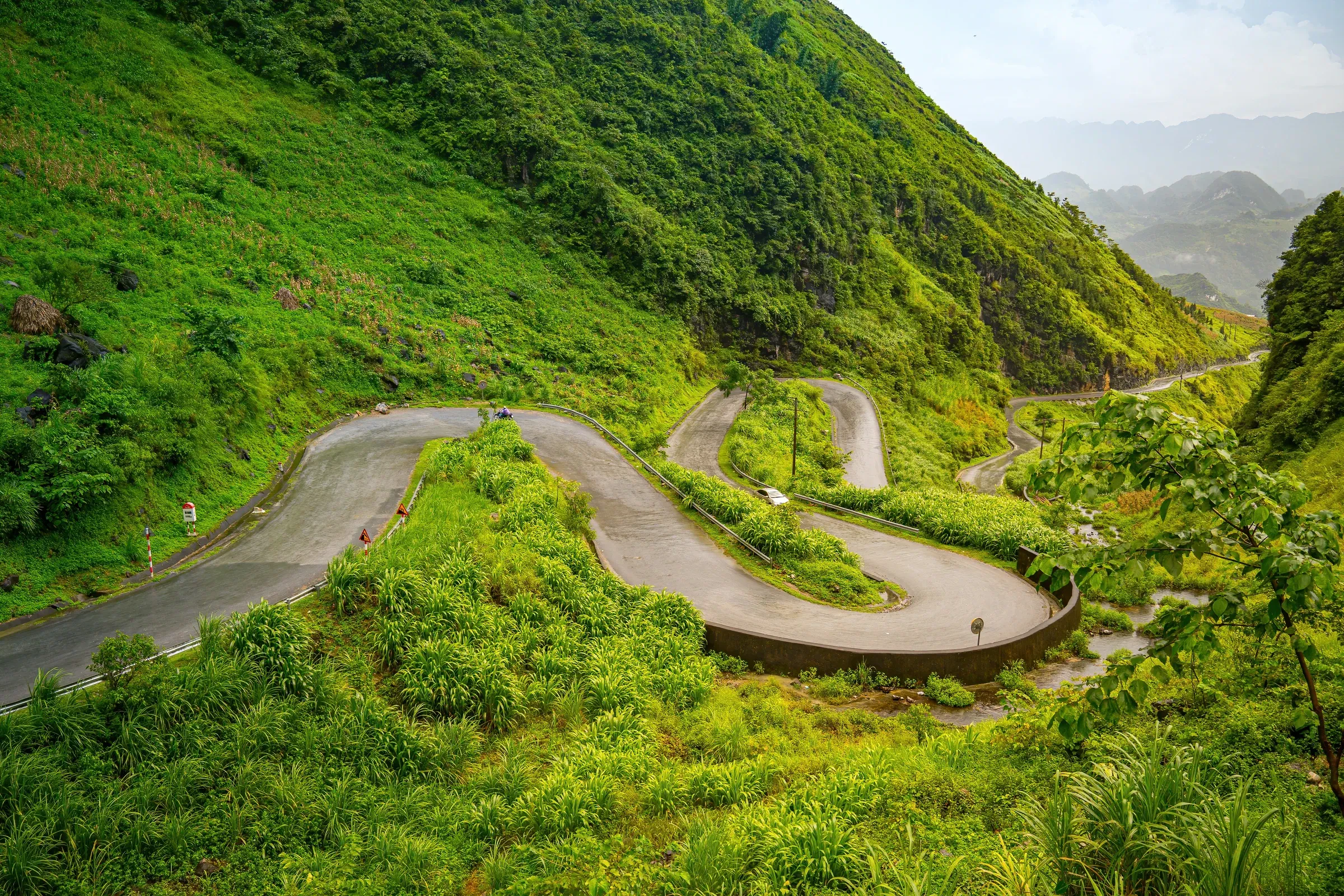
Ma Pi Leng Pass and the Nho Que River
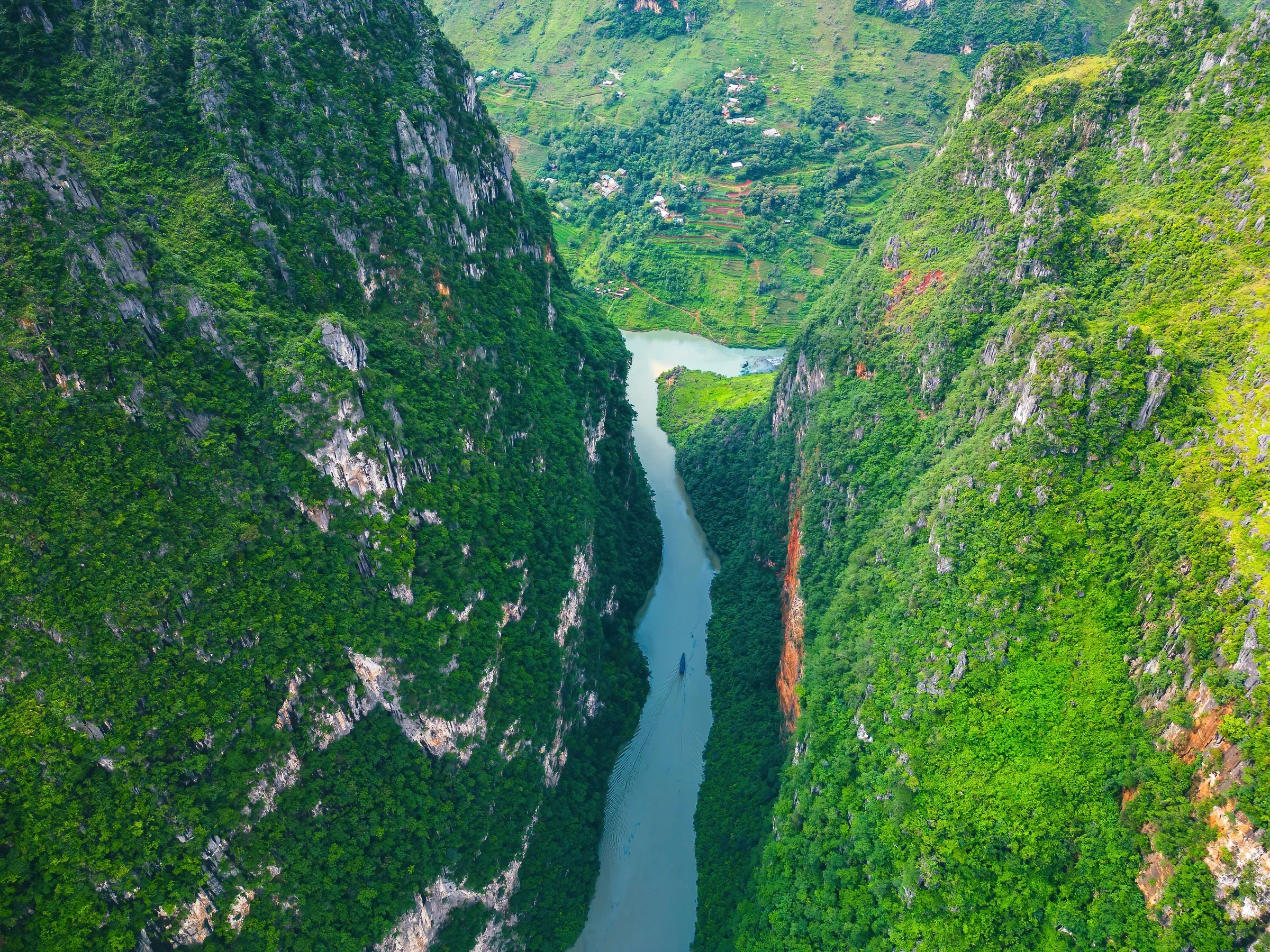
Ma Pi Leng is the highlight for most people: a road cut into the cliff high above the green Nho Que River. Go early, when the light is soft and the traffic is light. Two things have changed recently. The rocky "death rock" outcrop below the road, famous from social media, has been closed to visitors since 1 July 2026 for repairs after two earlier accidents there, with no reopening date when we checked; don't let anyone take you onto it. And the boat into Tu San canyon now leaves from a single dock below the Nho Que 1 hydropower dam: 150,000 dong including the shuttle, 60 to 90 minutes there and back. The water sits higher since the dam opened, so the canyon walls look lower than in older photos, and road works near the dock cause holds of an hour or more around 11am to noon and again near 5pm, so go early. After heavy rain the river runs fast and brown, and it's better to skip it.
Is this route for you?
It suits anyone who's happy sitting on the back of a motorbike for several hours a day, doesn't mind a simple homestay with a shared bathroom, and wants proper mountain scenery rather than a beach. It works well as the opening week of a longer Vietnam trip, since Ha Giang has no railway and no airport, so you're already committing to the long way in.
It suits you less if you get travel-sick on winding roads, want your own private room every night (some homestays now offer one for a supplement, but not all), or have a fear of heights on cliff-edge roads. If a gentler, walking-paced version of the mountains sounds better, our Sapa guide and its trekking guide cover a similar landscape on foot with proper hotels each night.
Day by day: 1 week from Hanoi
The trip up
Hanoi
Getting there day limousine van from the Old Quarter, about 5.5 to 6.5 h, 450,000 to 600,000 dong; or a sleeper or cabin bus overnight, about US$20, arriving 3:30am to 5am
- Morning
- leave Hanoi on the day van if you want to arrive rested, or spend the morning in the Old Quarter and take a night bus
- Afternoon
- watch the scenery change from rice paddies to limestone hills as you climb north
- Evening
- meet your rider or guide in Ha Giang and go through your gear and the route
Eat pho or bun cha in Hanoi before you leave; a simple rice and grilled meat set once you're in Ha Giang
Local tip arrive in Ha Giang the afternoon before you ride rather than straight off a night bus. You'll start the loop fresh instead of exhausted
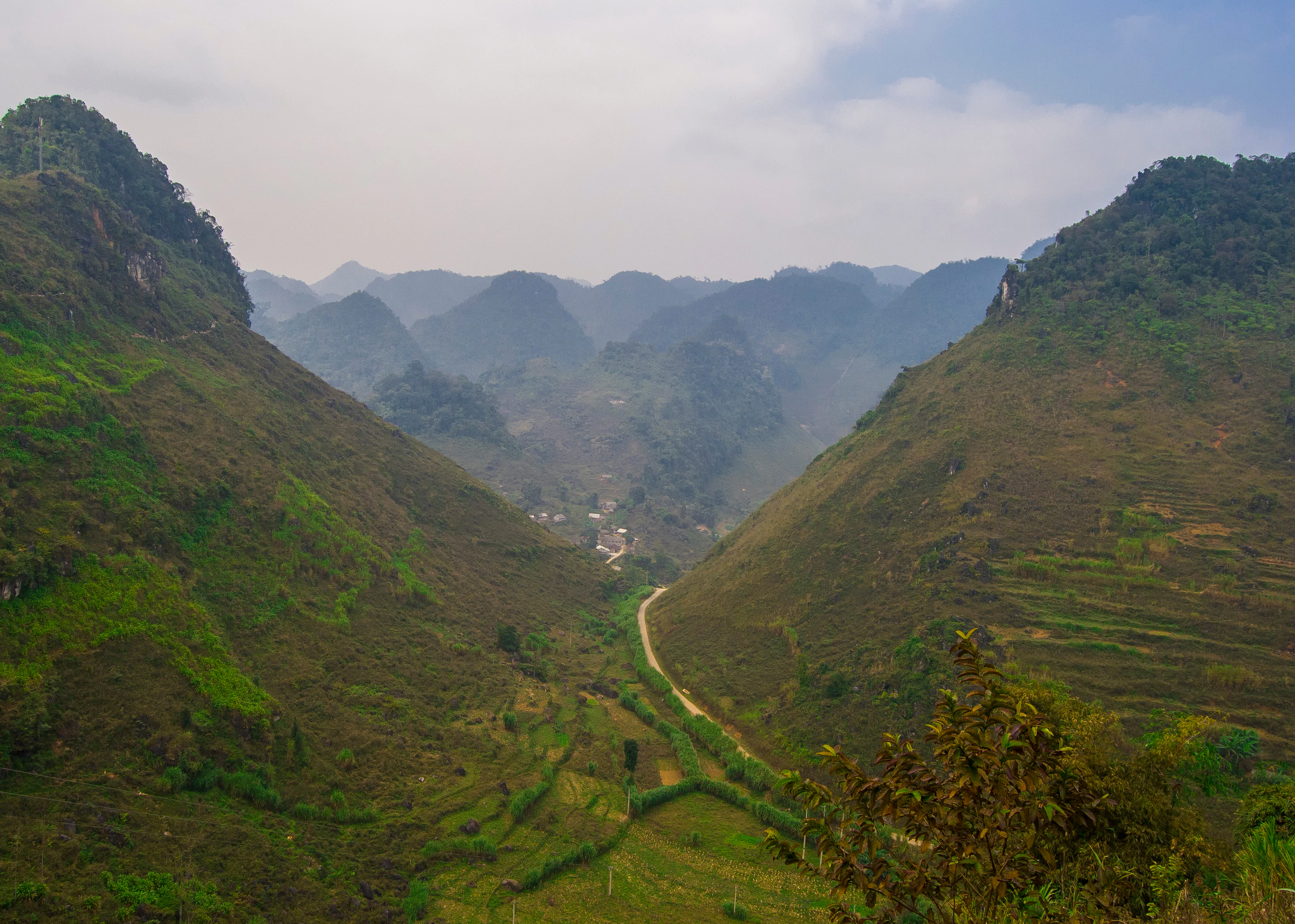
Bac Sum Pass and Heaven's Gate
Yen Minh
Getting there Ha Giang to Yen Minh, 80 to 90 km, about 2.5 to 3.5 h riding
- Morning
- climb out of Ha Giang and up Bac Sum Pass, the loop's first proper switchbacks
- Afternoon
- stop at Heaven's Gate for the view over the "Fairy Bosom" hills, then ride on through pine forest
- Evening
- an unhurried evening in Yen Minh, with dinner at the homestay table
Eat thang co, a mountain stew of meat and herbs, if you're happy trying it; otherwise a rice and vegetable set at the homestay table
Local tip this is the shortest riding day of the loop, so it's a good one to stop often for photos
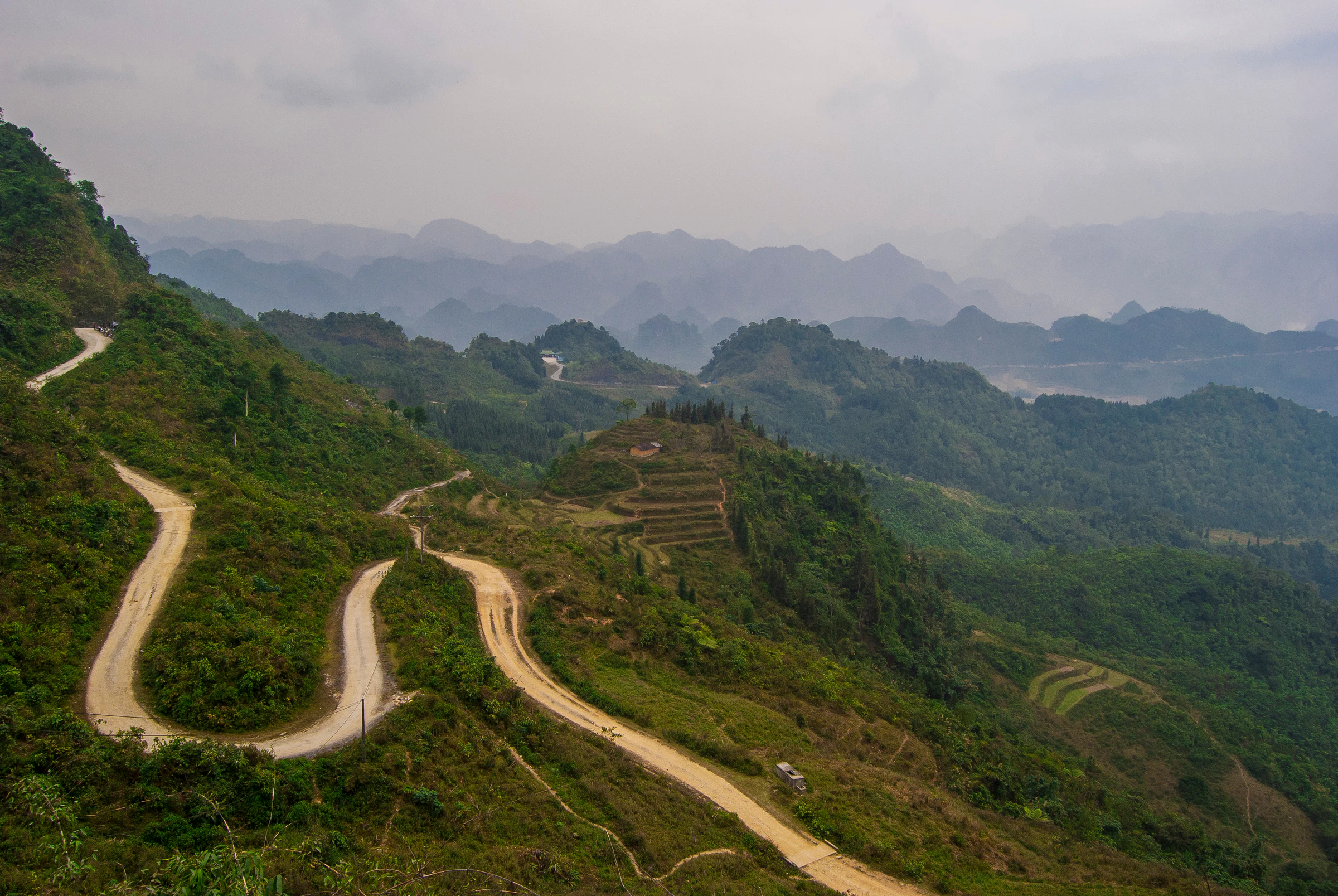
Lung Cu and the H'mong King Palace
Dong Van
Getting there Yen Minh to Dong Van via Lung Cu, 100 to 110 km, about 3.5 to 4.5 h riding
- Morning
- detour to Lung Cu, Vietnam's northern tip, and climb the flag tower (open 8am to 5pm)
- Afternoon
- the H'mong King Palace and Lung Cam village, then on into Dong Van
- Evening
- Dong Van's old quarter, with corn wine and grilled snacks around the square
Eat grilled corn and skewered meats from the stalls around Dong Van's old town square
Local tip if you can time it, sleep here on a Saturday night so you're up for the Sunday market before riding on
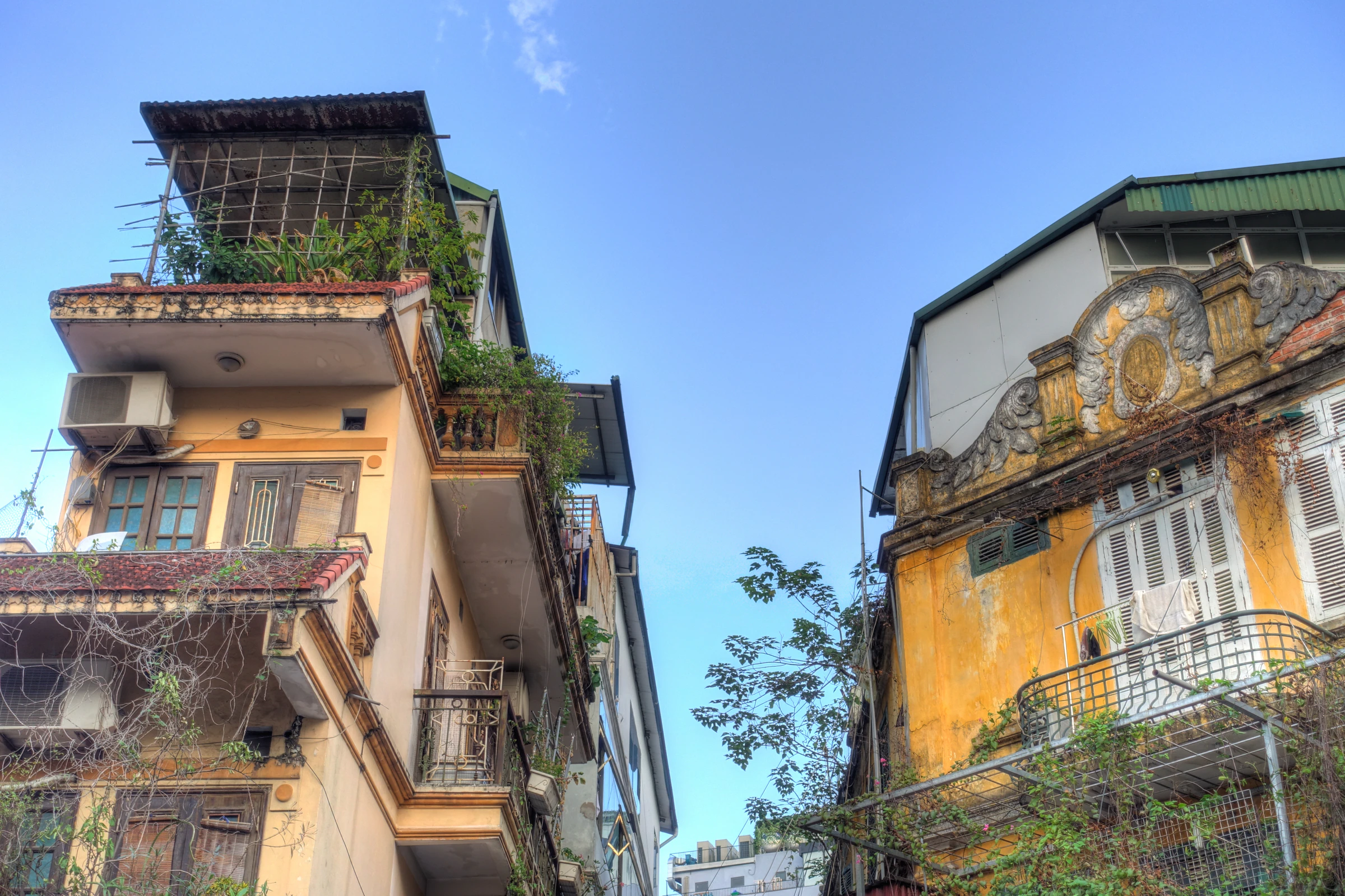
With more time with a spare afternoon, the Dong Van old quarter's French-colonial shopfronts are worth a slow wander
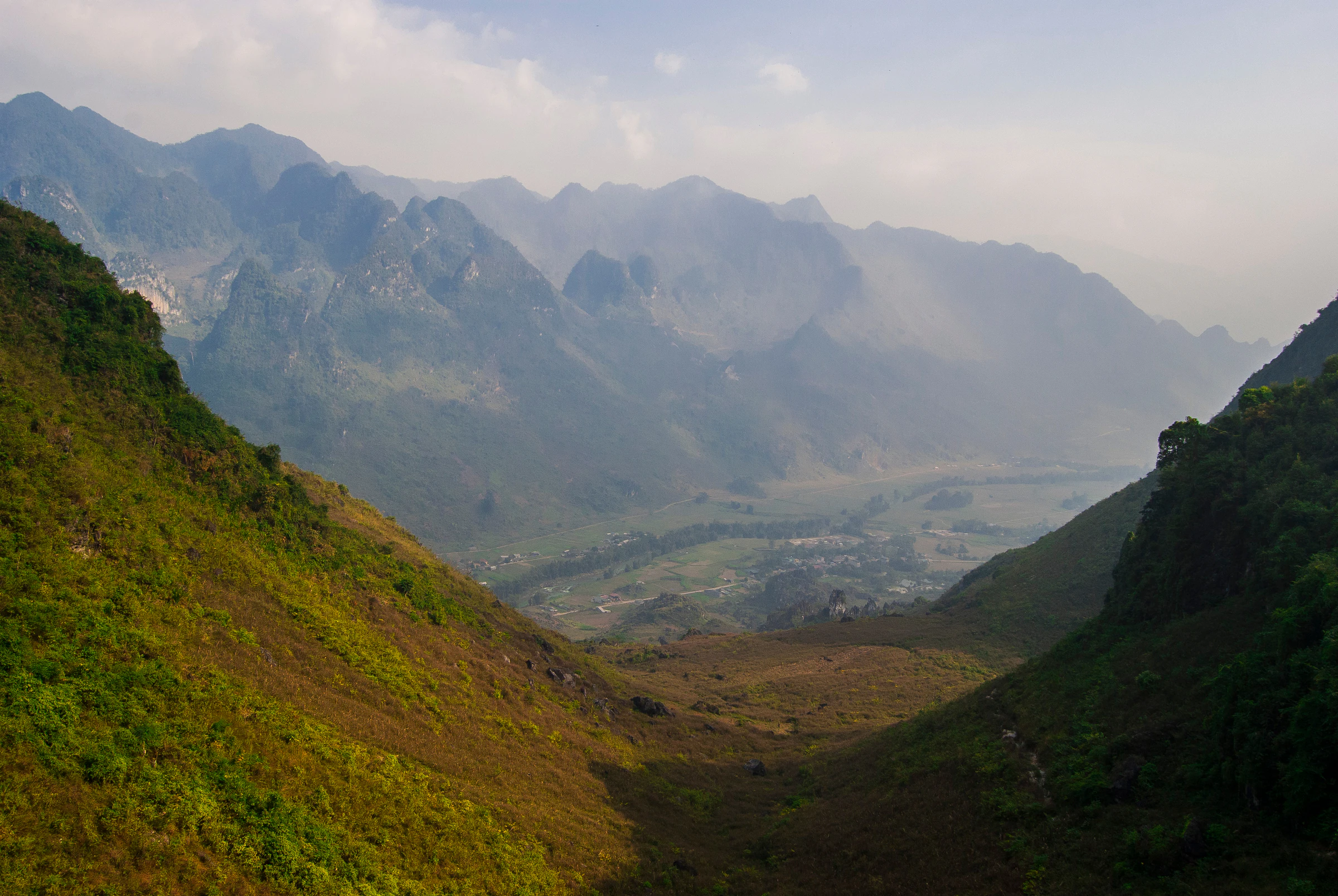
Ma Pi Leng, the Nho Que boat and a waterfall
Du Gia
Getting there Dong Van over Ma Pi Leng Pass to Meo Vac, then on to Du Gia, 95 to 110 km, about 3.5 to 4.5 h riding, longer with the boat
- Morning
- leave early for Ma Pi Leng Pass while the light and the roads are both quiet
- Afternoon
- the Nho Que River boat (150,000 dong, 60 to 90 minutes), lunch in Meo Vac, then the back roads to Du Gia
- Evening
- a swim at Du Gia waterfall if there's time, then dinner at the homestay table
Eat bamboo-tube rice, cooked over a fire in a length of bamboo, is a Du Gia speciality
Local tip this is the longest day on the loop, 7 to 9 hours door to door with stops, so start as early as your rider will agree to
Back to the start
Ha Giang
Getting there Du Gia to Ha Giang, 80 to 100 km, about 2.5 to 3.5 h riding
- Morning
- a last swim or a slow start at Du Gia waterfall
- Afternoon
- the quieter back roads south, with fewer other riders than the outbound legs
- Evening
- lunch and a shower in Ha Giang before the afternoon van to Hanoi, or one more night here
Eat a proper sit-down meal in Ha Giang town, after four days of homestay tables
Local tip tip your rider in cash before you part ways; 400,000 to 800,000 dong for the four days is typical
The trip back
Hanoi
Getting there Ha Giang to Hanoi, about 6 h by van
- Morning
- the afternoon van from Day 5 gets you into Hanoi by evening; some riders prefer an early Day 6 van instead
- Afternoon
- a hot shower, laundry drop and an early dinner if you rode straight through
- Evening
- the Old Quarter, if you've got the energy for it
Eat egg coffee and a late bowl of pho, back in Hanoi
Local tip build in this whole day for the return; the road doesn't reward rushing on either end
A free day
Hanoi
- Morning
- sleep in, then a wander through the Old Quarter's 36 streets
- Afternoon
- the Temple of Literature, a lake walk around Hoan Kiem, or a spa if your back needs it
- Evening
- a last Hanoi dinner before you move on to the rest of Vietnam
Eat bun cha Obama-style, grilled pork with noodles and herbs, a Hanoi classic
Local tip use this day as slack. If Day 6's van is delayed or the loop overran, it absorbs the difference

The 10 days version: adding Cao Bang
Swap the final loop back to Ha Giang for a ride east, and the same trip stretches to 10 days with Cao Bang and Ban Gioc Waterfall added on. It suits people who've got the extra days and want to see one of northern Vietnam's best waterfalls without doubling back on themselves.
| Day | Where | What | Eat |
|---|---|---|---|
| 1 | Hanoi to Ha Giang | Travel day, gear check | Pho before you leave Hanoi |
| 2 | Yen Minh | Bac Sum Pass, Heaven's Gate | Thang co at a roadside stall |
| 3 | Dong Van | Lung Cu flag tower, H'mong King Palace | Grilled corn in the old quarter |
| 4 | Bao Lac | Ma Pi Leng, the Nho Que boat, then east instead of south | Bamboo-tube rice |
| 5 | Cao Bang | Settle in, town market and a short walk | Cao Bang duck noodles (pho vit) |
| 6 | Cao Bang | Ban Gioc Waterfall and Nguom Ngao Cave | Grilled river fish near the falls |
| 7 | Hanoi | The long ride back, or a night bus | Rest and an early night |
| 8 to 10 | Hanoi and around | A slower few days: Ninh Binh's karsts or Lan Ha Bay by boat | Whatever's on the boat or the bus |
What changes: Days 1 to 4 are the same riding as the 1-week version. From Dong Van, you ride east to Bao Lac instead of south to Du Gia, then on to Cao Bang for two nights and a day trip to Ban Gioc. The ride back to Hanoi from Cao Bang is long, so many people take a night bus instead of riding it. The extra days at the end are for the rest of the north; our northern Vietnam itinerary covers Ninh Binh and Lan Ha Bay in full.
Easy rider, self-drive or car?
Easy rider. You sit behind a local driver. Most people choose this, and it's what we'd recommend for almost everyone: you get to look at the views instead of the potholes, the riders know every blind bend, and there's no licence problem because you aren't driving.
Self-drive. You ride your own bike, usually with a guided group. It only works if you're an experienced rider with the right paperwork (below); mountain roads with gravel, trucks and fog are not the place to learn. Scooters struggle here, so you'd want a semi-automatic or manual bike.
Car or jeep. A good option if you don't want to be on a bike at all. You see the same places and lose some of the open-road feeling.
To ride legally yourself, you need both a home licence that covers motorbikes and an International Driving Permit issued under the 1968 Vienna Convention. Permits from the US, Canada, Australia, New Zealand, India, Ireland and Spain are 1949-convention and aren't valid here, which is the main reason most solo travellers ride as a passenger instead. Without the right licence and permit you risk a fine of about 2 to 4 million dong, and an insurer may refuse a claim. As a passenger, the licence question disappears, but check your travel insurance covers you as a motorbike passenger, since some policies exclude motorbikes entirely.
You'll also need a border-area permit for the communes near the Chinese border, including Dong Van, Meo Vac and Lung Cu: roughly 210,000 to 300,000 dong depending on the source (the official fee is about US$10) from the Immigration Management Office at 415 Tran Phu Street in Ha Giang, or arranged by a licensed operator if you're on a tour. Police at checkpoints, especially around Bac Sum Pass and Yen Minh, have been checking for it since about June 2026. See our Vietnam visa guide for entry rules.
Is the Ha Giang Loop safe? The 2026 update
It isn't a risk-free ride, and nobody should pretend it is. On 29 March 2026 a 19-year-old British traveller was fatally injured in a crash while riding as a passenger on the loop, and died in hospital in Hanoi on 2 April. In mid-April 2026 the Tuyen Quang Department of Culture, Sports and Tourism announced new rules: firms without a licence may not organise or sell motorbike tours, bikes must be maintained and carry helmets and protective gear, operators need written contracts naming their drivers, routes, rest stops and emergency duties, operators can't merge groups, swap drivers or change the itinerary without approval, tourists must get a safety briefing, and accidents must be reported promptly to the authorities and police.
The rules don't cap riders' working hours or group sizes, so the operator you choose still decides most of how safe your loop is. Before you book with anyone, including us, ask: are you a licensed operator, and what's your licence number? How many hours a day do your riders work? What's your alcohol rule, including the night before a riding day? What's the maximum group size, and do you ever merge groups? What happens in an emergency, and how far is the nearest hospital?
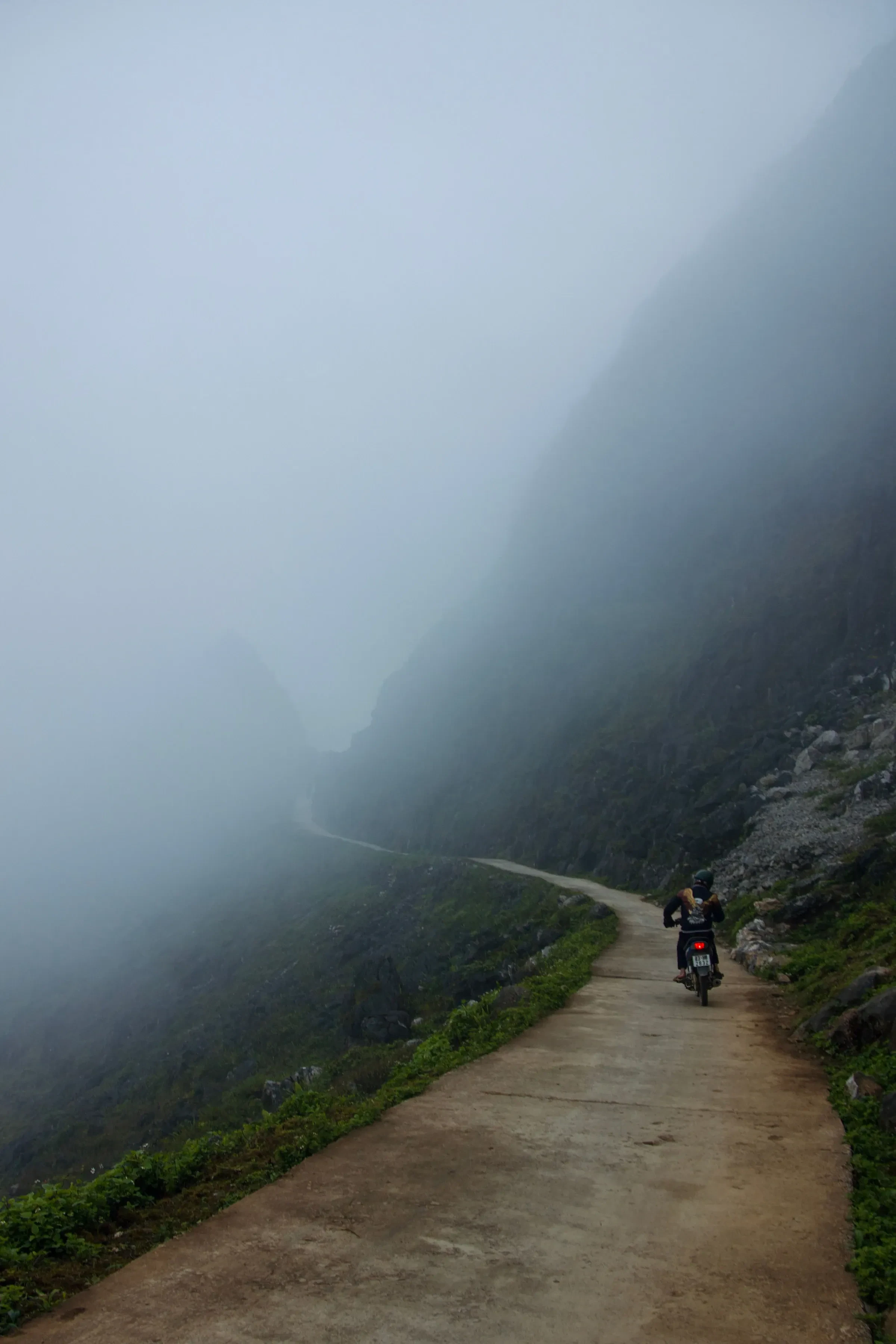
A few things help beyond the paperwork. Helmets are compulsory in Vietnam for every rider and passenger on a motorbike, so wear yours properly fastened from the first minute, even on short hops, and ask for a different helmet if yours doesn't fit. It's completely normal to ask your rider to slow down. Take fog seriously on winter mornings, when visibility on the passes can drop to a few metres; a good operator will wait it out. The wet season, from May to September, brings landslides and slippery limestone, and heavy rain in late July 2026 caused several landslides on QL4C. For the wider picture, see our guide to safety in Vietnam.
Riding the loop as a solo woman
Plenty of women ride the loop alone. You'll spend three to five days holding on to a man you've only just met; almost every rider is professional and kind, but you can still set boundaries: hold the rear grab rail instead of the rider, ask for a different rider, or tell your guide if something feels wrong. Most homestays have shared, mixed dorms rather than female-only rooms, so ask for a private room before you book if that matters to you. The evening drinking culture is real (rounds of "happy water", a local rice or corn wine); you can join in, sip, or say "khong, cam on" (no, thank you) with a smile.
What it costs
A sample day, per person, on a mid-range easy-rider tour:
| Item | Riding day on the loop | Travel day (Hanoi to Ha Giang) |
|---|---|---|
| Easy rider and bike, per day of a 4-day tour | About US$48 to 60 | Not applicable |
| Homestay dorm bed | Usually bundled into the tour price | Bundled, or about US$5 to 10 alone |
| Meals | Bundled on most tours | US$5 to 10 |
| Private room supplement | About US$15 to 23 a night | Not applicable |
| Drinks, snacks, tips | US$5 to 15 | US$5 to 10 |
| Transport | Not applicable | 450,000 to 600,000 dong (day van) or about US$20 (sleeper bus) |
A 4-day easy-rider tour runs about US$190 to 240 in total at budget operators, though some quote US$280 or more; 3 days is US$150 to 180. Be wary of tours priced well below this, since the saving usually comes from the riders' pay, the bikes' maintenance, or how many hours the riders are made to work. Tip your rider 400,000 to 800,000 dong in cash at the end of a 4-day trip.
Getting there, away and around
Ha Giang is about 300 km north of Hanoi, and neither Ha Giang nor Sapa has a railway, so the road is the only way in. A day limousine van (5.5 to 6.5 h, 450,000 to 600,000 dong) gets you there rested; a sleeper or cabin bus (about US$20, overnight) saves a night's accommodation but is a rough start to a riding day. Around the loop itself, you're on the back of your rider's bike, in a self-drive group, or in a jeep, as above; there's no public transport between the loop's villages. Once you're back in Ha Giang, the same vans and buses run on to Hanoi, or you can carry straight on to Sapa or Cao Bang by private transfer if your operator arranges it.
Best time to do the Ha Giang Loop
| Months | Weather | Worth knowing |
|---|---|---|
| October and November | Dry, 12 to 22°C by day, clear | The best window. Pink buckwheat flowers from late October, peaking late October to mid November. The busiest time |
| December to February | 3 to 12°C in the highlands, near freezing at night | Thick morning fog on the passes and ice on some mornings. Tet, the Lunar New Year, closes homestays and fills transport for about a week; Tet 2027 falls on 6 February |
| March and April | Mild, some drizzle | Peach and plum blossom early in the year; a good shoulder season |
| May to September | Hot in the valleys and wet, July the wettest | Landslides, rockfalls, slippery roads and a muddy river. Only if you're flexible |
For the wider picture across the whole country, see best time to visit Vietnam and our Tet guide.
What to eat on this route
Homestay dinners are shared at big tables: rice, stir-fried greens, and whatever meat the house is cooking, often thang co, a mountain stew that isn't for everyone. Dong Van's old quarter has grilled corn and skewered meats around the square in the evening, and Meo Vac and Du Gia both do a good bamboo-tube rice, cooked over a fire inside a length of bamboo. Corn wine, sold as "happy water" on some tours, turns up at most homestay dinners. Our Vietnamese food guide covers dishes for the rest of the country.