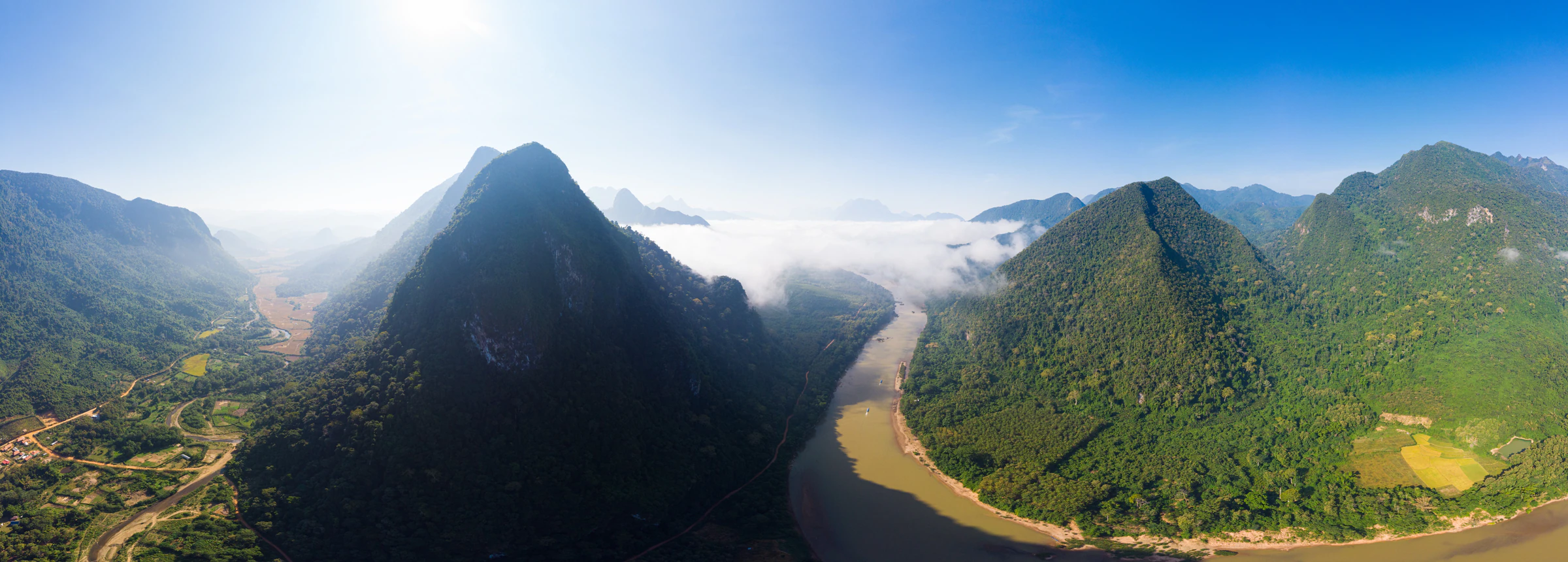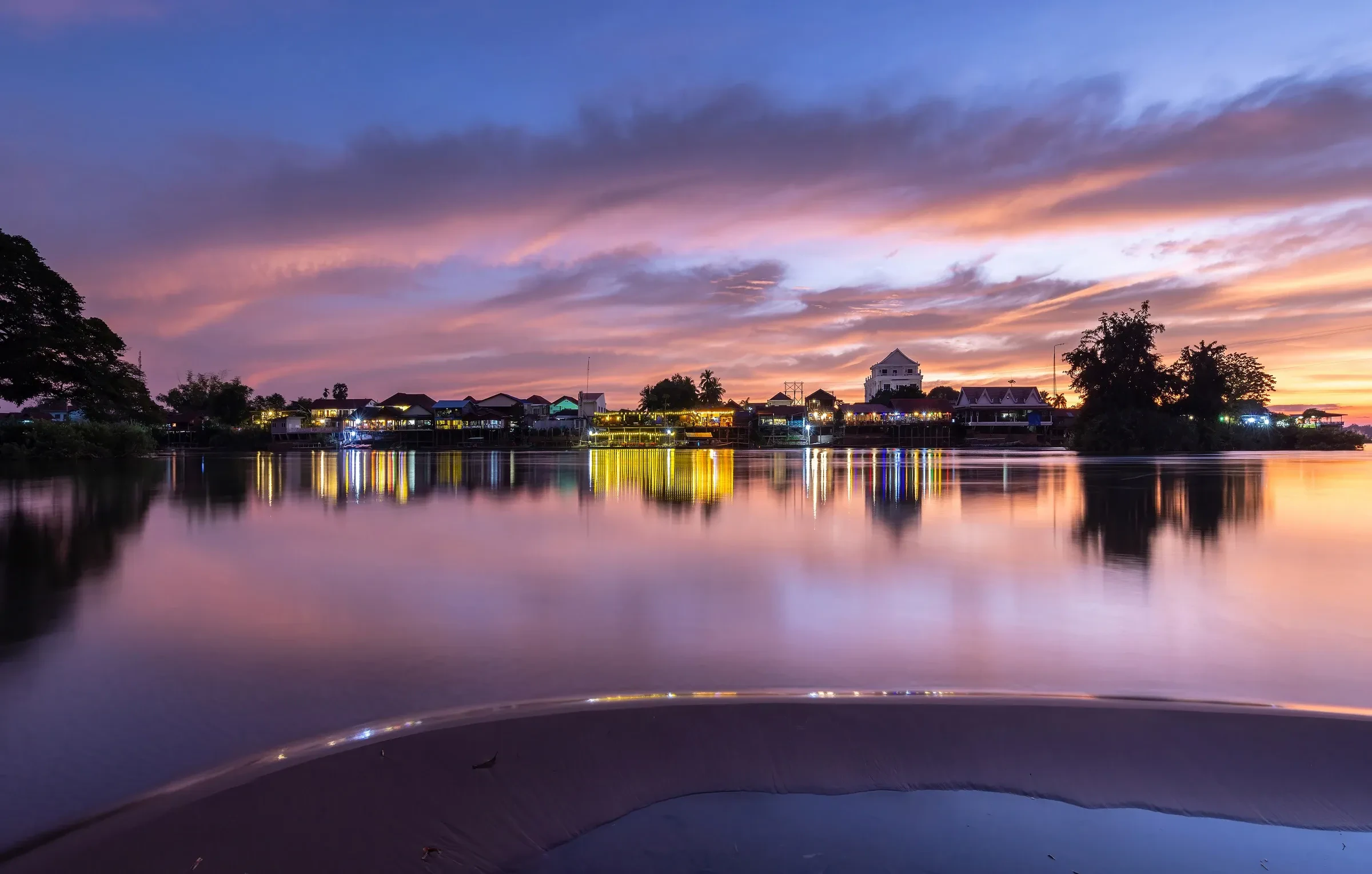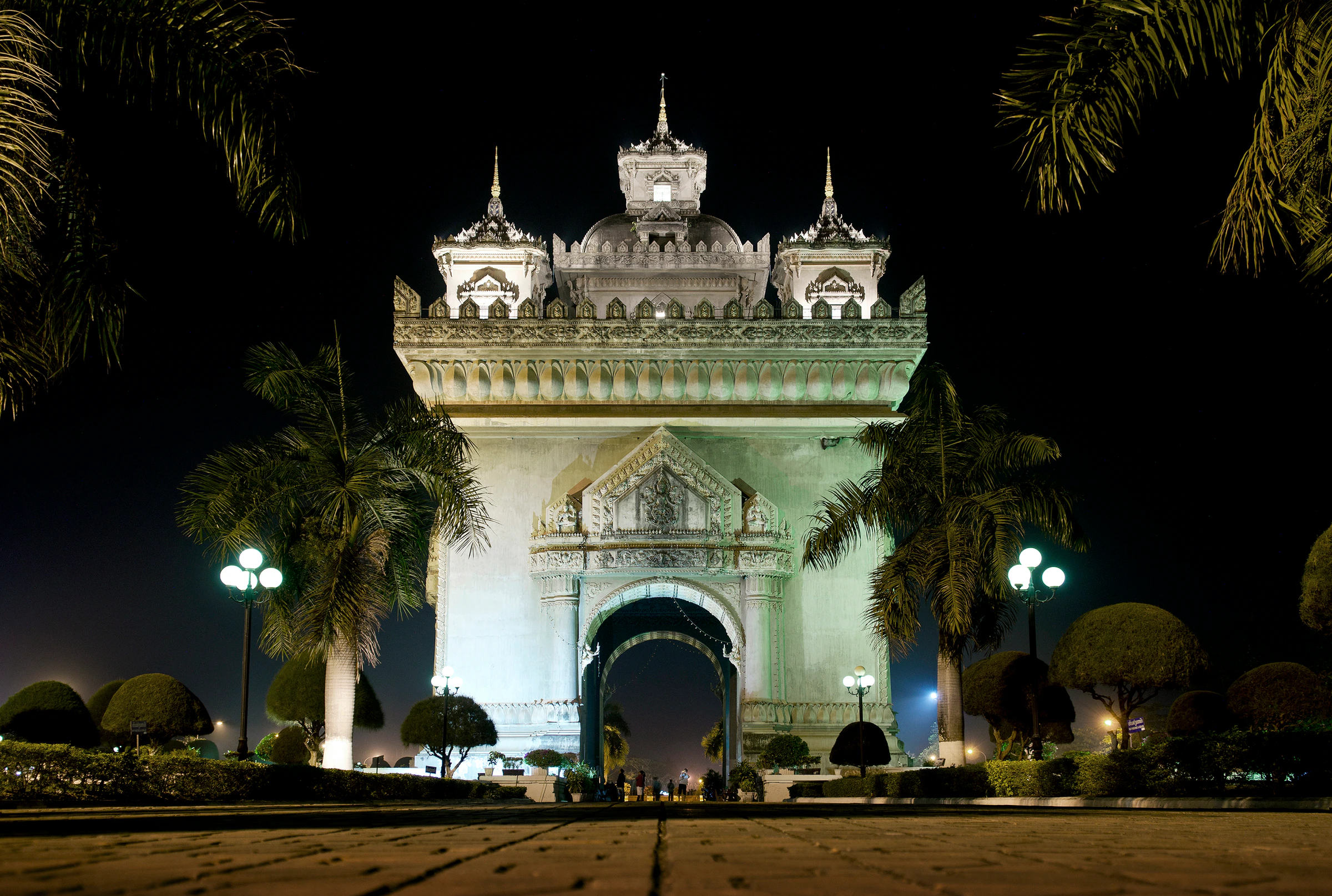
Laos is the quiet one of the region. It has no coastline and fewer visitors than its neighbours, and the pace is slower. Luang Prabang is a town of temples and saffron-robed monks where the Mekong and Nam Khan rivers meet. Vang Vieng, sometimes written Vieng Vang, sits among limestone karsts on the Nam Song river. Further south, the Mekong spreads out into the 4,000 Islands. Since the Laos-China Railway opened, the north has become much easier to get around, and a week goes a lot further than it used to. For the fuller regional breakdown, see where to go in Laos. For more on filling your days beyond the big three towns, see things to do in Laos.
How long do you need in Laos?
One week covers the three big stops in the north. Two weeks lets you add the slow boat or a proper run south. With a month you can see the whole country. The Laos itinerary guide sets out routes of every length in detail.
Laos in 1 week
Spend three nights in Luang Prabang, two in Vang Vieng and one or two in Vientiane, and take the train between them. The fast trains take about an hour from Luang Prabang to Vang Vieng and about an hour from Vang Vieng to Vientiane. It's an easy week with no long journeys, and you can fly out of Vientiane or take the sleeper train on to Bangkok. See the 1-week Laos itinerary for the day-by-day plan, or the rail-only route between the three towns if that's all you're doing.
Laos in 10 days
With ten days, add one of two things to the week above. You can arrive from northern Thailand on the slow boat, which takes two days on the Mekong from Huay Xai to Luang Prabang with a night in Pakbeng. Or you can head up the Nam Ou river to Nong Khiaw, about four hours from Luang Prabang by minivan, and take the boat on to the village of Muang Ngoi. The 10-day Laos itinerary compares both.
Laos in 2 weeks
Two weeks lets you cross the whole country instead of seeing one end of it. Arrive on the slow boat, take the train between Luang Prabang, Vang Vieng and Vientiane, then head south to Kong Lor Cave and finish at the 4,000 Islands. It also works as the second half of a Thailand trip, whether you cross the border yourself on the Mekong slow boat or fly in from Chiang Mai. See the 2-week Laos itinerary for the full route.
If you'd rather travel with a group for the Thailand-to-Laos leg, our trip flies from Chiang Mai to Luang Prabang and continues by train through Vang Vieng to Vientiane.
Laos in 3 weeks
Three weeks covers the full loop with time to spare between the long travel days. Do the north by rail as above, then head south: a multi-day motorbike loop out of Thakhek to Kong Lor Cave, the coffee farms and waterfalls of the Bolaven Plateau near Pakse, and the 4,000 Islands on the Cambodian border to finish. If you're combining countries, there's room to add northern Thailand or northern Vietnam at either end. See the 3-week Laos itinerary for the full route.
Laos in 1 month
A month is enough to see the whole country. After the north, head south from Vientiane to ride the Thakhek Loop, about 450 km of karst country and river caves that most people take 3 to 5 days to ride. Then carry on to the 4,000 Islands on the Cambodian border. You could also detour east to the Plain of Jars near Phonsavan. Remember the 30-day limit: you'll need to extend your visa if you go over it (see the visa section below). See the 1-month Laos itinerary for the full route.
Laos regions at a glance
Luang Prabang
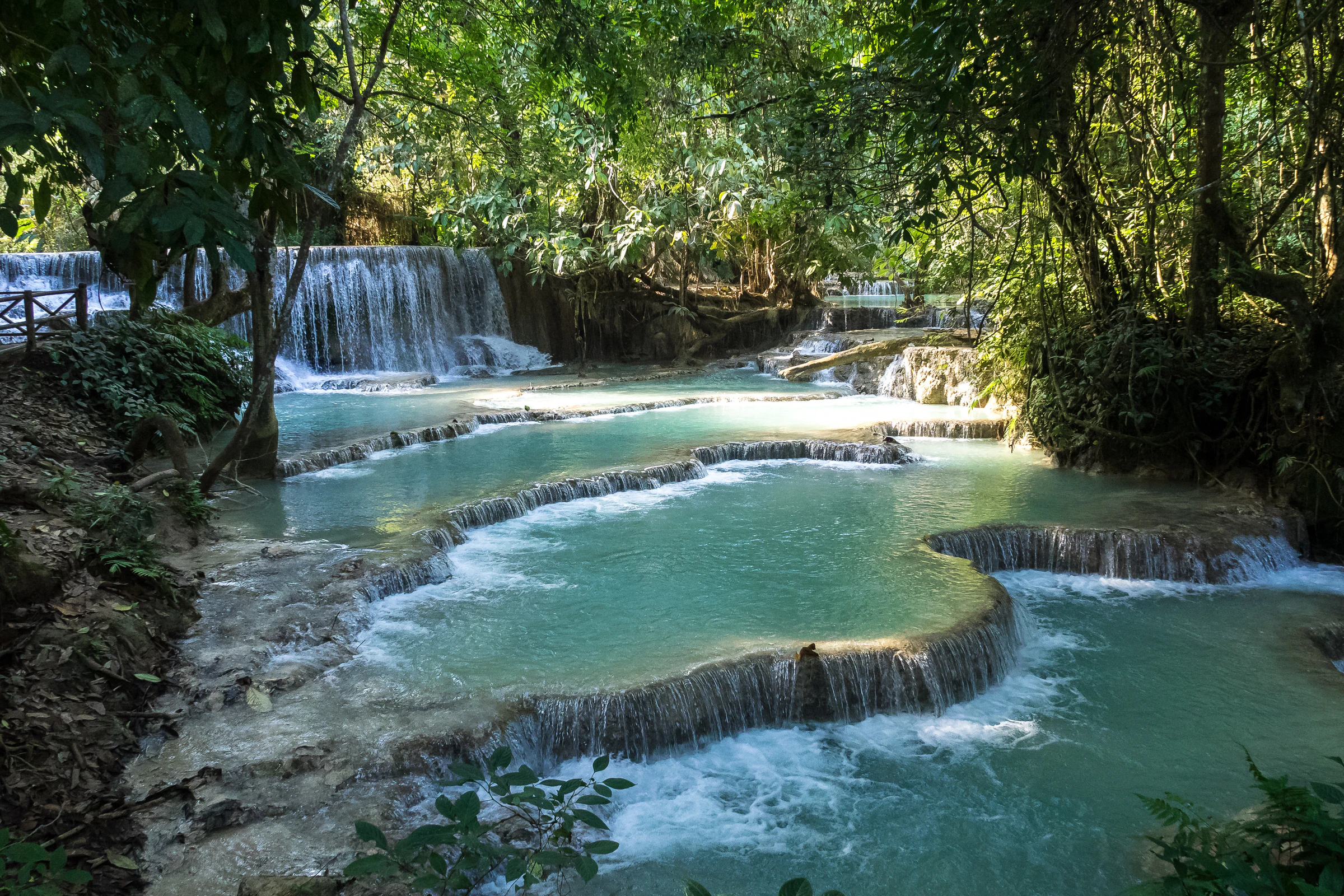
The whole town has been a UNESCO World Heritage Site since 1995. You come here for temples, French colonial shophouses, cafes along the river and a night market on Sisavangvong Road that runs every evening from about 17:00 to 22:00. Three nights is about right. Walk up Mount Phousi for sunset (about 20,000 kip), and spend a day at Kuang Si Falls, about 30 km out of town. Entry is 60,000 kip, which also covers the bear rescue centre.
Every morning at dawn, monks walk through town collecting alms (sai bat). If you watch, do it quietly and respectfully. Tourism Luang Prabang asks visitors to cover their shoulders and legs, stay at least 5 metres back, keep silent, use no flash and never touch the monks. Only make an offering if it means something to you.
Read the Luang Prabang guide for the full write-up.
Vang Vieng
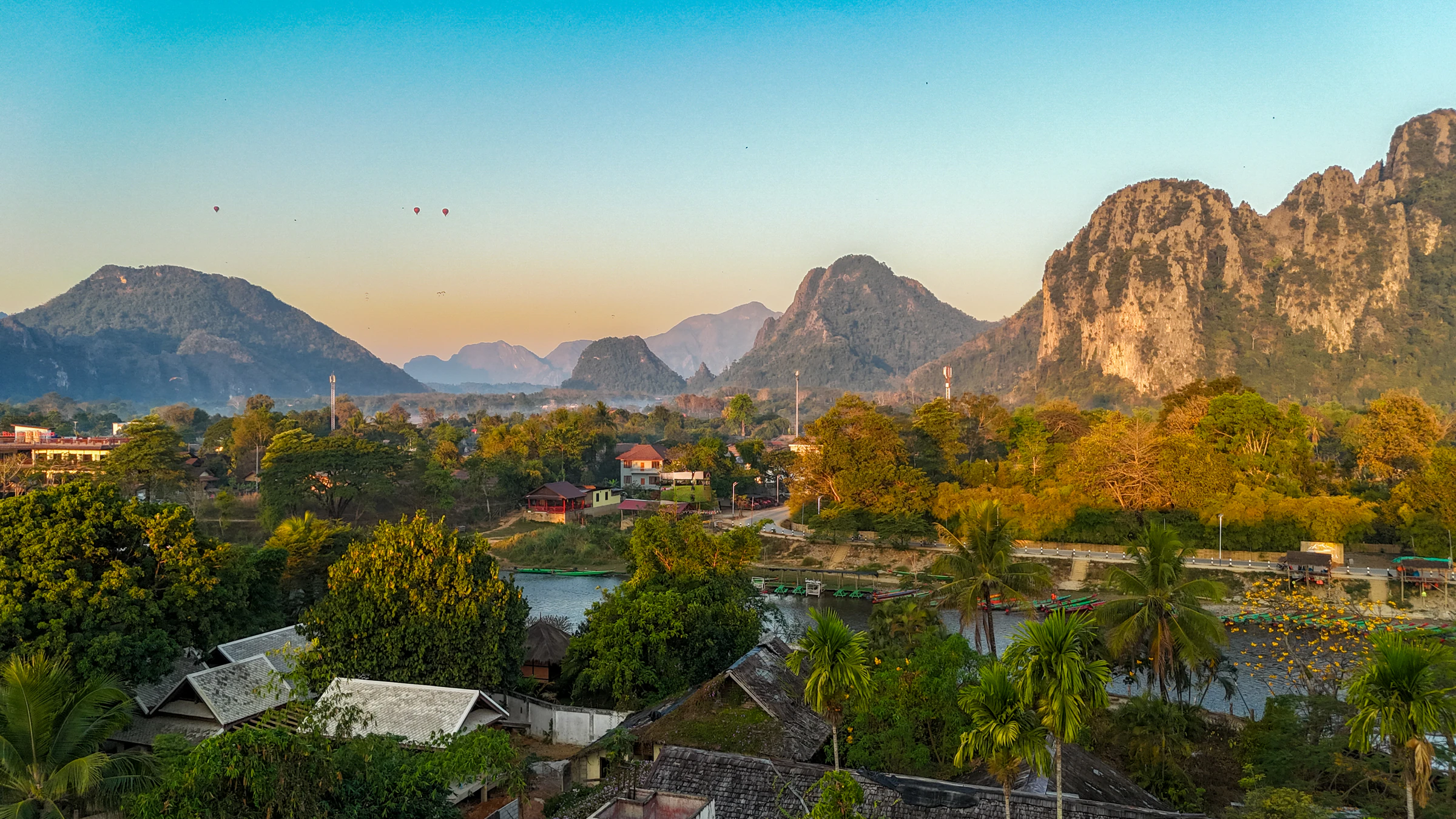
Vang Vieng (you'll also see it spelled Vieng Vang) was once famous for drunken river tubing, and it has calmed down a lot since. The draw now is the scenery: limestone karsts rising over the Nam Song, blue lagoons for swimming (about 20,000 to 30,000 kip each), caves, kayaking, and hot-air balloon flights over the valley at sunrise or sunset (prices vary by operator). Tubing still runs, for about 60,000 kip plus a refundable deposit. A balloon hit power lines during a flight in March 2026, so ask any operator about its safety record before you book.
Take care with drinks here. In November 2024, six foreign tourists died after a night out in Vang Vieng, in a case linked to methanol in spirits. In July 2026 the authorities said they couldn't formally establish the cause of death because the families hadn't allowed autopsies. Stick to sealed bottles or cans from a licensed shop or bar, and turn down free shots. See the Vang Vieng guide for more detail.
Vientiane
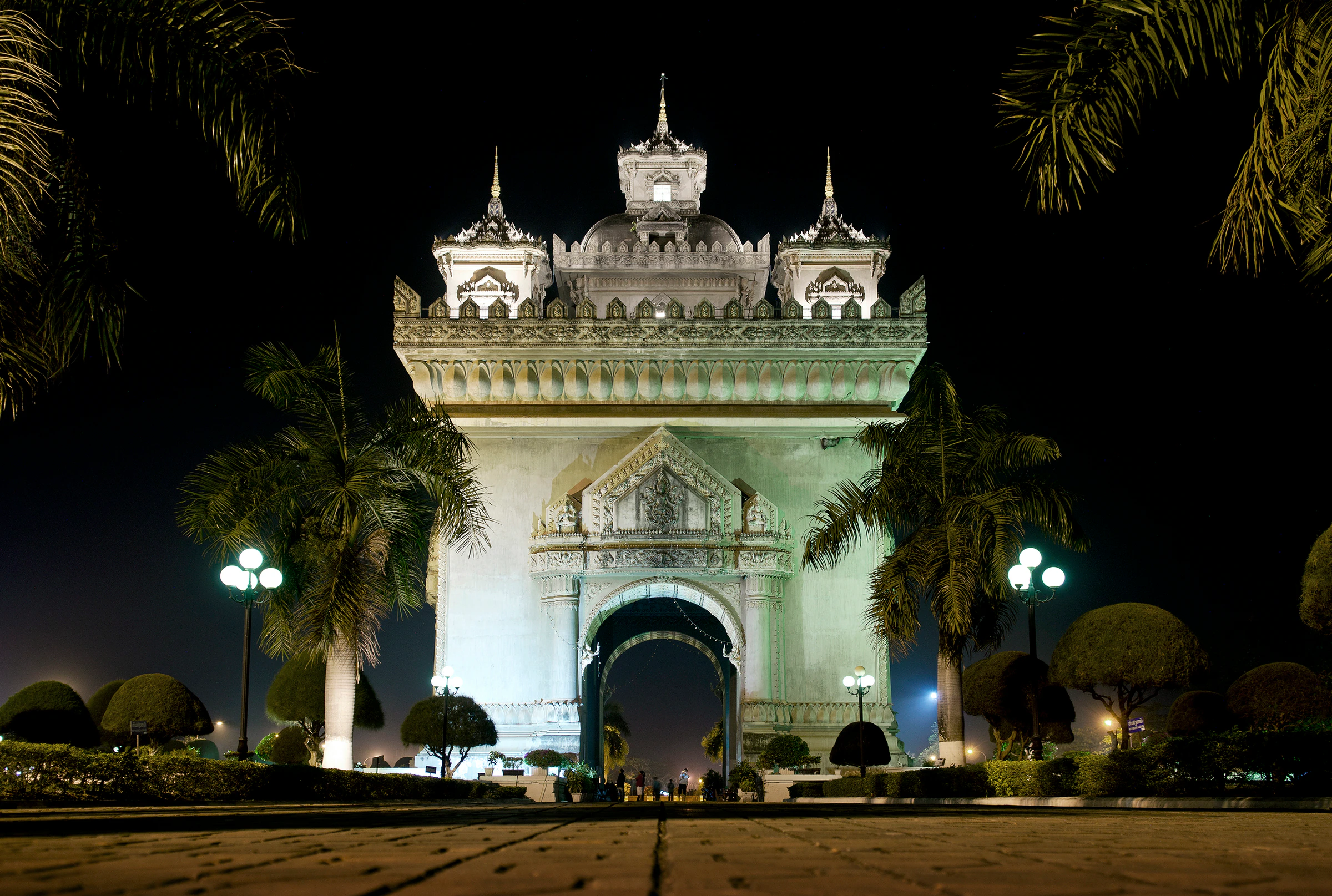
The capital is small and relaxed for a capital city: riverside bars on the Mekong, the gold stupa of Pha That Luang and the COPE visitor centre, which explains the unexploded bombs still left in the countryside. Pha That Luang also hosts Boun That Luang, Laos's biggest festival, each November. One or two nights is enough. It's also the gateway to Thailand, with a direct sleeper train to Bangkok that has run since July 2024. See the Vientiane guide for what to see and how to move on.
Nong Khiaw and the far north
Nong Khiaw and Muang Ngoi are riverside villages among karst cliffs on the Nam Ou, good for viewpoint hikes, kayaking and doing very little. They have few or no ATMs, so bring enough kip from Luang Prabang.
The south: Thakhek, Pakse and the 4,000 Islands
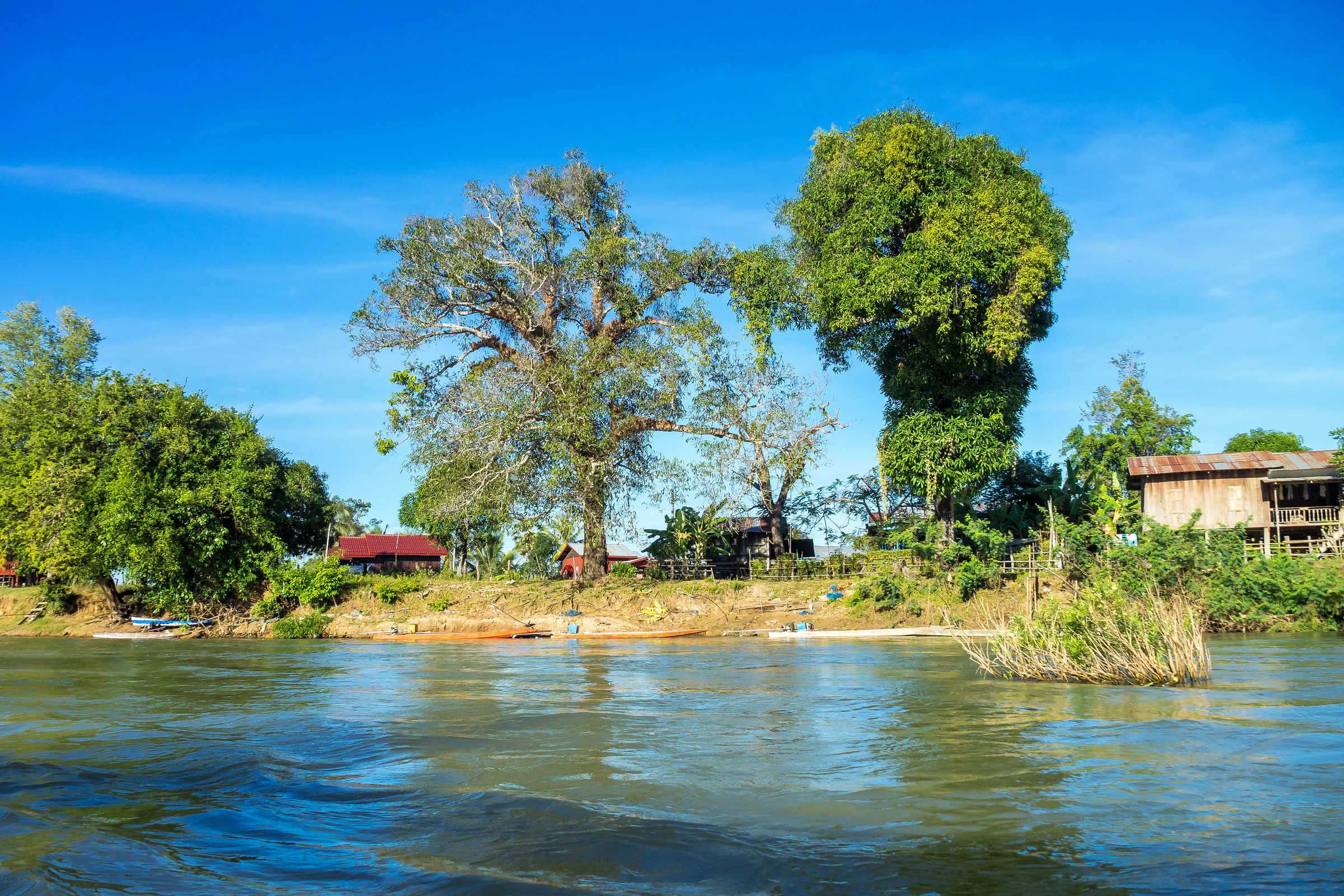
Southern Laos gets far fewer visitors. The Thakhek Loop is a multi-day motorbike ride that includes Kong Lor, a river cave about 7.5 km long that you go through by boat. The 4,000 Islands (Si Phan Don) are a scatter of river islands where the Mekong reaches Cambodia. Don Det and Don Khon are where people stay, about 2 to 3 hours by minivan from Pakse plus a short boat ride. The main sight is Khone Phapheng, a wide, powerful waterfall. You won't see the Irrawaddy dolphins that older guides mention: the species is now extinct in Laos, the last one known in the border pool between Laos and Cambodia having died in February 2022. For a route through the whole region, see the southern Laos itinerary.
The slow boat to Laos
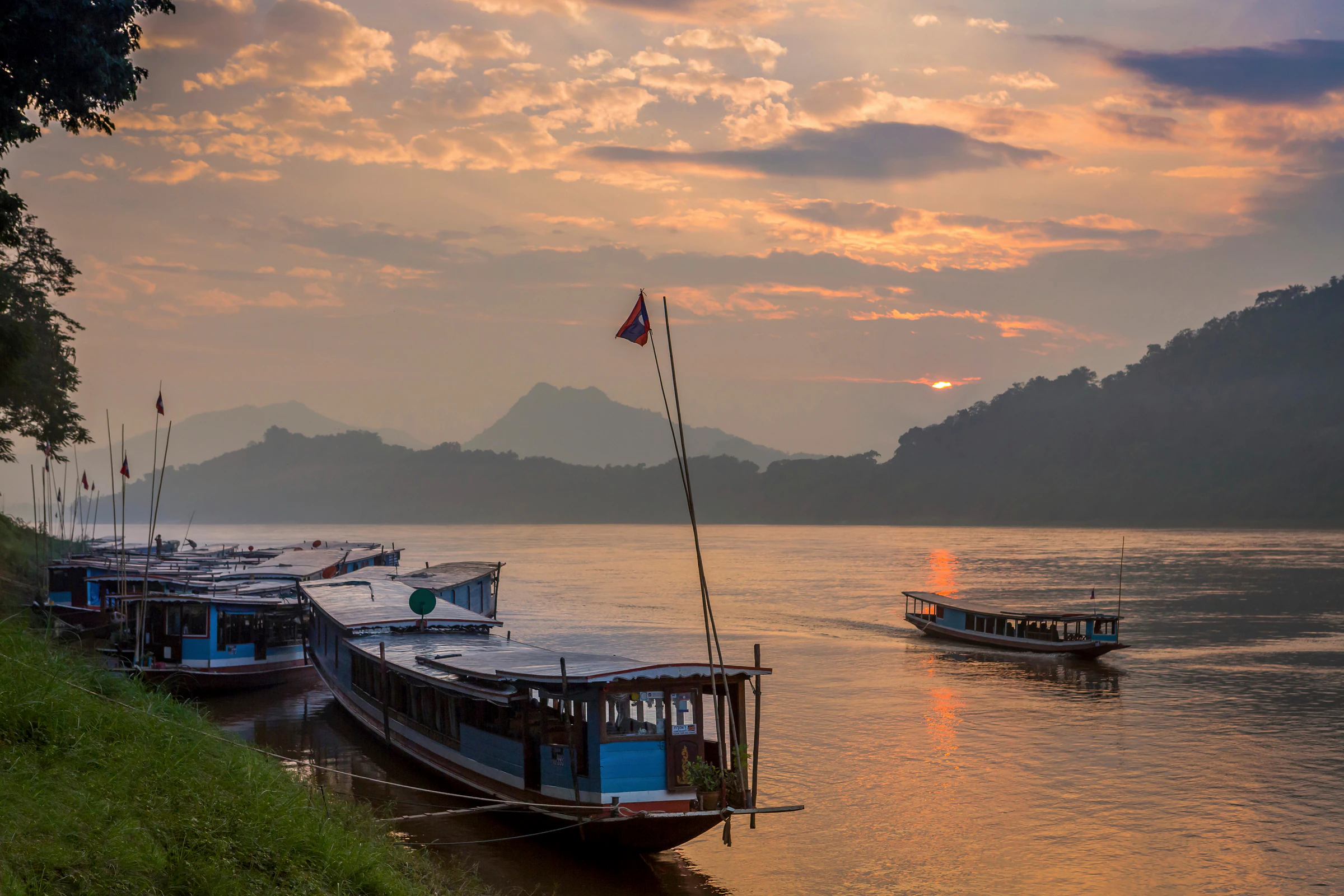
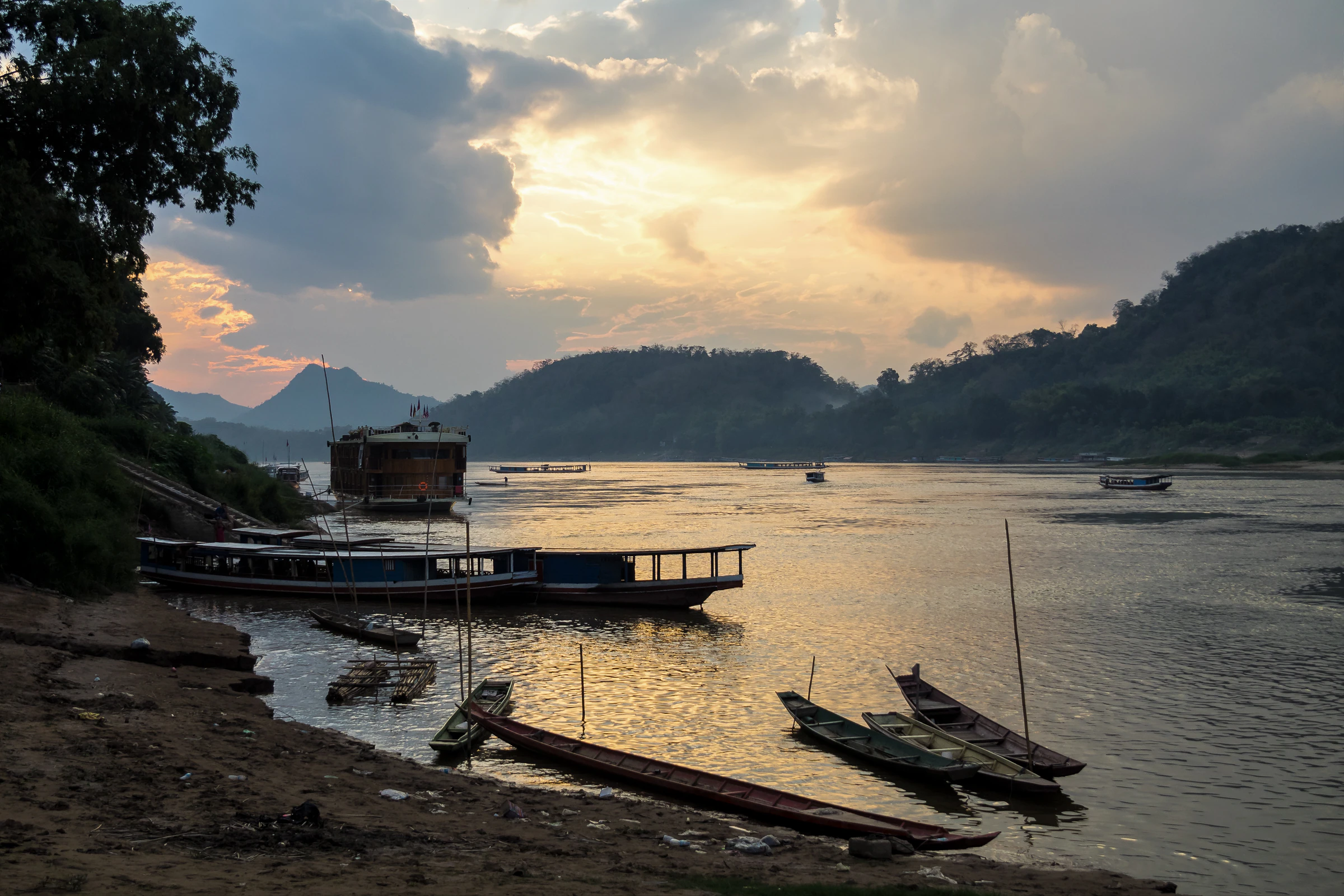
This is what most people mean by "the slow boat to Laos": a public riverboat from Huay Xai, just over the border from Chiang Khong in Thailand, to Luang Prabang. It takes two days with an overnight stop in Pakbeng, and you spend at least six hours a day on the water. Tickets cost about 400,000 to 500,000 kip for the whole journey. It's slow on purpose. People bring snacks, books and cards, and a lot of friendships start on the benches. Our Mekong slow boat guide covers the full timetable, costs and the speedboat alternative.
Before you book, know that Huay Xai and the Friendship Bridge crossing are in Bokeo province. Canada advises avoiding non-essential travel within 10 km of the Thai border there, the UK asks for extreme caution in Bokeo, and Germany advises against travel to Bokeo and Sainyabuli. Our Laos visa and border guide sets out what each government says. The warnings centre on the Golden Triangle Special Economic Zone near the border, where armed groups run employment scams and drug trafficking. Don't visit the zone, and turn down any job offer that involves going there. The river is usually highest just after the rainy season, in November, which makes that a good month for the trip.
What to eat in Laos
Laap (also spelled larb) is the dish to know before you go: minced meat tossed with herbs, lime and toasted rice. Sticky rice comes with almost every meal, eaten by hand from its own basket, and khao piak sen, a thick noodle soup, turns up at any time of day. Luang Prabang adds its own specialities, including or lam, a herby stew, and jeow, the local chilli dips. Wash it down with a large Beerlao. Our Lao food guide covers all of this in more depth, including the Luang Prabang night market.
Best time to visit Laos
| Months | Weather | Good for |
|---|---|---|
| November to February | Cool and dry. The best time overall | Everything: the north, the slow boat, the south |
| March to April (into May) | Hot and dry. Smoke from field burning in the north | The south and the rivers, but expect haze |
| May to October | Rainy season. Green, fewer visitors | Waterfalls and quieter towns, but floods and landslides make river trips and tubing riskier |
The haze can be serious. In January 2026 Laos brought in a nationwide ban on burning as air quality got worse, and Luang Prabang recorded unhealthy readings that month. If you're sensitive to air pollution, go in November or December. The Mekong runs highest in November, after the rains. April also brings Pi Mai Lao, Lao New Year, when Luang Prabang fills up for days of water throwing and processions. See our Pi Mai Lao guide and the full Laos festival calendar for other dates worth planning around.
Getting around Laos
The Laos-China Railway. This is the backbone of any northern trip. Fast trains link Vientiane, Vang Vieng and Luang Prabang, taking about 2 hours from end to end, and there are several each day. A 2nd-class ticket from Vientiane to Luang Prabang costs about 360,000 kip (US$16.40), and Vientiane to Vang Vieng about 170,000 to 190,000 kip, after fares rose about 9% on 1 April 2026. Domestic tickets are released only a few days ahead (reports say 3 to 7), and they sell out in high season, so book on the LCR Ticket app as soon as they open. The stations are outside town: about 12 km from Luang Prabang, 14 km from Vientiane and 7 km from Vang Vieng. Bring your passport, because security at stations is airport-style.
Minivans and buses. These cover everything the train doesn't, including Nong Khiaw, Pakse and the Thakhek area. Roads are slower than distances suggest.
Boats. The slow boat on the Mekong, the Nam Ou boats around Nong Khiaw, and short crossings to the 4,000 Islands.
Motorbikes. Motorbikes are the usual way to do the Thakhek Loop, but you need the right licence and insurance, and roads outside towns can be rough. In the south, stay on main roads and marked paths, because unexploded ordnance (UXO) from the war still kills and injures people every year.
How much does Laos cost?
Laos is cheap by Western standards but not as cheap as its reputation, because many things are imported.
| Item | Typical price (kip) |
|---|---|
| Dorm bed | about 100,000 to 400,000 |
| Street meal (noodle soup, khao piak sen) | 20,000 to 80,000 |
| Large Beerlao | 15,000 to 25,000 |
| Short tuk-tuk ride | from about 20,000 |
| Kuang Si Falls entry | 60,000 |
| Slow boat, Huay Xai to Luang Prabang | about 400,000 to 500,000 |
Most backpackers spend about US$20 to US$35 a day. Cash is king outside the main towns. BCEL ATMs allow about 2 million to 2.5 million kip per withdrawal and usually charge a flat fee of about 30,000 kip, so take out larger amounts less often. There are few or no ATMs in Pakbeng, Nong Khiaw and the 4,000 Islands, so take out cash before you go. In 2026 the rate has been roughly 22,000 to 23,000 kip to the US dollar, but it moves, so check it before you travel. Spend in kip where you can, because dollars and Thai baht are accepted in towns but usually at a worse rate.
Visas and entry
Travellers from the UK, US, Canada, Australia, New Zealand, Ireland, the EU and India all need a visa for Laos. The e-visa costs US$50 on the official portal (laoevisa.gov.la) and works at 9 entry points. The visa on arrival costs about US$40 in cash for most passports and is available at the main airports and most land borders. Both give 30 days. You also fill in the free online LDIF arrival form. Watch out for lookalike visa sites that charge more. The full rules, including extensions and each border crossing, are in our Laos visa guide.
Travelling solo in Laos
Laos is relaxed and friendly, and the backpacker trail (slow boat, Luang Prabang, Vang Vieng) is well worn, so you won't be alone for long unless you want to be. Know the main risks before you go:
- Drinks. Suspected methanol poisoning from spirits has killed or seriously sickened travellers in Laos. Avoid free shots and very cheap spirits.
- Scams. Don't enter the Golden Triangle Special Economic Zone in Bokeo province, and be wary of overseas job offers there. Elsewhere, stick to the official e-visa site and agree tuk-tuk fares before you get in.
- Rivers. The UK Foreign Office warns that tubing, kayaking and swimming can carry significant risks, especially after heavy rain.
- UXO. Stay on marked paths in rural areas, especially around the Plain of Jars and in the south.
- Healthcare. It's basic outside Vientiane, and serious cases go to Thailand, so get insurance that covers medical evacuation.
Laos group trips for solo travellers
If you'd like company, we run three Laos trips for solo travellers aged 18 to 40. Your Trip Host travels with the group throughout, and in Laos a licensed local agency and licensed local guides run the ground arrangements.
Our Thailand & Laos trip covers Chiang Rai and Chiang Mai before flying to Luang Prabang, then continues by train to Vang Vieng and finishes in Vientiane.
To stay in Laos the whole time, Laos Explorer spends three nights in Luang Prabang, heads into the karst hills around Nong Khiaw, then takes the railway south to Vang Vieng and Vientiane.
For the wilder south, our Laos Adventure covers the Thakhek Loop's caves and karst roads, then finishes among the river islands of the 4,000 Islands.
See all our Laos group trips. Our Thailand guide covers the other side of the border, and if you're deciding between countries, see Laos vs Vietnam.