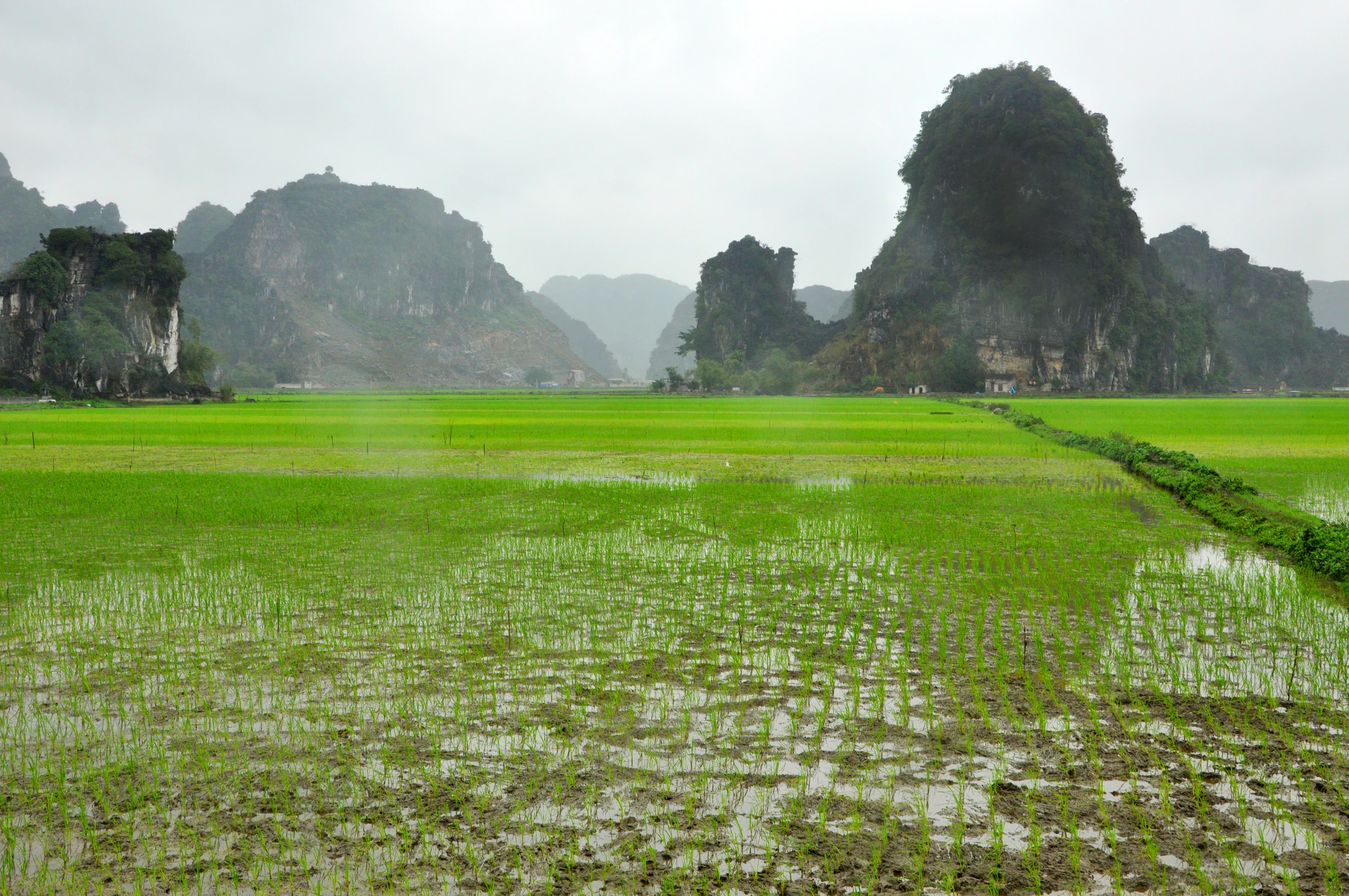
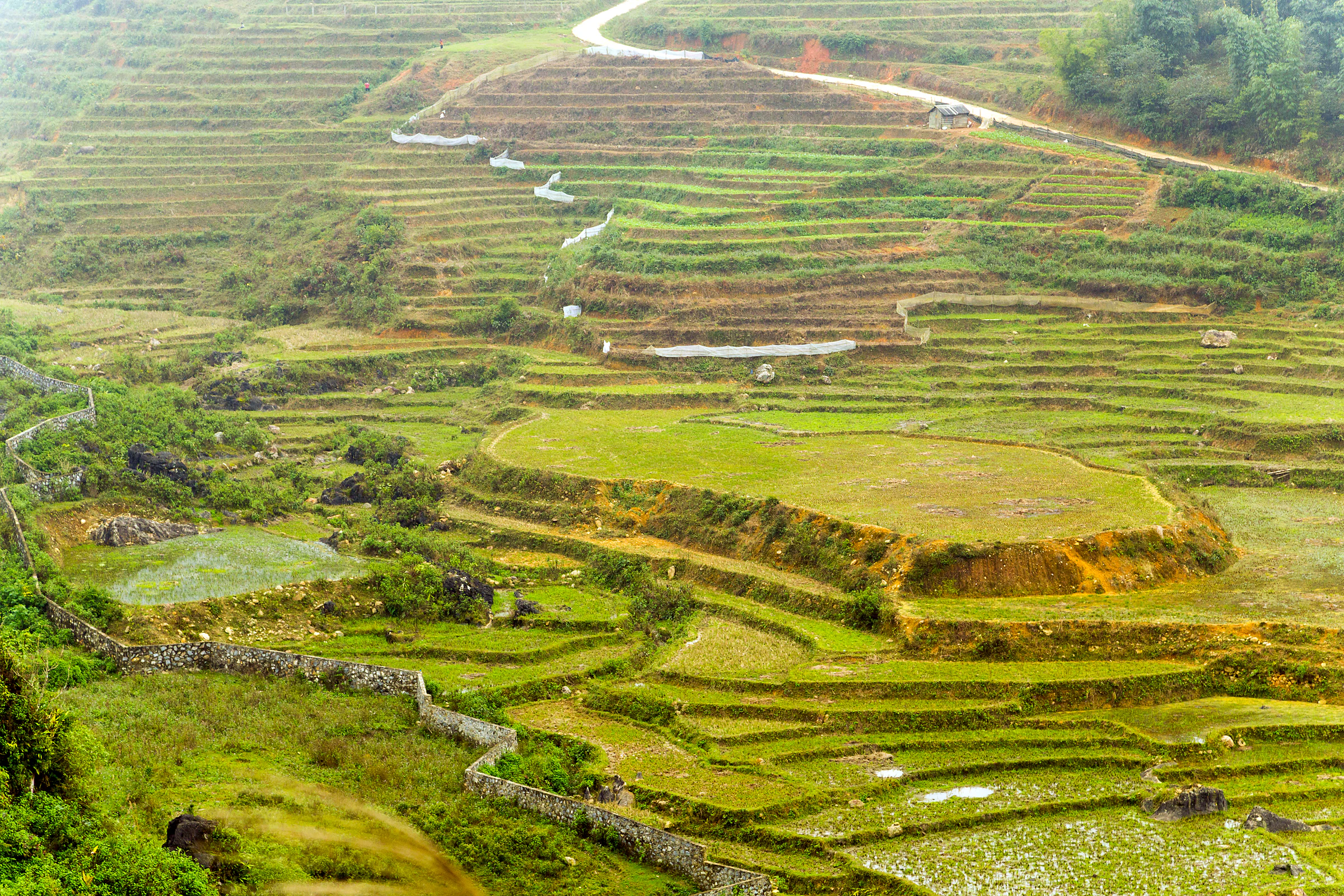
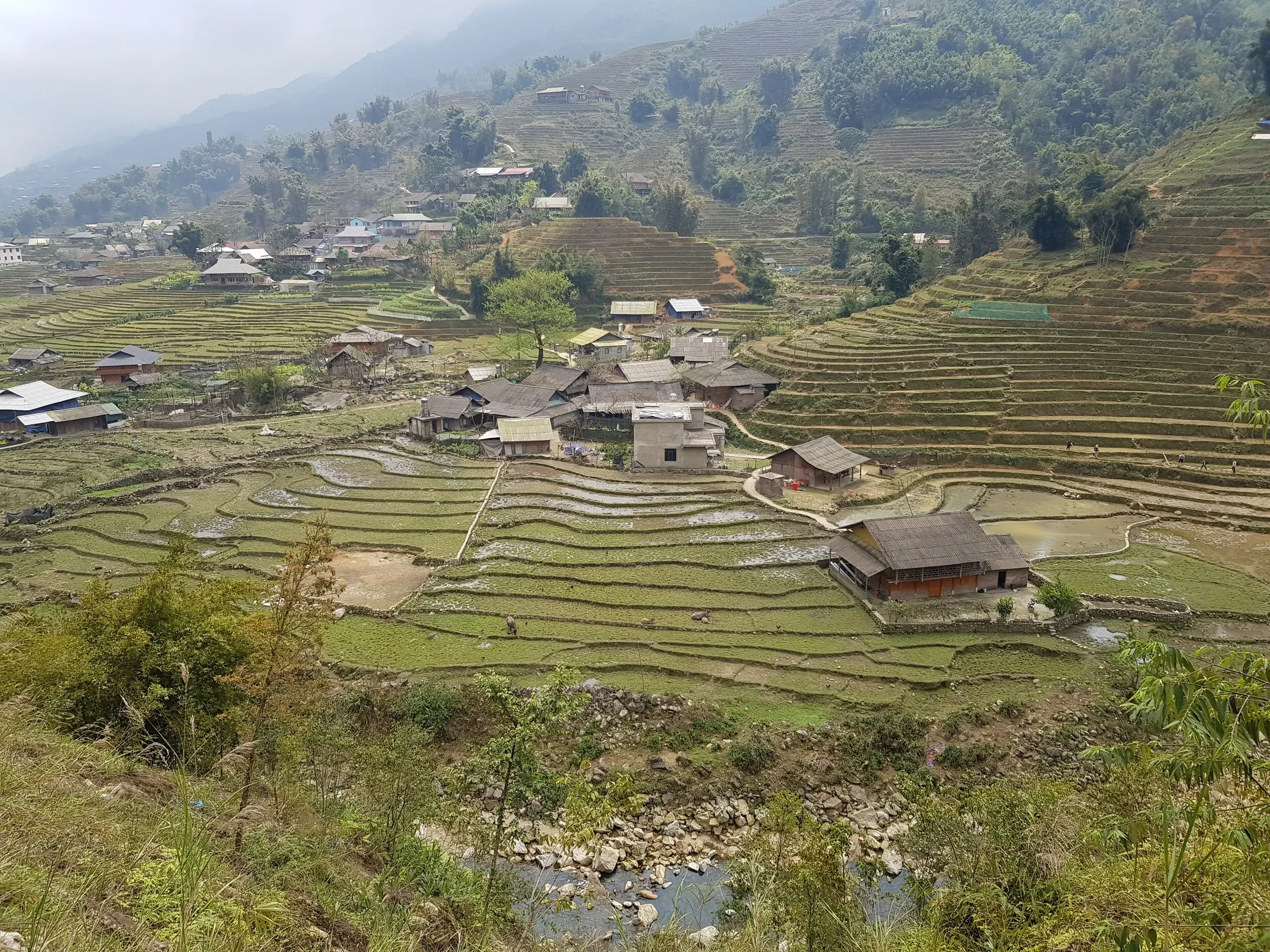
Sapa sits high in the Hoang Lien Son mountains near the Chinese border. The town itself is busy and built up, with hotels, cafes and a night market. The reason to come is what's around it: valleys of rice terraces cut into steep hillsides, villages of Hmong, Red Dao and Giay families, and some of the best walking in Vietnam. It's an easy place to travel alone, because treks and homestays put you in small groups from the first day.
This guide covers how to get there, what to do, trekking and homestays, the weather and how long to stay. For the rest of the country, see our Vietnam travel guide.
Sapa at a glance
- Where: Lao Cai province, northern Vietnam, about 35 km from Lao Cai city on the Chinese border
- Altitude: about 1,500 to 1,600 m, so it's much cooler than Hanoi
- Known for: rice terraces, trekking, village homestays and Fansipan
- Getting there: about 5.5 to 7 hours by bus or van from Hanoi, or a night train to Lao Cai plus an hour's drive
- Best months: September to November, and March to May
- How long: three days, or two if you're short of time
Since July 2025, what used to be Sa Pa town is officially Sa Pa ward, part of a larger Lao Cai province. You'll see both "Sapa" and "Sa Pa" on signs and tickets. They're the same place.
How to get to Sapa from Hanoi
| How | Time | About | Good to know |
|---|---|---|---|
| Sleeper bus or limousine van | 5.5 to 7 hours | About 270,000 to 450,000 dong | The easiest option. Several companies run departures through the day and night from Hanoi's Old Quarter, straight to Sapa |
| Night train to Lao Cai | About 8 hours, then 1 hour by road | Varies by carriage | Trains leave Hanoi at about 9:40pm and 10pm and reach Lao Cai between about 5:30am and 6:10am. Timetables change by season, so check before you book. Private sleeper carriages are more comfortable. From Lao Cai station, a local bus or van takes about an hour up to Sapa |
Most buses use the Noi Bai to Lao Cai expressway, which is why the road trip is now shorter than the train. The train is still the classic way to go, and you arrive early in the morning ready to walk. Book the train a few days ahead, and further ahead around Vietnamese holidays. Sapa has no airport. One has been planned for years, and in mid-2026 the province was still choosing an investor for part of the project.
Things to do in Sapa
Trek the Muong Hoa valley
The Muong Hoa valley, just south of town, is the classic Sapa walk. The usual route goes down through Y Linh Ho or Lao Chai to Ta Van, through rice terraces and bamboo, with the Muong Hoa river below. It's a day's walk, or two days with a night in a homestay. Entry to the Lao Chai and Ta Van area costs 75,000 VND, paid at a checkpoint.
A local guide isn't legally required for the valley, but it's worth having one. Paths split and change after rain, and hiring a Hmong or Dao guide from the villages keeps the money in the valley. Expect to pay roughly 500,000 to 700,000 VND a day. Our Sapa trekking guide covers the routes in detail.
Stay in a village homestay
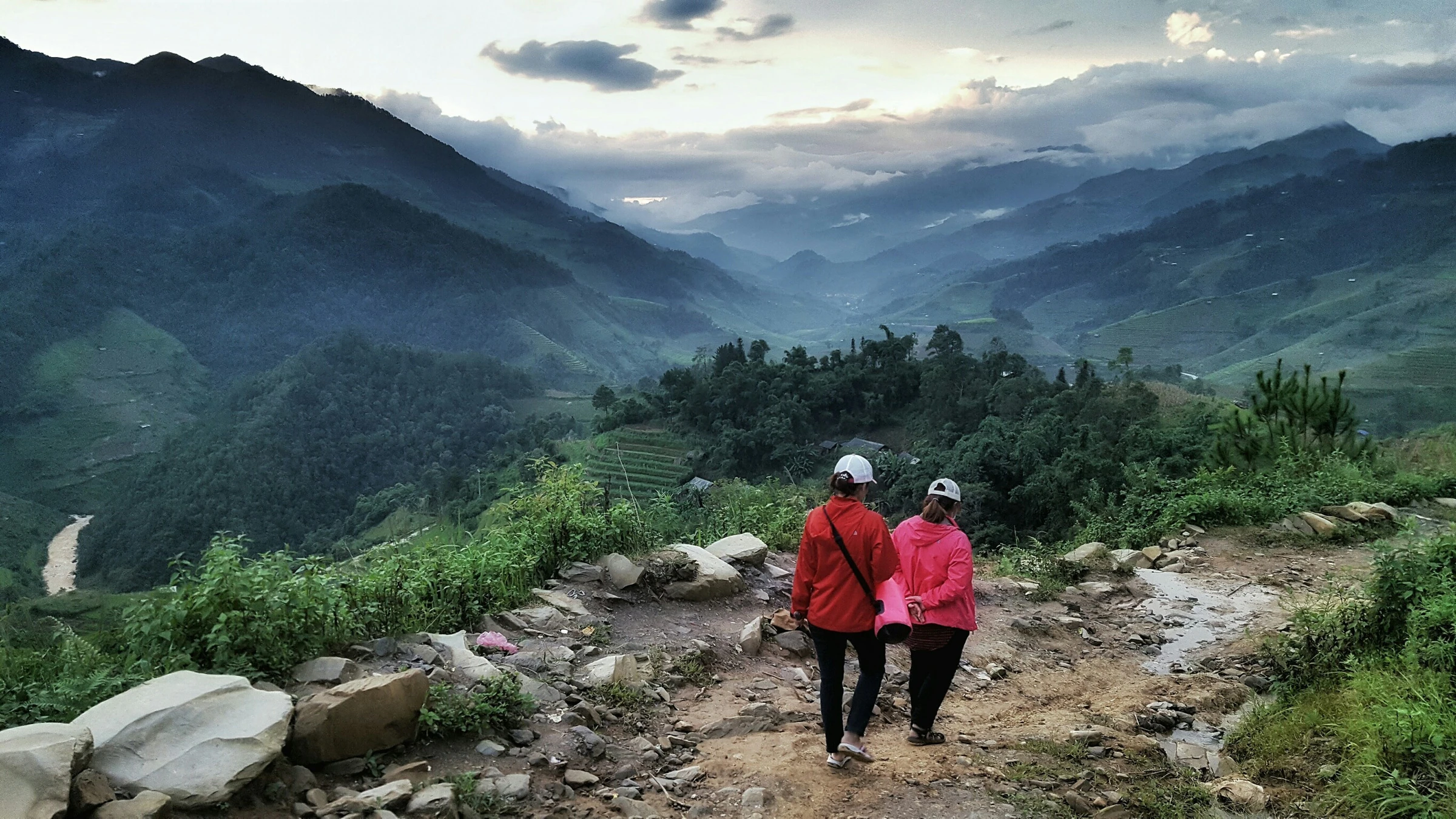
A night in a family homestay in Ta Van or another valley village is the highlight for most people. Rooms are simple, often a shared loft with mattresses and mosquito nets, and dinner is usually home-cooked with the family, sometimes with rice wine. Homestays cost roughly 250,000 to 800,000 VND a night, often with dinner and breakfast.
Fansipan
At 3,143 metres, Fansipan is the highest mountain in Vietnam. There are two ways up:
- By cable car. The cable car is about 6 km long and takes about 15 minutes, with a final climb or funicular to the summit. A return ticket for adults costs about 800,000 to 850,000 VND in 2026, with the higher price at weekends and on holidays. Check the price and times on the Sun World website before you go, because they change with the season. Go early on a clear day, as cloud often covers the top by midday.
- On foot. The trek from Tram Ton is about 19 km with around 1,700 m of climbing, done in one long day or over two days with a night on the mountain. Book through a licensed operator: a guide and a permit are required, and the operator arranges both. Rangers check trekkers on the way up.

Cat Cat village and the waterfalls
- Cat Cat is a Hmong village about 4 km from the centre, with a waterfall and craft stalls. It's the easiest village to reach on foot, and also the most touristy. Entry is about 150,000 VND (some sources still quote 100,000).
- Silver Waterfall and Love Waterfall are north-west of town on the road to O Quy Ho pass. Entry is about 20,000 VND and 70,000 VND.
- Heaven's Gate is the viewpoint at the top of O Quy Ho pass, at about 2,000 m. It's best at sunset. Entry is about 80,000 VND.
Bac Ha Sunday market
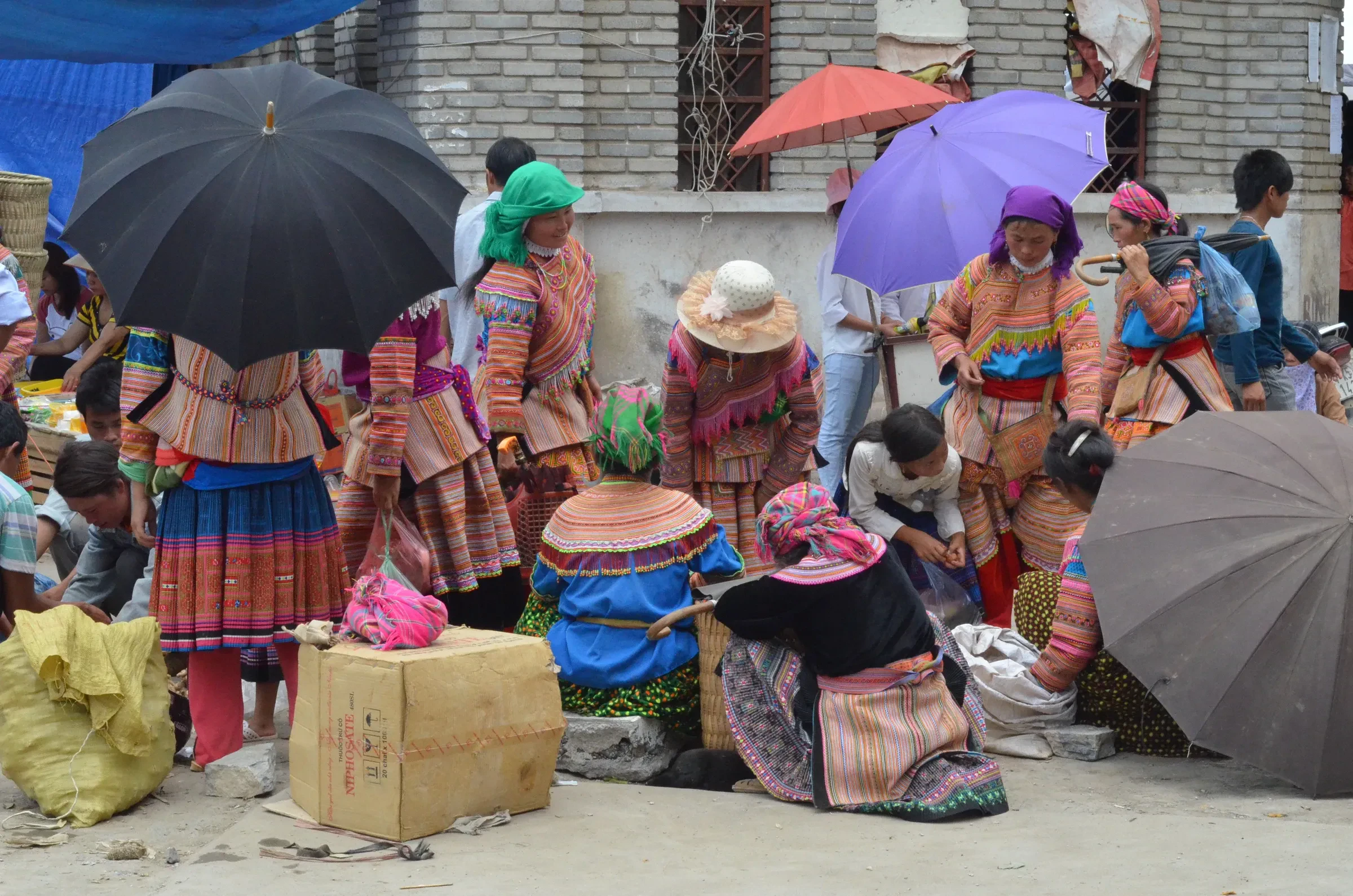
On Sundays, people from several ethnic groups come down from the hills to trade at Bac Ha market, about 110 km from Sapa. It's a long day out, with a 2.5 to 3 hour drive each way, and the market runs from early morning until early afternoon. Go only if you're in Sapa over a Sunday.
Visiting the villages respectfully
Tourism brings income to Sapa's villages, but it also brings problems. A few simple habits make a difference:
- Don't buy from children or give them sweets or money. It keeps them out of school. Buy crafts from adults or from village cooperatives.
- Ask before you take photos of people, and accept a no.
- Don't trek with under-age guides. Hire adult guides through a homestay, a cooperative or a licensed agency.
- Dress for the villages, not the beach, and ask before entering a home or a sacred place.
Best time to visit Sapa
Sapa's weather is very different from Hanoi's. It's cool all year, cold in winter and wet in summer.
| Month | Average high / low | Rain | What it's like |
|---|---|---|---|
| January | 12°C / 6°C | Low | Cold and often foggy. Snow is rare, but it has happened |
| February | 14°C / 8°C | Low | Cold. Busy around Tet |
| March | 18°C / 11°C | Low | Warming up. Still cool at night |
| April | 21°C / 14°C | Rising | Pleasant. A good month to trek |
| May | 22°C / 16°C | High | Water goes into the terraces. Showers begin |
| June | 23°C / 18°C | High | Green terraces, frequent rain |
| July | 23°C / 18°C | Highest | The wettest month. Paths are muddy and cloud is common |
| August | 23°C / 17°C | Very high | Very wet, but the terraces are green and start turning gold late in the month |
| September | 22°C / 16°C | Falling | Rice harvest. The terraces turn gold, peaking mid-month |
| October | 19°C / 14°C | Moderate | Clearer skies and cool walking weather. One of the best months |
| November | 16°C / 10°C | Low | Dry and clear, but getting cold at night |
| December | 13°C / 7°C | Low | Cold. Bring layers for the homestay |
Temperatures are long-term monthly averages. Cold snaps can push nights close to freezing in December and January. The rainy season, roughly May to September, brings the greenest views, but also landslides on mountain roads after heavy rain. Check the forecast before you travel and follow local advice. Our best time to visit Sapa guide goes month by month, and the best time to visit Vietnam guide covers the whole country.
How much does Sapa cost?
| Item | VND |
|---|---|
| Bus or limousine van from Hanoi | about 270,000 to 450,000 |
| Lao Chai and Ta Van entry | 75,000 |
| Cat Cat village entry | about 150,000 |
| Fansipan cable car, return | about 800,000 to 850,000 |
| Local trekking guide, per day | about 500,000 to 700,000 |
| Village homestay, per night | about 250,000 to 800,000 |
Fees at village checkpoints and attractions change from year to year, so treat these as a guide and carry some spare cash.
What to pack for Sapa
- Warm layers. Even in summer, evenings are cool. From November to March, bring a proper warm jacket, a hat and warm socks for the homestay.
- Rain gear. A light rain jacket all year, and a proper one from May to September.
- Shoes with grip. The trails are clay and turn slippery after rain. Trail shoes or light boots are much better than trainers.
- Cash. Village checkpoints, guides and homestays usually want cash. Use the ATMs in town before you set off, because you won't find them on the trails.
Is Sapa good for solo travellers?
Yes. Group treks and homestays make it easy to meet people, and the town has plenty of hostels. The main things to watch are practical: slippery paths, cold nights and road delays in the rainy season. If you walk without a guide, stick to the main valley routes, tell your accommodation where you're going, and start early so you're back before dark.
How many days in Sapa?
Three days is right for most people.
- Two days: a one-day trek through Lao Chai and Ta Van, then Fansipan or Cat Cat the next morning. It works, but it feels rushed.
- Three days: a two-day trek with a homestay night, plus a day for Fansipan, Cat Cat or O Quy Ho pass.
- Four days or more: add Bac Ha market on a Sunday, or a longer trek further down the valley.
In a one-week Vietnam trip, Sapa takes too long to reach unless the north is all you want to see. With two weeks you can fit it between Hanoi and the rest of the country. With three weeks or more you have time for Sapa and the Ha Giang Loop.
Our Northern Vietnam Mountains trip is the one that actually comes here. It's ten days from Hanoi: four days on the Ha Giang Loop with a licensed easy rider, back to Hanoi for a night, then out to Sapa for Cat Cat village and a full day trekking the Muong Hoa valley to Ta Van, with a homestay night in the village. A licensed local guide leads the trek, and your Trip Host is with the group throughout.
If you'd rather do the loop on its own, our Ha Giang Loop Tour is five days from Hanoi and back, without Sapa. Our longer Vietnam trips both start in Hanoi too, so you can add Sapa on your own before either one begins.