
Hoi An and Da Nang sit 30 km apart on Vietnam's central coast, and almost nobody visits one without ending up in the other, even if only for a day. Da Nang has the international airport, so it's the arrival and departure point for nearly every trip through the centre. Hoi An has no airport or train station at all. This guide sets out the real differences: atmosphere, beaches, food, nightlife, cost, the transfer between them, flood season, and which one suits you as a base.
Atmosphere
Hoi An's old town is a preserved 19th-century trading port: narrow lantern-lit streets, merchant houses, a covered bridge, no cars allowed in the historic core. It's slow and photogenic, built entirely for walking. Da Nang is a modern coastal city: wide boulevards, high-rises along the beachfront, a working port and fishing fleet next to the tourist strip. Want somewhere that feels like a living museum? Hoi An. Want city comforts and room to spread out? Da Nang.
Winner: Hoi An for atmosphere, Da Nang for city comfort.

Beaches
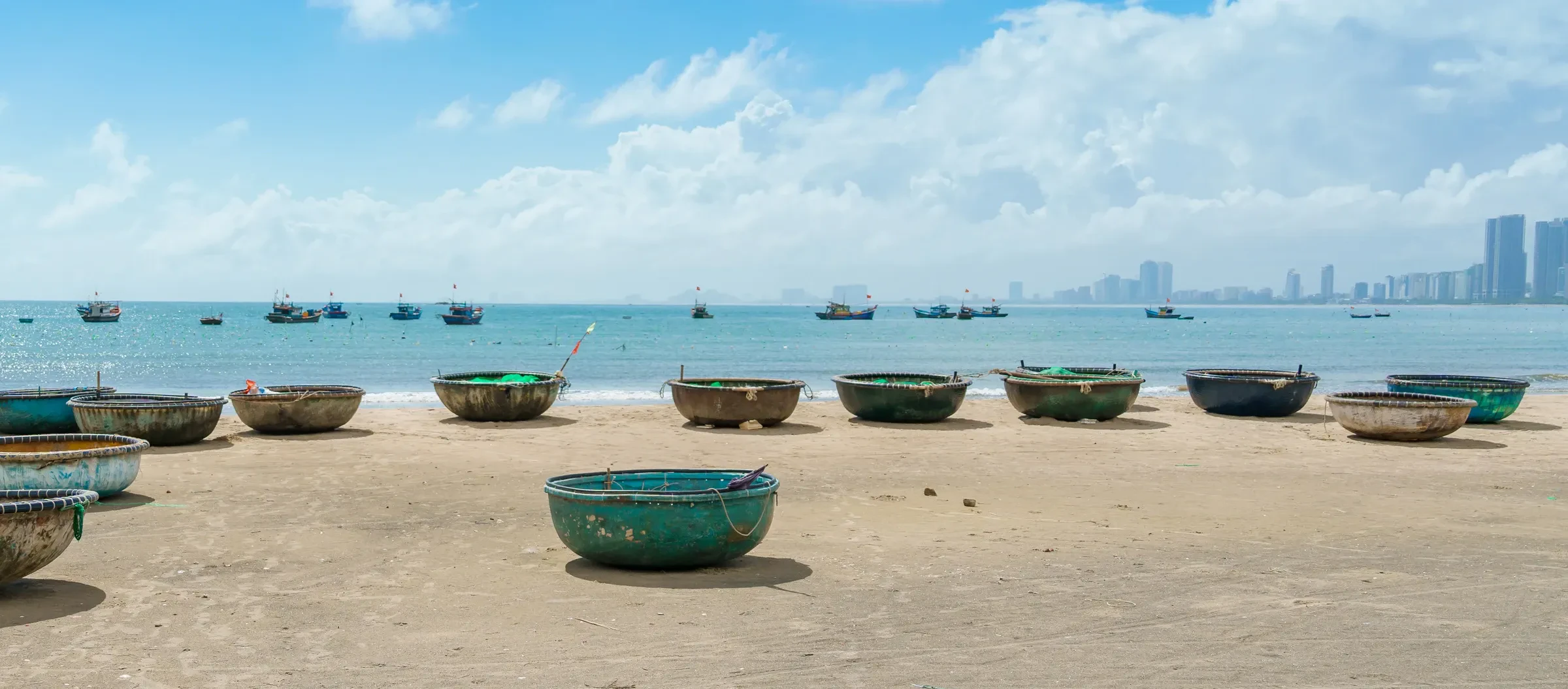
Da Nang's My Khe is a long city beach, free to use, backed by beach bars and seafood shacks rather than resort compounds, and a short taxi or Grab ride from the centre. Hoi An's beach is An Bang, a flat 4 to 5 km cycle from the old town, quieter and smaller, with beach cafes rather than a skyline behind it. Cua Dai, the older beach closer to Hoi An's centre, lost most of its sand to erosion; some stretches have been rebuilt, but An Bang is still the more reliable swim. Both beaches are free.
Winner: Da Nang for size and ease of access; An Bang if you want it quieter.
Food
Hoi An has its own regional dishes that barely turn up elsewhere: cao lau, a chewy noodle said to depend on local well water, com ga chicken rice, white rose dumplings, and the two banh mi stalls everyone queues for. Prices run from about 25,000 to 55,000 dong for a bowl or a sandwich, more for a shared plate. Da Nang leans on fresh seafood, priced by the kilo at Han market and in the beachfront restaurants, plus mi quang, the wider central Vietnam noodle bowl both towns serve. Neither town costs more day to day; Hoi An's food scene is compact and walkable, Da Nang's is spread out with bigger portions of seafood.
Winner: a tie. Hoi An for variety in a small area, Da Nang for seafood.
Nightlife
Da Nang is the livelier of the two after dark: beach bars along My Khe, a bigger spread of restaurants and bars in the city centre, and the free Dragon Bridge fire show on Saturday and Sunday nights at 9pm (Da Nang's tourism site also lists Friday), which draws a crowd to the riverside promenade on both banks. Hoi An's evenings are quieter and centre on the lantern-lit old town itself rather than bars; the monthly full-moon lantern festival, when the electric lights switch off, is the town's own version of a big night out.
Winner: Da Nang for bars and a livelier scene.

Cost
Accommodation and food run at similar levels in both towns for a solo traveller on a mid-range budget. Neither is consistently cheaper. The real cost difference is what you spend getting between them and out to the sights: a taxi or private van between Hoi An and Da Nang costs a set fare each way, and day trips from either side (the Marble Mountains, My Son) add small entry fees on top. Base in Da Nang and day-trip to Hoi An, or the reverse, and that transfer cost repeats every day you don't stay over.
Winner: a tie; the transfer is the only real added cost, and it's the same either direction.
Getting between them, and airport access
A private van or taxi between Hoi An and Da Nang takes about 40 to 50 minutes for the 30 km. Since Hoi An has no train station or airport of its own, Da Nang International Airport (DAD) is the way in and out for almost everyone travelling to either town, whether flying directly or crossing the Hai Van Pass from Hue. If your flight lands in Da Nang and you're heading straight to Hoi An, budget the 40 to 50 minute transfer into your first day; the same applies in reverse on departure.
Winner: Da Nang, for having the airport at all.
Flood season
Hoi An's flood season runs from about mid-October to mid-December, when the Thu Bon River can rise over the old town's riverside streets, sometimes for a day or more; in late October 2025 the river broke a flood record set in 1964. Da Nang, on higher and more built-up ground, isn't affected the same way, though the same weather system brings heavy rain and the odd typhoon to the whole central coast at that time of year. If your dates fall in that window, a Da Nang base with day trips to Hoi An gives you more room to skip a flooded day than staying in the old town itself.
Winner: Da Nang, for weather resilience in that window.
Day trips from either base
Both towns work as a base for the same day trips, since they sit close enough together that it barely matters which one you pick:
- The Marble Mountains, a cluster of marble and limestone hills with cave temples, sit almost exactly between the two, about 30 to 45 minutes from either. Entry is 40,000 dong, plus a 15,000 to 30,000 dong lift and a separate 20,000 dong Am Phu cave ticket.
- My Son, Champa-era ruins about an hour from Hoi An, cost 150,000 dong for foreign adults at the latest reports (authorities are reviewing a single price for all visitors, so check before you go) and work as a half-day trip from either town, though the drive runs a bit longer from Da Nang.
- Ba Na Hills and the Golden Bridge, a hill-station theme park about 25 km west of Da Nang, cost around 1,000,000 dong and suit a Da Nang base better given the extra distance from Hoi An.
- The Hai Van Pass, the mountain road towards Hue, is a half-day round trip from Da Nang's side.
Winner: a tie; pick either as a base and the day trips stay the same.

Which should you choose?
| Choose Hoi An if | Choose Da Nang if |
|---|---|
| You want lantern-lit streets and an old town at walking pace | You want a beach with a city skyline behind it |
| A tailor fitting or a cooking class is on your list | You want more restaurants, bars and nightlife |
| You're travelling outside mid-October to mid-December | Your dates fall in the flood-risk window |
| You don't mind arriving via Da Nang's airport and transferring on | You'd rather land, drop your bag and start straight away |
| You want quiet evenings over a livelier scene | You want the Dragon Bridge fire show and beach bars |
Why not both?
Given they're only 40 to 50 minutes apart, splitting your stay often beats choosing one. A workable pattern for 1 week in central Vietnam: two nights in Da Nang to land, settle in and see My Khe beach and the Dragon Bridge, then move to Hoi An for three nights to cover the old town, a tailor fitting and An Bang beach, with the Marble Mountains as a stop on the way between them. For 10 days, add Hue over the Hai Van Pass before or after. Our central Vietnam itinerary sets out both lengths day by day, including where the Marble Mountains and My Son fit in.