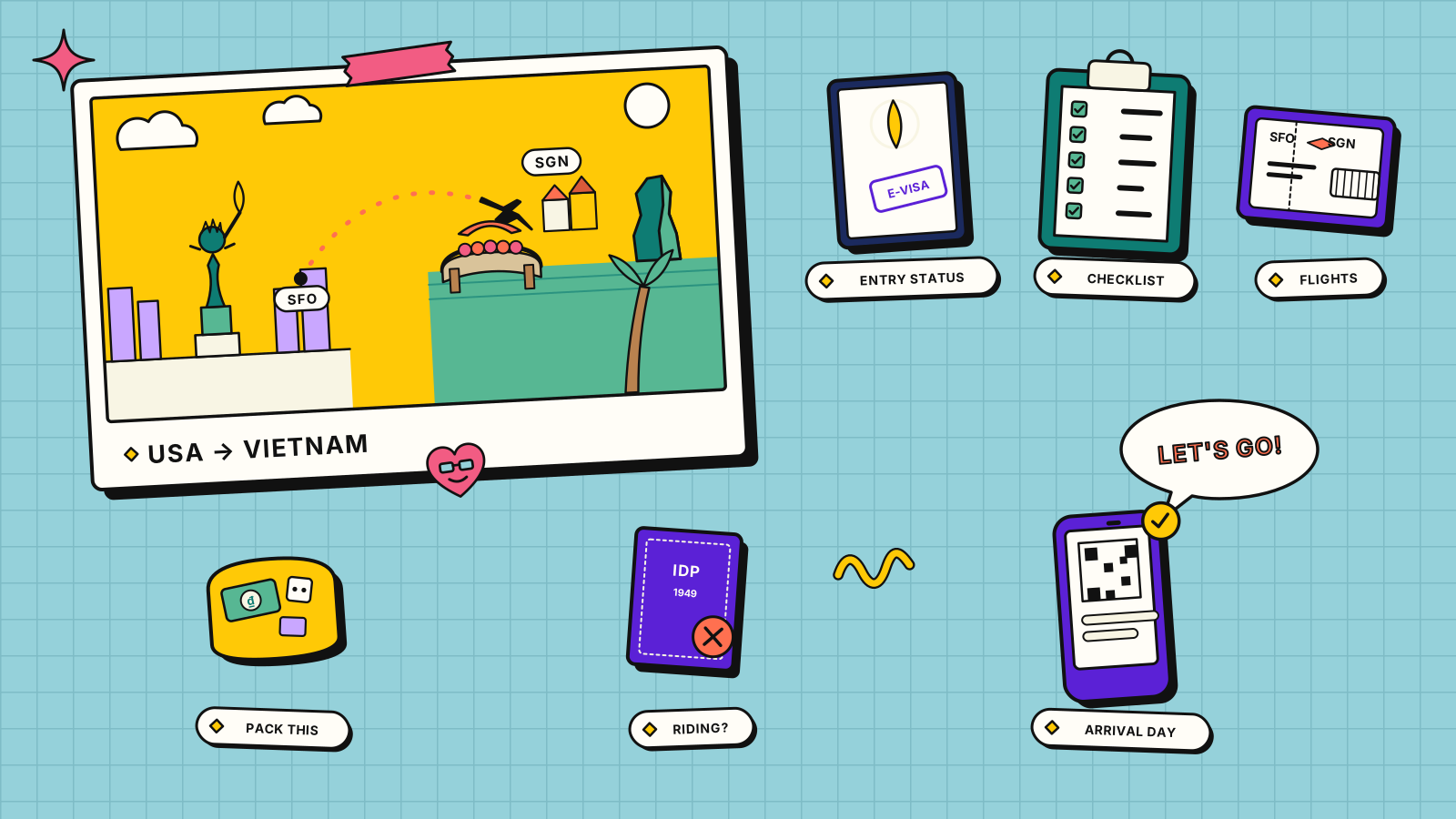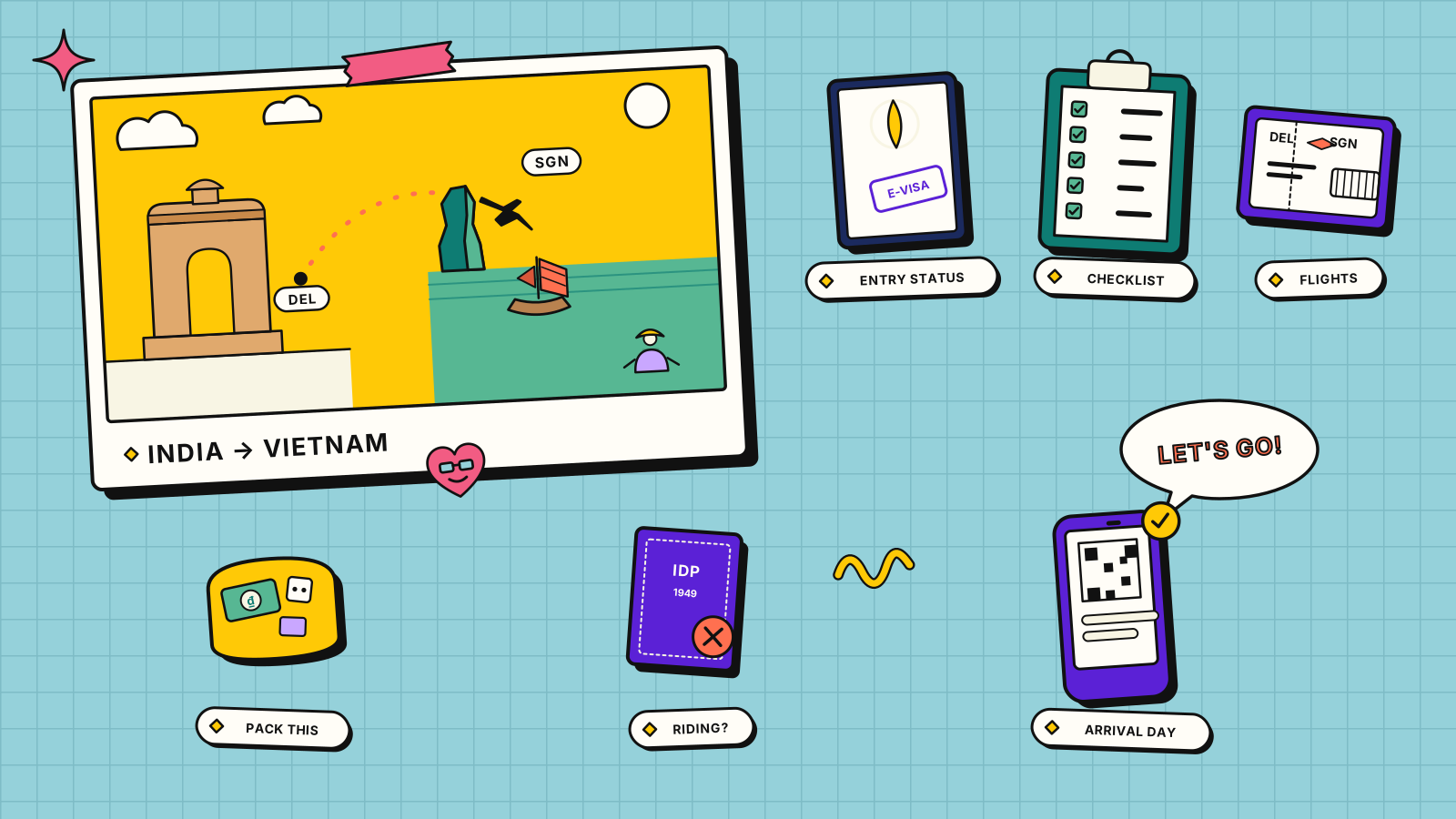
This page is for Indian passport holders. For other nationalities, and more on customs, health and overstays, see our Vietnam visa and entry requirements guide.
Do Indians need a visa for Vietnam?
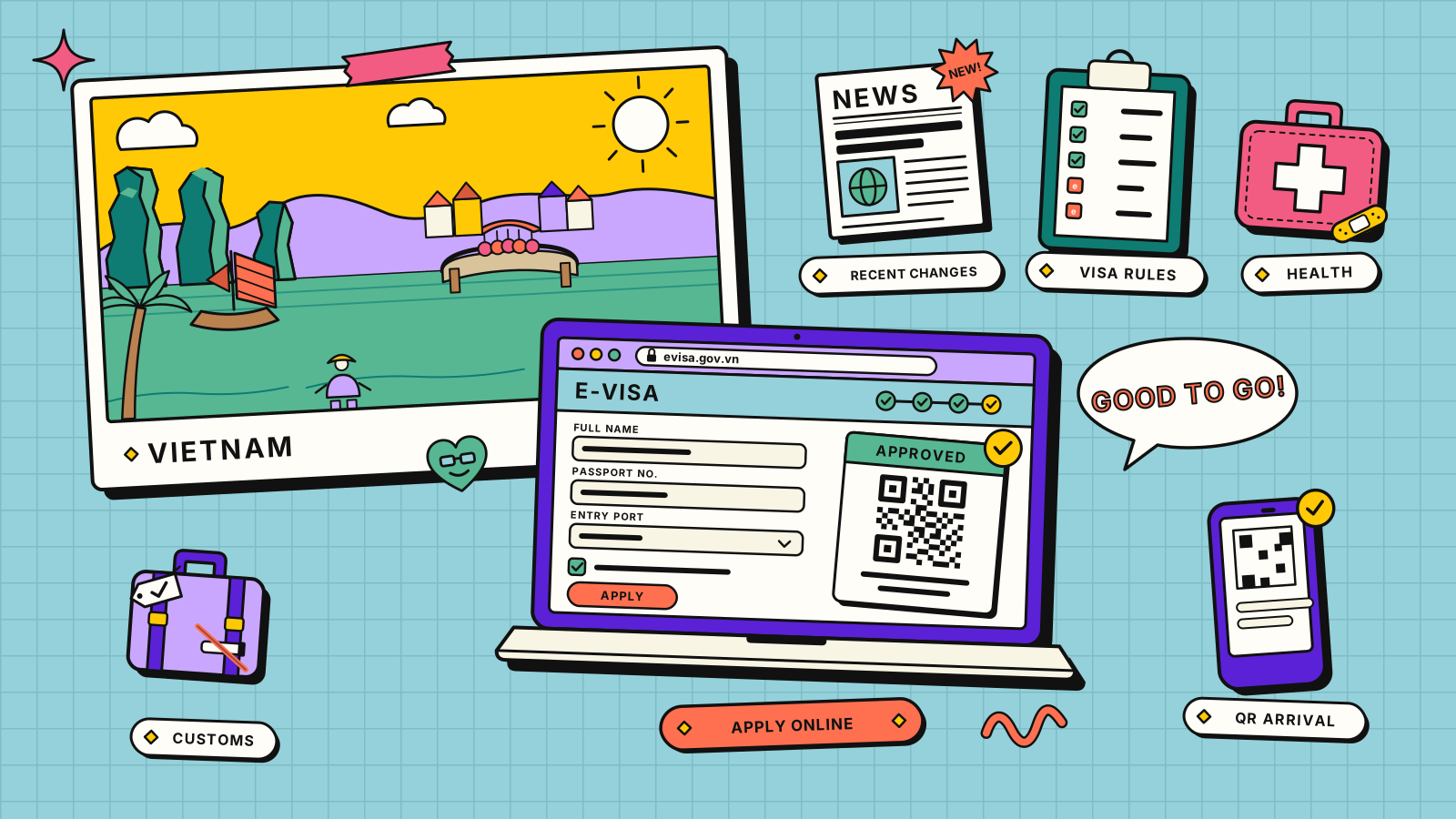
Yes. India isn't on Vietnam's visa-exemption lists, so you need a visa for any visit. The e-visa has been open to every nationality since August 2023, and for tourists it's the straightforward option:
| Official site | evisa.gov.vn |
|---|---|
| Cost | USD 25 single entry, USD 50 multiple entry |
| Length | Up to 90 days |
| Processing | About 3 working days. Allow 1 to 2 weeks, longer around Tết (Lunar New Year) |
| Entry points | 83 border gates, including the airports in Hanoi, Ho Chi Minh City, Da Nang, Nha Trang (Cam Ranh) and Phu Quoc |
Choose single entry for a normal round trip, or multiple entry if you're going out to Laos or Cambodia and coming back into Vietnam.
Phu Quoc is the one exception. If you fly directly to the island from abroad, you can stay up to 30 days without a visa, but you can't continue to the mainland on it. Vietnam's Ministry of Foreign Affairs says it also applies if you connect through another Vietnamese international airport without leaving the transit area. There's no regular direct flight from India to Phu Quoc right now: Air India ran a short series of Delhi flights with Vietravel from December 2025 to January 2026, and Sun PhuQuoc Airways' Mumbai route has ended. Watch for new seasonal charters.
Be careful with fake websites. The Vietnamese Embassy in New Delhi has published a warning about unofficial and fake visa websites. Agencies with near-identical names charge around USD 75 to 150 for the USD 25 visa. Only .gov.vn addresses are official, and evisagov.vn (no dot before "gov") is not one of them. Don't pay for a "visa on arrival approval letter" either, because the e-visa is cheaper and simpler.
How to apply for the e-visa
- Go to evisa.gov.vn and start an e-visa application for foreigners. Read the instructions and tick both confirmation boxes.
- Upload a photo: 4x6 cm, white background, facing the camera, no glasses, JPG under about 2 MB, taken in the last 6 months.
- Upload your passport's data page in full, including both lines of machine-readable text at the bottom. No glare, no cropped corners.
- Fill in your details exactly as they appear in your passport. If your passport shows a surname and given name in a particular way, copy it exactly, and include any middle name.
- Add your entry date, single or multiple entry, entry and exit ports, your first address in Vietnam and the purpose of the visit.
- Pay USD 25 or USD 50 by credit or debit card through the portal's Vietcombank gateway, and enter the one-time passcode your bank sends. The portal doesn't list card brands. Indian cards only work abroad and online in foreign currency if international use is switched on, so turn it on in your banking app first.
- Save the registration code, then check your status on the site with the code, email and date of birth. Once approved, print the e-visa.
Pick the entry port that matches your flight: Hanoi (HAN) for the IndiGo and Akasa flights, and Hanoi or Ho Chi Minh City (SGN) for Vietnam Airlines and VietJet, depending on your route. The UK Foreign Office says e-visas restrict you to the entry and exit points you select.
The portal says the fee is non-refundable if the visa isn't granted.
Entry checklist
- Passport valid for at least 6 months after arrival, with 2 blank pages and no damage
- Printed e-visa showing the right entry airport
- Pre-arrival QR code from prearrival.immigration.gov.vn (free, within 72 hours before landing)
- Return or onward ticket within your e-visa dates. Airlines often check this at check-in
- First night's hotel address
- Travel insurance details
- Doctor's letter for any controlled medicines
India isn't a yellow fever risk country, so you don't need a certificate when flying direct. You would only need one if you'd travelled through a country with yellow fever risk (in Africa or South America, for example).
On the pre-arrival form, the US Embassy in Vietnam calls it mandatory for all foreign passengers, while UK and Canadian advice says it's encouraged. It's free and quick, so I'd fill it in. Use only the .gov.vn site.
Flights from India to Vietnam
Several routes have launched since 2025, so there are plenty of direct options:
| Airline | Routes |
|---|---|
| Vietnam Airlines | Delhi and Mumbai to Hanoi (4 a week each) and Ho Chi Minh City (3 a week each) on the winter schedule from 25 October 2026. Bengaluru to Hanoi (4 a week). Hyderabad to Hanoi (3 a week). Ahmedabad to Hanoi from 3 November 2026 (4 a week) |
| VietJet | Delhi to Hanoi and Ho Chi Minh City. Mumbai, Ahmedabad, Bengaluru and Hyderabad to Ho Chi Minh City |
| IndiGo | Kolkata to Hanoi. Delhi to Hanoi daily. Mumbai to Hanoi, daily from late October 2026 |
| Akasa Air | Mumbai to Hanoi, since 4 September 2026 |
| Air India | Delhi to Ho Chi Minh City. Delhi to Hanoi (since 1 May 2026). Both were cut to 4 a week in July and August 2026, so check the timetable for your dates |
Two changes to know about: IndiGo suspended Kolkata to Ho Chi Minh City in July 2026, and VietJet no longer flies from Kochi or Tiruchirappalli.
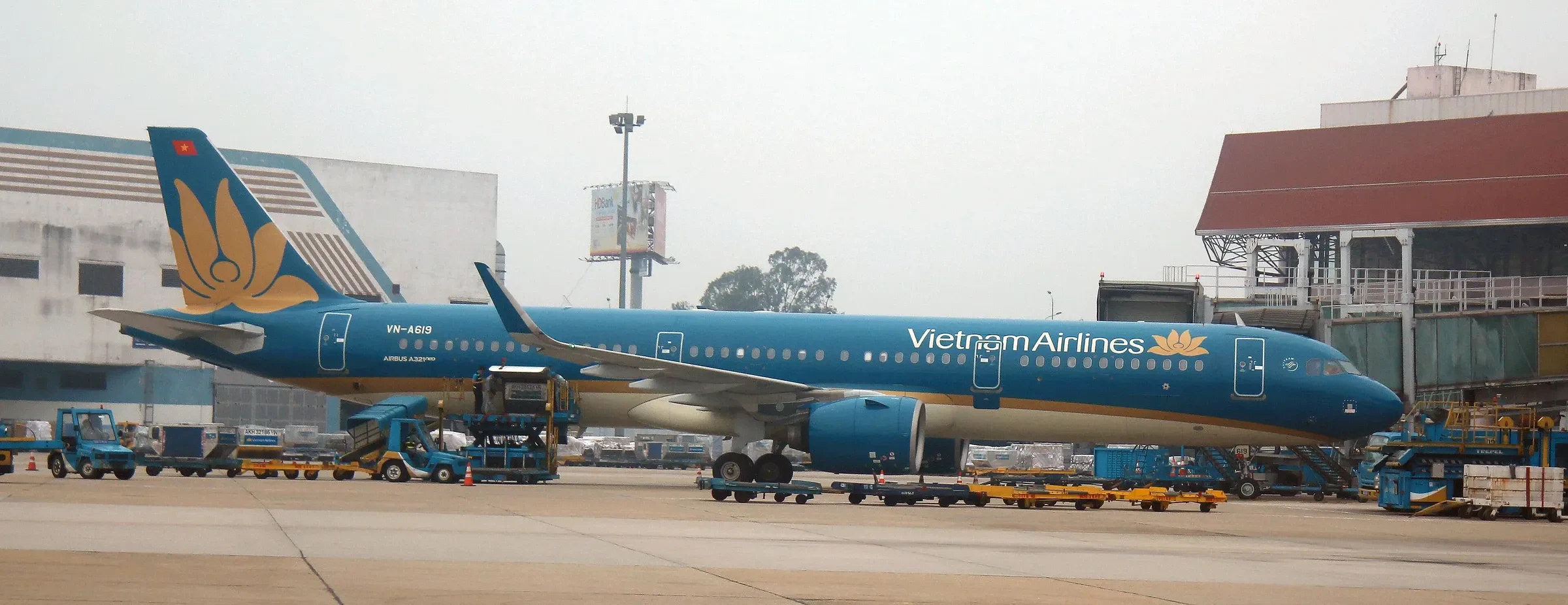
Delhi to Ho Chi Minh City takes about 5 hours, and Delhi to Hanoi about 4. Air India, VietJet and Vietnam Airlines fly Delhi to Ho Chi Minh City non-stop. On Kayak, Delhi to Ho Chi Minh City return fares averaged about ₹28,800 over the past year, with recent returns from about ₹23,800 (indicative, checked 24 Sep 2026). Any fare is only a snapshot.
From southern India it's harder. Chennai and Kochi have no direct flights to Vietnam at the moment (VietJet's Kochi route has ended). From Chennai, Kayak's cheapest options connect in Kuala Lumpur, Singapore, Bangkok or Kolkata, with returns from about ₹26,000 to Ho Chi Minh City. Bengaluru and Hyderabad do have direct flights.
Kayak's data for India puts February as the cheapest month (about ₹15,300 return on average across routes) and December and May as the most expensive. Tết (late January or February) is Vietnam's busiest travel period, so compare dates either side of it. Vietnam's north, centre and south have different weather, so check the best time to visit Vietnam before you choose dates.
Vietnam is about 1,600 km long, so an open-jaw ticket (into Hanoi, out of Ho Chi Minh City) saves you backtracking. With VietJet and Vietnam Airlines flying to both cities from Delhi, and several Hanoi-only routes, this is easy to set up.
Ho Chi Minh City's new airport, Long Thanh, about 40 km from the centre, is due to open commercially on 1 December 2026, with long-haul flights planned to move there from 28 March 2027. Check which airport is on your ticket.
For domestic flights, Bamboo Airways stopped scheduled services on 1 August 2026, so use Vietnam Airlines, Pacific Airlines, VietJet, Vietravel Airlines or Sun PhuQuoc Airways, and carry your passport, which is checked on domestic flights.
What to bring from India
Plugs. Vietnam uses Type A, C and F sockets at 220 V, 50 Hz. Two-pin chargers usually fit Type C sockets, but three-pin Indian plugs won't. A universal adaptor saves the hassle.
Money. The currency is the dong (VND). Cards work in city hotels and bigger restaurants, but you'll pay cash for most things outside cities. Change money only at ATMs or official, signposted counters, because changing money elsewhere is illegal. 2026 guides report VPBank ATMs charging foreign cards no fee and most other banks about VND 20,000 to 55,000 a withdrawal. Fees change often, so check the amount on screen before you confirm. Make sure your Indian card works abroad before you leave. Spend or change your leftover dong before you fly, because it's hard to change outside Vietnam. Declare cash over USD 5,000.
Insurance. It isn't an entry requirement, but get a policy with medical evacuation, as serious cases can mean a transfer to Bangkok or Singapore. If you'll ride on the back of a motorbike, on the Ha Giang Loop for example, check the policy covers you as a passenger.
Driving. Indian International Driving Permits are the 1949 type, and Vietnam only recognises the 1968 permit. Riding a motorbike yourself means riding unlicensed, which risks fines, an impounded bike and a rejected insurance claim. See our Ha Giang Loop guide.
Medicines. Controlled medicines (for anxiety, depression, insomnia or ADHD, and strong painkillers) are limited to 7 days' supply. Bring a doctor's letter in English with your name, age, the medicine, the dose, and the doctor's signature and address. Pack the medicines in your cabin bag with a copy of the prescription.
Leave at home. Vapes and heated tobacco are banned in Vietnam, and users can be fined VND 3 to 5 million. Drug laws are severe. Leave drones at home unless you have a permit.
SIM. A travel eSIM is the easiest option. A local SIM needs your passport and a face check, under rules in force since 15 April 2026. Foreigners register in person with their passport, and official guidance doesn't say exactly how that works at airport kiosks.
There's more in our Southeast Asia packing list.
Arrival day
- Before you board. Fill in the pre-arrival form within 72 hours of landing and save the QR code. Keep your printed e-visa and return ticket handy for the check-in desk.
- Immigration. Show your passport, printed e-visa and QR code. Check the stamp before you walk away from the desk.
- Customs. Green channel if you have nothing to declare. Red channel for cash over USD 5,000, goods over the duty-free allowances or controlled medicines.
- SIM and cash. Kiosks at the airport sell and register SIMs in minutes. Withdraw some dong at an ATM.
- Into the city. Hanoi's Noi Bai airport is about 30 km from the Old Quarter, 45 minutes to an hour by road. Airport bus 86 runs to Hanoi Railway Station for about VND 45,000, a Grab car costs roughly VND 250,000 to 350,000, and an official taxi around VND 550,000 to 600,000. In Ho Chi Minh City, bus 152 runs from the international terminal towards Ben Thanh (roughly 05:15 to 19:00), and Grab or Be to District 1 is usually about VND 150,000 to 250,000. Bus 109 now stops only at the domestic terminal (T3). These are 2026 reported prices, so treat them as a guide.
- Hotel check-in. The hotel will take your passport details to register you with the local police. That's standard.
Travel with us
Planning Vietnam on your own? Join a small group aged 18 to 40, with me along the whole way as your Trip Host.