The north: pho, bun cha and egg coffee
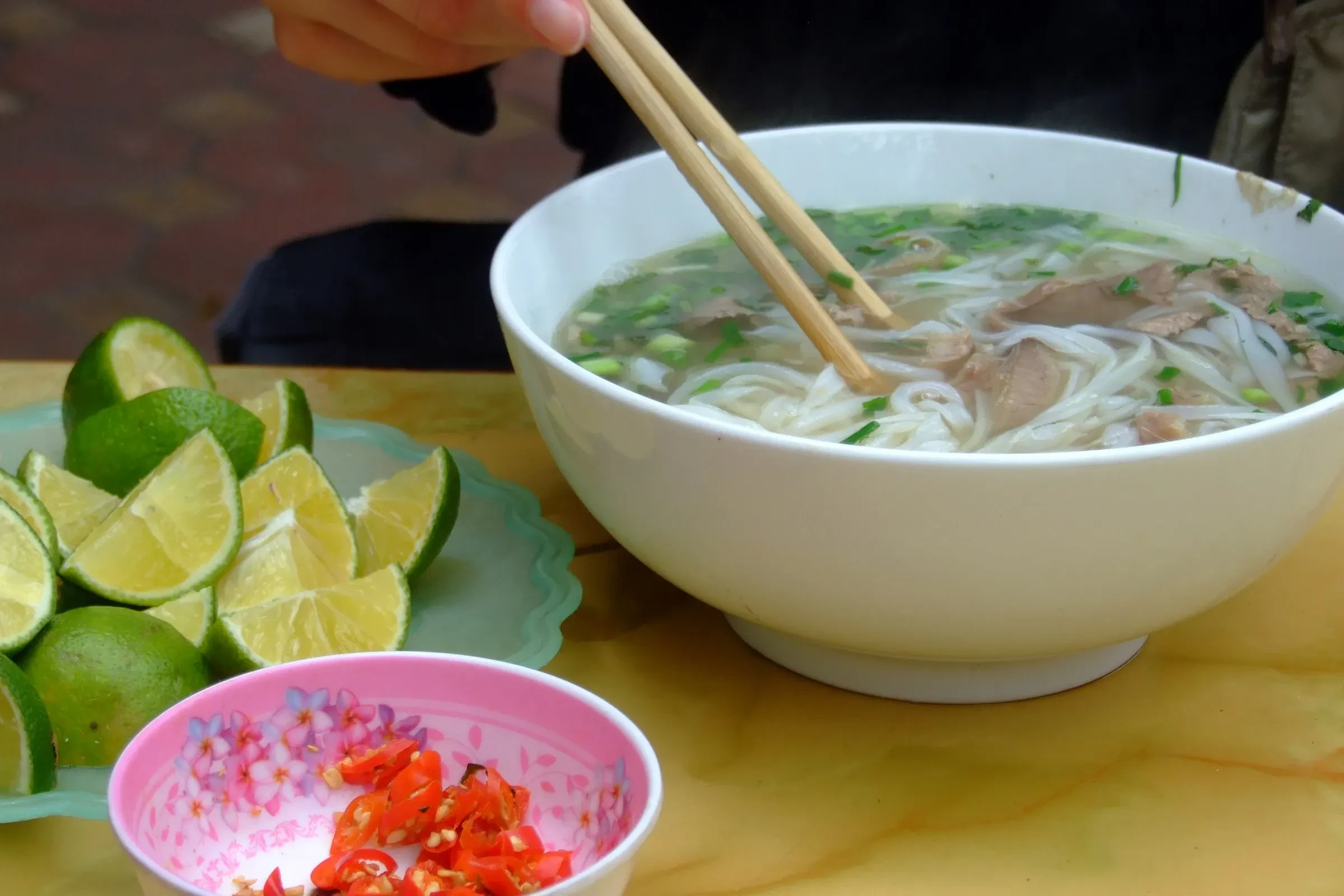
Hanoi's food is built on broth. Pho, a beef or chicken noodle soup simmered for hours with charred ginger and star anise, is Vietnam's best-known dish and costs about 40,000 to 55,000 dong for a street bowl. Bun cha, grilled pork patties and belly served in a bowl of sweet-sour fish sauce broth with cold rice noodles and herbs on the side, is Hanoi's other lunchtime staple, at roughly 40,000 to 70,000 dong for a full set. Our Hanoi street food guide covers exactly where to order both.
Cha ca la vong, turmeric and dill fish grilled at the table over a charcoal pot, then folded through rice noodles, peanuts and herbs, is the fussier order, eaten by the whole table rather than solo. It takes its name from Cha Ca La Vong, the family restaurant on Hanoi's Cha Ca Street that has served the dish since the 1870s and gave the street its name. A plate there runs about 350,000 dong, though newer neighbourhood versions cost 200,000 to 280,000 dong. It is the one dish on this page worth booking a table for rather than grabbing at a stall.
To finish, try egg coffee (ca phe trung): whipped egg yolk and condensed milk over strong robusta coffee, invented in Hanoi during a 1940s milk shortage and still a Hanoi speciality rather than a nationwide one. Our Hanoi guide and things to do in Hanoi cover where to fit a street food evening around the Old Quarter's other sights.
The centre: bun bo Hue, cao lau, mi quang and imperial cuisine
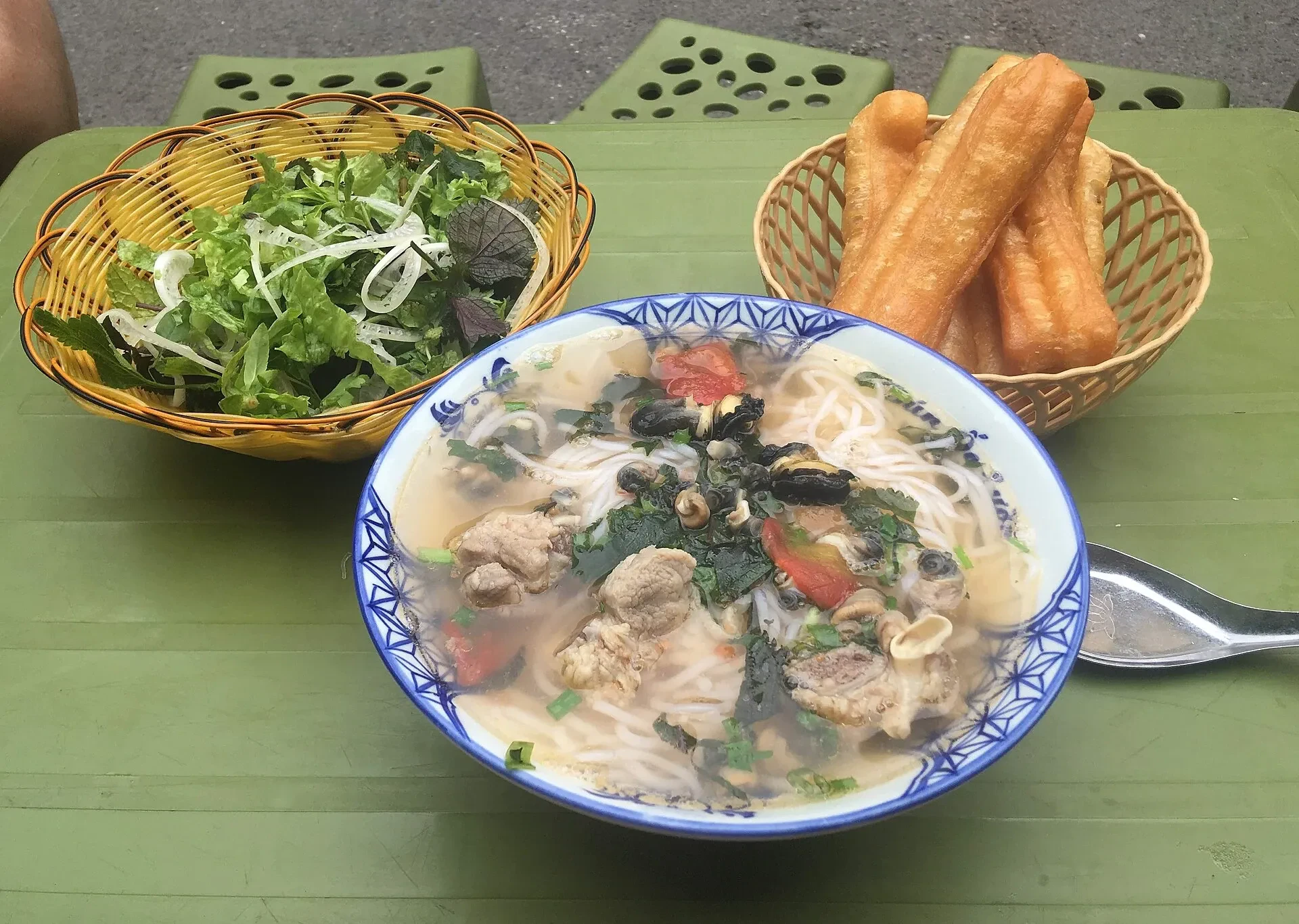
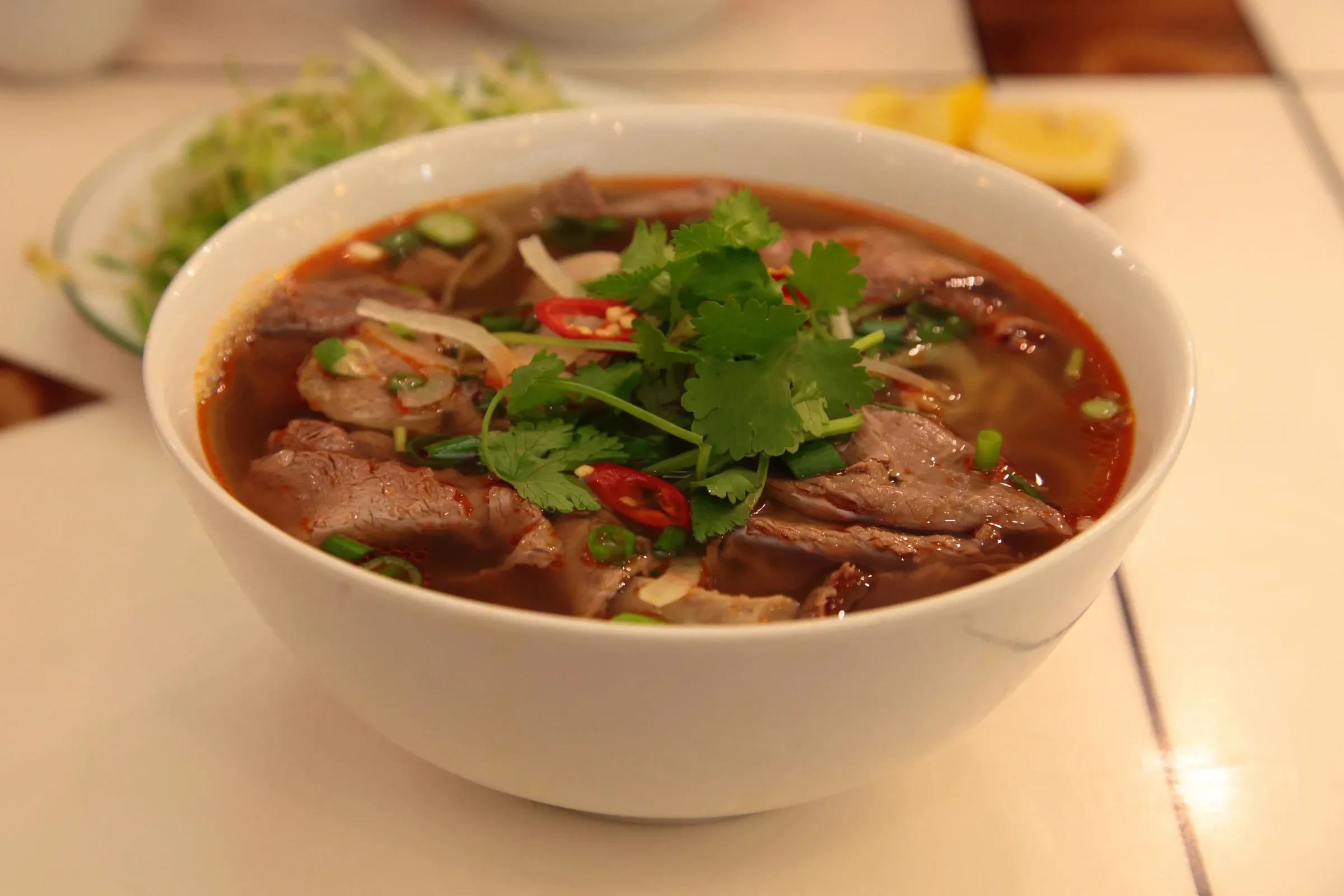
Central Vietnam eats spicier, and around Hue, more formally than the rest of the country. Bun bo Hue, a lemongrass and chilli beef broth with round rice noodles, is the region's headline dish and the spicier cousin of Hanoi's pho, at about 40,000 to 80,000 dong a bowl. Hue was Vietnam's imperial capital under the Nguyen dynasty, and its kitchens still turn out the small, delicate "royal" dishes once served at court: banh beo (steamed rice cakes topped with dried shrimp), banh loc (a chewy tapioca dumpling in banana leaf) and banh nam (a flat, translucent steamed rice dumpling), usually ordered together as a sampler. Our Hue guide covers these and the city's other dishes, including banh khoai and com hen, in more depth.
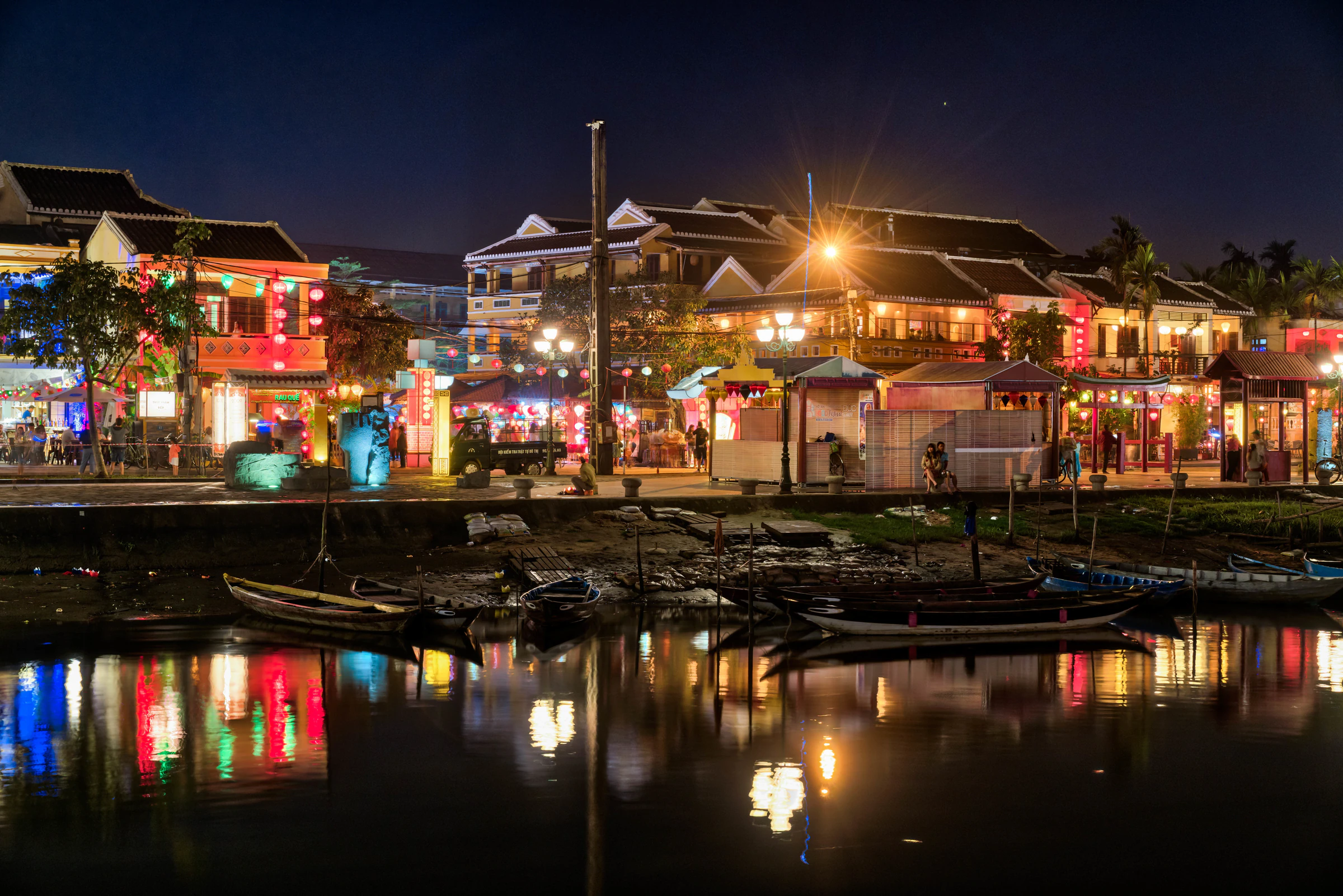
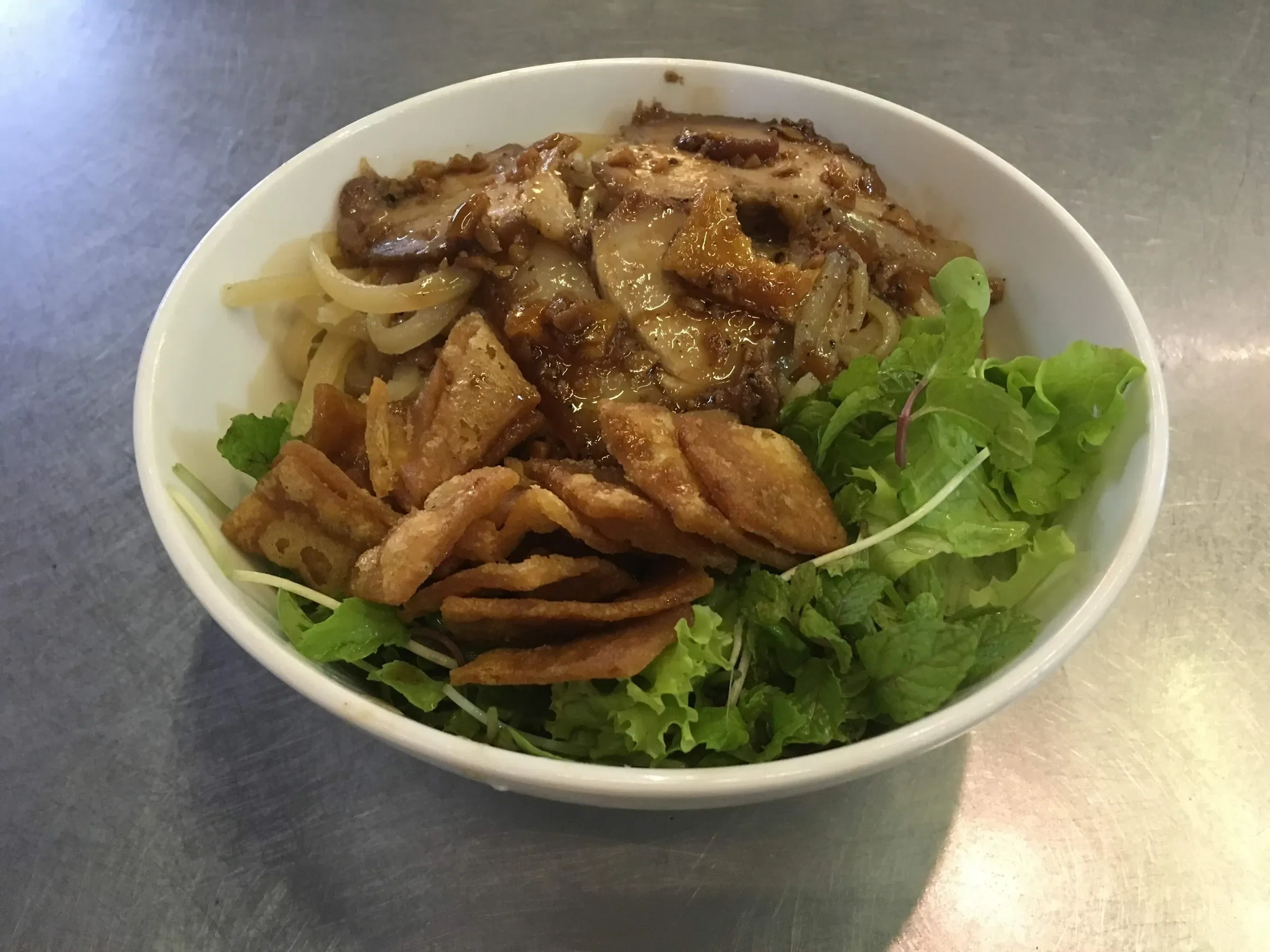
Further south in Hoi An, cao lau is the dish to try first: thick, chewy rice noodles, traditionally made with water from a specific local well, topped with sliced pork, croutons and greens, for about 30,000 to 45,000 dong at a local shop and more at a tourist-facing restaurant. Mi quang, from the wider Da Nang and Quang Nam area, is a turmeric-yellow noodle with a shallow, intensely flavoured broth rather than a soup, usually made with shrimp, pork or chicken, for about 40,000 to 60,000 dong. Banh xeo, a crispy, turmeric-yellow rice pancake filled with pork, shrimp and bean sprouts and wrapped in lettuce and herbs, appears all over central and southern Vietnam and costs roughly 40,000 to 80,000 dong. Our Hoi An food guide covers the market and the town's cooking classes in more depth, and the things to do in Hoi An guide lists what else to fit around meals.
The south: com tam, hu tieu, banh mi and the Mekong
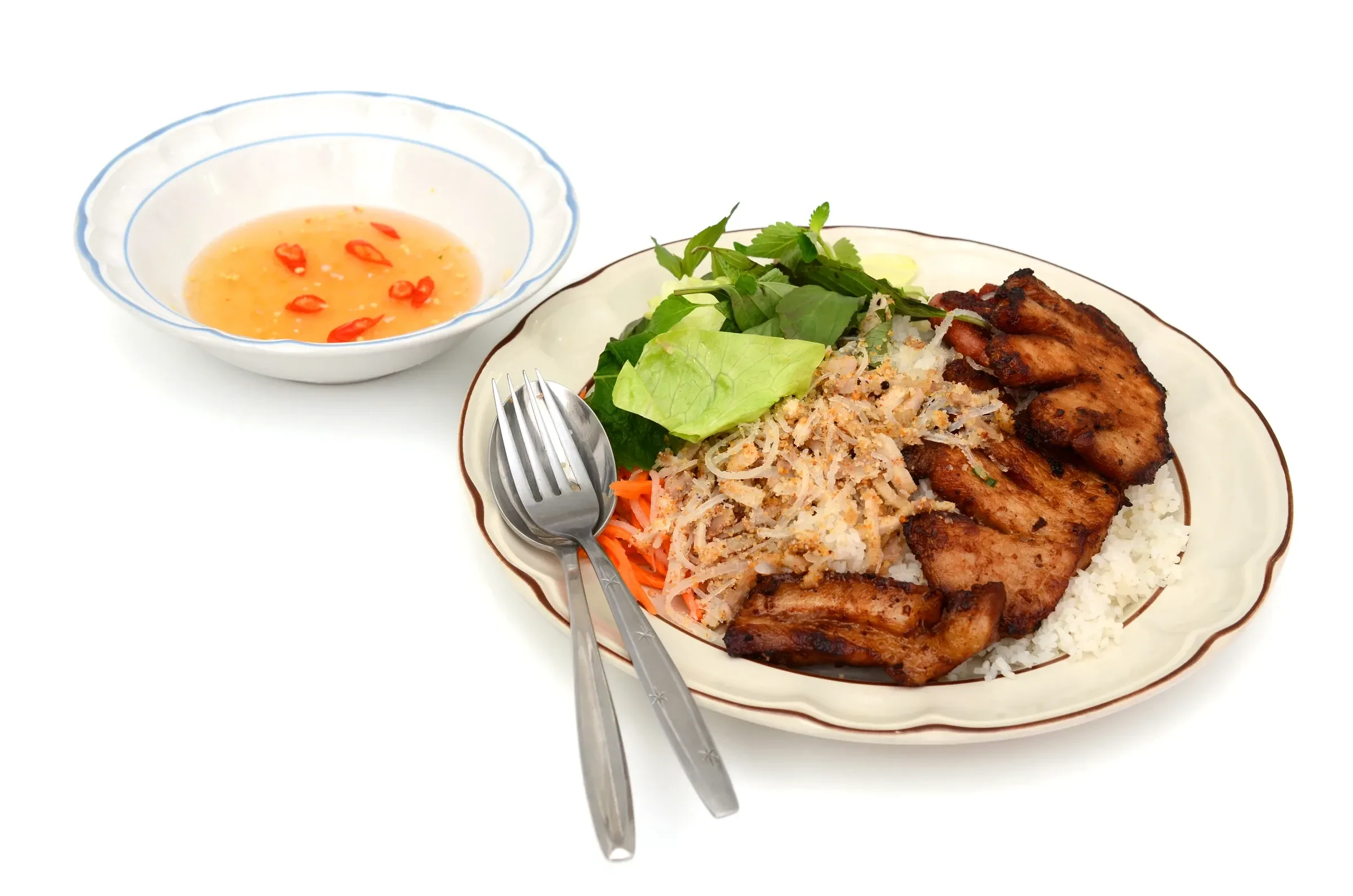
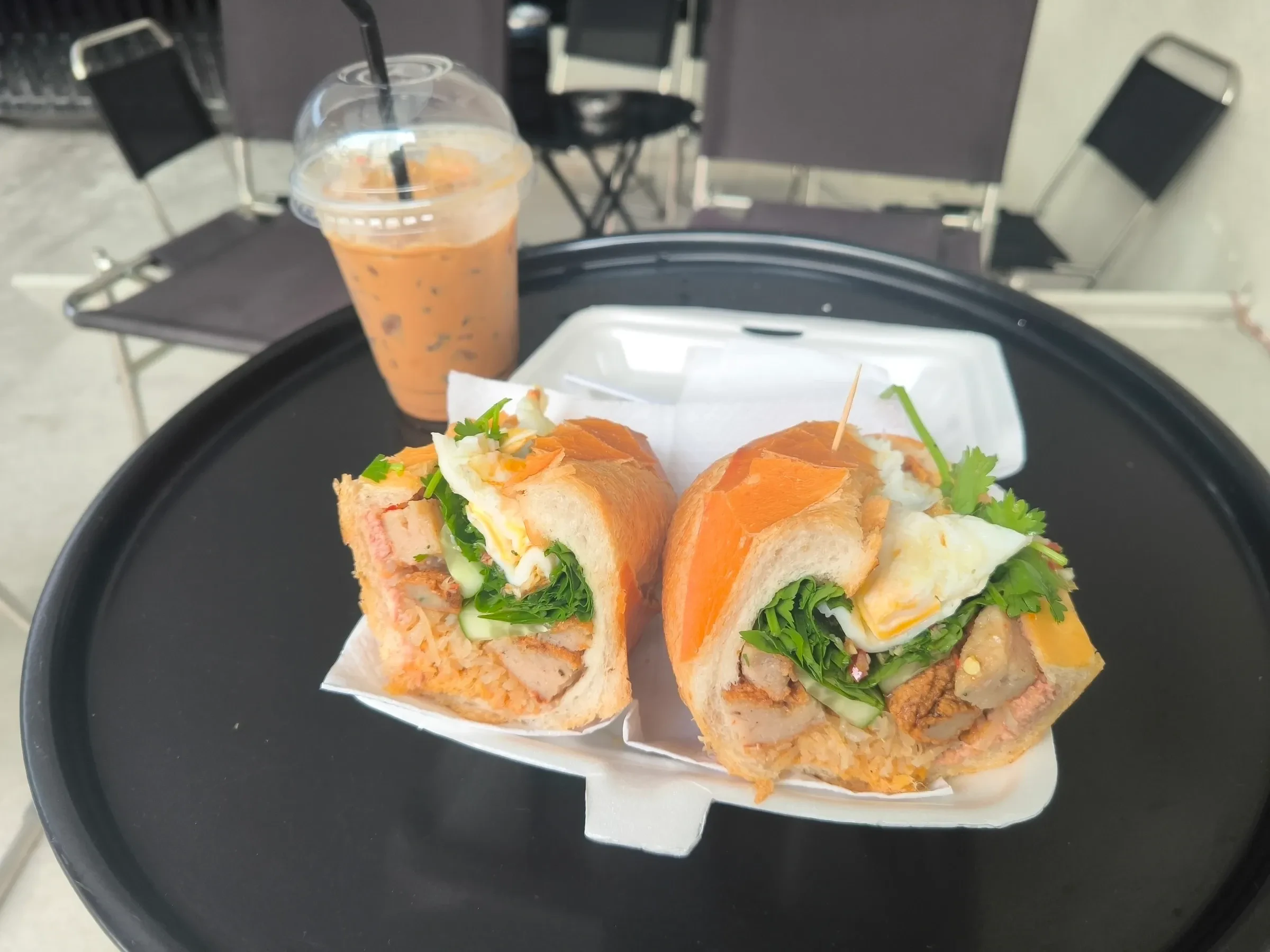
Ho Chi Minh City and the south eat faster and sweeter. Com tam ("broken rice"), a plate of grilled pork chop, a fried egg and shredded pork skin over rice made from broken grains once considered too poor for whole-grain markets, now turns up on menus at every price point, from about 20,000 dong at a street stall to 70,000 to 150,000 dong at a sit-down restaurant. Hu tieu, a noodle soup with roots in the city's Chinese and Khmer communities, comes dry or in broth with pork, shrimp or offal, from about 30,000 dong at a stall upward. Banh mi, the baguette sandwich built on the French bread the colonial period left behind and filled with pate, cold cuts, pickled carrot and daikon, coriander and chilli, is the easiest grab-and-go meal in the country, at 15,000 to 30,000 dong from a street cart (long-running shops charge considerably more).
Down in the Mekong Delta, fruit stalls sell dragon fruit, rambutan, mangosteen and durian depending on the season. The region's own dish, ca tai tuong chien xu (fried elephant-ear fish, named for the giant gourami's fin shape rather than any relation to elephants), is fried whole until the skin crisps, then wrapped in rice paper with herbs and pickles and dipped in a sweet and sour fish sauce. Our Mekong Delta guide covers this and the region's other food, plus how the Cai Rang floating market has changed in recent years.
How to eat street food well
A queue of locals at a stall is the best sign you can get: high turnover means ingredients do not sit around and dishes get cooked fresh through the day. Order what is cooked to order and served hot, since a boiling broth or a wok straight off the heat kills most of what would otherwise make you ill. Pho, bun cha and freshly fried banh xeo are all safer bets on that logic than something that has been sitting under a heat lamp. Stick to bottled or filtered water throughout your trip; tap water is not safe to drink anywhere in the country, though the tube ice used in drinks is made from filtered water and is generally fine. If a stall looks quiet, the meat looks grey or the herbs look wilted, walk on to the next one.
Coffee culture
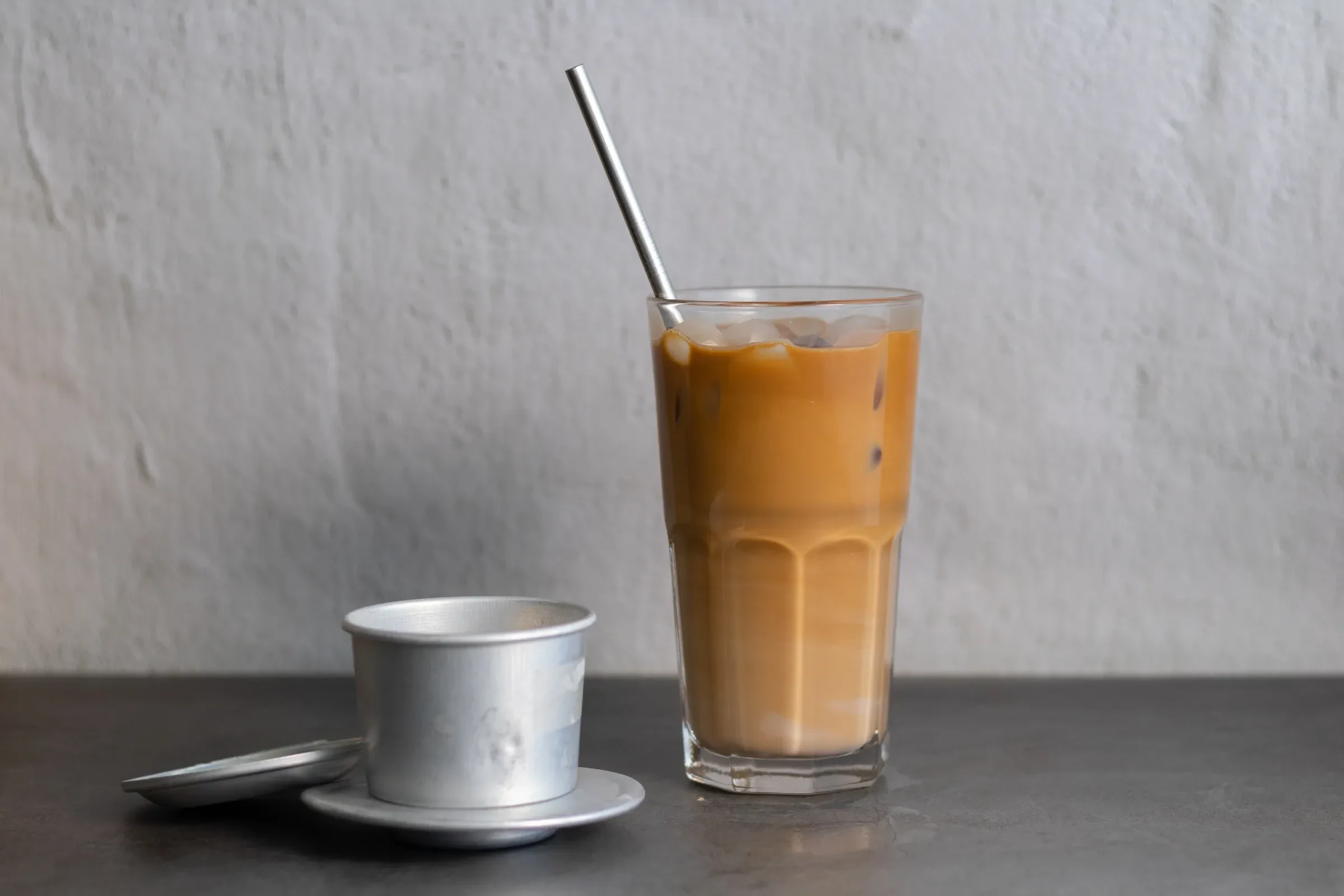
Coffee is a national pastime rather than a quick errand, and pavement stools facing the street are the default seating everywhere from Hanoi to Saigon. Vietnam grows mostly robusta beans, stronger and more bitter than the arabica most travellers are used to, dripped slowly through a small metal phin filter directly over the cup. Ca phe sua da, robusta dripped over a spoonful of sweetened condensed milk and poured over ice, is the everyday order. Condensed milk became the standard substitute for fresh milk during the French colonial period, when dairy was scarce. Beyond Hanoi's egg coffee, look for coconut coffee and salt coffee in the centre and south. Treat "weasel coffee" (ca phe chon), made from beans a civet has eaten and passed, as a novelty to try once rather than a daily habit: it is noticeably smoother and less bitter than a standard robusta brew, and it is not cheap.
Vegetarian and vegan food
Look for the word "chay" on a restaurant sign or menu. It marks a fully vegetarian kitchen, common in and around Buddhist temples and increasingly common in traveller areas of every city. Mahayana Buddhism's influence runs deep enough that many ordinary, meat-serving restaurants switch to a vegetarian menu on the 1st and 15th of the lunar month, so a "chay" sign you do not recognise on an otherwise normal street is usually just that. Fish sauce (nuoc mam) is the one ingredient to ask about specifically, since it goes into broths, dipping sauces and stir-fries by default across the country and is not always obvious from a menu description.
Typical prices
A street bowl of noodles or a plate of rice runs 20,000 to 80,000 dong (roughly £0.60 to £2.30) almost everywhere in the country, with banh mi and simple snacks at the lower end and a full sit-down meal in a local restaurant closer to 100,000 to 150,000 dong. Long-standing or well-known addresses, like Cha Ca La Vong in Hanoi, charge several times a street price for the same dish cooked with more ceremony, and both are worth doing once on a longer trip. See our Vietnam backpacking guide for how food costs fit into a wider daily budget, and best time to visit Vietnam for how the seasons affect which regions to prioritise.
Keep planning
For where these dishes fit into a route, see our region guides for Hanoi, Hue, Hoi An and the Mekong Delta, or start from the main Vietnam guide for routes and costs across the whole country.