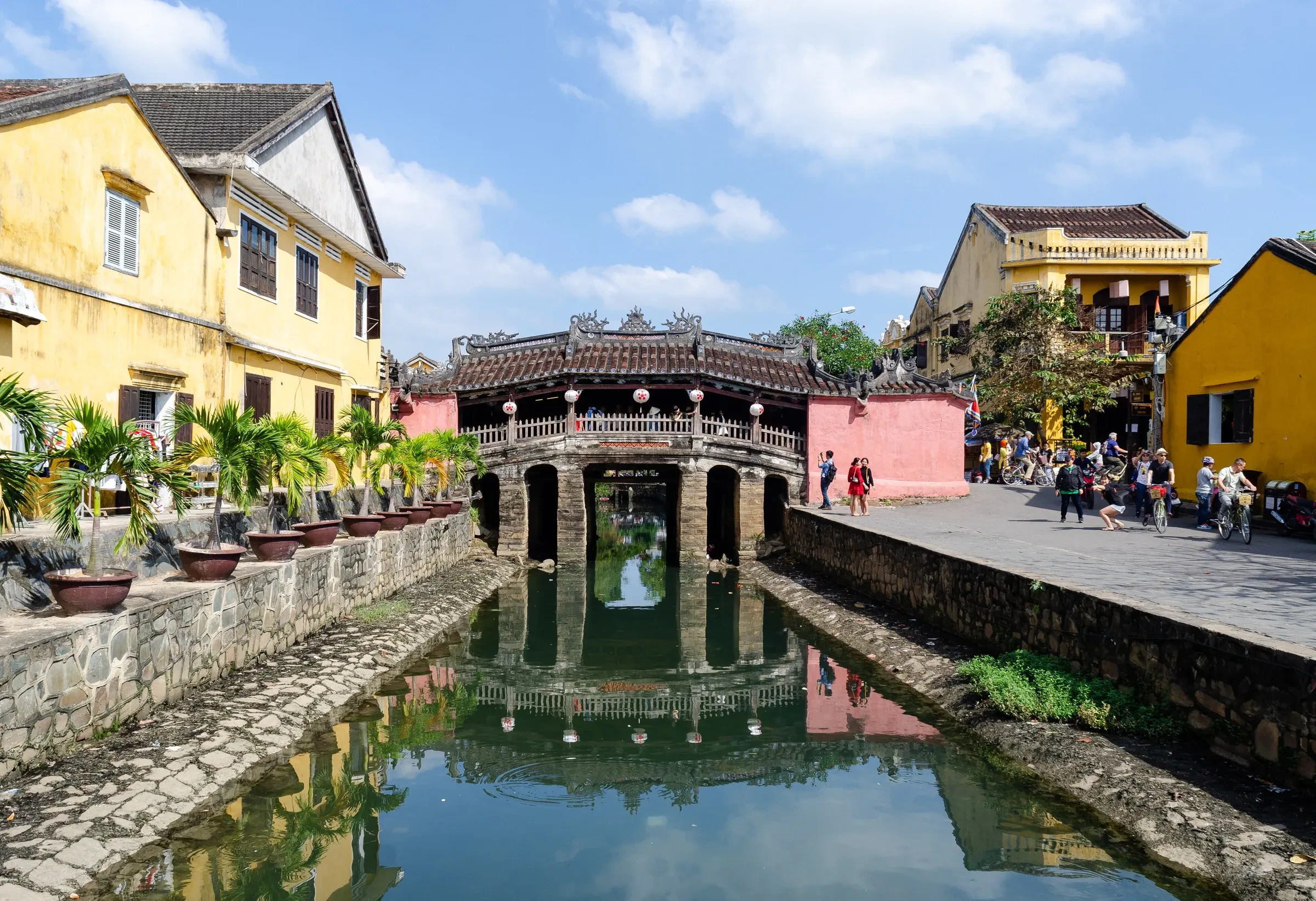
Hoi An is a small trading port on the Thu Bon River that stopped growing sometime in the 19th century and has spent the years since being beautiful about it. The old town's merchant houses, assembly halls and covered bridge survive largely intact, strung year-round with silk lanterns that give the streets their glow after dark.
This guide covers the Ancient Town ticket system, the lanterns and the monthly full-moon night, the tailors, the beach, My Son, getting there from Da Nang, the flood season and how long to stay. For the wider region, see our Vietnam travel guide.
Where Hoi An is, and getting there from Da Nang
Hoi An sits on the coast of central Vietnam, about 30 km south of Da Nang and its airport. Since 1 July 2025, when Vietnam merged several of its provinces, Quang Nam (Hoi An's old province) became part of Da Nang city, so Hoi An is now administered by Da Nang, even though most people still think of it as its own town.
A private van or taxi from Da Nang International Airport (DAD) to Hoi An takes about 40 to 50 minutes. Hoi An has no train station or airport, so almost everyone comes in through Da Nang, by air or overland from Hue over the Hai Van Pass. See our Vietnam itinerary guide for how Hoi An fits into a longer route, and the Hoi An lantern festival guide if a specific full-moon date is shaping your dates.
The Ancient Town ticket system
Hoi An's old town charges an entry fee, and it works differently from most. The town's heritage office sells two tickets: 120,000 dong (five sites: the Japanese Covered Bridge or Quan Cong Temple, one museum and three more from the list) and 80,000 dong (three sites). They include merchant houses, assembly halls and small museums. According to the heritage office's January 2026 notice, one ticket is valid for your whole stay, up to three days. Children under 16 go free.
The ticket is checked only at the doors of the ticketed buildings. Walking the streets, eating, shopping and being out after dark cost nothing. Buy your ticket from one of the booths at the edges of the old town before you go in.
Lanterns, and the monthly full-moon night
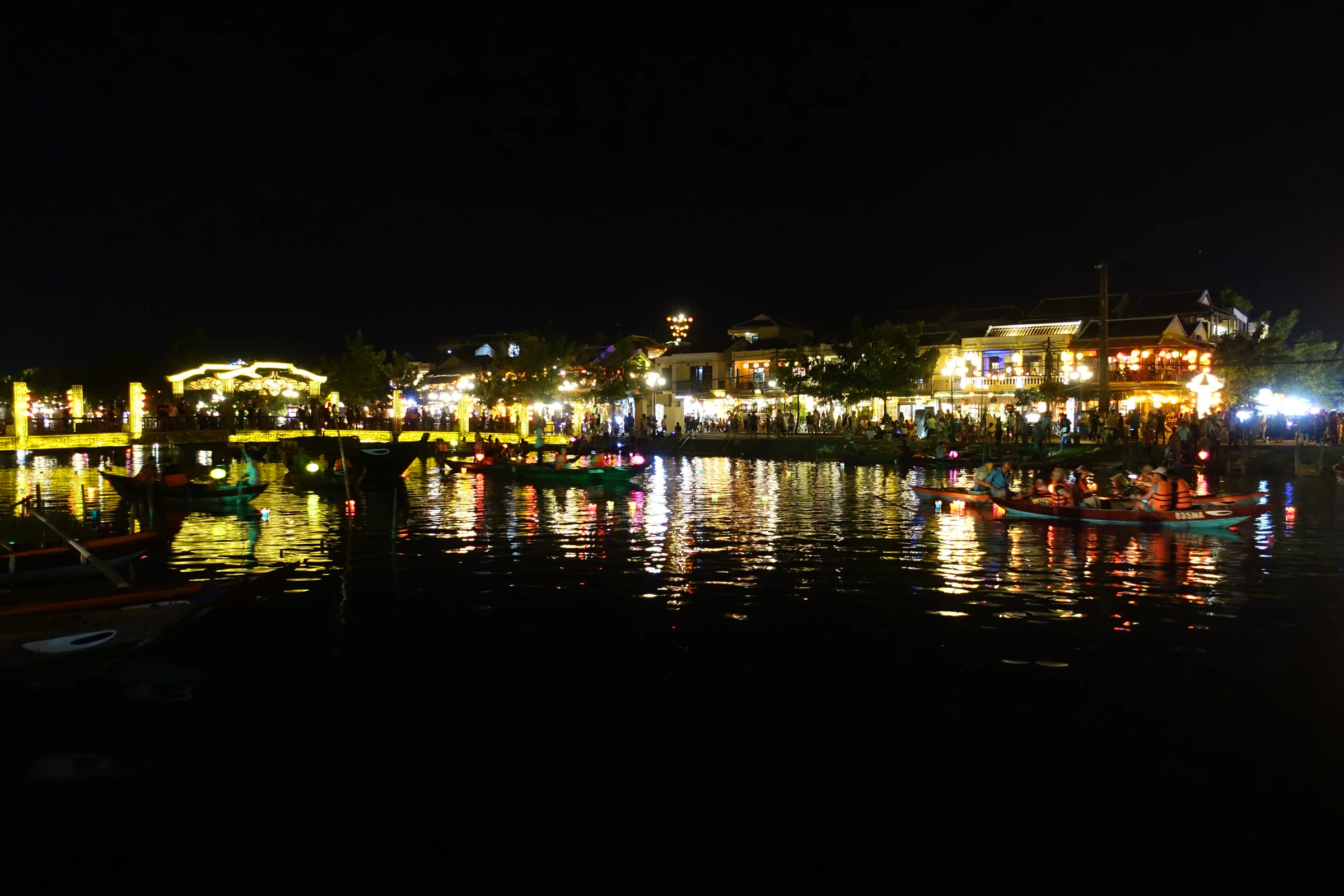
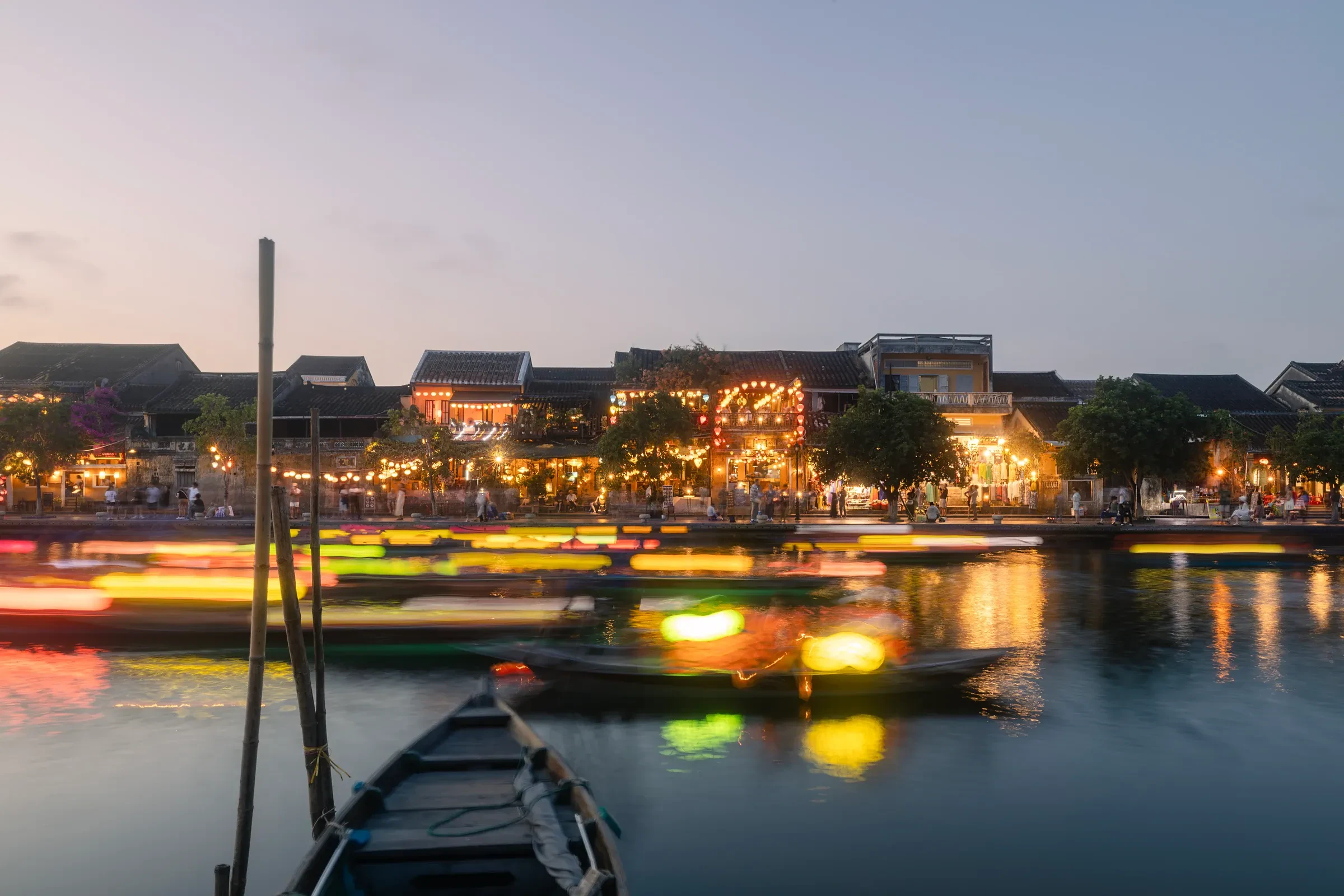
Silk lanterns hang over Hoi An's lanes and across the river every night of the year, which is reason enough to walk the old town after dark on any evening you're here. Once a month, on the 14th day of the lunar calendar, the town goes further: the electric street lights switch off from early evening, and the old town runs on lanterns and candles alone until about 10pm, with small floating candle lanterns set adrift on the Hoai River. We cover the mechanics of that night in full, including every date for the rest of 2026 and 2027, in our dedicated Hoi An lantern festival guide, so we won't repeat the dates here.
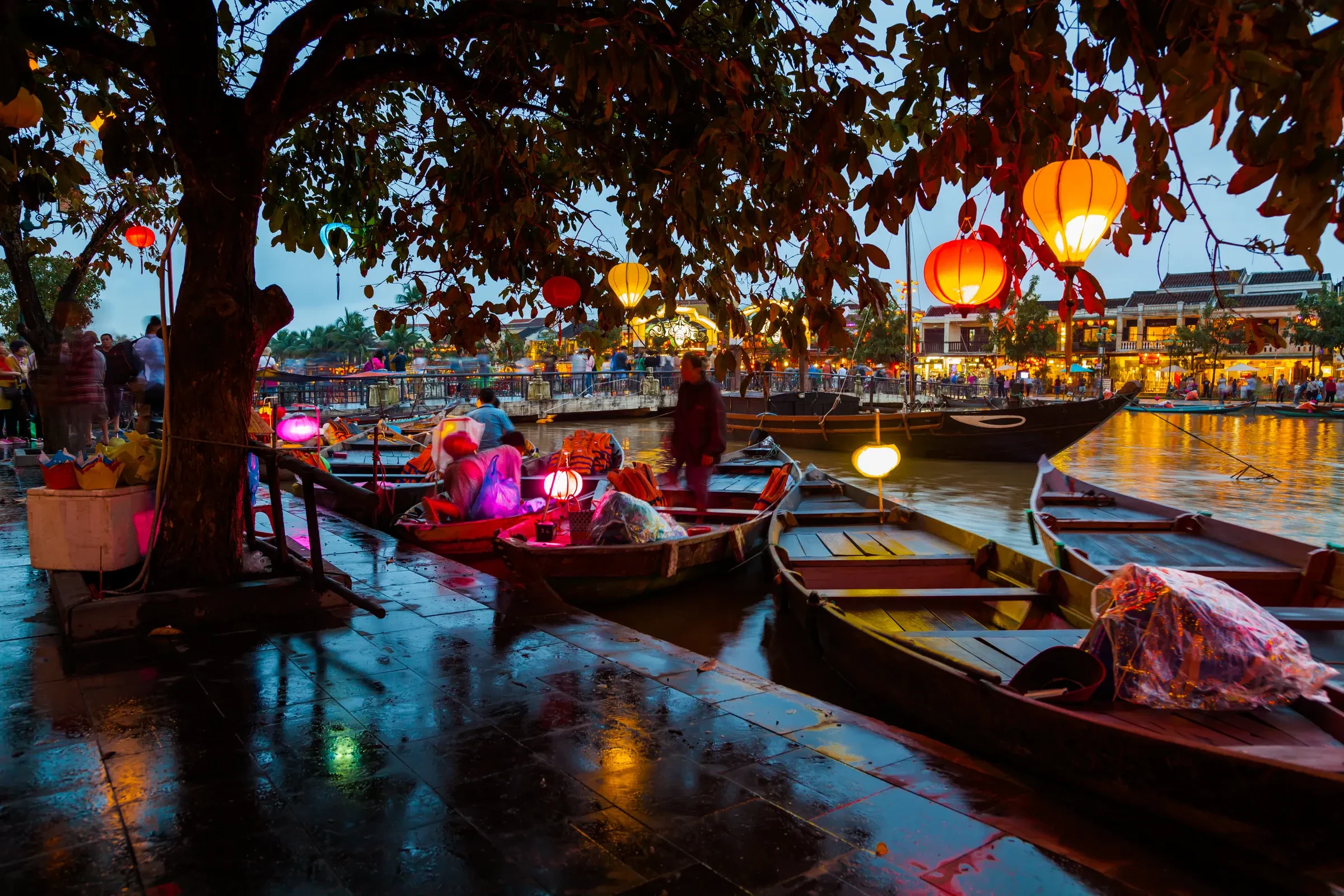
For a lantern night with the least chance of a wash-out, aim for February to August, since October to December is Hoi An's flood season (more on that below).
Tailors
Hoi An has been a tailoring town for tourists for decades, and it's still one of the few places in Vietnam where a made-to-measure jacket or dress is a realistic souvenir. Turnaround is usually 24 to 48 hours for two fittings, so if you're only here for two or three days, get to a tailor and have your first fitting on day one rather than your last afternoon. We don't recommend specific shops; ask other travellers at your hostel and look for a shop that will do a first fitting properly rather than rushing you through in one visit.
An Bang beach
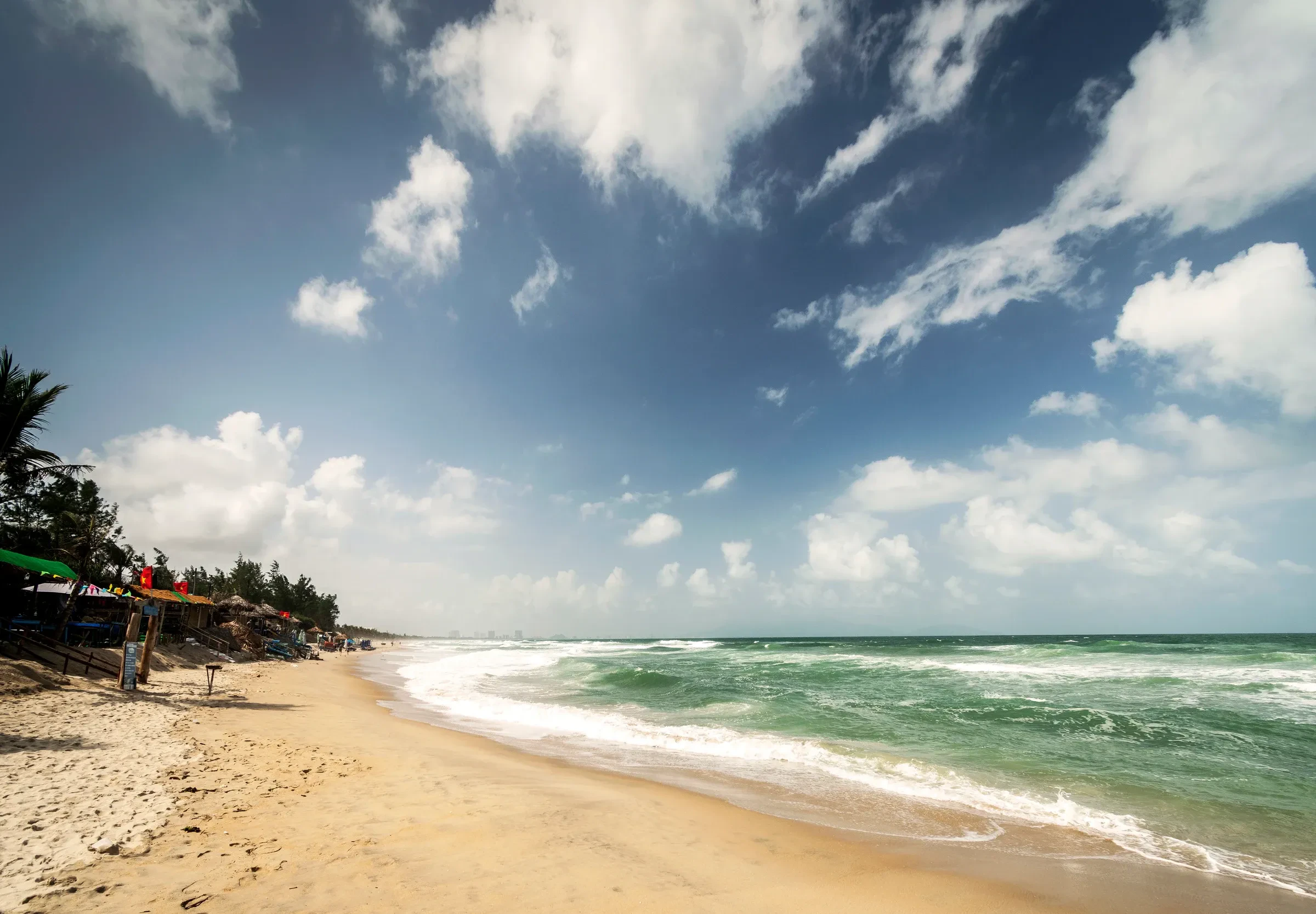
An Bang is Hoi An's beach, a flat and easy 4 to 5 km cycle through rice fields from the old town, about 15 to 20 minutes by bike. It's a good half day: swim, get a coffee at one of the beach cafes, and cycle back before the afternoon heat properly sets in. Bike hire in town costs a few tens of thousands of dong a day.
My Son
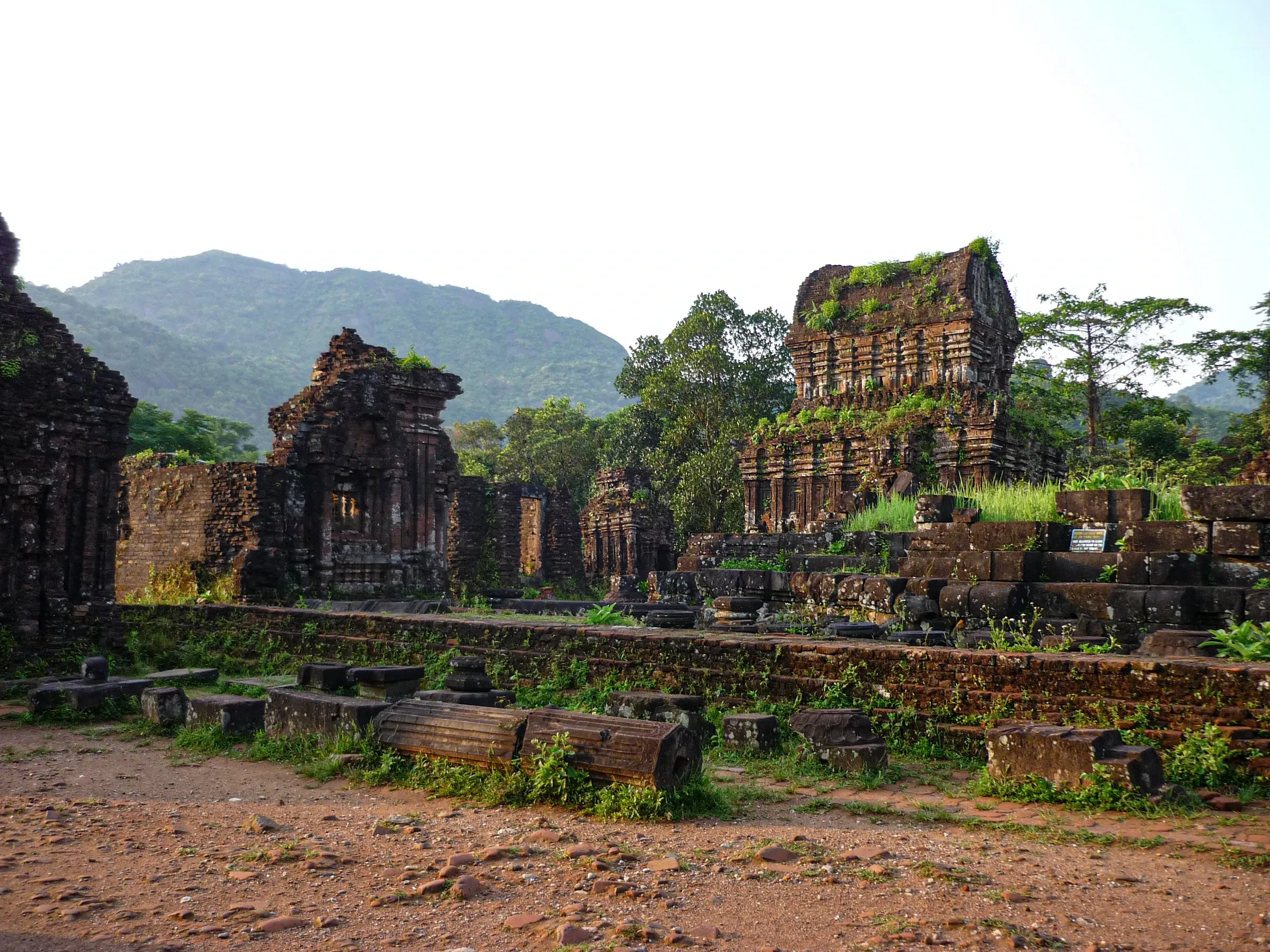
My Son is a cluster of ruined Hindu temples built by the Champa kingdom between roughly the 4th and 13th centuries, about 40 km and an hour's drive from Hoi An. Entry costs 150,000 dong for foreign visitors at the latest reports (100,000 for Vietnamese visitors; authorities are reviewing a single price for all visitors, so check before you go), and listings say it includes the electric cart between the entrance and the site. Go early, in the first hour or two after opening, to beat both the heat and the tour groups that arrive by mid-morning.
Basket boats and a cooking class
Just outside town at Cam Thanh, round basket boats paddle through a nipa-palm coconut forest, and several cooking schools combine a market visit with a paddle through the quieter side canals before the mid-morning tour convoys and loudspeaker "spinning boat" shows arrive. Go early (before 9am) or later in the afternoon, and pick a school that runs its own boats and pays the boat families directly rather than one that just drops you into the busiest stretch of canal.
How many days do you need in Hoi An?
Two to three days is enough to see the old town properly, walk it once by day and once by lantern light, fit in a tailor and get out to An Bang beach. Add a half day for My Son if the ruins interest you. With a week or more in central Vietnam, most people split their time between Hoi An and Hue over the Hai Van Pass, or combine Hoi An with the beach towns and the Mekong Delta further south. Our Vietnam itinerary guide sets out routes of every length, and if you'd rather cycle the coast between the two, our Hai Van Coastal Ride trip rides from Hue over the pass into Hoi An over a week.
Best time to visit Hoi An, and the flood season
Hoi An is at its best from February to May, when it's sunny and not yet at its hottest. June to August is hot but mostly dry, good for the beach. From about mid-October to mid-December, the rain arrives and the Thu Bon River can flood the old town's riverside streets, sometimes for a day or more. Flooding is most likely in October and November, and on 30 October 2025 the river passed the record set in 1964. If you're planning a trip in that window, build in flexibility, choose a hotel away from the riverfront, and check the forecast close to your dates. Our best time to visit Vietnam guide has the month-by-month detail for the whole country.
Hoi An on our trips
Our small-group trips for solo travellers aged 18 to 40 include a cooking class, basket boats, a bike ride to An Bang beach and a lantern-making workshop in Hoi An, and your Trip Host is with the group throughout.
Hoi An's old town can flood from mid-October to mid-December, so we schedule our trips outside that window.