Almost all of Hanoi's best eating happens on the pavement: a plastic stool, a low table, a pot of broth or a charcoal grill a few feet away. The Old Quarter's streets are still loosely named for the trade guild that once worked them, and food has settled into its own small clusters within them, one street for pho, another for grilled fish, a corner for beer.
Where Hanoi's street food clusters
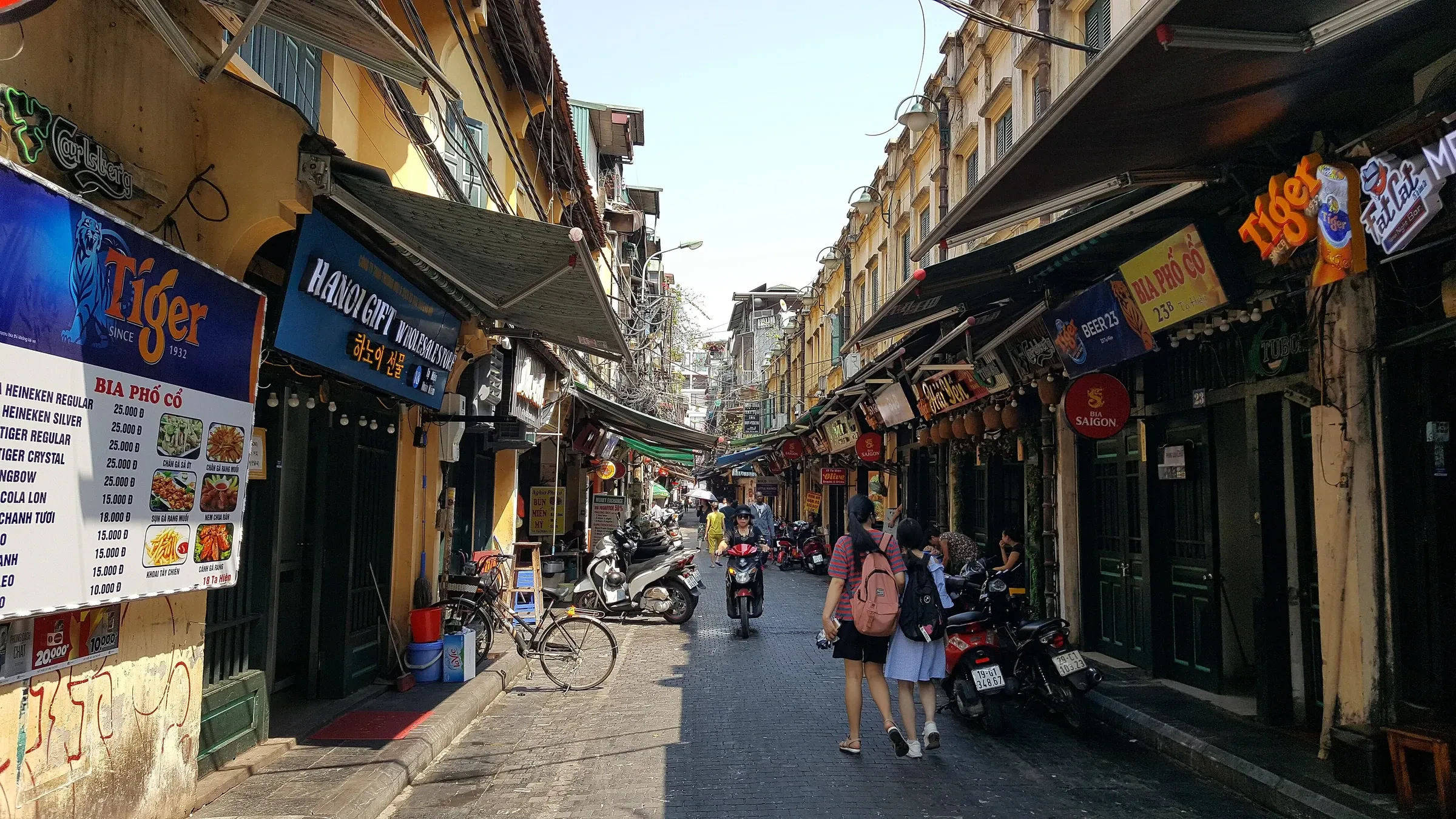
Old Quarter streets tend to specialise, a hangover from the days when each one belonged to a single guild. Bat Dan and Hang Manh are the pho streets, with queues out the door most mornings. Hang Buom and Ta Hien carry the evening crowd through to bia hoi. Nguyen Huu Huan, on the Old Quarter's eastern edge, does double duty: sticky rice in the morning, egg coffee any time of day. Cha Ca street (its modern name, taken from the dish) sits a few minutes north west, home to the restaurant that gave grilled fish its name here. All of it sits within easy walking distance of Hoan Kiem Lake.
Pho: Hanoi's own bowl
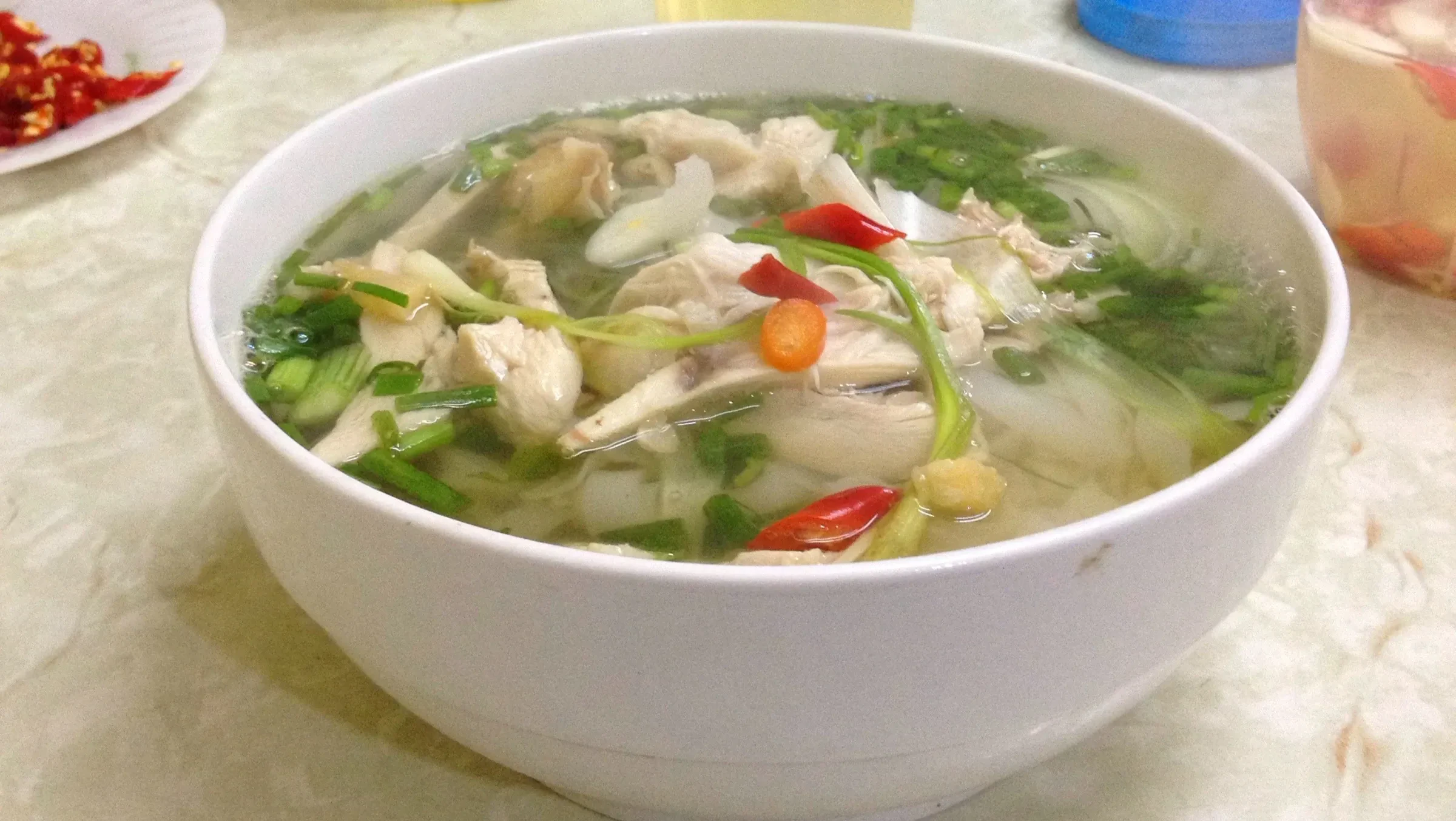
Pho started in the north, and Hanoi's version is plainer than what you'll find further south: a clear beef broth, flat rice noodles, a scatter of spring onion and coriander, no bean sprouts or basil piled on top, no hoisin or sriracha squeezed in. Pho bo (beef) is the default; pho ga (chicken) is lighter and just as widely sold, usually at the same stalls. Pho Gia Truyen, at 49 Bat Dan, is the Old Quarter's best-known address for it, a family-run stall that's been drawing a queue down the street for decades, serving just a handful of beef cuts. It only opens for a few hours at a time, roughly 6am to 10am and 6pm to 8.30pm, rather than running all day. Listings show a bowl there at roughly 50,000 to 70,000 dong, a little above the everyday street price.
Bun cha, cha ca and banh cuon
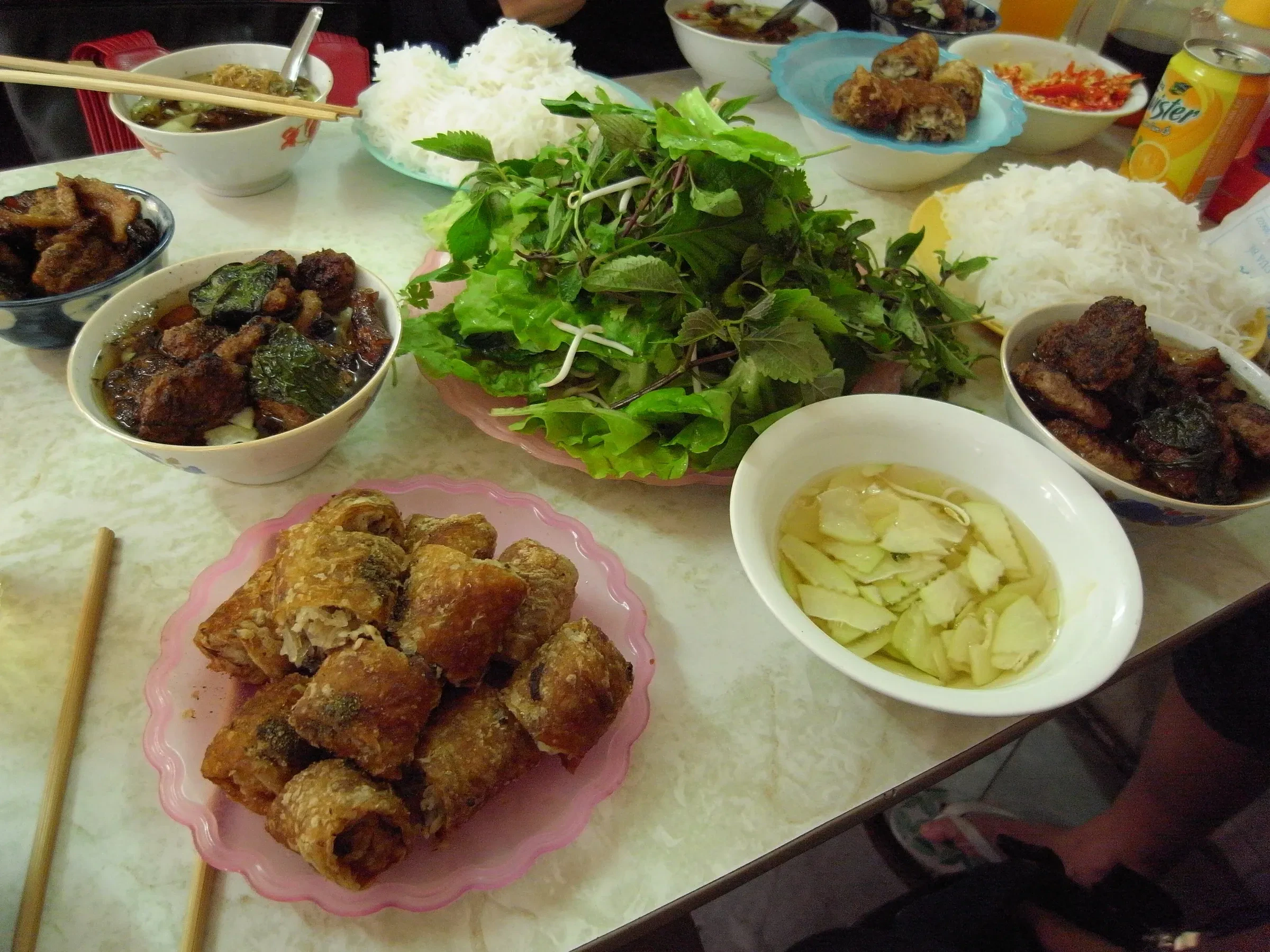
Bun cha is grilled pork, patties and slices both, served in a bowl of warm sweet-sour fish sauce with rice vermicelli and a plate of herbs on the side. You build each mouthful yourself, noodles and herbs dipped into the broth. Bun Cha Huong Lien, on Le Van Huu just south of the Old Quarter, is the shop that became known worldwide after Barack Obama ate there with Anthony Bourdain in 2016. Listings show a classic bowl at about 60,000 dong. The "Combo Obama" (bun cha, a fried spring roll and a Hanoi beer) is still on the menu, with 2026 listings giving it as 100,000 to 130,000 dong.
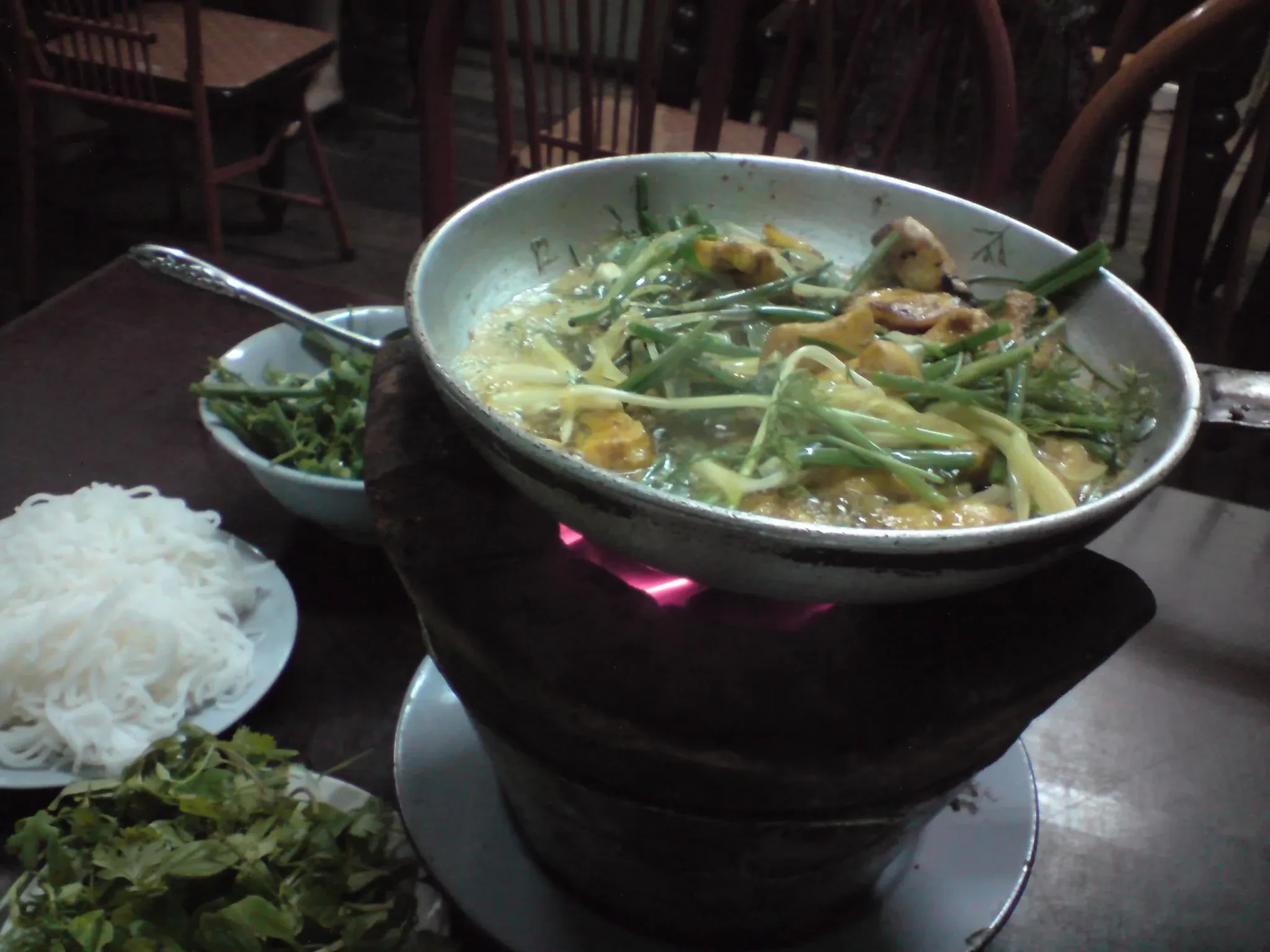
Cha ca is a different kind of meal: turmeric-marinated fish, grilled at your own table over a small charcoal brazier, then folded through dill, spring onion and rice noodles. Cha Ca La Vong, the restaurant that gave the dish and the street its name, has served it since the 1870s and still runs at 14 Cha Ca street. It's a sit-down restaurant rather than a stool stall, and priced accordingly: 2026 listings put it at around 350,000 dong a head.
Banh cuon, steamed rice-flour rolls filled with minced pork and wood-ear mushroom and topped with fried shallots, is more of a breakfast dish, sold from small stalls throughout the Old Quarter rather than one single address. Look for a stall with a steamer going and a stack of pre-folded rolls waiting.
Bun rieu, xoi and nem ran
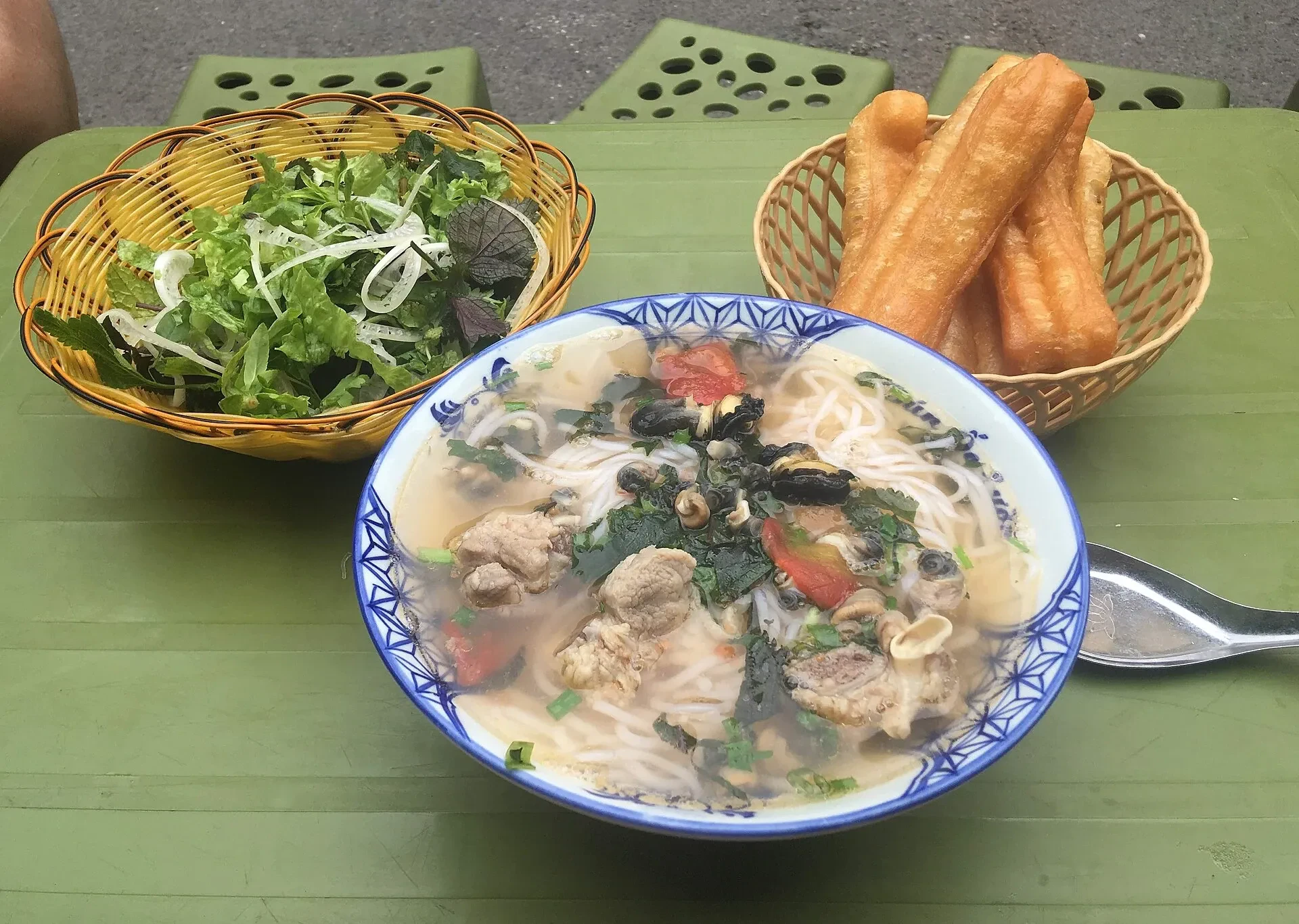
Bun rieu is a tomato-based broth with rice vermicelli and a crab paste that sets into loose curds as it cooks, sometimes topped with fried tofu or a boiled egg. It's a market-stall dish more than a destination one, found around the Old Quarter's morning food markets rather than at any single famous shop.
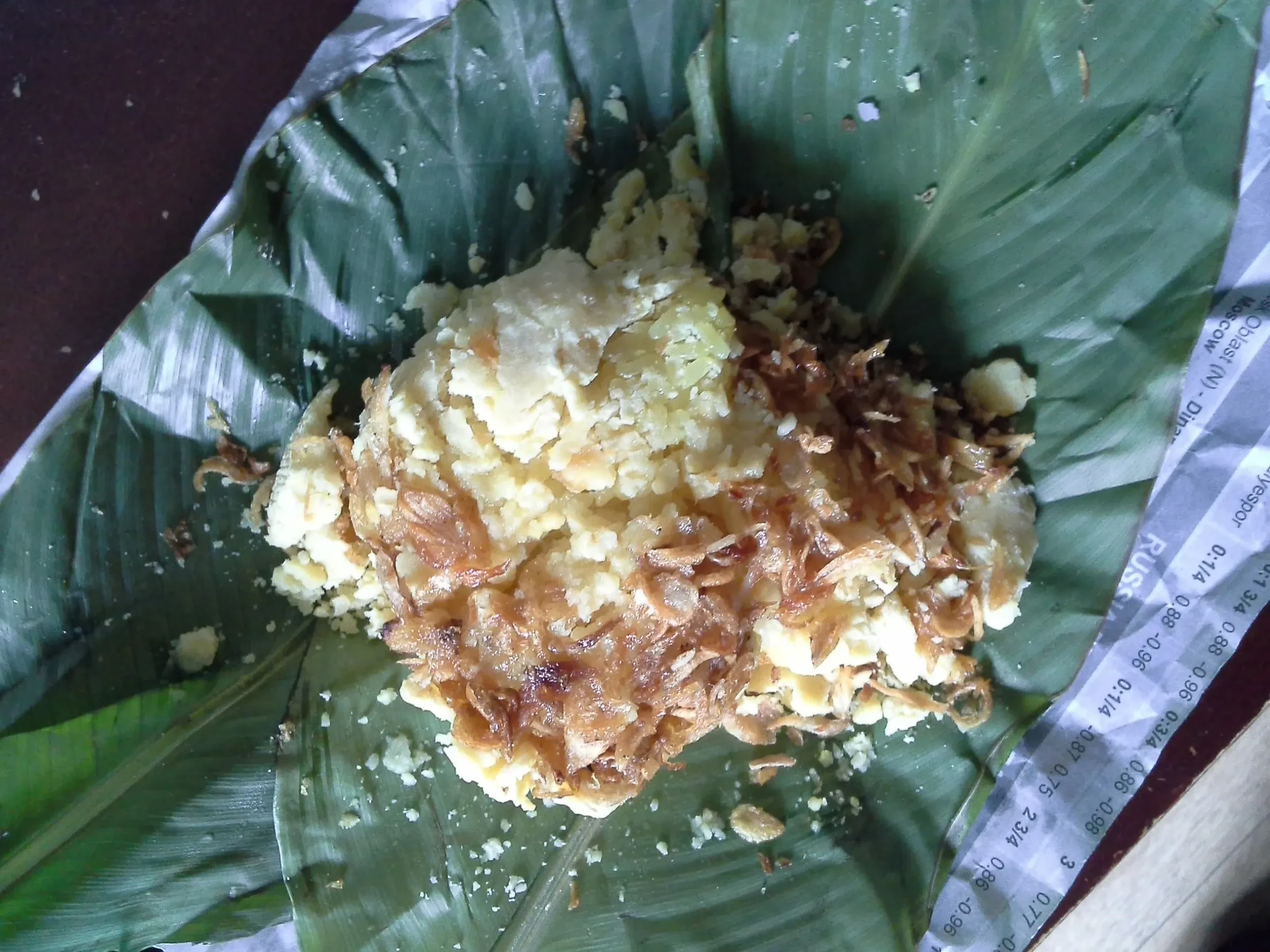
Xoi (sticky rice) is Hanoi's grab-and-go breakfast: steamed glutinous rice topped with anything from shredded chicken and pate to fried shallots and a fried egg, wrapped in a banana leaf or a box to eat on the move. Xoi Yen, on Nguyen Huu Huan, is the best-known name for it, usually busy from early morning, with bowls at about 20,000 to 50,000 dong on 2026 listings, depending on the toppings you choose.
Nem ran (fried spring rolls, sometimes called nem Ha Noi) rarely stands alone. It's the usual side to a bowl of bun cha or pho, deep-fried and cut into pieces, and it's what's inside the "Combo Obama" above.
Banh mi, egg coffee and bia hoi
Banh mi here is the same idea as anywhere else in Vietnam, a crisp baguette filled with pate, cold cuts, pickled carrot and daikon, cucumber, coriander and chilli, though Hanoi's crust tends to be lighter than the south's. Banh Mi 25, on Hang Ca, is a backpacker favourite for it, with baguettes at about 30,000 to 45,000 dong on 2026 listings.
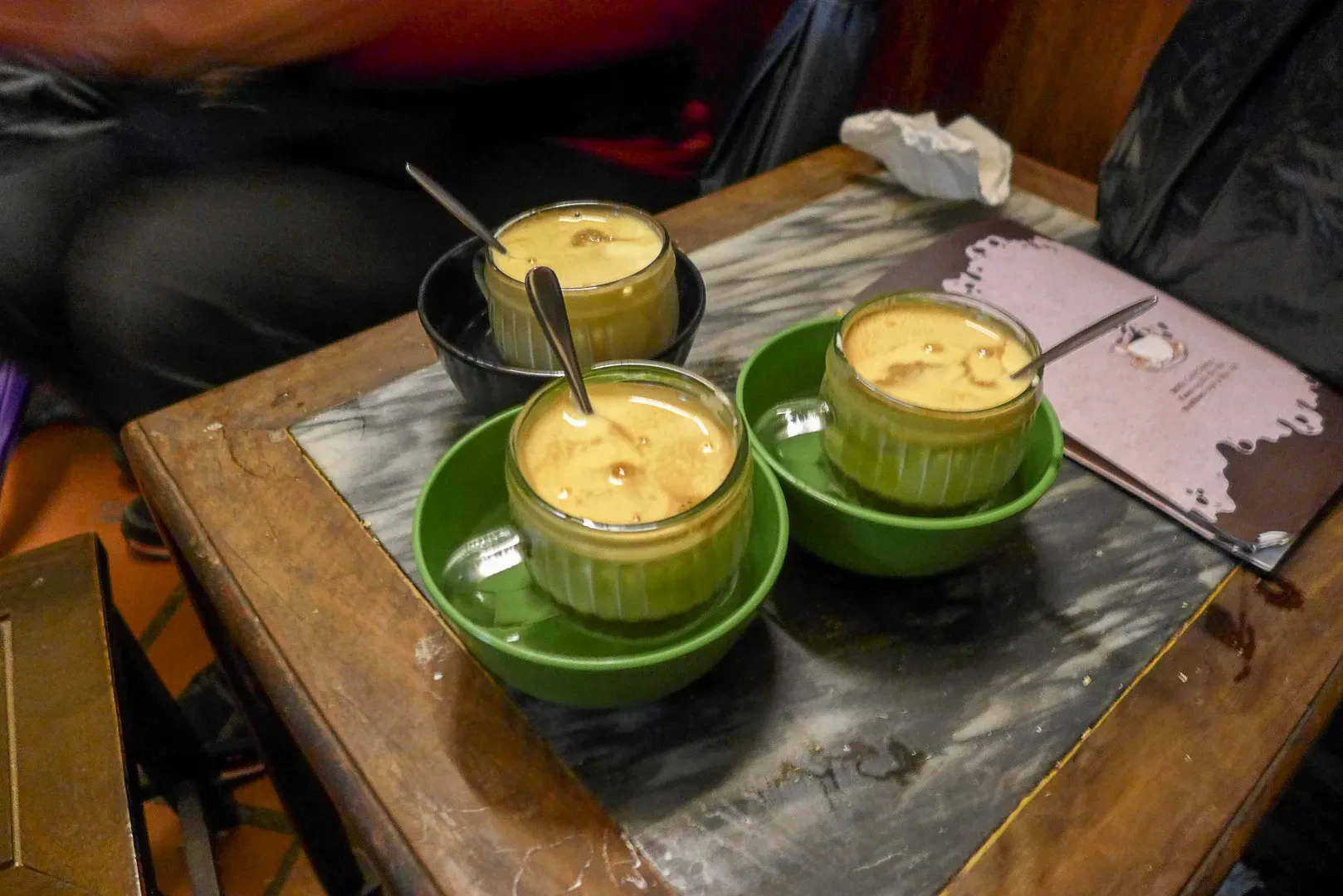
Egg coffee (ca phe trung) is Hanoi's own invention, egg yolk whisked with condensed milk over strong coffee, dating back to a shortage of fresh milk in the 1940s. Cafe Giang, tucked down an alley off Nguyen Huu Huan, is where it started in 1946 and still serves the original recipe today. Listings in 2026 put a cup at roughly 25,000 to 60,000 dong.
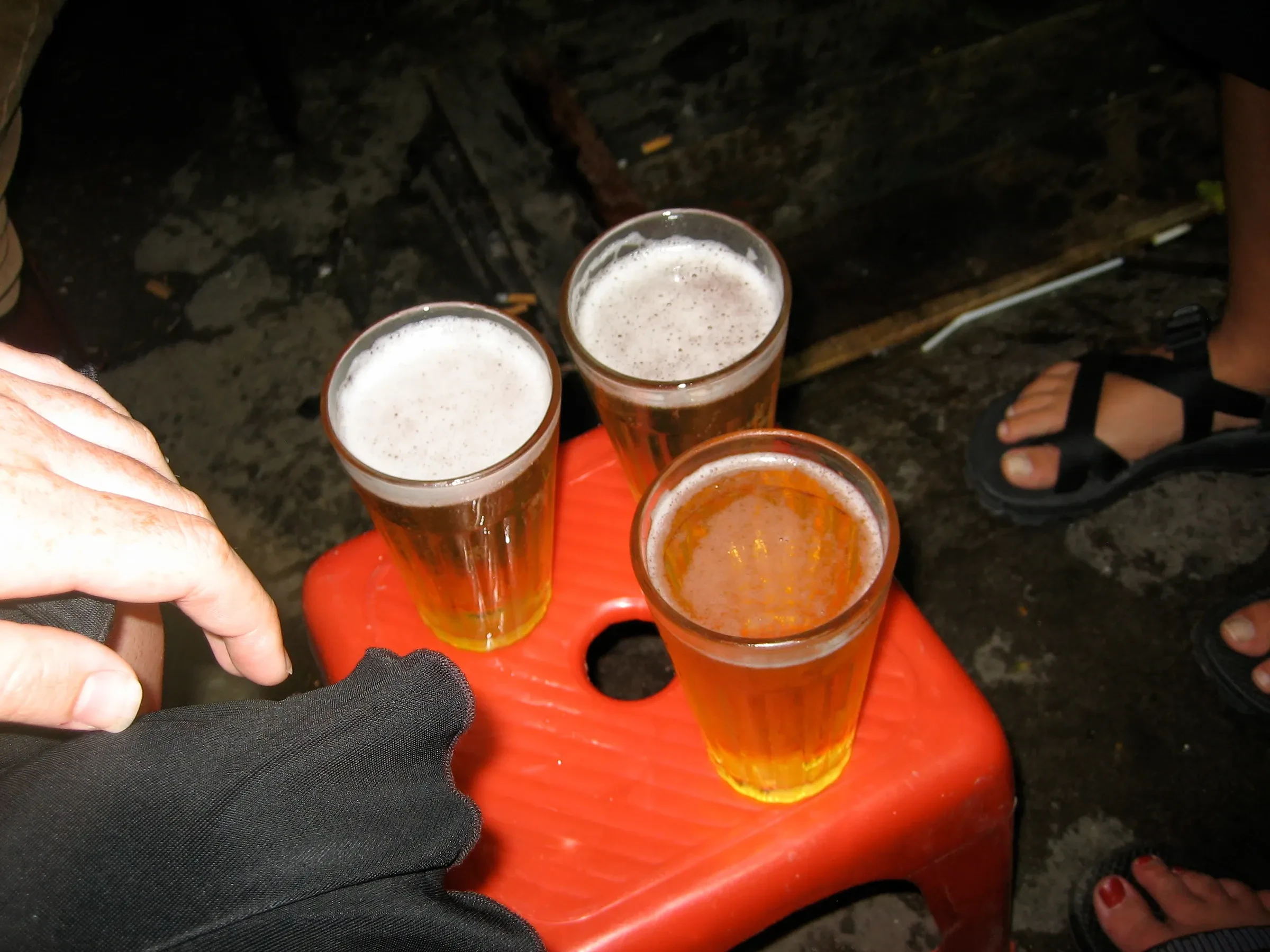
Bia hoi is cheap, light draught beer, brewed fresh and sold by the glass rather than the bottle. The "beer corner" around Ta Hien and Luong Ngoc Quyen is where it all comes together in the evening: plastic stools spilling off the pavement from early evening until around midnight, a glass at many street spots running about 5,000 to 15,000 dong on 2026 listings (tourist-focused bars charge more), and food stalls working the same crowd. It's the natural place to end a day of eating your way around the Old Quarter.
| Dish | Price on 2026 listings (dong) | Where |
|---|---|---|
| Pho bo or pho ga | 50,000 to 80,000 | Bat Dan and Hang Manh streets |
| Bun cha | 40,000 to 70,000 | Old Quarter and Le Van Huu |
| Cha ca | Around 350,000 (a sit-down meal, not a street stall) | Cha Ca street |
| Banh cuon | Varies by stall | Old Quarter breakfast stalls |
| Bun rieu | Varies by stall | Old Quarter markets |
| Xoi (sticky rice) | 20,000 to 50,000 | Nguyen Huu Huan street |
| Nem ran | Usually included as a side dish | Alongside bun cha or pho |
| Banh mi | 30,000 to 45,000 | Hang Ca and stalls citywide |
| Egg coffee | 25,000 to 60,000 | Old Quarter cafes |
| Bia hoi (glass) | 5,000 to 15,000 at many street spots | Ta Hien and Luong Ngoc Quyen |
How do you order and pay for Hanoi street food?
Most stalls sell one or two dishes and nothing else, so ordering is usually just naming the dish, or holding up fingers for how many bowls, rather than reading a menu. Prices are often chalked on a board or taped to the wall; if not, ask before you sit down, since a small number of stalls in the busiest tourist spots quietly charge foreigners more. Payment is cash, in dong, handed to whoever's cooking or serving once you're done, not to a separate till or waiter. Small notes help, since a cheap stall doesn't always have change for a large one. Card payment is rare to non-existent at street level, so carry enough cash for the day.
What's the etiquette on the plastic stools?
Sharing a table with strangers is normal once a stall fills up; nobody minds. Stools and tables are low and light, which is part of the appeal rather than a problem, though it's worth knowing before you sit down with a full bowl of hot broth. Extras like chilli, lime, herbs and fish sauce usually sit on the table or a nearby cart for you to help yourself; nobody brings them to you. Eating standing up or walking off with a bowl isn't really done, since stalls expect you to sit, eat and hand back the bowl before you go. There's no tipping culture at street level, though rounding up a small bill is fine.
Food tours: ride pillion, never self-drive
If you'd rather have someone else pick the stalls, a guided street food tour by motorbike is the fastest way to cover several of Hanoi's clusters in one evening: usually several tastings across the Old Quarter and beyond, over about 3 to 3.5 hours, for roughly US$55 to 75 per person on 2026 booking listings. Walking tours of the Old Quarter cost less, from about US$25. On a motorbike tour you ride pillion behind the operator's own driver rather than a bike you rent and ride yourself. Vietnam's licence rules for self-driving are strict enough that riding as a passenger is the sensible choice for almost everyone visiting, on a food tour or otherwise. Our Vietnam safety guide covers the licence and traffic picture in full.
Hygiene tips for eating on the street
Tap water isn't safe to drink anywhere in Vietnam, so stick to bottled or filtered water, and be cautious with ice unless you can see it's come from a proper block or tube rather than sitting loose in an open container. Cooked food, including broths, rice and boiled noodles, is generally fine, since the heat deals with anything in the water used to make it. The best sign of a safe stall is turnover: a queue of locals, a pot that's constantly refilled, food cooked in front of you rather than left sitting out. Our Vietnam food guide has more on eating well across the rest of the country, and our Hanoi hostels guide covers where to base yourself for easy walking access to all of this.
For more on getting around Hanoi and where to base yourself, see our Hanoi travel guide and things to do in Hanoi. Heading further afield afterwards, our Vietnam itinerary guide covers how Hanoi fits into a longer trip north to south.