Vietnam packs an unusual amount into one country: limestone bays, a 350km mountain motorbike loop, war history, colonial cities and some of the best street food anywhere. Nobody does all of it in one trip, so this page sets out the experiences worth actually planning your route around, rather than a long list of everything you could theoretically fit in.
Each one below links down to a full guide with the getting-there detail, the day-by-day and the current safety notes. This page is about picking what matters to you; where to go in Vietnam covers the places themselves, and our Vietnam itineraries show how to string a selection of these into 1 week, 10 days, 2 weeks, 3 weeks or a month.
The experiences, in short
| Experience | Where | Cost | Time needed |
|---|---|---|---|
| A night on Lan Ha or Ha Long Bay | Halong, near Hanoi | US$105 to 250 pp, 2D1N | 1 to 2 nights |
| The Ha Giang Loop | Ha Giang, far north | US$190 to 240 at budget operators, 4 days | 4 to 5 days |
| Trekking around Sapa | Sapa, northern mountains | 75,000 to 700,000 VND | Half a day to 3 days |
| Ninh Binh by boat | Ninh Binh, south of Hanoi | Trang An boat 300,000 VND | 1.5 to 3.5 hours |
| Phong Nha's caves | Phong Nha, central Vietnam | 150,000 to 700,000 VND | Half a day to 2 days |
| Hue's citadel and tombs | Hue, central Vietnam | 200,000 to 530,000 VND | 1.5 to 2 days |
| The Hai Van Pass | Between Hue and Da Nang | US$15 to 25 shared | Half a day |
| Hoi An's lantern nights and tailors | Hoi An, central Vietnam | Free to a few dollars; tailoring varies | 1 to 2 hours; 2 fittings |
| Street food in Hanoi | Hanoi Old Quarter | 30,000 to 130,000 VND a dish | A few hours to an evening |
| Street food in Saigon | Ho Chi Minh City | US$20 to 55 for a guided tour | 3 to 3.5 hours |
| The Cu Chi Tunnels | Near Ho Chi Minh City | About 90,000 to 125,000 VND entry; tour US$15 to 35 | Half a day |
| The Mekong Delta's floating markets | Can Tho, Mekong Delta | 100,000 to 400,000 VND | Half a day to 4 days |
| Phu Quoc's islands | Phu Quoc island | US$15 to 80 for a boat trip | 2 to 5 days |
| Da Lat canyoning | Da Lat, central highlands | Varies by operator | Half a day |
| Tet or Mid-Autumn | Nationwide | Free to watch | Timed with your dates |
1. A night on Lan Ha or Ha Long Bay
What it is: a cruise through the limestone karst towers of the Gulf of Tonkin, most people's single most-photographed stop in Vietnam.
Why: Lan Ha Bay sits in the same karst system as Ha Long Bay but carries far less boat traffic, so a 2 day, 1 night cruise gets you an afternoon of kayaking and swimming, one cave, dinner on board and a quiet night at anchor, followed by a morning activity before you disembark. A day cruise from Ha Long City or Cat Ba covers the same views in five to seven hours if you're short on time, but you miss the sunrise and sunset both give you.
Where: cruises leave from Ha Long City's Tuan Chau pier or from Cat Ba island, most with a shuttle from Hanoi's Old Quarter included.
Cost: budget boats run roughly US$105 to 160 per person for a 2D1N cruise; mid-range boats run US$145 to 250.
Time needed: one night is enough for most people; a second mainly adds more time on the water rather than new sights.
Photo: guide-vietnam-things-to-do-1
Full detail: Ha Long Bay, Lan Ha Bay or Bai Tu Long: which bay and which cruise, and Ha Long Bay vs Lan Ha Bay if you're choosing between the two.
2. The Ha Giang Loop, pillion with an easy rider
What it is: a motorbike circuit of about 350km through the limestone mountains on Vietnam's border with China, most people's answer when asked for their trip highlight.
Why: the road itself, through Yen Minh, Dong Van and the Ma Pi Leng Pass, is the point, along with village homestays and evenings that usually end with a shared bottle of "happy water". Most people ride as a passenger behind a licensed local "easy rider" rather than driving themselves. Self-riding is only legal with a home motorbike licence plus an International Driving Permit issued under the 1968 Vienna Convention; standard permits from the US, Canada, Australia, New Zealand, India, Ireland and Spain don't qualify, which is why almost everyone rides pillion instead.
Where: starts and ends in Ha Giang town, reached by a roughly 6-hour van ride from Hanoi.
Cost: a 4-day easy-rider tour runs about US$190 to 240 at budget operators, and some quote US$280 or more. Tip your rider 400,000 to 800,000 dong in cash at the end. Since April 2026 only licensed operators can run motorbike tours there, so book with one.
Time needed: 4 days riding is the comfortable fit inside a 1-week trip from Hanoi, with a travel day either side. The best months are October and November; March and April are a good shoulder season, and May to September is hot and wet.
Photo: guide-vietnam-things-to-do-2
Full detail: Ha Giang Loop guide: route, costs, safety and how to do it solo.
3. Trekking around Sapa
What it is: valley walking between rice terraces and Hmong, Red Dao and Giay villages in Vietnam's northern mountains, with the option to add a homestay night.
Why: the classic route from Y Linh Ho through Lao Chai to Ta Van covers 9 to 12km of the Muong Hoa valley in 3.5 to 4.5 hours, no technical skill needed. A local guide isn't required by law, except for the Fansipan summit trek, but hiring one from the villages puts your money directly into the valley's economy and keeps you from getting lost after rain washes out a path.
Where: trailheads leave from Sapa town, reached from Hanoi by sleeper bus, limousine van or the night train to Lao Cai.
Cost: entry to the Lao Chai and Ta Van area is 75,000 VND; a guide costs roughly 500,000 to 700,000 VND a day.
Time needed: half a day for Cat Cat village, a full day for the classic valley trek, or 2 to 3 days with homestay nights for the longer routes.
Photo: guide-vietnam-things-to-do-3
Full detail: Trekking in Sapa: routes, guides and how to plan it.
4. Ninh Binh by boat
What it is: a rowed sampan gliding between limestone karst towers and flooded rice fields, the scenery people mean when they call Ninh Binh "Ha Long Bay on land".
Why: Trang An is the longer ride, 2 to 3.5 hours through caves and temples depending on the route; Tam Coc is shorter, 1.5 to 2 hours, and combines more easily with a bike ride and the sunset climb up Hang Mua's roughly 500 stone steps.
Where: boats leave from wharves in Trang An and Tam Coc village, both about 2 to 2.5 hours south of Hanoi by road.
Cost: the Trang An boat is 300,000 VND for adults (since 1 January 2026), and Tam Coc's ticket is lower, so check the price at the wharf. Hang Mua's viewpoint is 150,000 VND to enter (since 1 April 2026). Tip the rower around 50,000 VND per boat.
Time needed: one full day covers the highlights; an overnight lets you do both boat rides plus cycling without rushing.
Photo: guide-vietnam-things-to-do-4
Full detail: Ninh Binh guide: Tam Coc vs Trang An and the karsts.
5. Phong Nha's caves
What it is: show caves and river caving in Phong Nha-Ke Bang National Park, home to some of the biggest cave passages on Earth, including Son Doong.
Why: Paradise Cave is the dry, "wow" cave, a kilometre of lit boardwalk through stalactite chambers; Dark Cave adds a zipline, a mud bath and a kayak back out; the Phong Nha Cave itself is a boat ride up the Son river. Most people do one full day of caves plus an evening cycling the Bong Lai valley.
Where: fly into Dong Hoi (about 45km away) or take the overnight sleeper train, then a van into Phong Nha town.
Cost: Paradise Cave is about 250,000 to 270,000 VND; Dark Cave's full package is about 450,000 VND; the Phong Nha Cave boat trip is 150,000 VND entry plus a shared boat fee.
Time needed: two nights is the standard stay; longer for a Hang En trek or Son Doong expedition, both of which need booking well ahead.
Photo: guide-vietnam-things-to-do-5
Full detail: Phong Nha travel guide for solo travellers: caves, Son Doong and how many days.
6. Hue's citadel and tombs
What it is: the walled Imperial City of Vietnam's last royal dynasty on the Perfume River, plus a scatter of ornate royal tombs in the hills nearby.
Why: the Nguyen dynasty ruled from here from 1802 to 1945, and the Ngo Mon Gate, Thai Hoa Palace and the Purple Forbidden City's ruins are still worth two to three hours alone. Of the tombs, Tu Duc's is the greenest and most relaxed, Minh Mang's the most formally laid out, and Khai Dinh's the strangest, a concrete, mosaic-covered building that splits opinion.
Where: a combined ticket covers the Imperial City and three tombs, bought at the Imperial City's own counter, not from a street tout.
Cost: the Imperial City alone is 200,000 dong; the combined citadel-and-tombs ticket is 530,000 dong and valid for two days.
Time needed: 1.5 to 2 days covers the citadel, the river and two tombs; add a full day if you want the Demilitarized Zone as well.
Photo: guide-vietnam-things-to-do-6
Full detail: Hue guide: the citadel, the tombs and the Hai Van Pass.
7. The Hai Van Pass
What it is: a roughly 21km mountain road climbing to about 500m between Hue and Da Nang, with the coastline and Lang Co lagoon on one side and jungle on the other.
Why: it's usually done as one leg of the road route from Hue to Hoi An, riding pillion with a licensed easy rider or by car, rather than a destination on its own. The Hue to Da Nang train covers the same stretch in about 2.5 to 4 hours if you'd rather watch it from a window. As with the Ha Giang Loop, riding it yourself needs a home motorbike licence plus a 1968-convention International Driving Permit.
Where: between Hue and Da Nang, with Hoi An as the usual onward stop since it has no train station or airport of its own.
Cost: a shared easy rider or motorbike hire for the crossing runs about US$15 to 25.
Time needed: half a day, either as a dedicated out-and-back from Da Nang or as one travel day inside a longer route.
Photo: guide-vietnam-things-to-do-7
Full detail: the Hai Van Pass section of things to do in Da Nang.
8. Hoi An's lantern nights and tailors
What it is: silk lanterns lit over the Hoai River every night, and a made-to-measure jacket or dress from one of the town's tailoring shops.
Why: Hoi An's old town glows every evening, but once a month, on the 14th day of the lunar calendar, the street lights switch off and small floating candle lanterns drift down the river for the full-moon festival. Tailoring here is a real, decades-old trade rather than a tourist gimmick, but turnaround is 24 to 48 hours across two fittings, so start on your first morning in town, not your last.
Where: the riverside streets around Bach Dang Street for the lanterns; tailor shops throughout the Old Town and just outside it.
Cost: walking the lantern-lit streets is free; a candle lantern and a short rowing boat cost a few dollars; tailoring costs vary widely by fabric and garment.
Time needed: an hour or two after dark for the lanterns; two shop visits, 24 to 48 hours apart, for tailoring.
Photo: guide-vietnam-things-to-do-8
Full detail: Things to do in Hoi An and Hoi An lantern festival guide: full moon dates, boats and tips for every 2026 and 2027 date.
9. Street food in Hanoi
What it is: pho, bun cha, cha ca and egg coffee, eaten at a plastic stool on the pavement rather than in a restaurant.
Why: Hanoi's Old Quarter streets still specialise by trade, a hangover from their guild days: Bat Dan and Hang Manh for pho, Hang Buom and Ta Hien for the evening bia hoi crowd, Nguyen Huu Huan for egg coffee. Eating this way is cheap, fast and, for most dishes, better than anything served in a restaurant nearby.
Where: clustered through the Old Quarter, all within easy walking distance of Hoan Kiem Lake.
Cost: a street-food dish costs about 30,000 to 80,000 dong; a guided motorbike food tour, ridden pillion behind the operator's own driver, runs about US$55 to 75 on 2026 booking listings, and a walking tour starts from about US$25.
Time needed: a few hours for a self-guided crawl; about 3 hours for a guided tour.
Photo: guide-vietnam-things-to-do-9
Full detail: Hanoi street food: bun cha, pho, egg coffee and where to find them.
10. Street food in Saigon
What it is: a denser, spicier, herb-heavier food scene than Hanoi's, best covered on a pillion food tour after dark.
Why: Ho Chi Minh City's food streets are more spread out than the Old Quarter's tight grid, so a motorbike tour behind a licensed driver, stopping at 5 to 7 food stalls across a few districts, is the easiest way to cover a proper range in one evening.
Where: districts 1, 3 and 4, plus a rooftop bar to finish the night.
Cost: a guided motorbike food tour runs roughly US$40 to 55 for about 3 to 3.5 hours.
Time needed: 3 to 3.5 hours for a tour, or spread across an evening if you're going stall to stall yourself.
Photo: guide-vietnam-things-to-do-10
Full detail: Things to do in Ho Chi Minh City.
11. The Cu Chi Tunnels
What it is: a widened section of the tunnel network Viet Cong fighters used during the war, with bunkers and booby-trap displays alongside it.
Why: it's the best half-day trip out of Ho Chi Minh City for anyone interested in Vietnam's war history, though the tunnels have been enlarged for visitors, so it isn't a fully authentic squeeze.
Where: about 70km northwest of Ho Chi Minh City.
Cost: foreign entry is about 90,000 to 125,000 dong depending on the site (the cash-only counters take dong); a guided day tour with transport runs about US$15 to 35.
Time needed: a full morning or afternoon.
Photo: guide-vietnam-things-to-do-11
Full detail: the Cu Chi Tunnels section of things to do in Ho Chi Minh City.
12. The Mekong Delta's floating markets
What it is: Cai Rang, Vietnam's largest floating market, plus quieter canals and coconut groves around Can Tho and Ben Tre.
Why: Cai Rang is smaller than older photos suggest, since wholesale trade has shifted from boats to roads, but it's still worth the early start, busiest between 5:30am and 8:30am with boats hanging cargo samples from tall "beo" poles. An overnight homestay gets you there in time; a day trip from Ho Chi Minh City can't.
Where: Can Tho is the usual base, about 3 to 3.5 hours by van from Ho Chi Minh City.
Cost: a boat to Cai Rang runs about 100,000 to 400,000 dong per person, more with breakfast and stops.
Time needed: one night in Can Tho is the minimum for Cai Rang; 2 to 4 days lets you add Ben Tre's canals or a Chau Doc side trip.
Photo: guide-vietnam-things-to-do-12
Full detail: Mekong Delta guide: Can Tho, Ben Tre and the floating markets.
13. Phu Quoc's islands
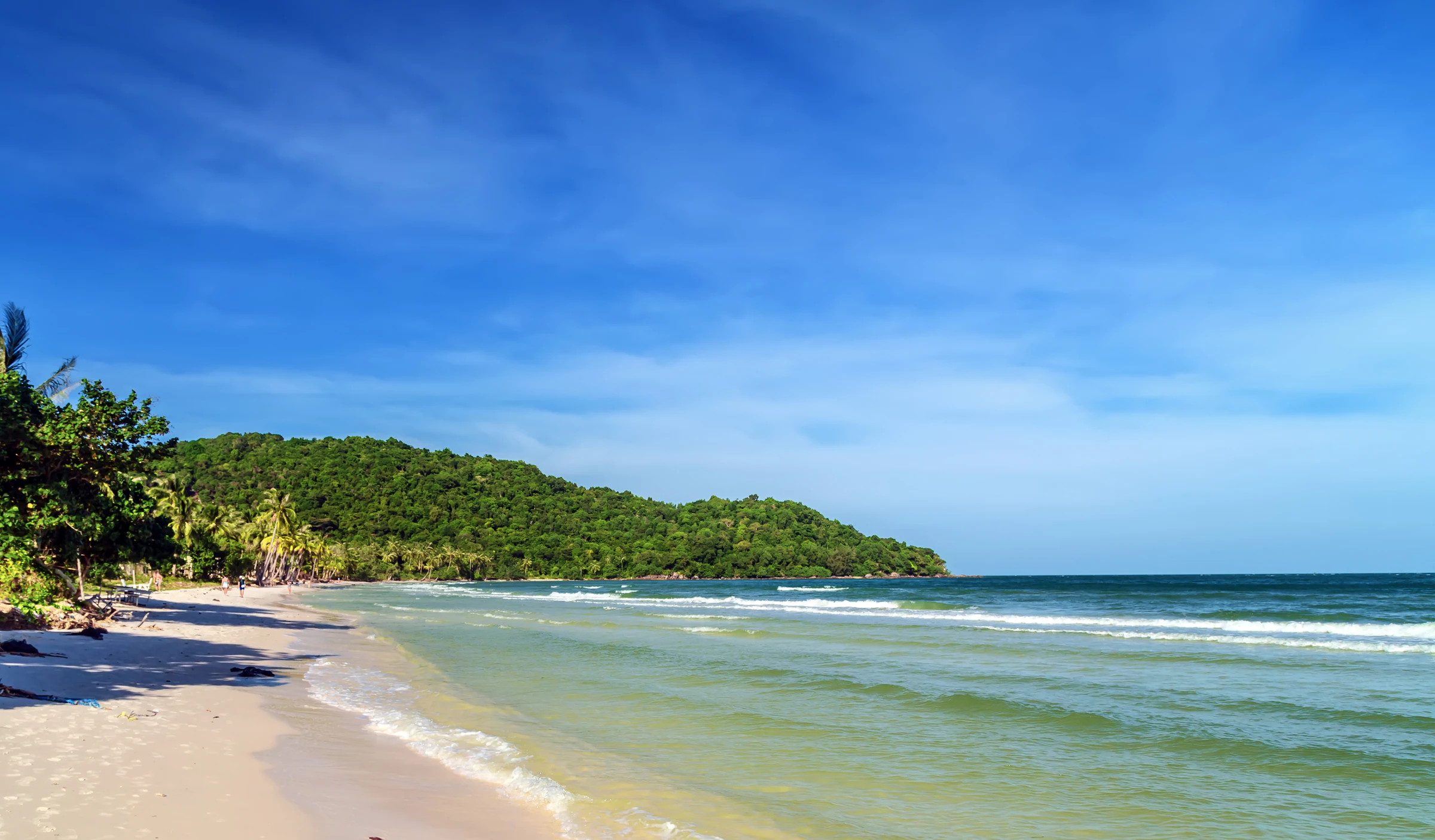
What it is: Vietnam's largest island, with white-sand beaches, a boat trip out to the An Thoi archipelago for snorkelling, and a cable car to Hon Thom.
Why: Long Beach is the easy first stop for sunset, Sao Beach the best white sand, and Ong Lang the quieter option if you'd rather skip the crowds. The An Thoi boat trips stop at 2 to 4 smaller islands with snorkelling gear and lunch usually included.
Where: reached by a roughly 1-hour domestic flight from Ho Chi Minh City; Phu Quoc also has its own 30-day visa-free rule for direct international arrivals, which doesn't cover onward travel to the mainland.
Cost: a group snorkelling boat runs US$15 to 40 per person; a private speedboat from about US$34; the Hon Thom cable car and buffet combined runs around US$80.
Time needed: 2 to 3 days covers the beaches and one boat trip; 4 to 5 days adds the cable car and a farm visit.
Photo: guide-vietnam-things-to-do-13
Full detail: Things to do in Phu Quoc.
14. Da Lat canyoning
What it is: abseiling down waterfalls, cliff jumps and natural water slides in the canyons around Da Lat, a cool-climate hill town in the Central Highlands.
Why: it's Da Lat's headline activity and genuinely exciting when it's run properly, but it isn't risk-free. Book only with an operator that issues a helmet, harness and life jacket for every jump and abseil, briefs you properly, and can show a business licence; unlicensed operators have been linked to serious injuries and, in past years, deaths.
Where: Datanla Falls, about 5km south of Da Lat town, is the usual starting point.
Cost: varies by operator; treat a price well below everyone else's as a reason to ask more questions, not book faster.
Time needed: half a day, usually paired with the Crazy House or a coffee farm on the same trip.
Photo: guide-vietnam-things-to-do-14
Full detail: Da Lat guide: the highlands and the canyoning.
15. Time it around Tet or the Mid-Autumn Festival
What it is: Vietnam's two biggest calendar events, Tet (Lunar New Year) and Tet Trung Thu (Mid-Autumn Festival), both worth timing a trip around if your dates allow it.
Why: Tet 2027 falls on Saturday 6 February, with flower markets and red lanterns filling the streets in the weeks before and a very quiet, family-centred first few days after. It's a lovely time to see Vietnam at home, but transport sells out and many small shops and restaurants close for several days, so it takes more planning than a normal trip. Mid-Autumn Festival, next on Wednesday 15 September 2027, is smaller and doesn't close anything down: Hanoi's Hang Ma street fills with lanterns and masks for weeks before it. It falls on the 15th lunar day, the night after Hoi An's monthly lantern night, so the two pair up well.
Where: Hanoi and Ho Chi Minh City for Tet's flower streets and fireworks; Hanoi's Hang Ma street or Tuyen Quang's giant lantern parade for Mid-Autumn.
Cost: free to watch both.
Time needed: build your trip dates around either festival rather than treating it as a single day.
Photo: guide-vietnam-things-to-do-15
Full detail: Tet in Vietnam: 2027 dates, what happens and how to travel through it, and Mid-Autumn Festival in Vietnam: lanterns, mooncakes and dates.
Practical notes
Distances are bigger than they look on a map, and Vietnam runs north to south, so pick a handful of these rather than trying for all 15 in one trip. A 1-week trip fits comfortably around one region, north, centre or south; our Vietnam itineraries show how 10 days, 2 weeks, 3 weeks and a month each add on more of this list. Riding a motorbike yourself, whether on the Ha Giang Loop or the Hai Van Pass, needs a home licence plus a 1968-convention International Driving Permit; riding pillion with a licensed local driver is the far more common choice and keeps your travel insurance valid. See our Vietnamese food guide for what to eat beyond the street stalls above, and festivals in Vietnam for the full year-round calendar.
Prefer to travel with a group?
Every experience above can be booked and pieced together yourself, or joined as part of a small-group trip with a Trip Host from day one. See our Vietnam group trips for the full list of routes.