This page is for Canadian passport holders. The main Vietnam visa and entry requirements guide covers other nationalities and has more on customs, health and overstays.
Do Canadians need a visa for Vietnam?
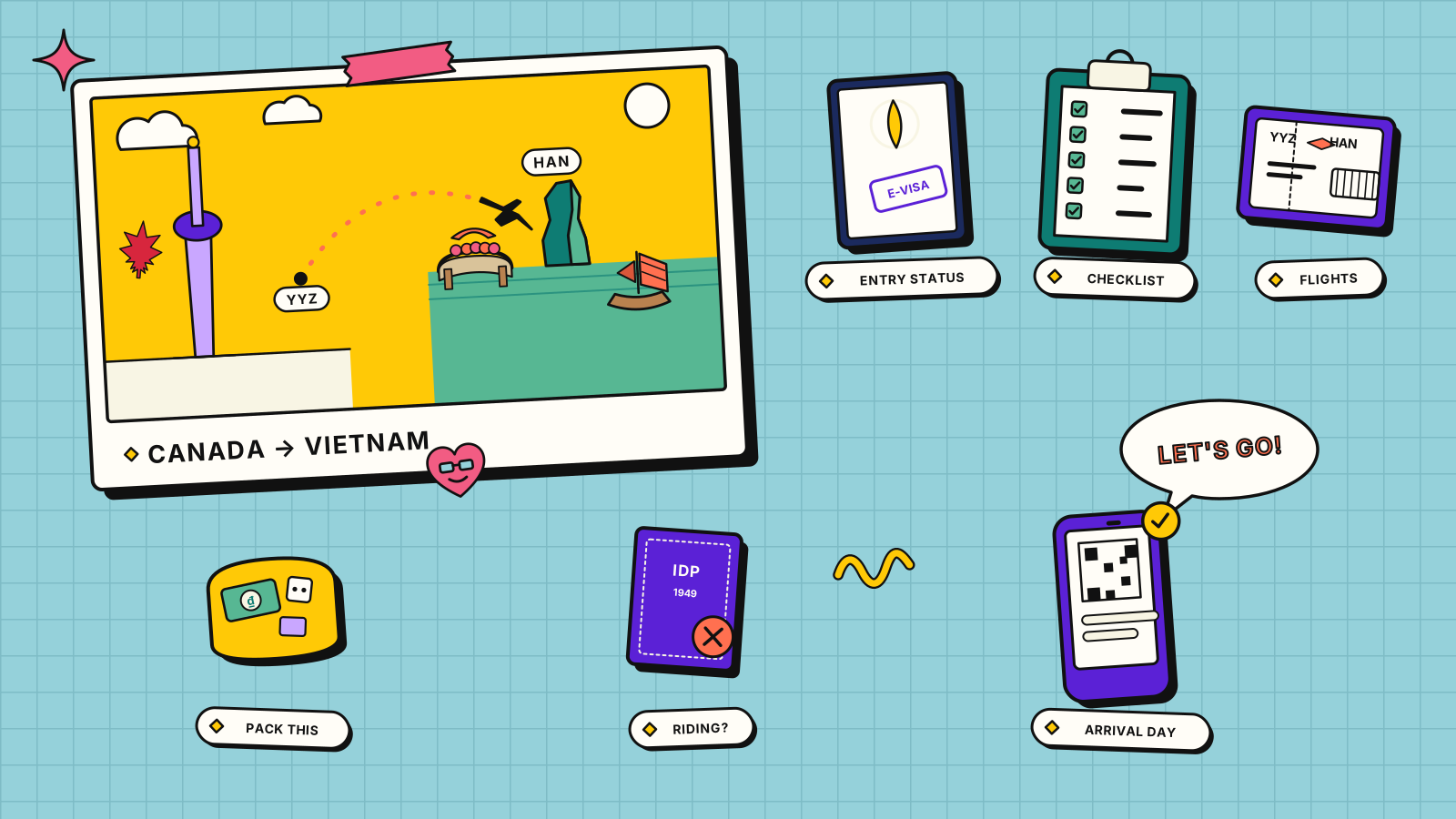
Yes. Canada isn't on either of Vietnam's visa-exemption lists, so you need a visa for any tourist trip. The Government of Canada's travel advice points you to the e-visa:
| Official site | evisa.gov.vn |
|---|---|
| Cost | USD 25 single entry, USD 50 multiple entry |
| Length | Up to 90 days |
| Processing | About 3 working days. Allow 1 to 2 weeks, more around Tết (Lunar New Year) |
| Entry points | 83 airports, land crossings and seaports |
Two points are specific to Canadians. First, Canada's advice says the e-visa allows entry only through the port of entry shown in the approval notice, so if you change flights, check your e-visa still matches. Second, Canada says a Vietnamese visa in an expired passport isn't valid. If you renew your passport, you need a new e-visa.
Choose single entry for a simple in-and-out trip, or multiple (USD 50) if you're side-tripping to Laos or Cambodia and coming back.
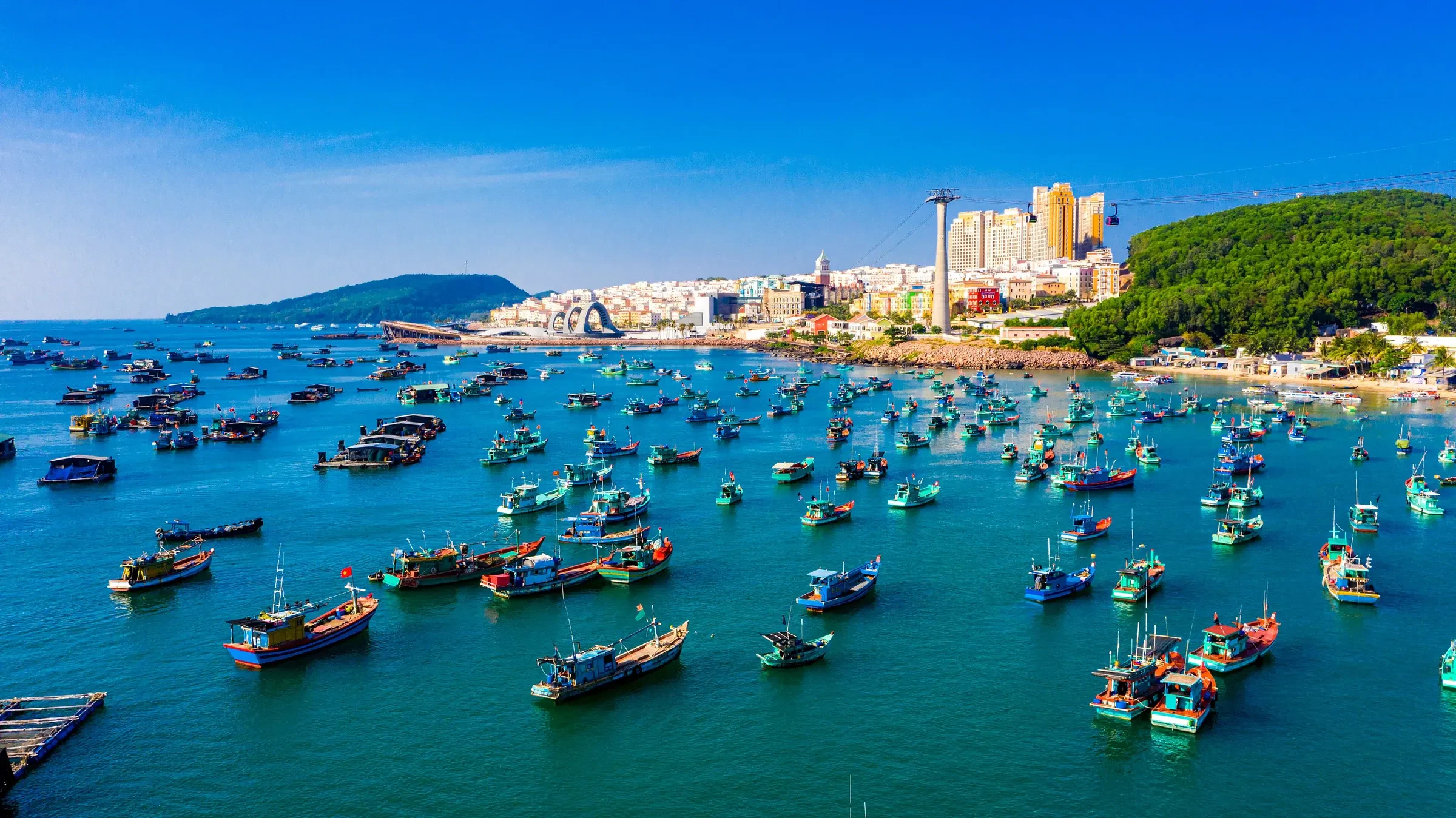
Phu Quoc works differently. Flying directly to the island from abroad gets you up to 30 days without a visa, but you can't go on to the mainland on it. Vietnam's Ministry of Foreign Affairs says it also covers travellers who connect through another Vietnamese international airport without leaving the transit area. Ask your airline whether it can check you through.
Watch out for scam sites. Agencies with near-identical names buy search ads and charge around USD 75 to 150 for the USD 25 visa. Only .gov.vn is official. evisagov.vn, with no dot before "gov", isn't. Skip "visa on arrival approval letters" too.
How to apply for the e-visa
- Go to evisa.gov.vn and choose the e-visa application for foreigners. Tick the two confirmation boxes.
- Upload a photo: 4x6 cm, white background, facing forward, no glasses, JPG under about 2 MB, taken in the last 6 months.
- Upload your passport data page, whole, with both lines of machine-readable text visible and no glare.
- Enter your details exactly as in your passport, middle names included. Add entry date, single or multiple entry, entry and exit ports, first address in Vietnam and purpose.
- Pay USD 25 or USD 50 by credit or debit card through the portal's Vietcombank gateway. Your bank will send a one-time passcode. The portal doesn't list card brands, so keep a second card handy.
- Save the registration code.
- Check your status with the code, your email and date of birth. When it's approved, download and print it.
Keep a printed copy with your passport. The portal says the fee is non-refundable if the visa isn't granted.
Entry checklist
- Passport valid for 6 months beyond your planned departure from Vietnam (Canada's rule, which is stricter than Vietnam's 6 months from arrival), with 2 blank pages and no damage
- Printed e-visa, in your current passport, with the right entry port
- Pre-arrival QR code from prearrival.immigration.gov.vn (free, within 72 hours before landing)
- Onward or return ticket within your e-visa dates, as airlines often check
- First night's address
- Travel insurance
- Doctor's letter for any controlled medicines
Sources disagree on whether the pre-arrival form is compulsory. Canada's travel advice (updated 22 June 2026) says it's encouraged and not mandatory, while the US Embassy in Vietnam says it's mandatory for all foreign passengers. I'd fill it in: it's free and quick, and queues are longer without it. Use only the .gov.vn site.
Flights from Canada to Vietnam
There are no non-stop flights between Canada and Vietnam yet. Kayak lists none from Toronto or Vancouver. In late September 2026 Canada and Vietnam expanded their air agreement to allow airlines from each country up to 14 weekly passenger flights, and Air Canada says it's working to get approvals for Ho Chi Minh City service in 2027. No gateway city, frequency or start date has been announced. From Vancouver, the cheapest one-stop fares usually connect in Guangzhou, Shanghai, Beijing or Manila (Korean Air, China Southern, Air China and Philippine Airlines), with round trips from about C$790. From Toronto, common connections are Seoul, Manila, Shanghai and New Delhi, with round trips from about C$1,010 to Da Nang and C$1,360 to C$1,470 to Hanoi or Ho Chi Minh City. Calgary and Montreal also rely on one-stop or two-stop routings, and Kayak showed Calgary round trips from about C$1,040. All fares are indicative, checked 24 Sep 2026.
Most routes go one of these ways:
- Through an Asian hub. Tokyo, Seoul, Taipei, Hong Kong, Manila and Singapore are the usual connecting points from the US, and the same hubs are the obvious ones to search from Canada.
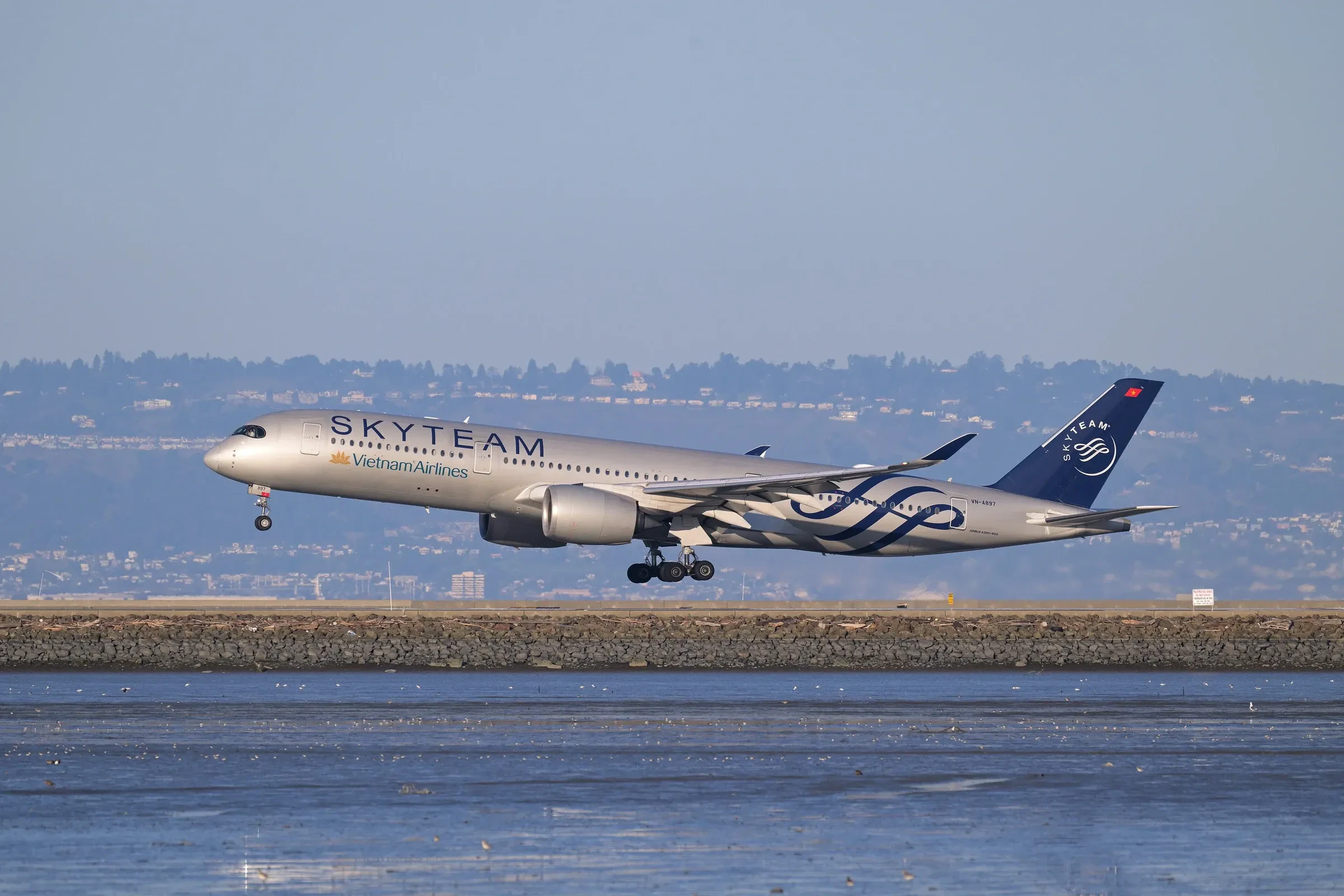
- Through the US. Vietnam Airlines flies non-stop from San Francisco to Ho Chi Minh City about 4 times a week, taking roughly 15 hours 40 minutes to 16 hours 35 minutes depending on the schedule. From Vancouver or western Canada, connecting in San Francisco is one option. Whether you can buy it as one ticket depends on the airlines involved. On separate tickets you'll collect and re-check your bags, so leave several hours between flights.
- Through the Gulf. Doha is another common connection.
- On a budget, fly as cheaply as you can to Bangkok, Singapore or Kuala Lumpur, then take AirAsia, VietJet or Scoot into Vietnam. These are separate tickets, so leave plenty of time between flights.
Avoid Tết (late January or February) and Christmas if you can, as they're busy and expensive. Kayak's cheapest month varies by city: September from Vancouver (about C$1,010 return on average) and April from Toronto (about C$1,560), with June, July and December the priciest. The weather is very different in the north, centre and south, so check the best time to visit Vietnam too.
Vietnam is about 1,600 km from top to bottom, so fly into Hanoi and out of Ho Chi Minh City on an open-jaw ticket and you won't have to backtrack. Travelling south to north? Do it the other way round.
Ho Chi Minh City's new airport, Long Thanh, about 40 km from central Ho Chi Minh City, is due to open for commercial flights on 1 December 2026. Long-haul flights are planned to move there from 28 March 2027, so check which airport is on your ticket.
Domestically, Bamboo Airways stopped scheduled flights on 1 August 2026. Vietnam Airlines, Pacific Airlines, VietJet, Vietravel Airlines and Sun PhuQuoc Airways all operate domestic routes, and you'll need your passport to board.
What to bring from Canada
Plugs and voltage. Your two-pin Canadian plugs fit Vietnam's Type A sockets, but you'll also meet Type C and F sockets (Type C is more common in the north), so a universal adapter is worth packing. Vietnam runs on 220 V, so check your chargers' labels. Anything that only runs on 120 V, such as some hair dryers, needs a converter.
Money. You'll use the dong (VND). Cards work in city hotels and bigger restaurants, but outside cities it's mostly cash. Use ATMs or official, signposted exchange counters only, since changing money anywhere else is illegal. 2026 guides report VPBank ATMs charging foreign cards no fee and most other banks about VND 20,000 to 55,000 a withdrawal. Fees change often, so check the amount on screen before you confirm. Declare cash over USD 5,000.
Insurance. It isn't an entry requirement, but get a policy with medical evacuation, because serious cases can be moved to Bangkok or Singapore. Check whether your provincial health plan covers anything abroad. If you'll ride on the back of a motorbike, make sure you're covered as a passenger.
Driving. Canadian International Driving Permits are the 1949 type. Vietnam only accepts the 1968 permit, so riding a motorbike yourself means riding unlicensed, and your insurance probably won't pay out. See our Ha Giang Loop guide for how people get around that as passengers.
Medicines. Controlled medicines (for anxiety, depression, insomnia or ADHD, and strong painkillers) are limited to 7 days' supply. Carry a doctor's letter in English with your name, age, the medicine, the dose, and the doctor's signature and address. Pack the medicines in your carry-on with a copy of the prescription.
Leave at home. Vapes and heated tobacco are banned (users can be fined VND 3 to 5 million). So are cannabis and CBD products: Vietnam's drug laws are severe, and a positive test can lead to charges even if you used before arriving. Leave drones at home unless you have a permit.
SIM. A travel eSIM avoids the paperwork. Local SIMs need your passport and a face check, under rules in force since 15 April 2026. Foreigners register in person with their passport, and official guidance doesn't say exactly how that works at airport kiosks.
The rest is in our Southeast Asia packing list.
Arrival day
- Before your last flight. Fill in the pre-arrival form within 72 hours of landing and save the QR code. The airline may want to see your e-visa and onward ticket.
- Immigration. Show your passport, printed e-visa and QR code, and check the stamp before you walk off.
- Customs. Green channel with nothing to declare. Red channel for cash over the limit, goods over the duty-free allowances or controlled medicines.
- SIM and cash. Kiosks at the airport sell and register SIMs in minutes. Take some dong out of an ATM.
- Into the city. Hanoi's Noi Bai airport is about 30 km from the Old Quarter, 45 minutes to an hour by road. Airport bus 86 runs to Hanoi Railway Station for about VND 45,000, a Grab car costs roughly VND 250,000 to 350,000, and an official taxi around VND 550,000 to 600,000. In Ho Chi Minh City, bus 152 runs from the international terminal towards Ben Thanh (roughly 05:15 to 19:00), and Grab or Be to District 1 is usually about VND 150,000 to 250,000. Bus 109 now stops only at the domestic terminal (T3). These are 2026 reported prices, so treat them as a guide.
- Check-in. Your hotel registers you with the local police using your passport. That's standard for every visitor.
Travel with us
Going to Vietnam alone? Join a small group aged 18 to 40. I travel with every group as your Trip Host.