What makes Ninh Binh special
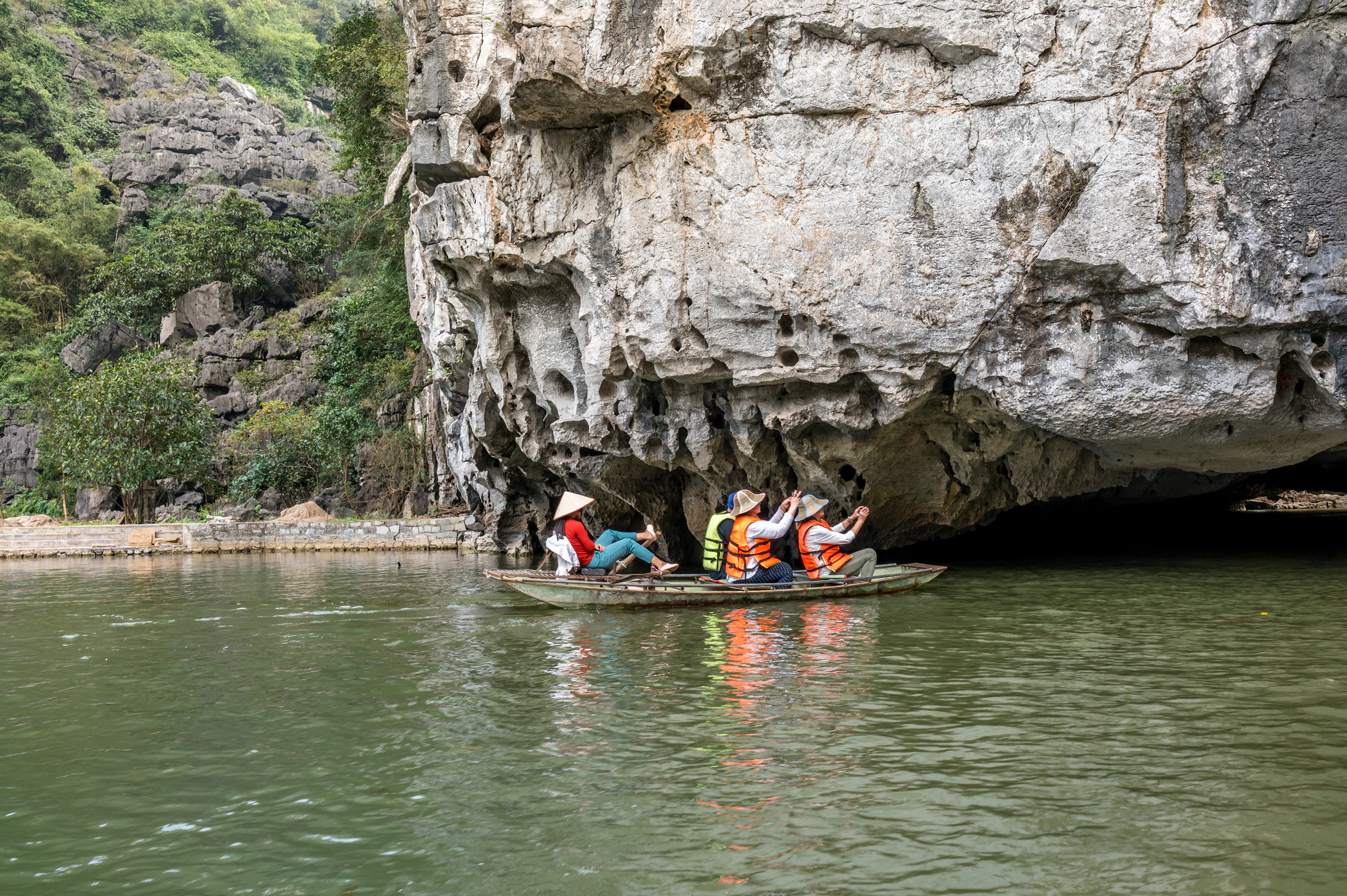
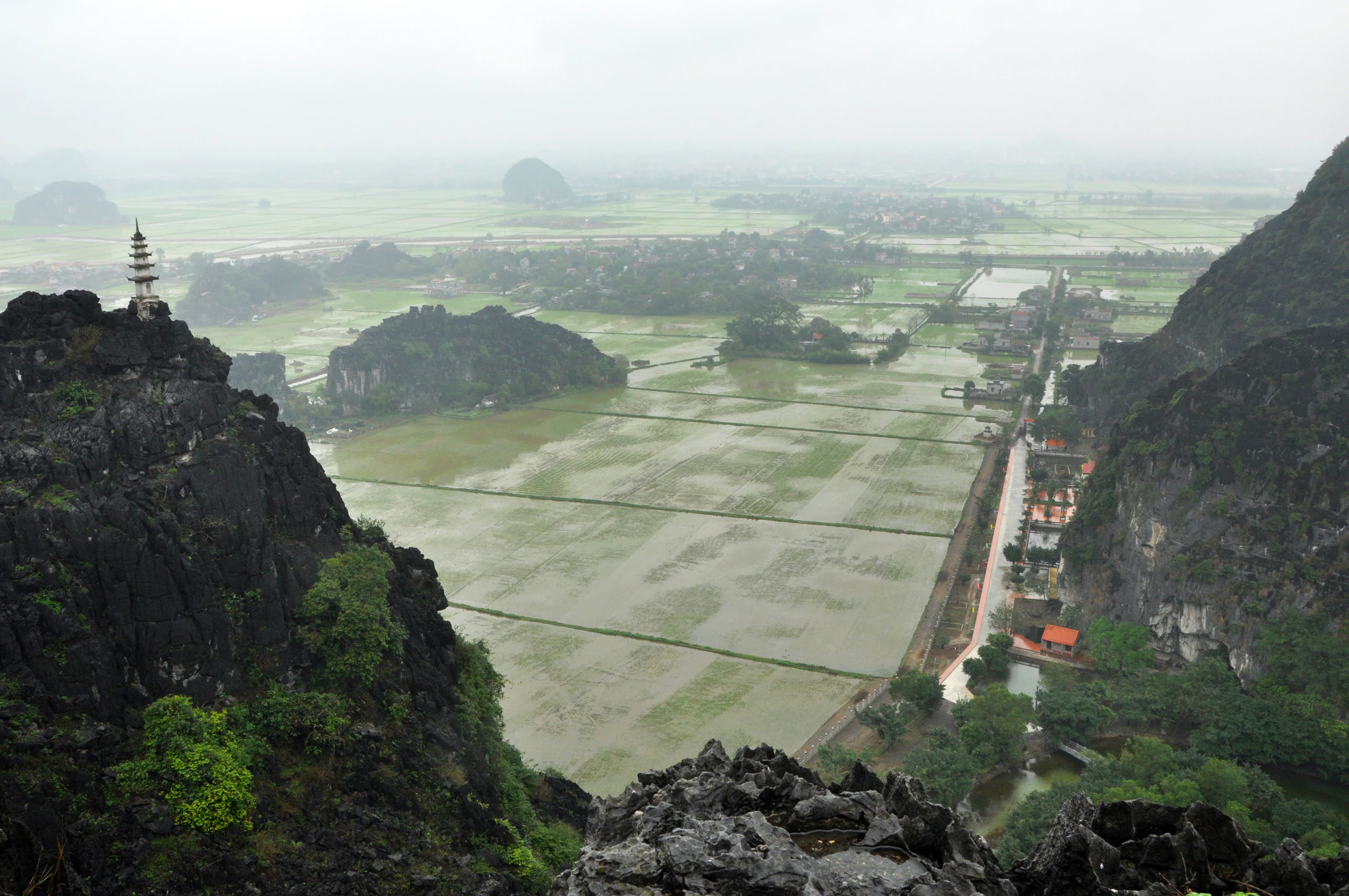
Ninh Binh is what a lot of people picture when someone says "Ha Long Bay, but on land": the same limestone karst towers as the coast, only here they rise out of paddy fields and slow green rivers instead of the sea. Rowers scull small boats between the towers and through low cave mouths, water buffalo graze the fields, and a scramble up a rock ridge called Hang Mua puts the whole valley under you at once. Since 1 July 2025, Ninh Binh province has technically absorbed neighbouring Ha Nam and Nam Dinh as part of Vietnam's national province merger, though everything below still sits in what most people simply call Ninh Binh.
Most travellers treat it as a stop rather than a destination in its own right: a long day trip from Hanoi, or better, an overnight in the village of Tam Coc.
Where to go within Ninh Binh
Trang An
The bigger, longer boat ride, and the one most operators default to when they only book one. A rowed sampan carries up to 4 passengers plus the rower through a mix of caves and small temples on a slow loop through the karst. There are three routes. Route 1 is the longest, about 3 to 4 hours through 9 caves and 3 temples. Routes 2 and 3 are shorter, roughly 2 to 3 hours, and both pass the village set built for *Kong: Skull Island*. Guides disagree on their exact cave and temple counts, so check at the ticket office. The adult boat ticket has been 300,000 VND since 1 January 2026. Get there as close to opening time as you can (6am in summer, 7am in winter). The caves are narrow enough that a queue of boats behind you kills the atmosphere fast. Tip the rower, commonly around 50,000 VND per boat.
How long: half a day, including getting to the wharf.
Tam Coc
The shorter, older-school version: a rowed sampan through 3 caves and open rice fields, usually around 2 hours on the water, with rowers who sometimes use their feet on the oars. It combines more naturally with cycling and the Hang Mua climb on the same day, which is why day-trippers from Hanoi tend to pick this over Trang An. Vendors sometimes paddle up mid-river to sell drinks or snacks; a polite no thanks is normal and works fine.
How long: 2 to 3 hours, boat included.
Hang Mua (Mua Cave) viewpoint
Despite the name, the draw here isn't the cave, it's the climb above it: around 500 stone steps up a limestone ridge to a viewpoint over the whole Tam Coc valley, rice fields and river bends included. It's about 10 minutes from Tam Coc village, and entry has been 150,000 VND since 1 April 2026. Go at sunrise or in the last couple of hours before sunset, both for the light and to dodge the worst of the heat and the crowds. Midday is genuinely unpleasant: no shade on the climb, and slippery steps if it's rained.
How long: 1 to 1.5 hours.
Bai Dinh pagoda
A huge modern Buddhist complex, one of the largest in Southeast Asia, about 20 minutes from Trang An. Entry is free, and an electric buggy runs between the car park and the main halls for a small fee if you'd rather not walk the site. Worth adding on if you're already spending two days here, but skippable on a single tight day when Trang An or Tam Coc, plus Hang Mua, already fill it.
How long: 1.5 to 2 hours.

Hoa Lu ancient citadel
The former capital of Vietnam in the 10th and 11th centuries, now a small, quiet site with two restored temples dedicated to the kings of the Dinh and Le dynasties, set against the same karst backdrop as everywhere else here. It suits travellers who want some history mixed in with the scenery rather than another boat ride, and it sits close enough to Trang An or Tam Coc to fold into the same morning.
How long: 1 hour.

Cycling the valleys
Renting a bike for a morning or afternoon is the easiest way to see more of Ninh Binh than the boat routes alone. Flat back roads run between the karsts and rice paddies around Tam Coc and Hang Mua, past working farms and the odd roadside café. Guesthouses in Tam Coc village rent bikes by the day. It pairs naturally with a Tam Coc boat ride and the Hang Mua climb as a single day, and it's a good way to fill an afternoon after an early Trang An start.
What to eat
Ninh Binh's own dish is com chay: crisp, deep-fried rice served with a rich meat and mushroom stew for spooning over the top, sold all over Tam Coc village and worth seeking out rather than settling for a generic hotel menu. The province is also known regionally for de (goat), served grilled, in a hotpot or steamed. Order it alongside com chay if a menu offers both.
Best time to visit
October to April is the standard advice for most of northern Vietnam, and it holds here too: cooler, drier, and comfortable on an open rowing boat or the Hang Mua steps. Late April into early June is its own special window, when the rice ripens to a deep gold across the valley floor before harvest, the look a lot of Ninh Binh photos are chasing. Summer (June to September) is hot, humid and the wettest stretch of the year. The boat rides still run, but the Hang Mua climb turns into a sweaty slog with little breeze, and the steps get slippery after rain.
How long to spend, and getting there and around
A day trip from Hanoi works, but it's tight. Door to door you're looking at 4 to 5 hours just on the road (about 2 to 2.5 hours each way), which leaves a single boat ride plus the Hang Mua climb as a realistic ceiling: no cycling, no Bai Dinh, no Hoa Lu. An overnight in Tam Coc village fixes this. It turns Ninh Binh into a full day rather than a rushed afternoon, with time for both a boat ride and the bike ride, or one of the extras above. Two nights covers everything on this page at an easy pace.
Private vans and shared minibuses both run the Hanoi to Ninh Binh road regularly; a shared van or limousine bus is the simplest way down if you'd rather not arrange your own transport. Once you're there, Tam Coc village is walkable to its own wharf, a short ride from Trang An and Hang Mua, and everything else is reachable by rented bike or a short taxi hop.
Self-riding a motorbike here works the same as anywhere else in Vietnam: it's only legal with a motorbike licence from your home country plus a 1968-convention International Driving Permit. Without both, you're riding illegally, and your travel insurance is unlikely to pay out. Given the flat back roads and short distances, most travellers just rent a bicycle and sidestep the question altogether.
Ninh Binh is the standard first stop south of Hanoi on the northern Vietnam route, which pairs it with Lan Ha Bay and Sapa over 1 week or 10 days, and it shows up the same way in the country's 1-week itinerary and the full itinerary guide. Planning Hanoi itself first? The Hanoi guide covers getting from the capital down to Ninh Binh, on to Sapa and Ha Giang, or out to the bay.