North India: Delhi, Punjab and the plains
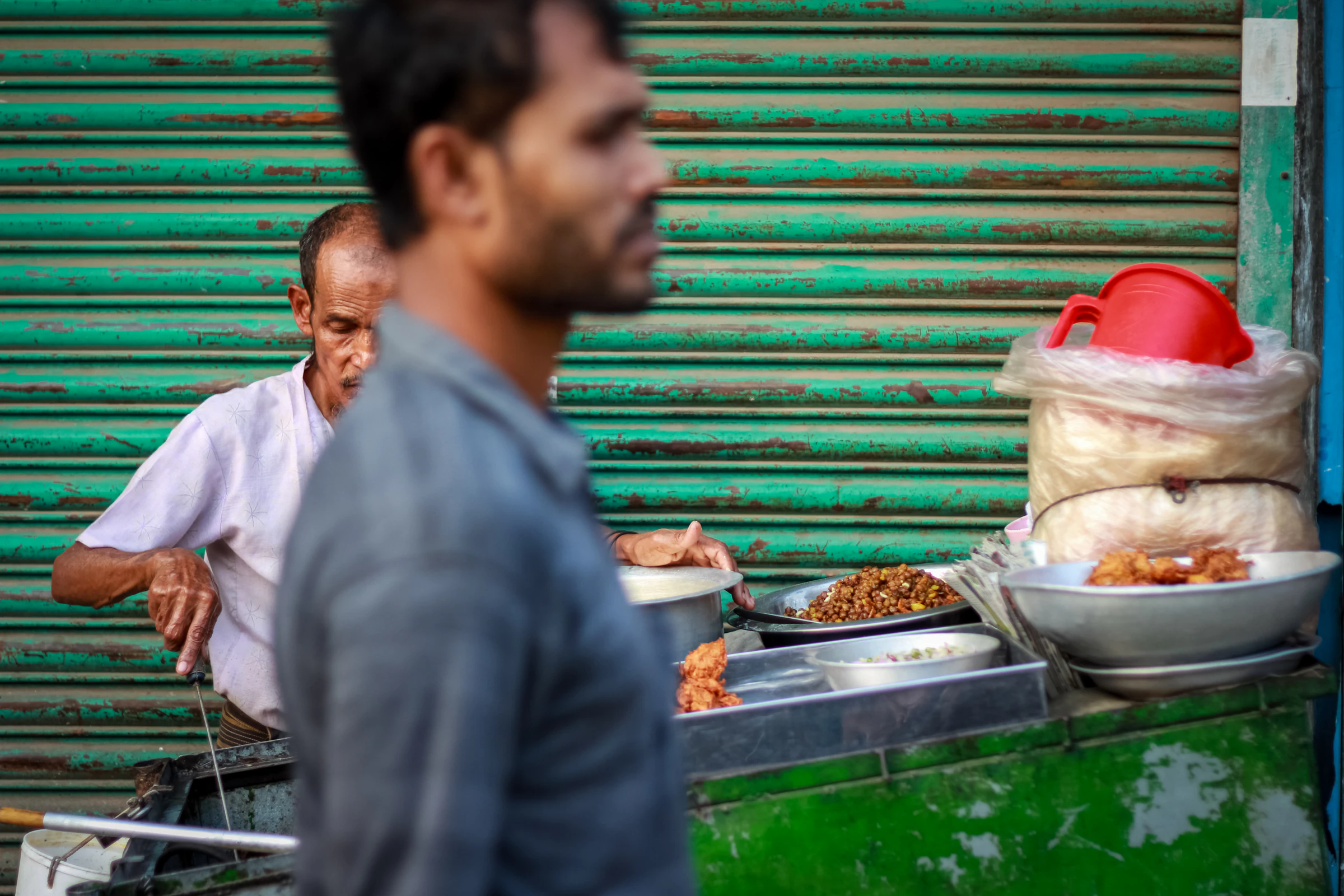
Old Delhi has a strong claim to being India's street food capital. Paranthe (stuffed flatbreads) from Paranthe Wali Gali, chole bhature and butter chicken, said to have first been served at Moti Mahal in Daryaganj, all come out of Chandni Chowk's lanes, the best place to graze through several dishes in one evening. Our Delhi street food guide covers exactly where to go and what to order; the wider Delhi guide covers the rest of the city.
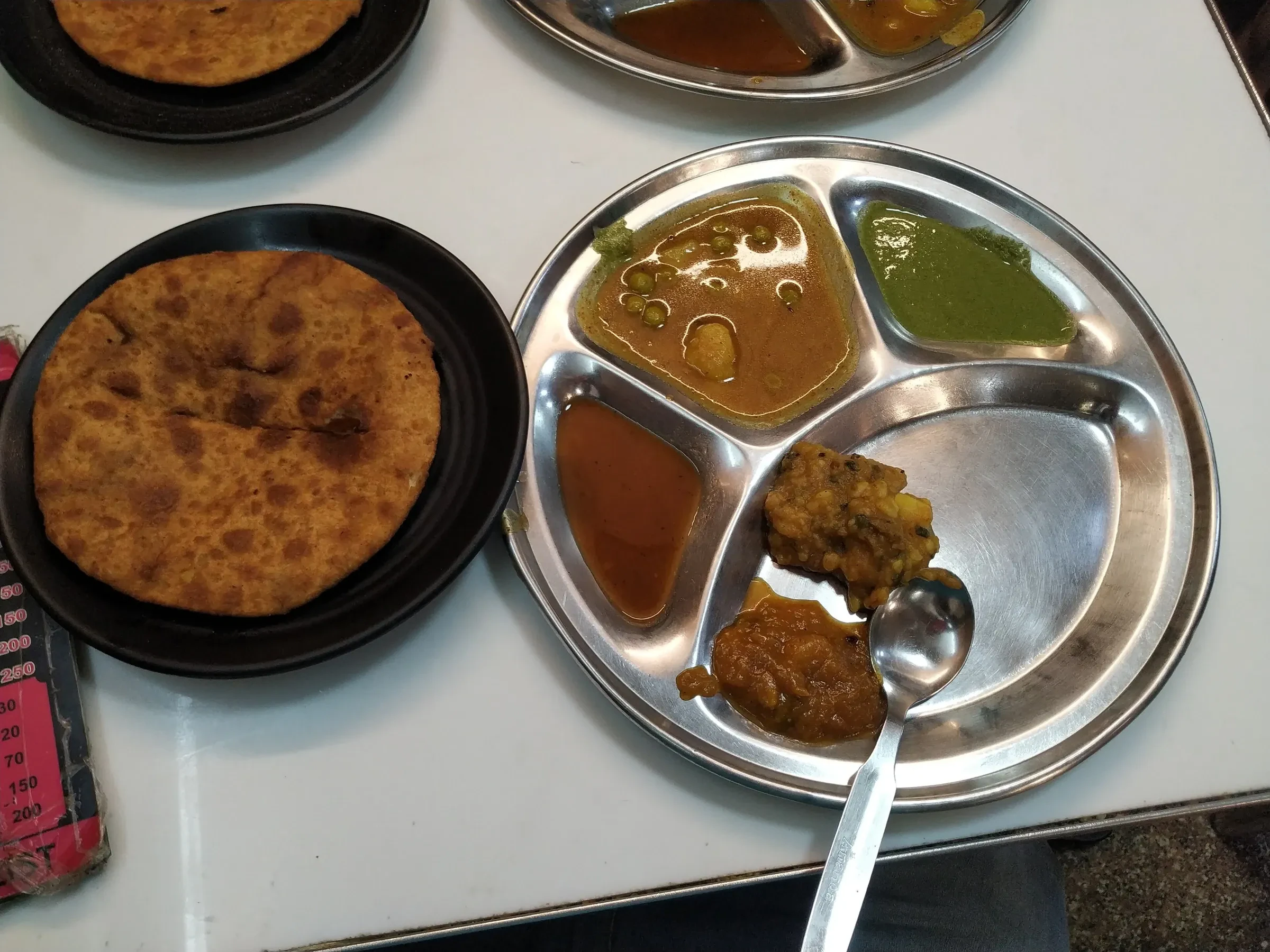
A few hours north, Amritsar has its own signature dish: Amritsari kulcha, a stuffed, tandoor-baked flatbread filled with spiced potato, paneer or onion, served with chickpea curry and a slab of butter. Pair it with makhani dal and a thick Punjabi lassi for the full Amritsar breakfast. Kesar Da Dhaba, a vegetarian dhaba in the lanes near the Golden Temple that started in Sheikhupura in 1916 and moved to Amritsar after 1947, is best known for its makhani dal. See our Amritsar guide for the rest of a day there.
Rajasthan
Rajasthan's best-known dishes include meat, such as laal maas, but the state also has a strong vegetarian tradition, and Pushkar itself is strictly vegetarian. Look for dal baati churma (baked wheat rolls with lentils and a sweet crumble, the state's signature dish) in Udaipur or Jodhpur; laal maas (a fiery mutton curry cooked with Mathania chillies) and pyaaz kachori (an onion-stuffed fried pastry) at a Johari Bazaar dhaba in Jaipur; makhaniya lassi and mirchi bada (a stuffed chilli fritter) from a Sardar Market stall in Jodhpur; ker sangri, a desert bean-and-caper dish, at a Jaisalmer camp; and malpua, a sweet pancake, in Pushkar. Lassiwala, the long-running earthen-cup stall on Jaipur's MI Road, is worth the queue. A full Rajasthani thali, ordered anywhere, is the easiest way to try several of these at once.
!Dal baati churma, Rajasthan's baked wheat rolls with lentils and a sweet crumble Our Rajasthani food guide goes deeper on where to order each dish, and the Rajasthan guide and Jaipur guide cover the rest of the region.
Gujarat
Gujarat's cooking is largely vegetarian, and it shows in the food. A Gujarati thali is built around a sweet, savoury and sour balance on one plate, usually served unlimited, with khaman dhokla (a steamed, spongy chickpea-flour snack) on the side. Out in Kutch, look for Kutchi dabeli, a spiced-potato bun snack sold from carts across the old towns, Kutchi kadhi, and bajra rotla with white butter and jaggery, a farmhouse staple worth trying at a village stop. Our Gujarat and Kutch itinerary covers where these turn up along the route.
Mumbai and Maharashtra
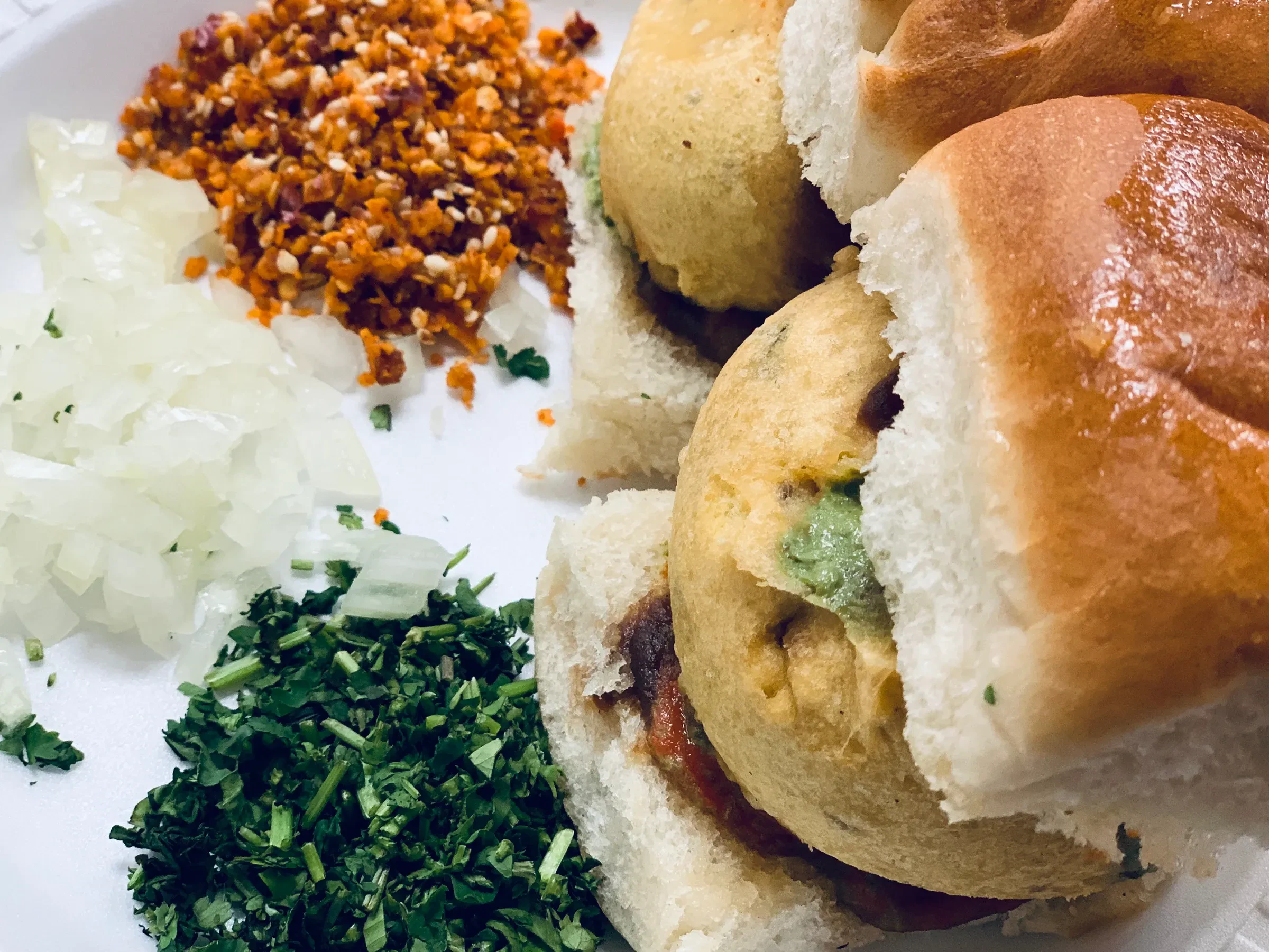
Street food is one of the best reasons to stop in Mumbai. Vada pav (a spiced potato fritter in a bread roll), pav bhaji, bhelpuri and other chaat are sold everywhere, and Girgaon Chowpatty beach is the classic spot for a plate of either at sunset. Behind the scenes, the city's dabbawalas sort and deliver thousands of home-cooked lunchboxes across Mumbai every day without a computer system, a well-known piece of food logistics in its own right. For a sit-down meal, Bandra and Colaba both run from old Irani cafes to modern Indian restaurants. See the Mumbai guide for where to base yourself.
Goa
Goan food carries its Portuguese history in almost every dish: fish curry rice, the everyday shack meal up and down the coast; prawn balchão; pork vindaloo and sorpotel; xacuti; and bebinca, a layered sweet, for dessert. Feni, a spirit distilled from cashew or coconut, is the local drink to try once rather than often. Beach shacks are the standard place to eat all of this, and fresh grilled kingfish or seer fish is the safest bet if you want something simple and just cooked. Our Goan food guide has the fuller list and where to find the real thing, and the Goa guide covers the rest of the coast.
Kerala and the south
Kerala starts the day with appam (a lacy rice-flour pancake) and vegetable stew, then moves to meen curry, a tangy fish curry with red rice, for lunch. Karimeen pollichathu (pearl spot fish marinated and grilled in a banana leaf) is worth seeking out on the coast, and puttu and kadala curry (steamed rice cylinders with a spiced chickpea curry) is another common breakfast. Around Onam, a full sadya, a vegetarian banana-leaf thali with a dozen or more small dishes, is worth planning a trip around. Finish with payasam, a sweet milk pudding.
!Fish cooked in a banana leaf, Kerala style Our Kerala food guide covers the region in depth, alongside the Kerala, Kochi and Varkala guides.
Along the Karnataka coast, Gokarna's food leans coastal Karnataka rather than Goan: a coconut-based fish curry in the South Kanara style, neer dosa (thin, soft rice crepes) and grilled kingfish at the beach shacks, or better value at a local udupi-style thali house away from the shack strip. Inland at Hampi, the core village sits inside a protected heritage zone with restrictions on non-vegetarian food and alcohol, so South Indian vegetarian thali houses are the norm. For a wider choice of cafes, try the north bank around Anegundi and Sanapur, and check locally before assuming meat or alcohol is on the menu.
Further round the coast in Tamil Nadu, Pondicherry's food is a genuine fusion: a French bakery breakfast in White Town, then a Tamil-spiced dinner the same evening, sometimes on the same menu. If your trip lines up with Pongal in January, look for sakkarai pongal (sweet, with jaggery, ghee and cashews) and venn pongal (savoury, peppery, closer to a rice porridge), the dishes that give the harvest festival its name, at any Tamil Nadu restaurant during festival week.
Kolkata and the east
Kolkata's street food runs on puchka (the city's tangy, water-filled version of pani puri) and the kathi roll, a paratha wrapped around skewered kebab meat, egg and onion. Nizam's, in what's now New Market, is credited with inventing the kathi roll, around 1932 according to most accounts, and the name comes from the bamboo skewers (kathi) the kebabs are cooked on. On the sweet side, Bengal's soft, syrup-soaked roshogolla (rasgulla) and sandesh are worth ordering from one of the city's long-standing sweet shops, K.C. Das among the best known. Our Durga Puja guide covers Kolkata's festival food stalls specifically, for travellers timing a visit around the pandals.
The northeast
The northeast cooks nothing like the rest of India, and it's worth treating as its own food region. In Assam, a thali built around masor tenga (a tangy fish curry) and khar (an alkaline vegetable dish unique to Assamese cooking) is the everyday meal, with pitha (rice cakes) turning up around Bihu and apong, a Mising community rice beer, worth trying respectfully if a local host offers it. See our Assam itinerary for where this fits into a Kaziranga and Majuli route.
In Meghalaya, Khasi food centres on jadoh, a rice dish cooked with pork or other meat, and tungrymbai, a fermented soybean staple, often alongside pork cooked with bamboo shoot. Kyat, a local rice beer, is worth trying the same way, respectfully rather than as a big night out. Our Meghalaya itinerary covers Shillong and the living root bridges.
In Nagaland, food built around the Hornbill Festival leans on smoked pork, bamboo-shoot dishes, local rice and the famously fierce king chilli, all sold from stalls at the Naga Heritage Village in Kisama. Vegetarians can manage but should ask what's in a dish, since meat and fermented ingredients run through most Naga cooking. Our Hornbill Festival guide covers the permit rules and how to plan the trip.
Safety and hygiene
Stick to bottled or filtered water throughout, and be cautious with ice, since it's often made at the stall and there's no way to know what water went into it. Freshly cooked, still-hot food from a busy stall, somewhere you can watch it being made, is generally the safest street food choice: high turnover and high heat both cut the risk. A thali or curry at a sit-down local restaurant costs about ₹150 to ₹500, and it's a reliable, lower-risk option if you'd rather not stand at a stall.
The June to September monsoon is the season to be more careful, not less hungry. Skip cut fruit and juice that's been sitting out, along with homemade ice and raw salads. Hot, freshly fried snacks and fully cooked curries stay a reasonably safe choice year round. See our India safety guide for the wider health and water picture.
Vegetarian, vegan and Jain notes
Vegetarian food is easy to find everywhere in India, and several places on this page lean vegetarian by default rather than by exception: Gujarat's cooking is largely vegetarian, and Pushkar and Hampi Bazaar's protected heritage zone serve little to no meat, and a thali anywhere in the country usually comes in a vegetarian version as standard.
Vegan travellers have a harder time, since ghee, paneer and milk-based sweets and lassi run through most regional cuisines. Asking for a dish "without ghee or dairy" gets you further than assuming a vegetarian dish is automatically vegan. Jain travellers, and restaurants used to serving them across Rajasthan and Gujarat, follow a stricter rule again: no onion, no garlic and no root vegetables. Asking for a dish "Jain style" is understood in both states and increasingly further afield, and most thali houses in Rajasthan and Gujarat can put one together on request.
Prefer to travel with a group?
If you'd rather taste your way across several of these regions with someone who already knows where to eat, see our India trips.