
What makes Varkala different
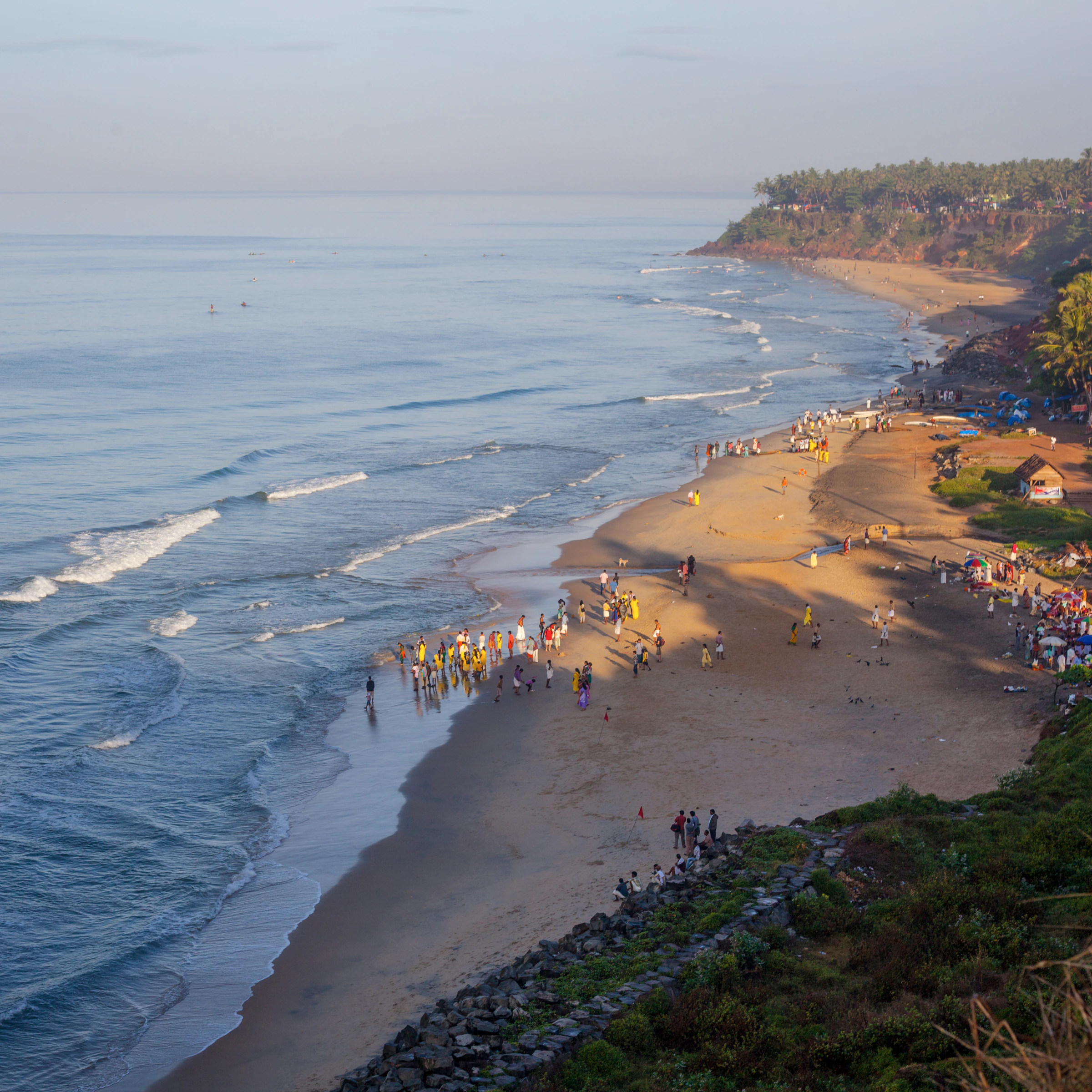
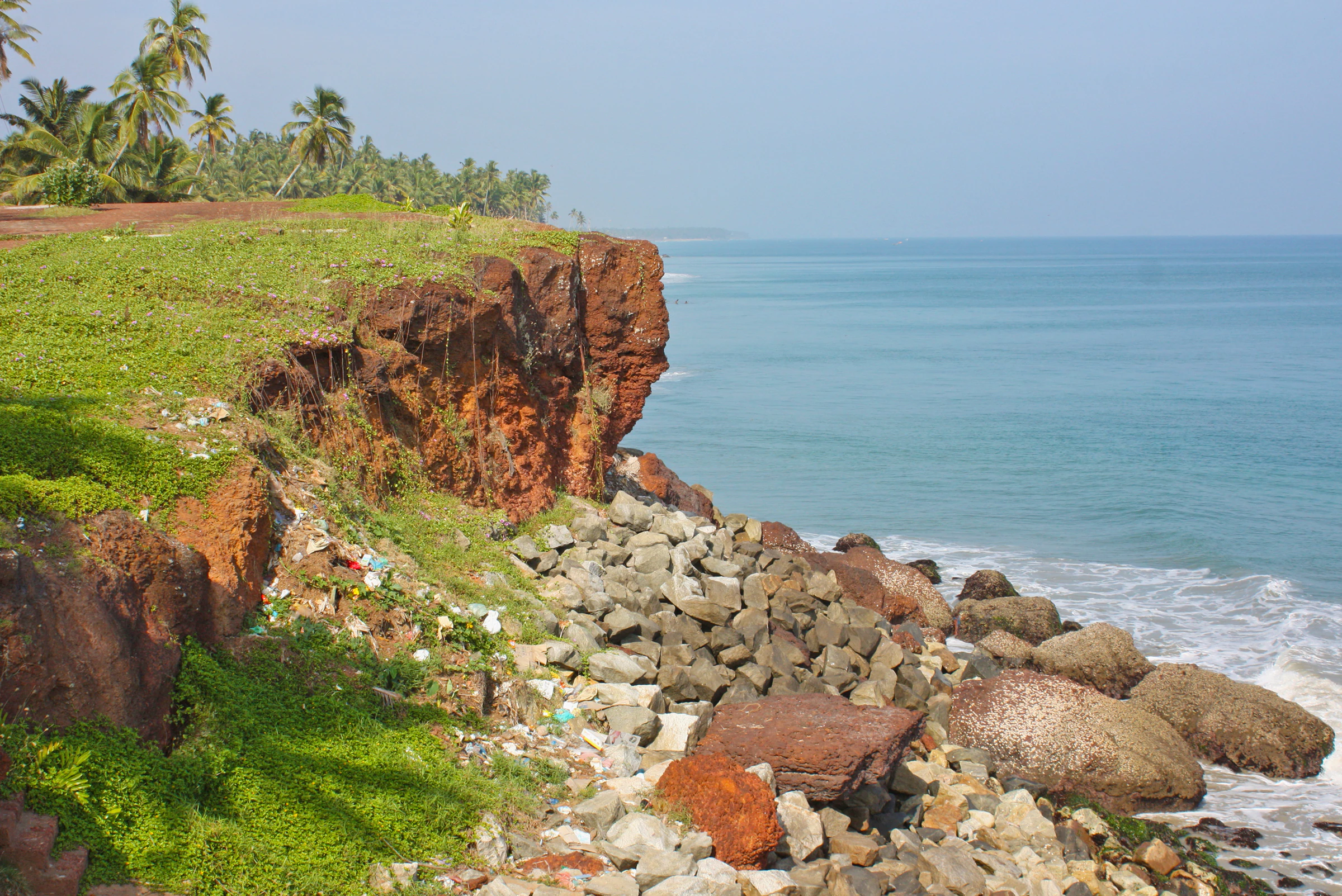
Most of India's coast is flat. Varkala's is not: a red laterite cliff rises straight above the sand for a couple of kilometres, and the main path along the top is lined with open-air cafes, yoga studios and Ayurveda parlours, all facing the sea. It reads as calmer and less built-up than Goa's beach strips, closer in feel to a long-running traveller town that grew up around a pilgrimage site than a purpose-built resort. The pilgrimage is real too: Papanasam Beach below the cliff is a working Hindu bathing site, and the Janardanaswamy temple and Sivagiri Mutt sit within a few minutes of the cafes, so temple bells and cliff-top cocktail menus end up sharing the same short stretch of coast. It's one stop within our wider Kerala guide, which also covers Kochi, Munnar, Thekkady and Alleppey.
Where to go in Varkala
North Cliff
This is the part everyone means by "Varkala cliff": the paved clifftop path above Papanasam Beach, packed with sea-view cafes, guesthouses and shops. It's the obvious base and the best spot for a sunset, and it's walkable end to end in 20 to 30 minutes, though most people linger far longer over a coffee or a meal. Give it a half day to properly explore, more if you're spending your whole stay in its cafes.
Cliff safety. Keep well back from the edge and stay on the paved path. A section of cliff collapsed at Papanasam Beach on 5 July 2026 after rain, and the Tourism Police warned visitors to take extreme care (Deccan Chronicle, 5 July 2026). That report doesn't say any part of the path was closed, and we found no dated notice on the path's current status when we checked on 6 October 2026. Access has been restricted before: in October 2024 the district collector limited vehicle entry on the approach to the North Cliff after landslides. Obey any barrier or warning board, don't climb over ropes, and don't take selfies at the edge.
Papanasam Beach
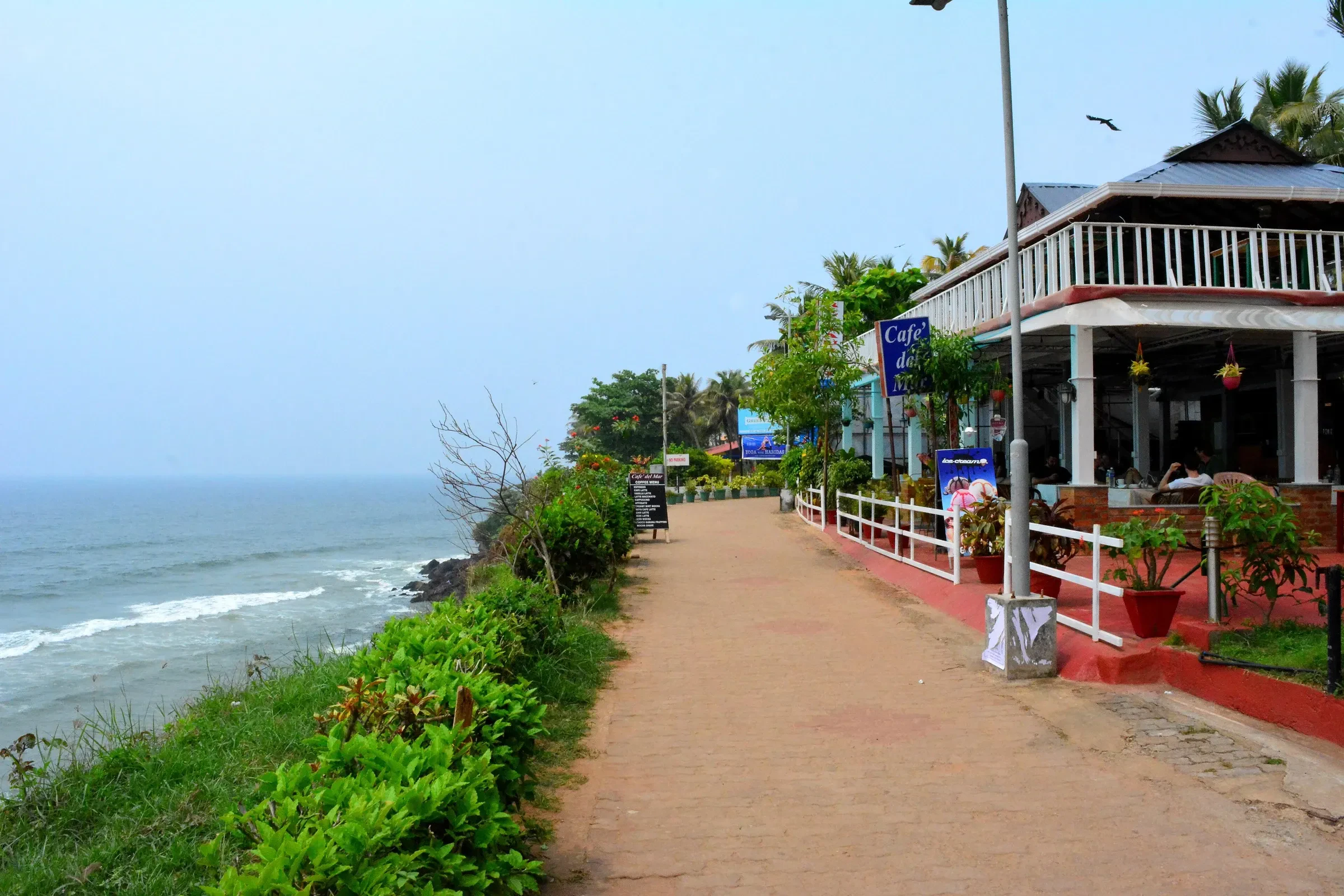
The beach directly below North Cliff, reached by steps cut into the cliff face, and Varkala's main swimming spot when the sea is calm. Its name means "sin-destroying," and it is a working Hindu bathing site. On the new-moon day of the Malayalam month of Karkidakam (July to August), thousands of people come to perform Karkidaka Vavu Bali, a ritual for departed ancestors, with priests from the Janardanaswamy temple helping, according to Kerala Tourism. Give worshippers space, ask before photographing anyone, and keep to modest dress away from the water: the FCDO asks visitors to respect local dress and customs at religious sites. Swim only where lifeguards are on duty and do what they tell you (see the swimming notes below). A morning or afternoon here is enough on any single visit.
Black Beach (Thiruvambadi)
A quieter cove about a kilometre north of North Cliff, named for its dark sand. It draws a fraction of Papanasam's crowds. There are no cliff-top cafes here, and we couldn't confirm any lifeguard cover, so treat it as unguarded and swim carefully. Worth half a day, especially if Papanasam feels too busy.
Janardanaswamy temple and Sivagiri Mutt
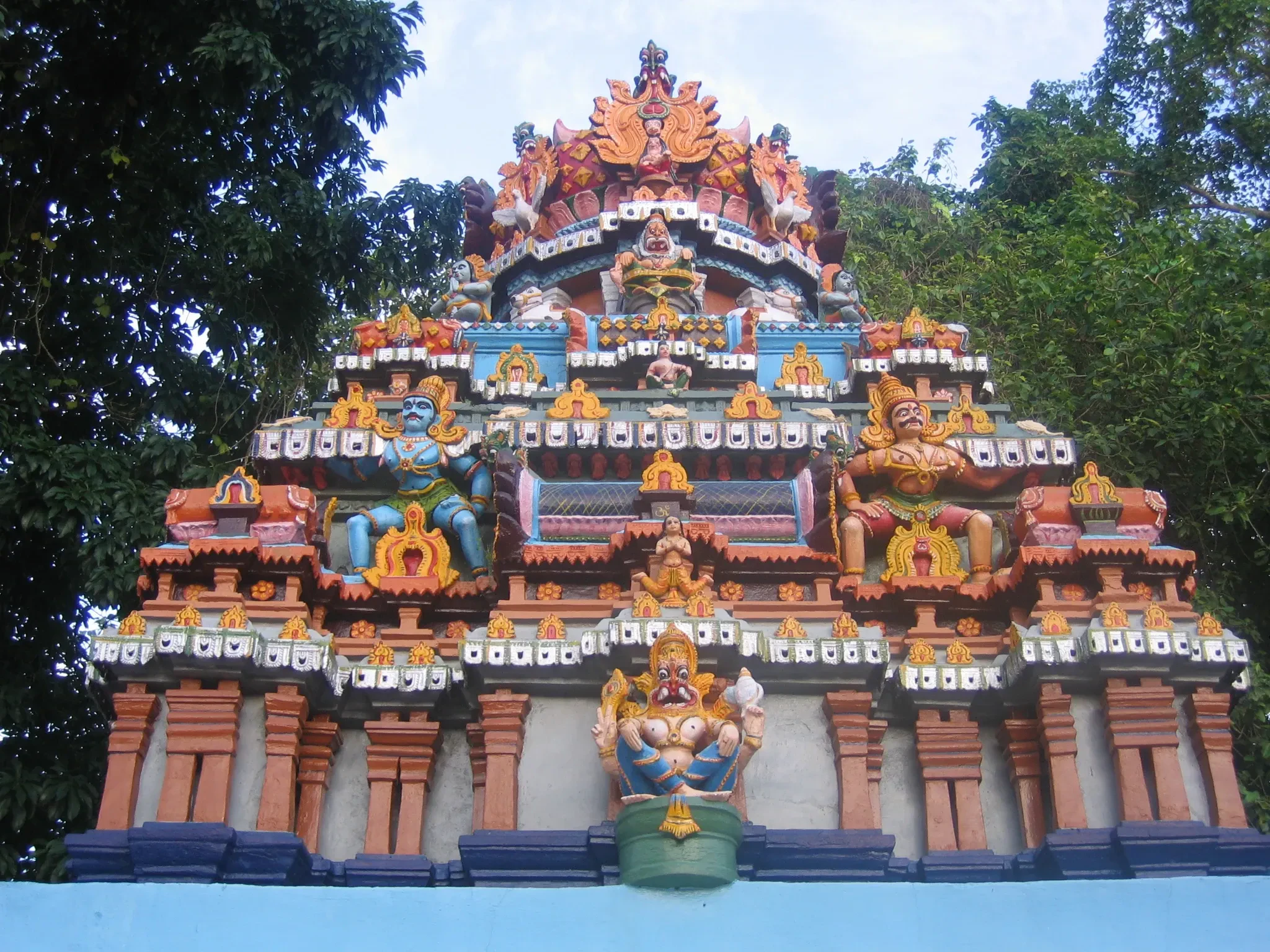
The Janardanaswamy temple, a short walk inland from the cliff, is dedicated to Vishnu and is one of Kerala's older Vaishnavite shrines; typical opening hours run early morning to noon and again in the early evening. Non-Hindu visitors can enter the outer courtyard and see the architecture but not the inner sanctum, and photography inside isn't allowed. Dress modestly, with shoulders and knees covered. A couple of kilometres away, Sivagiri Mutt is the samadhi (memorial shrine) of the social reformer Sree Narayana Guru and draws a large annual pilgrimage each December; it's the reason the local railway station is named Varkala Sivagiri. An hour or two covers both.
Kappil Lake
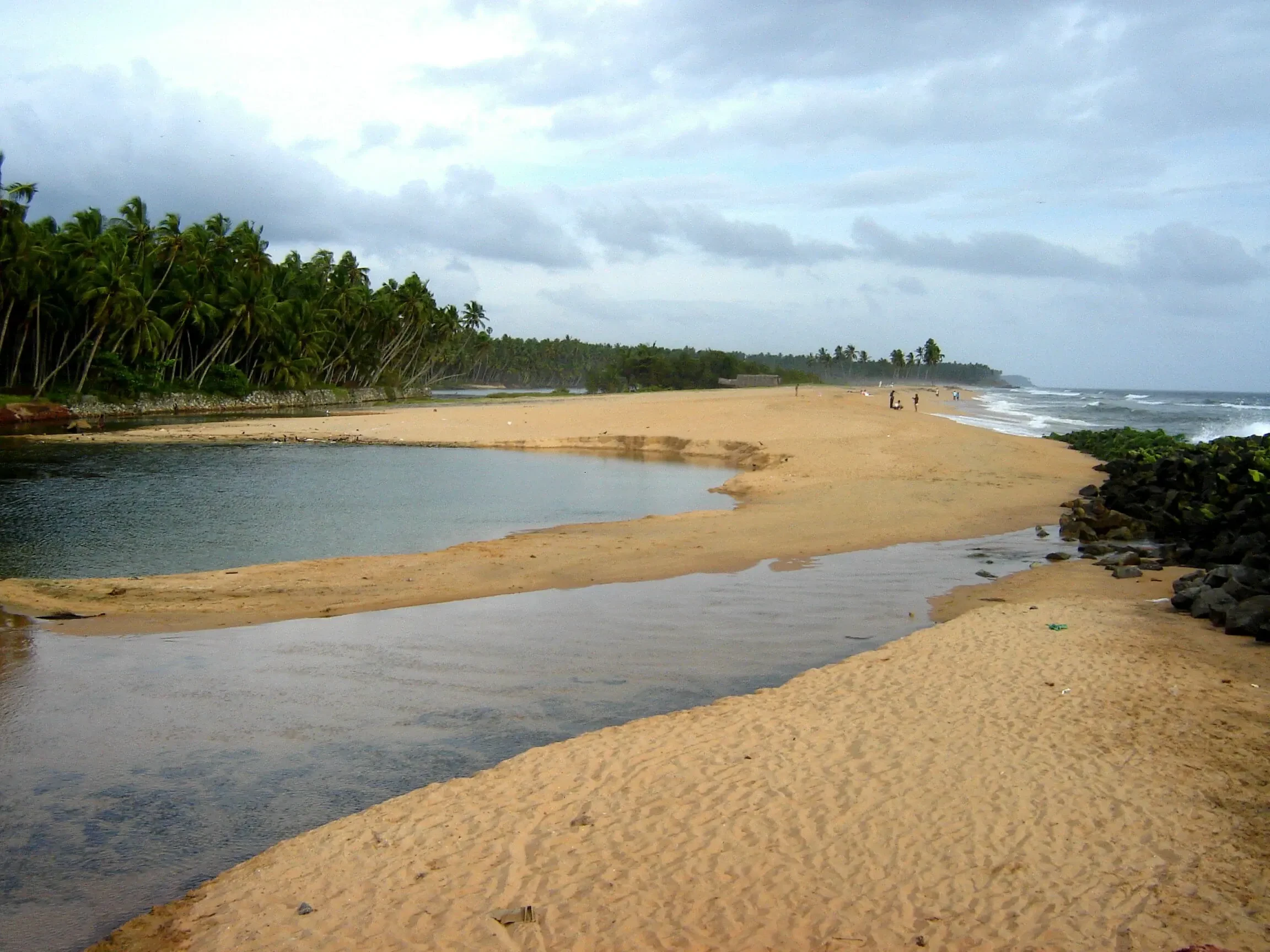
A short ride north of Varkala (reports vary, roughly 6 to 9 km), where a palm-fringed lagoon meets the sea across a narrow sandbar. It's a much quieter, more local scene than the cliff, good for a lagoon paddle or just a change of pace. Worth half a day, easily combined with Black Beach on the way back.
Jatayu Earth's Center
An inland day trip, about 28 km and 45 minutes to an hour by taxi or scooter: a hilltop park built around a giant sculpture of Jatayu from the Ramayana, with a cable car or an 826-step climb to the top, plus a small museum and a few adventure activities. It's a longer detour than Kappil and suits travellers with a spare day rather than a quick stop. Check opening hours before you go.
Things to do in Varkala
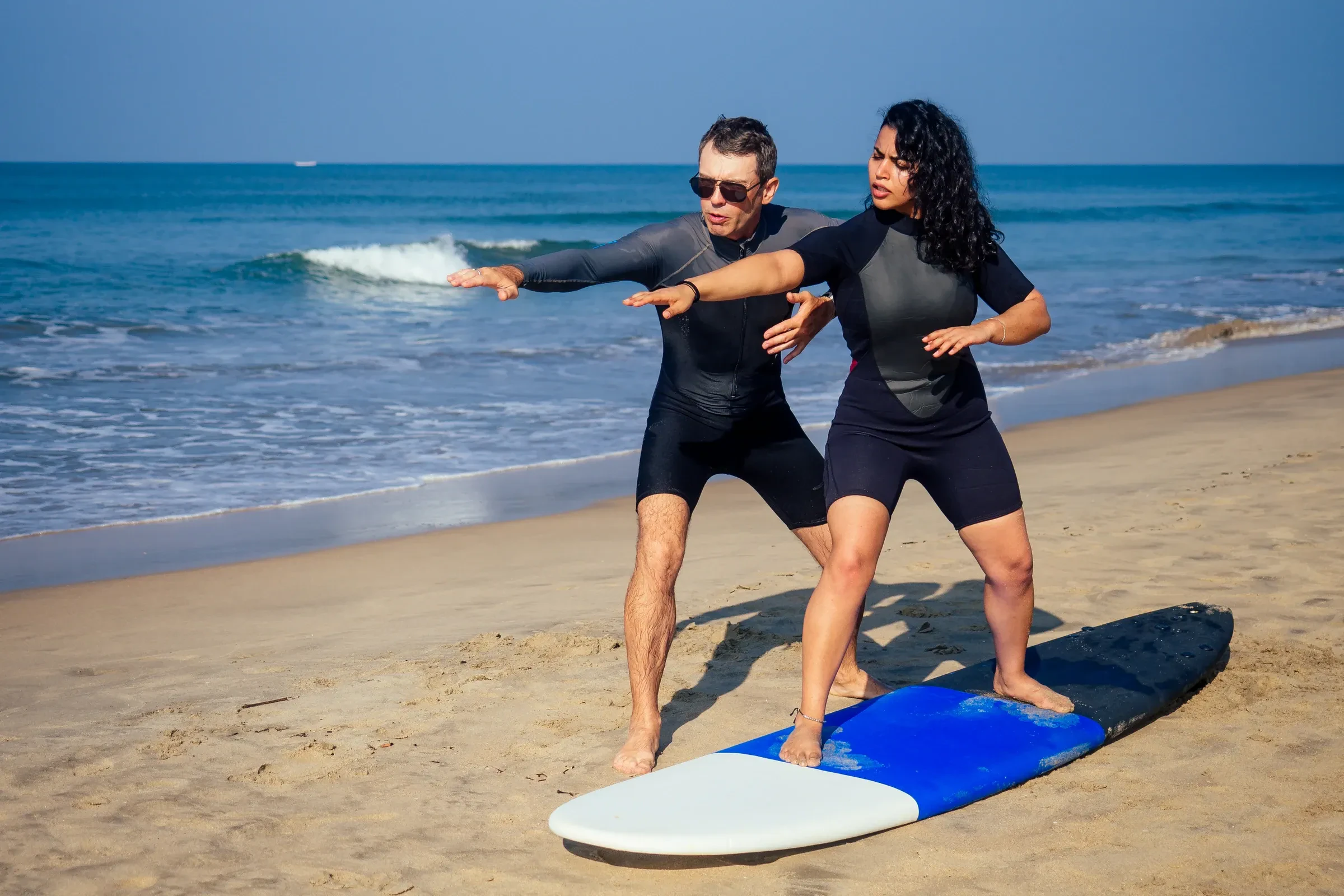
Walking the cliff at sunset is the obvious one, and worth doing at least once even if you've already spent the day in its cafes. Several beach-based schools run surf lessons for beginners, usually an hour or so with a board and instructor included; the season runs roughly October to March, with November to February the most consistent for swell and wind, and most beginner programmes pause during the monsoon. Yoga classes and Ayurveda treatments are easy to find along the cliff path, from a single drop-in session to a multi-day programme. At Kappil, a boat or canoe trip on the lagoon makes a calmer alternative to the open sea, especially in the shoulder months when the surf picks up.
What to eat in Varkala
Cliff-top cafes serve fresh-caught seafood, grilled or in a Kerala-style curry, alongside the usual traveller-town spread of pancakes, pasta and smoothie bowls. Away from the cliff, look for a proper Kerala thali (rice with a rotating set of vegetable and fish curries, served on a banana leaf) and puttu and kadala curry (steamed rice cake with a spiced chickpea curry) at a local "hotel" (the Kerala word for a simple café). Tender coconut water from a cliffside stall is the standard cool-down between beach and temple. Our Kerala food guide covers the region's dishes in more depth.
Alcohol in Varkala
Kerala's legal drinking age is 23 (Onmanorama, 13 August 2026), so travellers aged 18 to 22 can't legally drink or buy alcohol there. Drinking in public places, including on the beach or the cliff path, is illegal in India, so keep it to licensed premises (FCDO). Toddy shops and beer parlours can open from 11am to 11pm since 17 February 2026, per our Kerala food guide. The FCDO also warns about methanol in alcoholic drinks, which you can't detect by taste or smell, which is another reason to stay with licensed venues.
Best time to visit Varkala
November to February is the most settled period: dry and warm, and the best window for swimming and surf lessons. October and March are workable shoulder months, warmer and with a higher chance of a shower, and the Indian Meteorological Department counts October to December as Kerala's north-east monsoon season, so some rain is possible then. June to September is the southwest monsoon, with heavy rain and rough seas. India's ocean-information agency (INCOIS) issues swell-surge and high-wave alerts for Kerala's coast, including the Kappil to Pozhiyoor stretch near Varkala; one ran from 26 to 28 September 2026, and officials said beach trips should be avoided until it was withdrawn. The sea can be dangerous outside the monsoon too. A British tourist died after a large wave hit him while bodysurfing at Varkala in April 2024 (Onmanorama, 5 April 2024). See our Kerala best-time guide for how this fits the rest of the region's calendar.
Getting to Varkala and around
By train: Varkala Sivagiri station sits close to the cliff and has frequent services to and from Thiruvananthapuram (Trivandrum) Central, about 41 km away. Journeys take from about 41 minutes to 1 hour 48 minutes depending on the number of stops, and trains continue north to Kollam. From Ernakulam, the fastest trains take about 2 hours 48 minutes and slower ones about 4 hours. Those times come from timetable sites, so check IRCTC before you book.
By road: From Alleppey it's about 120 km, roughly 2 hours 30 minutes to 3 hours by taxi (a similar overall time by train via Kollam Junction). From Kochi, allow around 4 hours by road. Trivandrum International Airport is about 50 km away, roughly an hour by taxi.
Around town: North Cliff is entirely walkable. An auto-rickshaw covers everything further out, Black Beach, the temple, Kappil, cheaply; a scooter or a taxi makes more sense for Jatayu Earth's Center.
How long to spend in Varkala, and which route guide to use
Two to three days is enough to cover the cliff, a beach or two and one day trip without feeling rushed; Varkala rewards a slow pace more than a packed one, and a lot of travellers end up staying longer than planned simply because the cafes are easy to linger in. It sits at the end of the Kerala itinerary, which brings you here from Kochi, Munnar, Thekkady and Alleppey over 7 or 10 days, and it's also the finishing point in our 1-week and 10-day India itineraries. If you'd rather a livelier, more nightlife-driven beach town, Goa is the better fit; Varkala is the quieter alternative.


