What makes Jaipur special
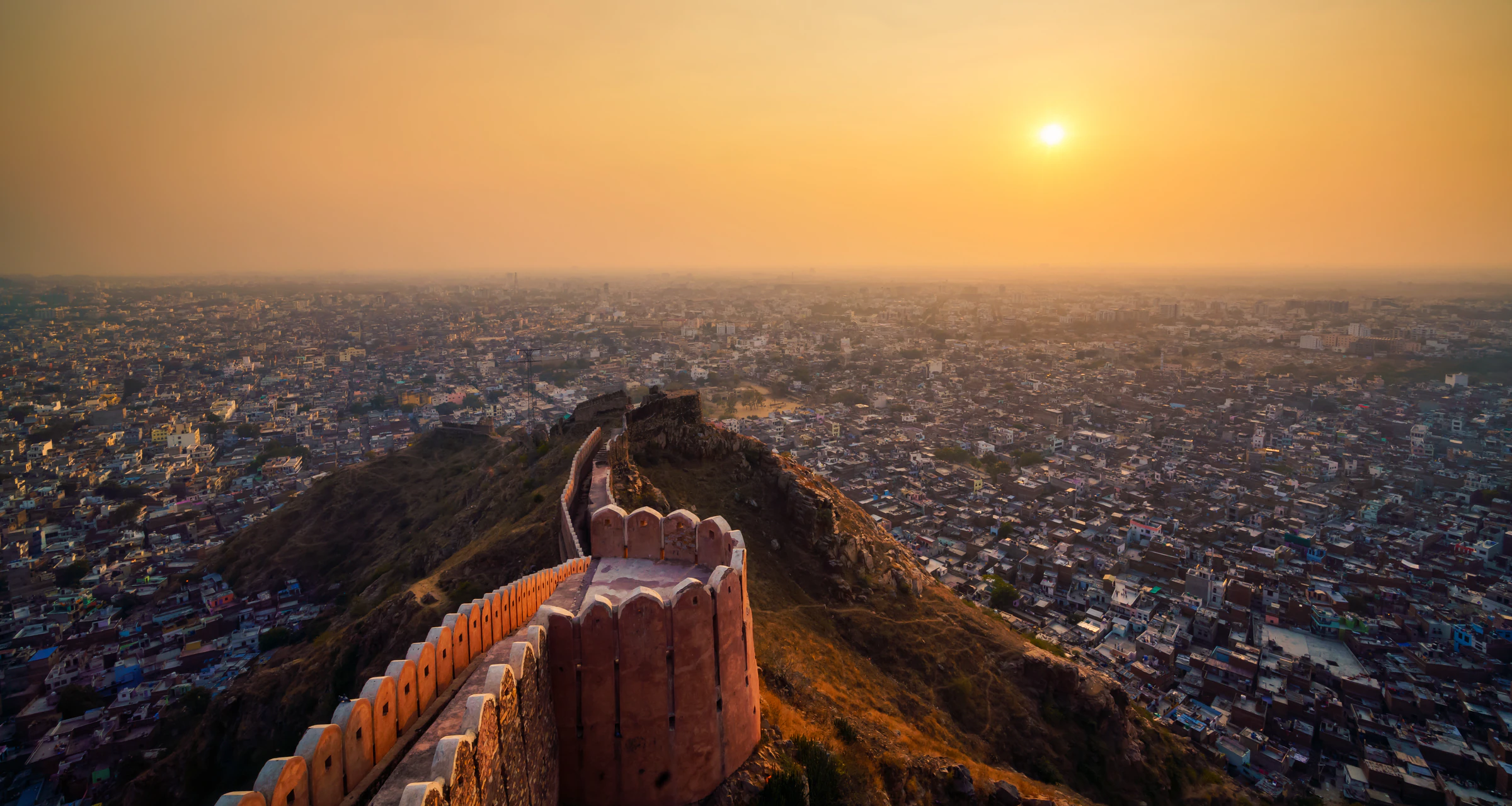
Jaipur was laid out in 1727 by Maharaja Sawai Jai Singh II on a grid plan unusual for its time, and the old city is still ringed by its original walls and gates. It's the one Rajasthan stop that works as both a fort city and an easy base: the sights cluster tightly enough to see on foot or by a short auto ride, the bazaars are some of the best organised in the state (each street still trades the one craft it always has, from lac bangles to hand-blocked textiles), and it sits close enough to Delhi and Agra to anchor a first trip to India without much extra travel. It's also the busiest stop on the Golden Triangle, so expect crowds at Amber Fort and Hawa Mahal by mid-morning. An early start buys real breathing room.
Where to go within Jaipur
Amber Fort: half a day
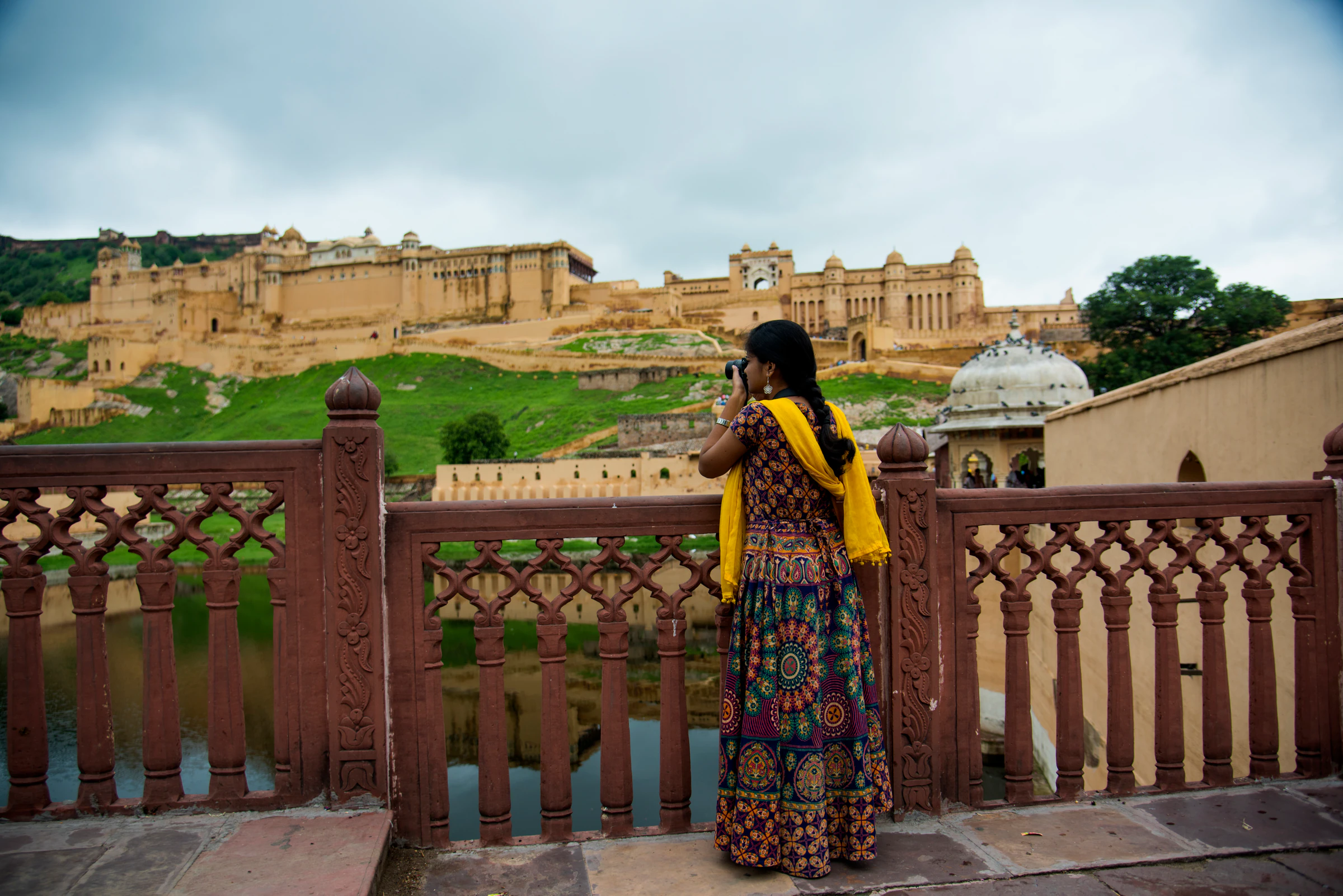
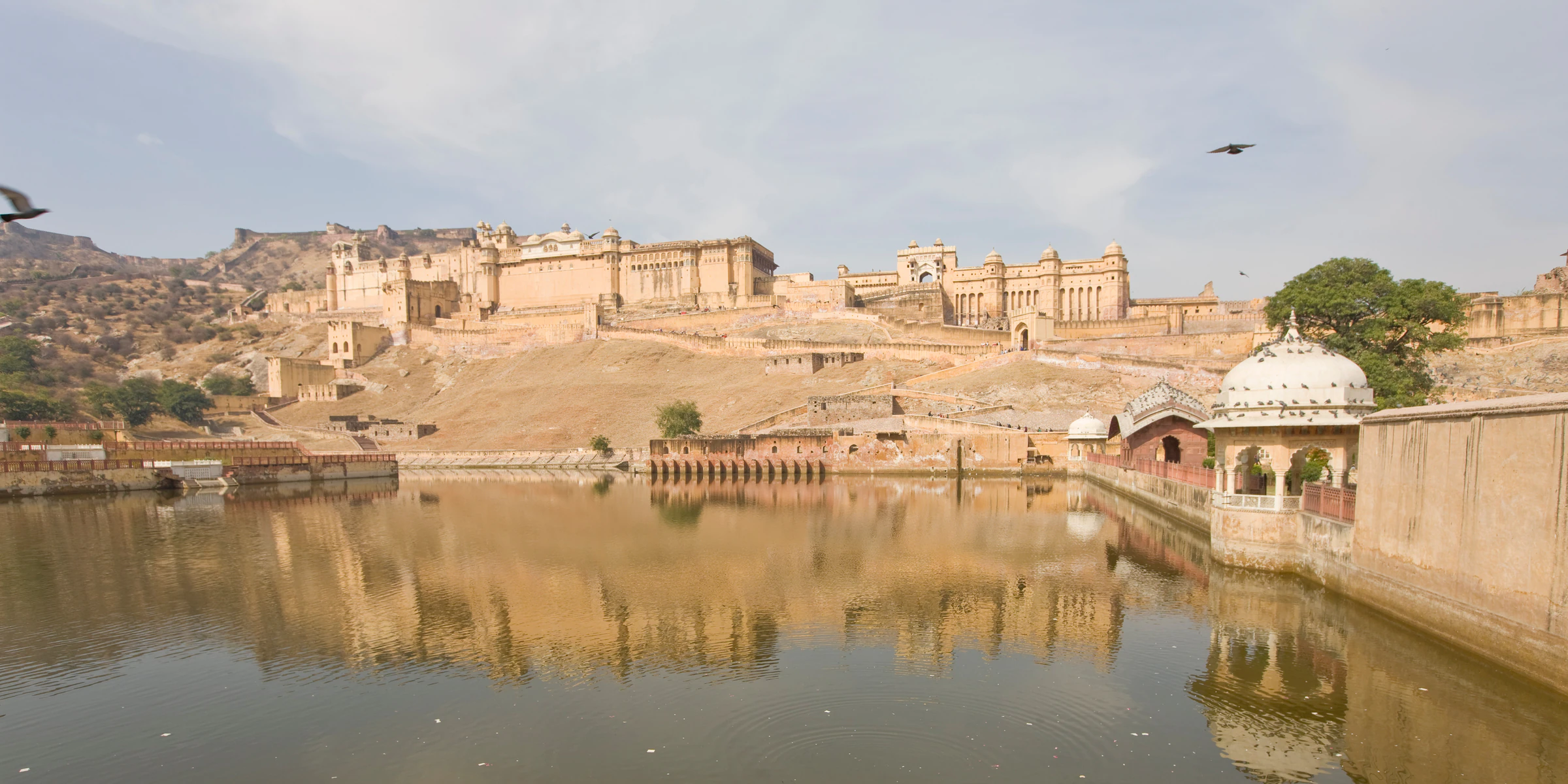
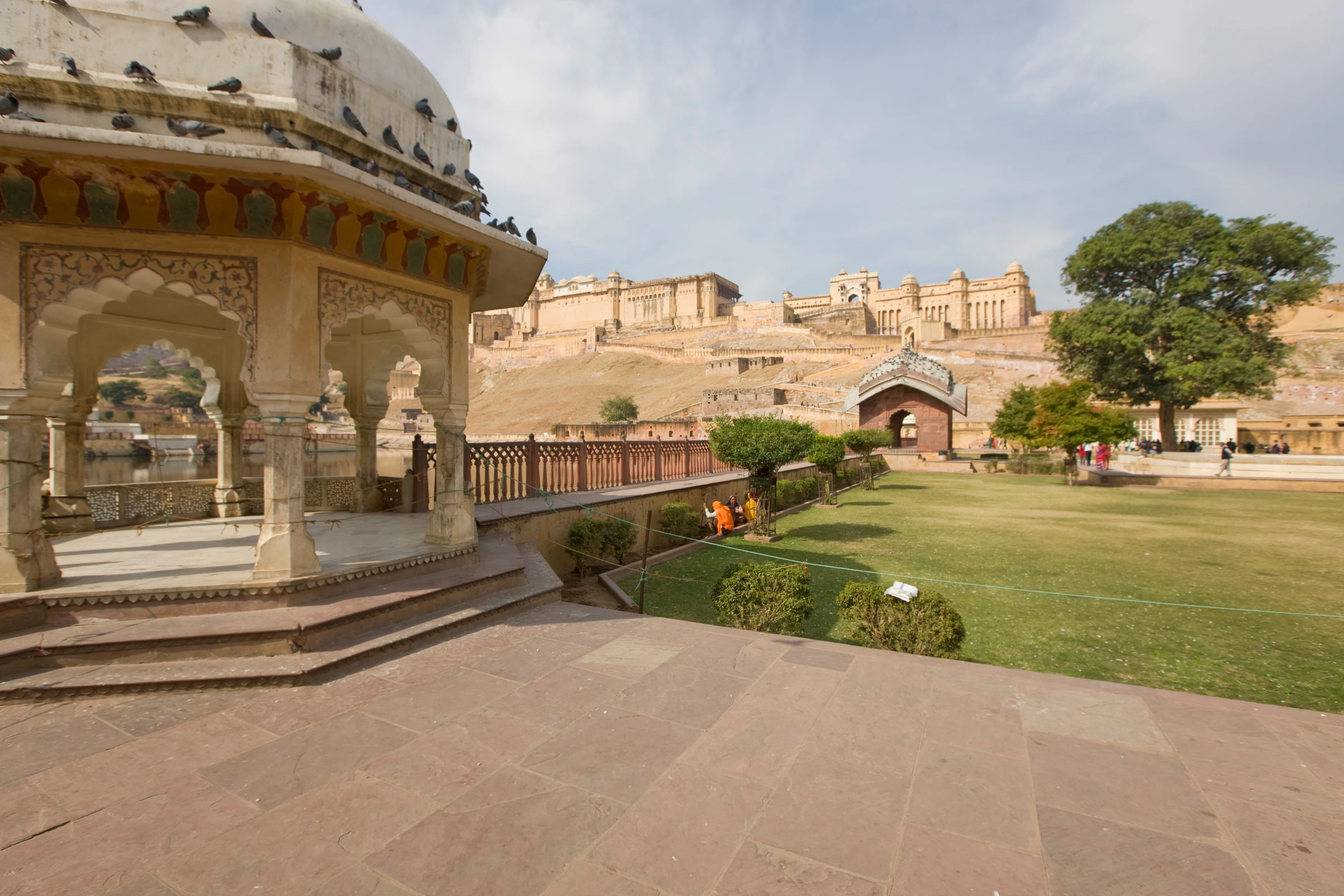
Amber Fort (also spelled Amer) sits on a ridge above Maota Lake, about 11 km north of central Jaipur, and it's the reason most people come. Sandstone ramparts and courtyards give way to the Sheesh Mahal, a hall lined with mirrored glass tiles that catch a single candle flame across the whole ceiling. Go at opening time, 8am, to see it before the coach groups and the heat both arrive; the walk from the base up to the main gate takes 10 to 20 minutes and is a real option outside the hottest months. Budget half a day including the drive out and back.
The old city: City Palace, Hawa Mahal and Jantar Mantar, half a day
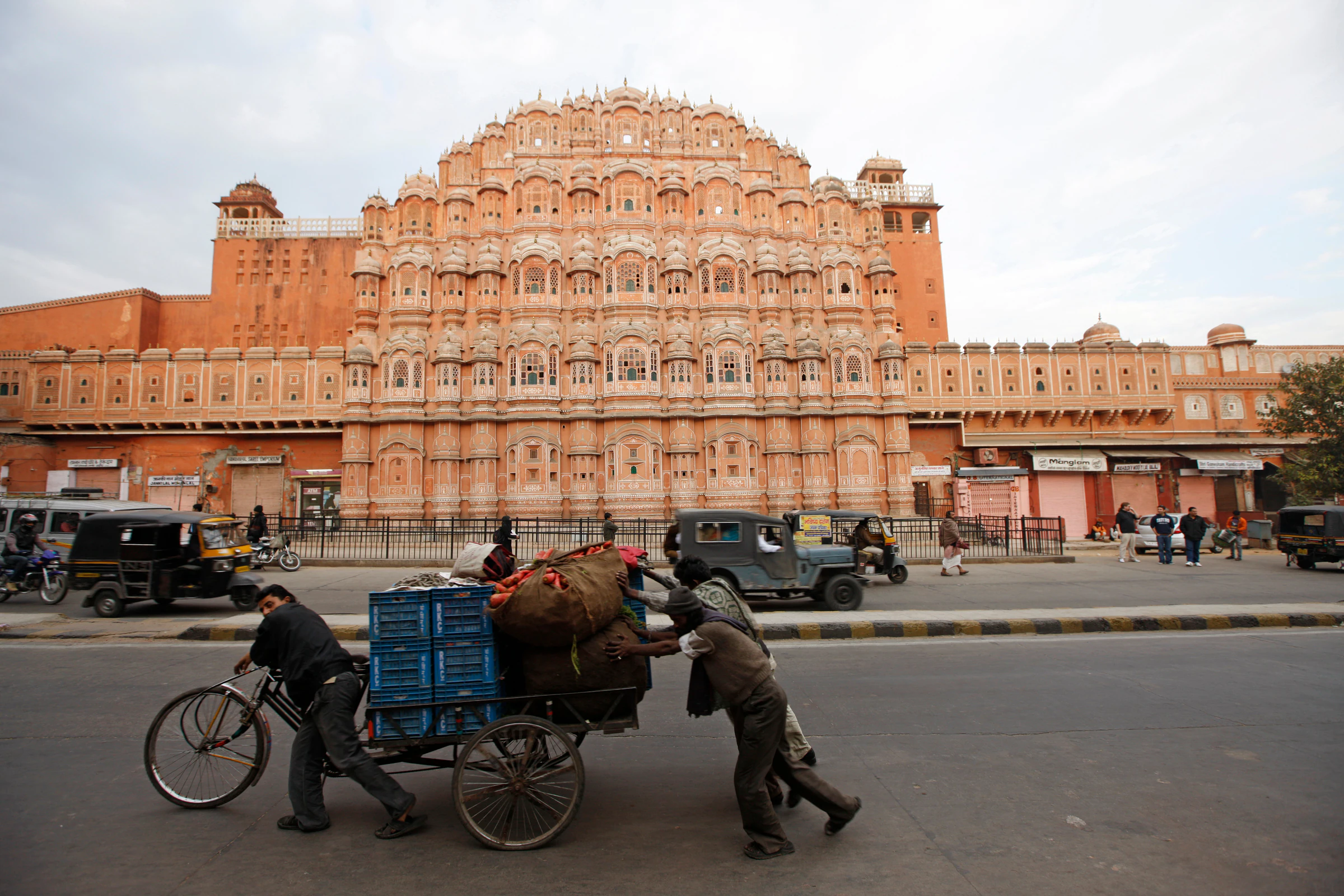
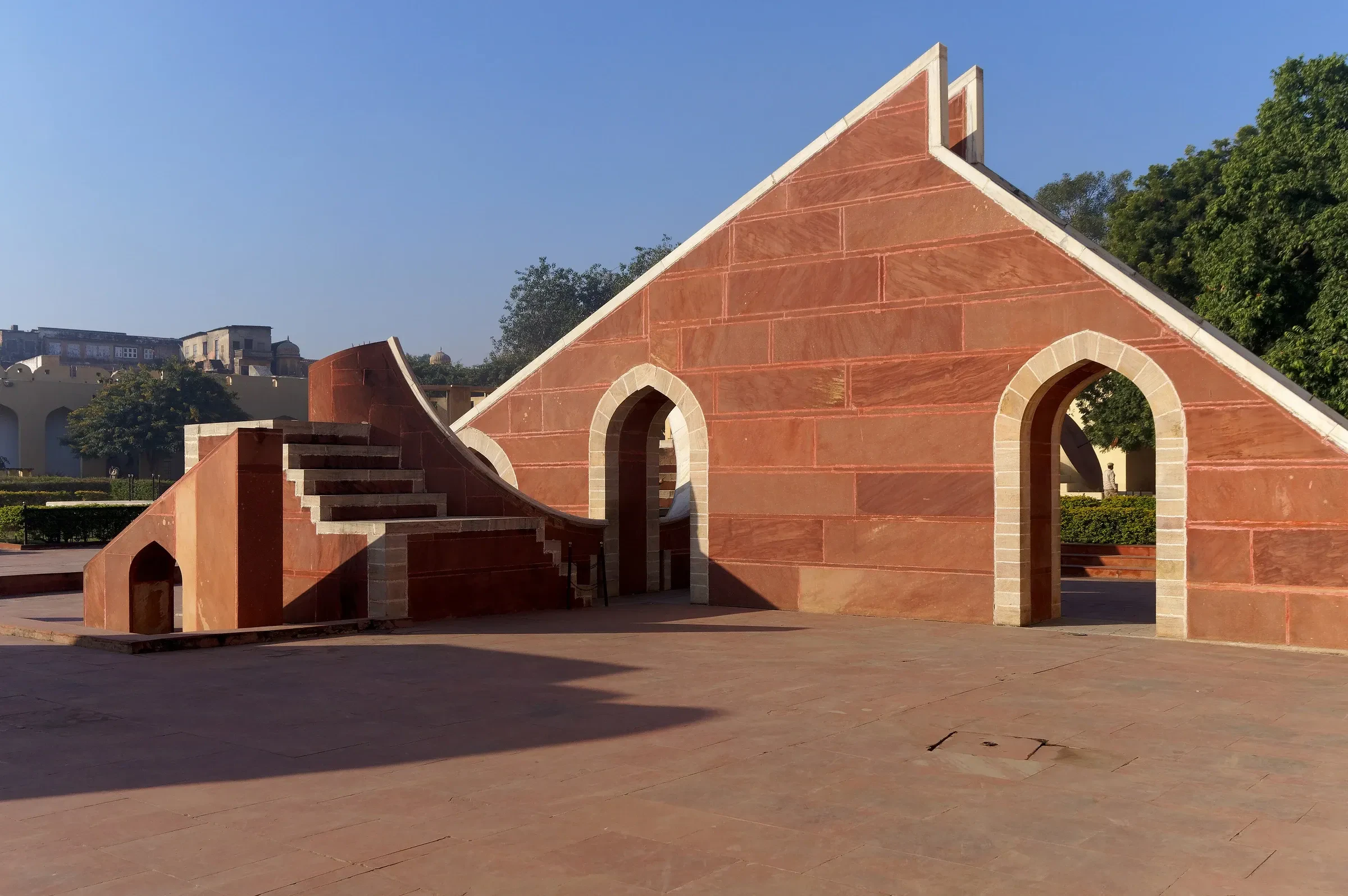
These three sit inside a few minutes' walk of each other in the walled Pink City, so they work as one outing. The City Palace, still home to the former royal family and run as a museum by their own trust rather than the state, holds the Chandra Mahal courtyards and costume and armoury galleries. Hawa Mahal, the honeycomb-windowed "Palace of Winds", is best photographed from the street below rather than from inside, where the view is mostly out through the same small screens. Jantar Mantar, a UNESCO-listed open-air observatory of 18th-century stone instruments, rewards 45 minutes with a guide who can point out what each device measured. All three are walkable from Bapu or Johari Bazaar, so pair the visit with lunch and a browse.
Nahargarh Fort: 2 to 3 hours, for the sunset
A smaller hilltop fort above the city, built as a defensive outpost rather than a palace, Nahargarh's real draw is the view: the whole Pink City spread out below, best at sunset. It's a short taxi or auto ride up (about 6 km from the centre), with a rooftop restaurant at the top if you want to make an evening of it rather than a quick photo stop.
The bazaars: an afternoon or evening
Johari Bazaar trades jewellery and gemstones (go in knowing showroom staff work on commission, and agree a price before you're shown the "best" pieces); Bapu Bazaar is textiles, block-printed fabric and juttis (traditional leather shoes); Tripolia Bazaar specialises in lac bangles, made and sold from the same small workshops for generations. None of the three needs a dedicated day, but together they're worth a half-day wander, ideally in the early evening once the heat drops.
Day trips: stepwells and a block-printing village
Bagru and Sanganer, both under an hour from Jaipur, are the two traditional centres for hand block-printing; a half-day workshop visit shows the actual carved-wood-block process behind the fabric sold in Bapu Bazaar. Further out, Chand Baori at Abhaneri, roughly 1.5 to 2 hours each way, is a 9th-century stepwell cut with thousands of steps into its sides, best combined with a stop en route between Agra and Jaipur rather than as a separate round trip from the city.
Things to do in Jaipur
Beyond the forts and palaces above, this is where the days actually fill up. Get to Amber Fort right at opening time, 8am, to beat the coach groups, and skip the elephant queue at the base: we don't recommend elephant rides here, or on any of our trips. A shared jeep (roughly ₹200 to ₹300 a ride, 2026 rates) or the 10 to 20 minute walk up both reach the same gate. Once you're inside, the Sheesh Mahal, the fort's mirrored hall, is the single most photographed room. A short walk from the fort's base is Panna Meena ka Kund, a free 16th-century stepwell with no official entry fee (ignore anyone at the gate who tells you otherwise).
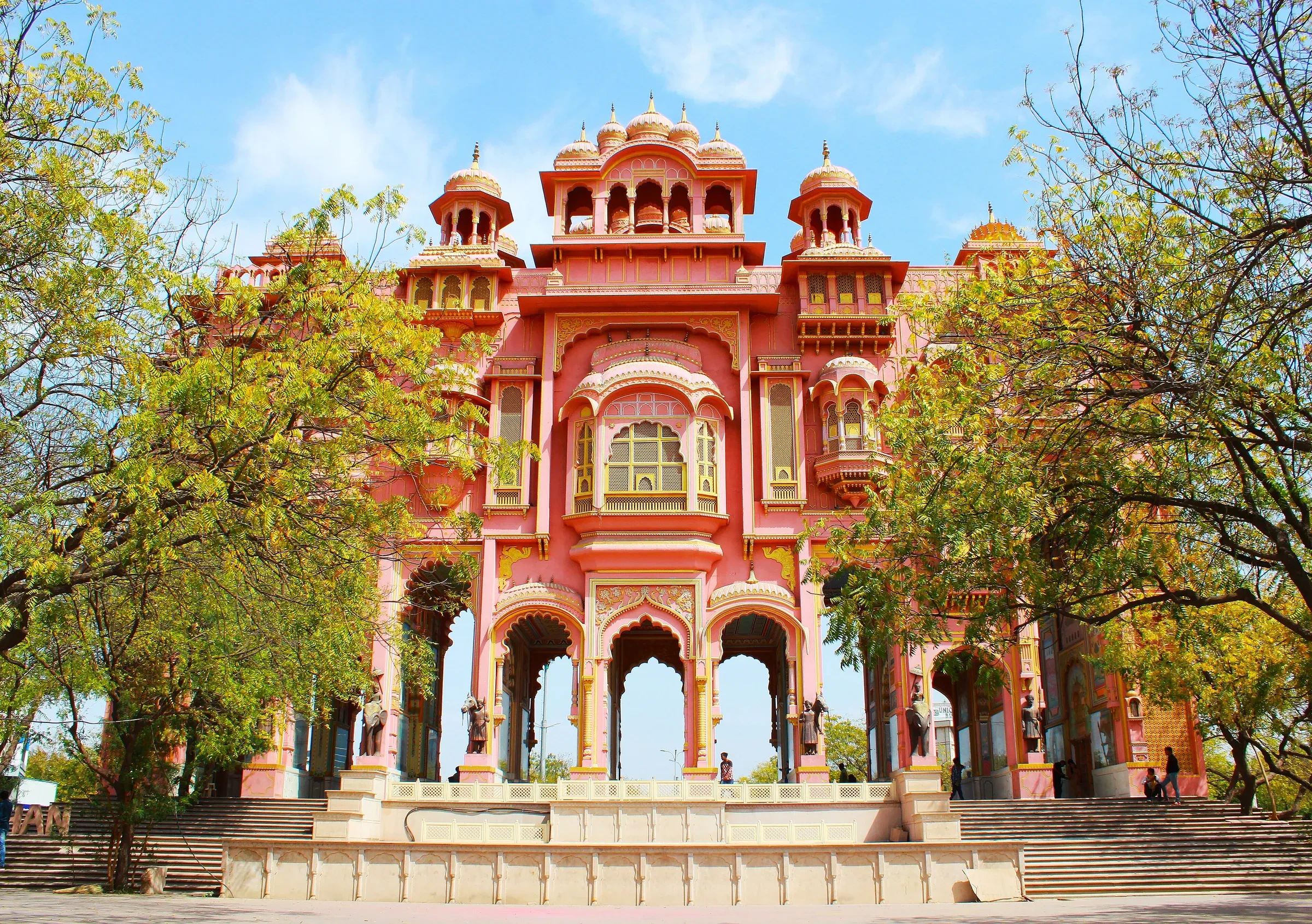
Elsewhere in the city: a half-day block-printing workshop in Bagru or Sanganer, watching fabric stamped by hand with carved wooden blocks; an evening at Chokhi Dhani, a village-themed dinner complex with folk dance, puppet shows and a Rajasthani thali, with packages running from about ₹1,000 to ₹1,700 depending on the menu (2026 rates); a quick stop at Patrika Gate, a brightly painted arch at Jawahar Circle that costs nothing and has become a standard photo spot; and the Albert Hall Museum in Ram Niwas Garden, an Indo-Saracenic building with a modest entry fee, worth keeping in reserve for a hot afternoon indoors. With a fourth day, or if you're driving between Agra and Jaipur anyway, add Chand Baori, the Abhaneri stepwell mentioned above.
Entry fees (Rajasthan revised state monument fees on 1 January 2026, so expect noticeably higher prices than older blog posts still quote):
- Amber Fort: ₹200 for Indian nationals, about ₹1,000 for foreign visitors on 2026 listings (some still show ₹500, so confirm at the counter).
- Hawa Mahal, Jantar Mantar and Nahargarh Fort: ₹100 for Indian nationals, ₹600 for foreign visitors each (2026 rates).
- City Palace: privately owned and run by the former royal family's trust, so it sits outside the government fee revision above. Indian nationals pay ₹400 for the museum or ₹500 for the composite ticket that adds Jaigarh Fort and the Royal Cenotaphs; foreign visitors pay considerably more (2026 listings quote about ₹1,000 for the museum ticket, though sources disagree). Check citypalace.org before you go, since the trust sets its own prices independently.
- A 2-day composite ticket covering the state-run sights (Amber Fort, Hawa Mahal, Jantar Mantar and Nahargarh, sometimes with Albert Hall too) undercuts paying for each separately. Listings in 2026 put it at about ₹1,000 to ₹1,200 for foreign visitors, with one visitor reporting ₹1,200, so confirm the current figure at the counter.
What to eat
Laal maas, a fiery mutton curry cooked with Mathania chillies, and pyaaz kachori, a flaky onion-stuffed fried pastry usually eaten as a mid-morning snack, are Jaipur's two signature dishes. Add ghewar, a disc-shaped, honeycombed sweet soaked in syrup and sold everywhere in the run-up to Teej and Raksha Bandhan, and a glass of lassi at Lassiwala, the long-running earthen-cup stall on MI Road. For the full regional spread, including where each dish comes from, see our Rajasthani food guide.
Best time to visit
October to March is the window, with daytime temperatures in the low-to-mid 20s°C and cool evenings that make Nahargarh's sunset comfortable rather than a heat-dodge. April to June gets uncomfortably hot, often above 40°C by May, with little shade at Amber Fort or around the old city's stone bazaars. Monsoon (July to September) is humid rather than a road-closure risk, and the crowds thin out. If your dates land on Diwali, Jaipur's markets light up for the competition between shopping streets, worth seeing if you're there for it (see our Diwali guide's Jaipur section).
Getting there and around
Jaipur has its own airport (Sanganer, code JAI) with domestic connections to Delhi, Mumbai and other major cities. By rail, the Ajmer Shatabdi from New Delhi takes about 4 h 25 min (06:10 to 10:35), and the Vande Bharat back to Delhi takes about 3 h 45 min (07:47 to 11:30), though it doesn't run on Wednesdays. From Agra, it's about 4.5 to 5 hours by road via Fatehpur Sikri. The old Jaipur to Agra Fort Shatabdi no longer runs; the Marudhar Express serves Agra Fort on Mondays, Wednesdays and Saturdays only. Within the city, ride-hailing apps and autos cover everything; the old city and Amber Fort are both walkable in short stretches but not door to door, and the midday heat outside winter makes an auto the better call for anything beyond a few hundred metres.
How long to spend, and which route guide to use
Two full days covers Amber Fort, the old city trio and a bazaar afternoon; three lets you add Nahargarh's sunset properly, a block-printing workshop or the Abhaneri stepwell without rushing. If Jaipur is part of a wider trip, our Golden Triangle itinerary gives Jaipur 1.5 to 2 days as the final leg after Delhi and Agra, while our Rajasthan itinerary treats it as the opening 2 to 3 days before continuing to Pushkar, Jodhpur and beyond. Either works; the choice comes down to whether you want a short first taste of India or the full desert loop.