What makes Hampi special
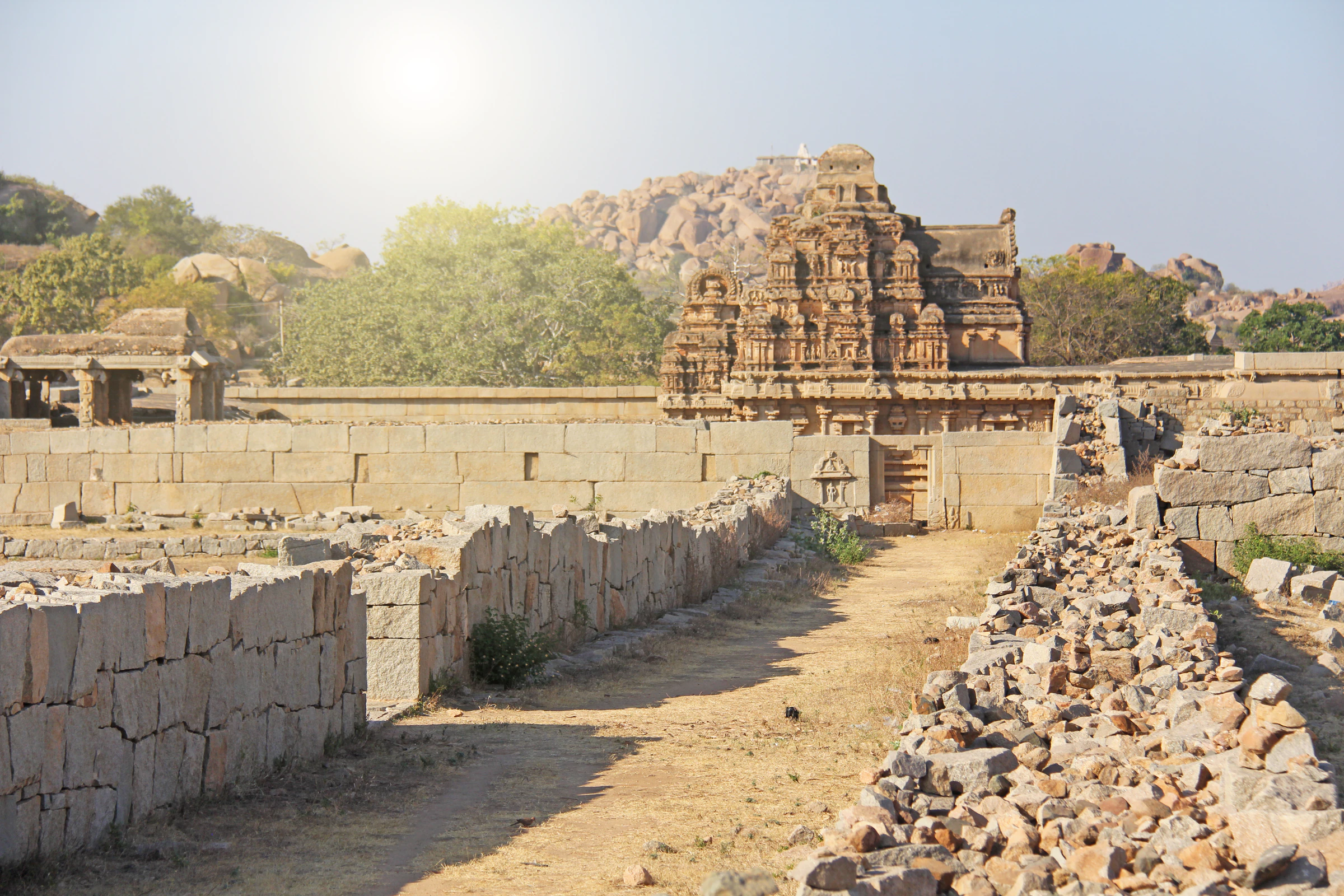
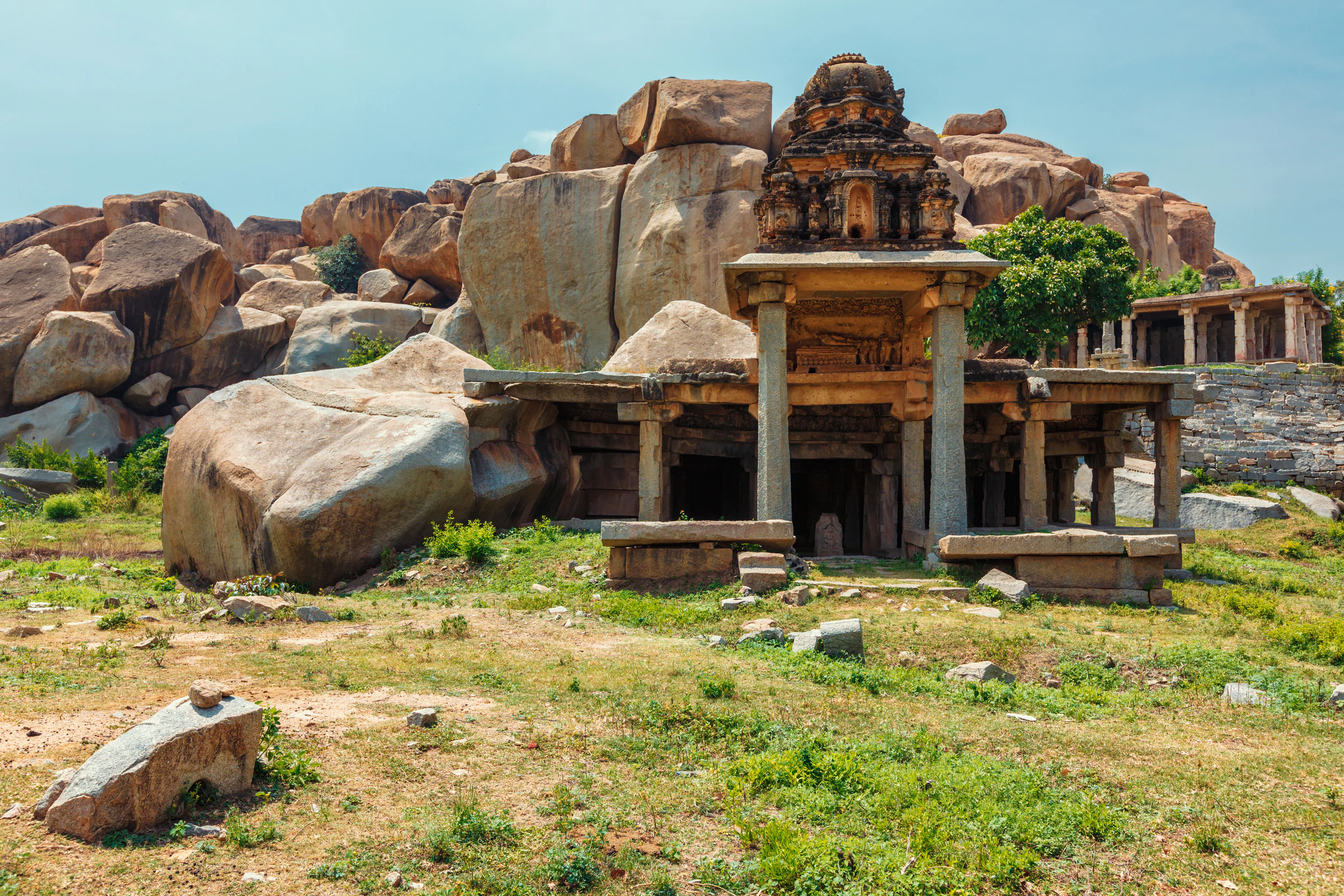
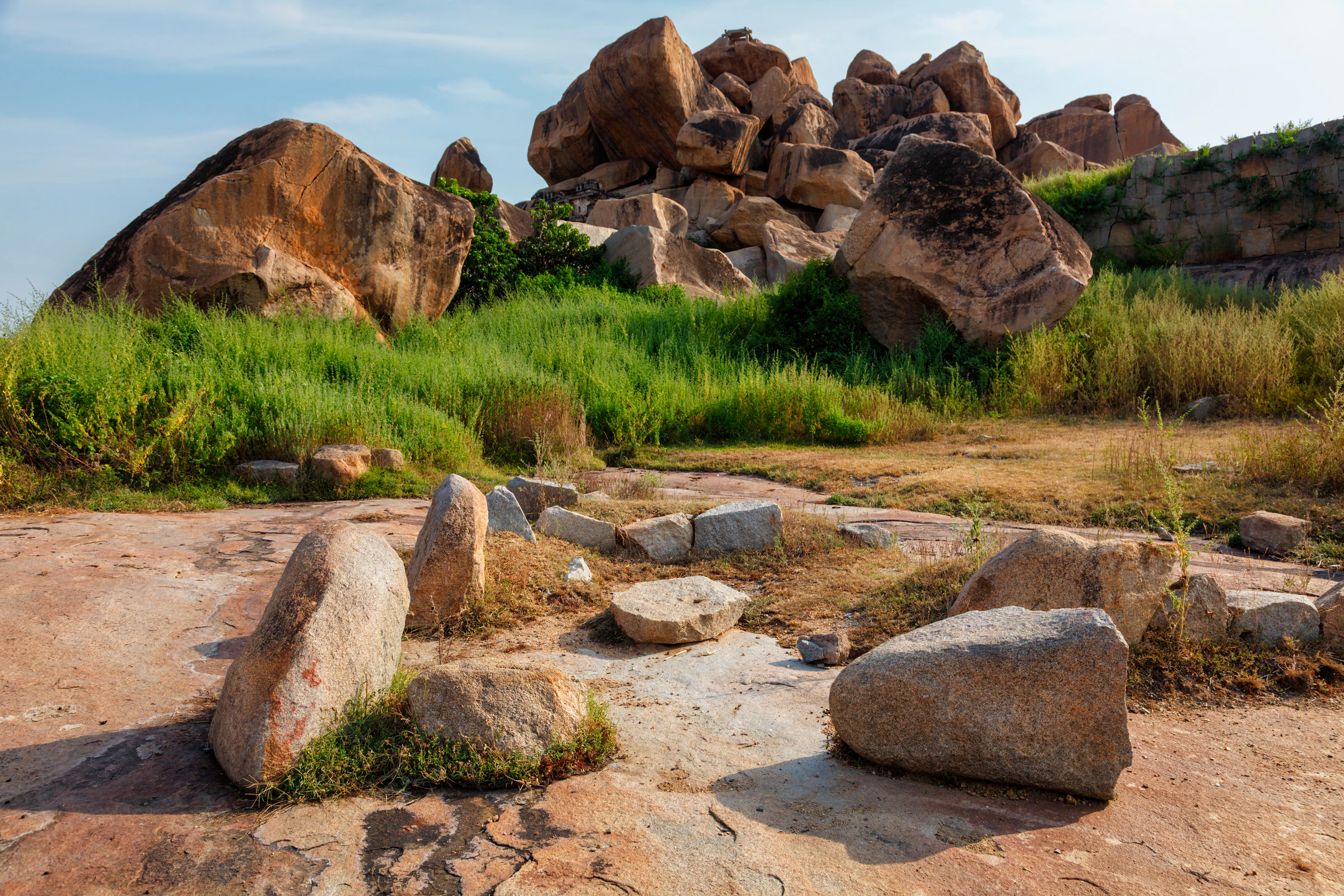
Hampi was the capital of the Vijayanagara empire, one of medieval India's largest Hindu kingdoms, until it was sacked in 1565. What's left is a UNESCO World Heritage Site: temple complexes, a stone chariot, elephant stables and royal platforms scattered across several square kilometres of giant granite boulders and banana plantations, with the Tungabhadra River running through the middle. It's half archaeological site, half strange boulder-strewn landscape, and it draws climbers as much as it draws history readers.
Where to go within Hampi
Hampi Bazaar and Virupaksha Temple
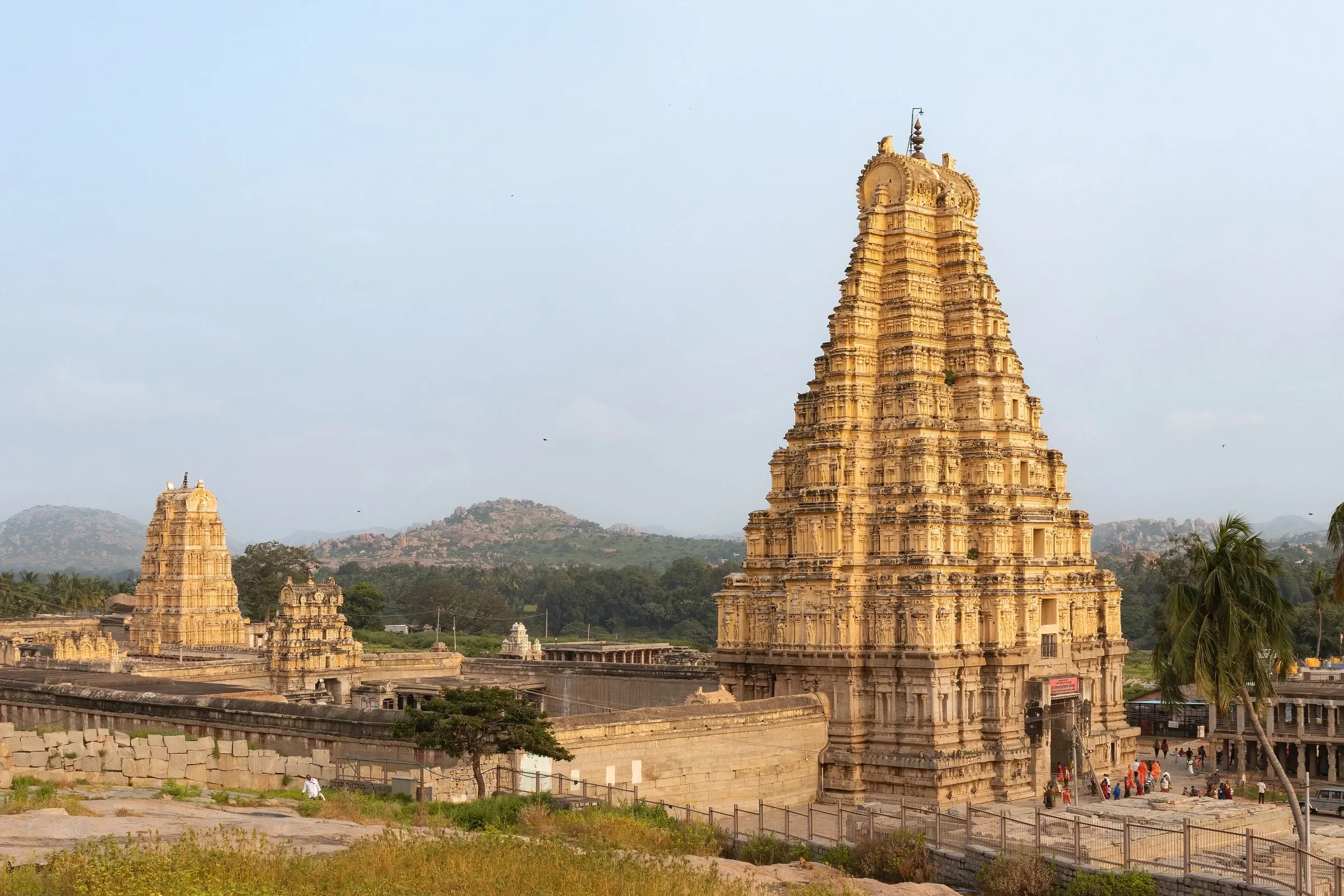
The main village sits below Virupaksha Temple, a still-active shrine, so cover your shoulders and knees and take your shoes off before the inner sanctum. The bazaar street in front of it was once a market lined with pavilions; today it's a good first stop, walkable from most guesthouses, and the base for everything on the south bank. Give it half a day.
Vittala Temple and the stone chariot
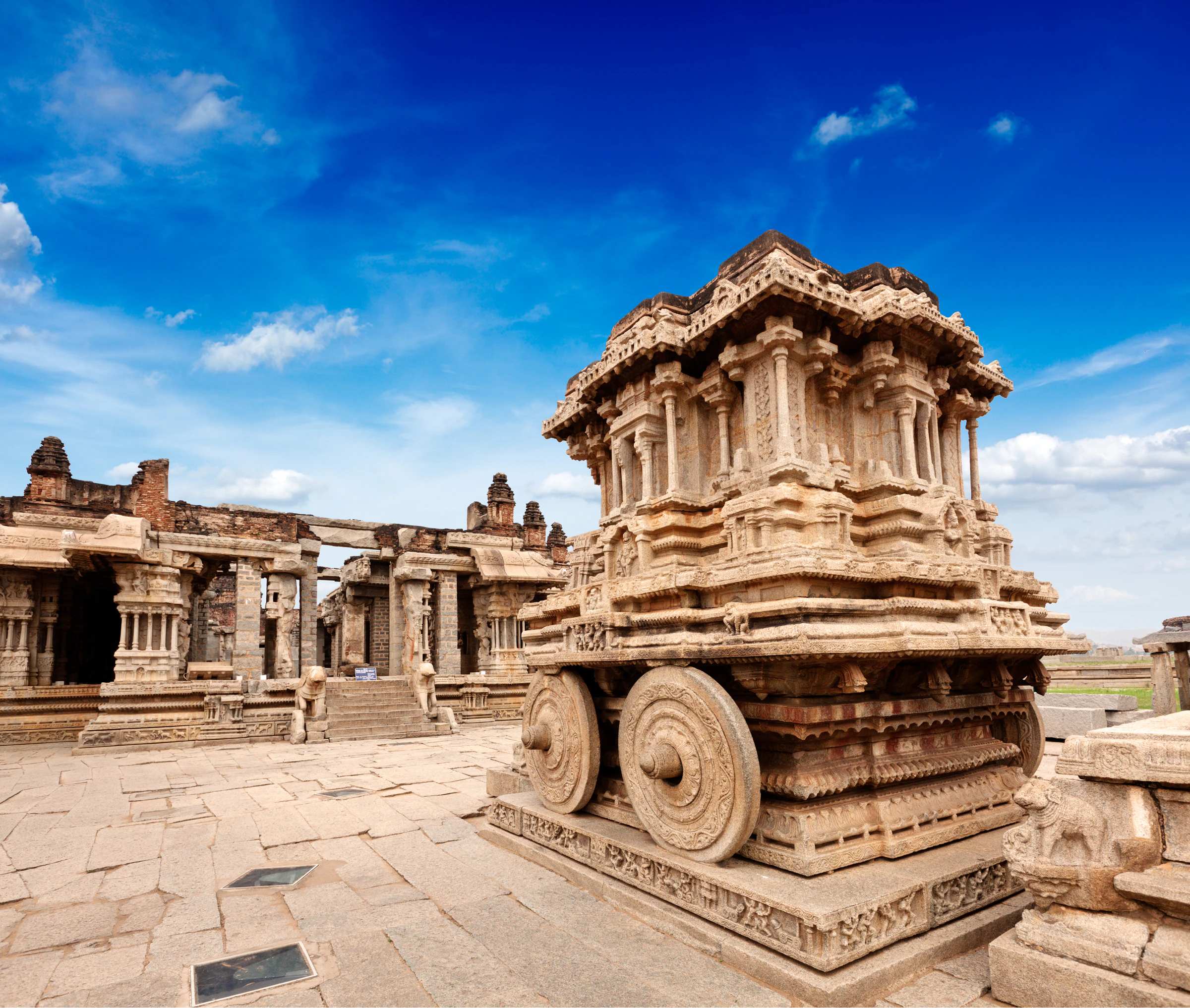
The single most photographed site in Hampi, about 2 to 3 km east of the bazaar. The stone chariot is the reason most people come. The hall of "musical" pillars is roped off to protect it, so look but don't tap. Arrive at opening time to beat both the heat and the tour groups. Private vehicles aren't allowed close to the monument; electric buggies shuttle visitors from the car park to the temple gate instead.
Hemakuta Hill and Matanga Hill
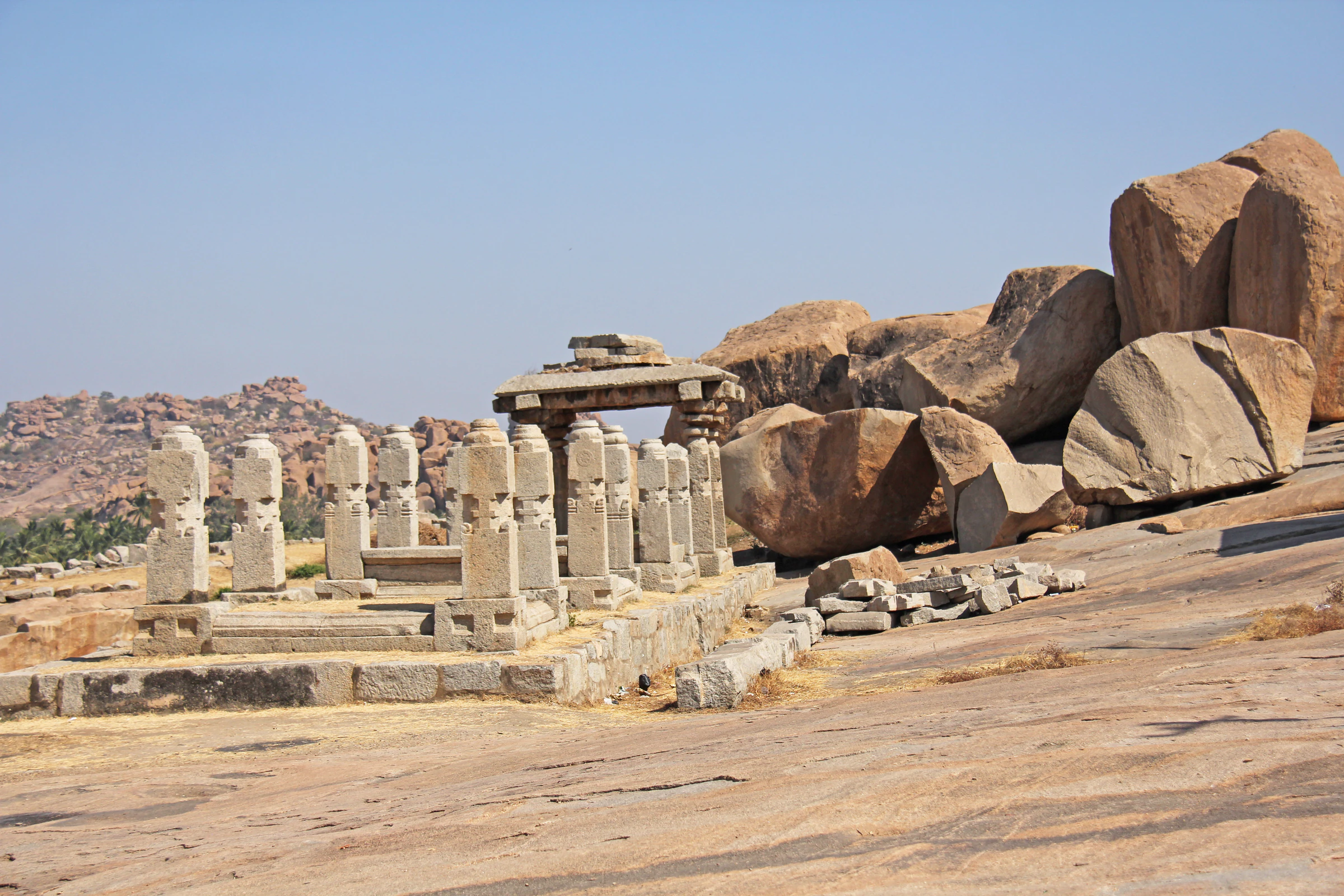
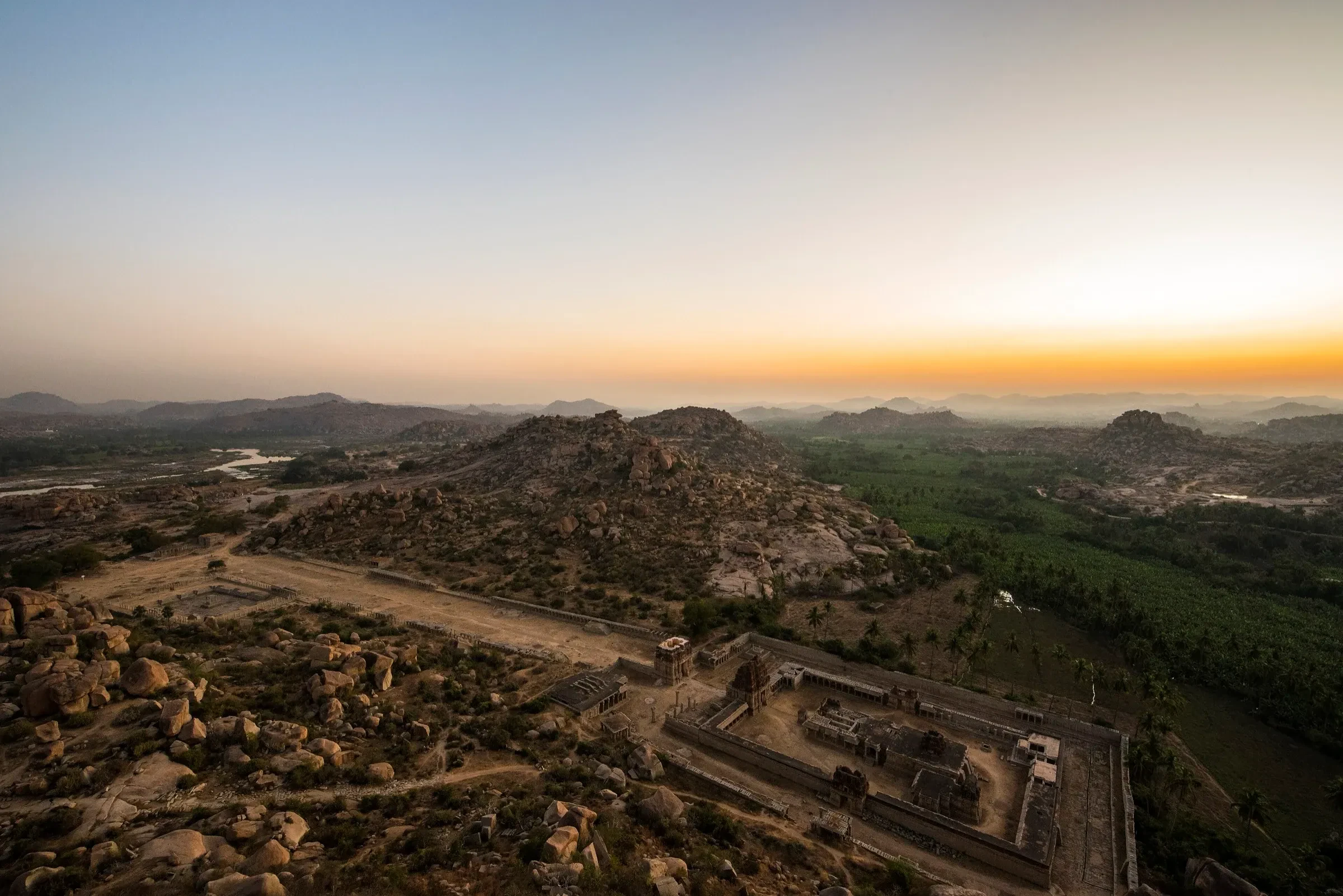
Two sunset and sunrise viewpoints. Hemakuta Hill, dotted with small pre-Vijayanagara shrines, is a short, easy climb right behind Virupaksha Temple and the better choice at sunset. Matanga Hill has the better 360-degree view over the boulder field but is a steeper scramble over uneven rock; go before it's fully dark, and ideally with someone else, since the path isn't lit.
Anegundi and the north bank, across the river
The north bank has a different character: rice paddies, fewer ruins, more cafes, and the boulders that draw climbers. It's a good half-day loop by bicycle or scooter, reached by the coracle crossing or the road bridge further along (see Getting around, below). The guesthouses and restaurants on Virupapur Gaddi, the former "hippie island", were demolished after a 2020 Supreme Court order, so don't plan to stay or eat there.
Things to do in Hampi
Hampi is one of India's best known bouldering destinations, with hundreds of problems scattered across the boulder fields on the north bank near Anegundi. The season runs roughly mid October to the end of January, with November and December the coolest and most comfortable; by March the rock is already too hot to climb through the middle of the day.
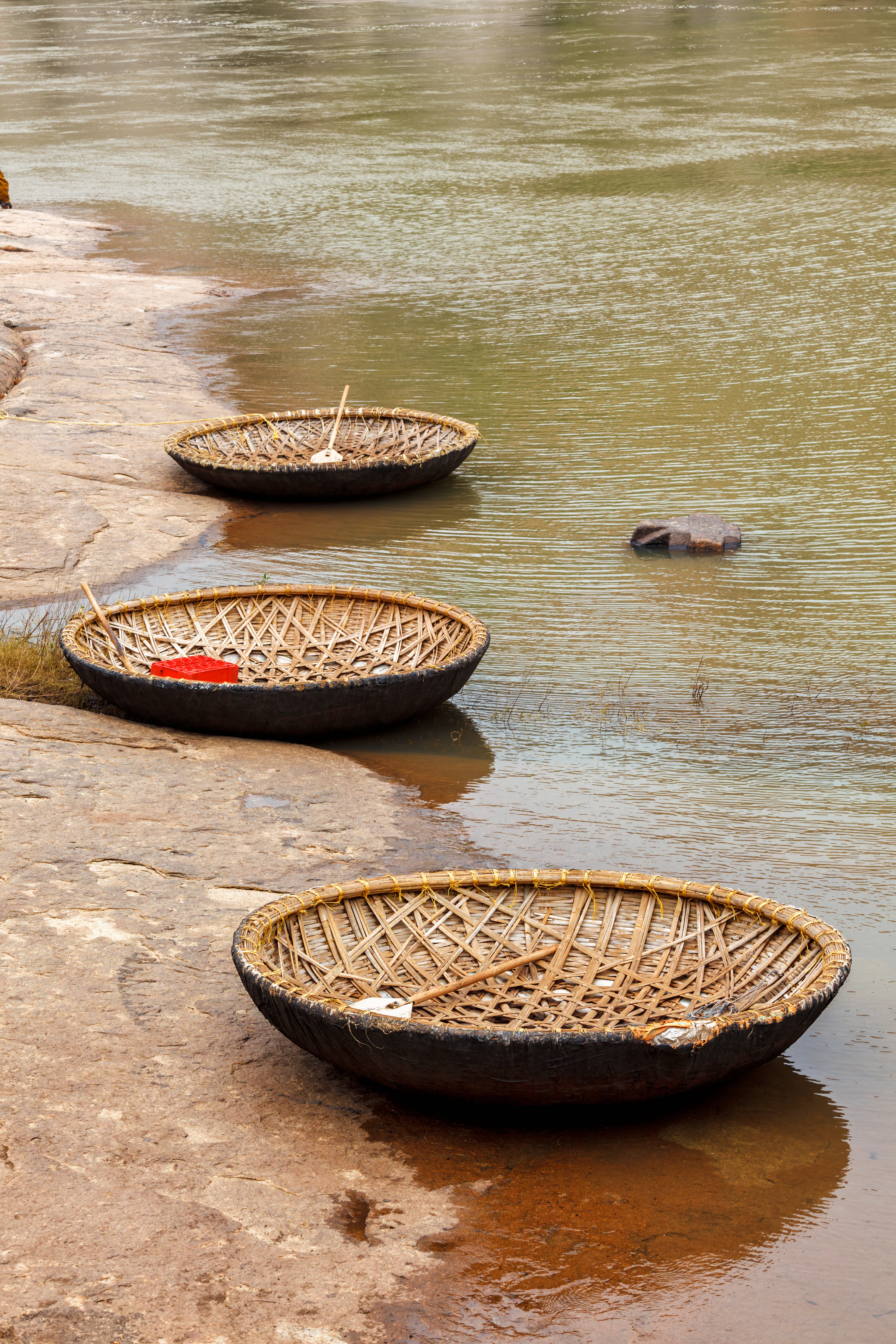
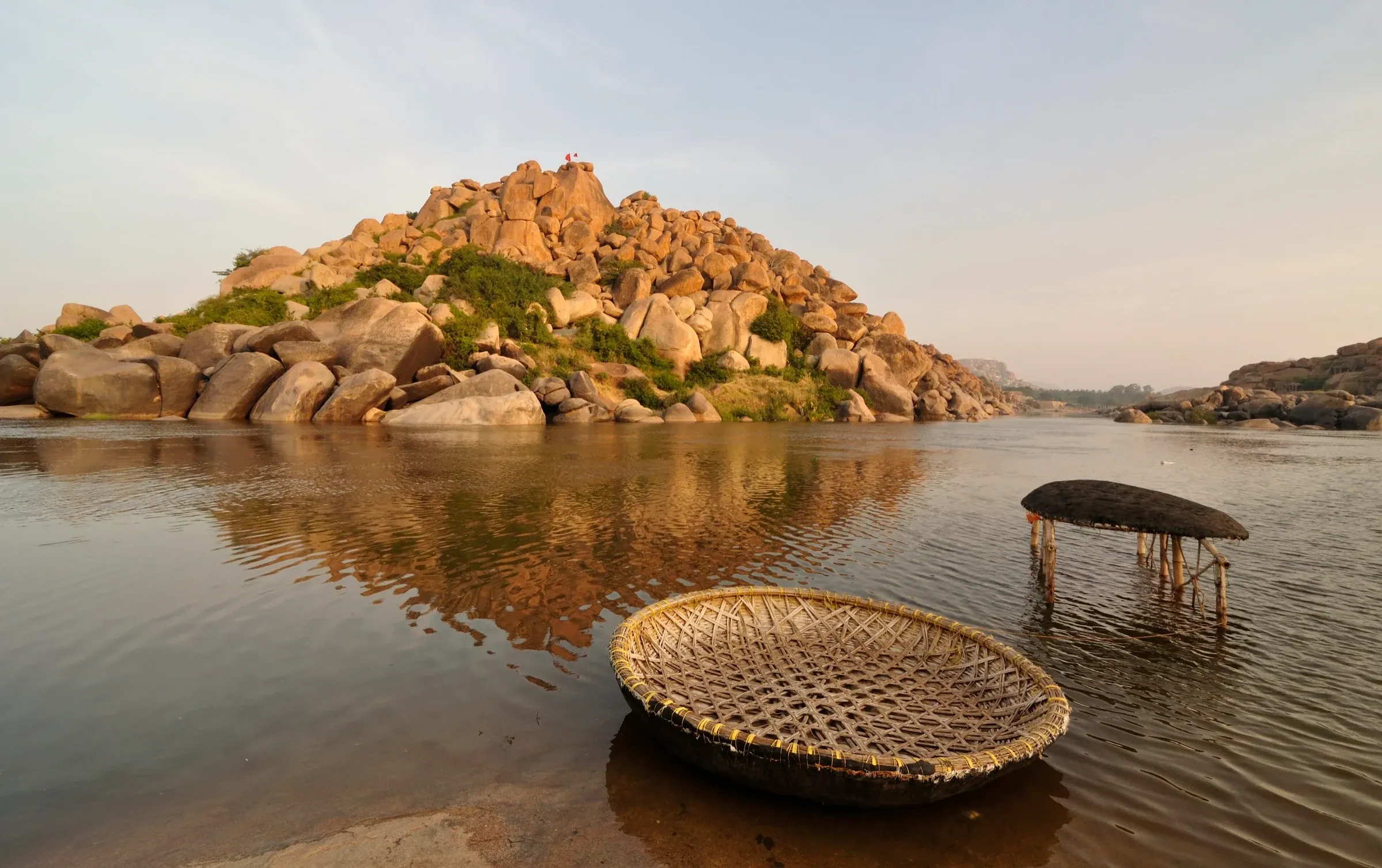
A coracle ride on the Tungabhadra is worth doing for its own sake, not just as a way across the river. These round, woven boats have worked this stretch of water for centuries, and a short crossing costs somewhere between ₹10 and about ₹100 a person, depending on the source, with a private half hour ride negotiable at about ₹100 to ₹200. The ruins are spread out enough that walking everything in the heat isn't realistic, so most people hire a bicycle or scooter and cover ground between sites that way.
What to eat in Hampi
Options in Hampi Bazaar are simple: the core village sits inside a protected heritage zone with restrictions on non-vegetarian food and alcohol, so thali houses serving South Indian vegetarian food are the norm. For a wider range of cafes, cross the river to the north bank around Anegundi and Sanapur. Virupapur Gaddi's restaurants were demolished in 2020, so don't count on them.
Best time to visit Hampi
November to February is the clear window: daytime temperatures sit around 20 to 30°C, and it's also the best stretch for bouldering. March already brings hot afternoons in the mid 30s°C, and by April and May the exposed rock and lack of shade make sightseeing genuinely uncomfortable outside early morning and evening. June to September is the monsoon: the boulders get wet and slippery, and the coracle crossing to the north bank is often suspended when the river is high. Whatever the month, sightsee early and rest through the middle of the day.
Getting to and around Hampi
From Goa
The 18048 Vasco da Gama-Shalimar Express is the direct link, departing Madgaon at 07:00 and reaching Hosapete around 14:30, roughly 7.5 hours (2A/3A fares about ₹850 to ₹1,100 and ₹600 to ₹800). It runs Tuesday, Thursday, Friday and Sunday only, so it won't fit every start day; check the current timetable before you plan around it. On other days, an overnight sleeper bus is the fallback, typically closer to 10 to 11 hours. By road it's about 315 to 330 km, roughly 5 hours of driving plus stops.
From Bengaluru
The overnight Hampi Express (16591/16592) runs daily between Hosapete and Bengaluru: it leaves Hosapete at 21:10 and reaches KSR Bengaluru at about 05:45 to 06:00 (2A fares roughly ₹1,200 to ₹1,400), a comfortable way to sleep through the journey in either direction.
Getting around
Hosapete (Hospet) station is about 13 km from Hampi Bazaar; autos and taxis cover it in 20 to 30 minutes. Inside the ruins, electric buggies shuttle visitors around the Vittala Temple area, and a bicycle (roughly ₹100 to ₹250 a day) or scooter (roughly ₹300 to ₹600 a day, more at weekends and in peak season) covers the rest of the site at your own pace. The coracle from Hampi Bazaar to the north bank runs from about 7am to 5:30pm, a five to seven minute crossing, cash only. Fares vary by source (₹10 to about ₹100 a person), so check the price before you board. It's suspended when the river runs high in the monsoon, and the alternative then is a longer road loop of about 25 km over the bridge further along the river, with autos charging a few hundred rupees for the round trip.
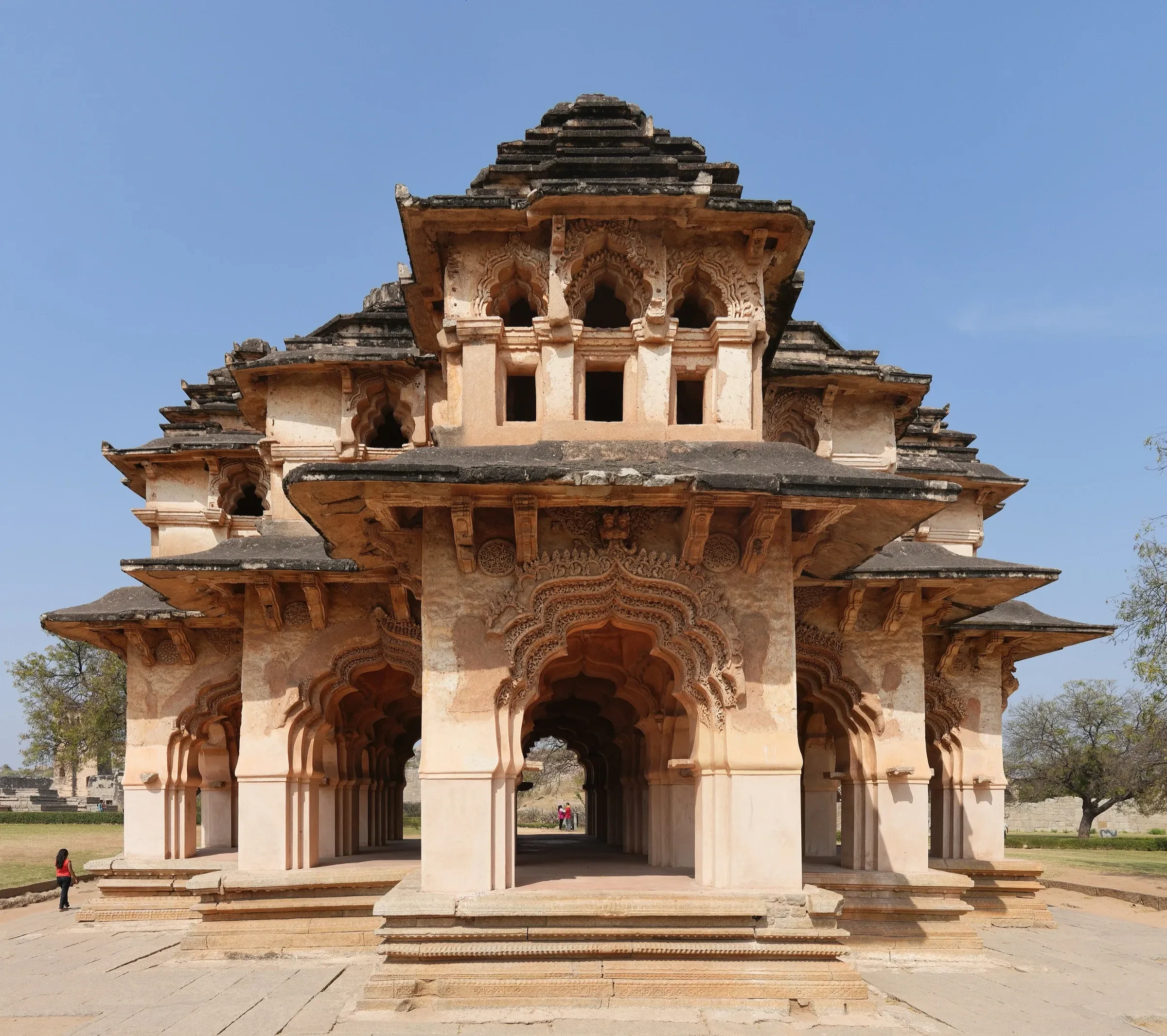
Entry fees: the ASI composite ticket covers Vittala Temple and the stone chariot, the Royal Enclosure group, Lotus Mahal and the Elephant Stables, and costs ₹40 for Indian and SAARC/BIMSTEC nationals or ₹600 for other foreign nationals (children under 15 free). It's worth checking the current price at the gate, since ASI fees are revised from time to time. Virupaksha Temple, a working temple rather than an ASI monument, has its own separate small entry charge.
How long to spend in Hampi, and how to use it
Hampi in 2 to 3 days
Two days covers the essentials without rushing: day one for the bazaar side (Virupaksha Temple, Hemakuta Hill, a wander through the bazaar ruins), day two for Vittala Temple at sunrise, the Royal Enclosure and Lotus Mahal, finishing with a coracle or bridge crossing to Anegundi for a quieter contrast in the afternoon. A third day suits climbers who want a full day of bouldering, or anyone who'd rather split the sightseeing into shorter, cooler sessions either side of the midday heat.
Getting here from Goa takes most of a day either way, so Hampi works best as an add-on to a longer trip rather than a weekend on its own. See the full Goa and Gokarna itinerary for how it slots into a 10-day coastal route, or the 10-day India itinerary for a Goa, Hampi and Kerala combination.
Our Goa, Hampi & Kerala Backwaters trip is one way to do this without organising the trains yourself.
Keep planning
Hampi is one stop on a wider south west India loop. For the coastal half, read the Goa and Gokarna itinerary, the Goa travel guide, and our Gokarna guide for the beaches and cliff walk in between. For what comes after, Kerala's backwaters and hill country is the usual next stop, and the India country guide covers how Hampi fits into longer routes.