
What makes Kerala different
Kerala is the gentler, greener alternative to the Rajasthan and Delhi circuit that most first India trips run on. There's still plenty to see, but the pace is slower: a canal drifting past coconut palms, a tea estate wrapped in mist, a red cliff above a quiet beach. It also works well as part of a longer trip through India, combined with a stint in Goa, since Kochi has direct flights from both Mumbai and Goa.
Where to go in Kerala
Kochi: the entry point, and the fishing nets
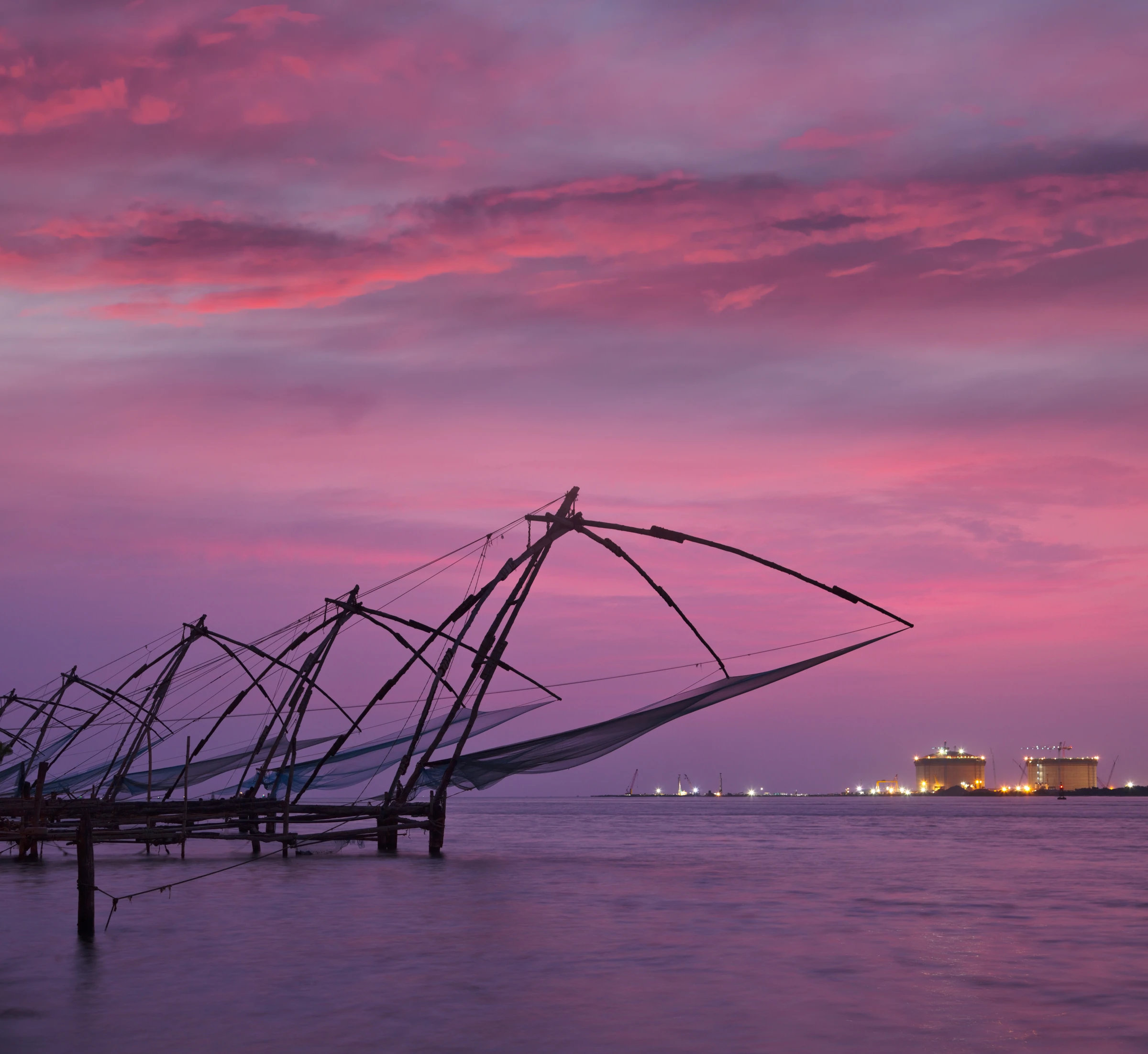
Most Kerala trips start in Fort Kochi, the old spice-trading quarter where Chinese fishing nets still work the harbour at sunset and Portuguese, Dutch and British buildings sit next to each other in a few square kilometres. It's an easy, walkable first stop for anyone new to India, and a Kathakali or Kalaripayattu show in the evening is a good introduction to Kerala's performing arts. Give it 1 to 2 days. Full guide: Kochi.
The Alleppey backwaters: a night, or a day, on the water
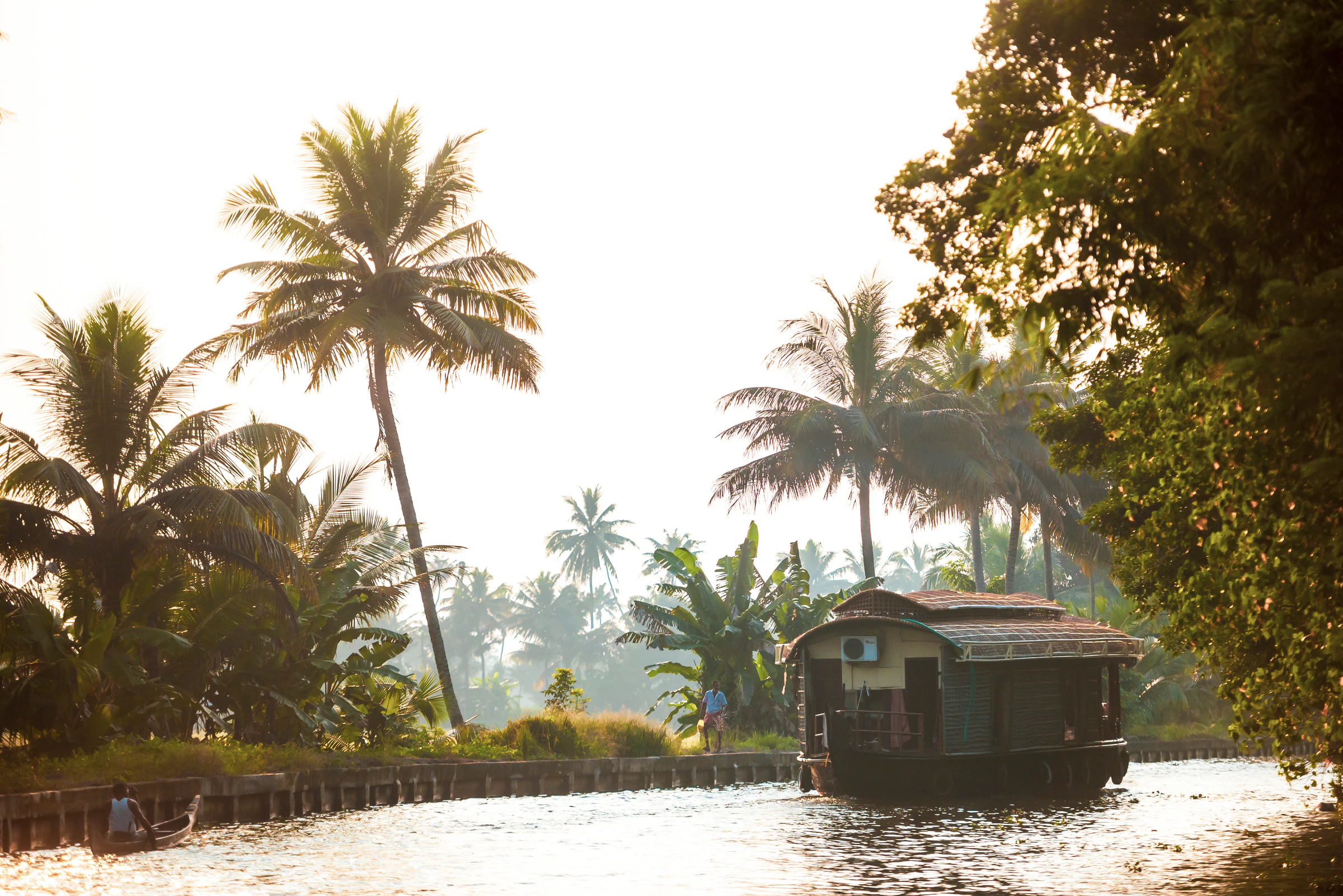
The backwater cruise most people picture when they think of Kerala runs through Alleppey (Alappuzha), on a wooden kettuvallam houseboat converted from an old rice barge. Private overnight houseboats are priced by the boat, and listings quote their rates for two people, so a solo traveller pays for a whole boat. Most solo travellers do better on a shared day cruise instead (ask an operator for the per-person rate and what it includes) or a shorter canal paddle by canoe. Whichever you choose, only book a houseboat registered with the Kerala Tourism Department, showing a visible KIV (Kerala Inland Vessel) number on the hull. That's what confirms it has passed its annual safety inspection. Give it half a day for a cruise, or one night for the overnight version.
Munnar: tea estates and cool hill air
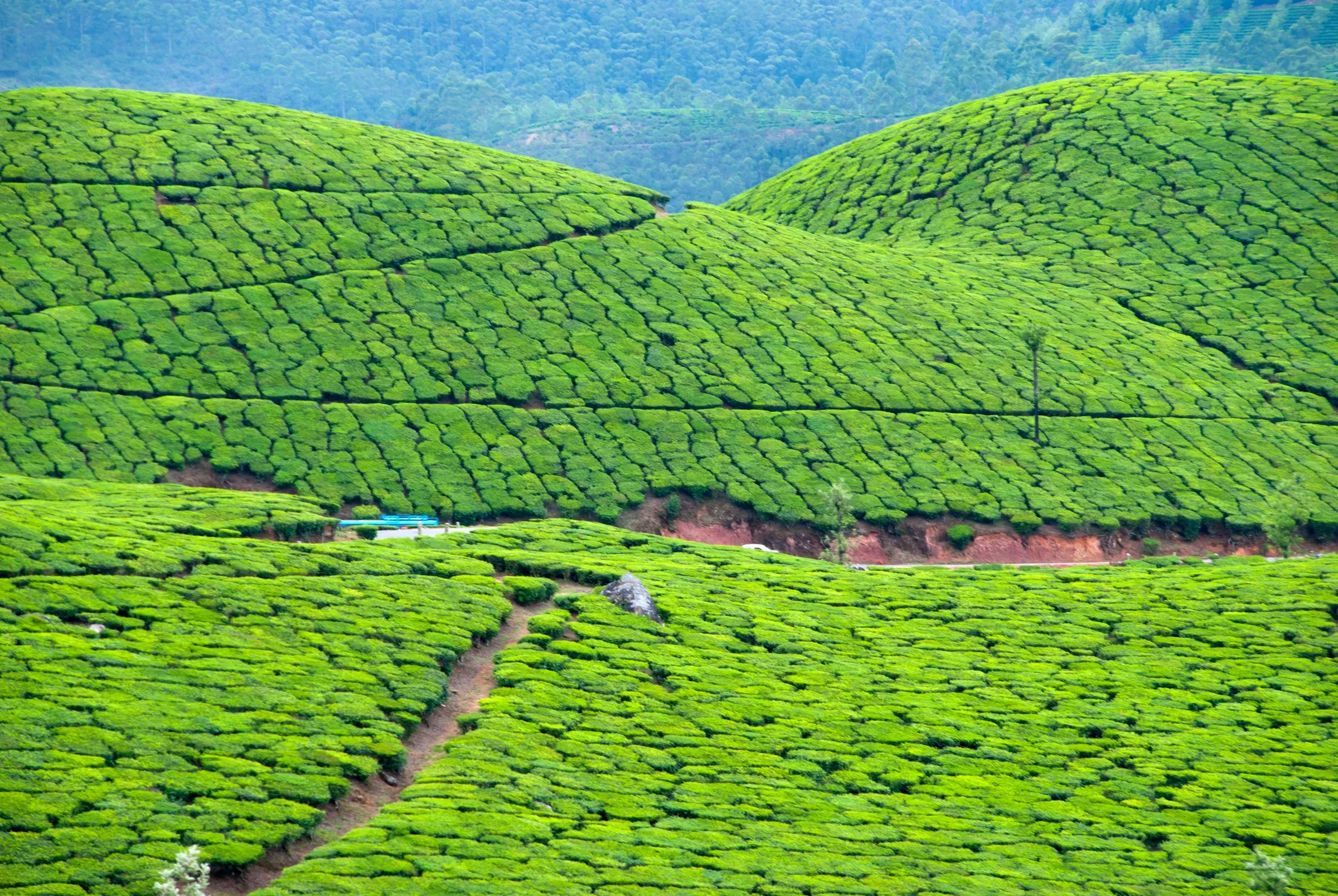
Munnar sits about 84 km and roughly 4 hours by road from Kochi, up through hairpin bends into tea country. The main draws are a walk through a working tea estate, the Tea Museum and boating at Mattupetty or Kundala. Eravikulam National Park, home to the Nilgiri tahr, was closed from 1 February to 31 March in 2026 for the tahr's calving season and reopened on 1 April. Closures are announced each year, so check the dates before you plan a morning there. Give it 2 days.
Thekkady: Periyar's forest and a spice walk
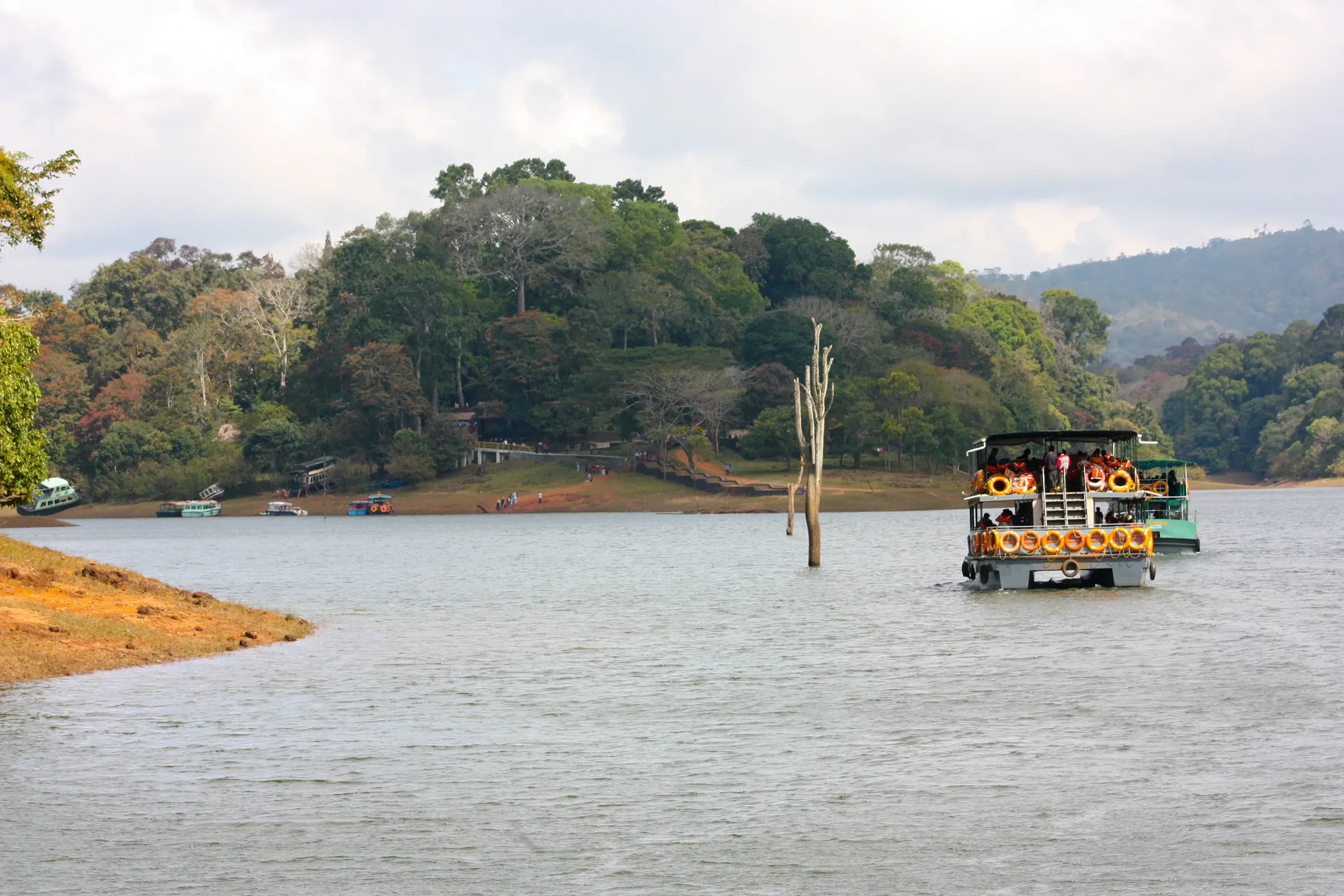
From Munnar, the scenic Devikulam road to Thekkady takes 3 to 4 hours (sources give 90 to 120 km). The reason to come is Periyar Wildlife Sanctuary: a boat safari on Periyar Lake that runs about 90 minutes along the shore. The boats are run by the Forest Department and by KTDC, with different fares and slots, so book through an official booking page rather than a street seller. Pair it with a spice plantation walk and a cookery demonstration. Give it 1 to 2 days.
Varkala: the clifftop beach
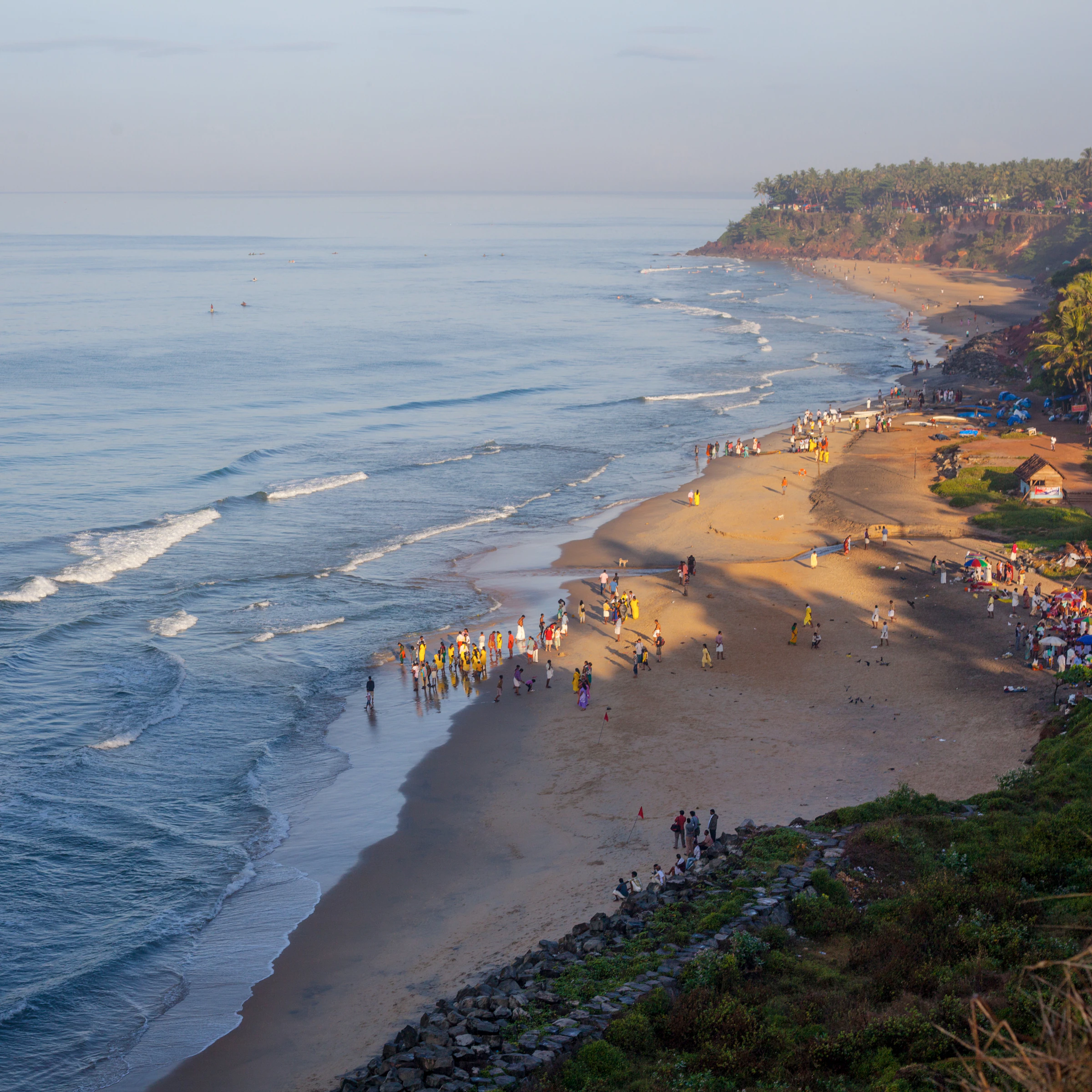
Varkala's red laterite cliff runs along the top of Papanasam Beach, lined with cafés that face straight out to sea, and it has a slower, less built-up feel than Goa's beach towns. It's about 2.5 to 3 hours from Alleppey. Keep back from the cliff edge: a section of cliff collapsed at Papanasam Beach on 5 July 2026 after rain, and the Tourism Police warned visitors to take extreme care. Give it 2 to 3 days. Full guide: Varkala.
Kovalam: a quieter finish near Trivandrum
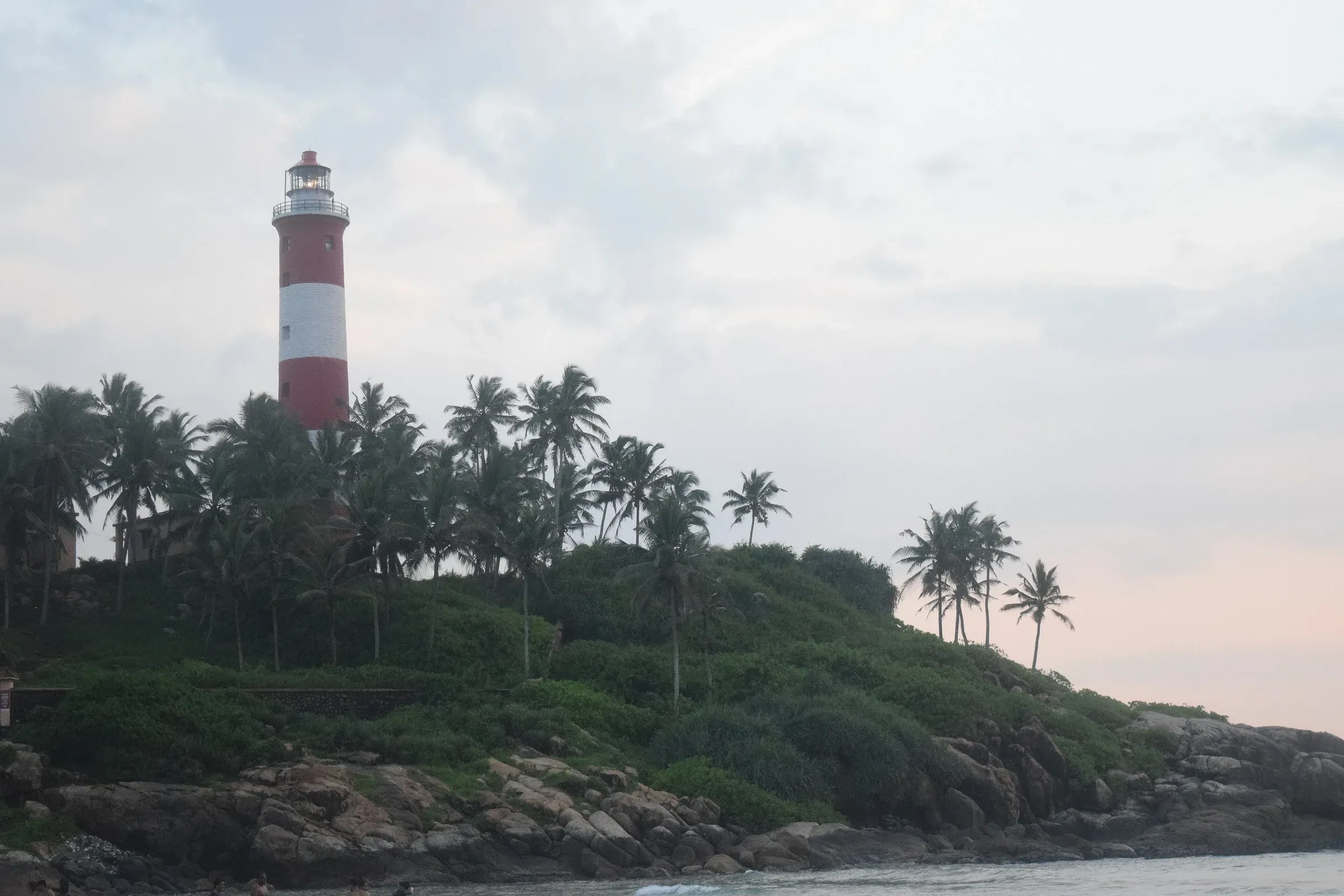
Kovalam, about 55 km and one to two hours south of Varkala and close to Trivandrum airport, makes a relaxed last stop before flying out: Lighthouse Beach and Hawah Beach, with less of a backpacker scene than Varkala. If beaches are your main draw, our Andaman Islands guide is worth comparing too. Give it 1 to 2 days if you're not in a rush to leave.
Wayanad: forests, waterfalls and a slower Kerala
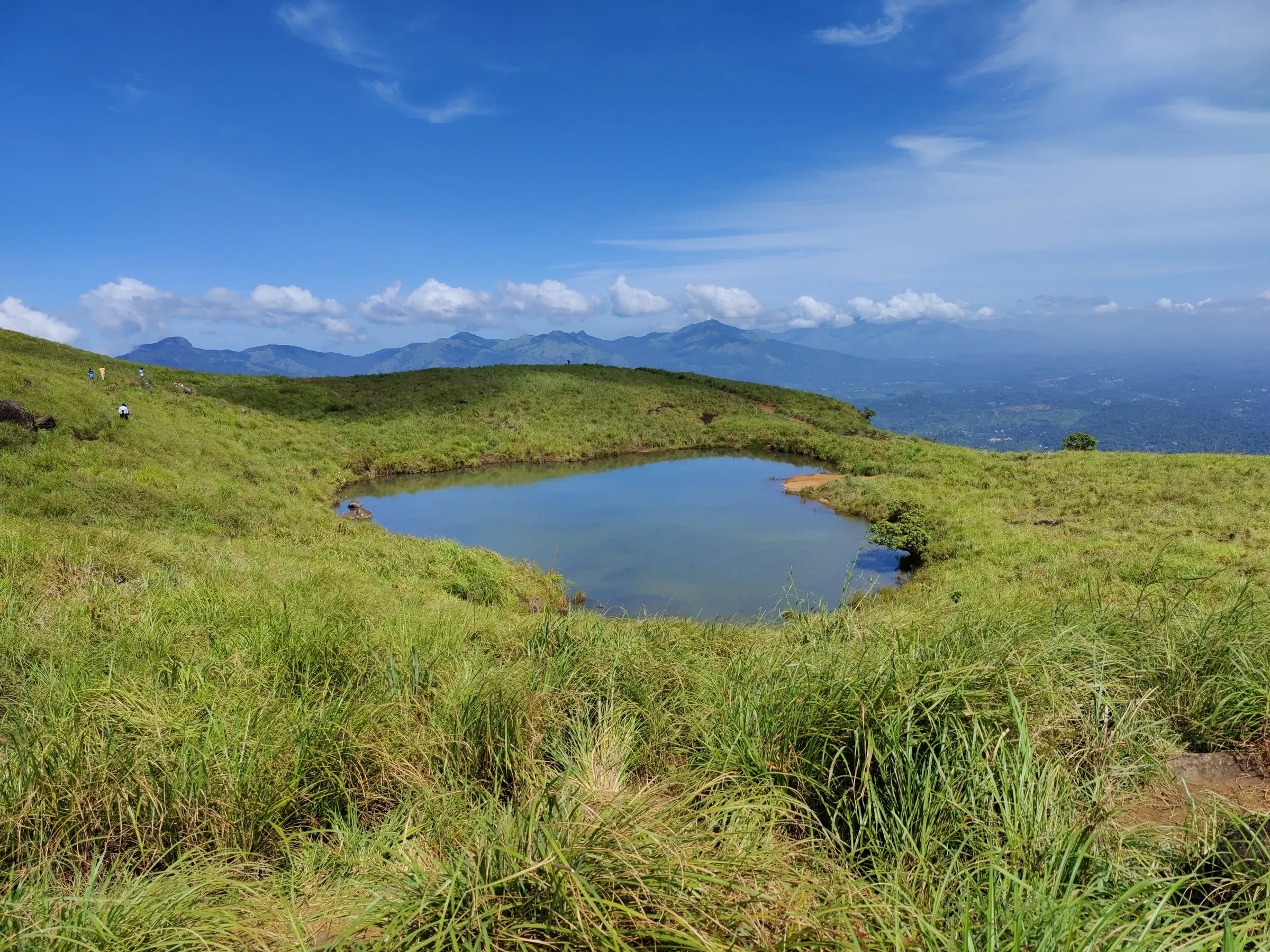
Wayanad sits north of the main Kochi, Munnar, Alleppey and Varkala route, roughly 70 to 85 km from Kozhikode (Calicut). The drive to Munnar is about 310 km, around 5 hours by car, so add it before or after Munnar rather than as a detour mid-route. It's the pick for wildlife sanctuaries, waterfalls and trekking rather than beaches or backwaters, and suits a trip of 10 to 12 days more than one of 5 to 7 days. Give it 2 to 3 days.
Things to do
Beyond the sub-places above, a few experiences are worth building time around: a Kathakali or Kalaripayattu performance in Kochi, a tea-estate walk in Munnar, the Periyar Lake boat safari, and a spice plantation tour near Thekkady. On the water, a backwater canoe paddle through Alleppey's narrower canals is a good, cheaper alternative to a full houseboat. And Kerala is well known for Ayurvedic massage, if you want to build in a day of it.
What to eat in Kerala
Start with appam (a lacy rice-flour pancake) and vegetable stew for breakfast, and meen curry, a tangy fish curry with red rice, for lunch. Karimeen pollichathu, pearl spot fish marinated and grilled in a banana leaf, is a Kerala classic worth seeking out on the coast, and puttu with kadala curry (steamed rice cylinders with a spiced chickpea curry) is another common breakfast. If you're travelling around Onam, look for a full sadya: a vegetarian banana-leaf thali with a dozen or more small dishes. Finish with payasam, a sweet milk pudding, or a filter coffee. Full food guide: Kerala food.
Best time to visit Kerala
November to January is the easiest stretch for both the hills and the coast, and Eravikulam is open. February and March are fine on the coast, but the park is closed for the tahr's calving season. The Indian Meteorological Department counts October to December as the north-east monsoon season, so some rain is possible early in that window. April and May turn hot and humid, especially on the coast. June to September is the southwest monsoon, and heavy rain can affect the hill roads around Munnar and Thekkady, though some travellers do come deliberately for monsoon Ayurveda packages. Full month-by-month guide: best time to visit India.
How long to spend, and which route to use
Five days is the minimum to see Kochi, Munnar and the Alleppey backwaters without rushing, but that cuts Thekkady. Seven days is the ideal length: it adds Thekkady and Varkala to the same route. Ten to twelve days lets you also add Kovalam and/or Wayanad, at a slower pace in the hills. For the full day-by-day route, see the Kerala itinerary guide. Kerala also links naturally onto a longer south India trip through Goa and Hampi, or after a Tamil Nadu leg.
Prefer to travel with a group?
Our Trip Host leads small groups through Kochi and the Alleppey backwaters on the South India: Goa to Kerala trip, with a licensed local guide in Fort Kochi and a night on a houseboat included. See all our India trips.


