The sadya, and Onam
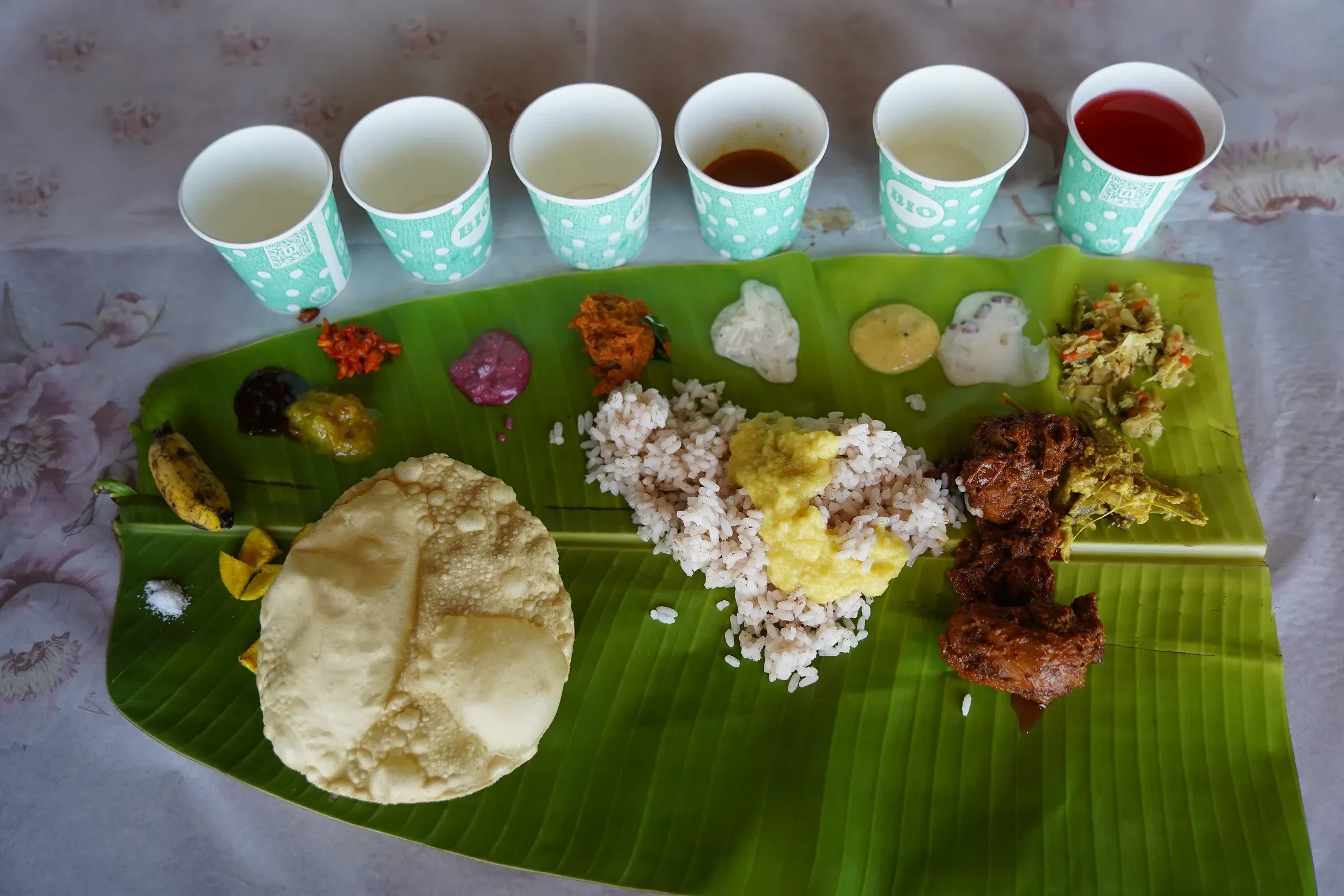
A sadya is Kerala's set piece vegetarian feast, served on a fresh banana leaf and eaten with the right hand while seated on the floor or at a long table. A full version at a temple or during Onam has around 20 or more small dishes: rice with sambar and parippu (dal), avial (mixed vegetables in a coconut and yoghurt gravy), olan, kaalan, thoran, a pickle or two, papadam, and payasam, a sweet milk pudding, often in two or three varieties by the end. There's a serving order, and it's normal to be offered seconds of rice and the wetter curries.
You can find a sadya on any day at restaurants that specialise in it, but it's worth timing a visit around Onam, Kerala's harvest festival, when nearly every home, hotel and office cooks or caters one. In 2026, Onam ran from Atham on 16 August to Thiruvonam, the main day, on 26 August. In 2027, Atham is on 3 September and Thiruvonam on 12 September. Restaurants and hotels put on sadya spreads in the days around Thiruvonam, and boat races are part of the festival: the Nehru Trophy Boat Race at Alappuzha was held on 22 August in 2026. A trip timed around Onam gets you both the feast and the festival.
Appam and stew, puttu and kadala
Appam is a bowl-shaped, lacy rice-flour pancake, soft and slightly sour in the middle, crisp at the thin edges, made in a small curved pan. It's a standard Kerala breakfast, eaten with a mild vegetable or chicken stew cooked in coconut milk.
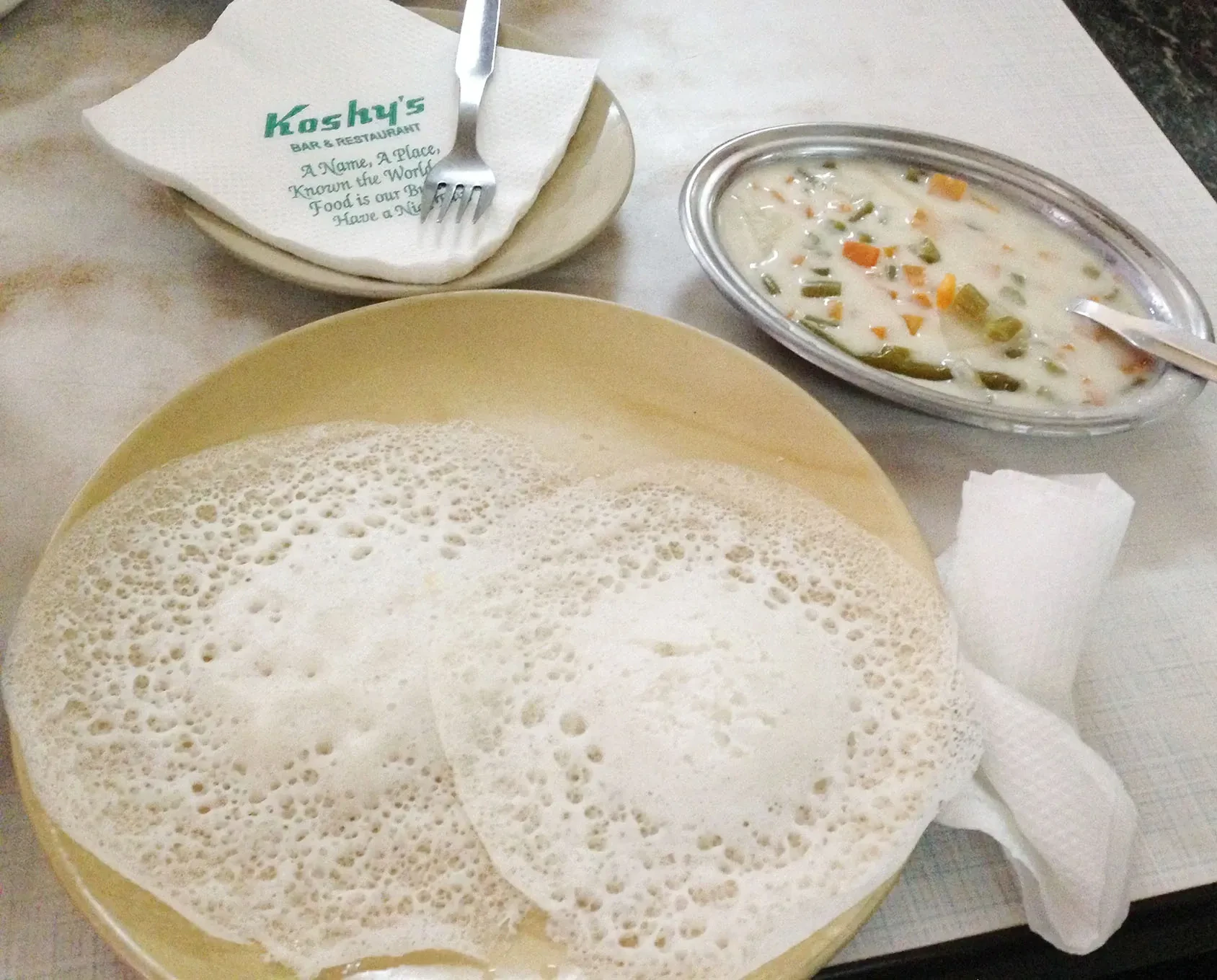
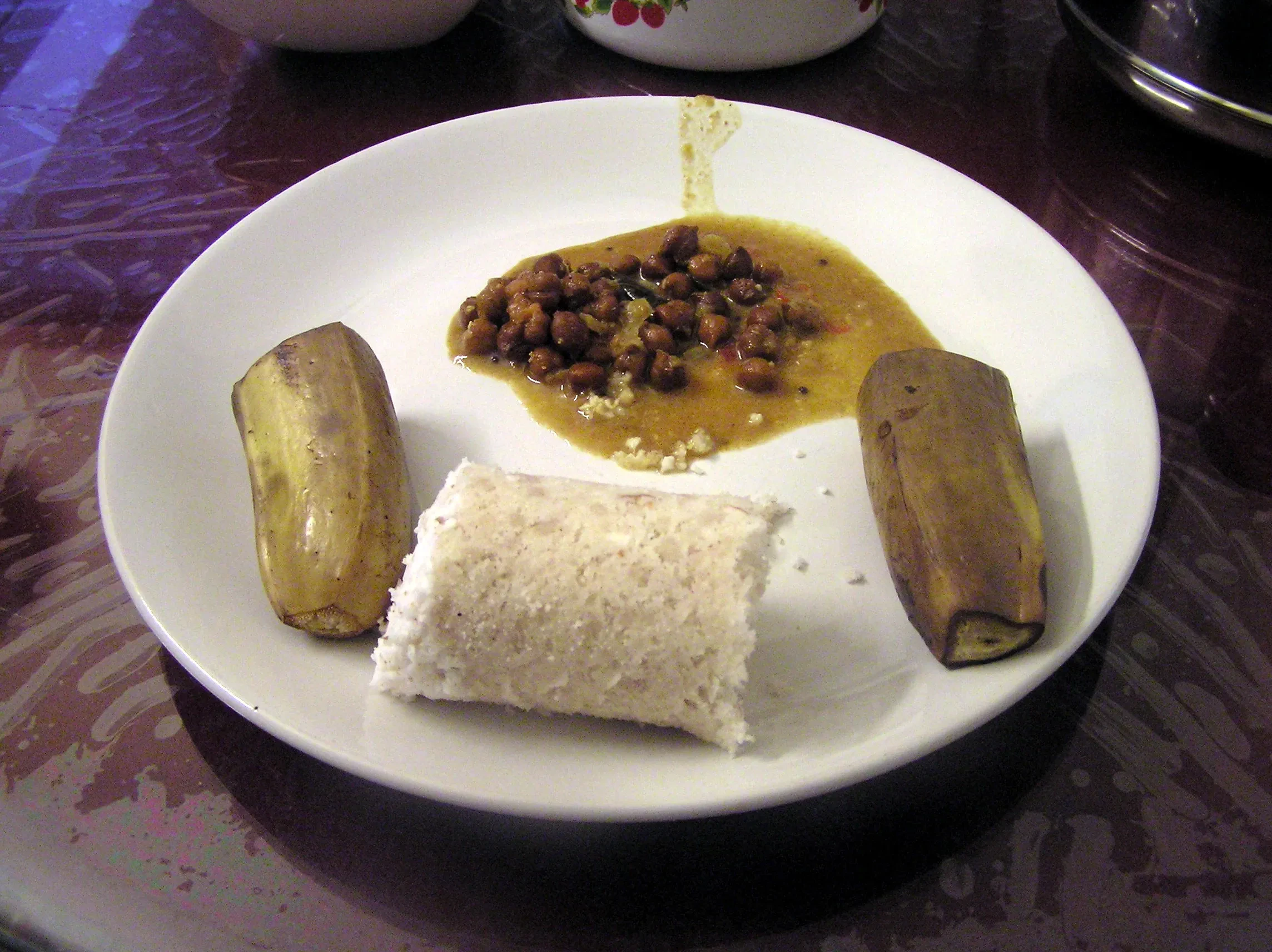
Puttu and kadala curry is the other regular breakfast: puttu is steamed rice flour and grated coconut pressed into a cylinder, served with a spiced black chickpea (kadala) curry. Both turn up on menus at almost any Kerala breakfast spot, from a Fort Kochi café to a roadside "hotel" (Kerala's word for a simple local café) in Munnar or Alleppey.
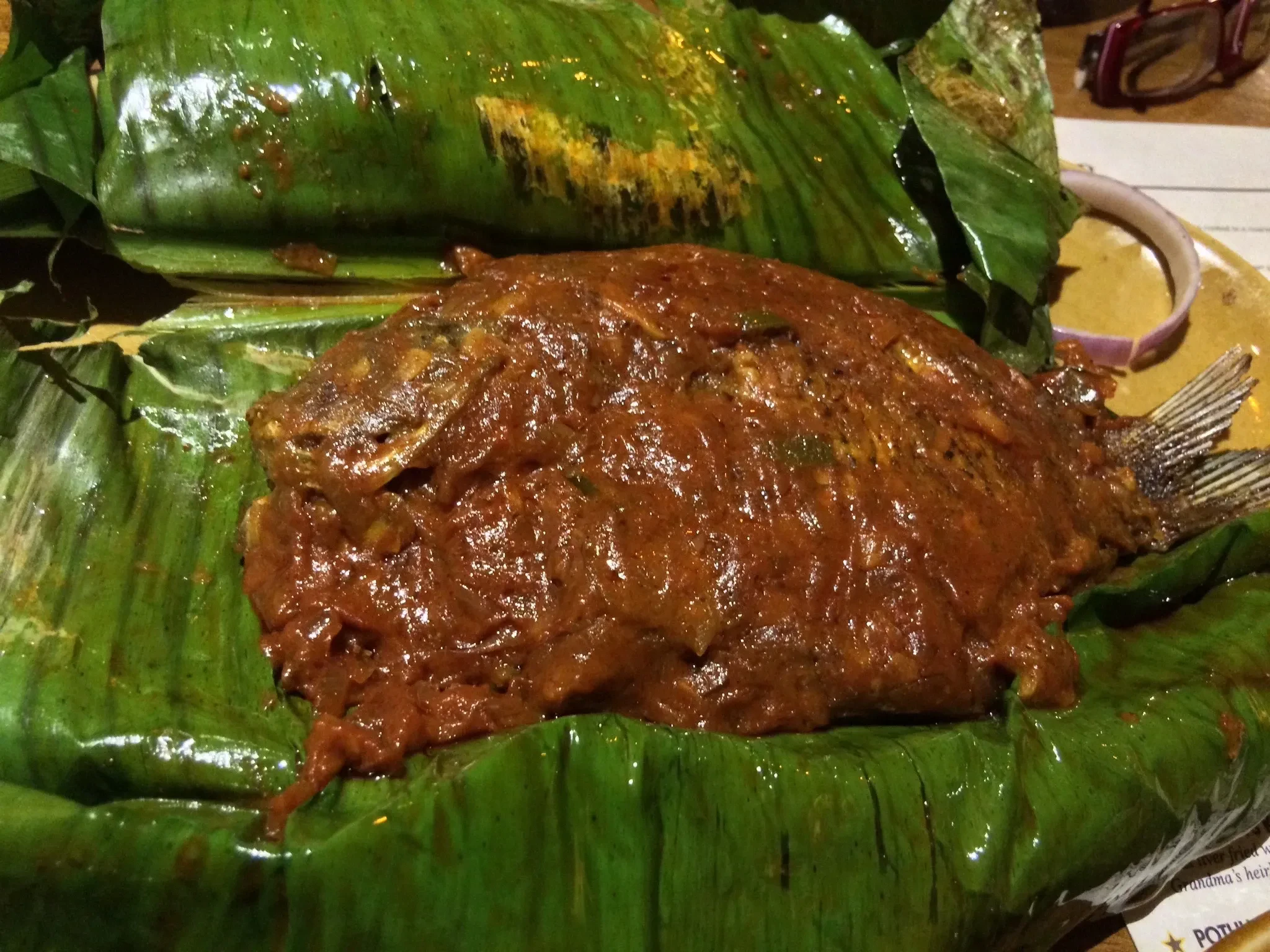
Kerala fish curry and karimeen pollichathu
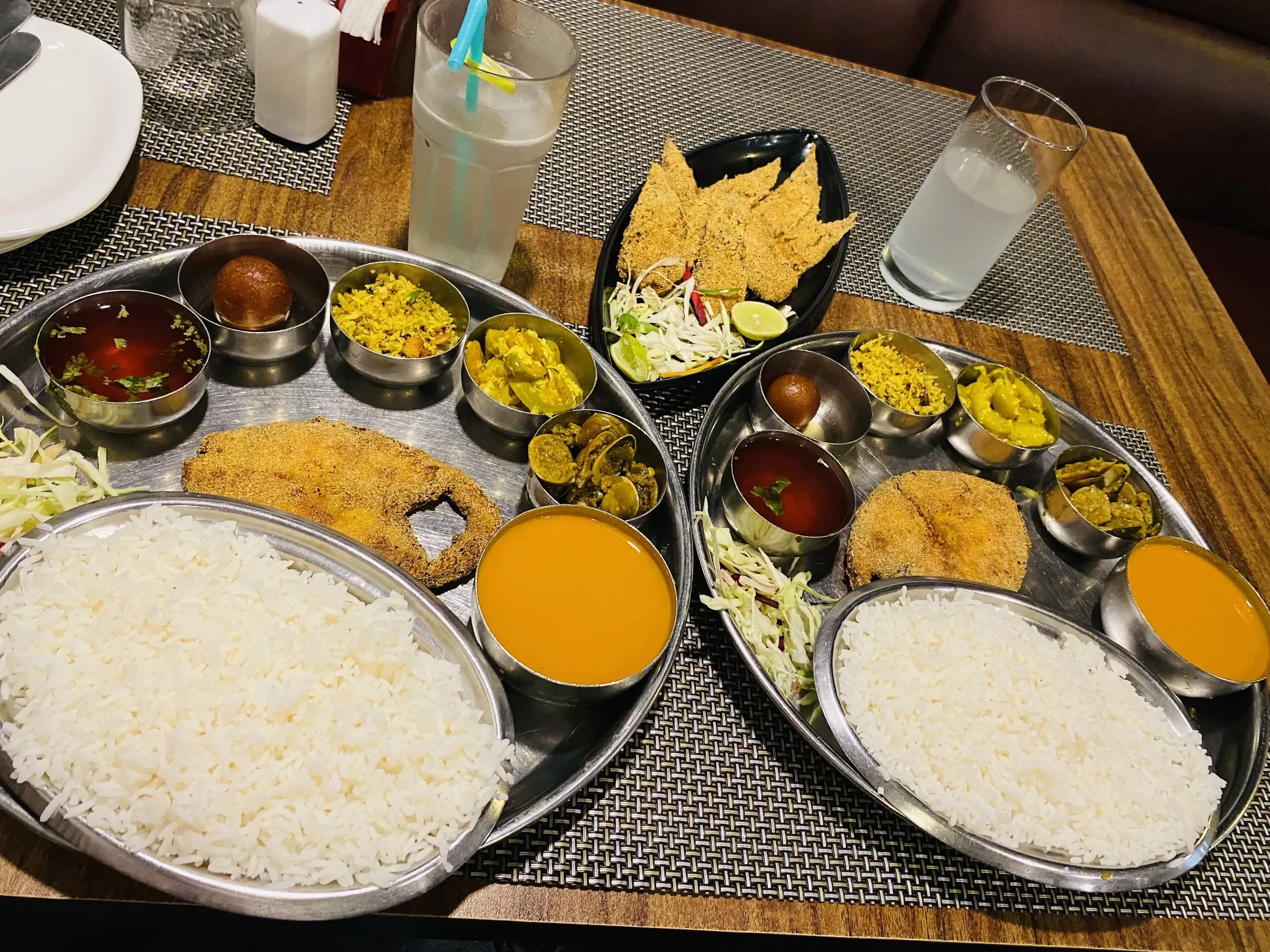
Meen curry, a tangy fish curry built on coconut, kokum or tamarind and served with red rice, is a common lunch dish across the state. The exact fish and how sour it comes out changes from kitchen to kitchen. Karimeen pollichathu is a step up: karimeen (pearl spot) is a brackish-water fish that Kerala made its state fish in 2010, and pollichathu means it is cooked in a banana leaf with a spiced masala. It's a backwater speciality. Look for it around Alleppey and Kumarakom, on a houseboat or at a canal-side restaurant, rather than assuming every Kerala menu will do it well.
Beef fry and Malabar biryani
Kerala beef fry is a well-known dish, cooked dark and dry with coconut slices, curry leaves and black pepper. Some Hindus in Kerala don't eat beef for religious reasons, and it's more common in Christian kitchens. Malabar parotta, a flaky, layered flatbread made from refined flour and oil, is the usual partner.
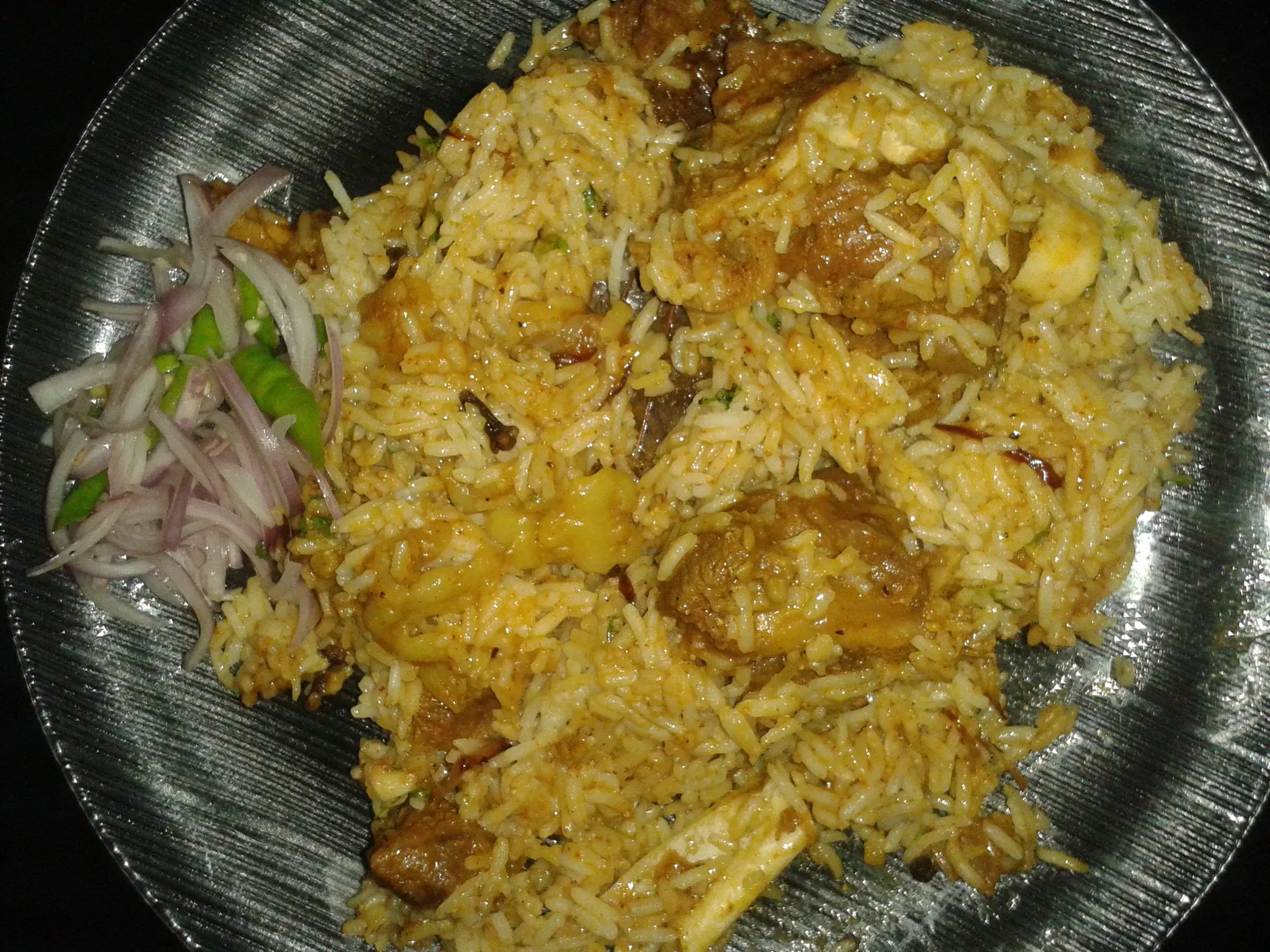
Malabar biryani, also called Thalassery biryani after the northern coastal city it comes from, differs from the Hyderabadi biryani most travellers already know. It uses kaima (jeerakasala) rice, a short-grain, fragrant variety, instead of basmati, and the raw chicken is mixed into the masala before cooking, which makes it less oily. Kozhikode (Calicut) is another good place to try the Malabar style. Paragon, a restaurant there that opened in 1939 and is still run by the founder's family, is the address most visitors name. TasteAtlas ranked it 11th in its 2023 list of the world's most legendary restaurants, and Manorama Online gave it a Golden Clove award in 2025.
Toddy shops
A toddy shop sells toddy, the mildly alcoholic, naturally fermented sap tapped from coconut or palmyra palms. It's part of Kerala's food culture and is usually served with simple, spicy dishes at basic places rather than restaurants aimed at tourists. Toddy counts as liquor under Kerala's Abkari Act, and toddy shops run under licences regulated by the state's Excise department. Since 17 February 2026, toddy shops and beer parlours can open from 11am to 11pm, according to Onmanorama; they used to open from 8am to 9pm. Kerala's legal drinking age is 23, raised from 21 in 2017. Go to try a local drink and dish, and don't expect every shop to welcome casual tourist visits.
Banana chips and other snacks
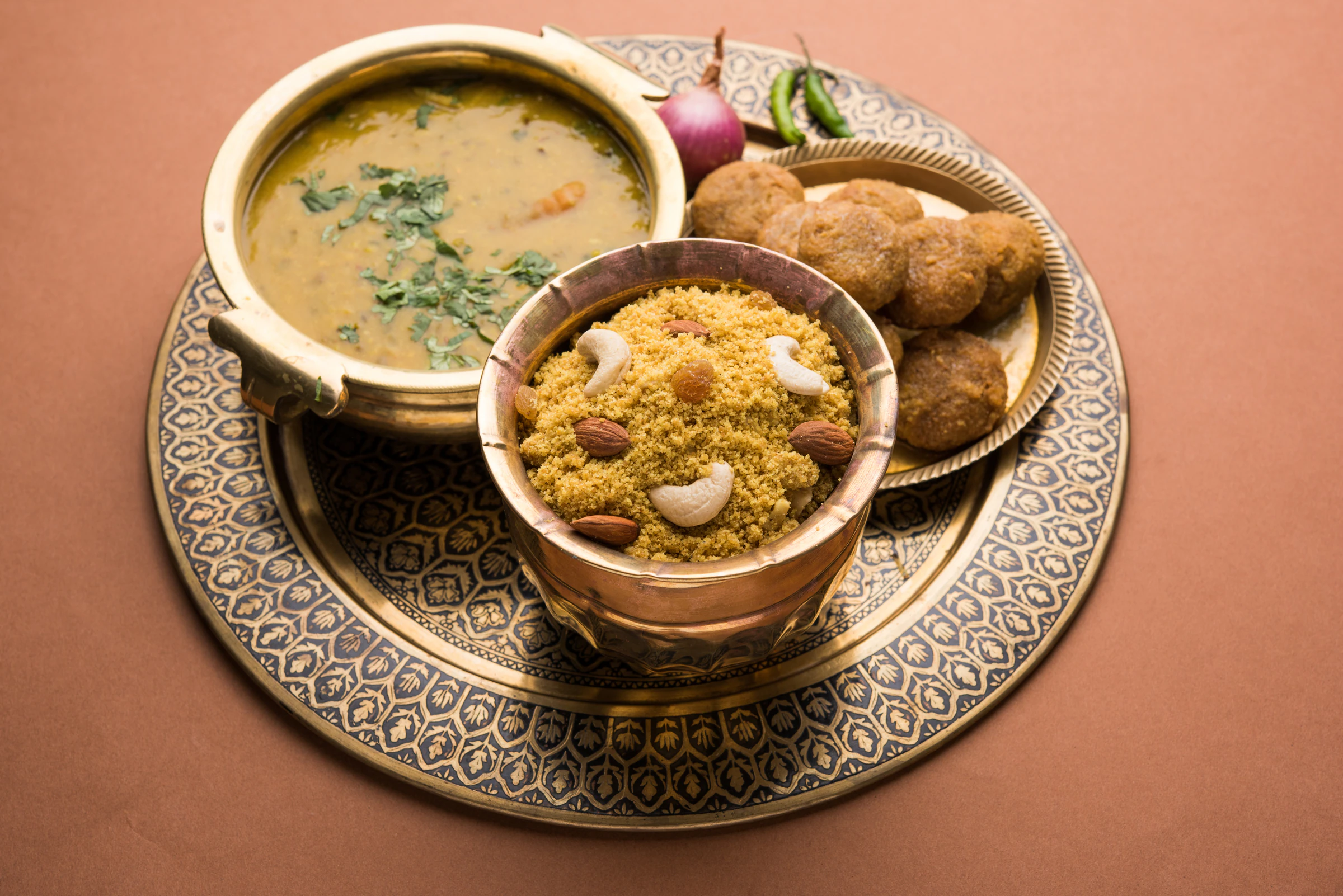
Kerala's banana chips, thin discs of raw banana deep-fried in coconut oil until crisp, are sold everywhere from train station stalls to dedicated shops. Kozhikode is also known for its halwa, a dense, chewy sweet made from wheat, sugar and ghee, stirred for hours in large copper pans. Other snacks worth knowing: pazham pori (ripe banana fritters, a tea-time staple) and unniyappam, small sweet rice-flour and jaggery fritters.
Filter coffee vs chai
Chai, the milky, sweet spiced tea found everywhere in India, is the everyday roadside drink in Kerala too. The state also grows tea in the Munnar hills and coffee in Wayanad and the Malabar highlands, so filter coffee, brewed strong and mixed with hot milk in the south Indian style, is on offer alongside chai almost everywhere. The Indian Coffee House, a chain run by worker cooperatives that formed in Kerala in 1958, has branches across the state and is a long-running place to get a filter coffee with a simple meal.
Where to eat, by kind of place
A toddy shop is for trying toddy itself alongside a simple non-vegetarian dish. Ask for a local recommendation rather than going to the first sign you see.
A "meals" lunch hall is a no-frills local canteen serving an all-you-can-eat rice thali, usually with a vegetarian option and a fish or meat option, for a low fixed price. It's an easy, low-cost way to eat a full Kerala meal.
Fort Kochi mixes traditional Kerala kitchens with a small café scene. See our Kochi guide for more on the area.
Kozhikode is the place to go deliberately for Malabar food: biryani, beef fry and halwa, and Paragon is the restaurant name most visitors know.
Safety and hygiene
Stick to places with visible turnover, where food is cooked fresh and to order rather than sitting out, and be cautious with raw salads, ice and tap water, as anywhere in India. Fish and seafood are best from a busy restaurant where they're cooked to order, not reheated from earlier in the day. Bottled or filtered water, and fruit you peel yourself, are the safer defaults. A "meals" lunch hall with a steady stream of local customers is often a good sign, since the food doesn't sit around for long.
Vegetarian notes
Kerala is an easy place to eat well as a vegetarian, despite its reputation for fish and beef. Appam and stew, puttu and kadala, and a full vegetarian sadya are all naturally vegetarian, and almost every "meals" lunch hall offers a vegetarian thali alongside the fish or meat version. Onam's sadya is entirely vegetarian, which makes that season particularly easy if you don't eat meat or fish.