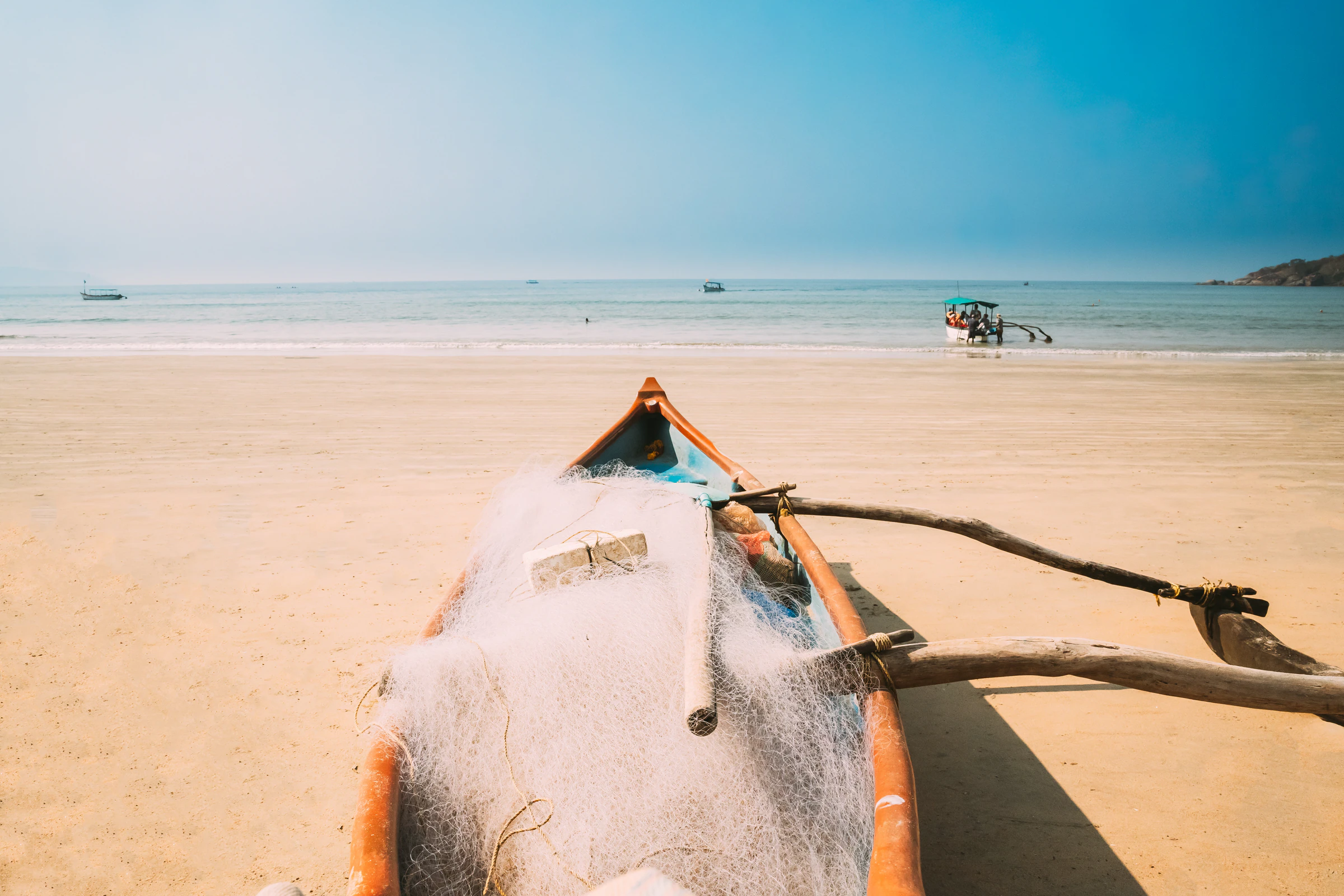
Goa is a small former Portuguese colony on India's west coast, with a long run of sandy beaches, whitewashed churches, cashew feni and fish curry rice. Life moves more slowly here than in most of the country, and it's an easy place to travel solo: plenty of hostels, plenty of other people on their own, and short hops between beaches.
It's also two quite different places, and picking the right half matters more than picking the right beach. This guide covers where Goa is, North Goa versus South Goa and who each suits, what there is to do and eat, the season, getting there and around, costs and safety, plus how long to spend and where to go next. For the rest of the country, start with our India travel guide.
Where is Goa on the map of India?
Goa is the small state on the west coast, on the Arabian Sea, just south of Maharashtra. It borders Maharashtra to the north and Karnataka to the east and south. At 3,702 km², it's the smallest state in India by area, split into two districts, North Goa and South Goa. The capital is Panaji (also called Panjim), and the main towns are Mapusa in the north, Vasco da Gama near Dabolim airport and Margao (Madgaon) in the south.
Portugal ruled Goa from 1510 until December 1961, and you still see that in the churches, the old Latin Quarter of Panaji and the food. Konkani is the official language, but English is widely spoken in tourist areas.
Distances are short. Driving from Arambol, the northernmost beach, to Palolem in the far south takes about three hours, so seeing both halves of the state on one trip is realistic.
North Goa vs South Goa: which one, and who it suits
North and South Goa aren't really one destination. The north has the density of hostels, bars, flea markets and other travellers; the south has the space and quiet. Neither is better, but one is usually the better fit for the trip you actually want.
North Goa suits you if you want hostels within walking distance of each other, a scene at night, and other solo travellers to fall in with. It's the busier, more built-up half of the state.
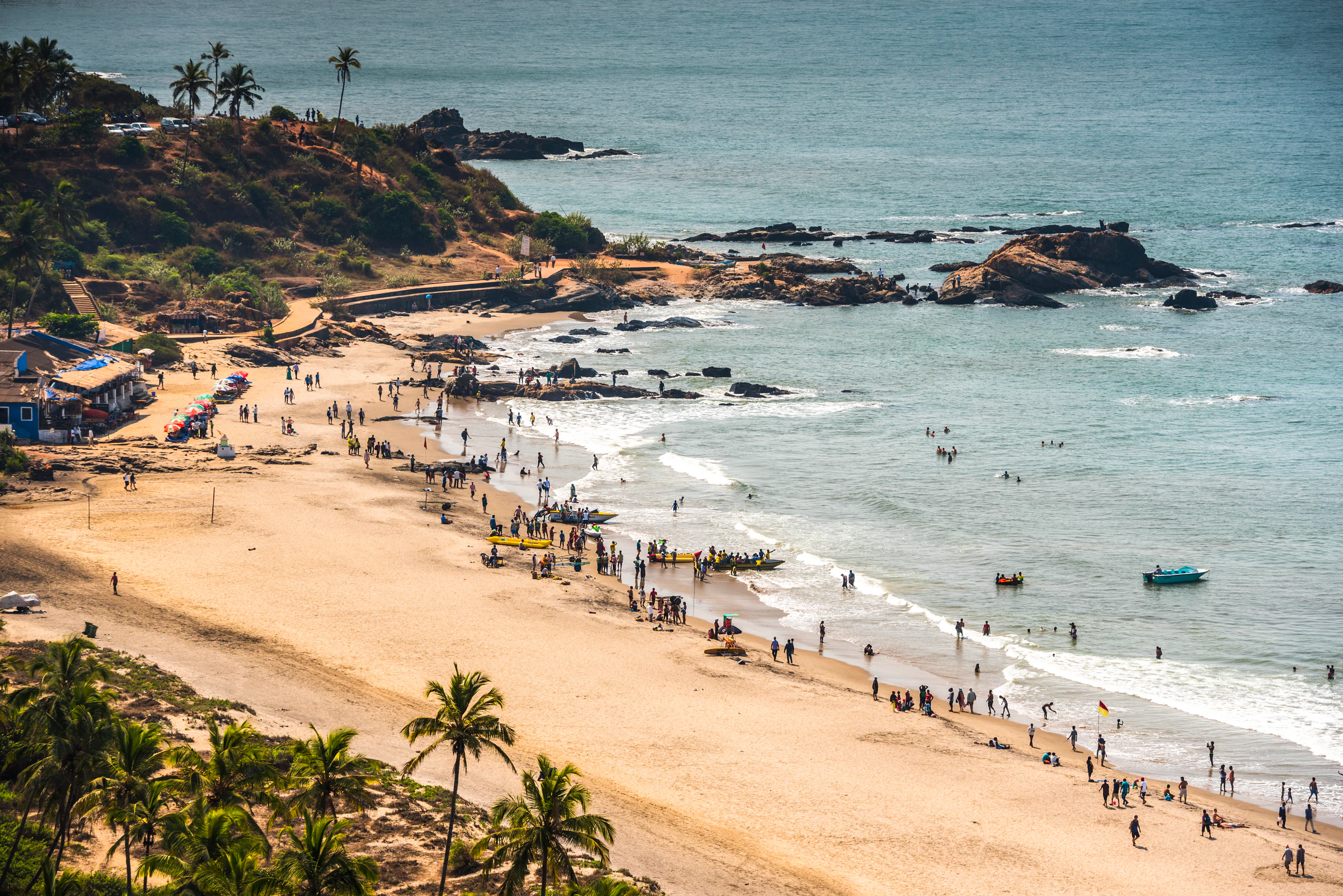
- Arambol is the northernmost beach and the most laid-back of the northern ones: long sand, cliff paths, cheap guesthouses, yoga classes and a strong long-stay backpacker scene.
- Mandrem, Ashwem and Morjim are quieter stretches between Arambol and the river, with beach huts and yoga retreats.
- Anjuna is where the hippie trail of the 1960s and 70s ended up. It has red cliffs, cafes and the Wednesday flea market, which usually runs from late October to early April.
- Vagator sits under the ruins of Chapora Fort, with views across the river mouth, and is where much of Goa's nightlife and many of its hostels are.
- Calangute, Baga and Candolim are the busiest, most built-up beaches, popular with domestic tourists and package holidays: central and well connected, but not the most peaceful.
South Goa suits you if you want a calm bay, beach huts under the palms, and an early night more often than a late one. It's a smaller, more spread-out scene with fewer hostels.
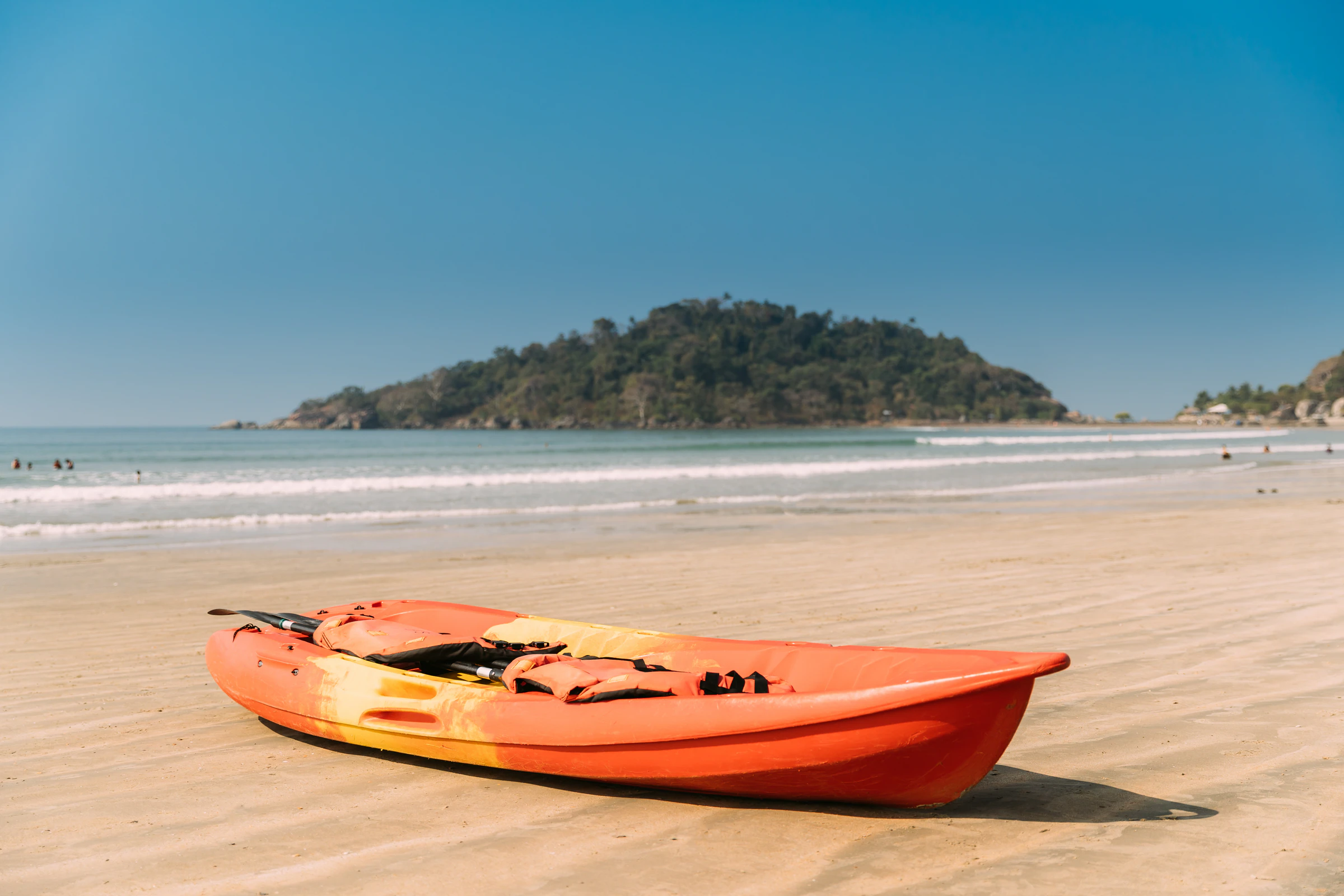
- Palolem is a curved bay with calm water, kayaks for hire and beach huts along the sand. It's South Goa's most social beach, but still relaxed by North Goa's standards.
- Patnem, the next bay south of Palolem, is a short walk away and quieter again.
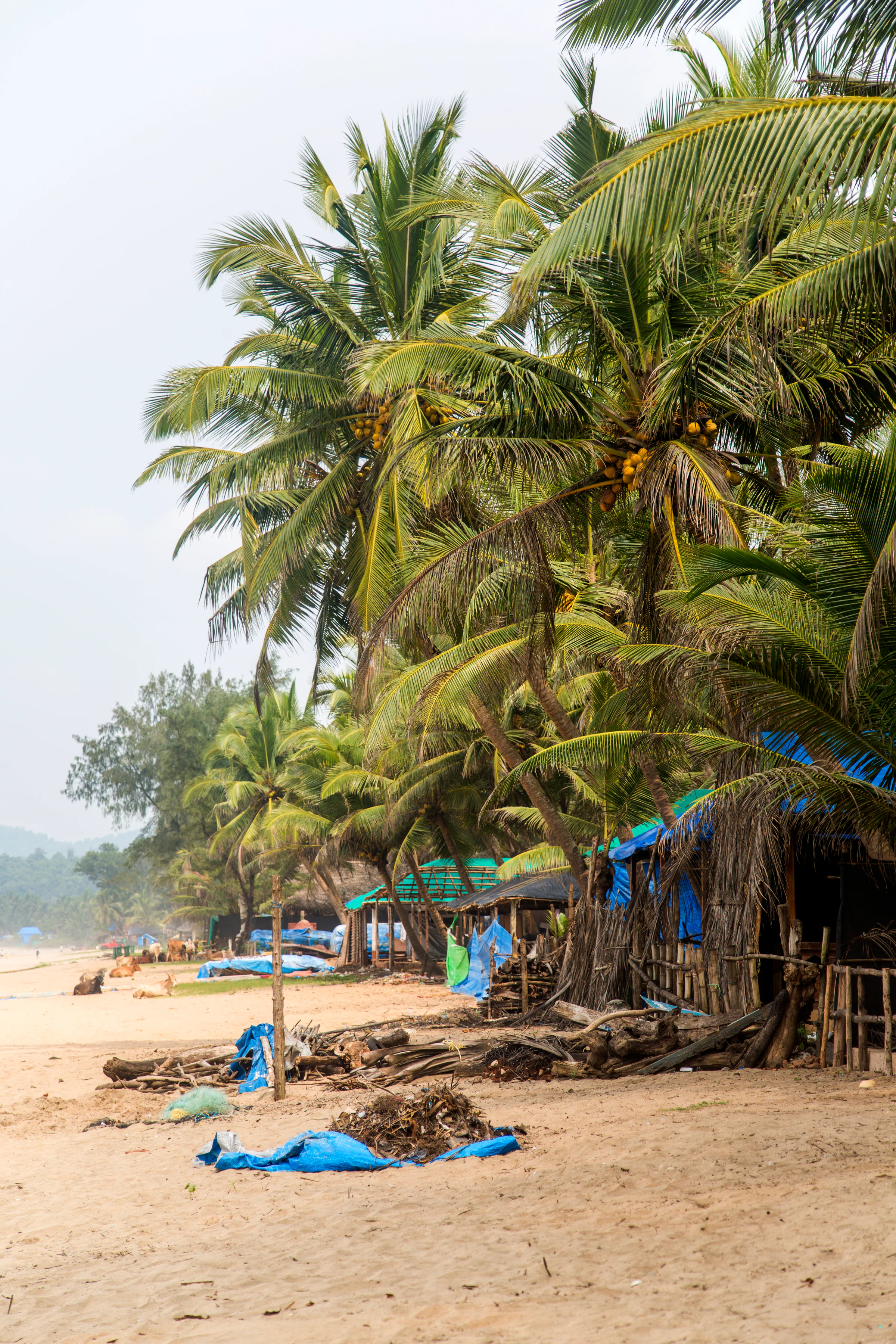
- Agonda, about 10 km north of Palolem, is a long, straight beach with huts behind the palms and very little nightlife. Pick it if you want to read, swim and sleep early.
- Colva and Benaulim, long, flat beaches near Margao, are busier with domestic visitors.
With three or four days, pick one half. With a week or more, do some of both, since the drive between them is short. For a fuller breakdown of the two halves side by side, see our North Goa vs South Goa comparison. If you're weighing Goa against the quieter town just down the coast in Karnataka, our Goa vs Gokarna comparison covers that instead.
Things to do in Goa
- Old Goa. The former Portuguese capital is a UNESCO World Heritage site ("Churches and Convents of Goa"). The Basilica of Bom Jesus holds the tomb of St Francis Xavier, and the Se Cathedral is one of the largest churches in Asia. Entry to the basilica is free; cover your shoulders and knees.
- Fontainhas, Panaji. The old Latin Quarter, a small grid of yellow, blue and red Portuguese-era houses, bakeries and chapels. An hour or two on foot is enough.
- Anjuna flea market. Stalls of clothes, jewellery, spices and souvenirs every Wednesday in season. Bargain, and go early before the heat.
- Chapora Fort. A short climb above Vagator for views over the Chapora river and the beaches either side.
- Kayaking and boat trips from Palolem. Paddle round the headland to Butterfly Beach, or take a morning boat to look for dolphins. Sightings aren't guaranteed, so choose a boat that doesn't chase them.
- Dudhsagar falls. A tall, multi-tiered waterfall on the Goa and Karnataka border, reached by jeep from Collem; the jeeps stop in the monsoon and restart around October.
- Festivals. Goa's Carnival fills the streets of Panaji, Margao, Mapusa and Vasco in the days before Lent; see our Goa Carnival guide for dates. Shigmo, the Hindu spring festival, follows in March with parades and floats.
What to eat in Goa
Order fish curry rice or a fish thali as your everyday meal (₹200 to 400, about £2 to £3), and save vindaloo, sorpotel and cafreal for a sit-down dinner. Beach shacks are the easiest place to eat, but a thali restaurant slightly inland, away from the beachfront, is usually cheaper and just as good. Try bebinca for dessert, and feni, the local cashew or coconut spirit, once if you drink. Our full Goan food guide covers the two culinary traditions behind these dishes, where to eat well and a vegetarian and monsoon-season note.

Best time to visit Goa
| Months | What to expect |
|---|---|
| October | Shacks and huts are mostly open by now (they start opening in September, and the official season starts on 1 October). Still humid, with some late rain, but quiet and cheaper. |
| November to February | The best months: dry, sunny and warm, with the sea at its calmest. Busiest, especially from mid-December to early January. |
| March to May | Hot and humid. Quieter, and prices drop. Many shacks close by the end of May. |
| June to September | Monsoon. Heavy rain, rough seas and no swimming at any beach. Green and cheap, but most beach businesses are shut. |
The weeks around Christmas and New Year are the most crowded and expensive time of year. Rooms can cost several times more and trains sell out, so book early if you want to be in Goa then. Our best time to visit India guide compares Goa with the rest of the country month by month.
Getting to Goa
Flying: Mopa (GOX) or Dabolim (GOI)?
Goa has two airports, and picking the right one saves a long taxi ride.
- Mopa (Manohar International Airport, GOX) opened in January 2023 in Pernem, in the far north. It's roughly 35 km from Panaji and the natural choice for Arambol, Mandrem, Anjuna, Vagator and Calangute. Kadamba (KTCL) shuttle buses run from the airport to Calangute and Panaji for about ₹200 and to Margao for about ₹400. Palolem is about 125 km away.
- Dabolim (GOI) is the older airport near Vasco da Gama, inside a naval air base. It's about 30 km from Panaji and about an hour's drive from Palolem, so it's the better choice for South Goa.
International flights from the Gulf and some seasonal charters land at Mopa, but most travellers from Europe, North America and Australia connect through Mumbai or Delhi. Ola and Uber aren't officially permitted in the state, so at Mopa use the prepaid taxi counter, the Kadamba shuttle, or GoaMiles, the state-backed taxi app.
By train from Mumbai
The Konkan Railway runs down the coast from Mumbai through tunnels and paddy fields and over river estuaries, and it's a lovely ride. Outside the monsoon, the Vande Bharat Express leaves Mumbai CSMT at 05:25 and reaches Madgaon at about 13:10, every day except Friday. From about mid-June to 20 October a slower monsoon timetable applies. Madgaon is the station for South Goa (Palolem is about 40 minutes away by taxi); some trains also stop at Karmali, near Old Goa and Panaji. Overnight trains and buses cover the same route, and a flight from Mumbai takes a little over an hour. Our Mumbai guide covers the city and the ways to get from Mumbai to Goa.
Visa
Goa follows the same rules as the rest of India. Most visitors need an e-Tourist visa, and both Goa airports accept it. See the India visa guide.
Getting around Goa
- Scooters. Renting a scooter is the most popular way to get around and costs about ₹300 to ₹600 a day, plus a deposit. By law you need your home licence and an International Driving Permit that covers motorbikes; rental shops in Anjuna, Vagator and Panaji increasingly ask to see one, and many travel insurance policies won't pay out on a claim without it. UK travellers need the 1949 IDP, which you can only buy before you leave. Wear a helmet: it's compulsory, and Goa traffic police have stepped up checks on the coastal belt and in Panaji and Margao.
- Taxis. GoaMiles, the state-backed app, is the easiest way to book a taxi at a fair price. Otherwise agree the fare before you get in.
- Buses. Kadamba state buses and private buses link the main towns (Mapusa, Panaji, Margao) cheaply, but they're slow for beach-hopping.
- Trains. The Konkan Railway is useful for arriving and leaving (Madgaon, Karmali, Canacona for Palolem), less so for getting around the state.
How much does Goa cost?
Goa costs more than most of India, especially in peak season, but it's still cheap by Western standards. At September 2026 rates, US$1 is about ₹96. Prices checked September 2026, approximate.
| Item | Typical price (rupees) | About (US$) |
|---|---|---|
| Fish thali or fish curry rice | 200 to 400 | 2 to 4 |
| Beer at a beach shack | 100 to 180 | 1 to 2 |
| Scooter rental, per day | 300 to 600 | 3 to 6 |
| Kadamba shuttle from Mopa airport | 200 to 400 | 2 to 4 |
| Prepaid taxi, Mopa to Panaji | about 1,200 to 1,300 | about 13 |
| Backpacker budget, per day (dorm, cheap food, scooter) | 1,200 to 1,800 | 13 to 19 |
For the whole country, see how much India costs.
How long to spend, and which route to follow
Three or four days covers one half of Goa properly, plus a day trip to Old Goa. A week lets you split your time between north and south, or push on to Gokarna's quieter coast next door in Karnataka. Two weeks is enough to slow right down and add Hampi's boulder-strewn ruins or a route into Kerala.
The day-by-day planning now has its own guide, so it can go into proper detail: our Goa and Gokarna itinerary covers a 1-week route from North Goa's beaches to the Om Beach cliff trail, and a 10-day version that continues to Hampi's temple ruins. If Goa is one leg of a longer India trip, our 2-week India itinerary and India itinerary guide lay out the other routes worth considering.
Two places are worth building extra days for, and both are reachable from Goa without flying:
- Gokarna, a pilgrim town over the Karnataka border with a cliff trail linking four quieter beaches, about 75 to 90 km from Palolem or a short Konkan Railway hop from Goa.
- Hampi, a 14th-century capital scattered among giant granite boulders, reached by a morning train from Madgaon that passes the Dudhsagar falls.
Hostels and where to stay in Goa
North Goa has most of the hostels, especially around Anjuna, Vagator, Candolim and Arambol. South Goa has fewer hostels and more beach huts and small guesthouses, though Palolem has a handful of good backpacker places.
These hostels come up again and again in the ratings and awards:
- House of Memories, Candolim won the Hostelworld HOSCAR for Best Hostel in India in 2024 and was rated 9.8 on Hostelworld in September 2026, from over 600 reviews.
- Dreams Hostel, Vagator was among the most popular hostels in Asia and the Pacific in the 2026 HOSCARs, rated 9.6 from almost 900 reviews.
- The Bucket List Goa, Vagator (9.7) and The Beachside Hostel, Anjuna (9.5, over 1,000 reviews) are other high-rated options in the north.
- Happy Panda Hostel, Arambol was rated 9.9 from over 900 reviews, a good pick if you want Arambol's quieter scene.
- In Palolem, Bhakti Kutir (10, just under 100 reviews) and Bibhitaki Hostels (9.8) were the top-rated places on Hostelworld in September 2026.
- In Panaji, The White Balcao (9.6) is well placed for Fontainhas and Old Goa.
Ratings and prices change through the season, so check recent reviews before you book. See the Goa section of our India hostels guide for area-by-area dorm prices, and the India hostels guide itself for the rest of the country.
Solo travel and safety in Goa
Goa is one of the easiest places in India to travel alone. The things to be careful about are mostly the sea, the roads and nights out.
- Swimming. Goa's sea has strong currents. Drishti Marine, the state's lifesaving agency, puts lifeguards on the main beaches in season and marks safe swim zones between red-and-yellow flags. Swim only inside those zones, stay out of the water where there's a red flag, and never swim at night or after drinking. From June to September swimming isn't allowed at any beach, and even wading in is discouraged; away from the main beaches there are often no lifeguards or flags at all.
- Drinks and drugs. The UK government warns travellers not to accept drinks from strangers or leave drinks unattended, because of drink spiking and cases of methanol poisoning from alcohol. India's drug laws are very strict, and the Goa Police warn that the penalties are severe.
- Drinking in public. Drinking alcohol on beaches and in other public places is banned in Goa, and you can be fined. Drink at a shack, bar or restaurant.
- Roads. India has a high rate of road deaths. If you ride a scooter, wear a helmet, don't ride at night after drinking, and make sure your insurance covers you.
- Women travelling alone. The UK Foreign Office warns of sexual assault, including attacks on female foreign visitors, in tourist areas and cities across India, and advises avoiding isolated areas, including beaches, when alone. Avoid isolated beaches on your own, even in the day, and take a GoaMiles taxi at night rather than walking along dark roads.
- Health. Malaria risk in Goa is low, and avoiding bites is usually enough, but check with a travel clinic before you go.
- Emergency numbers. 112 for all emergencies, 100 for the police and 108 for an ambulance.
Read our India safety guide for more.
Our trips that include Goa
Our Goa, Hampi & Kerala Backwaters trip starts right here: two nights on Anjuna's cliffs and cafes in North Goa, then one on Palolem's calm bay in the south, before an overnight train and a flight carry the trip on to Hampi's ruins, a night on a Kerala houseboat and Varkala's cliffs to finish. It is set in Goa's dry season (the trip page lists current dates), and your Trip Host is with the group for all 10 days.