Why the desert shaped the cuisine
Rajasthan's food is built around what keeps in a hot, dry climate with little fresh water or greenery. Lentils, gram flour and dried beans store for months and need no refrigeration, which is why gatte ki sabzi (gram-flour dumplings) and ker sangri, a dish of two things that grow wild in the Thar and dry rather than rot, turn up on almost every thali. Ghee works as both flavour and preservative, and yoghurt-based gravies stand in for the fresh vegetables that don't grow easily out here. Baati itself, the baked wheat roll at the centre of the state's signature dish, started as travelling food: dense, slow-baked over embers, durable enough for herders and soldiers to carry for days.
The meat dishes sit slightly apart from that logic. Laal maas comes out of Rajasthan's Rajput hunting and warrior history rather than desert practicality. Rajasthan is also the Indian state with the largest share of vegetarians: the 2014 Sample Registration System baseline survey put non-vegetarian adults at roughly a quarter, and the thali tradition reflects that as much as the curry houses do. Pushkar, a Hindu pilgrimage town built around one of very few Brahma temples, takes it further still: no meat, eggs or alcohol are sold within the town, a rule tied to its religious status.
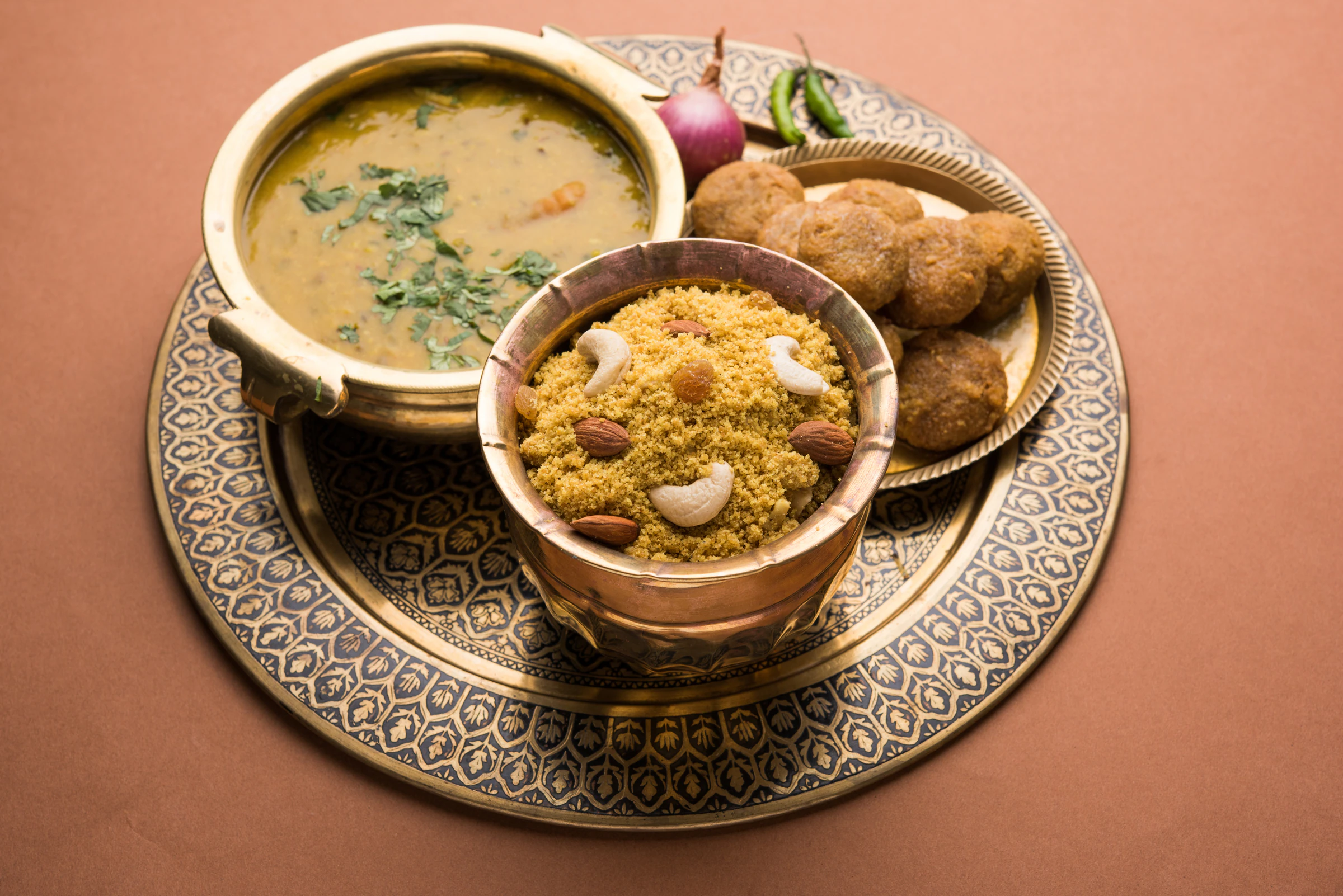
Dal baati churma
Rajasthan's signature dish is really three separate things served together. Baati is a ball of wheat dough, baked or roasted until firm, then cracked open and dunked in ghee. Dal is a lentil curry, usually a mix of two or three kinds, spiced and often finished with a tempering of ghee and cumin. Churma is the sweet part: cracked wheat cooked in ghee and mixed with jaggery or sugar, sometimes with nuts. Order it anywhere in the state, though Udaipur and Jodhpur are the two cities where it appears as the headline dish on a menu rather than one item on a thali.
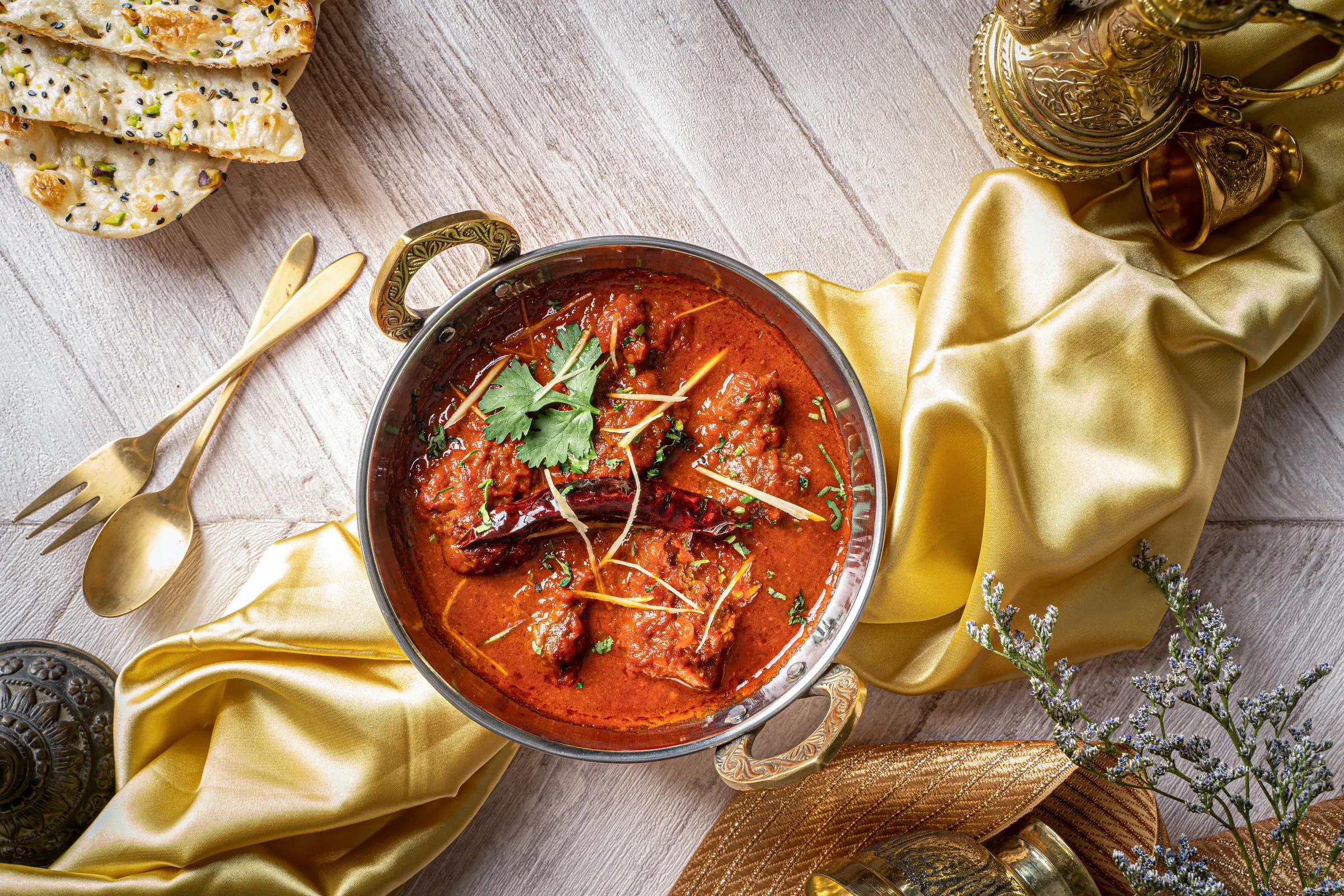
Laal maas
A fiery mutton curry cooked with Mathania chillies, a variety grown around Jodhpur that gives the dish its deep red colour without being punishingly hot on its own, laal maas is finished with yoghurt and a heavy hand of garlic. It's the dish most associated with Rajput royal kitchens, and it's usually served with rotis or rice rather than baati.
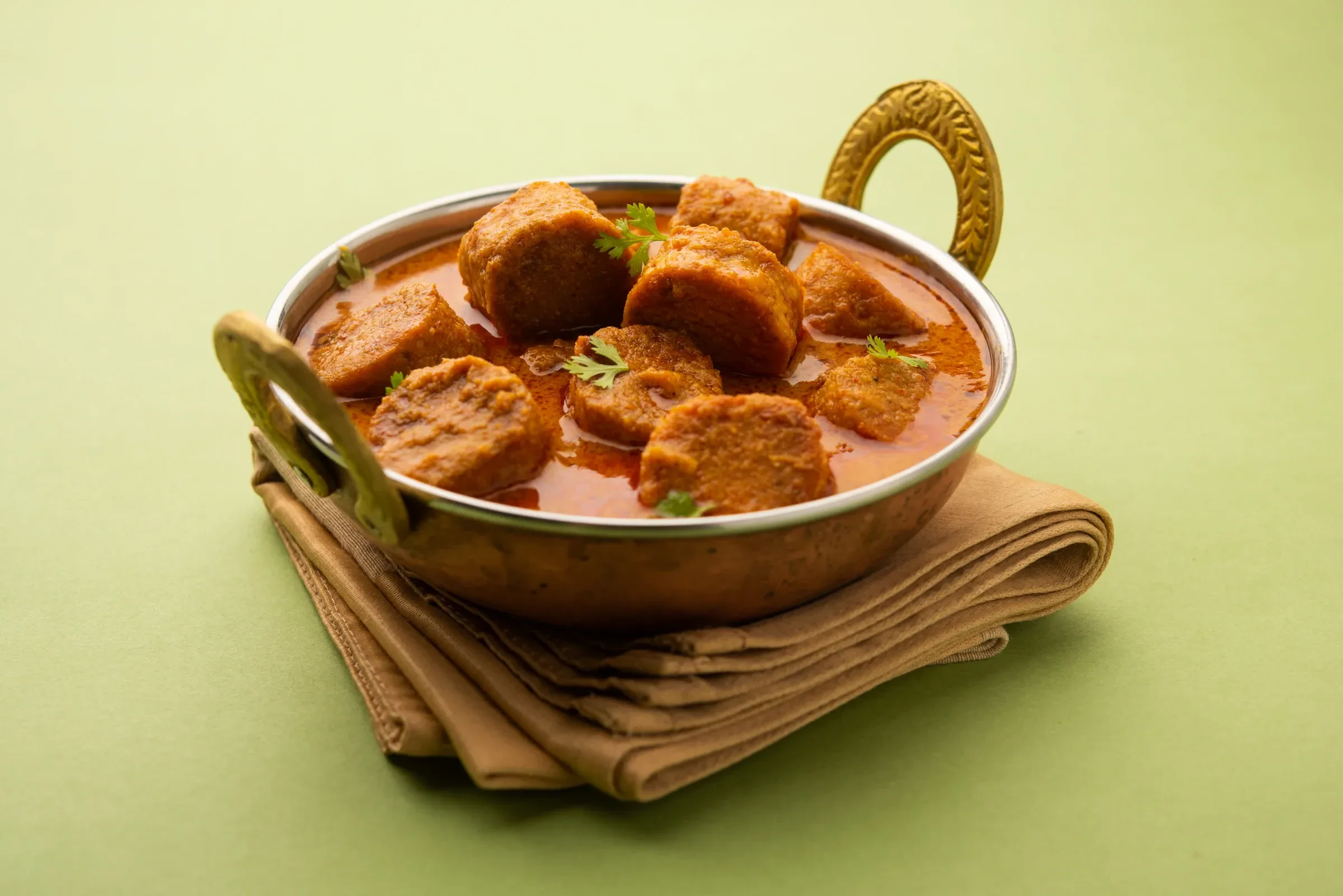
Gatte ki sabzi and ker sangri
Gatte ki sabzi is gram-flour dumplings, boiled then simmered in a spiced yoghurt gravy, a dish built for a place with more chickpea flour than fresh vegetables. Ker sangri pairs ker, a small wild caper-like berry, with sangri, dried beans from the khejri tree, both foraged and dried rather than farmed, then cooked with dried mango powder and chilli. Both turn up on a thali statewide, and ker sangri is worth seeking out around Jaisalmer, where it's closest to source, or at a desert camp on the way to the dunes.
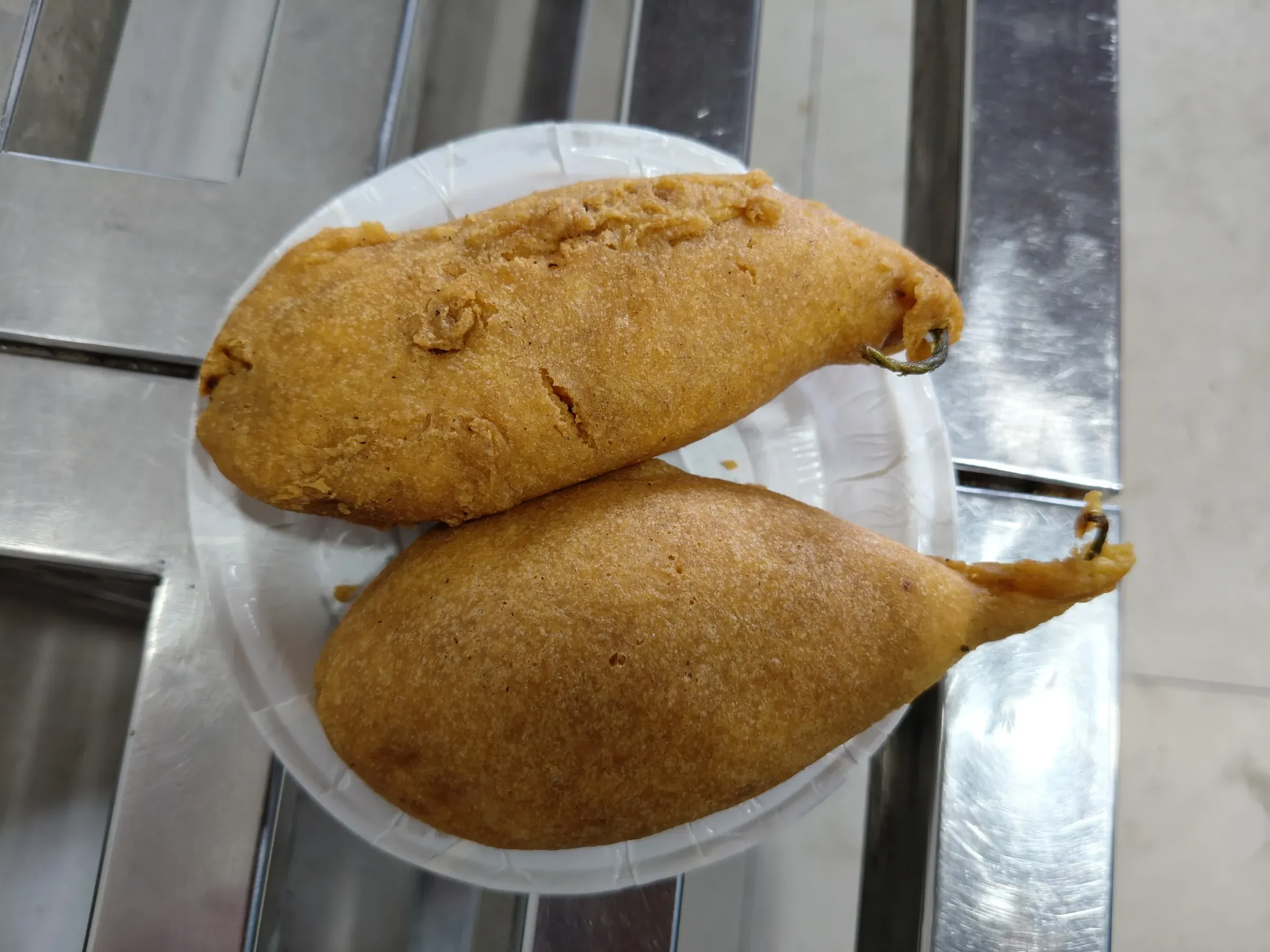
Pyaaz kachori and mirchi vada
Pyaaz kachori is a flaky pastry stuffed with spiced onion and deep fried, eaten standing up as a mid-morning snack rather than a meal. Rawat Mishthan Bhandar, a sweet shop that lists six stores in Jaipur on its own site, sells it along with mawa kachori. Mirchi vada (also written mirchi bada) is a large green chilli stuffed with spiced potato, dipped in gram-flour batter and fried whole; it's a Jodhpur speciality, and you'll find it at stalls around Sardar Market and the clock tower.
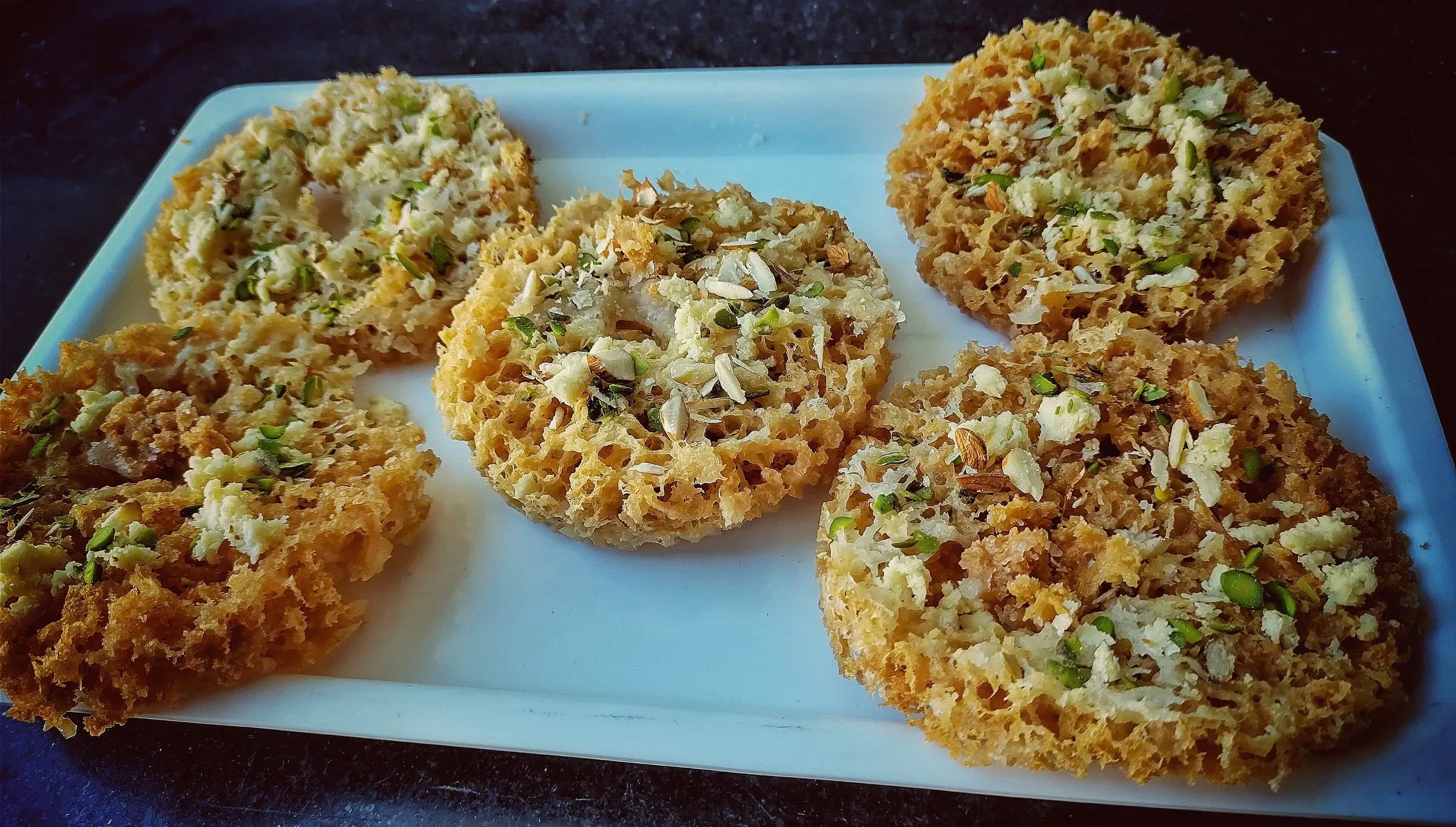
Ghewar and mawa kachori
Ghewar is a disc-shaped, honeycombed sweet, made by frying a thin ghee-and-flour batter in a ring mould, then soaking the result in sugar syrup. It's sold everywhere in the run-up to Teej and Raksha Bandhan, and Jaipur's sweet shops stack it high in the weeks before both. Mawa kachori is a sweeter cousin of the savoury version above: a kachori shell stuffed with mawa (khoya, or thickened milk) and dried fruit instead of onion. It's a Jodhpur speciality that Rawat Mishthan Bhandar also sells in Jaipur.
Lassi and the Rajasthani thali
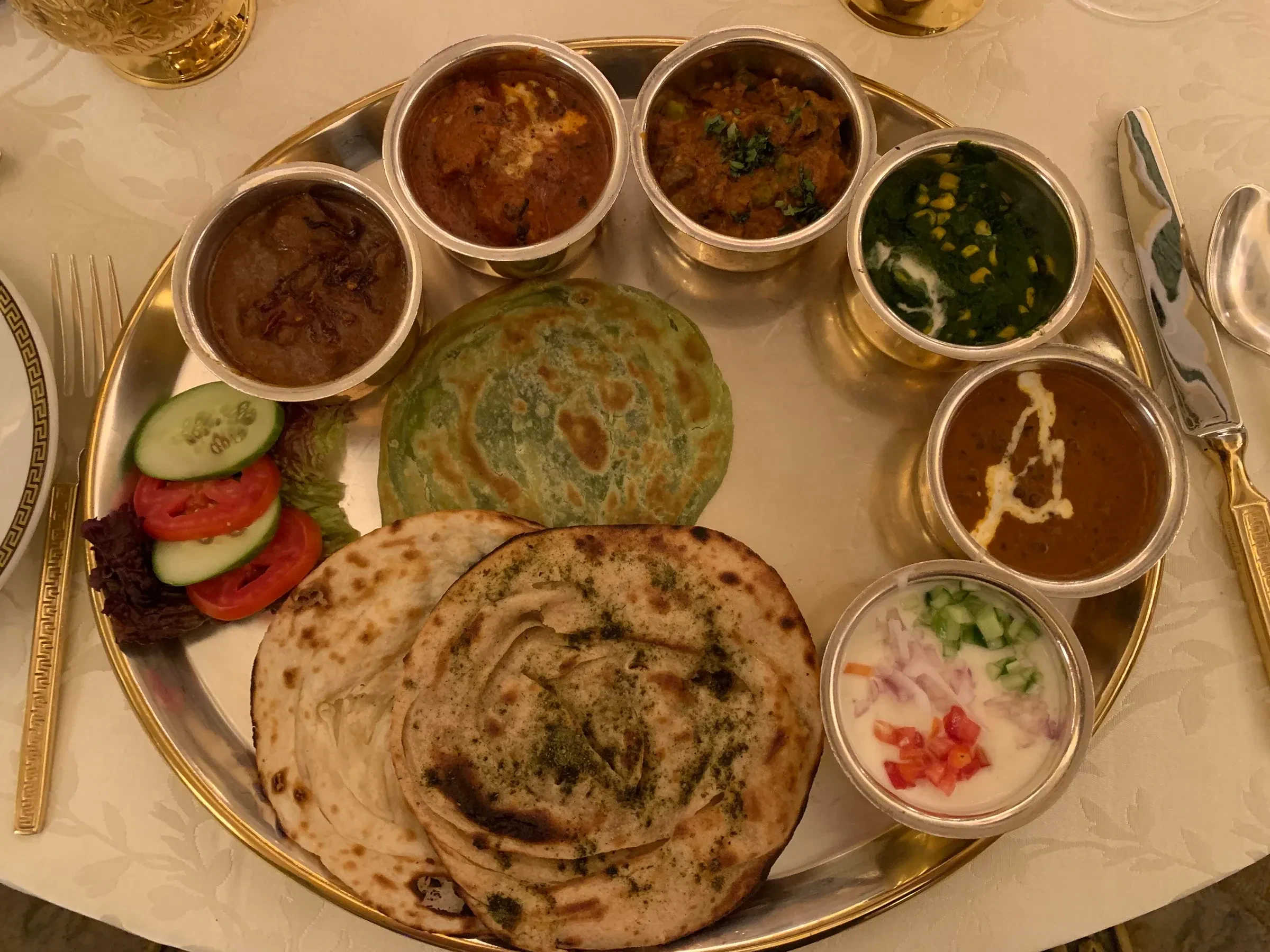
Jodhpur's makhaniya lassi, a thick, saffron and malai-topped version of the drink, is sold from stalls around Sardar Market and the clock tower. In Jaipur, Lassiwala on MI Road serves lassi in clay cups; it opens early and can sell out by mid-afternoon. For a single meal that covers most of the above, order a Rajasthani thali: dal, a vegetable dish (often gatte ki sabzi or ker sangri), rotis or baati, rice, pickles and a sweet, usually with unlimited refills of the lentils and rice. It's sold everywhere in the state and is an easy way to try several dishes at once.
Where to eat, by city and kind of place
Jaipur
LMB (Laxmi Mishthan Bhandar) is a pure-vegetarian sweet shop and restaurant on Johari Bazaar Road in the old city, and it serves a Rajasthani thali and dal baati churma. Rawat Mishthan Bhandar and Lassiwala on MI Road cover kachori and lassi for breakfast. Rooftop cafes around the old city and toward Nahargarh do a more general menu with a Pink City view thrown in.
Jodhpur
Sardar Market's stalls around the clock tower sell makhaniya lassi and mirchi vada for eating on the move, and mawa kachori is the sweet to look for. Rooftop restaurants below Mehrangarh Fort serve laal maas and a full thali with the blue city spread out below, particularly at dinner.
Udaipur
Rooftop restaurants clustered around Lal Ghat and Hanuman Ghat, with a direct line of sight to the City Palace, are where many visitors eat dal baati churma. The old city's smaller cafes and stalls do a quicker thali, along with kachori and lassi for breakfast.
Jaisalmer
Restaurants inside the fort walls serve dal baati churma and thali. Desert camps outside town, usually part of an overnight dune trip, often serve ker sangri and a thali, so ask what's on the menu when you book.
Pushkar
In Pushkar, no meat, eggs or alcohol are sold within the town, a rule tied to the sanctity of its Brahma temple (see our Pushkar Camel Fair guide for more on the town's etiquette). Ghat-side cafes serve vegetarian thalis and malpua, a sweet pancake that's a local speciality, alongside the usual traveller-cafe menu of pancakes and lassi.
Safety and hygiene
Stick to bottled or filtered water, and be cautious with ice, since there's rarely a way to know what water it was made from. Freshly cooked, still-hot food from a busy stall, somewhere you can watch it being made, is generally the safest street food choice: high turnover and high heat both cut the risk. A thali or curry at a sit-down restaurant costs about ₹150 to 500, and it's a reliable, lower-risk option if you'd rather not stand at a stall. Our India food guide and India safety guide cover the same basics for the rest of the country.
Vegetarian and Jain notes
Rajasthan's restaurant food can look meat-forward, but roughly three quarters of its adults are vegetarian in survey data, and most thali houses treat that as their default rather than an exception. Jain travellers should ask for a dish "Jain style", meaning no onion, garlic or root vegetables; it's understood at most thali restaurants across the state. Pushkar removes the question entirely, since no meat, eggs or alcohol are sold within the town.
Alcohol and dry days
Outside Pushkar, licensed bars, shops and some restaurants sell alcohol. Rajasthan's excise department defines a dry day as one when sale is prohibited across the state but drinking is not, and its list gives 26 January, 30 January, 15 August, 2 October and Mahaveer Jayanti. Local dry days can also apply, so buy ahead if you want a drink on one.