
What makes the Rann of Kutch special
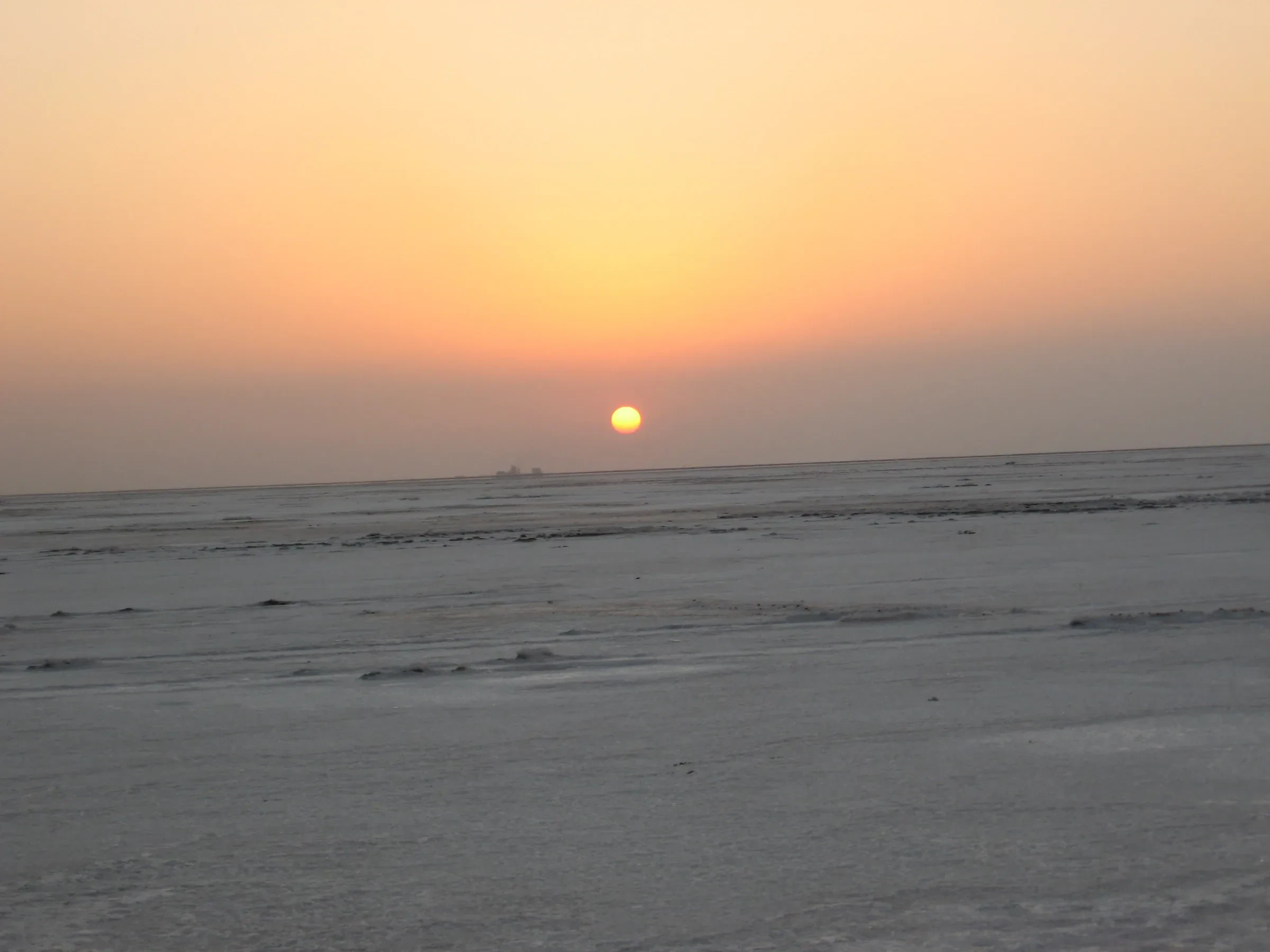
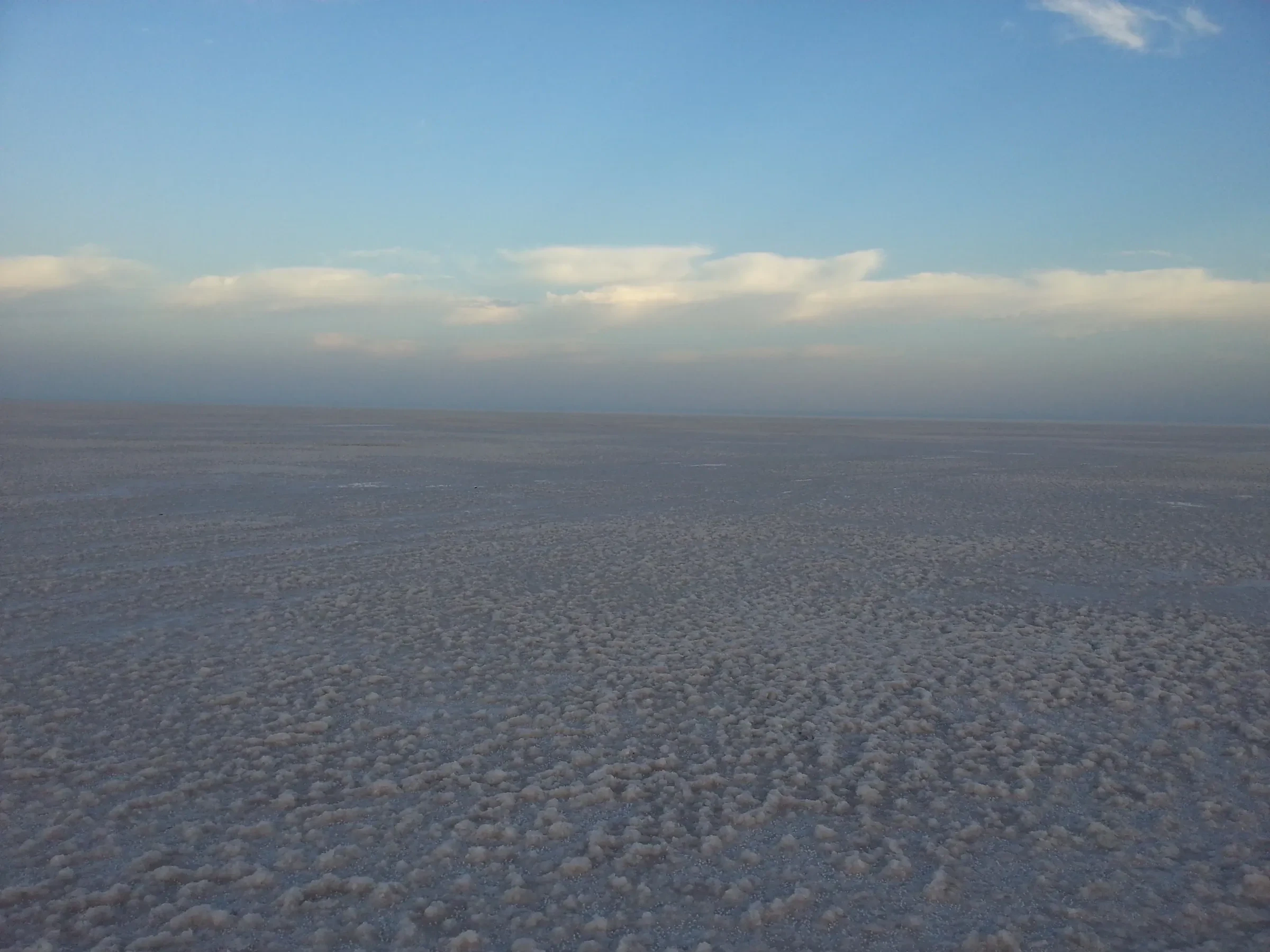
The Great Rann of Kutch is a seasonal salt marsh, roughly 7,500 square kilometres of it, that dries into a blinding white crust every winter. It's one of the largest salt deserts on earth, and there's nothing else in India quite like walking out onto a flat, cracked, white surface that runs to the horizon in every direction: no trees, no buildings, and at night, no ambient light at all. Rann Utsav, Gujarat Tourism's festival at Dhordo, is what made the area famous, but the desert itself is the real draw, and it's there for anyone with a permit, festival or no festival.
When the desert turns white, and when it floods
The Rann isn't white all year. Monsoon rain floods the marsh from around July to September and the salt disappears under shallow water, so there's no white desert to see and no practical way to visit. Once the water evaporates, the crust dries out and turns white again, starting around October and holding through the winter and into the pre-monsoon heat of April, May and June. Of that dry stretch, November to February is when it's actually pleasant to be there: cool nights, warm rather than punishing days, and Rann Utsav running at Dhordo. March is a shoulder month as the festival winds down and the heat starts building. April to June is dry but genuinely brutal, with very high temperatures, and best avoided even though the salt itself is technically still there to see.
Where to go in the Rann of Kutch
Dhordo and the White Rann viewpoint
Dhordo is the village on the edge of the salt desert where Rann Utsav's tent city sits, and the checkpost and viewing area for the White Rann itself are a short drive beyond it. Outside festival season, or simply without a tent city booking, day visitors can still drive out, show their permit and walk onto the salt. The crust turns from white to pink to grey as the sun sets. Opening hours change with the season and on full moon nights, so ask at the checkpost for current timings. Give it half a day at minimum, including the drive from Bhuj.
Kalo Dungar
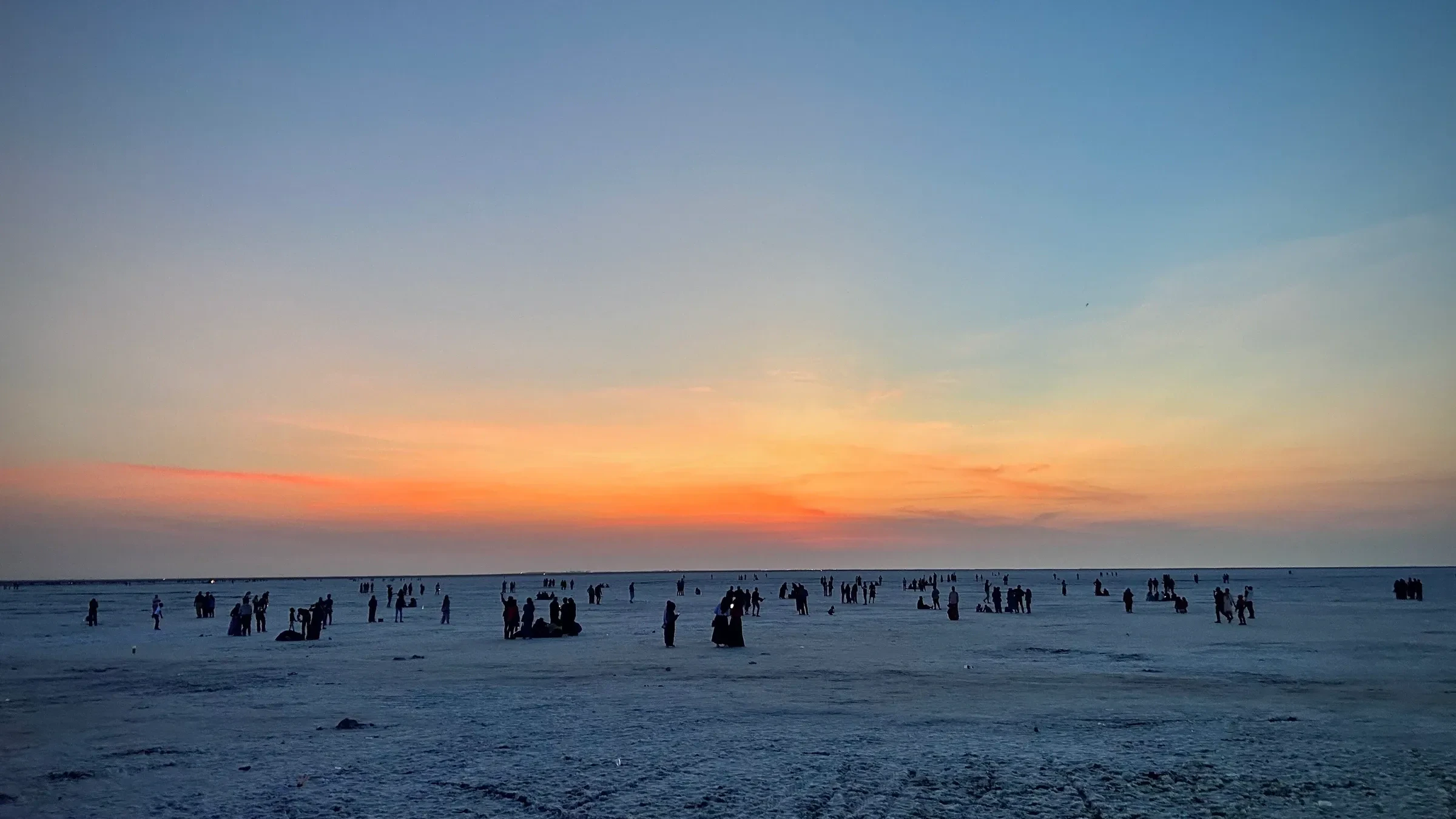
Kalo Dungar, or Black Hill, is Kutch's highest point at 462m, about 90km from Bhuj via Khavda, and gives the widest view over the Rann there is: on a clear day, the salt desert stretches out toward the Pakistan border. It's known for a 400-year-old temple dedicated to Dattatreya and for a stretch of road with an optical illusion where the gradient plays tricks on your eyes and vehicles look to roll uphill on their own. An army post restricts access beyond the summit itself, given how close this is to the border, but the same permit that covers the White Rann covers Kalo Dungar too, so it's easy to add to the same day trip, ideally timed for sunrise or sunset. Gujarat Tourism says the area is under army jurisdiction and photography is not allowed.
Bhuj
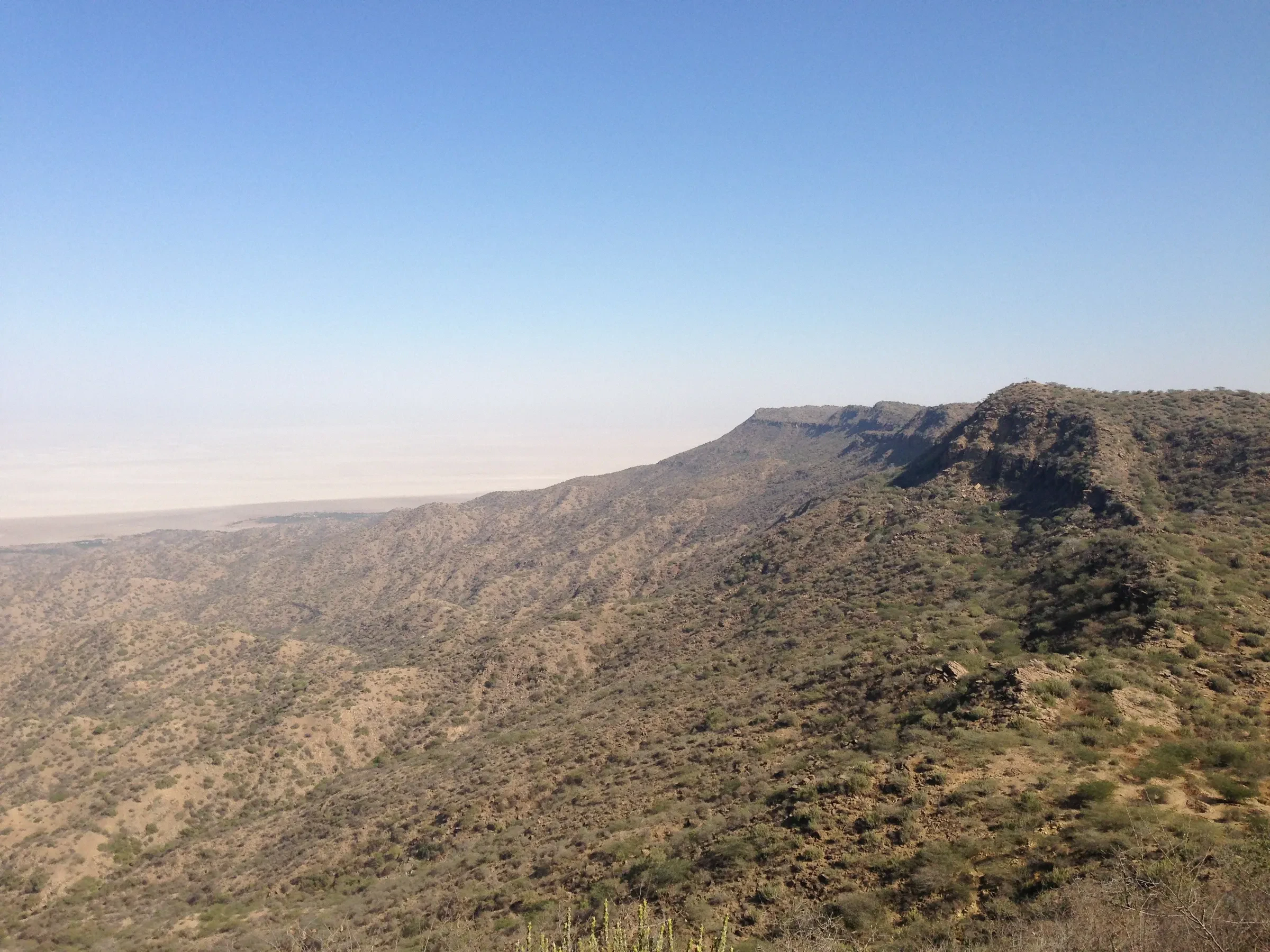
Bhuj is Kutch's main town and the practical base for the whole district. It has its own old-town sights, including the 18th and 19th-century Aina Mahal and Prag Mahal palaces, a bazaar worth an evening on its own, onward transport, and the widest choice of guesthouses and hotels once you're back from the desert. Most people spend a night or two here either side of a trip out to the Rann.
Kutch's craft villages, briefly
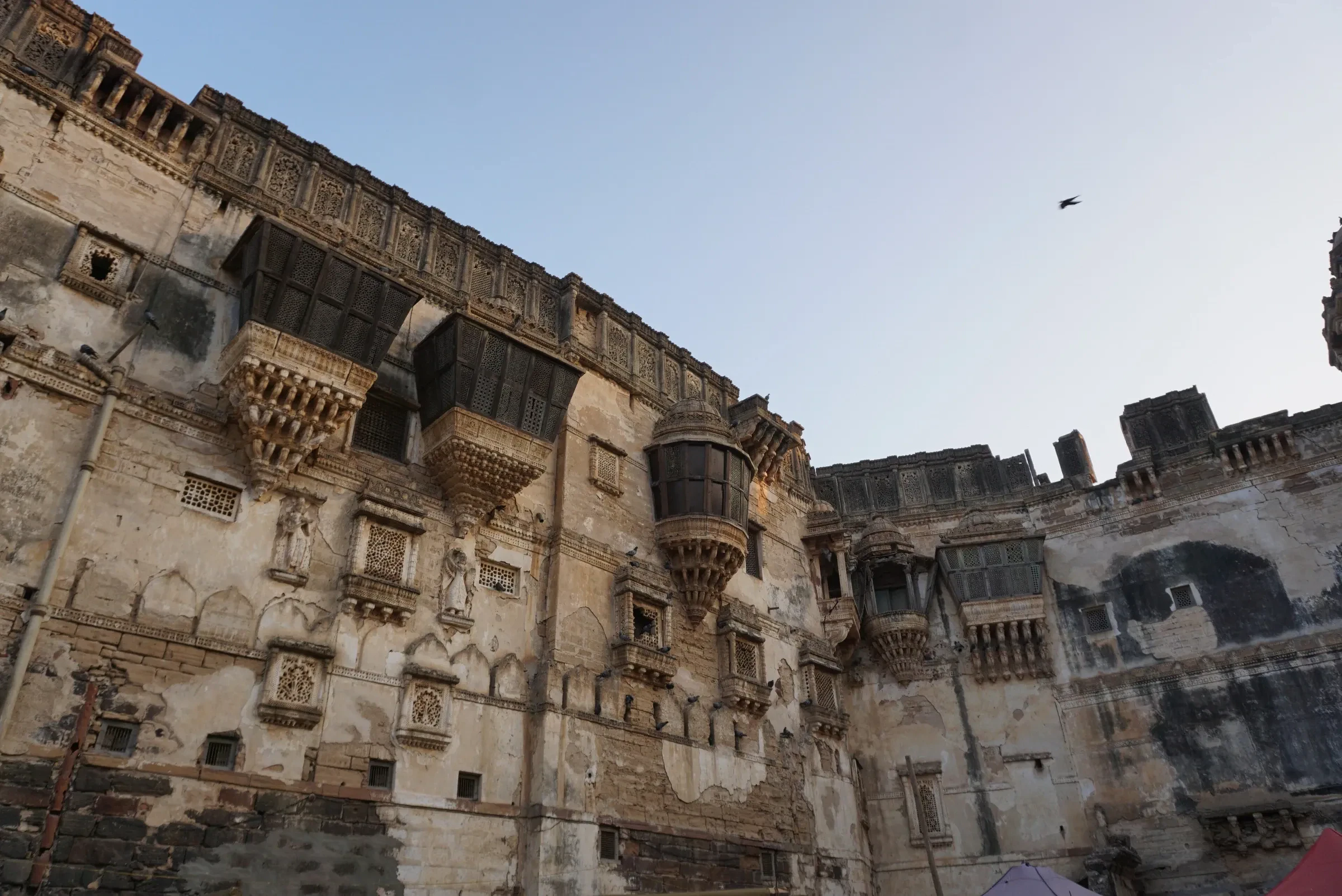
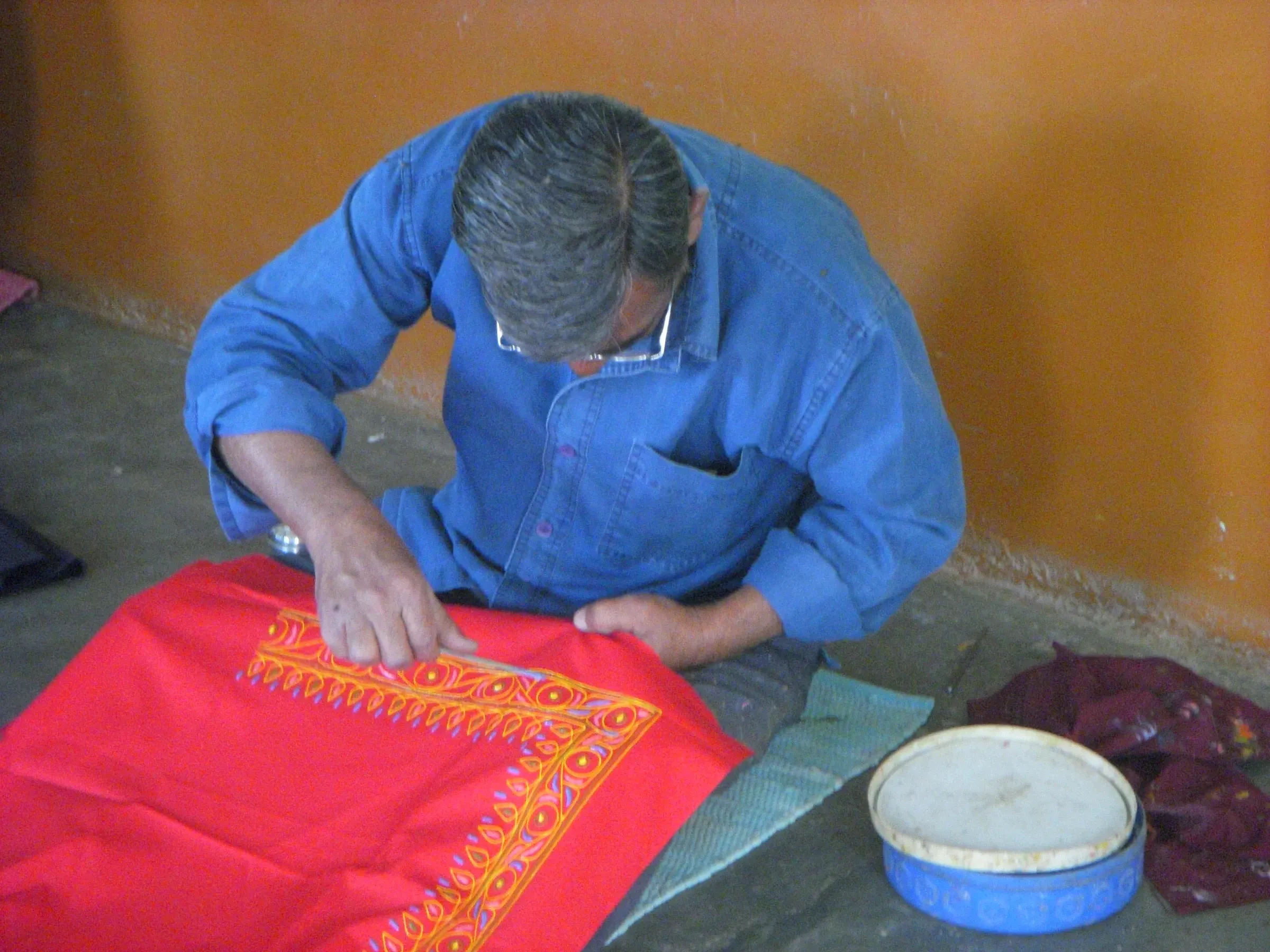
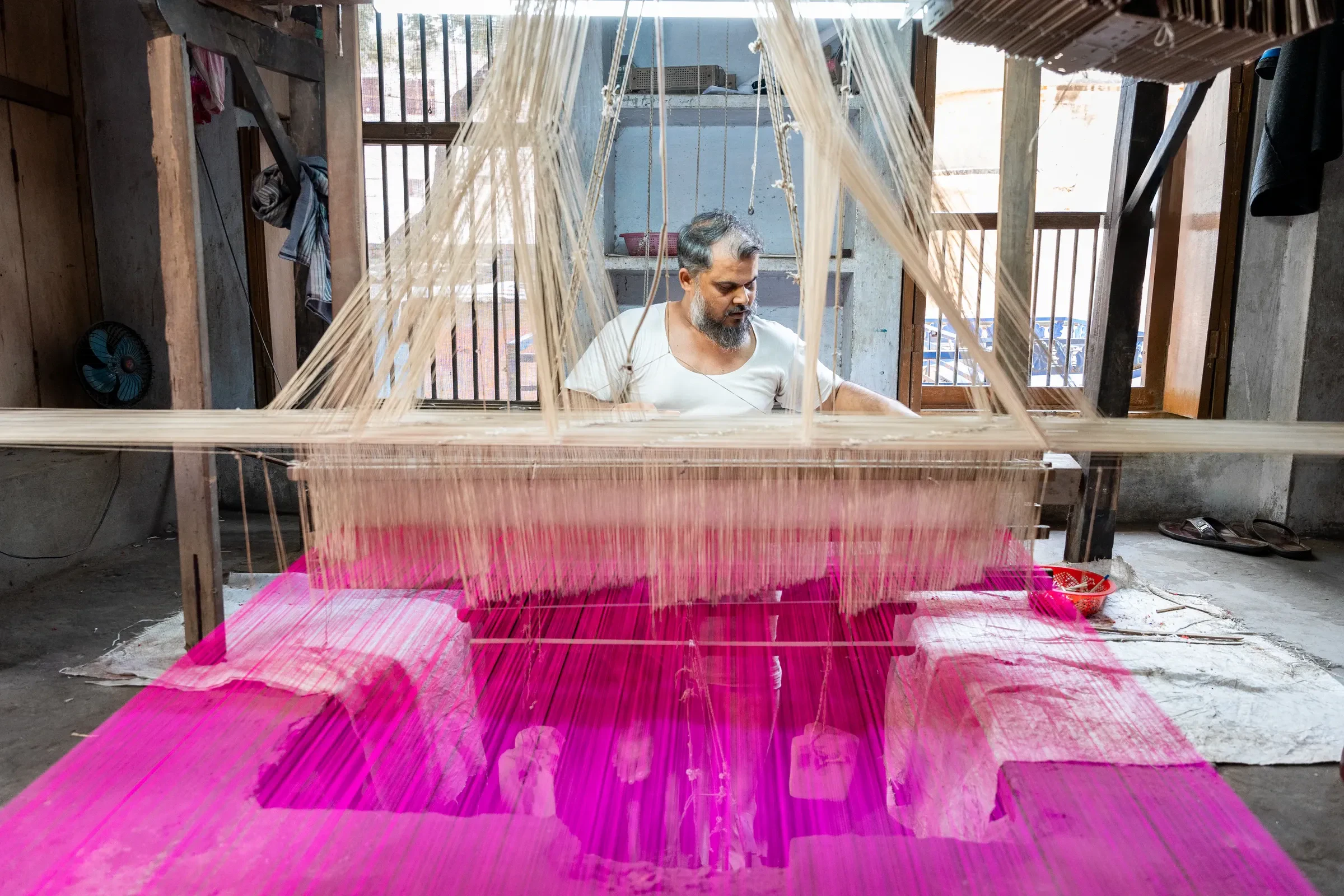
Kutch's embroidery, block printing and other crafts are worth a day around Bhuj in their own right. Bhujodi is a weavers' village known for shawls and stoles woven on traditional pit looms, Ajrakhpur specialises in hand block-printed textiles, and Nirona is home to the last families still practising Rogan art, painting done with a thick, boiled castor-oil paste rather than a brush. Further out in the Banni grasslands, Hodka and Ludiya add embroidery and mud-mirror-work houses, and Hodka's community-run Shaam-e-Sarhad village resort, open only from October to March, is a well-known example of the area's rural tourism, and has won a Pacific Asia Travel Association award. Our Gujarat and Kutch itinerary covers a full day around these villages.
Things to do around the Rann of Kutch
Most of it is the desert itself: a camel-cart ride or jeep safari onto the salt flats, sunset and sunrise photography, and a full moon walk when the crust glows silver rather than plain white. Kalo Dungar adds a sunrise viewpoint and a small temple. If you're spending a day around the craft villages, several run short weaving, block-printing or Rogan-art demonstrations. With a permit and a headtorch, there's so little ambient light out here that it's genuinely one of the better places in India for stargazing.
What to eat
Kutchi food is distinct from the rest of Gujarat: Kutchi dabeli, a spiced-potato bun snack sold from carts in Bhuj's old town, Kutchi kadhi, and bajra rotla with white butter and jaggery, a farmhouse staple worth trying at a village stop. For the fuller regional spread, including Ahmedabad's Gujarati thali, see our Gujarat and Kutch itinerary.
The permit you'll need
Everyone needs a permit to enter the White Rann itself, both guests at Rann Utsav's tent city and day visitors driving out from Bhuj, since the salt desert sits inside a notified border security zone close to the India-Pakistan border. Indian nationals can apply online in advance through the Gujarat government's portal, rannpermit.gujarat.gov.in. The portal says it is only for Indian nationals, so foreign visitors can't use it. They get the permit in person at the Bhirandiyara checkpost, the only one the portal names, and should carry their passport and visa details. The portal lists ₹100 for anyone over 12, ₹50 for ages 6 to 12 and free entry up to 5, with vehicles free. The same permit covers Kalo Dungar. Ask your hotel in Bhuj to confirm the current process for foreign passports before you set out. Our Rann Utsav guide covers the festival side, and the permit works the same whether or not you're visiting during the festival.
Getting to the Rann of Kutch and around it
Bhuj is where almost everyone arrives first. From Ahmedabad, take the overnight Kutch Express train (about 7 hours, departing around 01:30 and arriving around 08:30) or the daytime Namo Bharat Rapid Rail, which covers the same route in under 6 hours but leaves Ahmedabad in the early evening, Sunday to Friday. Bhuj has an airport, but we couldn't find a direct Ahmedabad to Bhuj flight listed in October 2026, so check before you plan around one. From Bhuj, it's about 85km and 1.5 to 2 hours by car to Dhordo and the White Rann, and about 90km, up to 2 hours, on to Kalo Dungar via Khavda. There's no reliable public transport for either leg, so hire a car and driver, either for one long day covering both, or with a night near Dhordo or Hodka if you'd rather see the sunset and the next morning's sunrise without a very early start each way.
How long to spend, and which guide to use next
The White Rann and Kalo Dungar can be done as a single long day trip from Bhuj if you're short on time, though it's a full day either way once you count the driving. Two to three nights based in Bhuj is more comfortable, and leaves room for the craft villages without rushing. If you want the fuller regional route, with Ahmedabad's stepwells, Kutch's craft villages, the White Rann and the Harappan ruins at Dholavira strung together over a week, follow our Gujarat and Kutch itinerary. If it's specifically the festival season you're planning around, our Rann Utsav guide covers the tent city, its programme and its pricing in full.
Prefer to travel with a group?
Nobody in our catalogue runs a dedicated trip to Kutch yet. India Rajasthan & Varanasi, 14 days ending in Udaipur, and India North to South, 21 days from Delhi to Kerala, are the closest matches, since Ahmedabad to Udaipur is a manageable road link if you wanted to add Kutch onto either trip yourself, before or after. Browse the full India group trips if you'd rather travel the rest of your route with company than solo.


