
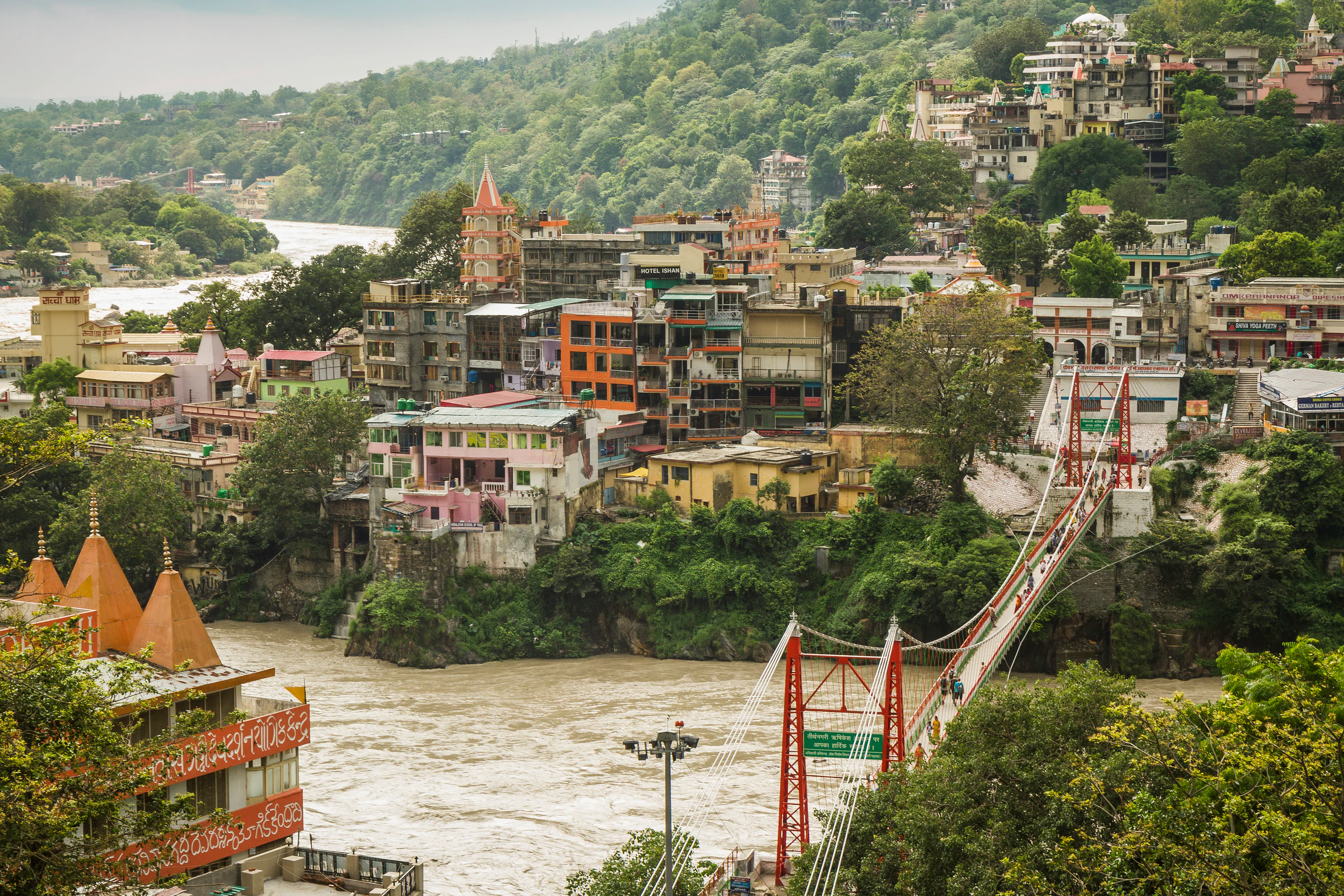
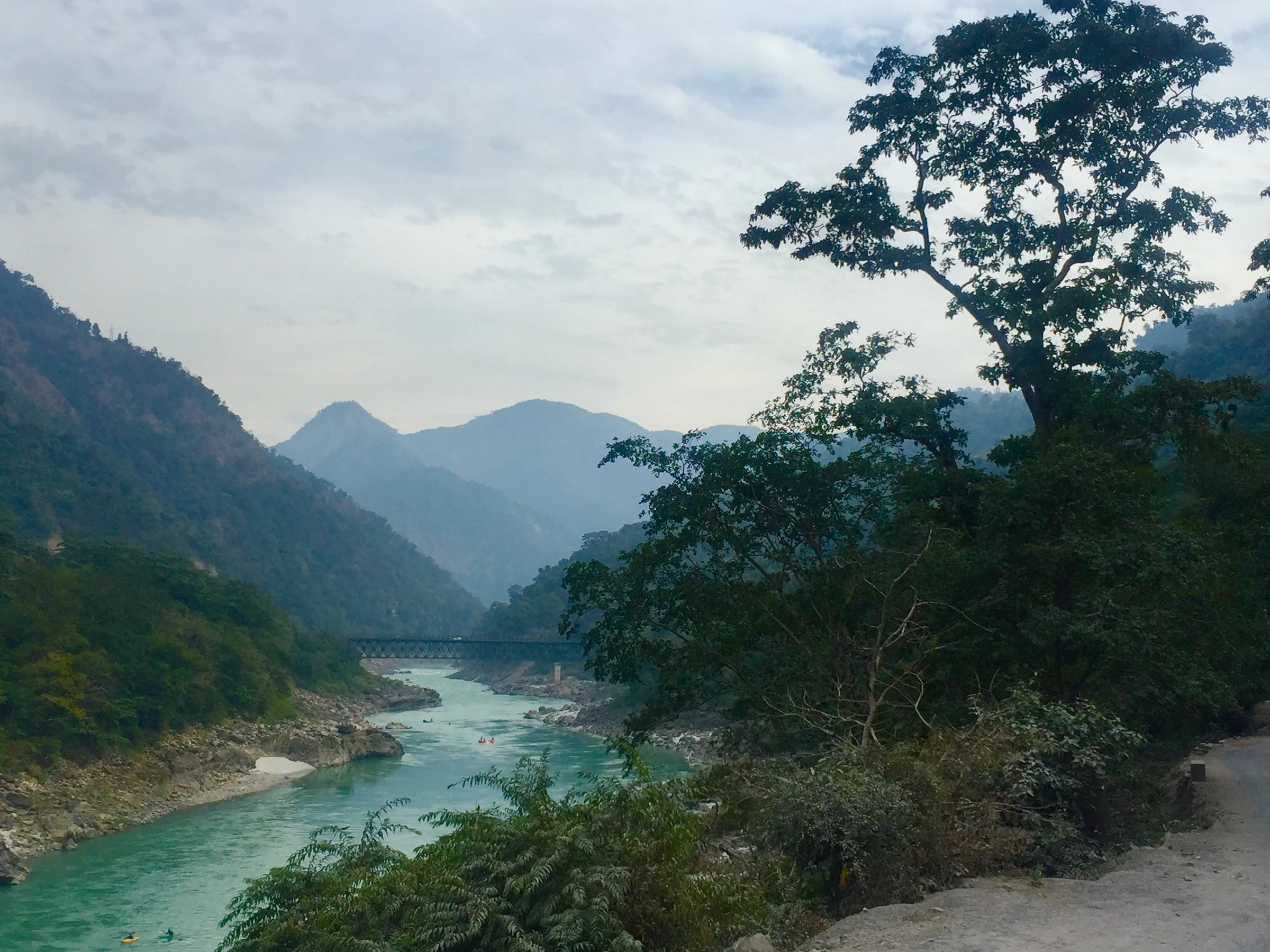
Rishikesh is where the Ganges leaves the mountains. The river runs fast and green through a narrow valley, with ashrams, yoga schools and cafes stacked up both banks. Pilgrims come for the ghats and the evening aarti. Backpackers come for the rafting and the cheap hostels, and plenty of people come for yoga, whether that's one drop-in class or a month-long teacher training.
It's also one of the easier places in India to travel alone. You can walk almost everywhere, and the hostels and cafes in Tapovan make it easy to meet people.
Where is Rishikesh?
Rishikesh (Uttarakhand, India) is in Dehradun district, in the north of the country. It sits at about 340 m, right where the Ganga comes out of the hills onto the plains. Haridwar is 25 km downstream, Dehradun (the state capital) is about 45 km away, and Delhi is about 240 km to the south (Wikipedia).
When people say "Rishikesh city", they usually mean a string of riverside neighbourhoods, not one centre. The busy town with the bus stand and Triveni Ghat is at the southern end. Upstream are Muni Ki Reti and Ram Jhula, then Swarg Ashram on the east bank, and then Laxman Jhula and Tapovan, where most backpackers stay.
How to get to Rishikesh
By train. The quickest way from Delhi is the Vande Bharat that leaves Anand Vihar at 17:50 and reaches Haridwar at about 21:15. It doesn't run on Thursdays. The morning Shatabdi from New Delhi (06:45) also stops at Haridwar. From Haridwar it's about 25 km to Rishikesh: 45 to 60 minutes by taxi, or a bit longer by shared auto, which costs roughly ₹80 to ₹100 to Tapovan. For the return, the Vande Bharat leaves Haridwar at about 08:08 and reaches Delhi at 11:45.
By bus. UPSRTC runs buses from Delhi's Kashmere Gate bus station that take about 6 hours. A Volvo seat costs around ₹726. Buses drop you at the bus stand in town, so you'll still need an auto to Tapovan.
By air. Dehradun's Jolly Grant airport is about 21 km from Rishikesh, 35 to 45 minutes by taxi. Online cab fares start at about ₹800 to ₹1,300. Flights from Delhi are short, but by the time you add airport time, the train is often just as quick.
How many days do you need in Rishikesh?
Two days covers the basics: the evening aarti, the bridges, the Beatles Ashram and one morning yoga class. Three to four days is better. It adds a rafting trip, a sunrise at Kunjapuri and a slow cafe day in Tapovan. A week or more makes sense if you're doing a yoga course, or if you like the pace and want to stay on.
Rishikesh works well as an add-on to a longer India trip. With 10 days, you could do the Golden Triangle and then take the train north for three nights. With a month, it fits between Delhi and the mountains. Our India itinerary guide has routes of every length.
Where to stay in Rishikesh
- Tapovan (Upper and Lower). Hostels, yoga schools, cafes and most of the backpackers. It's on the hill above the Laxman Jhula end, a short walk from Bajrang Setu. The best base for solo travellers.
- Laxman Jhula area. Right by the river and the new bridge, with more guesthouses, shops and noise.
- Swarg Ashram. On the east bank between the two bridges, with ashrams including Parmarth Niketan. The lanes are quiet, and it suits people who want an early night.
- Muni Ki Reti and Ram Jhula. Closer to town, with ashrams and mid-range hotels.
- Shivpuri. About 16 km upstream, with riverside camps that bundle rafting, meals and a tent.
At the luxury end, Taj Rishikesh Resort & Spa is in Singthali village, about 30 km upriver from town (Taj Hotels). It's a resort stay rather than a base for exploring Rishikesh itself.
Hostels in Rishikesh for solo travellers
Rishikesh has lots of hostels, and dorm beds are cheap. On Hostelworld's solo-traveller list in September 2026, the best-reviewed places with a good number of reviews were:
- Joey's Hostel in Tapovan: rated 9.3 from 293 reviews, dorms from about ₹299.
- Indian Culture in Tapovan: rated 9.0 from 252 reviews, dorms from about ₹270.
- The Hosteller, Upper Tapovan: rated 9.2 from 68 reviews, dorms from about ₹417.
- Skyard Hostel by Laxman Jhula: rated 7.9 from 498 reviews, dorms from about ₹249.
- Madpackers Laxman Jhula: rated 7.8 from 358 reviews, dorms from about ₹429.
No Rishikesh hostel won a 2026 Hostelworld HOSCAR. India's country winner was Dreamyard in Udaipur (HOSCARs 2026). Ratings change quickly, so check recent reviews before you book, especially for noise and hot water in winter.
Staying at Parmarth Niketan ashram
Parmarth Niketan is one of the largest ashrams in Rishikesh, and you can stay there as a guest. You request a room through the ashram's own booking system at parmarth.org, and they aim to reply within 3 days. Reception is open 8 am to 8 pm. The ashram warns that it never asks for payment by phone or WhatsApp, so ignore anyone who does. Ashram life has rules, so read their guidelines before you book.
Things to do in Rishikesh
These are the highlights. Our things to do in Rishikesh guide has the full list.
The Ganga Aarti at Parmarth Niketan
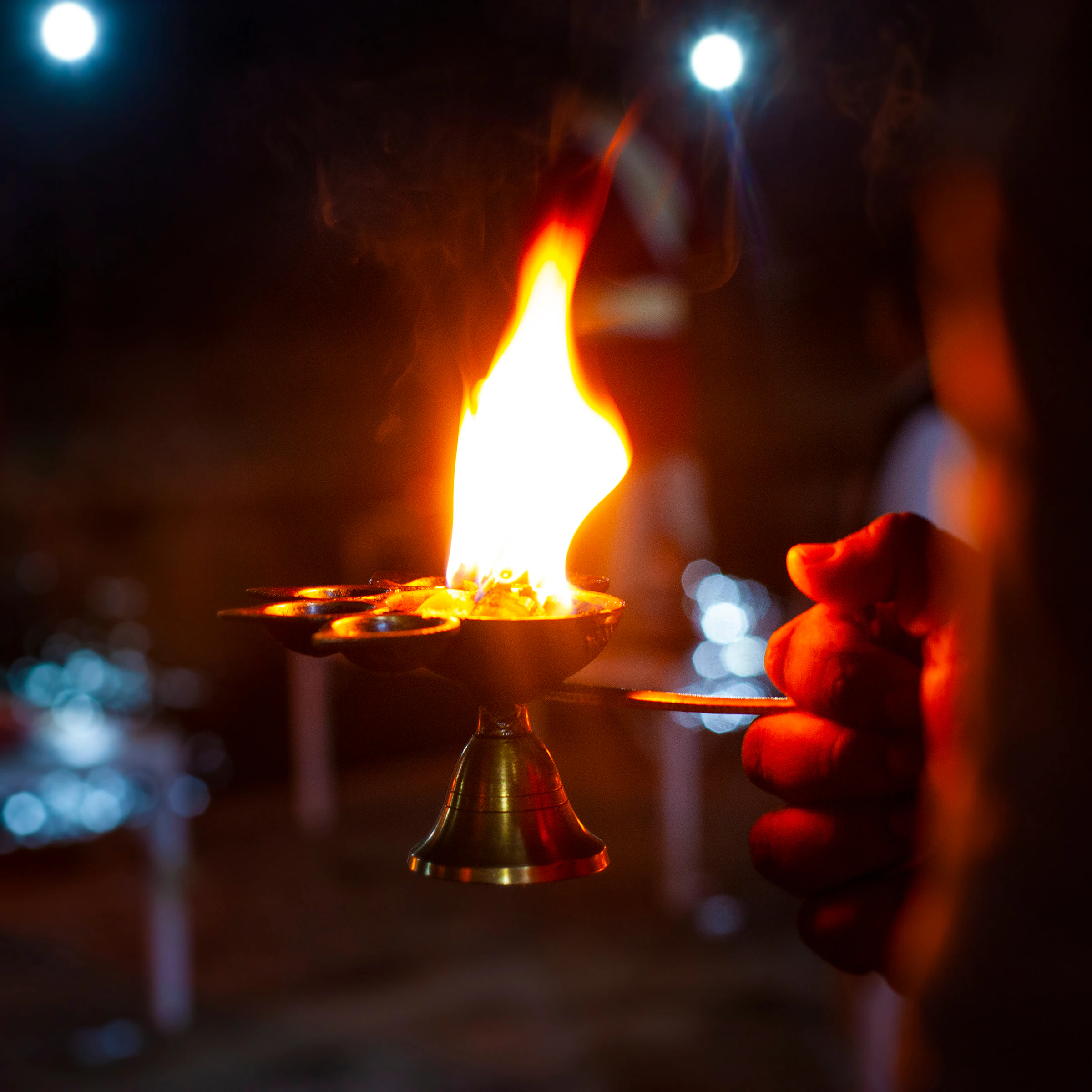
Every evening at sunset, Parmarth Niketan holds a Ganga Aarti on its ghat: songs, prayers and lamps offered to the river. A fire ceremony (yagna) starts half an hour before. It's free and open to everyone, and hundreds to thousands of people come each day (Parmarth Niketan). The ashram says times change with the season and to check at reception. Local listings put it at around 17:30 in winter and 18:00 in summer. Arrive 30 to 45 minutes early for a spot on the steps.
Triveni Ghat in the town centre has its own evening aarti, with a busier, more local crowd. If you have two evenings, see both.
Ram Jhula, Laxman Jhula and Bajrang Setu
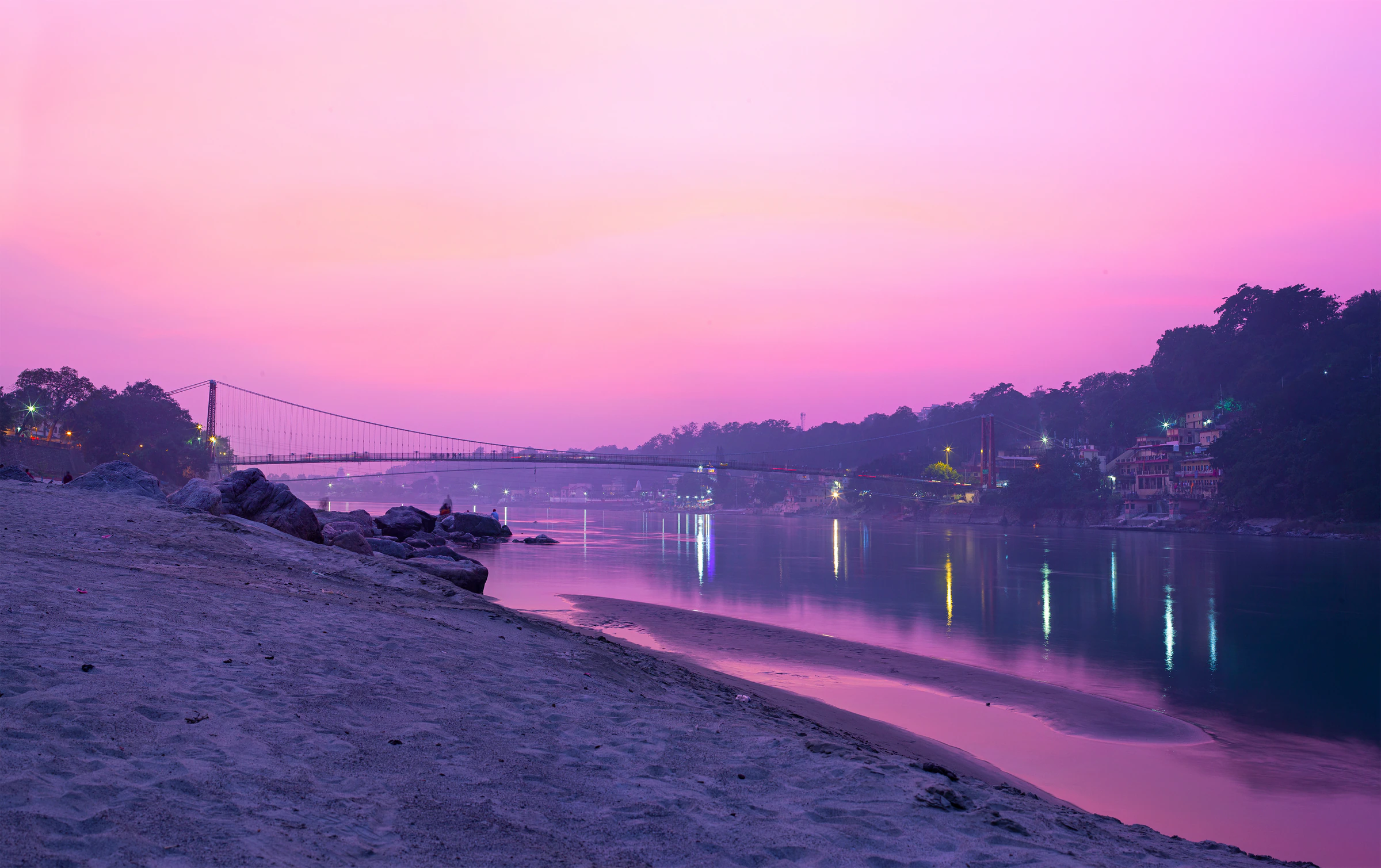
The footbridges are how most people get across the river, and you'll share them with pilgrims and the odd cow. Ram Jhula has been closed for repairs since 26 July 2026. The local works department expects it to reopen around February 2027, so check before you go. Laxman Jhula, the 1929 suspension bridge, has been closed since 2019 for safety reasons. It's been replaced by Bajrang Setu, a new 132 m bridge next to it, which is open. The concrete middle section is free and open around the clock. The glass walkways on each side cost ₹100 for two hours and are open 06:00 to 22:00 (India.com, August 2026).
The Beatles Ashram (Chaurasi Kutia)
In February 1968 the Beatles came to Maharishi Mahesh Yogi's ashram to study meditation. The ashram has since been abandoned and is now part of Rajaji Tiger Reserve. You can walk around the meditation huts and graffiti-covered halls. Entry is ₹1,200 for foreigners and ₹200 for Indian and SAARC visitors, and an SLR camera costs extra (₹2,000 for foreigners). It's open from sunrise to sunset (Rajaji Tiger Reserve).
Yoga in Rishikesh
Rishikesh is known as the Yoga Capital of the World, and you can't walk far in Tapovan without passing a studio. A drop-in class usually costs ₹300 to ₹350, with no need to book (Rishikesh Yoga Club). Try a couple of schools before you commit to anything longer.
A 200-hour yoga teacher training takes about three to four weeks and costs roughly US$700 to US$2,200, depending on the school and the room. Many schools include meals and a bed. Check what's in the price, and check that the school is registered with Yoga Alliance if you want the certificate to count abroad.
The International Yoga Festival is held at Parmarth Niketan every March. The 2027 edition runs from 9 to 15 March, according to the festival's own site, internationalyogafestival.org.
White-water rafting on the Ganga
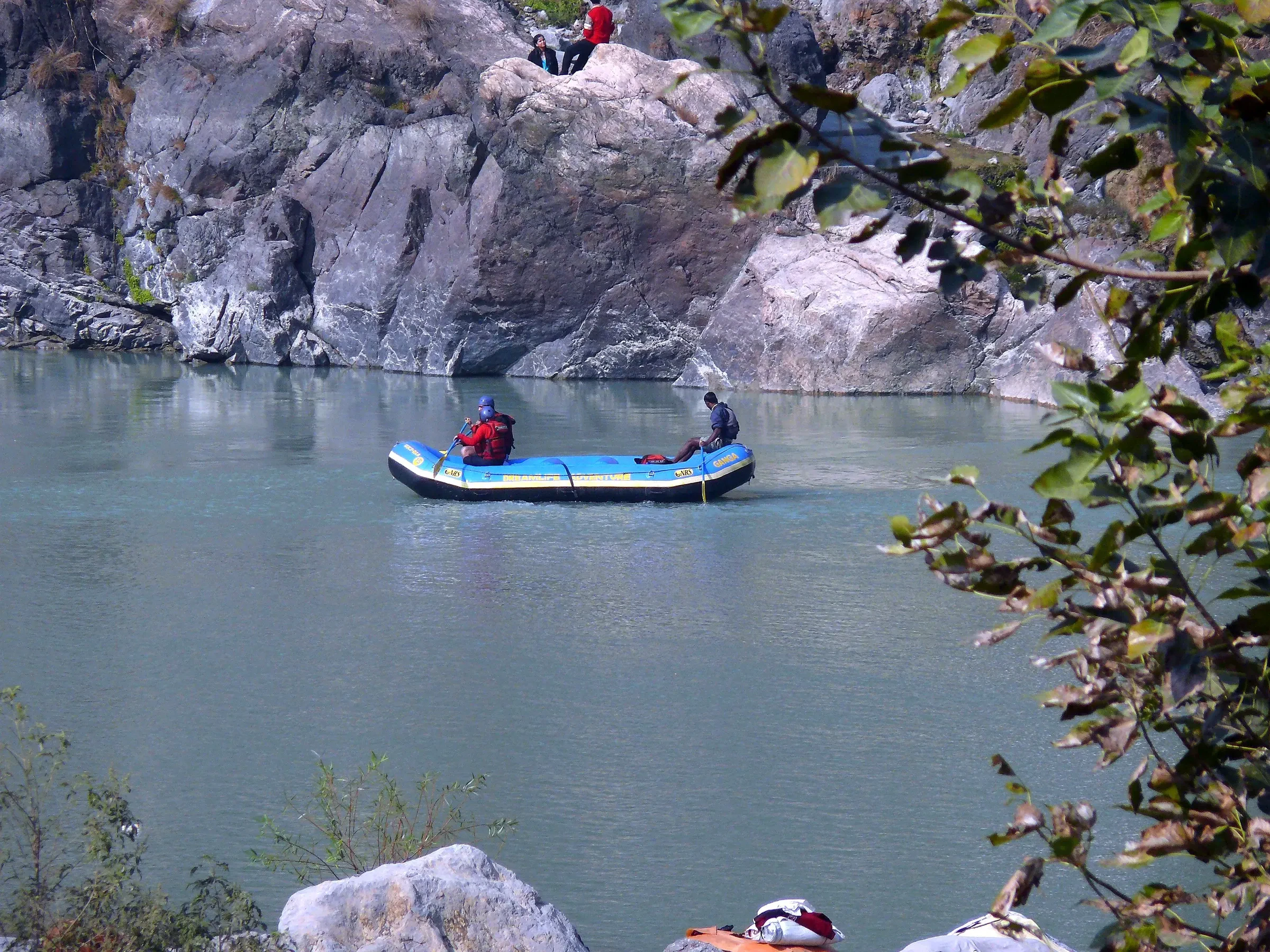
Rafting is the other big draw. The season runs from late September to the end of June, and the river is closed to rafting in the monsoon. In 2026 it was suspended from the start of July and reopened on 24 September. The local rafting committee sets the date each year (Camping in Rishikesh). The main stretches all finish near town:
| Stretch | Distance | Rapids | Approx. price per person |
|---|---|---|---|
| Brahmpuri | 9 km | Grade I to II | ₹600 |
| Shivpuri | 16 km | Grade II to III | ₹1,000 to ₹1,200 |
| Marine Drive | 24 to 25 km | Grade III | ₹1,500 to ₹1,700 |
| Kaudiyala | about 36 km | Grade III to IV | about ₹2,500 |
The Shivpuri run is the usual first choice. You have to be at least 14 to raft. Our rafting in Rishikesh guide covers operators, what to wear and which stretch suits you.
Bungee jumping at Mohan Chatti
Jumpin Heights runs an 83 m bungee jump over a gorge at Mohan Chatti, about 45 minutes' drive from its office in Tapovan. It costs ₹4,500, including video and GST, and the transfer from Tapovan is free. The same company runs a giant swing and a long flying fox. Jumpers must be 12 or older and weigh 40 to 110 kg (Jumpin Heights).
Neer Garh waterfall and Kunjapuri sunrise
Neer Garh is a series of small waterfalls in the forest above Laxman Jhula, about 6 km from the bridge. From the road it's roughly a 1.5 km walk uphill to the top pool, and there's a small entry fee.
Kunjapuri is a hilltop temple at about 1,650 to 1,700 m, some 25 to 30 km by road from Rishikesh. On a clear morning you can see the snow peaks of the Garhwal Himalaya. Taxis and tours leave Tapovan about an hour before sunrise.
Best time to visit Rishikesh
- October to November: clear, warm days, the river is back to its green colour, and rafting has just reopened. This is the best time for most people.
- December to January: cool days (highs of about 19°C in January) and cold nights, down to about 6°C. Bring a warm layer.
- February to April: warm and pleasant again. March brings the International Yoga Festival, and Holi. It's busy.
- May to June: hot, with highs around 36°C. It's also the peak of the Char Dham pilgrimage season, when Rishikesh fills with pilgrims heading for Badrinath and Kedarnath and the roads north get jammed. In 2026 the four temples opened between 19 and 23 April, and they close for winter around early to mid November.
- July to late September: monsoon. Rafting is closed, the river runs high and brown, and landslides can cut roads.
For month-by-month weather, see the best time to visit Rishikesh.
Getting around Rishikesh
You'll walk most of the time. The bridges are for pedestrians, and the lanes in Swarg Ashram and Tapovan are narrow. Shared autos and e-rickshaws run along the main roads between town, Ram Jhula and Laxman Jhula, and are cheap. Agree a price or ask your hostel what's fair. For Kunjapuri, Neer Garh or the rafting and bungee starting points, you'll need a taxi, though most operators include the transfer.
Food and local rules
Rishikesh is vegetarian and dry. Selling meat and fish has been banned in the town since 1956, and the ban covers eggs too. India's Supreme Court upheld it in 2004 (Wikipedia). Alcohol isn't sold within the town limits either. The cafes in Tapovan and around Laxman Jhula are all vegetarian, and a thali is the cheapest filling meal.
Dress modestly around the ghats and ashrams, take your shoes off where others do, and ask before photographing people at prayer.
How much does Rishikesh cost?
Prices are approximate and were checked in September 2026. The US dollar figures use ₹96.07 to US$1 at September 2026 rates.
| Item | Rupees | US dollars |
|---|---|---|
| Hostel dorm bed | ₹250 to ₹500 | US$2.60 to US$5.20 |
| Vegetarian thali or cafe meal | ₹150 to ₹350 | US$1.56 to US$3.64 |
| Drop-in yoga class | ₹300 to ₹350 | US$3.12 to US$3.64 |
| Bajrang Setu glass walkway (2 hours) | ₹100 | US$1.04 |
| Beatles Ashram entry (foreigners) | ₹1,200 | US$12.49 |
| Rafting, Shivpuri stretch | ₹1,000 to ₹1,200 | US$10.41 to US$12.49 |
| Bungee jump, Jumpin Heights | ₹4,500 | US$46.84 |
| Volvo bus, Delhi to Rishikesh | about ₹726 | about US$7.56 |
| Taxi, Dehradun airport to Rishikesh | ₹800 to ₹1,300 | US$8.33 to US$13.53 |
A careful backpacker can get by on ₹2,000 to ₹3,000 (US$21 to US$31) a day with a dorm bed, cafe meals and a yoga class. Rafting, bungee or a teacher training are extra.
Solo travel and safety in Rishikesh
Rishikesh is generally relaxed, and plenty of solo travellers spend weeks there. A few things are worth knowing:
- The river is dangerous. The Ganga looks calm from the ghats, but the current is strong and cold, and people drown here every year. In June 2026 a visitor from Delhi drowned while bathing at a restricted beach near Shivpuri (Amar Ujala). Only go in at ghats with chains or railings, don't swim after rafting unless the crew says it's safe, and stay out completely in the monsoon.
- Raft with a licensed operator in season. Rafting is closed in the monsoon. Anyone offering a trip then isn't operating legally.
- Harassment. The UK Foreign Office warns of sexual assault against female visitors in tourist areas and says women often face harassment (FCDO). Avoid isolated forest paths and riverbanks after dark, and be wary of self-styled gurus offering private sessions.
- Monsoon travel. The FCDO warns that flash floods and landslides can happen with little warning in mountain areas during the monsoon. If you come in July or August, keep plans flexible.
- Insurance. Make sure your policy covers rafting and bungee jumping if you plan to do them.
Our India safety guide covers scams, transport and health across the country.
Our trips and Rishikesh
Our 9-day India Rishikesh & Himalaya trip is built around the town: rafting on the Ganges, yoga in Tapovan, the evening aarti and a couple of easy days up in Mussoorie. Our other northern India trips start in Delhi, so it's also easy to add a few days in Rishikesh before or after one of them.
India Golden Triangle is 7 days, Delhi to Delhi, and runs from October to March, which is also the best time for Rishikesh. When it finishes, you can catch the evening Vande Bharat to Haridwar and be in Tapovan the same night.
India Rajasthan & Varanasi is 14 days from Delhi to Udaipur. Spend three or four days in Rishikesh before it starts and you'll have seen the aarti on the Ganga at both ends: in the foothills and in Varanasi. It can be timed for Holi, which falls in the same month as the International Yoga Festival. The trip page lists current dates.
Both trips are small groups for solo travellers aged 18 to 40, with a Trip Host who travels with the group the whole way.


