What makes Ajanta and Ellora worth the detour
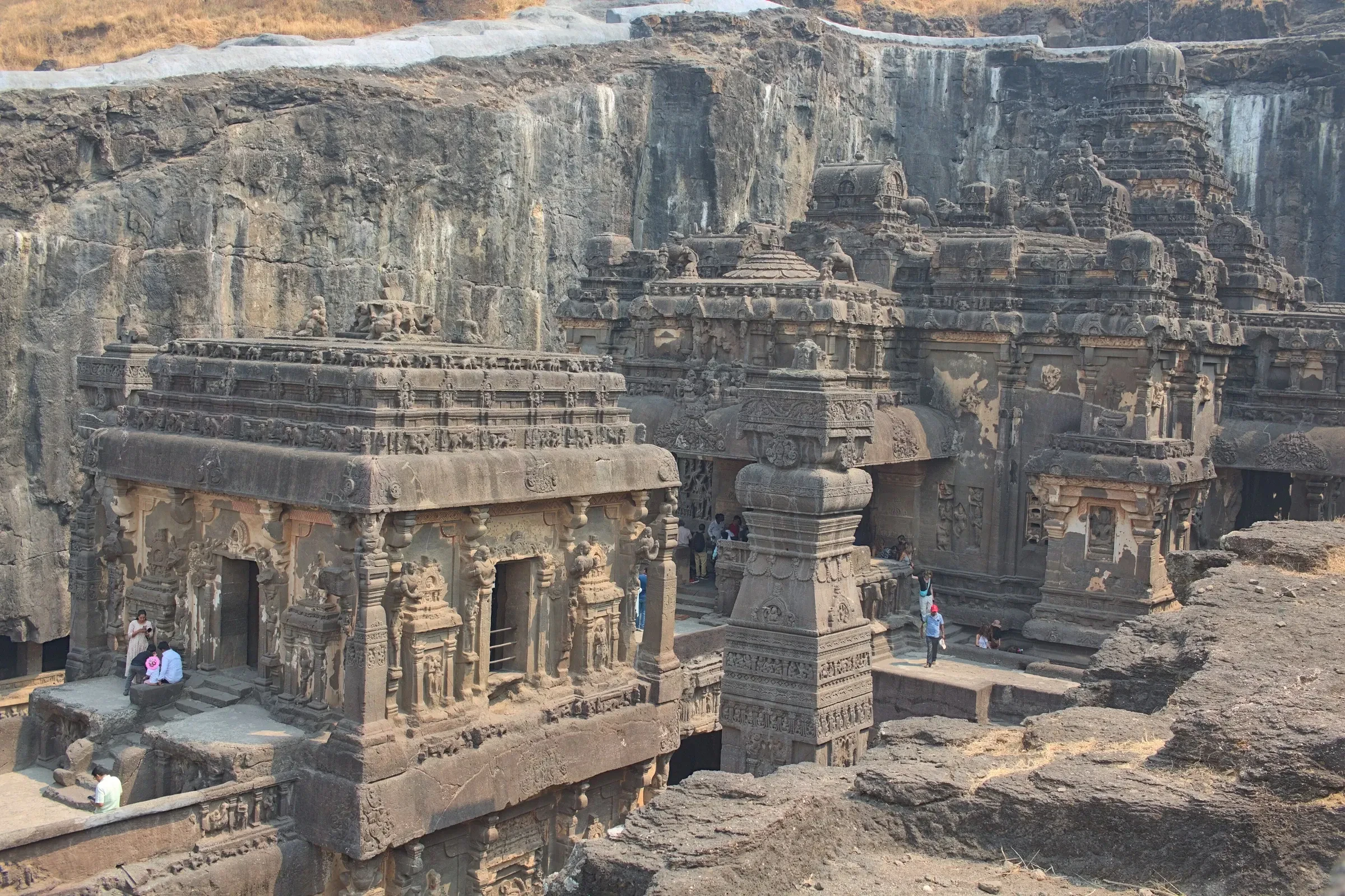
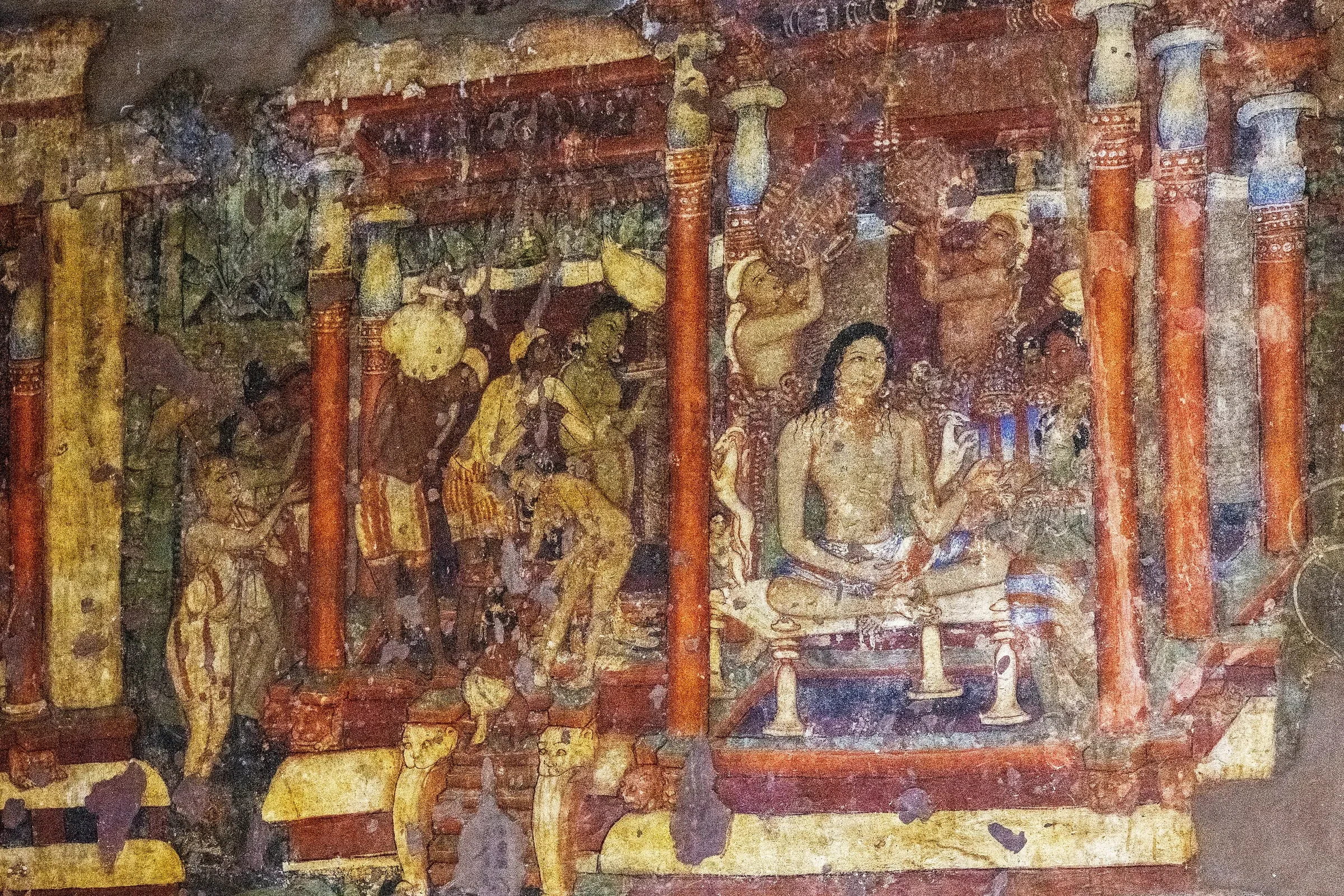
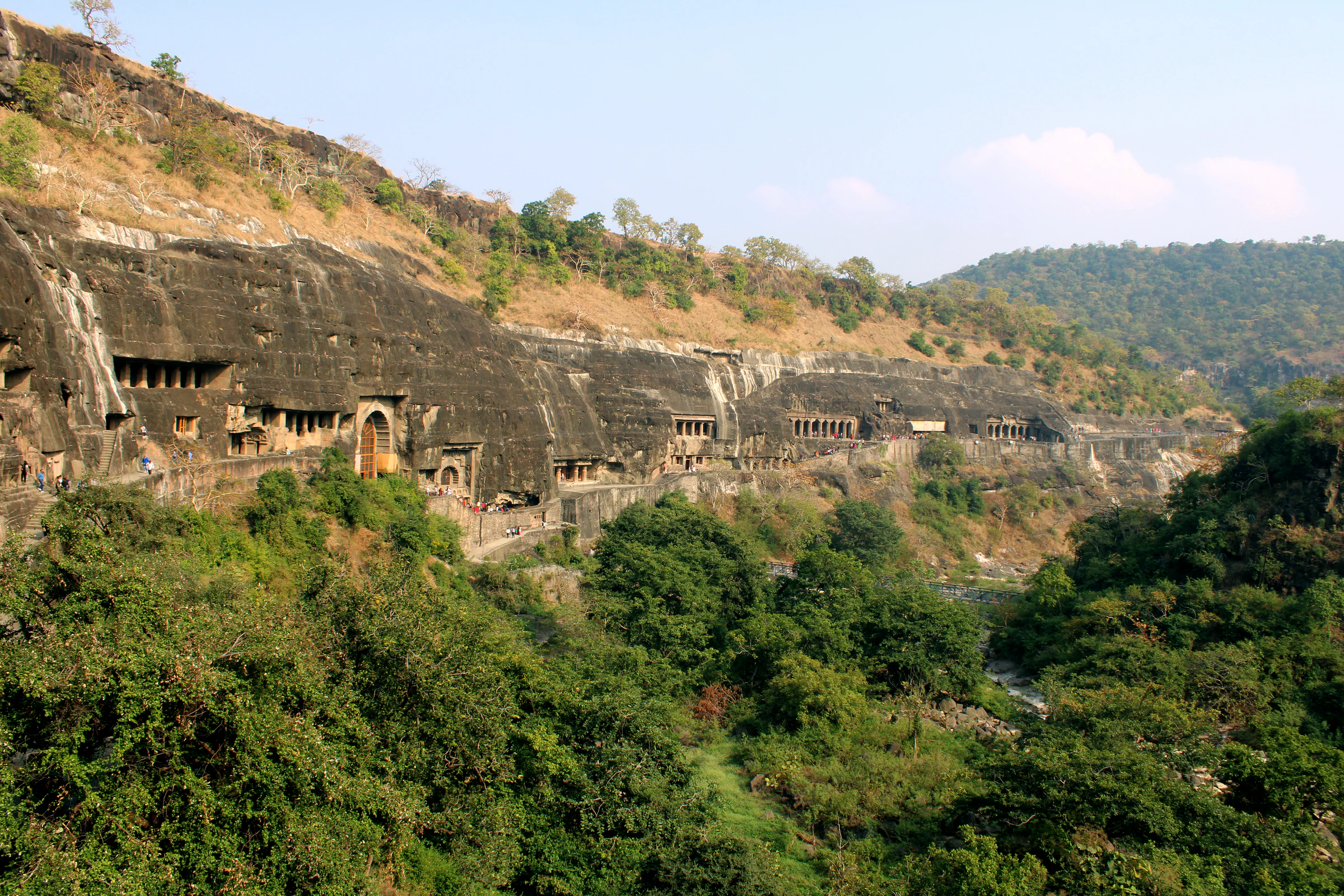
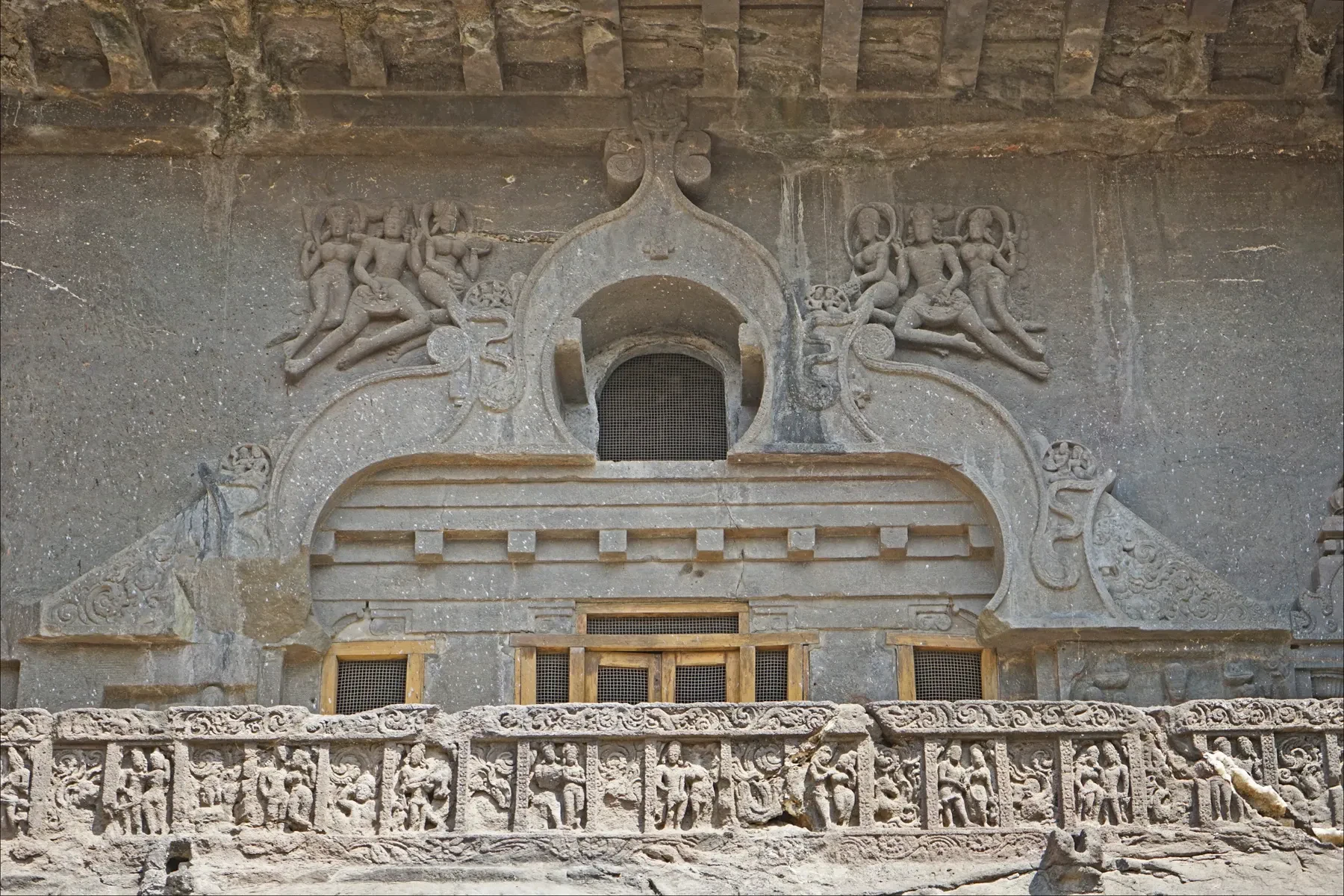
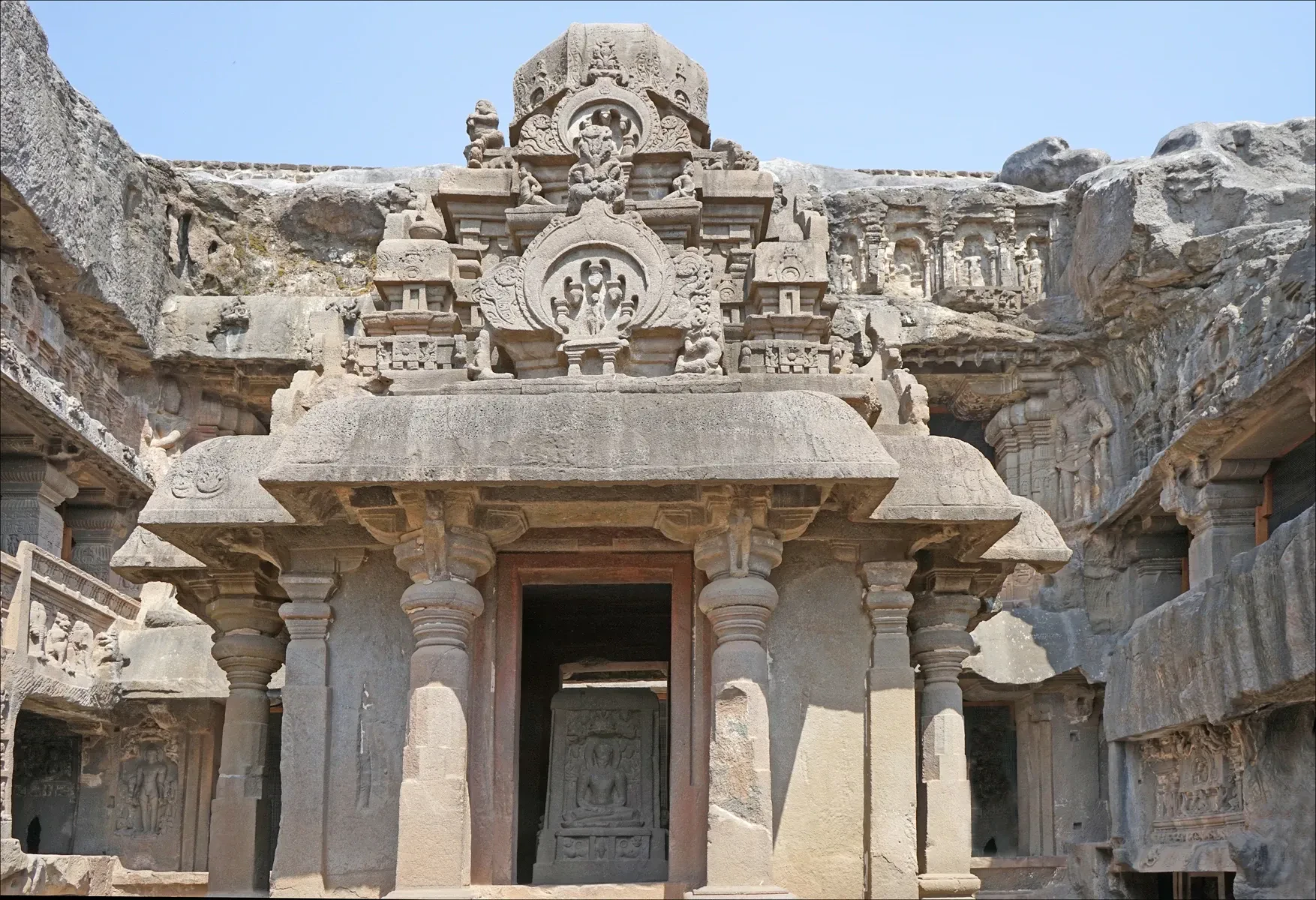
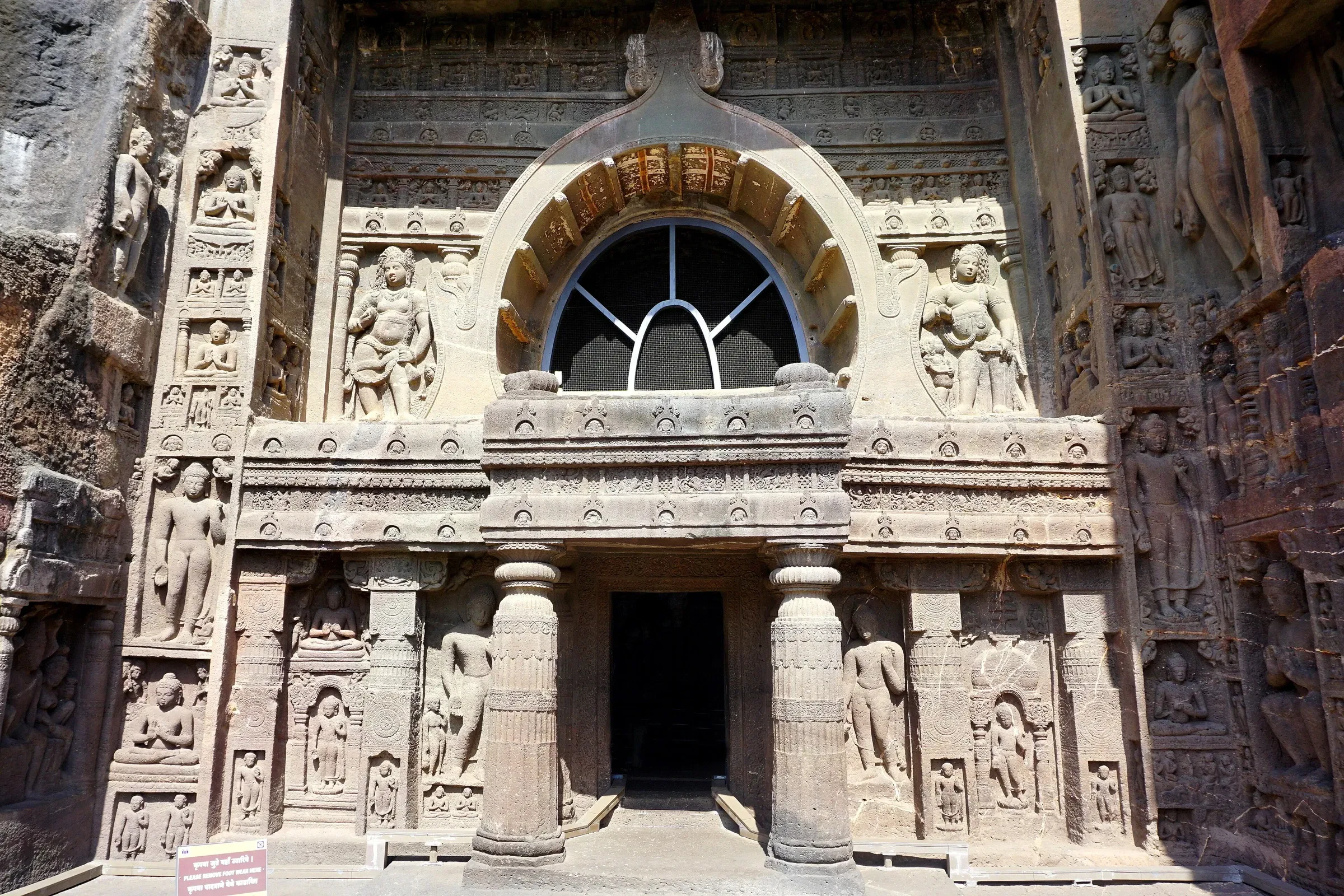
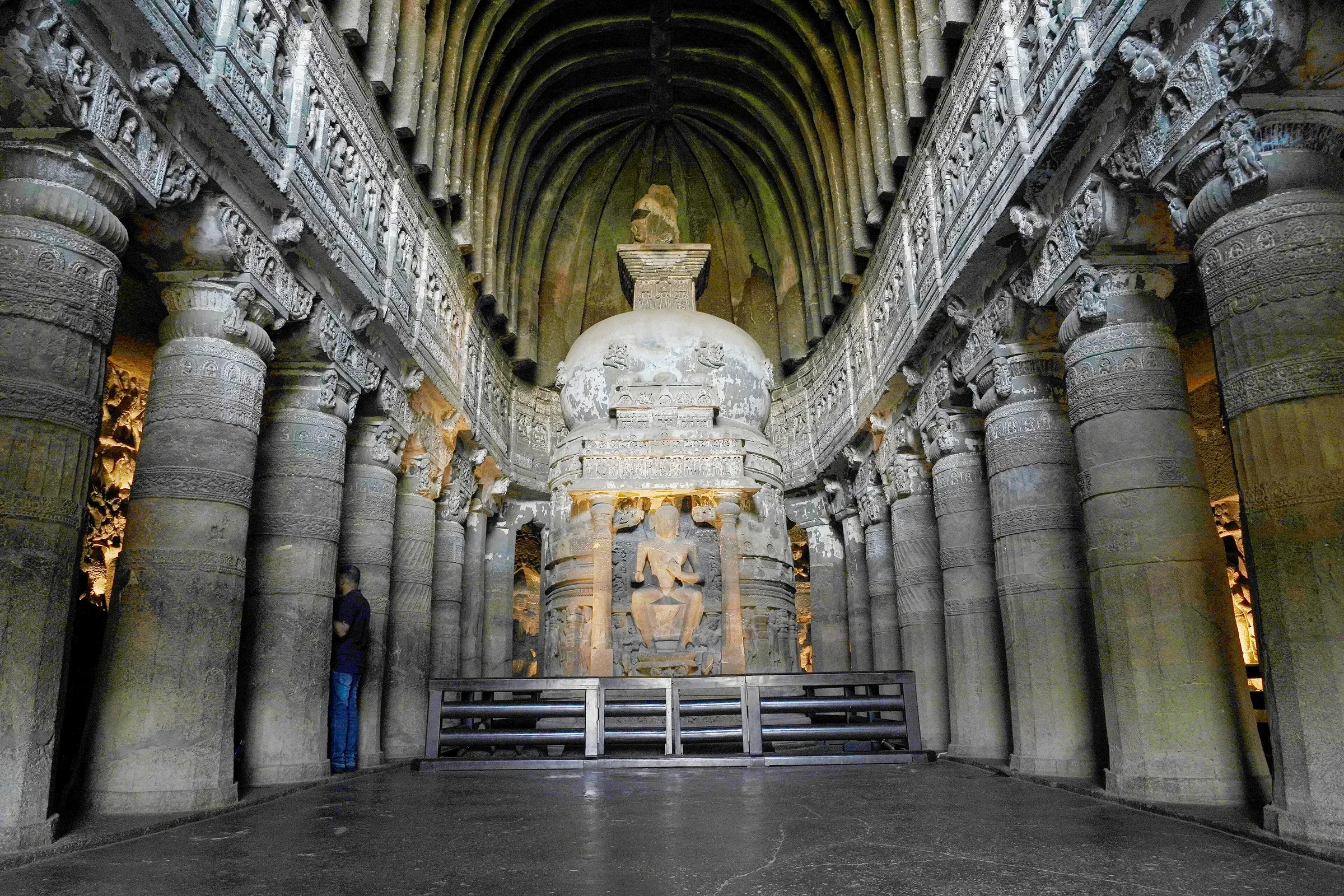
The two sites get mentioned in the same breath, but they aren't duplicates of each other. Ajanta's 30 rock-cut Buddhist caves, carved between roughly the 2nd century BCE and the 6th century CE into a horseshoe-shaped cliff above the Waghora river, are known for their painted murals: some of the best-surviving ancient Buddhist paintings anywhere, depicting Jataka tales of the Buddha's earlier lives. Ellora, about 30 km from Chhatrapati Sambhajinagar, is a different kind of site: 34 caves cut side by side by Buddhist, Hindu and Jain communities over several centuries, including Cave 16, the Kailasa Temple, a full temple carved downward out of a single rock face rather than built up from a foundation. Seeing both on one trip covers roughly 1,500 years of Deccan rock-cut architecture across three religious traditions.
Where to go within the caves
Ellora Caves: the single-rock Kailasa Temple
Give Ellora at least half a day, a full day if you want to walk the Buddhist caves (1 to 12) and the Jain caves (30 to 34) as well as the Hindu group around the Kailasa Temple. The temple itself, excavated top-down so the sculptors worked their way into the rock rather than building upward, is worth an hour on its own, plus time at the upper viewpoint to see the full facade. Ellora is open from sunrise to sunset and closes on Tuesdays.
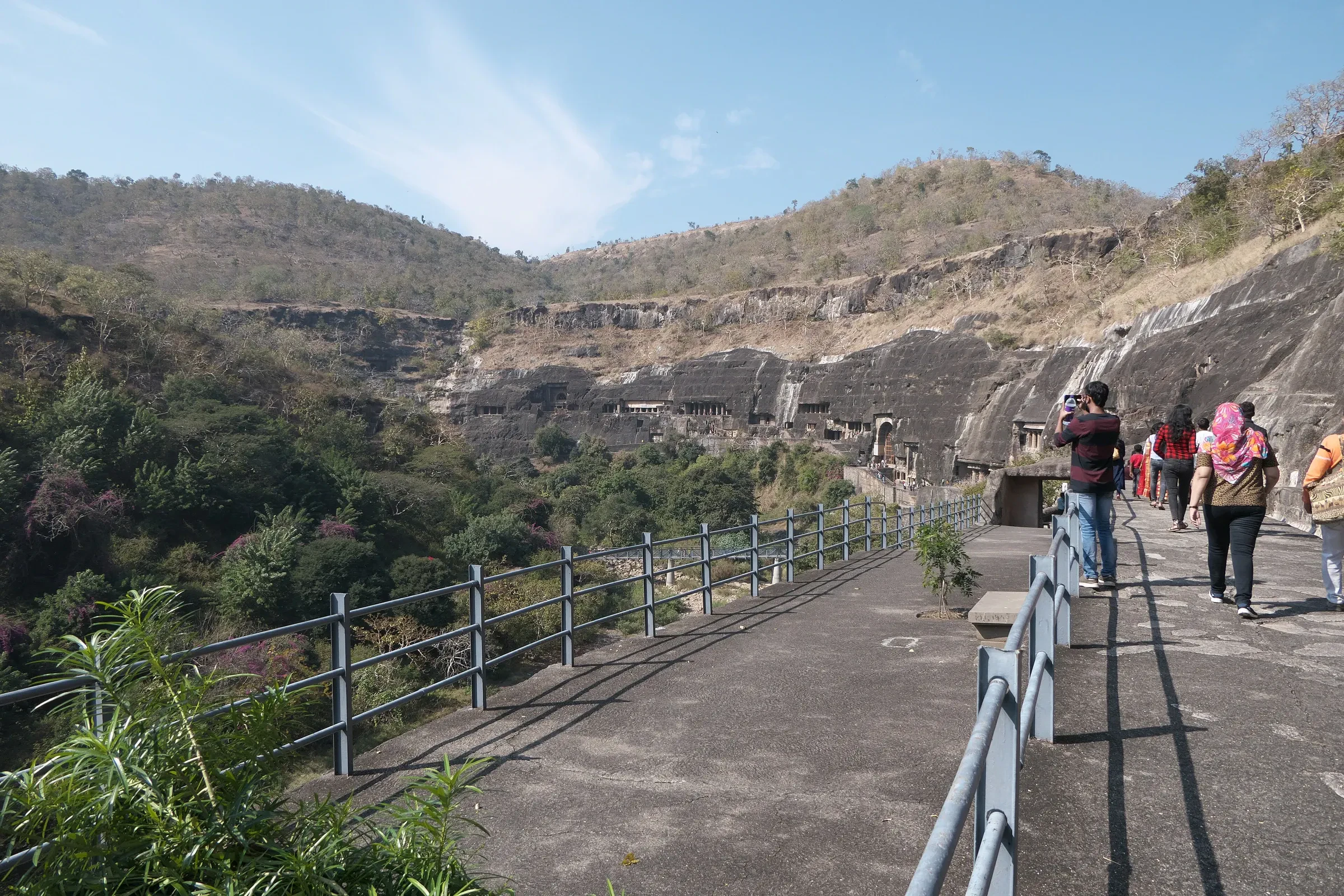
Ajanta Caves: painted Buddhist murals in a horseshoe gorge
Ajanta needs a full day once you count the drive out from Chhatrapati Sambhajinagar and the mandatory shuttle bus at the site (below). The caves are numbered 1 to 30 along the cliff face; the painted caves (1, 2, 16 and 17 in particular) hold the murals, while others are mostly sculptural. Ajanta is open 9am to 5pm and closes on Mondays.
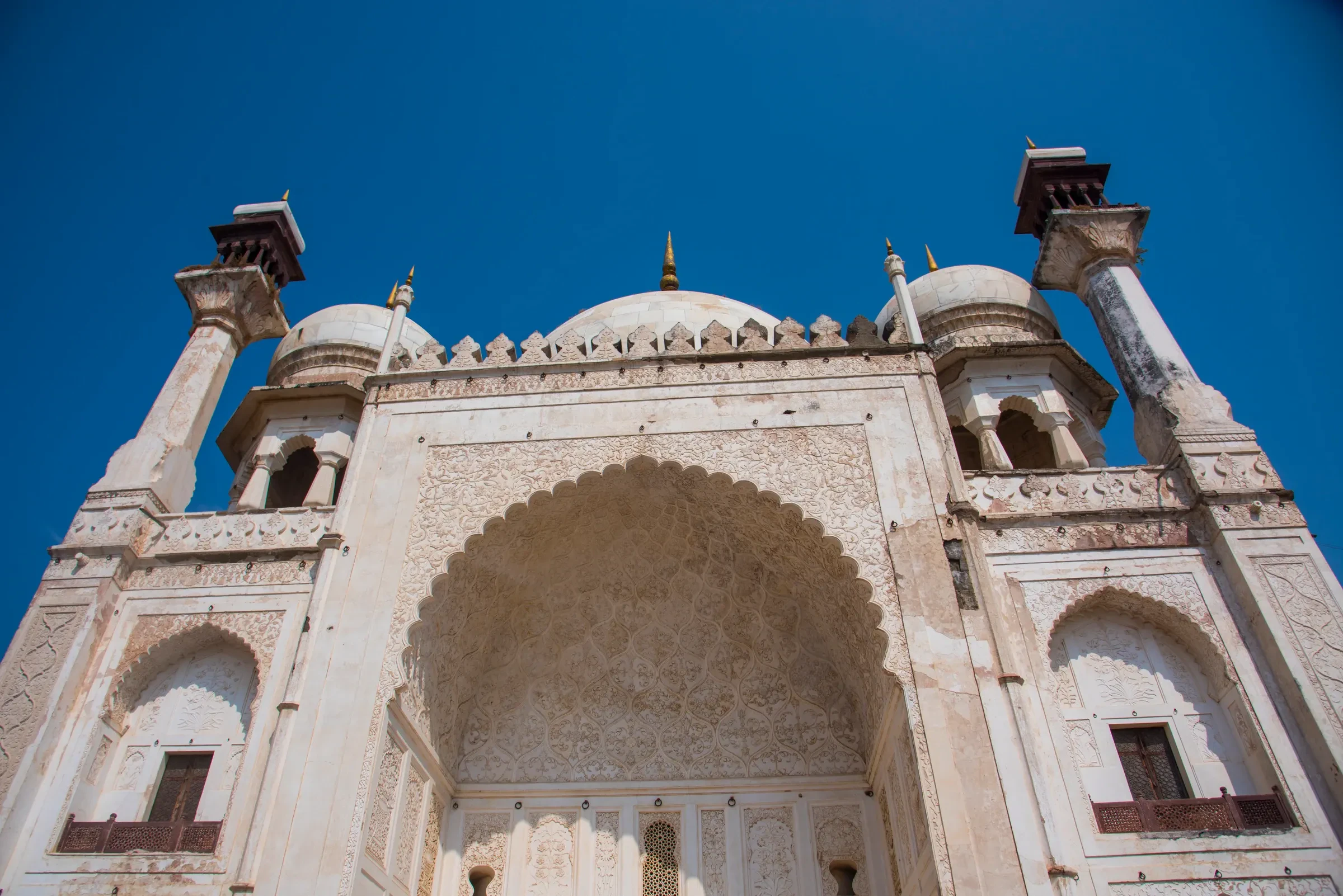
Chhatrapati Sambhajinagar itself: Bibi Ka Maqbara and Panchakki
The base city has its own half-day worth seeing: Bibi Ka Maqbara, a white marble tomb built in the 1660s and often nicknamed the "mini Taj" for its resemblance to the Taj Mahal, and Panchakki, a centuries-old water-powered flour mill with a shaded garden. Both fit neatly into an arrival or departure afternoon around the two full cave days.
Getting to Chhatrapati Sambhajinagar from Mumbai
By air: the fastest option, at about 1 hour 10 minutes. IndiGo and Air India both fly the route. Airport listings still commonly use the old name and the code IXU, so search under both names. Check current timings when you book, since schedules shift.
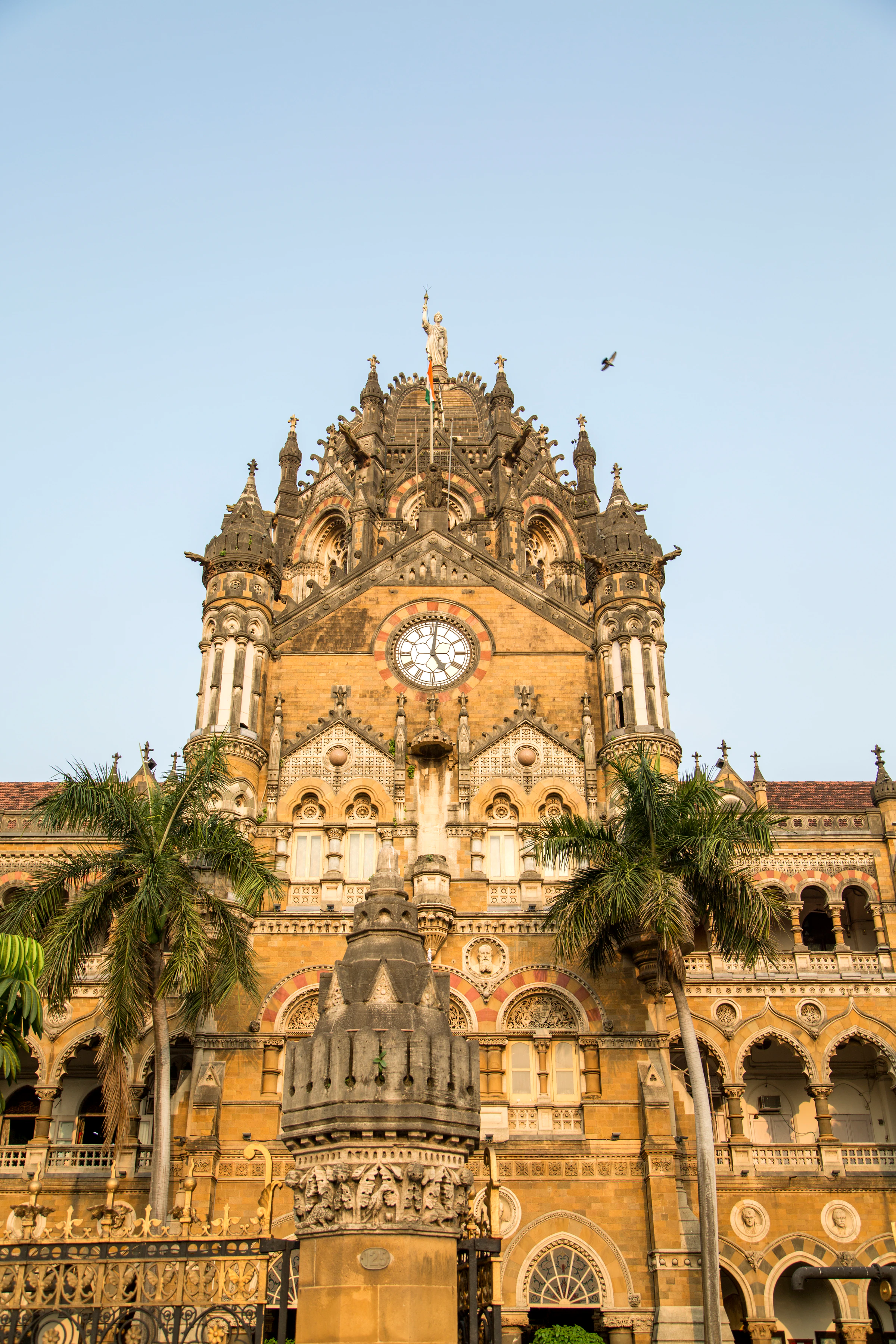
By train: several options run from Mumbai CSMT. The Vande Bharat Express is the fastest, at a little under 6 hours, but it doesn't run every day of the week, so check the exact date. The Janshatabdi Express (12071) is a daytime option: it leaves CSMT at 12:10 and reaches Chhatrapati Sambhajinagar at 18:30, and runs daily. The Devagiri Express (17057) runs overnight, leaving at 21:10 and arriving at 04:05, a reasonable way to save a hotel night if the small hours don't bother you. Timings are from railmitra.com and Wikipedia (6 October 2026), so compare them on a booking site for the day you're travelling.
A note on names: the Maharashtra government formally notified the new name, Chhatrapati Sambhajinagar, in September 2023, and the railway station followed by gazette notification in October 2025. Flights, hotels, tour operators and a lot of signage still use Aurangabad, so search and book under both names to be safe.
Getting between the caves and around town
To Ellora: about 30 km and 45 minutes by road from Chhatrapati Sambhajinagar, by taxi, hired car or MSRTC bus. It's an easy half-day round trip, with no separate shuttle system at the site itself.
To Ajanta: about 100 to 102 km and 2.5 to 3 hours by road, most straightforwardly by private car or taxi for the day. Private vehicles stop at the Fardapur T-junction visitor centre, about 4 km short of the caves; from there, a mandatory shuttle bus (state-run, green liveried, departing roughly every 15 minutes) takes you the rest of the way, a rule brought in to limit vehicle exhaust and vibration near the painted caves. Travel listings report the shuttle at around ₹25 in a non-AC bus or ₹30 in an AC bus each way, on top of the cave entry fee, and the ASI's own page doesn't give shuttle details, so confirm the fare on the day.
What it costs, and the photography rules
The ASI's pages for the two sites (read 6 October 2026) list the same fees: ₹600 for foreign visitors at the counter or ₹550 online, ₹40 (₹35 online) for Indian, SAARC and BIMSTEC nationals, and free entry for children under 15.
Inside Ajanta's painted caves, flash photography and tripods are both banned, protecting pigments that are already faded after 1,500-plus years from further light damage. The interiors are kept deliberately dim and lit with small LED lamps, so bring a camera (or a phone) that copes reasonably in low light. Ellora's caves, being mostly sculptural and partly open to daylight, are more forgiving for photography, though the same courtesy around flash near painted or fragile surfaces applies at Ellora's Buddhist caves too.
Best time to visit Ajanta and Ellora
November to February is the easiest stretch: cool enough for a full day of walking around stone caves that offer little natural shade. October and March work as a shoulder season. Avoid April to June if you can, when the heat makes a full day at either site genuinely hard going, especially with the stone floors and cliff faces radiating heat back at you.
The caves stay open through the monsoon (roughly July to September), and it's a different visit altogether: the hills around Ellora turn green and nearby waterfalls start running, a scene few visitors plan for. The trade-off is that heavy rain can affect the approach roads and leave stone steps and walkways slippery, so build in flexibility and check the forecast before you commit to a day trip.
How long to spend, and which route to build it into
The realistic minimum is 2 full days at the caves, one for each site, since Ajanta and Ellora close on different days of the week and sit too far apart to comfortably cover both properly in a single rushed visit. Add a travel day from Mumbai each way and you have a 4 to 5 day add-on, which works well as an extension to a short Mumbai stopover: see the Mumbai guide for the city itself before or after the caves.
Our India itinerary overview suggests Mumbai as a base for a side trip to the caves, and where to go in India puts Ajanta and Ellora in the west of the country. For the full country picture, start at the India travel guide.
Our India North to South group trip passes through Mumbai but doesn't build in the Ajanta-Ellora detour, so if you want to add the caves, plan the extra days independently before or after the group departure. For wider planning, see what an India trip costs, the best time to visit India month by month, and the India e-visa guide before you book flights.