Agra was a Mughal capital before it was a tourist stop: Akbar, Jahangir and Shah Jahan all ruled from here, and the Taj Mahal, Agra Fort and Fatehpur Sikri were all built within about a century of each other. That history is why the city rewards more than a rushed selfie stop, even though most visitors only ever budget half a day for it.
Where to go in Agra
The Taj Mahal
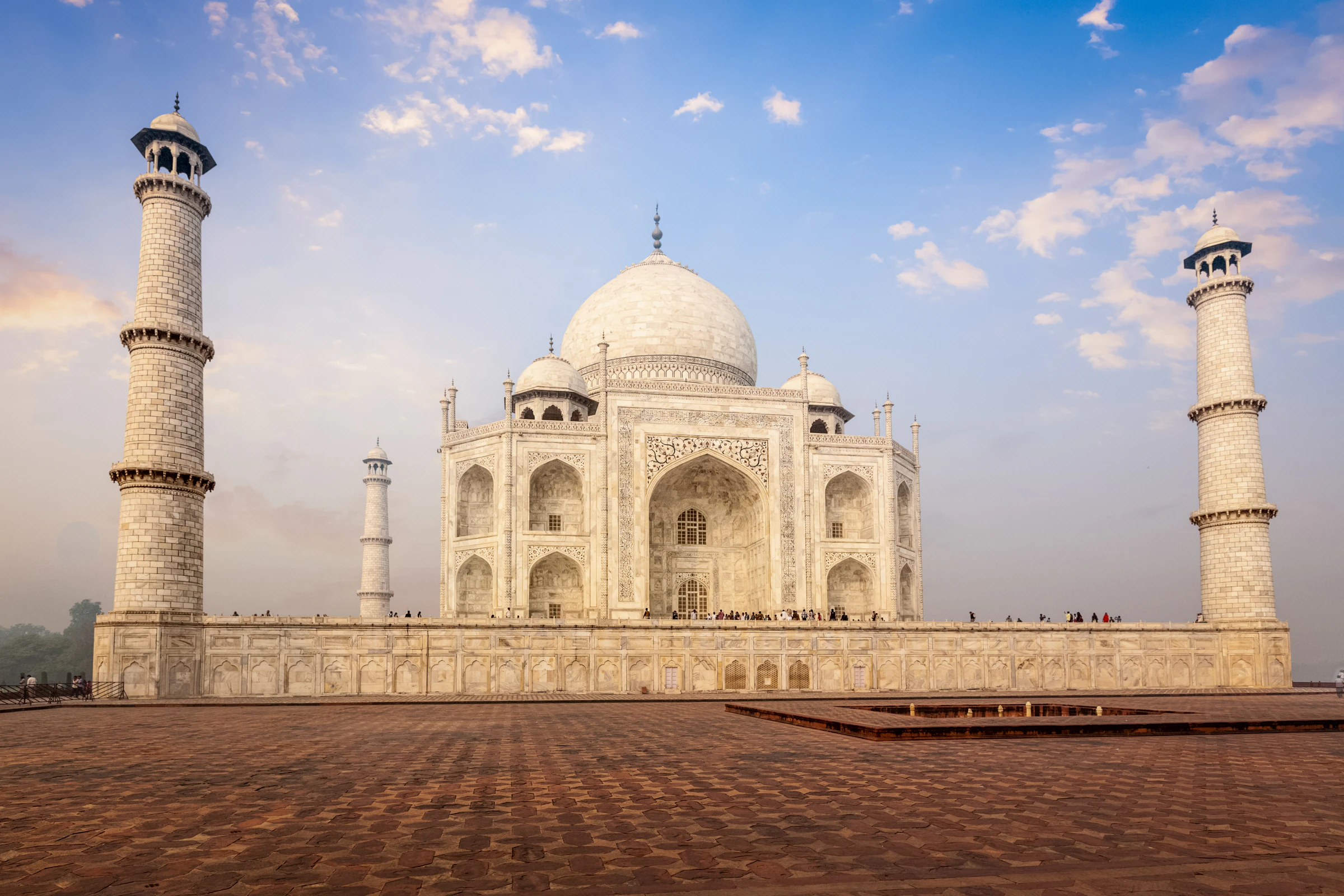
Shah Jahan built the Taj Mahal as a mausoleum for his wife Mumtaz Mahal, finishing the main structure around 1653. It's the reason most people come to Agra, and it earns the reputation: the white marble changes colour through the day, from pink-tinged at sunrise to almost silver by late morning. Gates open 30 minutes before sunrise and close 30 minutes before sunset, so the exact times move with the season. Ticket counters open an hour before sunrise and close 45 minutes before sunset. The ASI ticket page (checked 6 October 2026) lists ₹1,100 for foreign visitors, plus ₹200 more to go inside the mausoleum itself; children under 15 go free. The one closure to plan around: the Taj shuts to visitors every Friday.
Security is strict and worth knowing before you queue: no food, tobacco, tripods, drones, headphones, power banks or electrical items beyond your camera, and no photography once you're inside the mausoleum itself. Keep bags small.
Give it 2 to 3 hours, more if you're there for sunrise and want to linger.
Agra Fort
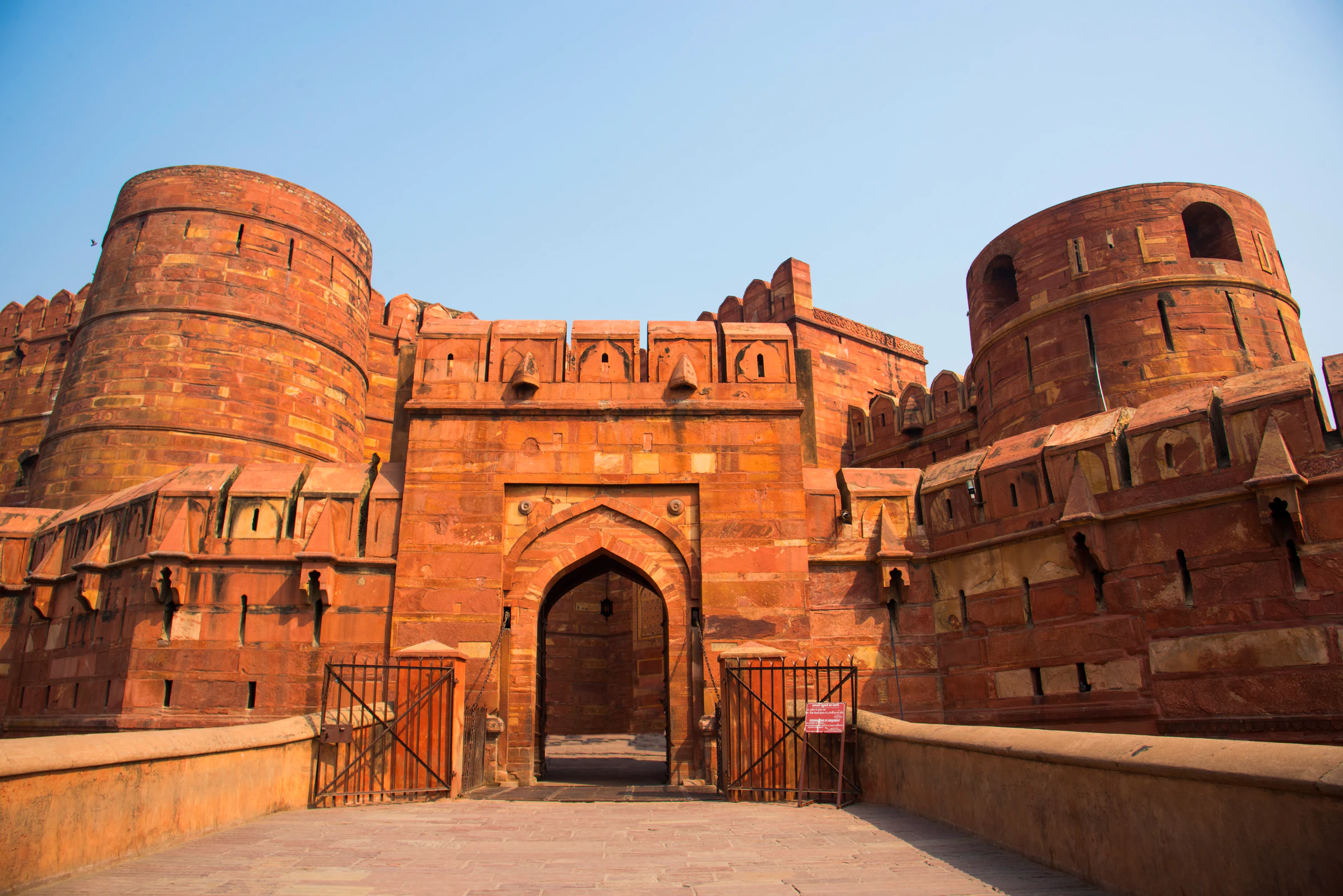
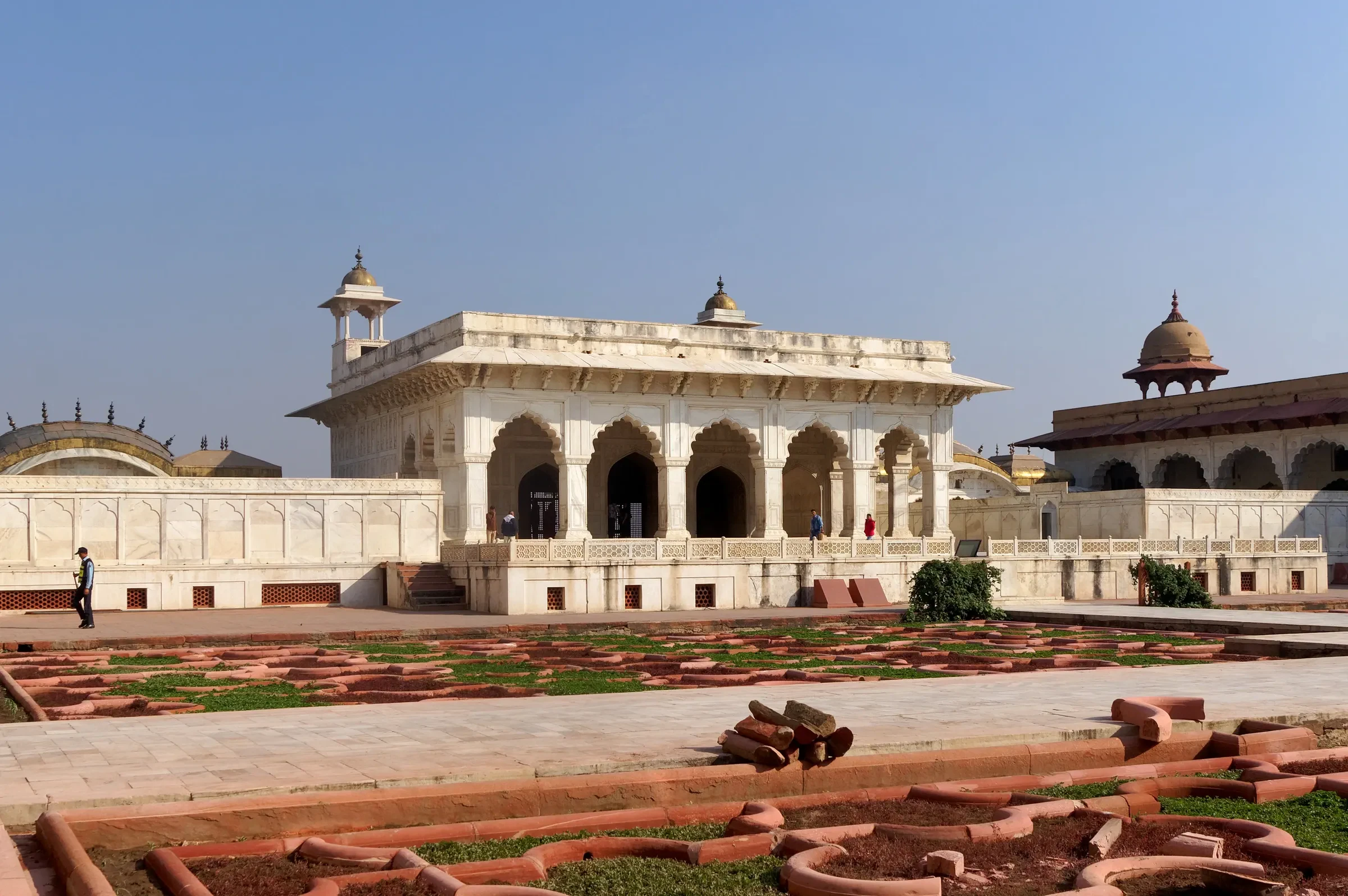
A 10 to 15 minute drive from the Taj, this red sandstone fortress on the Yamuna was the Mughal seat of power before Shah Jahan's own son, Aurangzeb, imprisoned him here with a view of the monument he'd built. Large sections are still an active military area and closed off, but the palace courtyards that are open are worth 1.5 to 2 hours. The ASI ticket page lists foreign entry at ₹650 (₹600 on Fridays, when it's one of the few major sights still open).
Mehtab Bagh
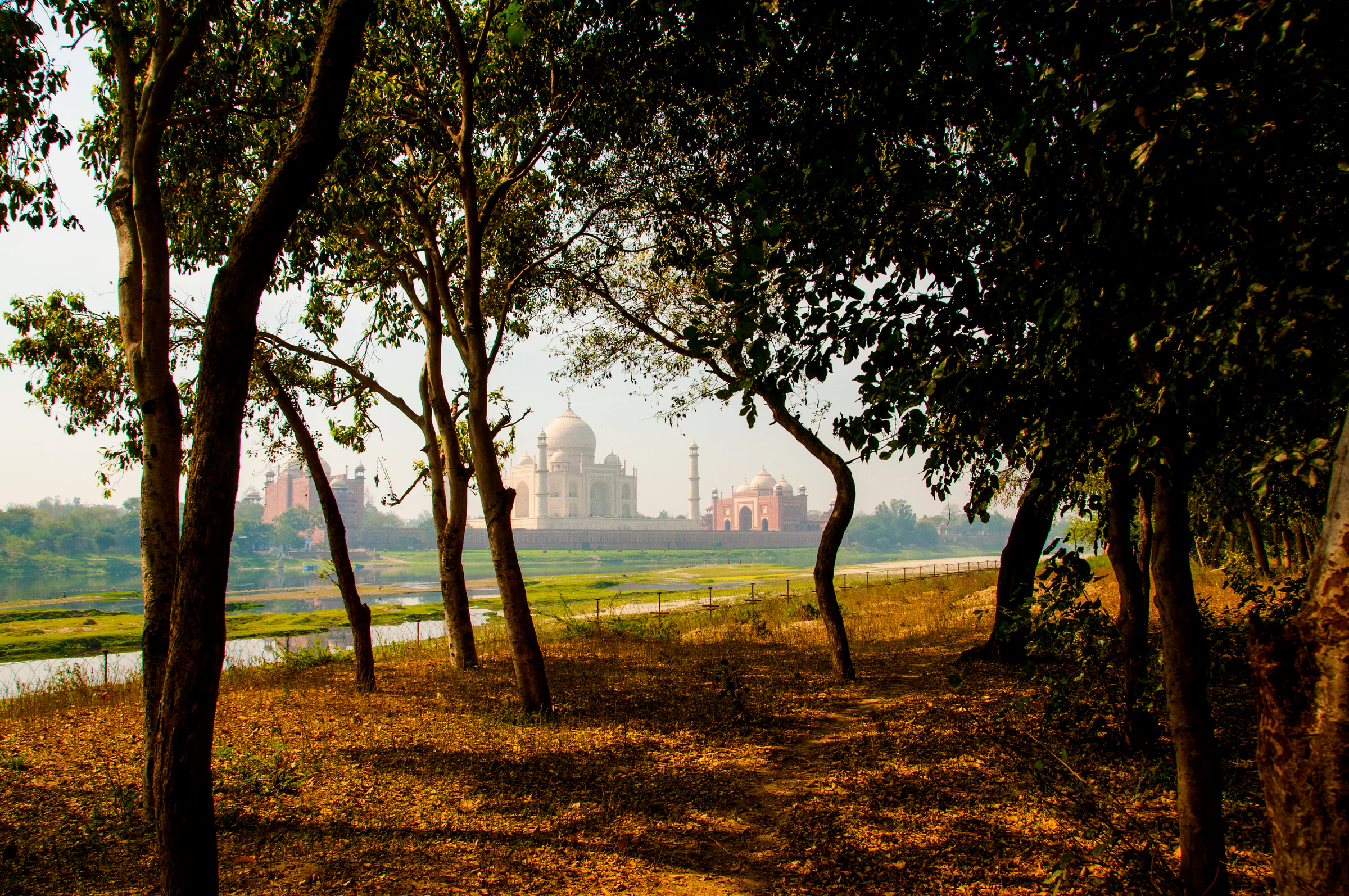
A garden directly across the river from the Taj, built as a viewing point in Mughal times and now the best spot for a photo of the whole monument with the river in front of it, particularly at sunset. It's open from sunrise to sunset every day, and foreign entry is ₹300 (ASI ticket page, 6 October 2026). The Agra district website also lists a separate ₹500 Agra Development Authority toll for foreign visitors, not charged on Fridays; the ASI page doesn't mention it, so confirm the total at the counter. It's a natural add-on to an Agra Fort afternoon, a short auto-rickshaw ride from either.
Itimad-ud-Daulah ("the Baby Taj")
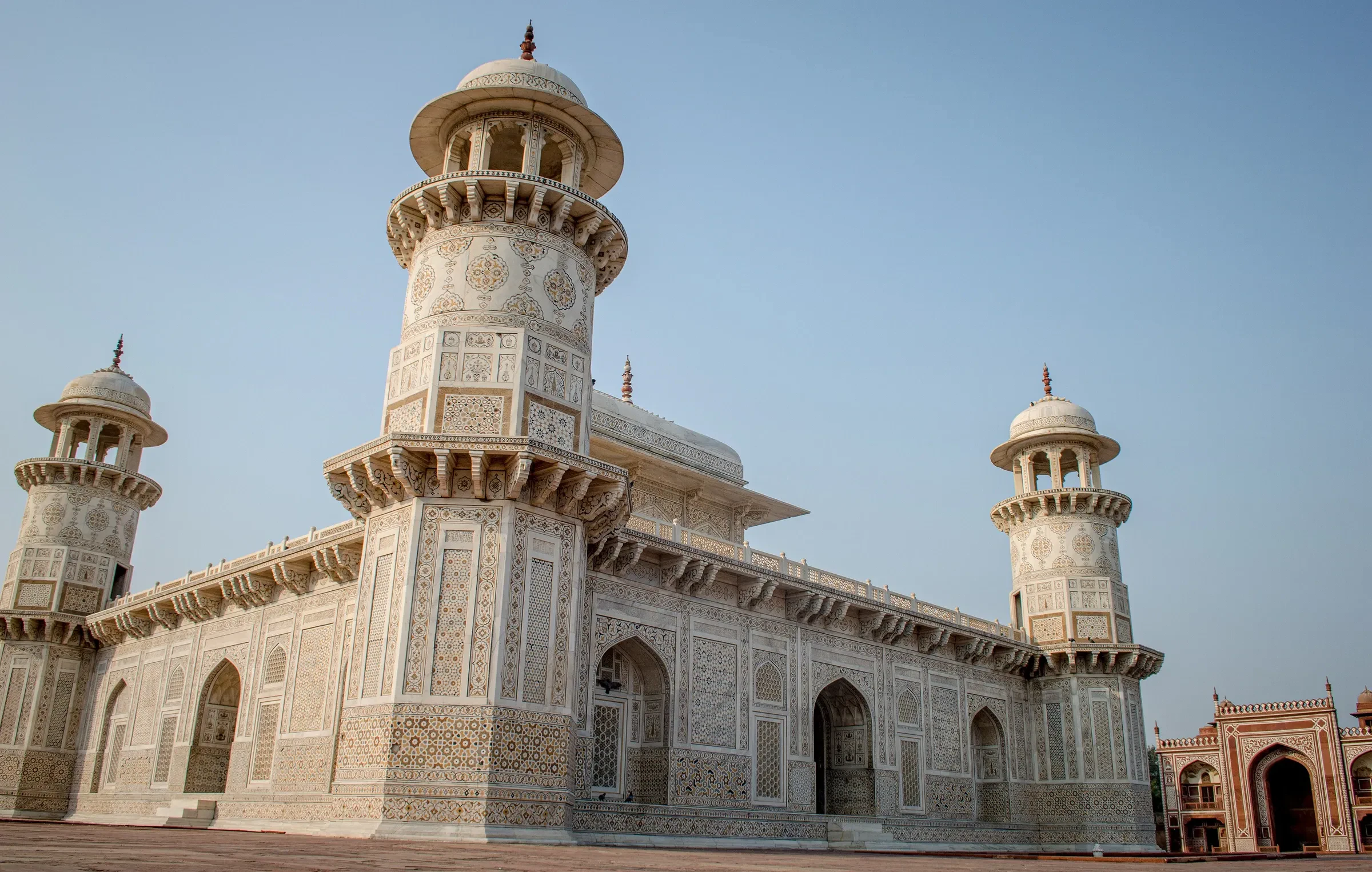
A smaller marble tomb on the same riverbank, built about a decade before the Taj Mahal and often credited as its architectural rehearsal: the first Mughal structure in India built entirely from white marble with inlay work rather than red sandstone. It's quieter, cheaper (₹310 for foreign visitors per the ASI ticket page) and worth an hour if you have a second day.
Fatehpur Sikri
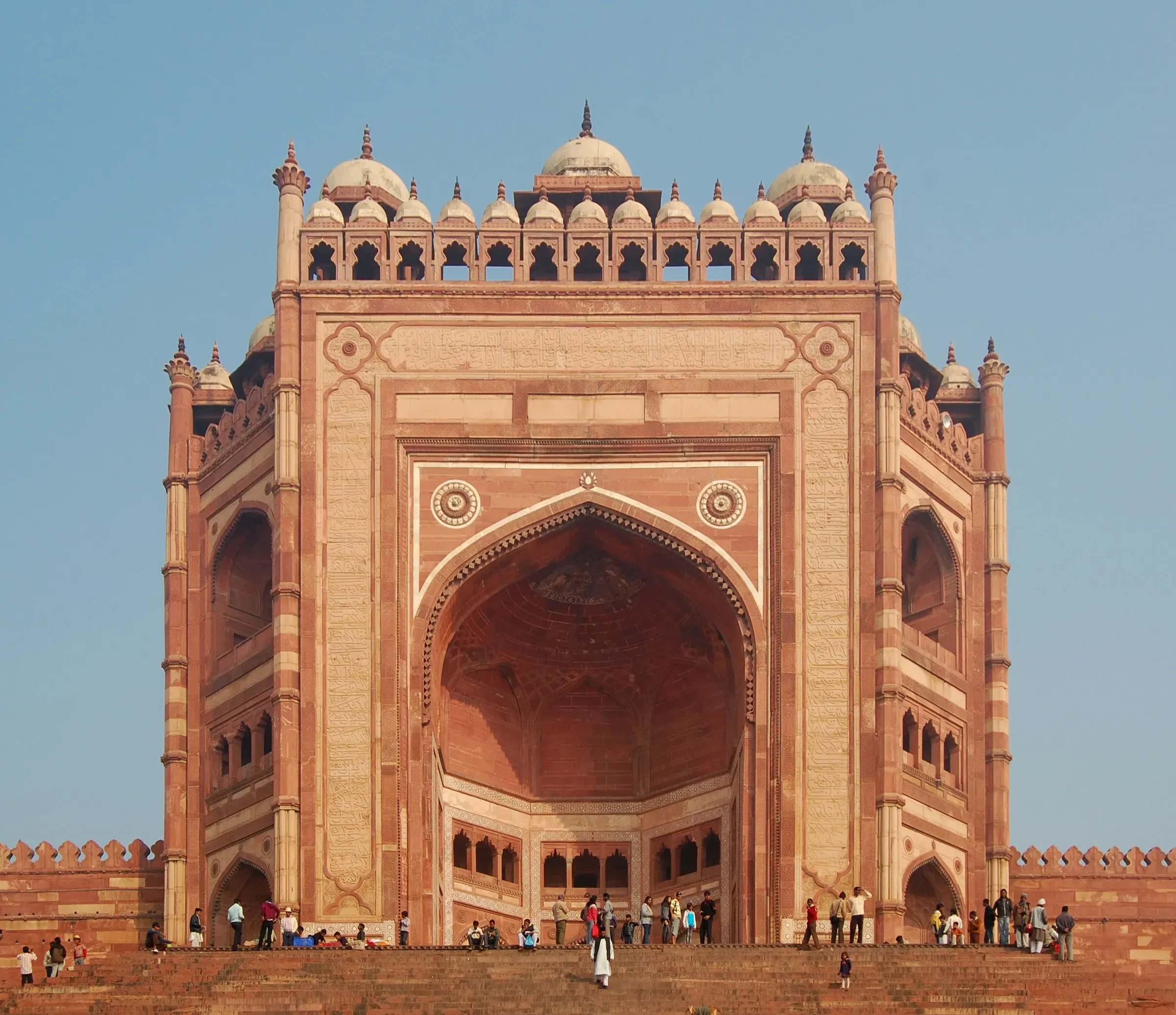
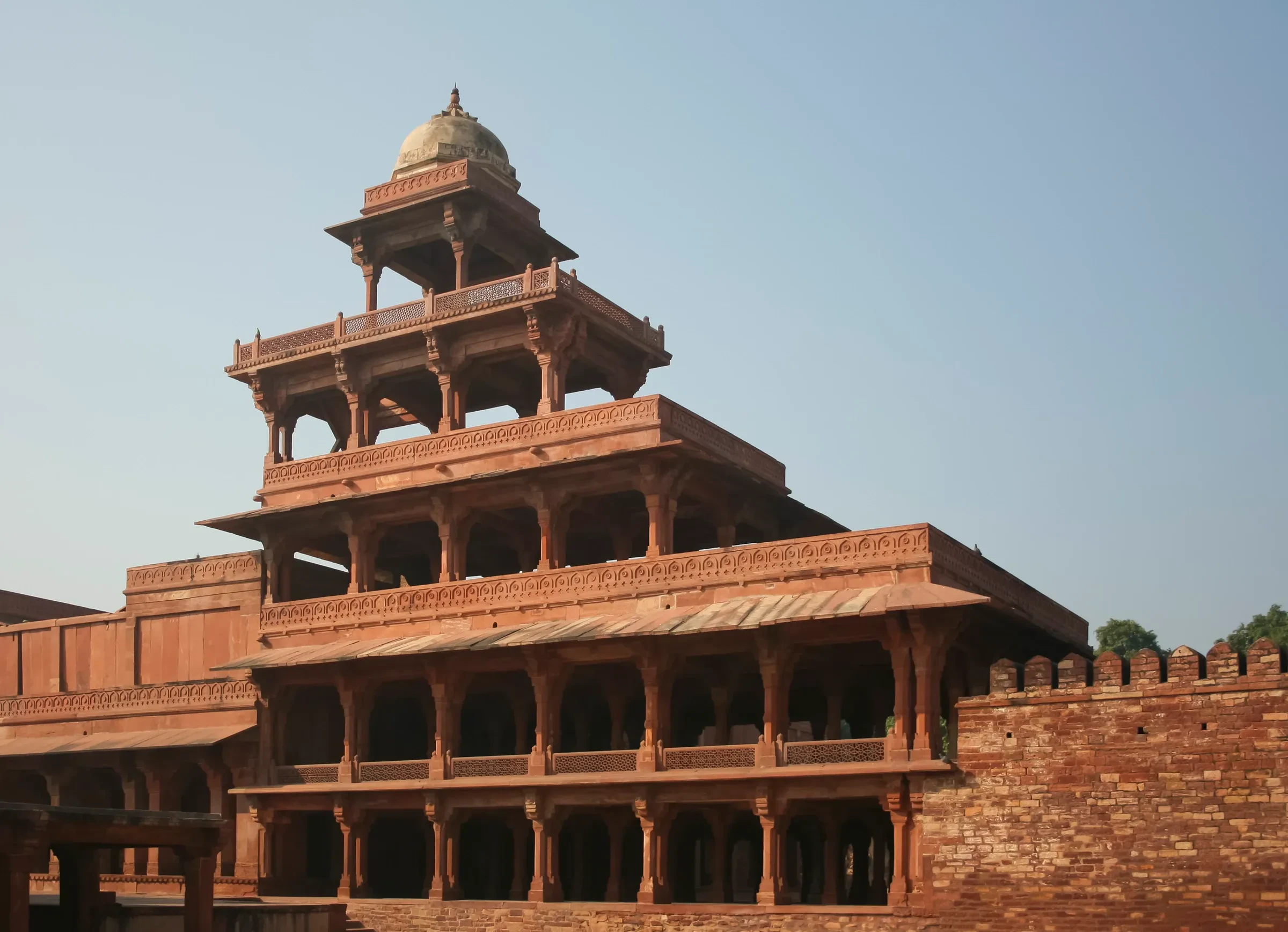
Akbar's abandoned capital, about 40 km (an hour by road) west of Agra: a whole Mughal city built in red sandstone in the 1570s and deserted within 15 years, reportedly over water shortages. The Jama Masjid and the towering Buland Darwaza gate are free to enter and run separately from the ASI-ticketed palace complex, which costs foreign visitors ₹610 (₹600 on Fridays). Budget half a day including the drive, and expect persistent touts around the free entrance.
More things to do in Agra
Beyond the monuments, Agra is known for marble inlay work, the same pietra dura technique used on the Taj itself, still practised by artisan families in workshops around Taj Ganj; a demonstration and a browse is a common add-on, though prices vary enough by workshop that it pays to compare a couple before buying anything.
!A carved marble panel with an inlaid floral border at the Taj Mahal A cycle rickshaw through the lanes near Kinari Bazaar is a slower, cheaper way to see the old city than a car, and an evening food crawl around Sadar Bazaar covers most of what's below.
What to eat
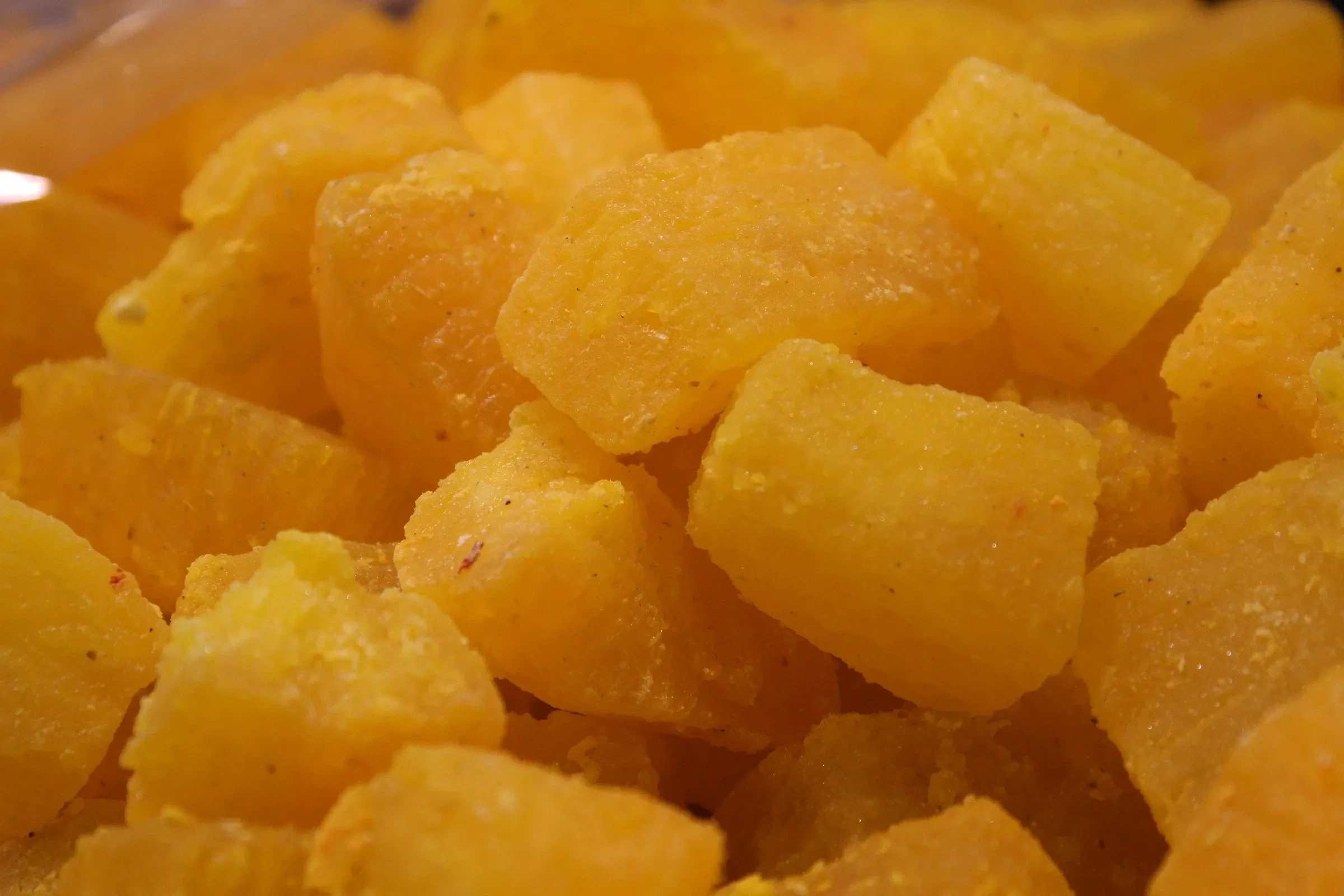
Agra's signature sweet is petha, a translucent, syrup-soaked candy made from ash gourd, sold in dozens of flavours from shops all over the old city. Pair it with Mughlai-style kebabs, a legacy of the same court cuisine that built the monuments. Neither needs a specific restaurant recommendation: both are sold widely and reliably across Agra.
Best time to visit
October to March is the comfortable window, the same logic as the rest of North India's plains: clear skies, daytime temperatures that make sightseeing bearable, and cool enough evenings for Mehtab Bagh's sunset view. April onward gets progressively hotter, and May and June are genuinely rough, with the Taj's marble courtyard offering no shade in 40°C-plus heat. Monsoon (July to September) is humid and quieter, with occasional heavy downpours, but it isn't the road-closure risk it is in the mountains. If you're travelling by train in mid-December or January, build in a buffer: winter fog across the Indo-Gangetic plain regularly delays early morning services by an hour or more.
Getting there and around
From Delhi
The Gatimaan Express runs Hazrat Nizamuddin to Agra Cantonment in 1 hour 40 minutes (08:10 to 09:50), and the return leaves Agra Cantonment at 17:35 and reaches Delhi at 19:30; it doesn't run on Fridays. For an earlier arrival, the daily Shatabdi from New Delhi towards Rani Kamalapati (Bhopal) reaches Agra Cantonment at 07:50 (departs 06:00, meals included), and the Vande Bharat from Nizamuddin to Khajuraho reaches it around 07:40 (departs 06:00, not on Mondays). Neither lands you at the gates for true sunrise opening. Timetables are from railmitra.com and confirmtkt.com listings (6 October 2026), so check IRCTC before you book. Regular IRCTC bookings open 60 days ahead and this route sells out fast in December and January. Foreign visitors can also use the Foreign Tourist Quota, which opens up to 365 days ahead for the 1A, 2A and EC classes only.
From Jaipur
About 240 km, either 4.5 to 5 hours by road (worth breaking at Fatehpur Sikri en route) or by one of the daily intercity trains, which take about 4 to 5 hours. Jaipur itself, the Pink City, is worth 2 to 3 days; see our Jaipur guide for its own forts and bazaars.
Getting around
Central Agra is compact enough to cover by auto-rickshaw or e-rickshaw; agree the fare before you get in. A 500-metre no-pollution zone around the Taj means the last stretch to the gates is on foot, by cycle rickshaw or by battery bus regardless of how you arrive. Most trains from Delhi use Agra Cantonment station; some overnight services from Varanasi use Agra Fort station instead, a short ride from Taj Ganj.
How long to spend, and which route guide to use
One full day is enough for the Taj Mahal and Agra Fort if you're not chasing sunrise light. Two days is more comfortable, and lets you add Fatehpur Sikri, the Baby Taj and an unhurried sunset at Mehtab Bagh without treating any of them as an afterthought. Agra is rarely a trip on its own: most people visit as the middle leg of the Golden Triangle itinerary with Delhi and Jaipur, or folded into a longer India itinerary that runs a week to a month, or the Rajasthan itinerary if you're continuing west from Jaipur. See our full India travel guide for how Agra fits into a bigger trip.
Before you go, check India's e-visa rules and our India packing list; our best time to visit India guide covers the rest of the country beyond Agra's own October-to-March window.