
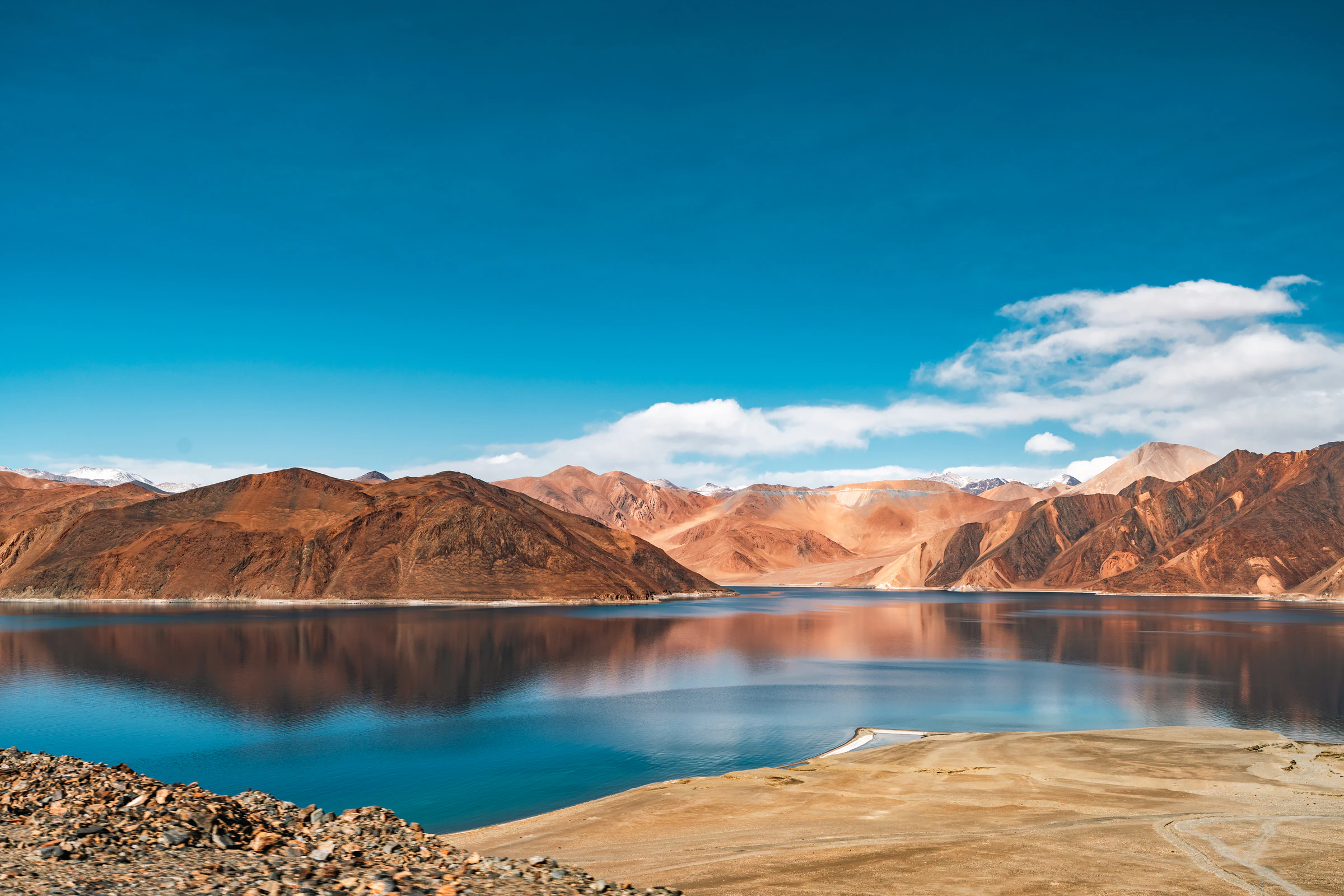
Ladakh is the Himalaya at its driest: bare brown mountains, white monasteries on the hilltops, green villages along the rivers and lakes that change colour through the day. Leh, the main town, sits at about 3,500 m, and the roads out of it cross passes above 5,000 m. It's one of the most rewarding trips in India, but you have to plan it around the altitude as well as the season.
This guide covers getting to Leh, how long to stay, the sights and what they cost, permits, altitude, the best months, hostels and money. For a day-by-day route, see our Ladakh itinerary.
Where is Ladakh?
Ladakh is in the far north of India, between the Karakoram range and the main Himalaya, with Pakistan-administered territory to the west and China to the east. People often search for "Jammu Kashmir Leh Ladakh" because the region was part of the state of Jammu and Kashmir until 2019. Today Ladakh and Jammu and Kashmir are two separate Union Territories. That matters for travel advice (see safety below).
Nearly all travellers to the Ladakh region base themselves in Leh. Most of what's in this guide sits within about 250 km of Leh town: the Nubra Valley to the north, Pangong Tso to the east, Tso Moriri to the south-east and the Sham Valley monasteries to the west along the Indus.
How to get to Leh Ladakh
Flying from Delhi
Leh's Kushok Bakula Rimpochee Airport (IXL) has direct flights from Delhi on Air India, IndiGo and SpiceJet, with about 91 a week in August 2026. The flight takes about 1 hour 25 minutes. In September 2026 the cheapest one-way fares we found started at about ₹5,000 when booked ahead, and they rise sharply in July and August and at short notice.
Flying is the quickest way in, and it takes you from near sea level to 3,500 m in under two hours. The Leh district administration advises at least 48 hours of rest after you land before going any higher, drinking 2 to 3 litres of water a day and no alcohol or smoking for the first days. Since 2022 a two-day stay in Leh has been required before crossing Khardung La.
Flights keep running through winter, and then they are the only way in, because the Manali and Srinagar roads close for much of the season. Winter timetables differ from summer ones and most flights leave Delhi before noon, so check the airlines' current schedules. Weather can delay or cancel flights into Leh, so leave a spare day before any onward connection.
The Manali to Leh road
The Manali to Leh highway is about 431 km over high passes including Baralacha La and Tanglang La. In 2026 the Border Roads Organisation cleared it in mid-May and it opened to tourist traffic on 1 June. It usually closes in late October or November with the first heavy snow (it closed on 20 November in 2025), and an early snowfall at Baralacha La can shut it for days before that. Check the road's status with your operator or the BRO before you set off. Take at least two days, with a night at Keylong or Jispa. HRTC runs a public bus in season, and the fare was about ₹833 one way in 2026.
The road is long and rough, and the passes are higher than Leh, so it doesn't let you skip the rest days once you arrive. It's a good way in if you're coming from Spiti Valley or the rest of Himachal Pradesh anyway.
The Srinagar to Leh road
The other road runs from Srinagar over the Zoji La and through Kargil. The UK Foreign Office (FCDO) advises against all travel to the Union Territory of Jammu and Kashmir, including Srinagar and Sonamarg, except flying into and within Jammu city. Ladakh is not covered by that warning, but the Srinagar road runs through areas that are. If your travel insurance follows FCDO advice, fly into Leh or use the Manali road.
How long to spend and which route to follow
A week is the minimum for Ladakh: two days resting in Leh, then Nubra and Pangong. Ten days adds Tso Moriri or the Sham Valley monasteries west of Leh. Our Ladakh itinerary sets out both routes day by day, with costs, permits and where to eat built in.
Longer trips here usually mean pairing Ladakh with somewhere else, rather than spending two or three weeks in one set of valleys. If you're coming in over the Manali road, the natural add-on is Spiti Valley or the rest of Himachal Pradesh, since the road runs through both on its way north; see Ladakh vs Spiti if you can't decide which to do first. A month is enough time for Ladakh plus one of those, or for Ladakh with a multi-day trek added on (see below).
Keep the Protected Area Permit in mind whichever length you plan: it's valid for up to 7 days, so if your trips to Nubra, Pangong and Tso Moriri add up to more than that, ask your agent how to split them.
Where to stay: Leh and the valleys
Leh is your base for the whole trip. The Main Bazaar area is handy for agents, cafes and taxis, while Changspa, the road that climbs towards the Shanti Stupa, is quieter and full of guesthouses.
In the Nubra Valley, Diskit is the main village and has the monastery. Hunder, a few kilometres on, has the dunes and camps, and Turtuk is further along the Shyok River towards the border. At Pangong Tso, foreigners can stay at Spangmik, on the north shore, and go on to Man and Merak; there are camps and homestays along the shore. At Tso Moriri, Korzok village has homestays and a monastery.
Things to do in Ladakh
Leh town
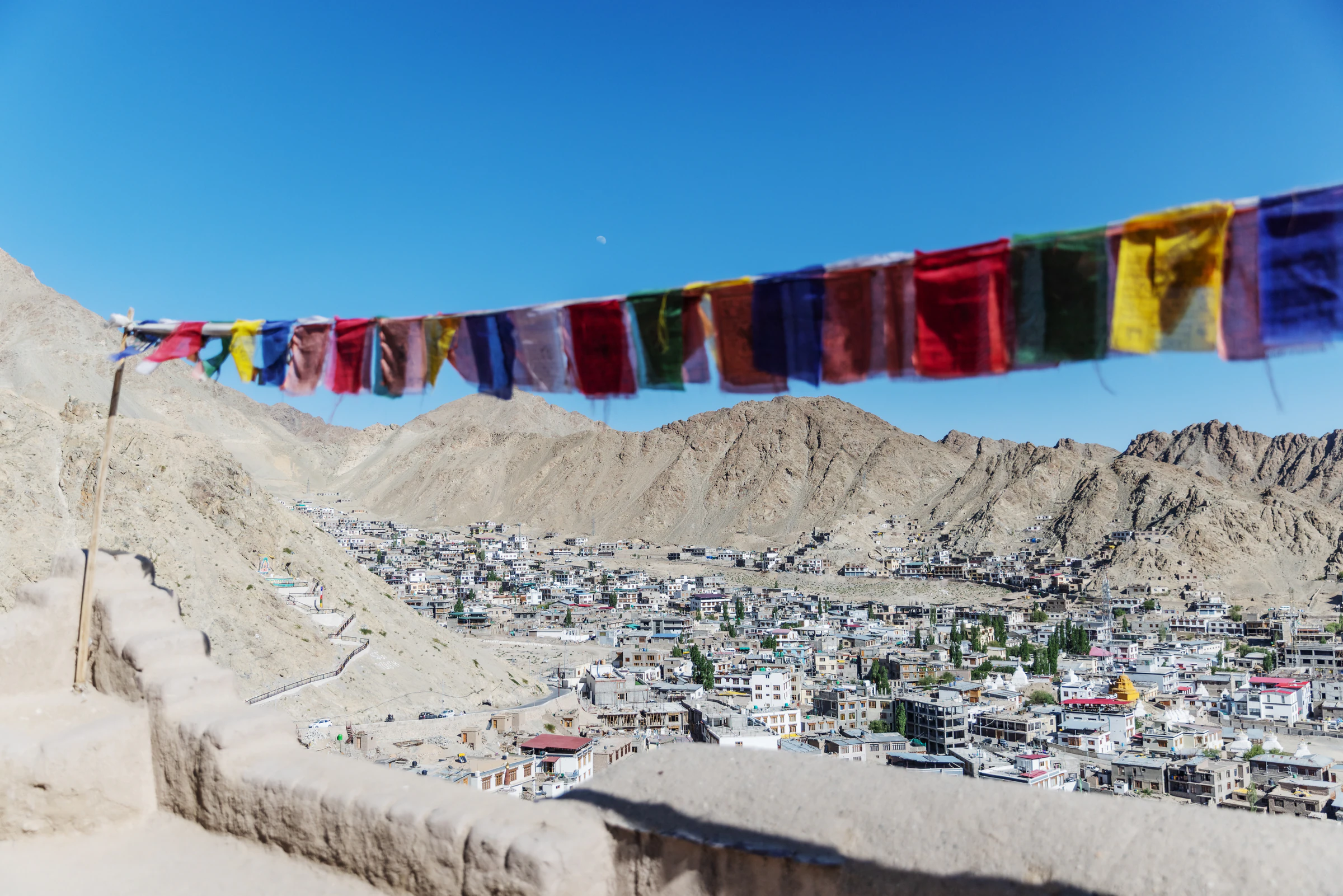
Leh Palace, the nine-storey former royal palace above the old town, is looked after by the Archaeological Survey of India. It was open 7:00 to 16:00 in 2026, and foreigners paid about ₹250. Above it, the Namgyal Tsemo monastery and fort give the best view over town. The Shanti Stupa, a white stupa on the ridge to the west, is the easy sunset walk. The Main Bazaar is where you'll sort out permits, taxis and warm clothes.
The Indus Valley monasteries
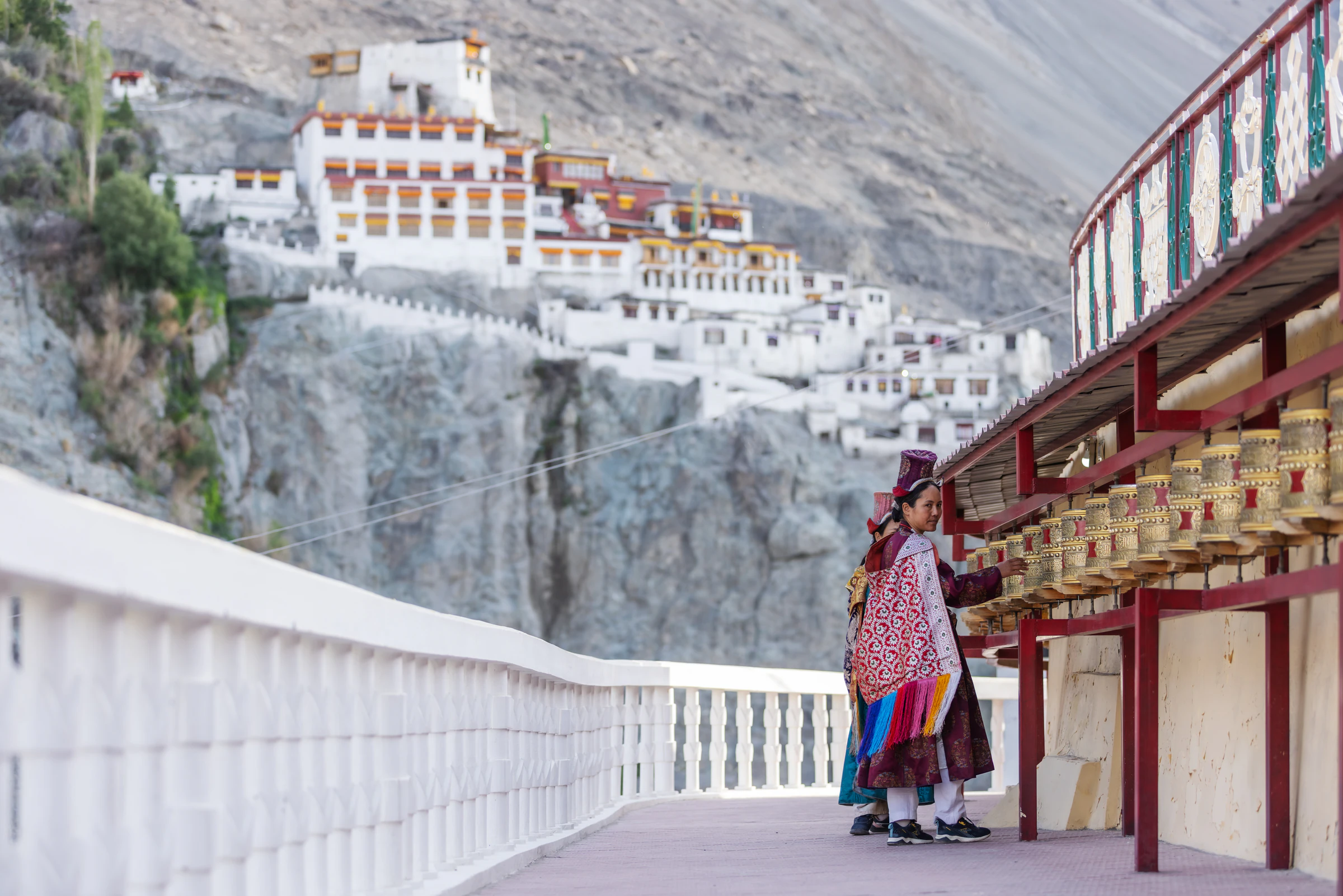
Thiksey, about 19 km from Leh, looks like a small version of the Potala Palace in Lhasa, stacked up a hillside. Its Maitreya Buddha is about 15 m tall. Morning prayers run from about 6:00 to 7:00 and visitors can sit in quietly. Entry was about ₹40 in 2026. Hemis, about 45 km from Leh, is the largest monastery in Ladakh and has a museum of thangkas and old texts; a taxi there and back costs roughly ₹4,500 to 5,000 and takes about an hour to an hour and fifteen minutes each way. Fees were a few hundred rupees at most (checked September 2026). Shey, on the way, has an old palace and a large seated Buddha.
Khardung La and the Nubra Valley
The road north climbs to Khardung La, which is 5,359 m high. The signs at the top claim more, but that's the real figure. Below it, Nubra is a wide, green valley at a much kinder altitude (Diskit is about 3,144 m). The Maitreya Buddha at Diskit Monastery is 32 m tall and was consecrated by the Dalai Lama in 2010. Hunder has sand dunes and double-humped Bactrian camels.
Pangong Tso
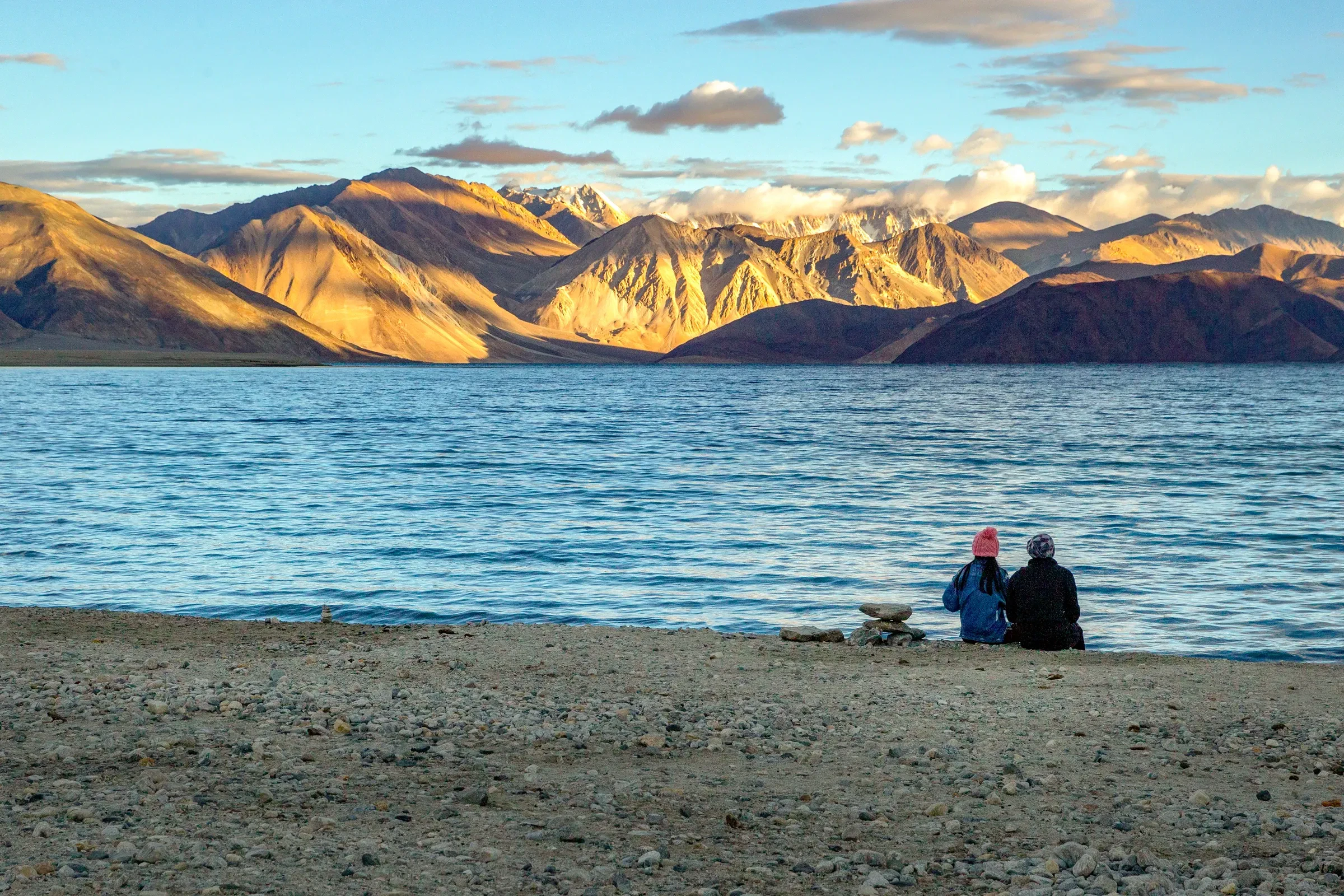
Pangong is 134 km long and about 4,300 m up. Roughly 40 per cent of it is in India, about half is in Tibet under Chinese control, and the rest is a disputed buffer. The colour changes from turquoise to deep blue as the light moves. The drive from Leh to Spangmik is about 150 to 170 km over Chang La and takes most of a day. Nights are cold even in August.
Tso Moriri
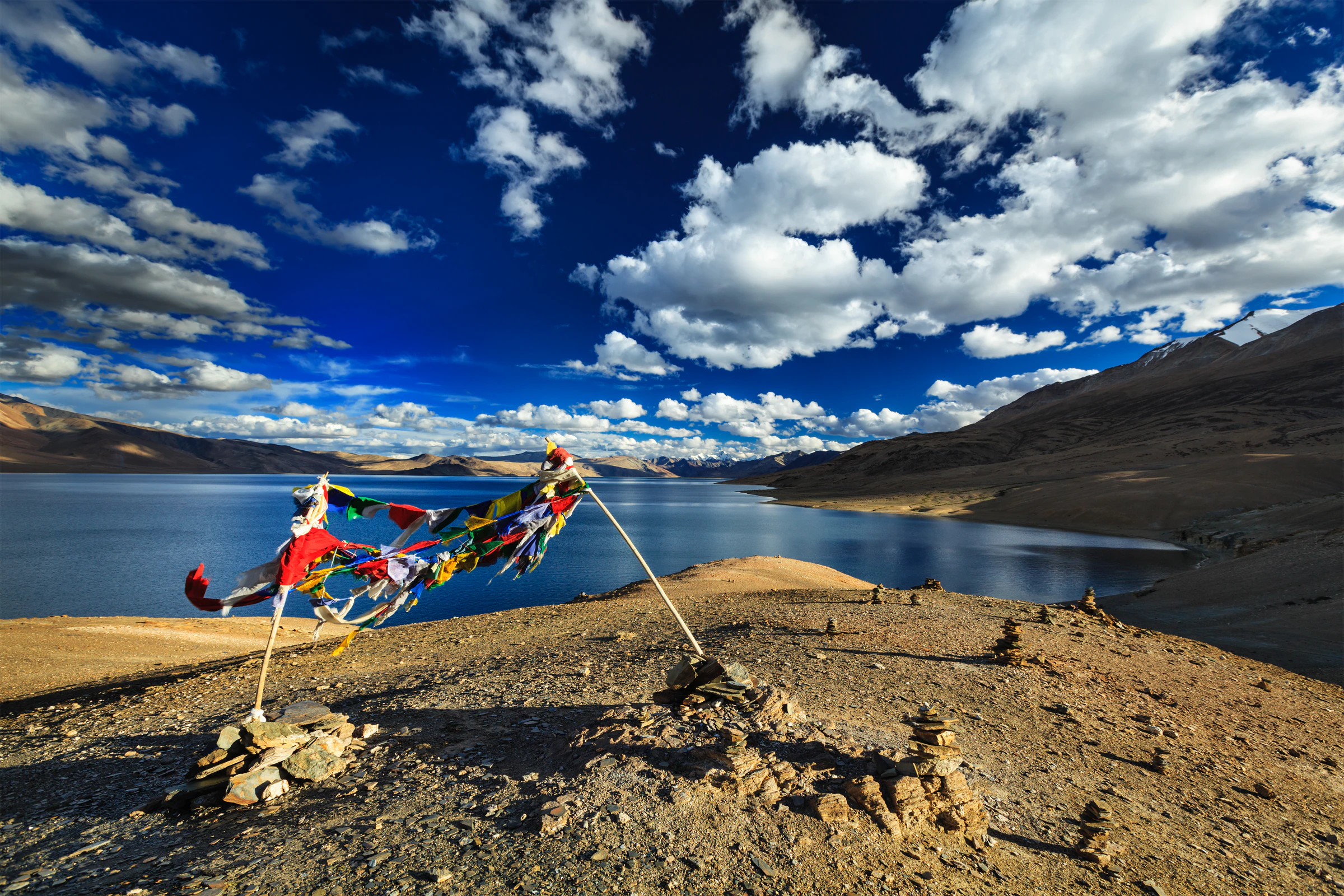
Tso Moriri is higher again, at 4,522 m, and much quieter than Pangong. It's a protected wetland under the Ramsar Convention, and Korzok is the main village on its shore.
The Sham Valley
West of Leh along the Indus are Likir, Alchi and Lamayuru. Alchi's temples are among the oldest in Ladakh and are known for their murals. Lamayuru sits above eroded hills people call the "moonland".
Festivals
The Hemis festival (Hemis Tsechu) marks the birth of Guru Padmasambhava with two days of masked dances in the monastery courtyard. It follows the Tibetan calendar: in 2026 it was on 24 and 25 June, and festival calendars give 13 and 14 July 2027. Check the date again nearer the time. Our Hemis Festival guide covers the dances day by day and how to fold it into a 1-week or 10-day Ladakh route rather than making a separate trip for it.
Trekking in Ladakh
Ladakh has some of the most accessible high-altitude trekking in India, with the Markha Valley as the classic multi-day route and the Sham Valley as a gentle introduction. Stok Kangri, the peak most people used to add on, was still closed to trekkers and climbers when we checked in October 2026.
Markha Valley trek
Ladakh's best-known trek runs several days along the Markha river inside Hemis National Park, with village homestays or camps and a crossing of Kongmaru La, at about 5,200 m the trek's highest point. Most groups take 6 to 8 days, usually starting at Chilling or Skiu. Hemis National Park charges a small daily entry fee, separate from the Protected Area Permit described below. June to September is the season, the same window as the rest of Ladakh, when the passes are clear of snow and the river crossings are manageable. Arrange a guide and homestays through a trekking agent in Leh's Main Bazaar.
Sham Valley trek
Known locally as Ladakh's "baby trek", this is the easy option: about 3 days from Likir to Hemis Shukpachan over the Tsermangchan La pass, at around 3,750 m, through the same villages you'd otherwise see on the Sham Valley day trip above, on foot instead of by road. It suits a first Ladakh trek, or anyone short on days.
Stok Kangri: currently closed
At 6,153 m, Stok Kangri was Ladakh's most climbed peak until the Stok village committee and the All Ladakh Tour Operators' Association closed it in 2020 to let its glacier recover. It remained closed when we checked in October 2026, with no confirmed reopening date. Ask a Leh trekking agent for the current status before you plan around it; Kang Yatse II, also in the Markha Valley, is the usual alternative for trekkers who wanted a Ladakh summit.
See best time to visit Ladakh for how the trekking season lines up with the rest of the year, and the permits section below for what a trek beyond Leh needs on top of your e-visa.
Permits for foreigners
Your Indian e-visa alone isn't valid in protected areas. Most of Ladakh beyond Leh, including Nubra, Khardung La, Pangong and Tso Moriri, needs a Protected Area Permit (PAP).
- What it's called. Many websites call this the Inner Line Permit (ILP). For foreigners the document is the Protected Area Permit. Indian citizens need no permit, only the environment fee.
- Who issues it. Under the Ministry of Home Affairs rules, the permit is for groups of two or more, sponsored by a recognised travel agency, and is valid for up to 7 days. In practice you apply through a registered travel agent in Leh. If you're travelling alone, ask the agent how they handle the two-person rule before you pay.
- Fees. You pay an environment fee, a wildlife fee and a Red Cross contribution on the official portal, lahdclehpermit.in. Agents add their own charge, so ask for the total up front. Secondary guides put the permit itself at roughly ₹600 and the agent's charge at ₹200 to ₹400 (checked 3 October 2026, not confirmed on the portal). The portal warns about fake fee slips.
- Where you can go. Pangong is open to foreigners as far as Spangmik, Man and Merak. Hanle, Umling La, Chushul and the south bank of Pangong are not open to foreigners.
- Nationality exceptions. Citizens of Pakistan, Afghanistan and China need approval from the Ministry of Home Affairs.
- Carry copies. Take several photocopies of your permit and passport to hand in at checkpoints.
Indian citizens don't need a PAP, but they pay the environment and wildlife fees on the same portal and carry the receipt. Our India visa guide has the e-visa rules and a section on protected areas.
Best time to visit Ladakh
The best months to visit Leh Ladakh are June to September, when both roads are open and daytime temperatures in Leh are comfortable. July and August are the busiest months. September is quieter, with clear skies and colder nights.
| Month | Leh average high | Leh average low | What to expect |
|---|---|---|---|
| June | 22°C | 8°C | Manali road just open, snow on the passes |
| July | 26°C | 12°C | Warmest month, peak season, Hemis festival in some years |
| August | 26°C | 12°C | Busy; rain can cause landslides on the Manali side |
| September | 22°C | 8°C | Quieter, clear skies, cold nights at the lakes |
| October | 14°C | 0°C | Roads start to close; many camps shut |
Ladakh gets very little rain (about 15 mm in July), because the monsoon barely reaches it. From November to April it's bitterly cold, and Pangong freezes over. See the best time to visit Ladakh for a month-by-month guide.
Getting around Ladakh
Most people get around by taxi. Leh's taxi union sets fixed rates per vehicle. A two-day round trip to Nubra in an Innova cost about ₹11,800 to ₹13,000 in 2026, and Pangong about ₹12,500 to ₹13,700, including tolls and the driver's costs. Split between four to six people, that's affordable, and hostel noticeboards and agents in Leh are the usual places to find people to share with. Shared taxis to Nubra also leave Leh early in the morning.
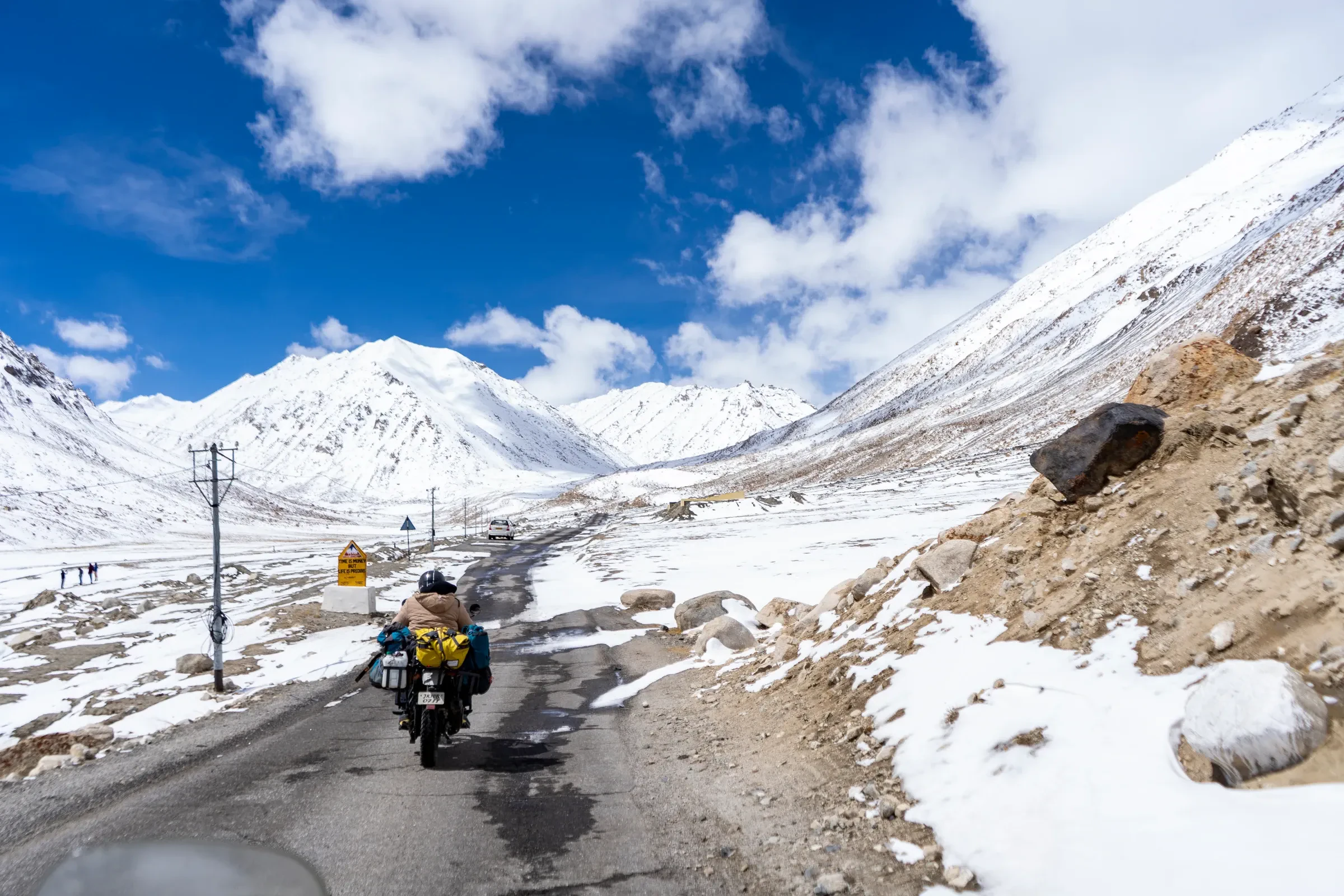
Renting a Royal Enfield motorbike in Leh is popular. Make sure your licence is valid in India and that your travel insurance covers riding at altitude. Wear a helmet and carry warm layers, since the passes can be snowy even in summer.
Costs in Ladakh
Leh itself is cheap. The big cost is the jeep, which is why most solo travellers share one. Prices below are approximate, checked in September 2026, at about ₹96 to US$1.
| Item | Price (₹) | About (US$) |
|---|---|---|
| Dorm bed in Leh | 550 to 700 | 6 to 7 |
| Budget guesthouse dorm | from 200 | from 2 |
| Delhi to Leh flight, one way, booked early | from 5,000 | from 52 |
| HRTC bus, Manali to Leh | 833 | 9 |
| Taxi, 2 days Leh to Nubra and back (per vehicle) | 11,800 to 13,000 | 123 to 135 |
| Thiksey Monastery entry | 40 | under 1 |
| Leh Palace entry (foreigners) | 250 | 3 |
Money, SIM cards and internet
- Cash. Leh has several ATMs. Diskit has one, but it's often out of service, and there are none at Pangong or Tso Moriri. Take out enough in Leh for the trip.
- Phones. Prepaid SIMs from other parts of India don't work in Ladakh. Postpaid Indian SIMs do. International roaming eSIMs are reported not to work either. You can buy a local prepaid SIM in Leh with your passport and a photo. It cost about ₹300 to ₹500 in 2026 and takes a few hours to activate.
- Signal. Diskit and Hunder have decent 4G. At Pangong, Spangmik has signal on Airtel and Jio. Expect little or nothing at Tso Moriri beyond BSNL.
Hostels in Leh for solo travellers
Leh has a small but good hostel scene, and it's the easiest place in Ladakh to meet people to share a jeep with. Leh hostels we found listed on Hostelworld in September 2026 (check current prices and reviews before you book):
- Woosah Hostel has dorms from about ₹550. It's under half a kilometre from the centre.
- Raybo Hostel has dorms from about ₹700.
- Rainbow Hostelier has dorms from about ₹549.
- Tsetan Guest House is a guesthouse rather than a party hostel, with dorm beds from about ₹200.
- Zostel Leh is part of India's best-known hostel chain and is listed from ₹699. Zostel says it's about a 10-minute walk from the Main Bazaar.
Safety and solo travel tips
- Altitude. Headache, nausea, breathlessness, poor sleep and loss of appetite can all be signs of altitude sickness. Rest for your first 48 hours, drink plenty of water, skip alcohol, and go back down if symptoms get worse. The Leh administration suggests acetazolamide (Diamox), but that's a medicine with side effects: ask your doctor before you travel.
- Travel advice. The FCDO advises against all travel to the Union Territory of Jammu and Kashmir, except flying into and within Jammu city. Ladakh isn't covered, but the Srinagar road is. Read the FCDO India page before you book, and see our India safety guide.
- Local news. Ladakh is generally calm for visitors, but a statehood protest turned violent in Leh in September 2025: four people died and a curfew kept visitors in their hotels for days. Check local news before you fly.
- Insurance. Check your policy covers the altitudes you'll reach, and any trekking or motorbiking.
- Cold. Even in summer, nights at Pangong and Tso Moriri get close to freezing. Bring a warm layer, a hat and good sunscreen.
- Respect. Walk clockwise around stupas and prayer wheels, dress modestly in monasteries, and ask before photographing monks or villagers.
Our trips and Ladakh
Two of our trips go to Ladakh, both running June to September, in step with the season on this page. The Ladakh Road Trip is a 10-day 4x4 loop out of Leh to the Nubra Valley, Pangong Lake and Tso Moriri, with the two rest days this page recommends built in before Khardung La and the Protected Area Permit arranged for you. The Ladakh Royal Enfield Expedition rides from Manali over four high passes to Leh and on to Nubra and Pangong, either self-riding a Royal Enfield Himalayan or on the back of one with a local rider-guide.
Both trips run in the same window as the rest of Ladakh's season, which doesn't overlap with our October to March India trips.
Keep planning
- Ladakh itinerary: the 1-week and 10-day routes, day by day, with what they cost
- Best time to visit Ladakh: month-by-month weather, roads and festivals
- Hemis Festival in Ladakh: the masked dances, dates and how to time your trip
- Ladakh vs Spiti: choosing between the two if you're short on time
- Spiti Valley travel guide and Himachal Pradesh travel guide: where the Manali road leads next
- India travel guide: routes for the rest of the country


