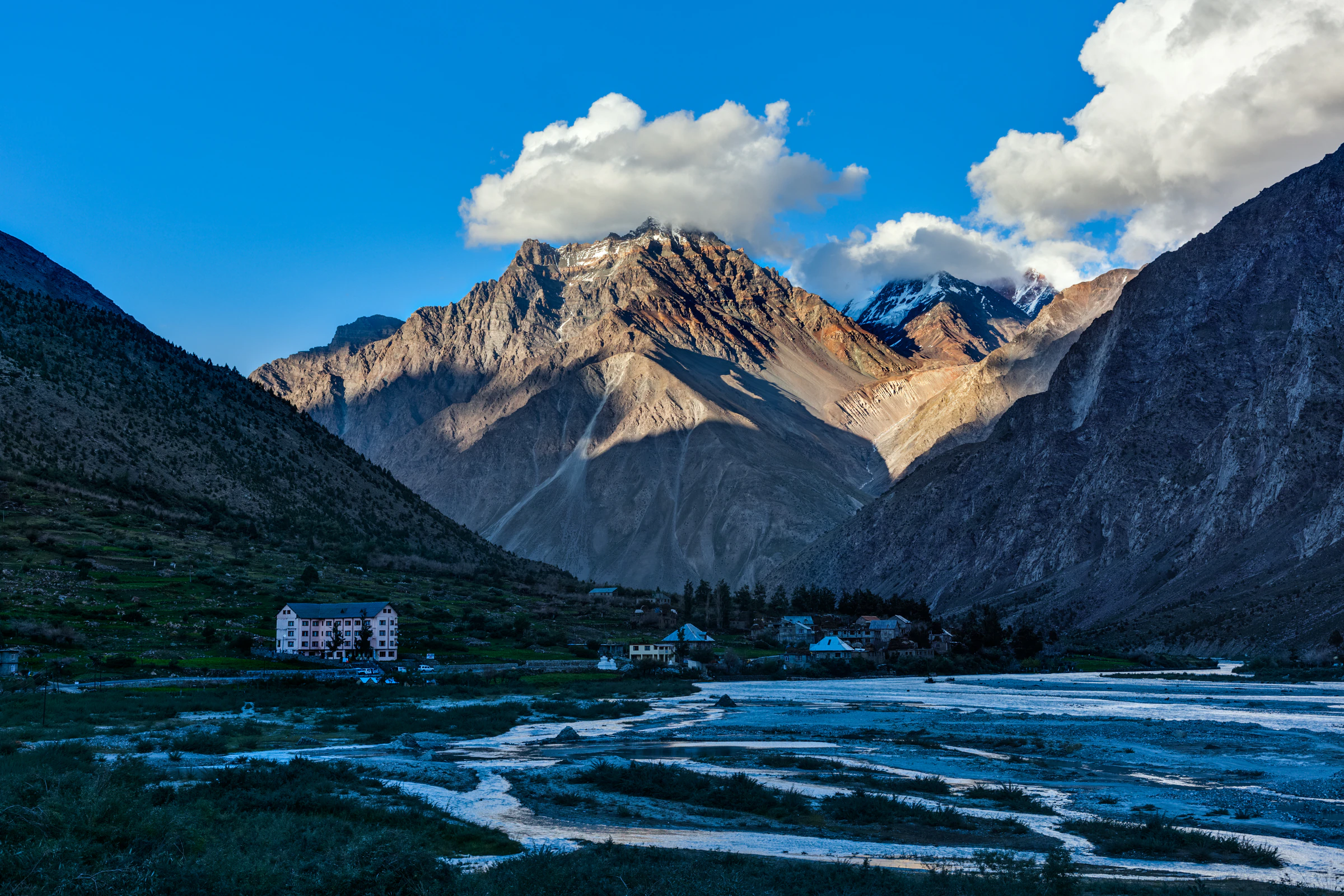
Spiti Valley is the quieter, rougher cousin of Ladakh: bare brown mountains, whitewashed monasteries on the ridges, villages of flat-roofed houses and green barley fields beside a wide grey river. Its name is usually explained as "the middle land", the land between Tibet and India. There are no flights and no trains. You arrive by road after one or two long days, and that's a large part of why it still feels remote.
This guide covers the two routes into Spiti, the permit rules for foreigners, the places worth your time, what to eat, the best month to go, getting around by HRTC bus, costs, staying safe on the roads and at altitude, and how long to spend once you get there.
For the rest of the country, start with our India travel guide.

Where is Spiti Valley?
Spiti is in the far north-east of Himachal Pradesh, on the border with Tibet. It's part of the Lahaul and Spiti district, which is why you'll see "Lahaul and Spiti valley" on maps and signs. Lahaul is the greener valley to the west, beyond Kunzum Pass. Spiti's valley floor runs from about 2,950 m to 4,100 m, and the Spiti River flows south-east through it to join the Sutlej in Kinnaur.
Kaza is the only real town. Everything else is a village: Key and Kibber to the north, Langza, Hikkim and Komic on the plateau above Kaza, Dhankar and Tabo downriver, and the Pin Valley to the south.
How to get to Spiti Valley
You can go in one way and out the other, which is the classic Spiti circuit. Most people start from Shimla and leave via Manali, because the Shimla side climbs slowly and gives your body time to adjust.
The Shimla road through Kinnaur
Shimla to Kaza is about 412 to 420 km on National Highway 505 and the roads that lead to it. It follows the Sutlej River through Kinnaur, past Reckong Peo and Nako, then turns up the Spiti River to Tabo and Kaza. Split it over at least two or three days, with nights in Sangla, Kalpa or Reckong Peo, and Nako.
This road stays open most of the year, including in winter, but snow and landslides close it for hours or days at a time. The worst stretch is Maling Nala, between Pooh and Nako, where rockfall is common during and after rain, particularly in July and August. It's also the route that crosses the protected border area, so foreigners need a permit (see below).
The Manali road over Kunzum Pass
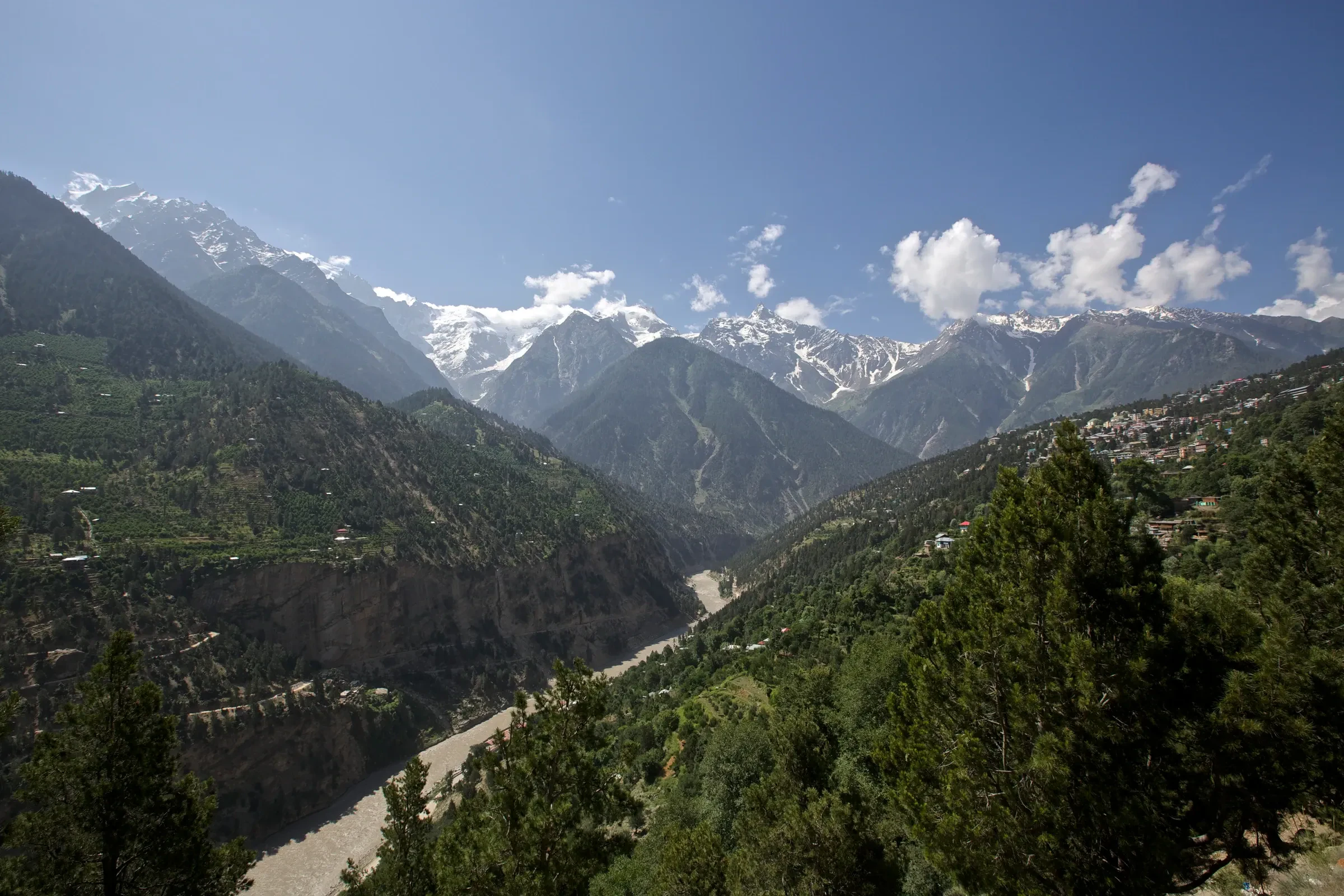
Manali to Kaza is roughly 180 to 200 km, depending on the source, through the Atal Tunnel, along the Chandra River past Batal and over Kunzum Pass at 4,590 m. It's a rough 7 to 10-hour drive or a 9 to 12-hour bus ride, with unpaved stretches and stream crossings between Gramphu and Batal. Those streams run highest in the afternoon, when the glaciers melt, so start early.
Kunzum is closed by snow for six to seven months a year. In 2026 the Border Roads Organisation cleared it in late May, and regular traffic was running by mid-June. It usually closes again between mid-October and November. In 2025 it shut in mid-October. Fresh snow from late September can close it at short notice, so check the road the week you travel.
The Atal Tunnel, opened in October 2020, runs 9.02 km under the Rohtang Pass at about 3,000 m. It saves three to four hours and means you no longer have to wait for Rohtang to open.
Getting to Shimla or Manali
Both towns have overnight HRTC buses from Delhi's Kashmere Gate bus station. In 2026 the Delhi to Shimla bus cost about ₹600 on an ordinary bus and ₹900 on an air-conditioned one. For more on reaching the mountains from Delhi, see our India itinerary guide.
Permits for foreigners
Spiti borders Tibet, so parts of it are Protected Areas. Your e-visa alone isn't valid there. Indian citizens don't need a permit for Spiti. Local offices and blogs often say "Inner Line Permit", but for foreigners the official name is a Protected Area Permit.
- Where you need one. The Kinnaur district lists the Pooh block villages near the border, including Nako, Khab, Pooh and Lippa, and Spiti villages including Dhankar and Tabo. If you come in on the Shimla road, you pass through this stretch, so you need the permit.
- The rules. The permit is for "foreign tourists in groups consisting of two or more persons, duly sponsored by a recognized travel agency", valid for up to 30 days. It costs about ₹200 to ₹250 per person at a district e-Governance Centre, or up to ₹400 at Shimla's Sugam counter, and agencies add their own charge.
- Who issues it. The district offices list the magistrates at Kalpa and Pooh in Kinnaur, and at Kaza and Keylong in Lahaul and Spiti. In practice you apply through a registered travel agent, who handles the paperwork; Reckong Peo is usually the least crowded office.
- Kaza. The two districts disagree. Kinnaur's tourism page says a foreigner can visit Kaza without a permit. The Lahaul and Spiti district's own page lists Kaza as a protected area and speaks of groups of four or more foreigners. If you're coming from Manali to Kaza, Key, Kibber and Chandratal only, ask the office of the Sub-Divisional Magistrate in Kaza (01906-222302) or your agent what applies before you go.
- Travelling alone. Solo foreigners are sometimes given a permit, but it's at the officer's discretion, especially at Reckong Peo or Kaza. Ask your agent how they handle the group rule before you pay.
- Off-limits. The roads to Shipki La and the Kaurik area are closed to foreigners.
Carry several photocopies of your permit, passport and visa for the checkpoints. Our India visa guide has the e-visa rules and a section on protected areas.
Things to do in Spiti Valley
Kaza and Key Monastery
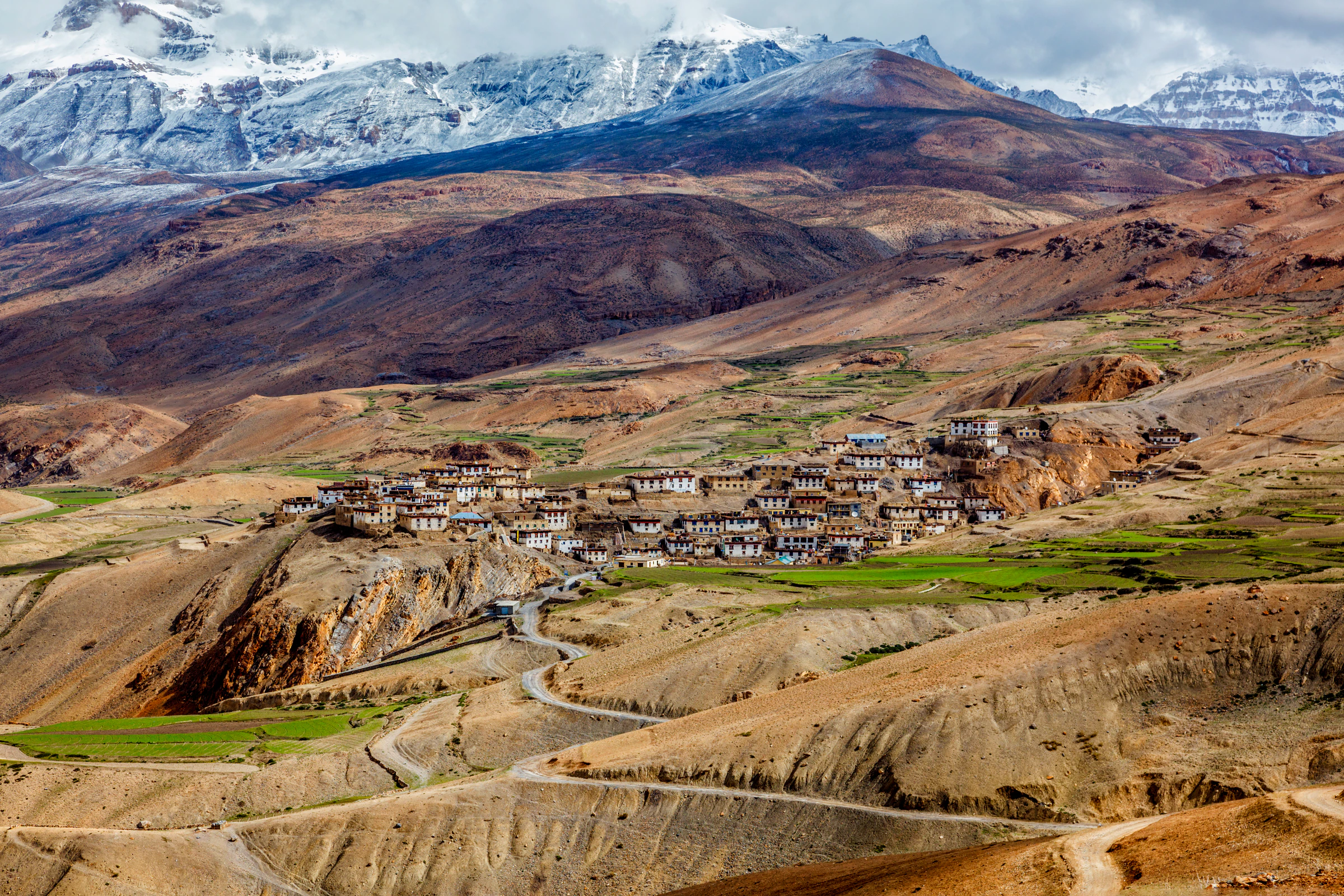
Kaza has the guesthouses, the cafes, the bus stand, the only fuel station in the valley and a community health centre. Give yourself at least one easy day here before you go higher. Key Monastery, about 12 km north of Kaza at 4,166 m, is the picture on every Spiti postcard: a stack of white buildings on a cone-shaped hill. It's the largest monastery in Spiti and dates back to around the eleventh century.
Kibber and Chicham Bridge
Kibber is a stone village past Key and the base for snow leopard tracking in winter. Beyond it, Chicham Bridge crosses a gorge about 1,000 ft (roughly 300 m) deep at about 4,145 m. It opened in 2017 and is often billed as the highest bridge in Asia. Before it was built, villagers crossed in a hand-pulled cable trolley.
Langza, Hikkim and Komic
Above Kaza is a loop of about 44 km through three high villages that most people do in a day. Langza, at about 4,420 m, has a large Buddha statue watching over the valley and is known for marine fossils in the surrounding hills, left from when this land was under the sea. Look, but leave them where they are. Hikkim, about 16 km from Kaza at 4,400 m, has what's widely described as the world's highest post office, and people queue to send a postcard home. Komic, at about 4,587 m, is one of the highest villages you can reach by road and has the Tangyud monastery.
Dhankar and Tabo
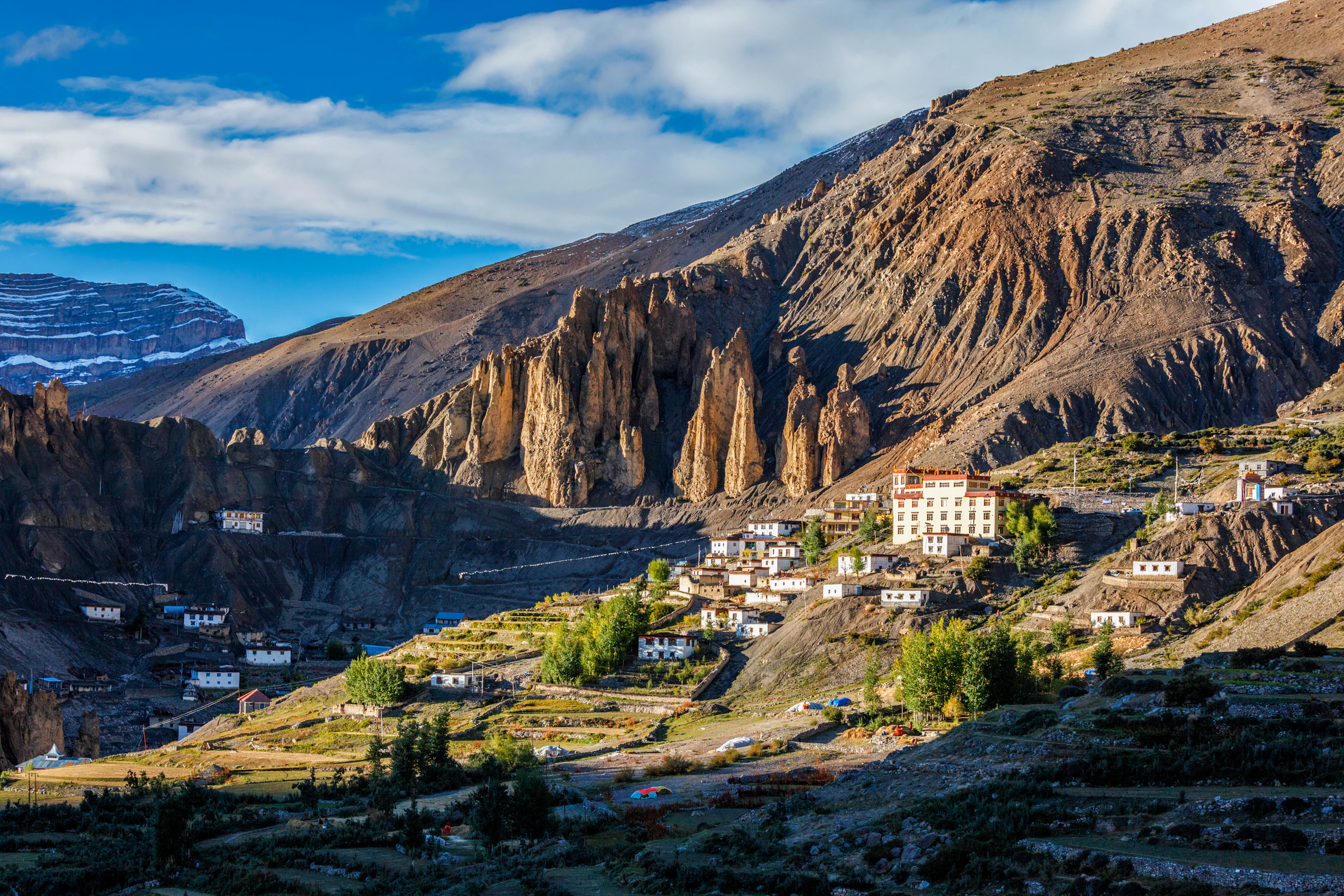
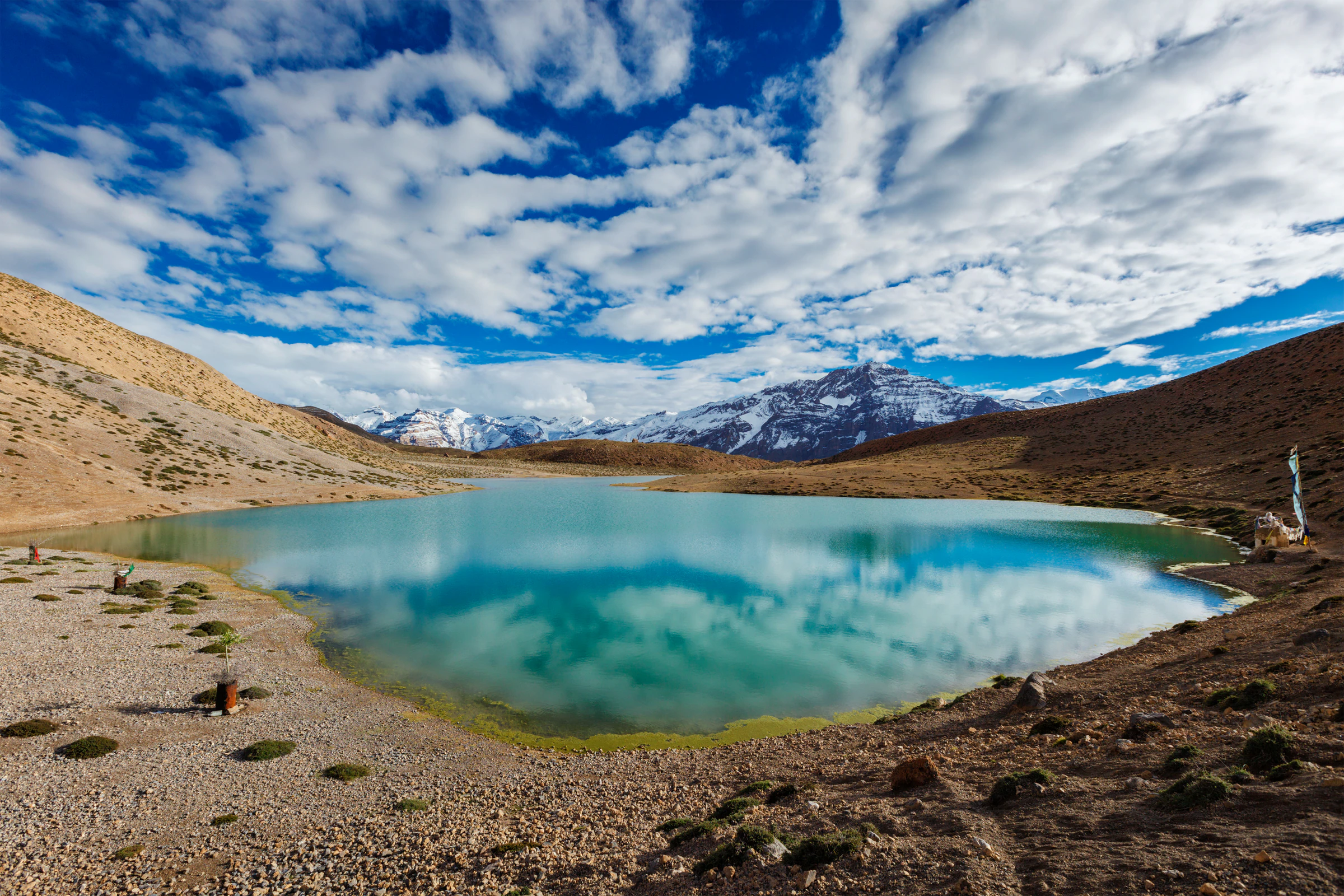
Dhankar Monastery clings to a crumbling ridge at 3,894 m, above the point where the Pin and Spiti rivers meet. A steep walk of about an hour takes you up to Dhankar Lake at about 4,140 m. Tabo Monastery, founded in 996 CE, is one of the oldest working Buddhist monasteries in the Himalaya. From outside its mud-walled halls look plain, but inside they're covered in old murals. Tabo is lower, at 3,280 m, and a good place to sleep on your way up from Kinnaur.
Pin Valley
The Pin Valley runs south from the Spiti River near Dhankar and is a national park, home to ibex and snow leopards. The road ends at Mudh, a village of homestays and the start of treks. It's quieter than the villages around Kaza and a good place for a night or two.
Chandratal
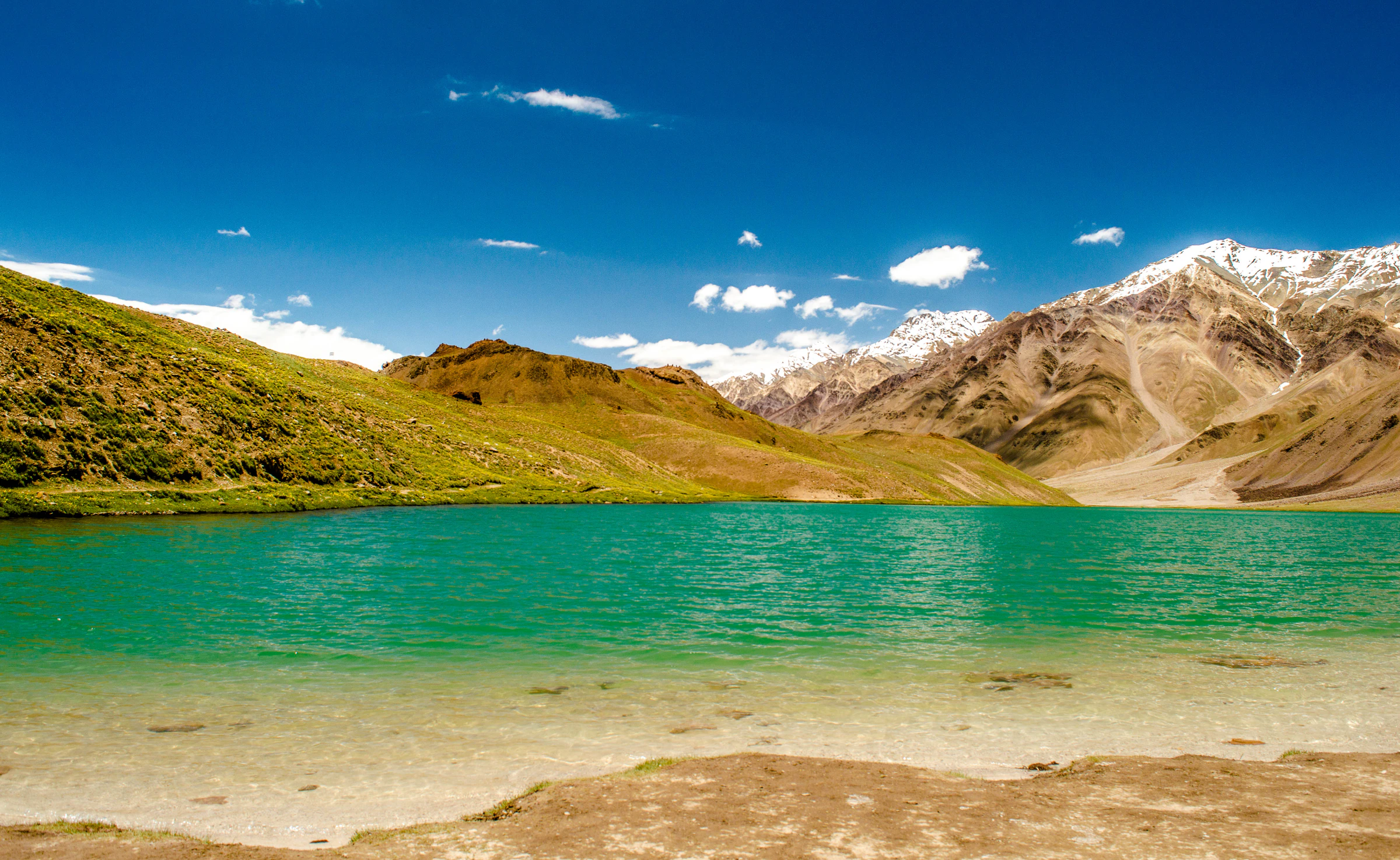
Chandratal, the "moon lake", sits at about 4,300 m in Lahaul, just west of Kunzum Pass. A side road leaves the main road near Batal and ends at a car park about a kilometre from the shore. Camping by the lake is no longer allowed, so the camps are a couple of kilometres away. The road only opens once Kunzum is clear, usually from about mid-June to early October.
Nako
Nako, at about 3,662 m on the Kinnaur side, is a stone village around a small lake and the usual first night above 3,500 m on the Shimla route. It's inside the protected area, so foreigners need their permit by here.
What to eat in Spiti Valley
Spiti's food is Tibetan-Buddhist in character, the same family as the rest of the high Himalaya. In Kaza's cafes, look for thukpa (a noodle soup) and momos, alongside chhurpi, a hard yak-milk cheese, and butter tea if you want to try the traditional version. Homestays in villages like Kibber, Langza and Mudh usually just serve whatever the family is cooking that night rather than a menu, and it's often the best meal of the trip. On the Shimla side, Kinnaur's apple orchards mean apple products turn up on menus too. Our Indian food guide covers the wider country.
Best month to visit Spiti Valley
The season runs from late May or June to early October, when both roads are open. In our view September is the best month: clear skies, harvest colours in the fields, fewer people and both routes still open. Nights are cold by then, near or below freezing in the higher villages.
| Months | Conditions | Verdict |
|---|---|---|
| June | Manali road just open, snow on the passes, Chandratal opening | Good, but check the road |
| July to August | Warmest months. Spiti gets little rain, but landslides hit the Kinnaur and Manali roads | Fine, with spare days for road closures |
| September | Clear, dry and quieter, cold nights | The best month |
| Early October | Very cold nights, some guesthouses closing, Kunzum can shut | Possible via Shimla |
| November to April | Kunzum closed, deep cold, Shimla road open between snowfalls | Winter Spiti only |
India's rains hit the lower hills hard in July and August, so leave a day or two of slack in your plan for blocked roads. In August 2025, cloudbursts washed away bridges in the Lahaul and Spiti district, and on 4 July 2026 a debris flow blocked the Kinnaur road for about half an hour before diggers cleared it. Most closures are short, but some last days. Our best time to visit India guide shows how Spiti's season fits with the rest of the country.
Winter in Spiti
From November to April, the only way in is the Shimla road, and even that closes for a few days after heavy snow. January nights in the high villages can drop well below minus 20°C, pipes freeze and many guesthouses shut. People who go in winter usually come for the snow leopards: local trackers in Kibber and the Pin Valley lead sighting trips in January and February. Go with a local agency, stay in a homestay with a wood stove, and allow extra days either side.
Altitude and acute mountain sickness
Almost everywhere in Spiti is above 3,000 m, and you sleep at 3,650 m in Kaza or higher. Acute mountain sickness (AMS) can affect anyone, however fit. Headache, nausea, dizziness, breathlessness, poor sleep and loss of appetite are the early signs.
- Gain height slowly. The Shimla route does this for you. If you come from Manali, rest on your first day in Kaza.
- Drink plenty of water and skip alcohol for the first days.
- Don't go higher if you feel unwell. If symptoms get worse, go down.
- Ask your doctor before you travel about acetazolamide (Diamox), and check that your travel insurance covers the altitudes you'll reach.
Getting around Spiti
HRTC buses. Himachal's state buses are cheap and reliable, but slow. In 2026 a bus left Reckong Peo at about 7am for Kaza, via Nako and Tabo, for about ₹550. In season, a bus leaves Kaza for Manali at about 5am and takes 9 to 12 hours, for about ₹400 to ₹600. Timetables change with the season, so check at the bus stand the day before.
Shared jeeps and taxis. Shared jeeps run between Kaza and the villages for about ₹50 to ₹200 a leg, but they go from A to B and don't stop for sightseeing. For the high villages or Chandratal, most solo travellers share a taxi with people from their guesthouse or hostel.
Motorbikes. Riding the circuit on a rented Royal Enfield is popular. Make sure your licence is valid in India, and that your insurance covers riding at altitude.
Costs in Spiti Valley
Spiti is cheap once you're there. Prices below are approximate, checked in September 2026, at about ₹96 to US$1.
| Item | Price (₹) | About (US$) |
|---|---|---|
| Guesthouse or homestay, per person | 300 to 600 | 3 to 6 |
| Food at dhabas, per day | 250 to 300 | 3 |
| HRTC bus, Delhi to Shimla | 600 to 900 | 6 to 9 |
| HRTC bus, Reckong Peo to Kaza | 550 | 6 |
| HRTC bus, Kaza to Manali | 400 to 600 | 4 to 6 |
| Shared jeep between villages | 50 to 200 | 1 to 2 |
| Permit for foreigners, plus agency charge | 200 to 250 | 2 to 3 |
One budget traveller's breakdown puts a 10-day circuit by public transport at about ₹8,000 to ₹10,000 (about US$85 to US$105) per person. Taxis, tours and a travel agent for the permit add to that.
Money, SIM cards and internet
- Cash. Kaza has a couple of ATMs, but they often don't work. Take out enough in Shimla, Manali or Reckong Peo for the whole trip.
- Phones. BSNL has the widest coverage in Spiti. Jio 4G works in Kaza and Tabo. Airtel and Vi are reported not to work in most of the valley. Expect no signal at all in many villages and at Chandratal.
Where to stay
Most of Spiti is homestays and small guesthouses, often family-run, with meals included or cooked on request. Kaza has the widest choice, including a Zostel hostel. A night or two in a village homestay in Kibber, Langza or Mudh is one of the best things to do in the valley.
Safety and solo travel tips
- Roads. The biggest risk in Spiti is the road. Landslides, rockfall and stream crossings are normal. Travel early in the day, don't push on after heavy rain, and leave spare days in your plan.
- Medical care. Kaza has a community health centre, but serious cases need a long drive out. Travel insurance with medical evacuation is essential.
- Cold. Even in summer, nights are cold. Bring a warm jacket, a hat and gloves, and good sunscreen for the strong sun at altitude.
- Respect. Walk clockwise around stupas and prayer wheels, dress modestly in monasteries and ask before photographing people.
- Plastic. Waste is hard to deal with this high up. Carry a refillable bottle and take your rubbish back out.
See our India safety guide for the rest of the country.
How long to spend and which route to follow
A week works if you loop in and out through Manali, over Kunzum Pass both ways. Ten days is the better choice for most people: up from Shimla through Kinnaur, gaining height gradually, then out over Kunzum to Manali. Our Spiti Valley itinerary has both routes written out day by day, with permits, costs and food along the way.
Longer trips usually combine Spiti with its neighbours rather than staying in the valley for two or three weeks straight. Kinnaur's own villages and orchards on the Shimla side, or Lahaul's greener valley just over Kunzum from Chandratal, add an easy few days without leaving the region; see our Himachal Pradesh guide for how they fit into a wider loop through the state. With a month or more, Spiti connects north to Ladakh over the Manali to Leh road. See Ladakh vs Spiti if you're weighing the two against each other for a shorter trip, or our Ladakh guide for the longer road trip north.
Our trips and Spiti Valley
We run a dedicated Spiti road trip, timed for the valley's own June to early October season. It gains height gradually from Shimla through Kinnaur to Kaza, crosses Kunzum Pass to camp near Chandratal, and finishes in Manali, with your Trip Host and the permit paperwork handled for the group.
If you'd rather travel a different way or in a different season, see our India trips for the full range.