What makes Pondicherry special
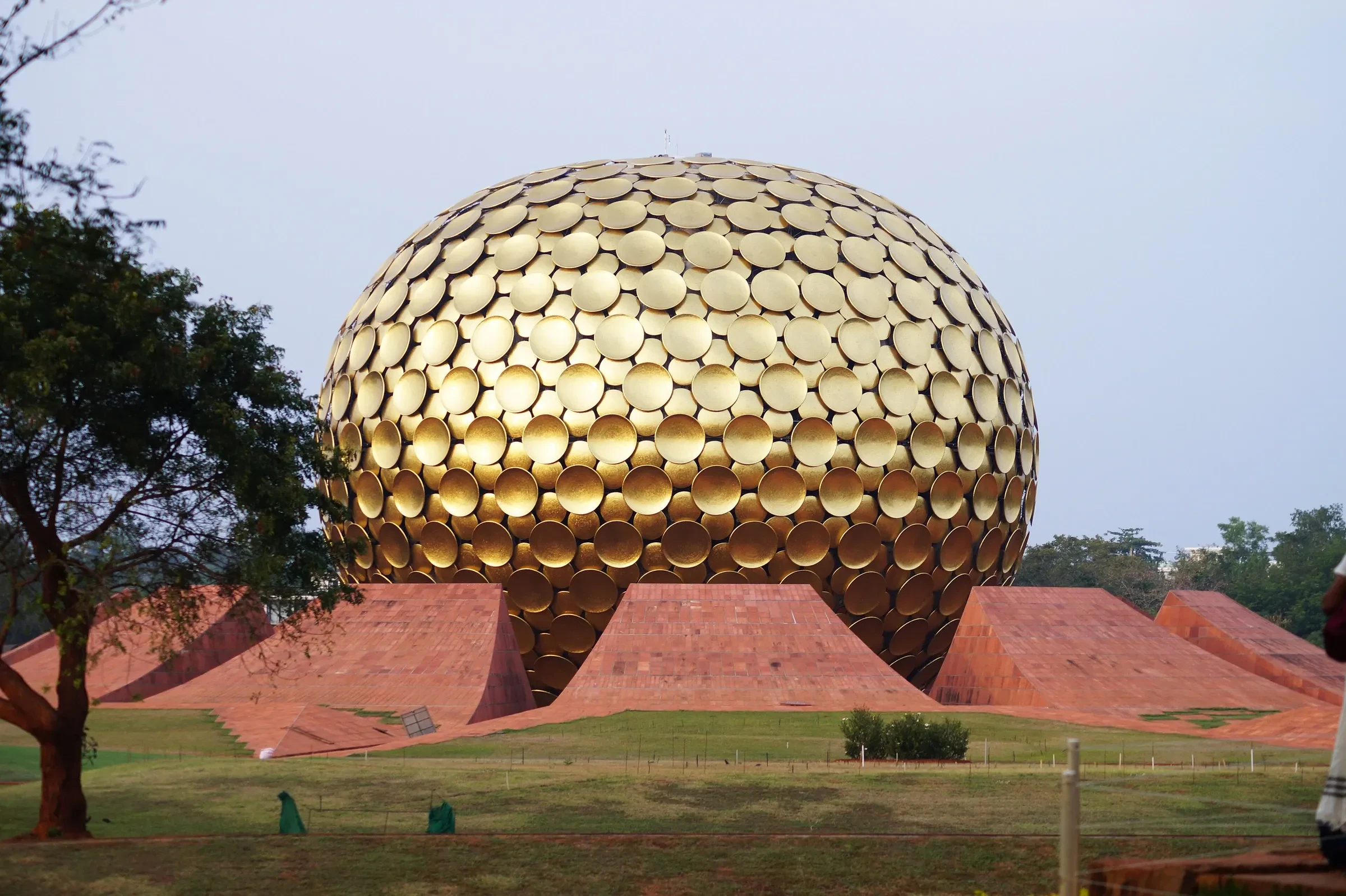
Pondicherry, officially Puducherry, was a French colonial trading post until 1954, and the old quarter still shows it: mustard-yellow villas, bougainvillea spilling over garden walls, street signs in French as well as Tamil. Step out of White Town and it's a working Tamil city again, the two identities sitting side by side rather than one dressed up for tourists. Ten kilometres north, Auroville adds a third layer: an experimental international township built around a meditation centre, the Matrimandir, that draws a much quieter, more contemplative crowd than the rest of Tamil Nadu's temple towns. That combination, quiet colonial streets, an unusual food scene and an easy pace, is why Pondicherry works so well as a short stop rather than a destination people build a whole trip around.
Where to go within Pondicherry
The French Quarter (White Town)
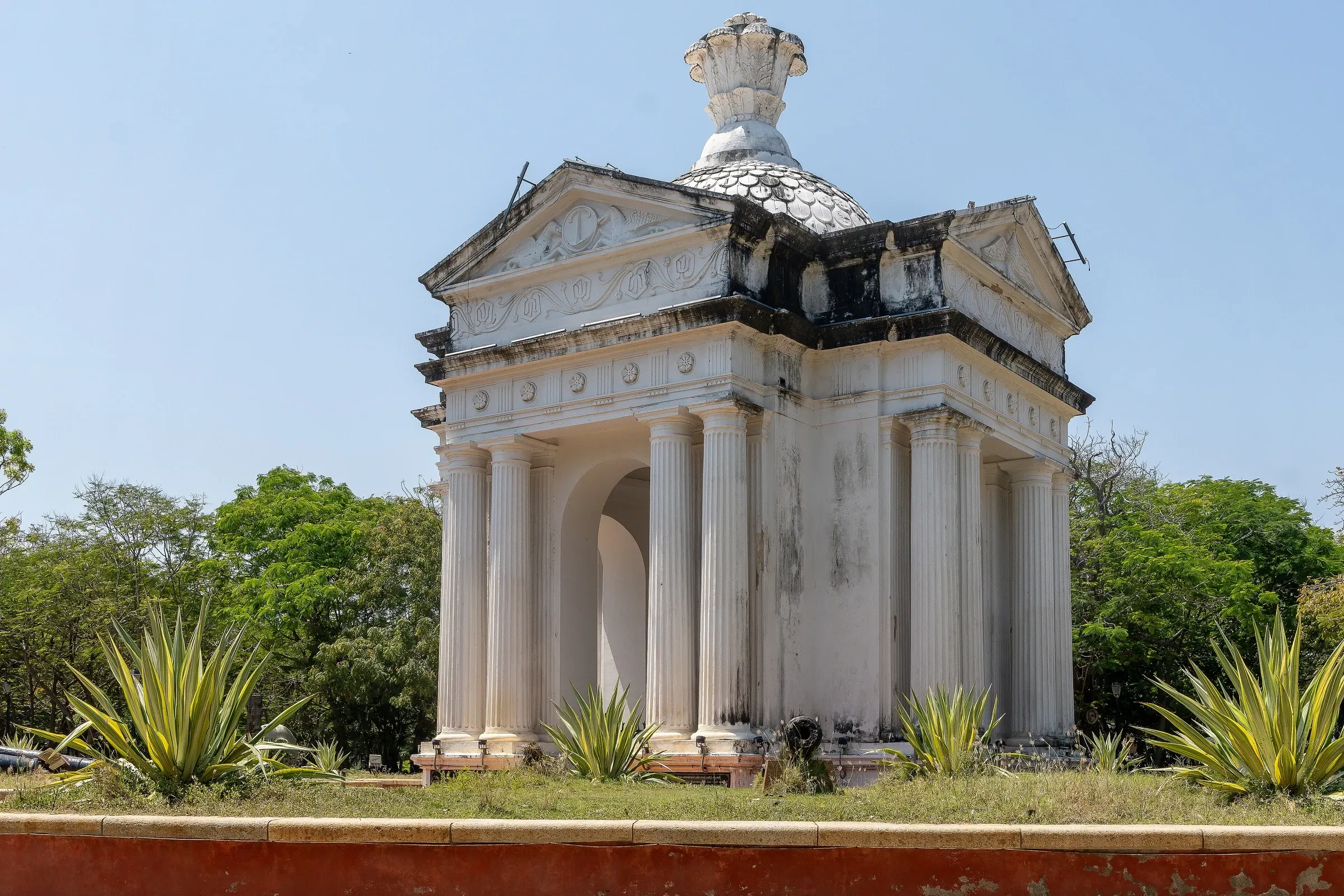
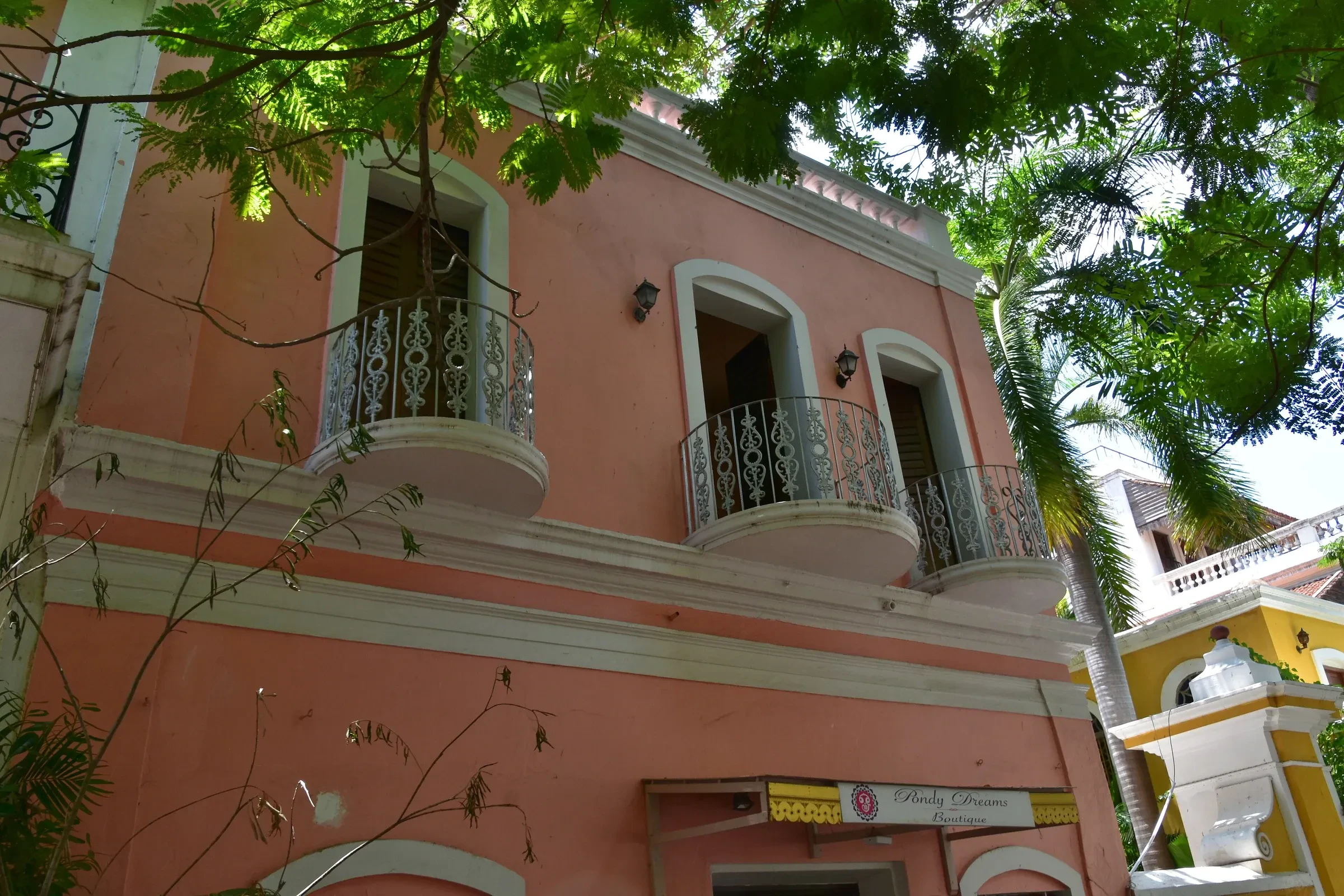
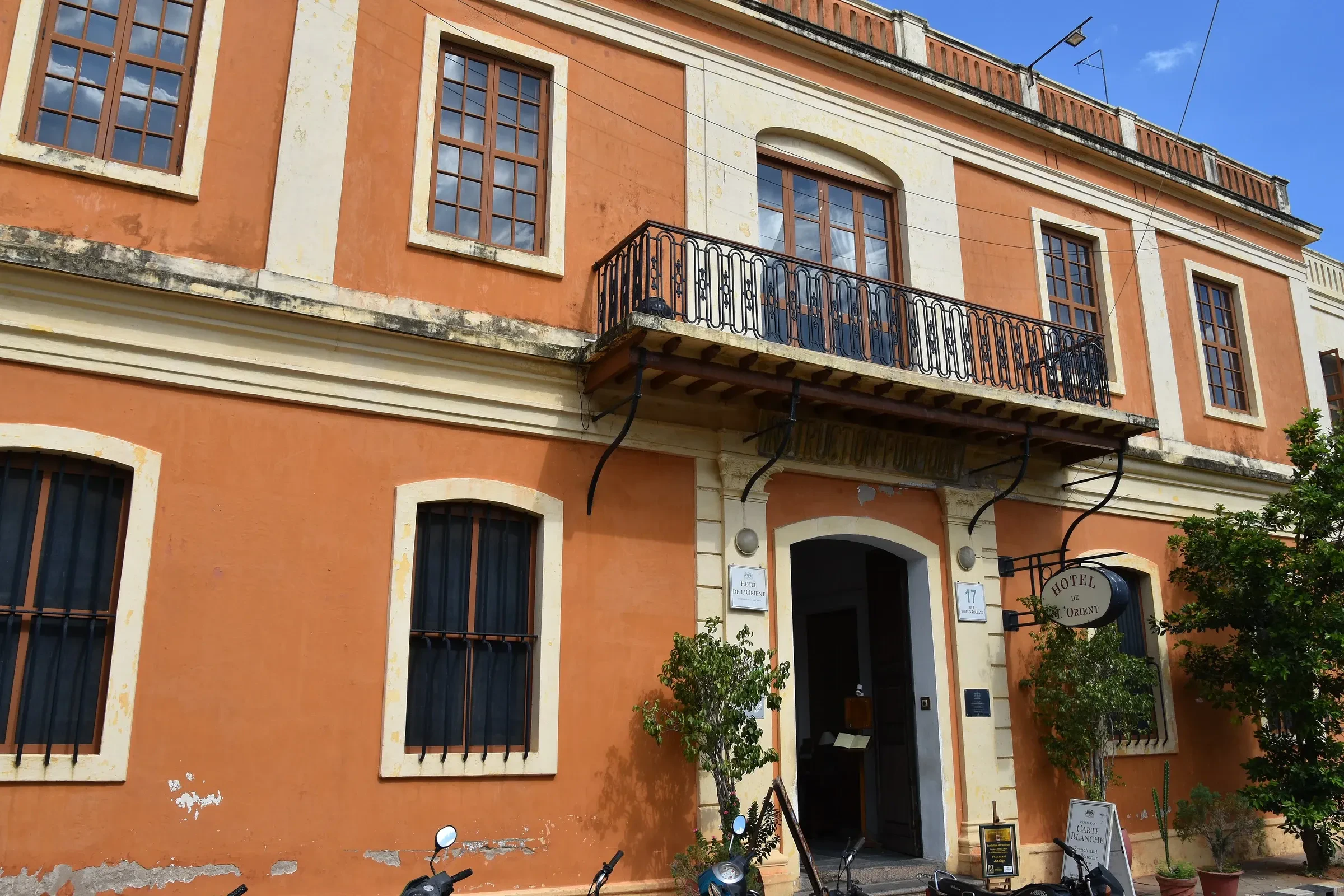
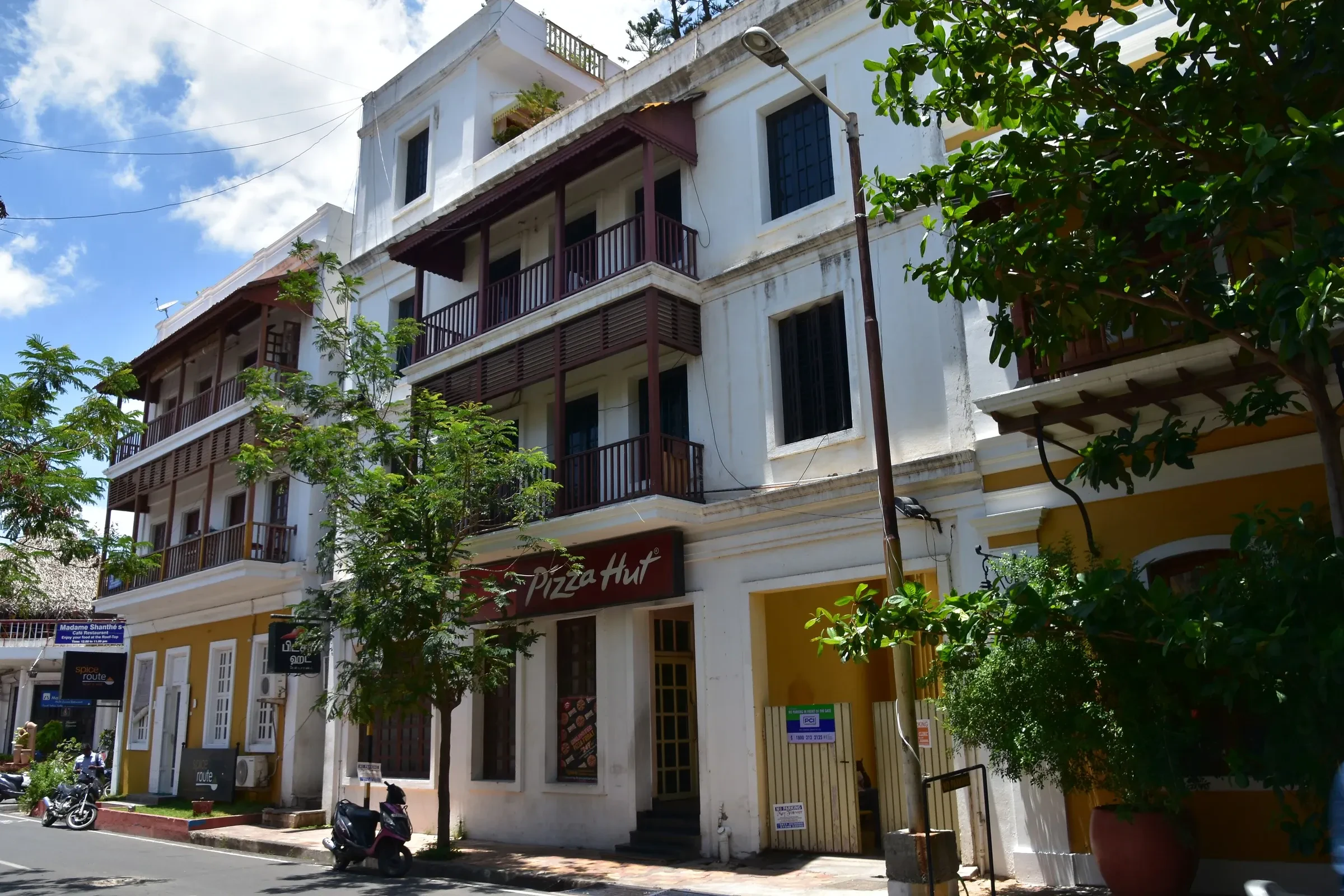
The French Quarter, or White Town, packs around 250 colonial-era buildings into a walkable grid between Bharathi Street and the beach. Rue Romain Rolland and the streets around it are the core of the walk: yellow and ochre villas, ornate wooden doors, small art galleries and bookshops. The whole loop takes an hour or two on foot at an easy pace, longer if you stop for coffee. Go early morning or late afternoon; midday sun on the pale walls and cobbled lanes gets uncomfortable fast.
Auroville and the Matrimandir
Auroville sits about 10 km from central Pondicherry, roughly 20 to 30 minutes by scooter or taxi. Register at the Auroville Visitors' Centre, watch the short introductory film, then take the free shuttle (about 1 km) to the Matrimandir Viewing Point; that part is free, open daily from 9am to 5pm and needs no advance booking. Going inside the Inner Chamber itself is a separate, more involved process. You book individually on the official portal, which asks for at least a week's notice. You need to reach the Visitors' Centre by 8am for the early session, and the chamber is closed on Sundays, Tuesdays and when it rains. Unless a quiet, seated visit inside really appeals, the viewing point alone gives a real sense of the place and needs none of that planning.
Sri Aurobindo Ashram
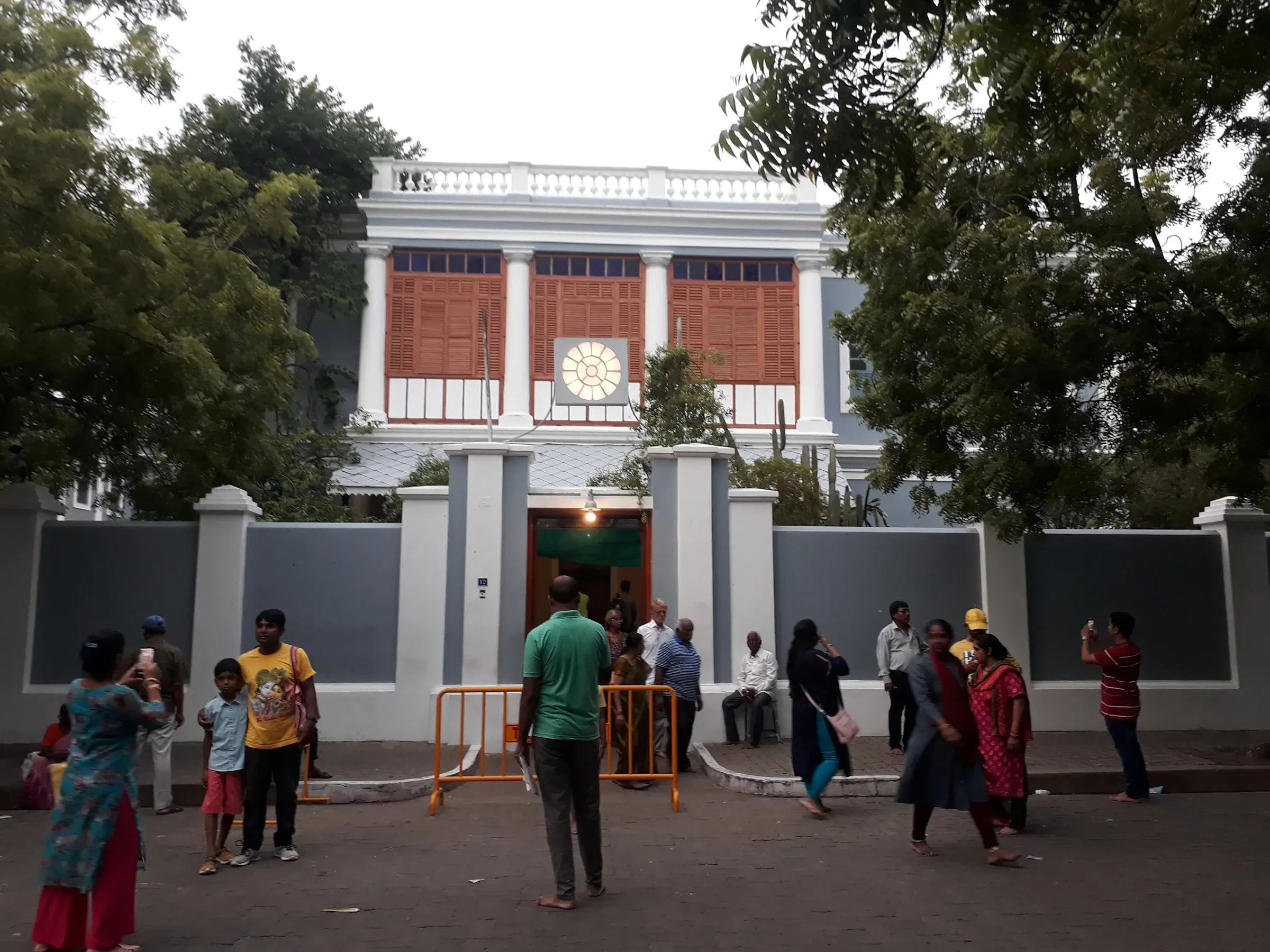
Back in town, the Ashram that Auroville grew out of keeps strict visiting hours: 8am to 11:30am and 2pm to 6pm. There's no entry fee, but shoes, phones and photography aren't allowed inside, and visitors are expected to move quietly and dress modestly (no shorts or sleeveless tops). It's a genuinely peaceful stop, not a sight to rush through between other plans.
Promenade Beach
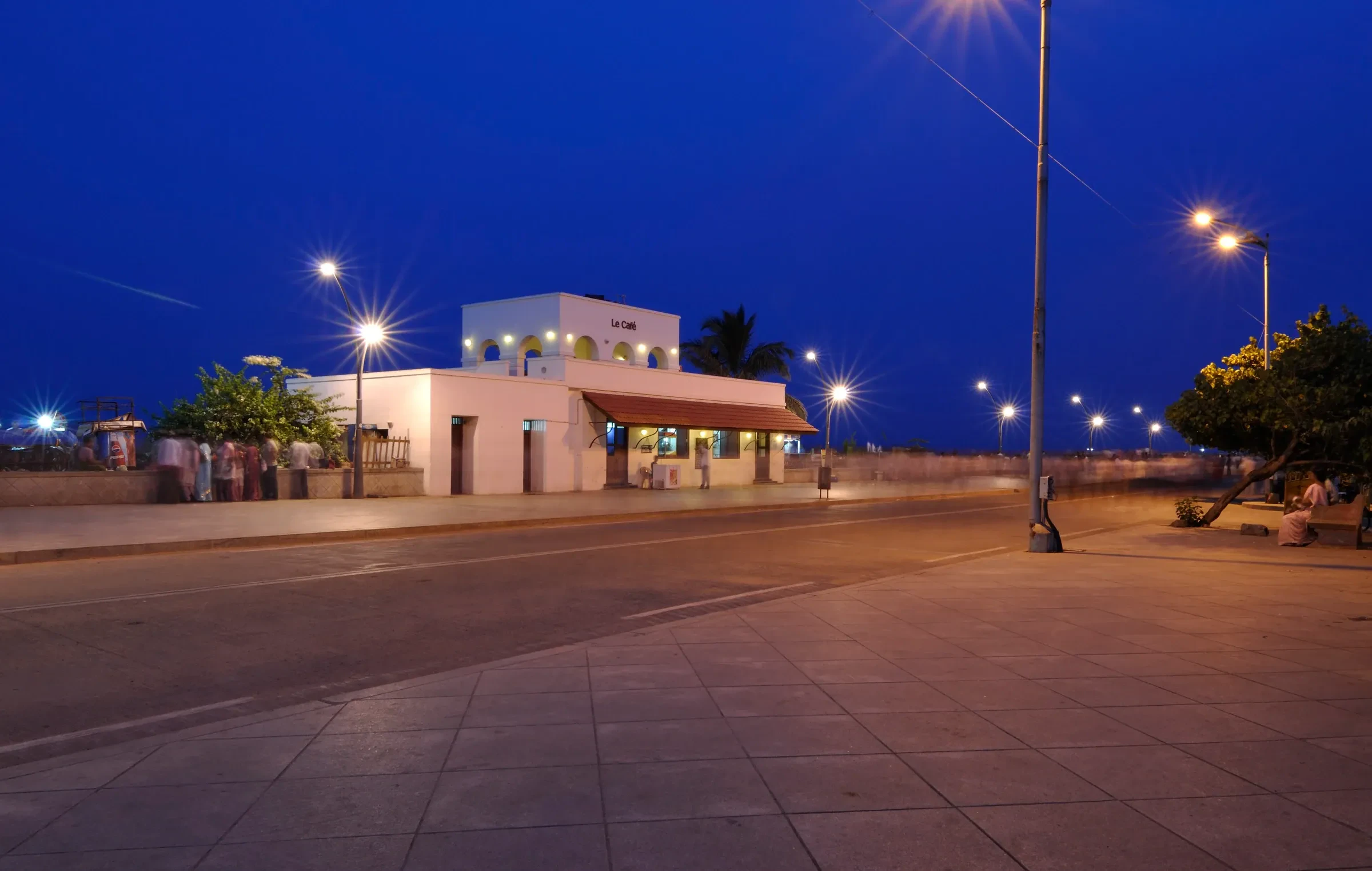
The seafront Promenade runs the length of White Town and is closed to vehicles from 6pm to 7:30am every day, which is when it comes alive: families and travellers walking, snack stalls setting up, a proper sunset over the Bay of Bengal. It's rocky rather than a swimming beach, but it's the best free way to end a day in Pondicherry.
Paradise Beach and the Chunnambar backwaters
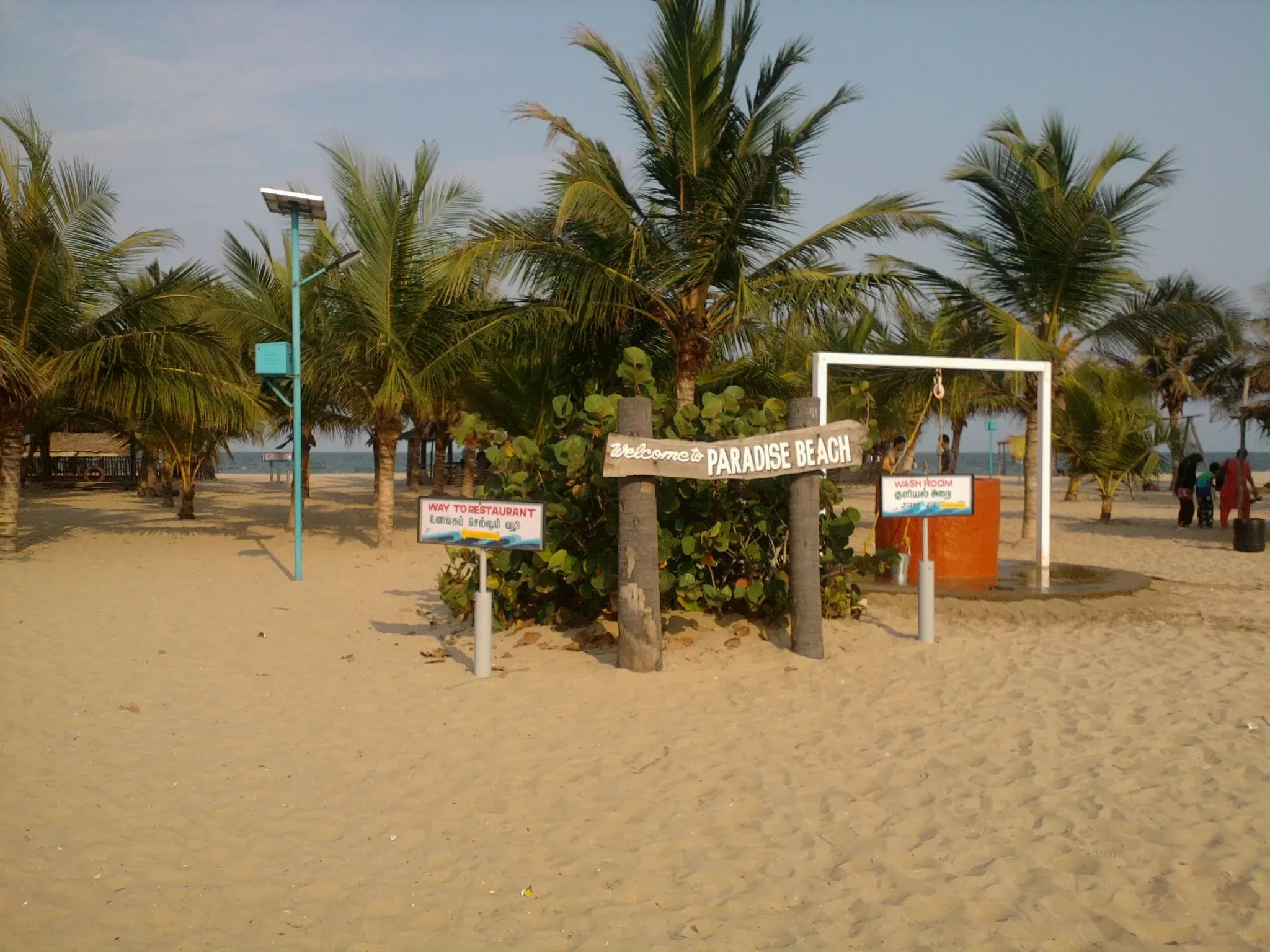
Paradise Beach, a stretch of sand across the backwaters from the mainland, is reached only by boat from the Chunnambar Boat House, about 8 km south of town. Ferries run roughly 9am to 4pm out, with a last return around 5:30pm; the crossing takes 20 to 30 minutes through mangrove-lined backwater channels, and an adult return ticket has been listed at about ₹325 to ₹350 (check the current fare at the boat house). Half a day is enough, more if you want to swim and linger before the last boat back.
Things to do
- Walk or cycle the French Quarter's lanes, calling in at its small galleries and bookshops
- Visit Auroville's Matrimandir Viewing Point, and the Inner Chamber if you've booked ahead
- Sit through the quiet hours at the Sri Aurobindo Ashram
- Watch the sunset from the car-free Promenade
- Take the backwater boat to Paradise Beach for a half day on the sand
- Browse Pondicherry's bookshops, several with an Auroville connection and worth a rainy-hour browse
What to eat
Pondicherry's food is the same fusion as its streets: a French bakery breakfast, then a Tamil-spiced dinner the same evening, sometimes on the same menu. Look for fresh bread and pastries at a French Quarter bakery in the morning, and Franco-Tamil dishes (a Tamil fish curry served alongside a classic French sauce, say) for dinner in White Town. Auroville's own cafés serve a wholefood, largely vegetarian style of cooking worth building a lunch around if you're out there for the Matrimandir. Filter coffee, as everywhere in Tamil Nadu, is the constant.
Best time to visit
December to February is the coolest, driest stretch and the best time to walk the French Quarter in comfort, though the tail of the north-east monsoon can still bring rain in early December. March is a decent shoulder month. Avoid April to June, when the plains and coast both get very hot. Tamil Nadu's main wet season is the north-east (retreating) monsoon, roughly October to December, unlike most of India where June to September is the rainy season, and November is usually the wettest month on this coast. That can bring heavy, disruptive rain right when other parts of the country are drying out.
Getting there and around
Pondicherry's small airport has a few IndiGo flights, to Bengaluru, Hyderabad and Rajahmundry, so it can work if you're coming from one of those cities (check the current schedule). Most travellers from abroad still arrive via Chennai. Buses run from Chennai's Koyambedu bus terminus (CMBT) through the day, taking about 3 h 30 min to 4 h on the direct inland road, with fares starting from around ₹250 for a non-AC service and rising for AC and sleeper coaches. Driving the same route by car takes a similar time. The more scenic option is the coastal East Coast Road (ECR) via Mahabalipuram, about 3 h 30 min in total if you stop there on the way (roughly 1 h 30 min Chennai to Mahabalipuram, then about 2 h on to Pondicherry). It's a well-surfaced route, but it does add driving time over the direct road, so it suits a stop rather than a straight transfer.
Once in Pondicherry, White Town itself is entirely walkable or cyclable, and bicycle hire is cheap and easy to find. For Auroville, Paradise Beach or anywhere outside the old quarter, a scooter or moped is the usual choice, widely available for hire in and around White Town. Helmets are compulsory for rider and pillion under both Puducherry and Tamil Nadu law, and it's worth carrying your driving licence (an International Driving Permit if you're not an Indian resident), since spot checks do happen. One quirk worth knowing: Pondicherry itself is a Union Territory, separate from Tamil Nadu, and Auroville lies mostly in Tamil Nadu, just over that boundary. A Puducherry-registered rental scooter crossing into Tamil Nadu for the day is routine and not something rental shops or riders think twice about, but it's why you'll occasionally see it flagged in older forum threads about renting here.
How long to spend in Pondicherry, and how to spend it
Two full days is the minimum that does Pondicherry justice: one for the French Quarter, the Ashram and a Promenade sunset, a second for Auroville and, if there's time left, Paradise Beach. Three days is more comfortable and lets each of those be a proper half-day rather than a rush, with room for a slow café morning or a second look round White Town's bookshops.
A lot of Chennai residents do Pondicherry as a weekend trip, and it works, but with 3 h 30 min or more of travel each way, that really means one full day in town bookended by two travel days. Stretching to three days is worth it if your schedule allows.
Pondicherry also slots naturally into a longer loop: it's the third stop on our Tamil Nadu and Pondicherry itinerary, which runs from Mahabalipuram's Shore Temple through Pondicherry and on to Thanjavur and Madurai's temple towers, as either a 1-week or 10-day route. SoloNomads doesn't currently run a fixed departure through Tamil Nadu, but if you'd rather travel with a group, our India group trips cover other regions end to end with a Trip Host and a small group throughout.