Most visitors come for one building and one ceremony: the Golden Temple, Sikhism's holiest shrine, and the Wagah border's evening flag-lowering display, 28km away. Both are free to see and both draw huge crowds, but for different reasons. The temple rewards a slow, repeat visit; the border ceremony is a single, theatrical hour that's over almost as soon as it starts. Between them, Amritsar also holds two of India's most sobering historical sites, Jallianwala Bagh and the Partition Museum, and a food scene built around one dish: the amritsari kulcha.
The city sits on a direct, fast rail line from Delhi, and a long but doable road link from Dharamshala, which is why it tends to show up as a bolt-on to a Golden Triangle trip or a Himachal circuit rather than somewhere people fly to on its own.
Where to go in Amritsar
The Golden Temple (Harmandir Sahib)
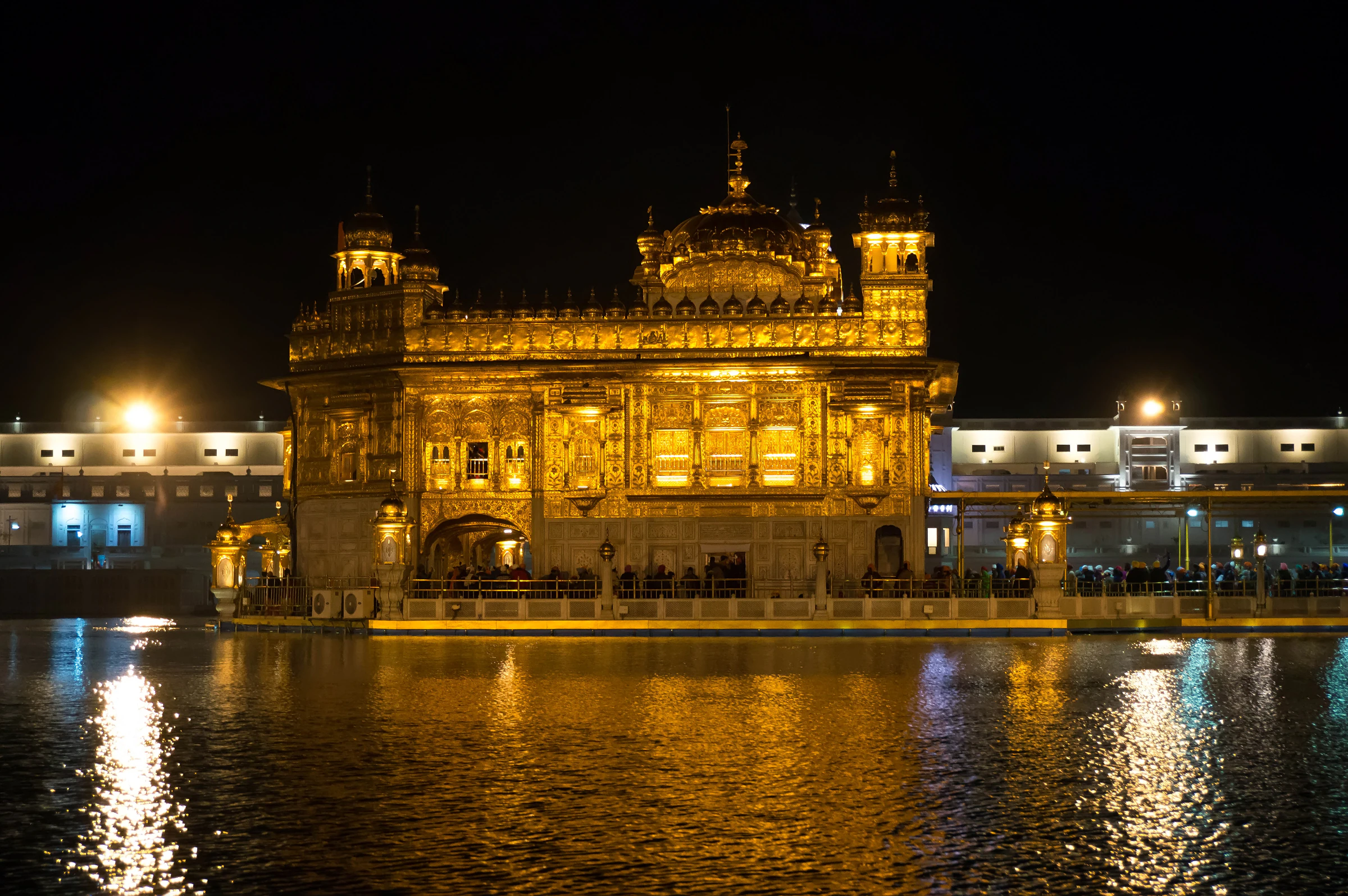
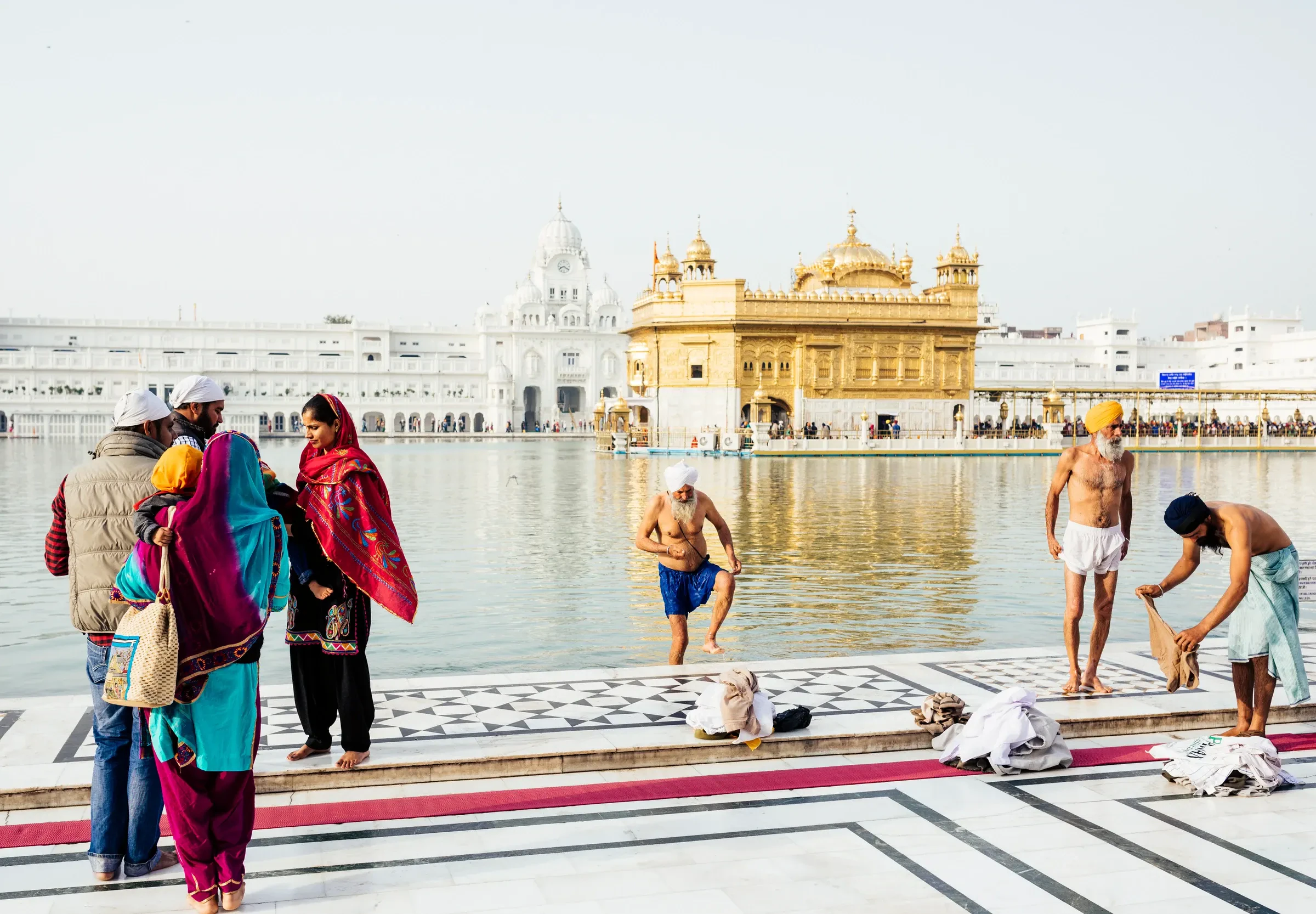
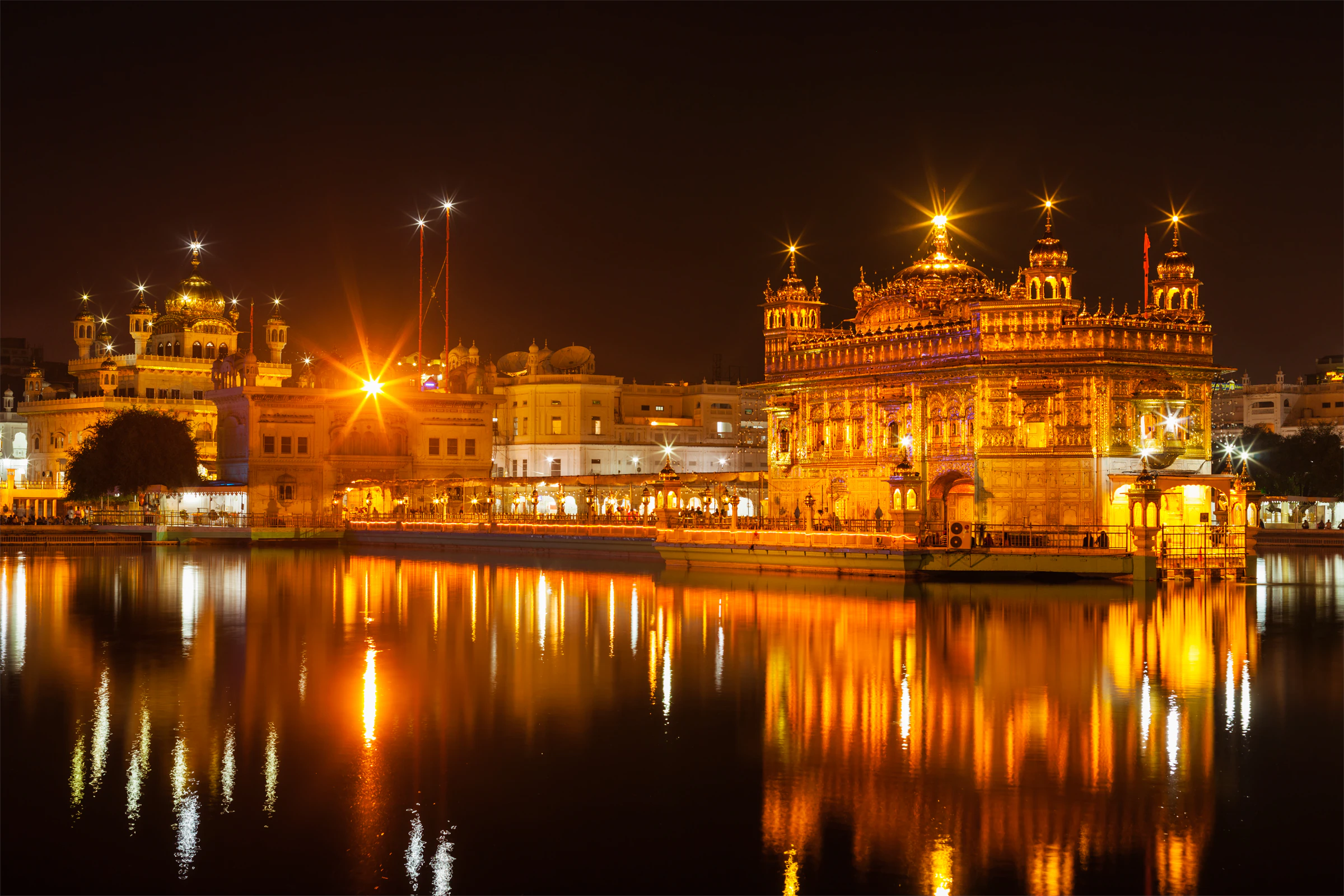
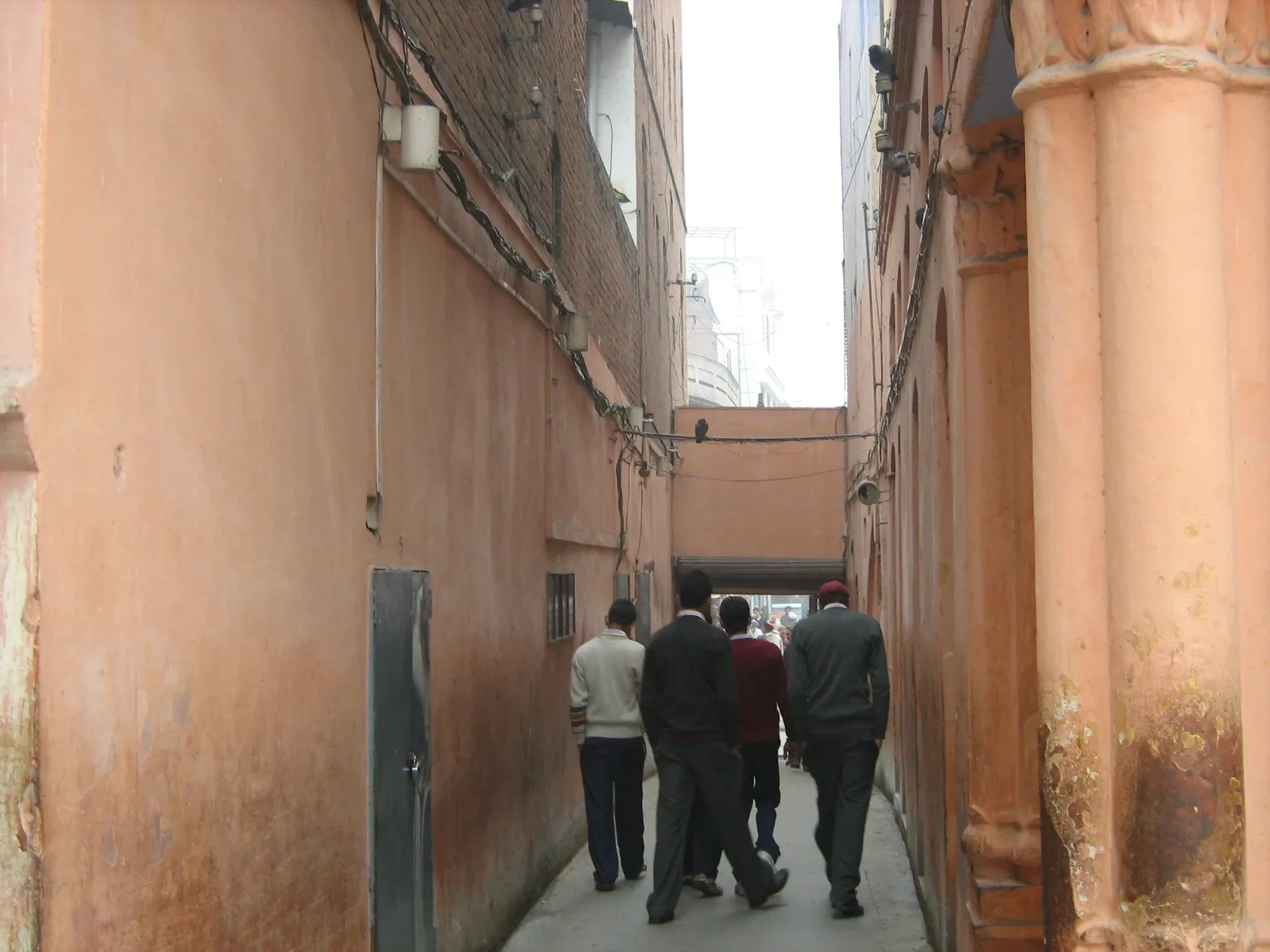
The temple itself, gold-plated and set in the middle of the Amrit Sarovar (the sacred pool that gives Amritsar its name), is smaller than photos suggest, but the complex around it is vast: a marble walkway (the parikrama) circles the pool, and the langar hall feeds tens of thousands of people a day. Budget at least half a day for a first visit, and come back at a different time if you can. Dawn and late evening, when the crowds thin out and the dome is lit, are when the place feels most like what it is: a working shrine, not a sight.
How long: Half a day minimum; most people return at least once more.
The Attari-Wagah border
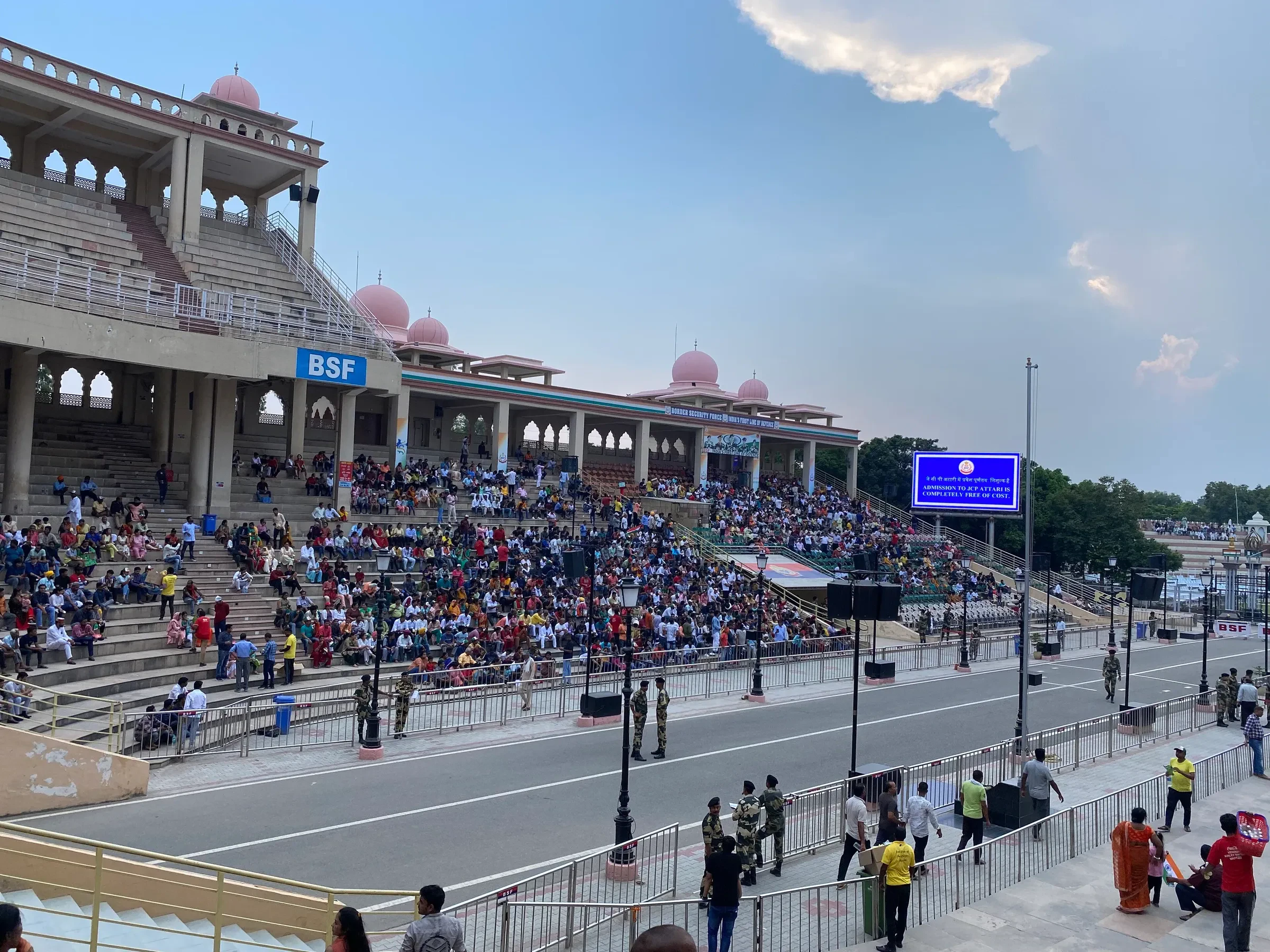
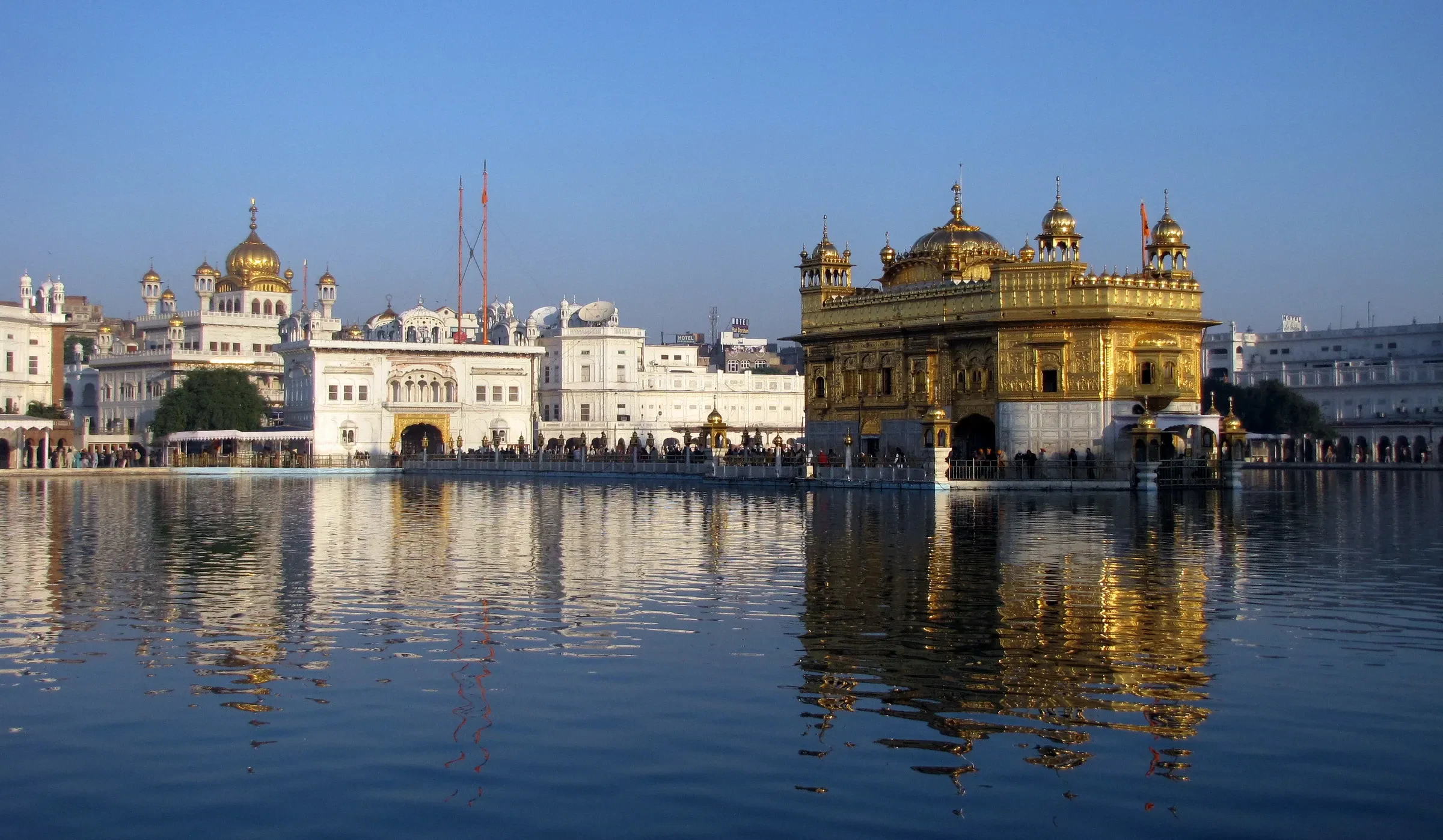
Every evening, Indian and Pakistani border guards face off in a choreographed, high-kicking retreat ceremony, then lower their flags as the border closes for the night. It's part military drill, part patriotic pep rally, with a stadium crowd cheering on each side. Since May 2025 the gates on the line have stayed shut and the usual handshake between the two sides no longer happens (The Tribune, 15 August 2025). The ceremony is scheduled for about half an hour; getting there, queuing and getting back takes most of an afternoon or evening.
How long: Half a day, mostly travel and queuing, for a show of about 30 minutes.
Jallianwala Bagh
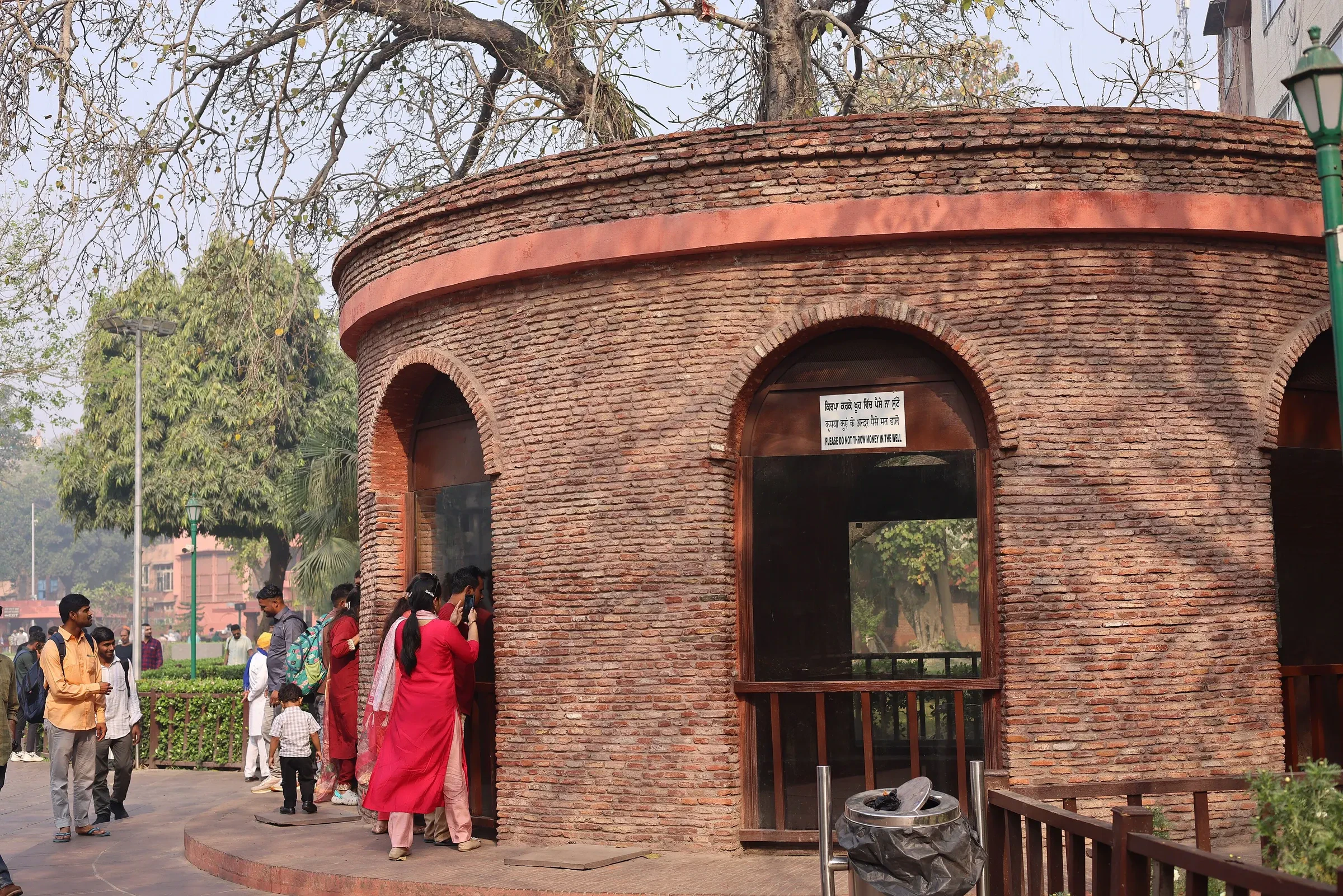
The walled garden where British troops opened fire on an unarmed crowd in 1919, killing hundreds. The bullet-marked wall and the well where people jumped to escape the shooting are both still there, alongside a memorial and a small museum. It's a short, quiet visit, a few minutes' walk from the Golden Temple, and worth doing on the way in or out.
How long: 30 to 45 minutes.
The Partition Museum
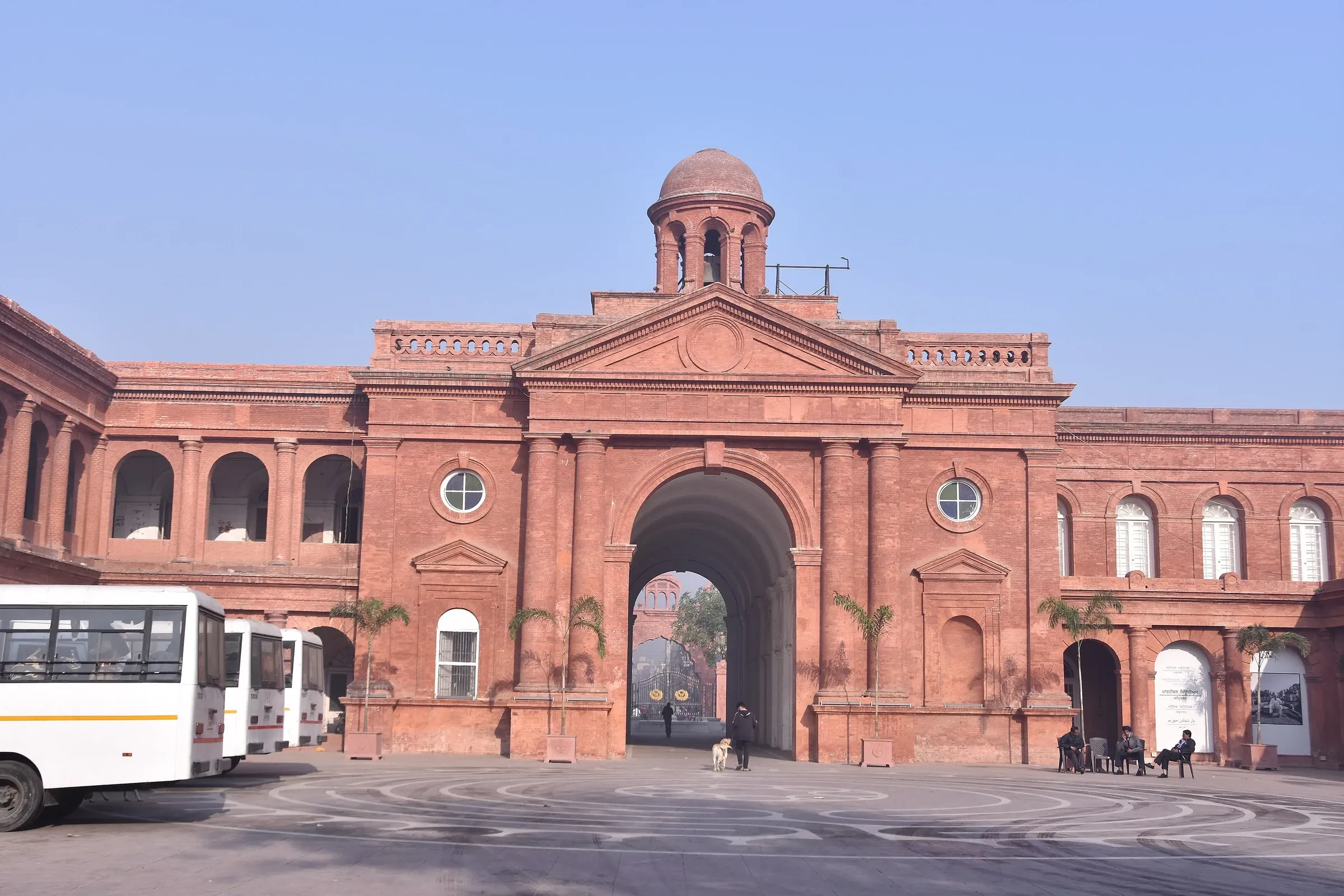
This was the world's first museum dedicated to the 1947 Partition of India and Pakistan, housed in Amritsar's old Town Hall and built largely around oral histories and objects donated by survivors and their families. It goes deeper and hits harder than Jallianwala Bagh, and the two pair up naturally since they're a short walk apart.
How long: 1 to 1.5 hours.
Things to do
Walk the parikrama and see the temple lit at night. The marble path around the Amrit Sarovar is where most of the temple's life happens: people sitting quietly, reading scripture aloud, or just watching the water. The whole complex is lit up every night, with the dome and its reflection in the pool making for the temple's best-known image; it's also markedly quieter after dark than during the day.
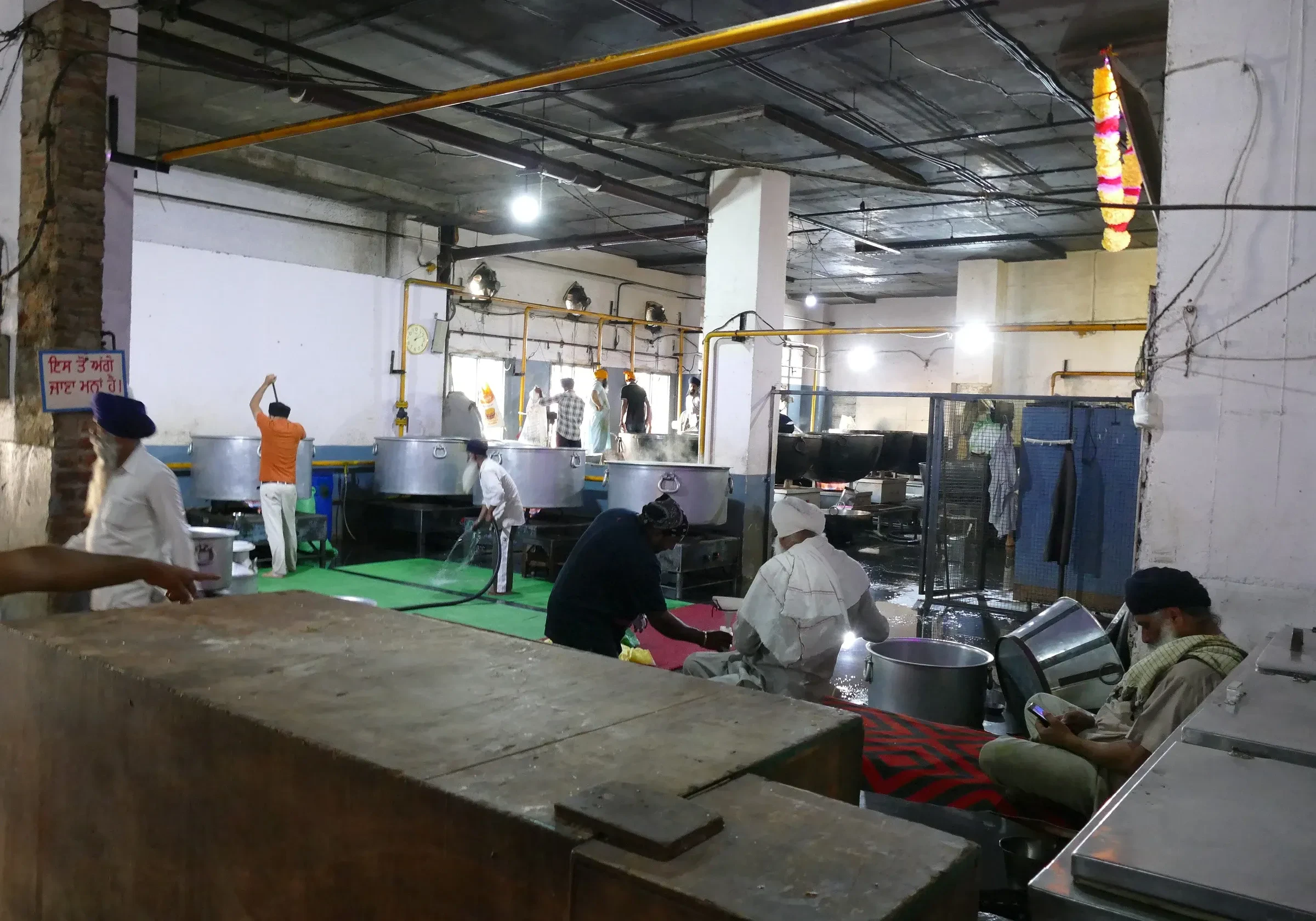
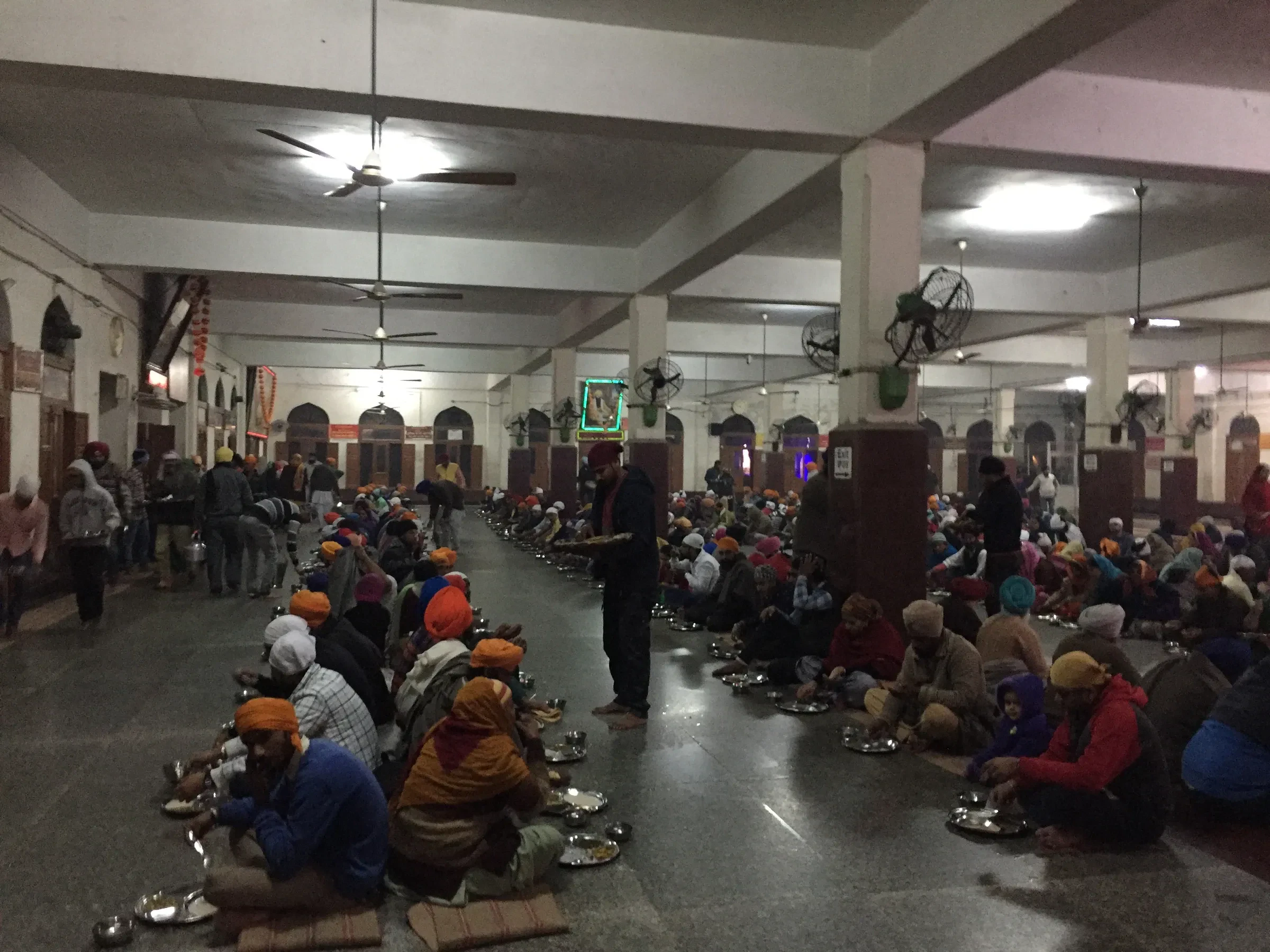
Eat at the langar, and volunteer if you have time. The temple's free community kitchen serves an estimated 75,000 to 100,000 meals a day to anyone who comes, regardless of religion or nationality, making it one of the largest free kitchens in the world. Join the queue, sit on the floor in one of the long communal rows, and eat with your hands from a metal plate. Volunteering (sewa) in the kitchen, rolling dough, washing dishes, serving food, is open to any visitor who asks; it's a better way to understand the place than watching from the side.
Consider a night at the free guest houses. The temple authority runs sarais (guest houses) for pilgrims and visitors of any background. Foreign visitors need to show their passport to be given a bed, and the rooms and dormitories are free, given as seva (service). Availability varies, so ask on arrival rather than counting on a bed. It's basic and communal and won't suit everyone, but it's an unusual way to experience the temple outside visiting hours.
Cover your head and go barefoot. Everyone, regardless of religion, must cover their head (scarves are handed out free near the entrance if you don't bring one) and remove their shoes before entering the complex, leaving them at the free counters provided and washing their feet in the shallow channel at the entrance. Shorts, short skirts and sleeveless tops aren't appropriate; alcohol, cigarettes and chewing gum aren't allowed inside at all.
Look for the foreigners' enclosure at Wagah. Travel sites report a separate queue and seating area for foreign passport holders, and say you need your actual passport rather than a photo of it. No official BSF page confirms this, so ask when you arrive. Get there well before the start time, and travel light: security is strict, and most bags aren't allowed inside.
What to eat in Amritsar
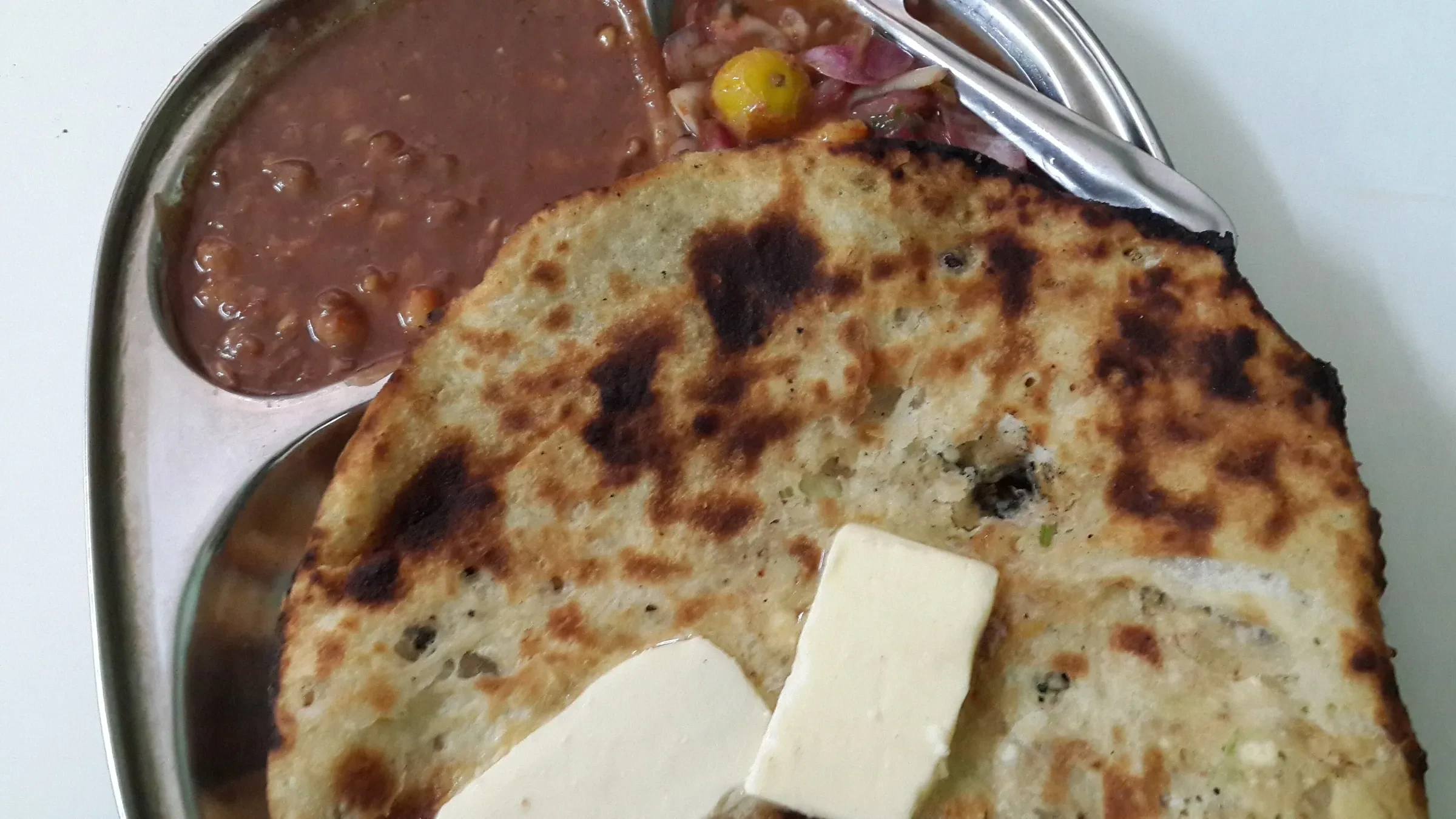
Amritsari kulcha is the city's signature dish: a stuffed, tandoor-baked flatbread, usually filled with spiced potato, paneer or onion, served with chickpea curry and a slab of butter. Pair it with makhani dal, a slow-cooked black lentil dish finished with cream and butter, and a glass of Punjabi lassi, thick enough to need a spoon. Kulcha shops are everywhere in the old city, so you don't need a specific address. Kesar Da Dhaba, which dates to 1916, is best known for its dal makhani.
Best time to visit
October to March is best, for the same reason as Delhi and Rajasthan: Punjab's plains get uncomfortably hot from April, and the heat holds through the early monsoon months. Avoid April to June if you can. Winter mornings can be genuinely cold and foggy, which occasionally delays trains, so build in some slack if you're catching an early service either way.
Getting there and around
By train, Amritsar is a straightforward run from Delhi. The Swarn Shatabdi (train 12029) leaves New Delhi at 07:20 and reaches Amritsar at 13:30, about 6 hours 10 minutes, and doesn't run on Thursdays. The Delhi to Amritsar Vande Bharat (22487) leaves Delhi at 15:15 and arrives at 20:45, about 5 hours 30 minutes, and doesn't run on Fridays. Timetables are from railmitra.com listings (6 October 2026), so check IRCTC when you book. Both are air-conditioned chair-car services.
By air, Amritsar's Sri Guru Ram Dass Jee International Airport is about 11km from the Golden Temple, with frequent flights from Delhi (a little over an hour) on Air India, IndiGo and other domestic carriers. UK travellers have had a shortcut here: Air India has flown direct from London Gatwick to Amritsar, so you could start a north India trip in Amritsar itself rather than flying via Delhi. A report from 28 September 2026 (AeroRoutes) says the Gatwick service is cancelled from 25 October 2026, so check what is flying before you plan around it.
By road, Amritsar is around 450km from Delhi, officially about 5 hours 40 minutes by car but realistically more like 6 to 8 hours once you allow for traffic through Punjab's towns; the train is faster and far less tiring. From Dharamshala or McLeod Ganj, it's a more manageable road link, roughly 4.5 to 5 hours, which is why Amritsar works as a western bookend to a Himachal trip.
Around town, autos and cycle-rickshaws cover the short hop between the railway station and the Golden Temple in 10 to 15 minutes. For Wagah, 28km away, a shared jeep, taxi or one of the tourist buses that run from near the temple in the afternoon are all straightforward; allow about 45 minutes to an hour each way, more if you're travelling right before the ceremony.
How long to spend, and which route guide to use
If you're tight on time, stick to one day: the Golden Temple in the afternoon and evening, Wagah the same or the next afternoon, then move on. Two days is the more satisfying version, with a dawn return to the temple and unhurried time for Jallianwala Bagh and the Partition Museum. Beyond that, there isn't a natural next stop nearby, so Amritsar rarely works as a base for longer than 2 to 3 days.
Most travellers reach it one of two ways. Some come at the end of a north India loop out of Delhi, alongside the Golden Triangle and full Rajasthan, which is how our 3-week and 1-month India itineraries use it. Others come down from the hills, tacking it on as the western end of a Himachal Pradesh circuit after Dharamshala or McLeod Ganj.
Our Golden Triangle trip doesn't include Amritsar, so ask us if you want to add it.