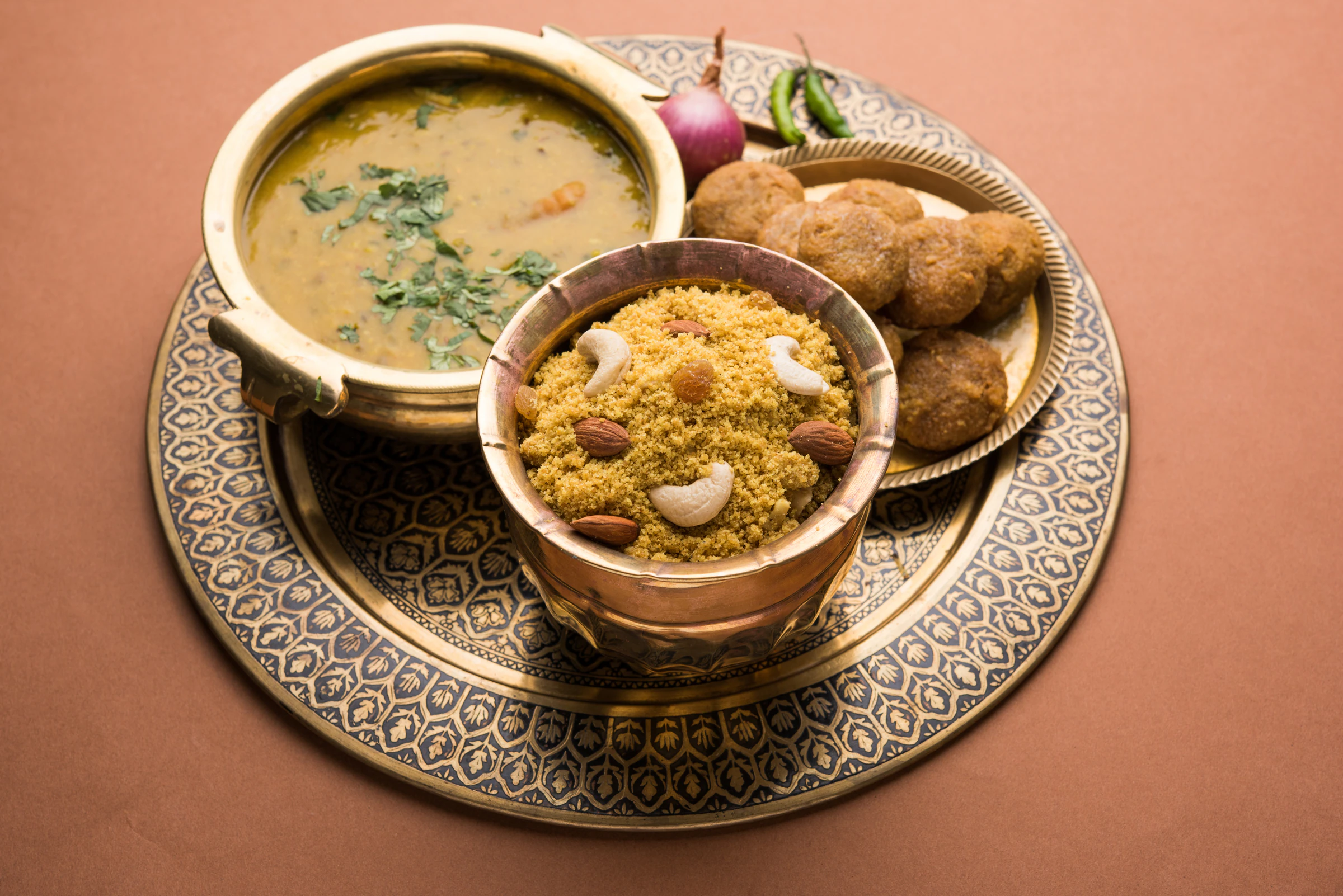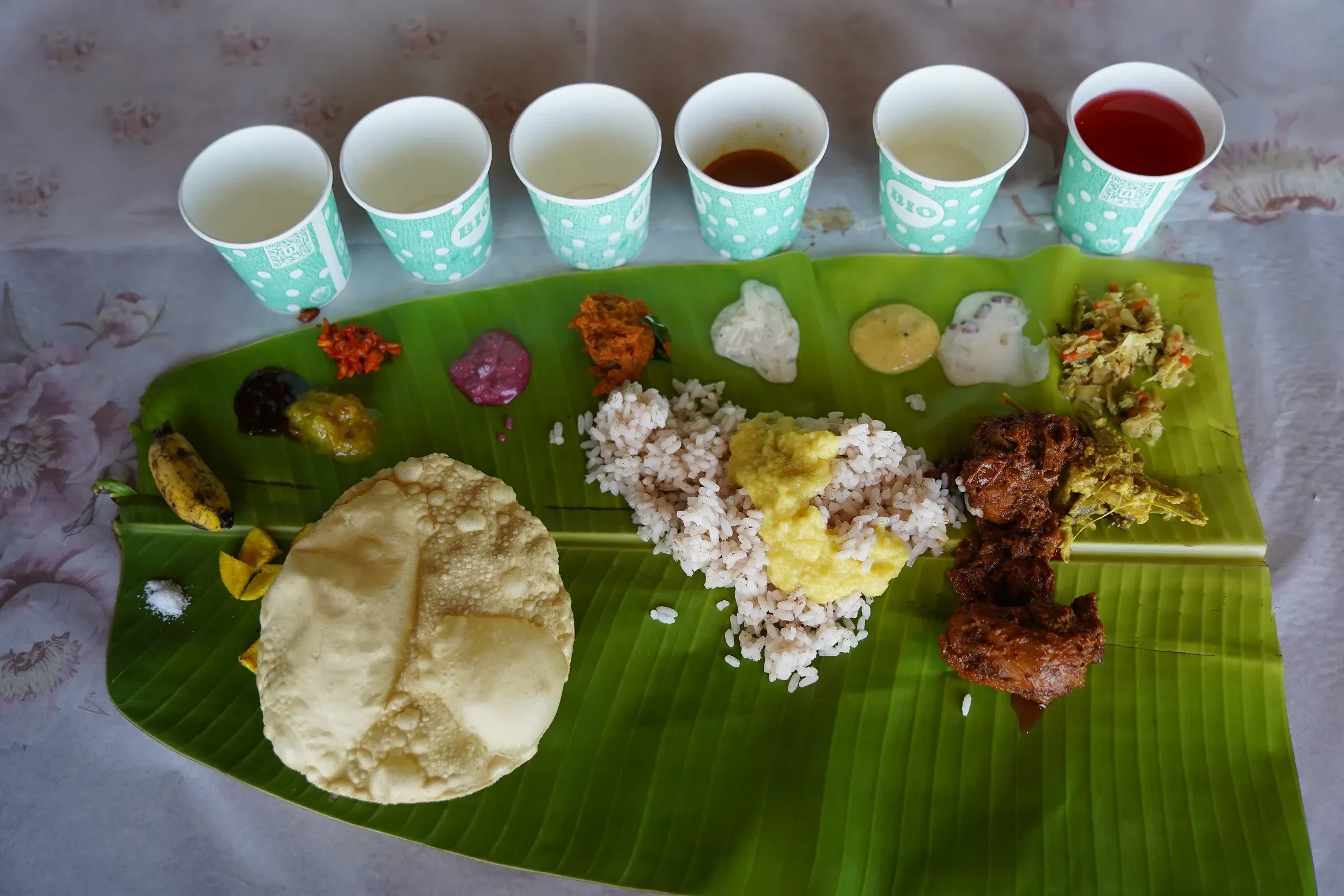
Hindu Goan and Catholic Goan kitchens
Goa's food splits along the same line as its history. Portugal held the territory from 1510 to 1961, and Catholic Goan cooking still carries that layer: pork, vinegar-based curries, bread baked in a wood oven, and feni distilled from cashew or coconut. Hindu Goan cooking, associated in particular with the Saraswat Brahmin community, is built more around fish, coconut, kokum and rice, with little pork and often no beef. Fish curry rice and xacuti, a roasted, coconut-based spice paste that predates the Portuguese arrival, sit closer to this side of the table, though both communities cook and eat them today. Statewide, the 2011 census recorded Goa as about 66% Hindu and 25% Christian, mostly Catholic, with a higher Catholic share in South Goa than in the north.
Fish curry rice and xacuti
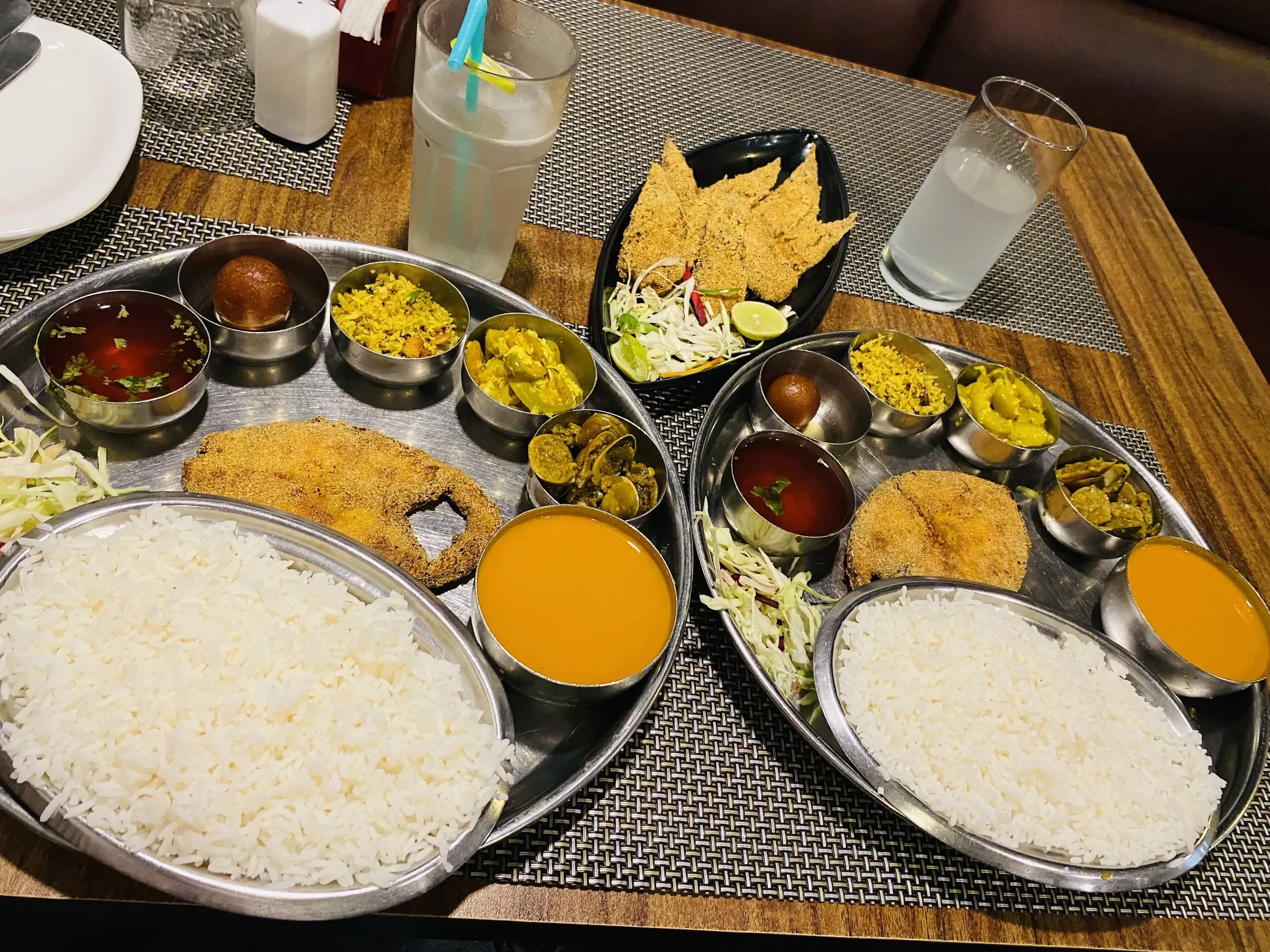
Fish curry rice is Goa's everyday meal: a tangy, coconut-based curry, usually made with kingfish, pomfret or mackerel, spooned over plain rice. It's what a fish thali is built around, and it's the dish to order if you only try one thing here. Xacuti (pronounced "sha-KOO-tee") is heavier work: a spice paste of roasted coconut, dried chillies, poppy seed and a long list of whole spices, ground down and cooked with chicken or mutton. It's older than the Portuguese period, often traced to Goan village kitchens, and it's worth ordering somewhere that makes the paste fresh rather than from a jar.
Vindaloo and sorpotel: the Portuguese layer
Vindaloo is Goa's best-known export, and its name gives the story away. It comes from the Portuguese carne de vinha d'alhos, a pork dish preserved in wine and garlic that sailors carried on the voyage out. Goan cooks swapped palm vinegar for the wine and added local chillies, turning a preservation technique into a fiery, tangy curry, traditionally made with pork. The vindaloo most people know abroad, thick with tomato and mild, is a long way from the sharp, vinegar-forward original.
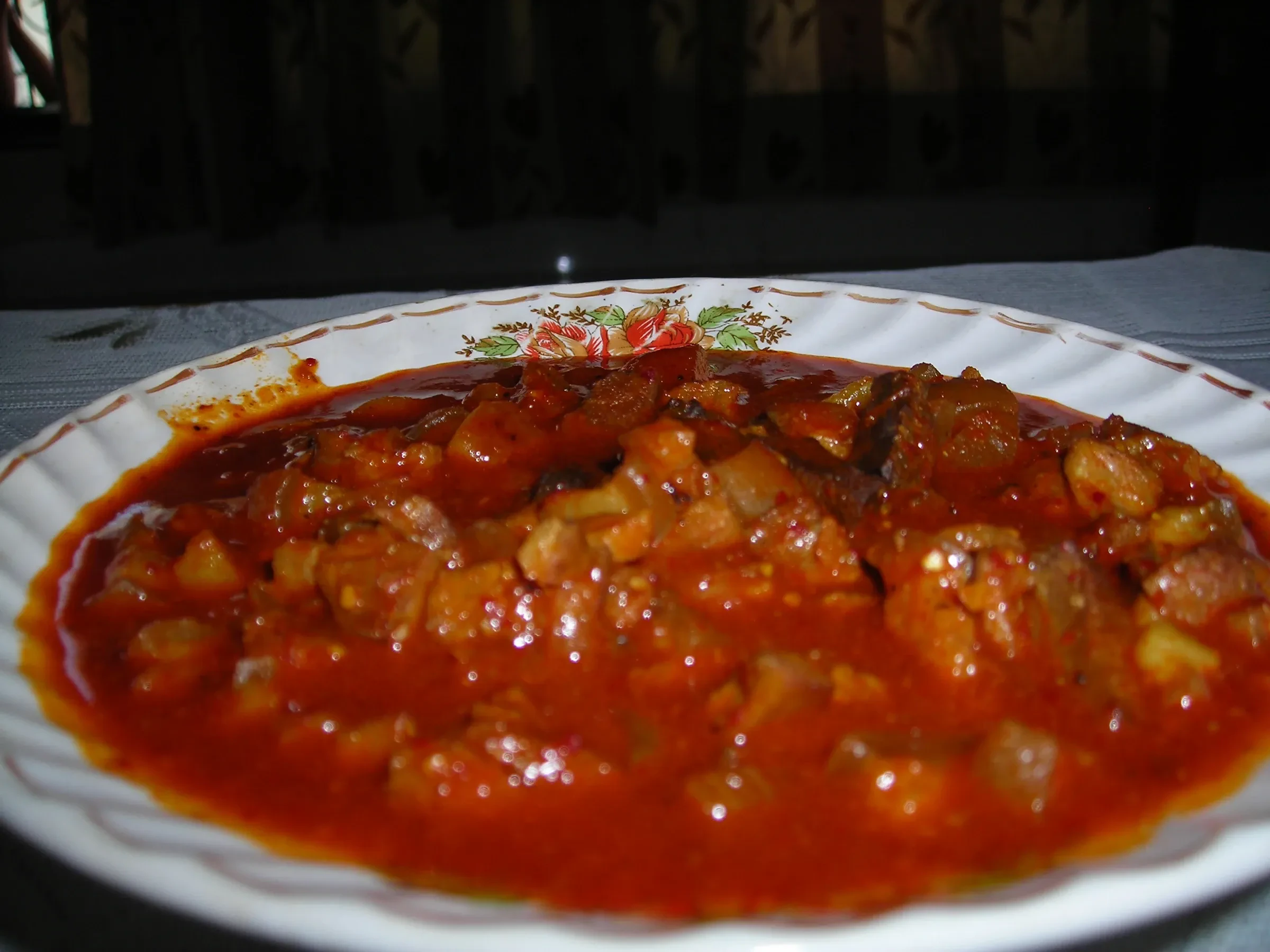
Sorpotel goes further into pork offal: a hearty vinegar-and-blood curry traditionally made for Christmas and weddings in Catholic Goan homes, and now on most Goan-food menus. It's an acquired taste for some travellers, but it's the dish to try if you want the real version of this side of the cuisine rather than the shack-menu one.
Cafreal, prawn balchão and the rest of the table
Chicken cafreal is chicken marinated in a green paste of coriander, green chilli, garlic and spices, then pan-fried or grilled. It didn't originate in Goa itself but in Portugal's African colonies, most likely Mozambique, brought over by Portuguese and African soldiers and folded into Goan cooking. Prawn balchão is a pickled prawn curry, preserved in vinegar and dried red chillies, sharp and slow-cooked enough to keep for days rather than a dish you'd want as your main plate every meal. Both are Catholic Goan staples, and both turn up on almost any Goan restaurant menu alongside vindaloo and xacuti.
Bebinca, poi bread and ros omelette
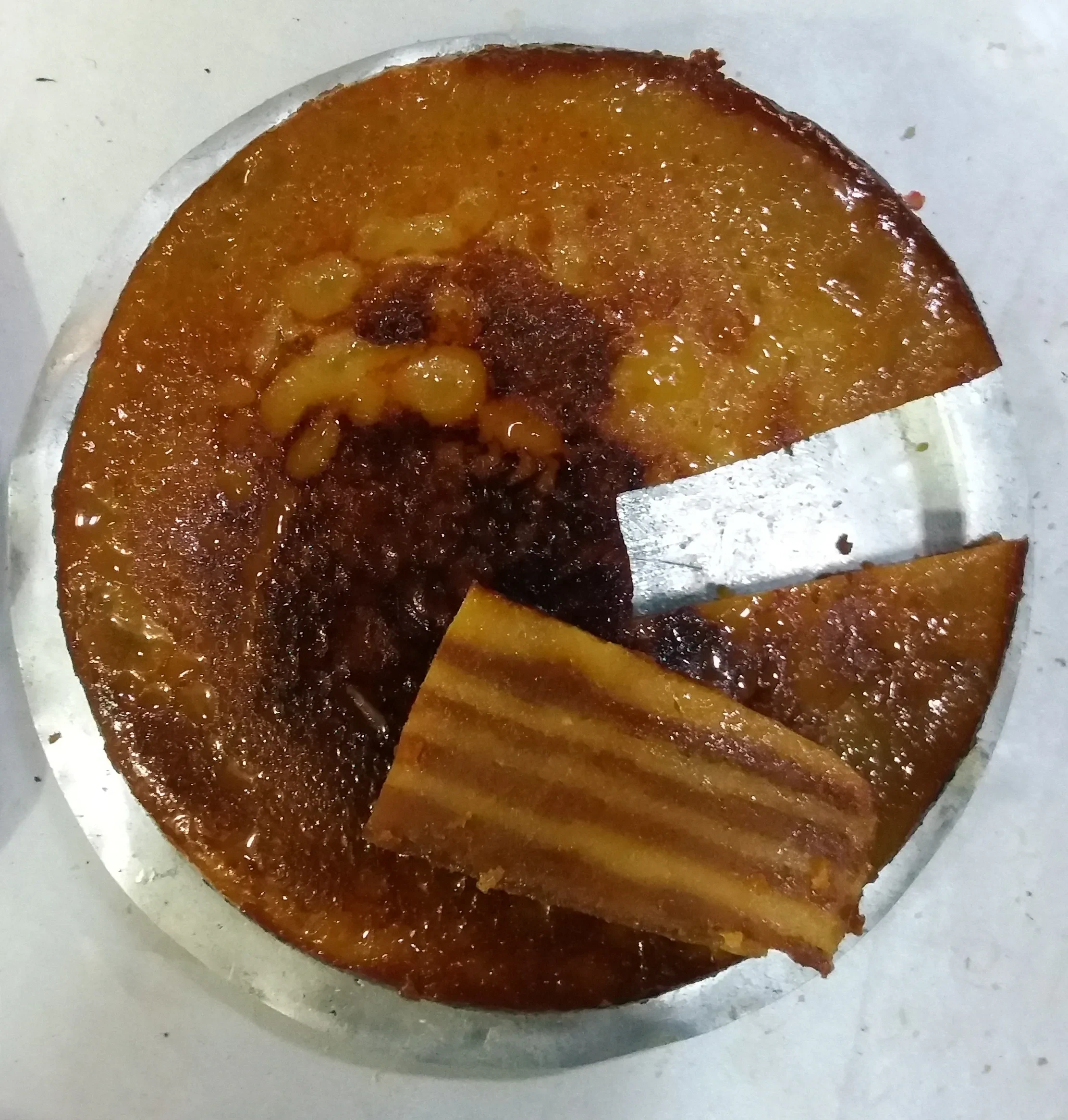
Bebinca is Goa's signature dessert, a dense, layered coconut-and-egg cake baked one thin layer at a time, traditionally for Christmas and now sold year round. Poi (also spelled poee or pao) is the local Goan bread, a slightly hollow white roll once carried door to door by local bakers each morning. Fewer poders (bread vendors) still do the rounds, but the bread itself remains a breakfast fixture, often alongside cafreal or a curry. Ros omelette is Goa's own street snack: a plain omelette drowned in a spiced gravy similar to a thin xacuti, said to have started as working-class food in Margao in the 1980s before spreading north through the state in the 1990s.
Feni, honestly
Feni is Goa's local spirit, distilled from either fermented cashew apple juice or coconut palm sap, and it's worth trying once if you drink. Cashew feni got India's first Geographical Indication tag for a liquor in 2009, which legally restricts genuine feni production to Goa. It's strong, typically 40 to 45% ABV, and an acquired taste; most travellers try it as a small measure with soda or a local mixer rather than neat. Drinking in public places can bring a fine, so keep it to a bar, restaurant or shack. If you don't drink, feni is easy to skip; nothing else on this list depends on it.
Where to eat: beach shacks, local thalis, Mapusa and Fontainhas
Beach shacks, in Anjuna, Baga, Palolem and the rest, are the easiest place to eat on a Goa trip, and grilled kingfish or a seafood platter there is a reasonable, if pricier, way in. For the same food done more cheaply and often better, look slightly inland for a fish thali restaurant with a mostly local clientele rather than a beachfront one; a full thali there covers curry, rice, a fried fish, a vegetable and a sol kadi (a pink, kokum-and-coconut digestif drink) for a fraction of shack prices. Martin's Corner, running in Betalbatim, South Goa, since 1989, is a long-standing, well-known example: it grew from a few tables serving taxi drivers into one of the state's best-known seafood addresses. It serves lunch and dinner, but check its hours before you go.
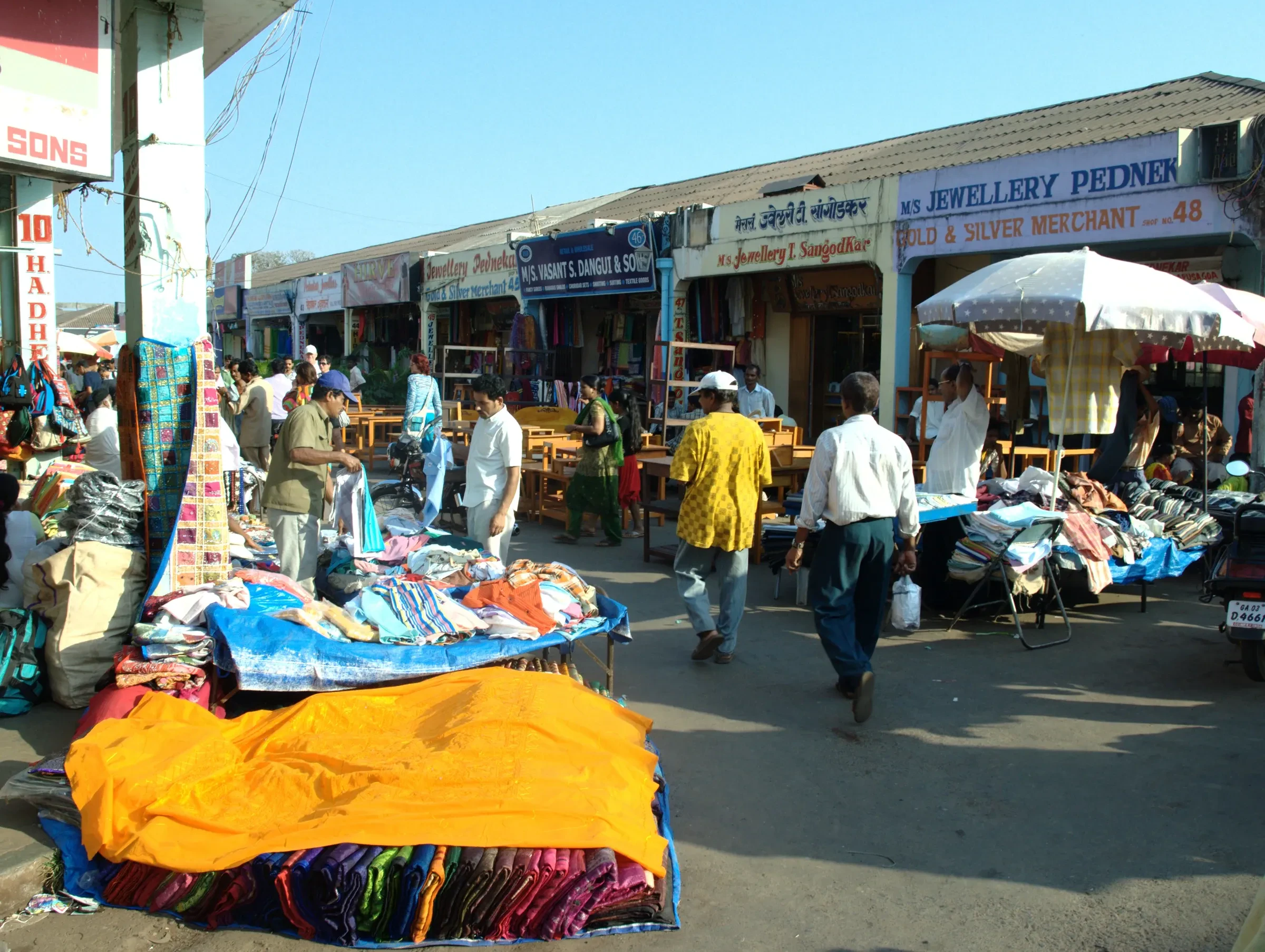
Mapusa's Friday market, held every Friday morning in North Goa's main market town, is where locals do their own shopping: spices, dried fish, homemade sausages (chouriço) and fresh produce, sold by vendors who come in from surrounding villages. It's a better place to buy a spice blend or a bottle of feni to take home than to eat a full meal there.
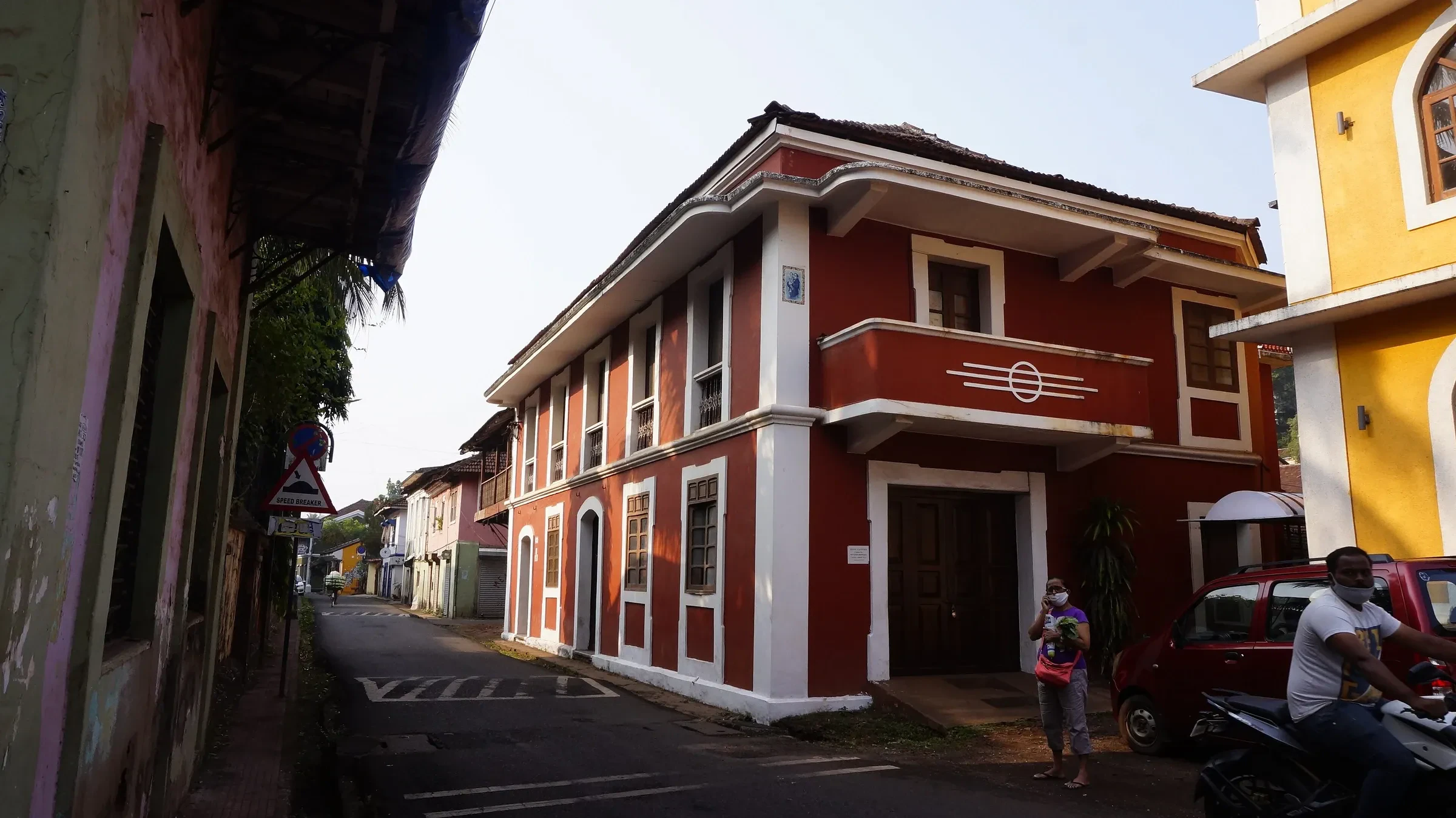
In Panjim, the old Latin quarter of Fontainhas, a grid of yellow, blue and red Portuguese-era houses, holds some of the city's most established Goan-Portuguese restaurants, including houses converted from old family homes that still serve dishes like vindaloo and xacuti in their original setting.
Safety and hygiene
Goa runs an annual fishing ban along its coast, usually from 1 June to 31 July, to let fish stocks recover. It covers mechanised boats and trawlers; small registered canoes with outboard motors are exempt. Fresh local catch is scarcer through the monsoon, and some seafood served in this window is frozen or trucked in from elsewhere on the coast, so it's worth being more cautious about seafood specifically in June and July: stick to places with a fast, visible turnover, and lean towards vegetarian dishes or well-cooked meat if you're unsure how fresh a fish dish is. Year round, the same general rules apply as anywhere in India: bottled or filtered water, hot food that's cooked to order rather than sitting out, and caution with ice, cut fruit and raw salads from casual stalls.
Vegetarian notes
Goa's menus lean towards fish and meat, so vegetarians need to ask a bit more here than in, say, Kerala or Rajasthan. Hindu Goan home cooking has a genuine vegetarian side, built around kokum, coconut and vegetables like taambdi bhaji (a red amaranth greens dish), and some restaurants offer a vegetable xacuti or mushroom xacuti alongside the meat and fish versions. Away from beach shacks, which are mostly built around seafood, a fish thali restaurant will usually also do a simpler vegetarian thali on request.