Our Goa travel guide covers the state as a whole. This page goes further into the choice most first-time visitors actually face: which half to base yourself in, beach by beach, and how to move between the two if you'd rather not choose at all.
North Goa vs South Goa at a glance
| North Goa | South Goa | |
|---|---|---|
| Typical daily budget | ₹1,200 to 1,800; hostel dorms are easy to find | Similar, though beach huts in Palolem cost a little more than a North Goa dorm bed in peak season |
| Best months | November to March | November to March |
| Flight time from the UK, US or Australia | Most travellers connect through Mumbai or Delhi, though some seasonal charters and Gulf flights land at Mopa; then take a short domestic flight or the Konkan Railway to whichever airport suits | Same as North Goa |
| Visa | India e-Visa, same rules at both airports (see the India visa guide) | Same as North Goa |
| Beaches | Busier and more built up: Anjuna, Vagator, Arambol, Calangute and Baga | Calmer and less developed: Palolem, Agonda, Patnem, Colva, Cola |
| Food | Beach shacks everywhere, plus cafes and international menus around Anjuna | Fewer shacks, a bit more traditional; South Goa's Catholic-Goan cooking is a touch stronger here |
| Culture | Old Goa's churches, Anjuna's hippie-trail history, the Wednesday and Saturday markets | Quieter fishing villages, less foreign development, fewer sights to tick off |
| Nightlife | Clubs, beach bars, live music and two big weekly markets | A handful of bars; Palolem enforces a 10pm noise curfew, worked around with a weekly silent disco |
| Adventure | Watersports off Baga and Calangute, a scooter ride up to Chapora Fort | Kayaking and dolphin-watching boats from Palolem, the Cola lagoon down a dirt track |
| Ease for first-timers | Easier: hostels sit close together, Mopa is a short hop away | A little harder: fewer hostels, longer distances, best with a scooter or a booked taxi |
| Getting around | Scooter or a GoaMiles taxi between beaches minutes apart | Same options, but distances between good beaches are a bit longer |
| Solo-friendliness | Very solo-friendly: hostels, group activities and other travellers everywhere | Solo-friendly but quieter: easy to be alone, a bit harder to always find company |
Beaches: North Goa vs South Goa, beach by beach
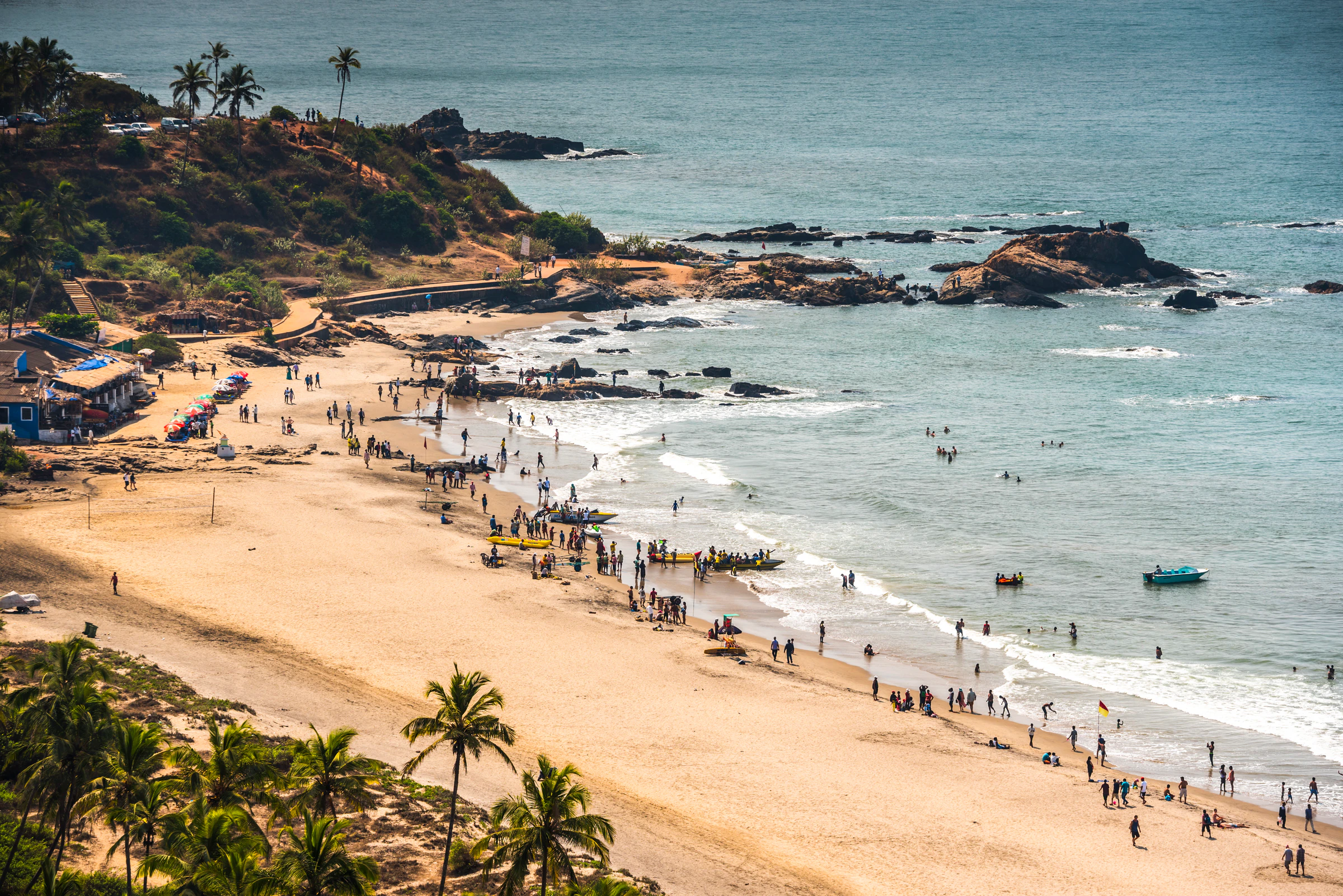
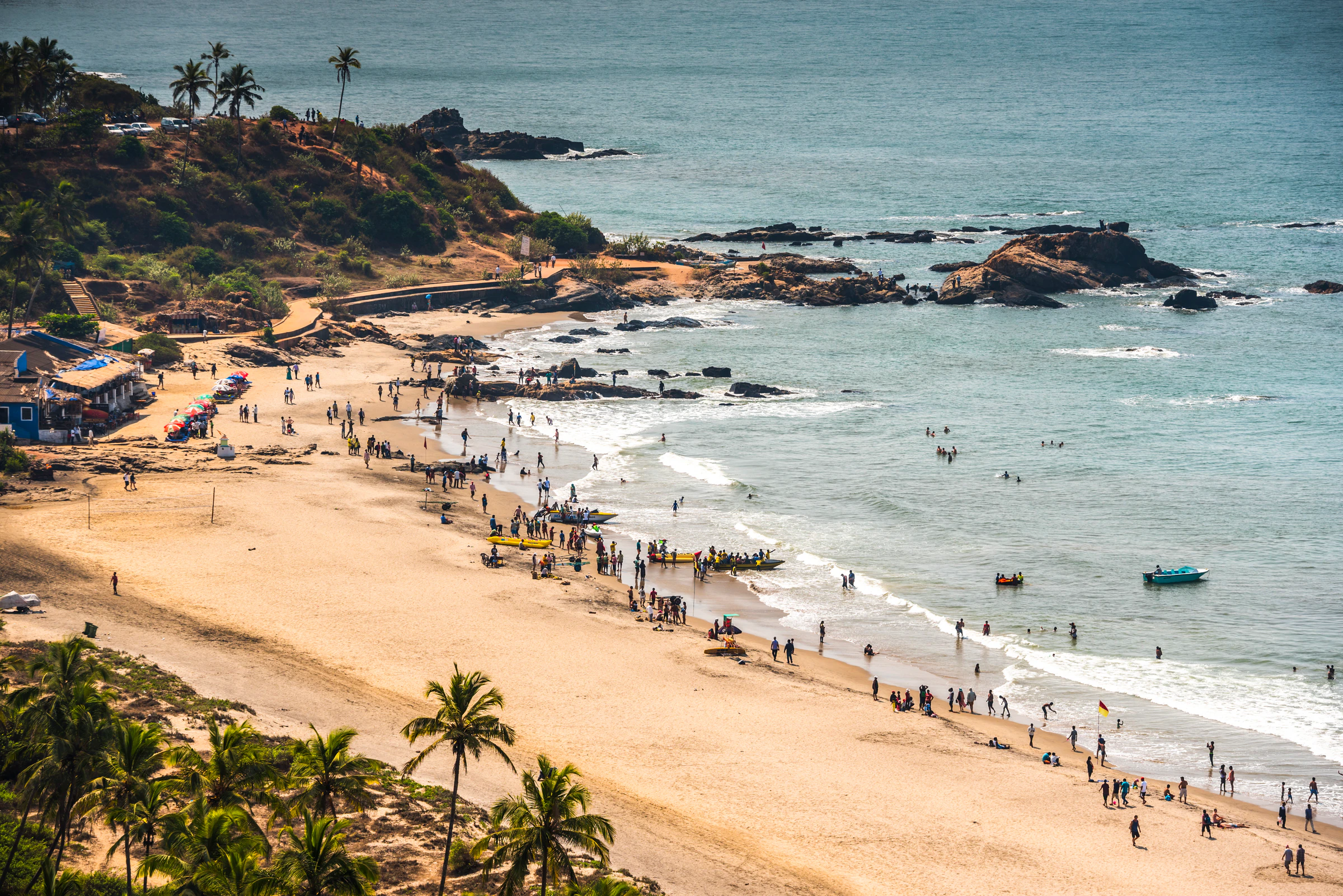
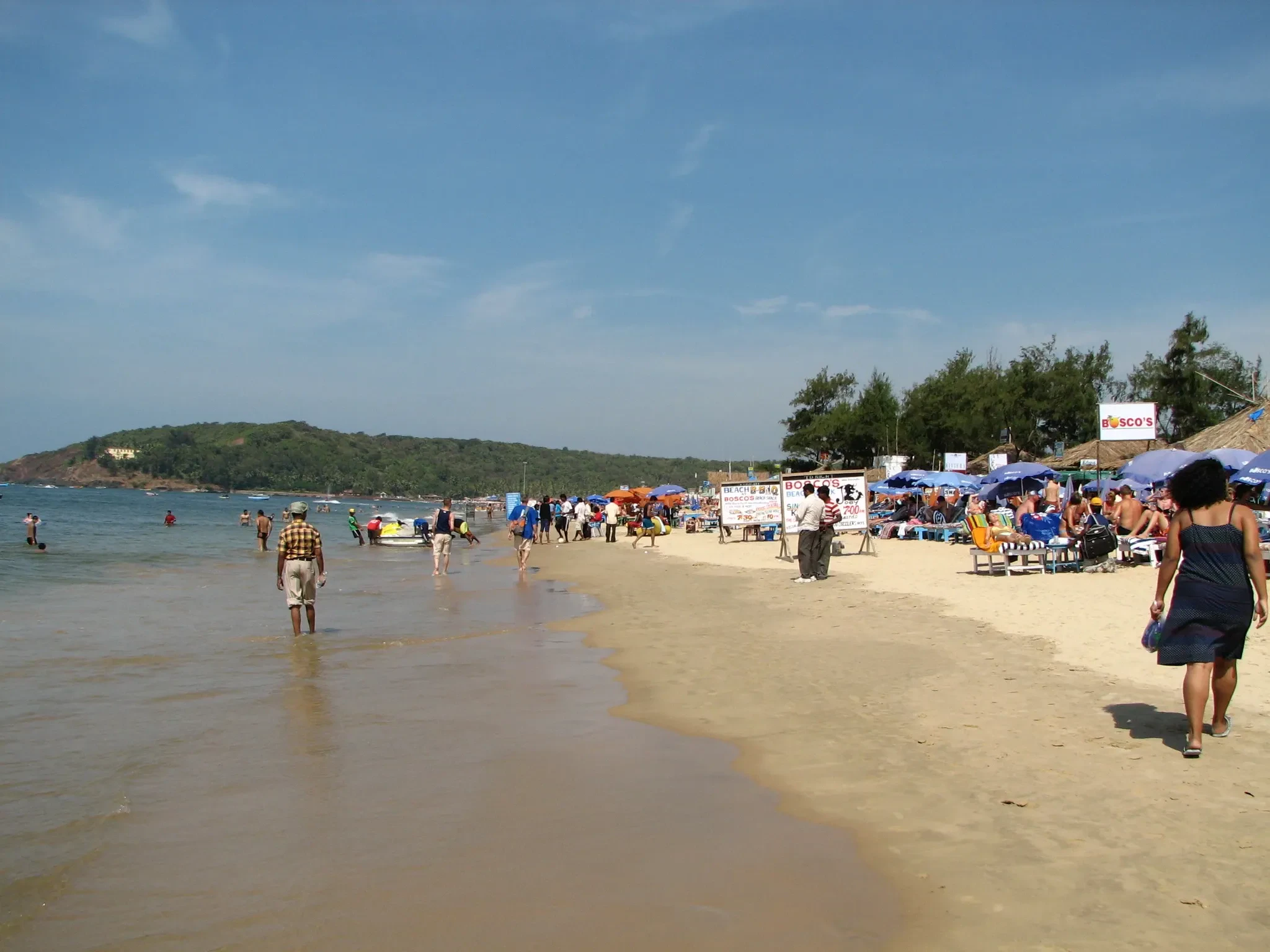
North Goa. Arambol is the northernmost beach and the most laid-back of the north's beaches: long sand, cliff paths, cheap guesthouses and a strong long-stay backpacker scene. Morjim, and the quieter Mandrem and Ashwem beside it, sit between Arambol and the river mouth, with beach huts and yoga retreats rather than bars. Anjuna is where the 1960s and 70s hippie trail ended up, with red cliffs, cafes and the Wednesday flea market. Vagator sits under the ruins of Chapora Fort and holds much of Goa's nightlife and its hostels. Baga and Calangute are the busiest, most built-up beaches in the state, popular with domestic package tourism, and it's worth naming them honestly: they're central and easy to reach, but the sand is crowded and they're the least peaceful place in Goa to actually swim or sunbathe.
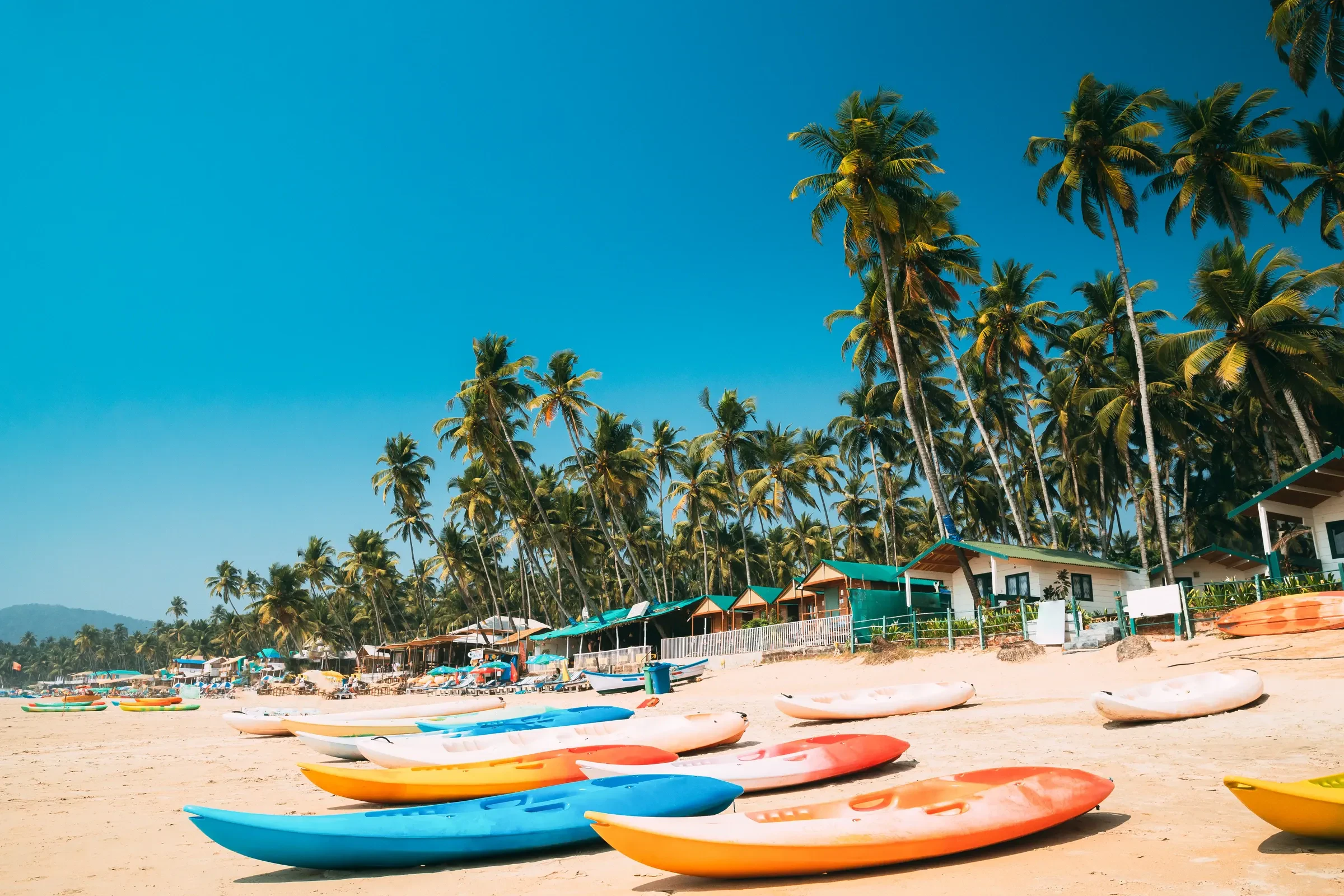
South Goa. Palolem is a curved, calm bay with kayaks for hire and huts along the sand, and it's South Goa's most social beach, though still relaxed by North Goa's standards. Patnem, the next bay south, is a short walk away and quieter again, with a similar mix of huts and yoga. Agonda, about 10km north of Palolem, is a long, straight beach with very little nightlife: pick it if you want to read, swim and sleep early. Colva and Benaulim, near Margao, are long and flat but busier with domestic visitors, similar in character to Baga and Calangute but with more space. Cola, further south again, is a small lagoon beach reached down a rough, unpaved final stretch (about 2.4km of dirt track) or by a short boat from Agonda, with tents and simple cottages rather than proper huts. It's the quietest name on this list, and worth the effort only if you have a scooter or don't mind a bumpy ride.
Winner: North Goa, for the sheer number of good beaches packed close together. South Goa's are calmer and cleaner if that matters more to you than variety.
Nightlife and markets
North Goa runs the show here. Anjuna's Wednesday flea market has been going since the hippie era and still draws a crowd for clothes, jewellery, spices and souvenirs, usually from late October to early April. Arpora's Saturday Night Market, a short ride from Anjuna and Vagator, usually runs every Saturday through the same season, roughly 6pm to 1am, with stalls, live music and food stands rather than a temple-market feel. Check that it's running that week before you plan around it. Vagator holds most of the state's beach clubs and late bars, and Baga and Calangute add more of the same on a bigger, more commercial scale. After the Arpora nightclub fire on 6 December 2025, which killed 25 people, authorities sealed several venues for safety violations, including two clubs in Vagator, so check what is open before you head out.
South Goa is quieter, and not by accident. Palolem enforces a 10pm curfew on amplified music, a rule the beach takes seriously because it's known for calm nights. The workaround is Silent Noise, a headphone party at Neptune Point on Saturday nights in season, where three DJs broadcast on separate channels through wireless headphones, so the beach itself stays silent while the dance floor doesn't. Agonda, Patnem and Cola don't even offer that much: an early night is the normal plan.
Winner: North Goa, by a wide margin, if a night out matters to you at all.
Food: North Goa vs South Goa
Both halves serve the same core dishes: fish curry rice, vindaloo, xacuti and bebinca turn up on menus everywhere, and our Goan food guide covers the two culinary traditions behind them in full. The difference is emphasis rather than variety. North Goa has more foreign-run cafes, health food and international menus, clustered around Anjuna and Vagator's long-stay scene. South Goa leans a little more towards the Portuguese-influenced, Catholic-Goan side of the menu (pork vindaloo, sorpotel, feni), which tracks with a higher Catholic population share than the north; Martin's Corner, running in Betalbatim since 1989, is a well-known example of that side of the table done properly. Beach shacks are the easy option in both halves, but a fish thali restaurant slightly inland is usually cheaper and just as good wherever you are.
Winner: a genuine tie. North Goa for range and convenience, South Goa if you want the more traditional plate without the beach-shack markup.
Quieter stays
If North Goa's density still feels like too much, Mandrem and Ashwem sit a short ride north of Anjuna with beach huts and yoga schools instead of bars, a calmer alternative without leaving the north at all. In South Goa, Agonda and Patnem already do most of that work, and Cola takes it further again: no real nightlife, no strip of shops, just a lagoon, some palms and a rough road in. Long-stay travellers doing a month or more tend to gravitate to whichever of these fits their budget and negotiate a weekly or monthly rate directly with a guesthouse rather than booking a hostel dorm the whole time.
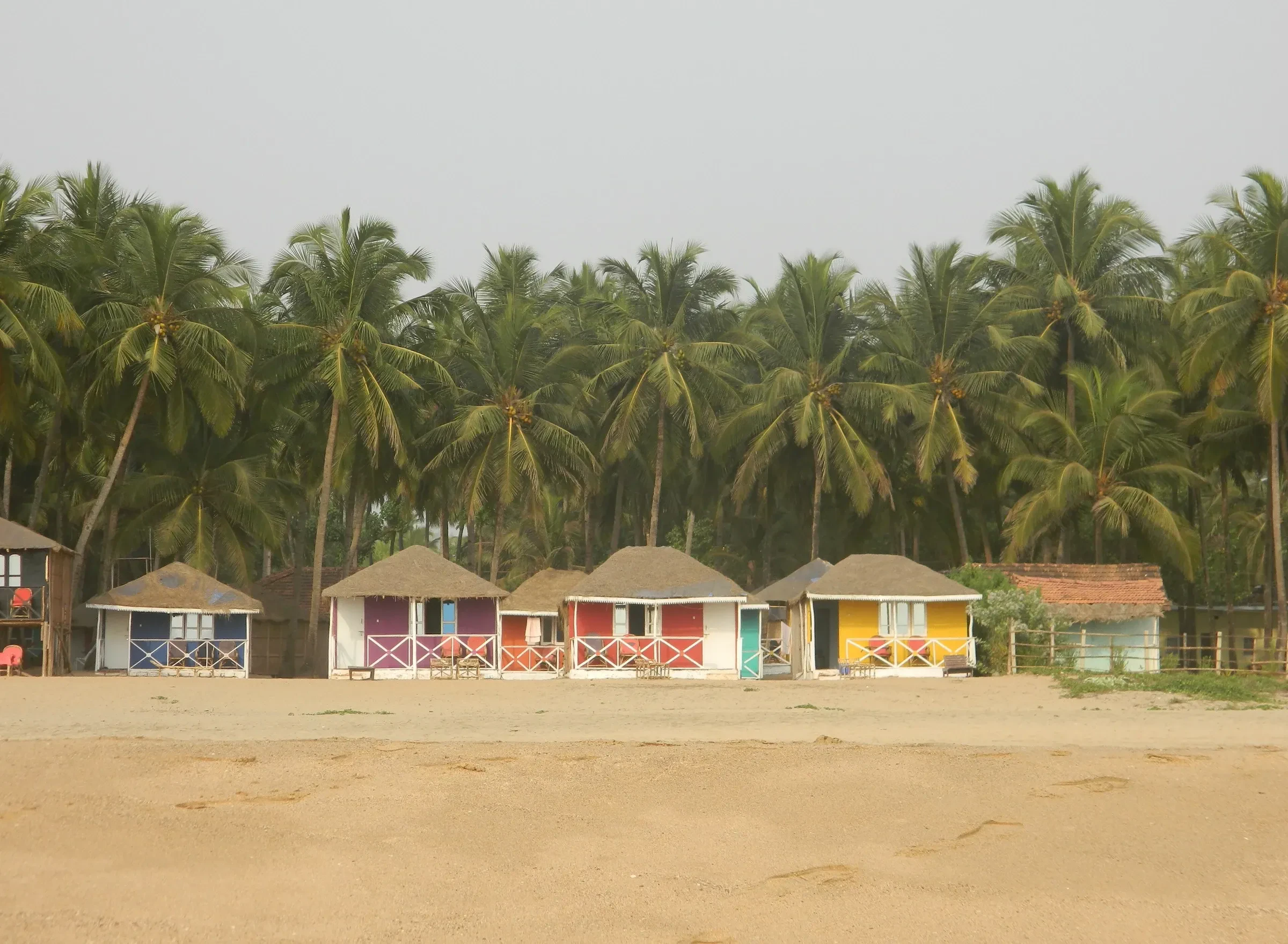
Winner: South Goa, for stretches like Agonda, Patnem and Cola that stay quiet even over Christmas and New Year, North Goa's busiest weeks.
Which airport should you fly into?
Goa has two airports, and matching the right one to your first stop saves a long taxi ride. Mopa (Manohar International Airport, GOX), in the far north near Pernem, is the natural choice for Arambol, Mandrem, Anjuna, Vagator and Calangute; a Kadamba shuttle bus runs to Calangute and Panaji for about ₹200, and Palolem is about 125km away, a long way to start a South Goa trip. Dabolim (GOI), the older airport near Vasco da Gama, is about an hour's drive from Palolem and the better choice for South Goa, though it also works for the north (around 45 minutes to an hour to Calangute or Anjuna). Ola and Uber don't operate at Mopa; use the prepaid taxi counter, the Kadamba shuttle, or GoaMiles, the state-backed taxi app, at either airport.
Winner: there's no fixed answer here. Match the airport to where you're sleeping on night one, not the other way round.
Getting between North and South Goa
The two halves sit close enough that visiting both on one trip is realistic. Driving between them, Anjuna to Palolem, takes about two and a half to three hours by taxi or scooter, roughly 90km down the coast via Margao. The Konkan Railway offers an alternative: Karmali station (near Panaji, for the north) to Canacona (near Palolem, for the south) takes about 1 hour 45 minutes and costs less than a taxi, but only a few trains run, so check the current timetable before you rely on it. Scooters are the cheapest way to cover the distance yourself, at about ₹300 to ₹600 a day, but by law you need your home motorbike licence plus an International Driving Permit that covers motorbikes, and a helmet is compulsory.
Winner: North Goa if convenient onward transport matters more to you than nightlife; South Goa if you're weighing up the effort of the transfer, since the trains are few and a real constraint.
Which is more solo-friendly?
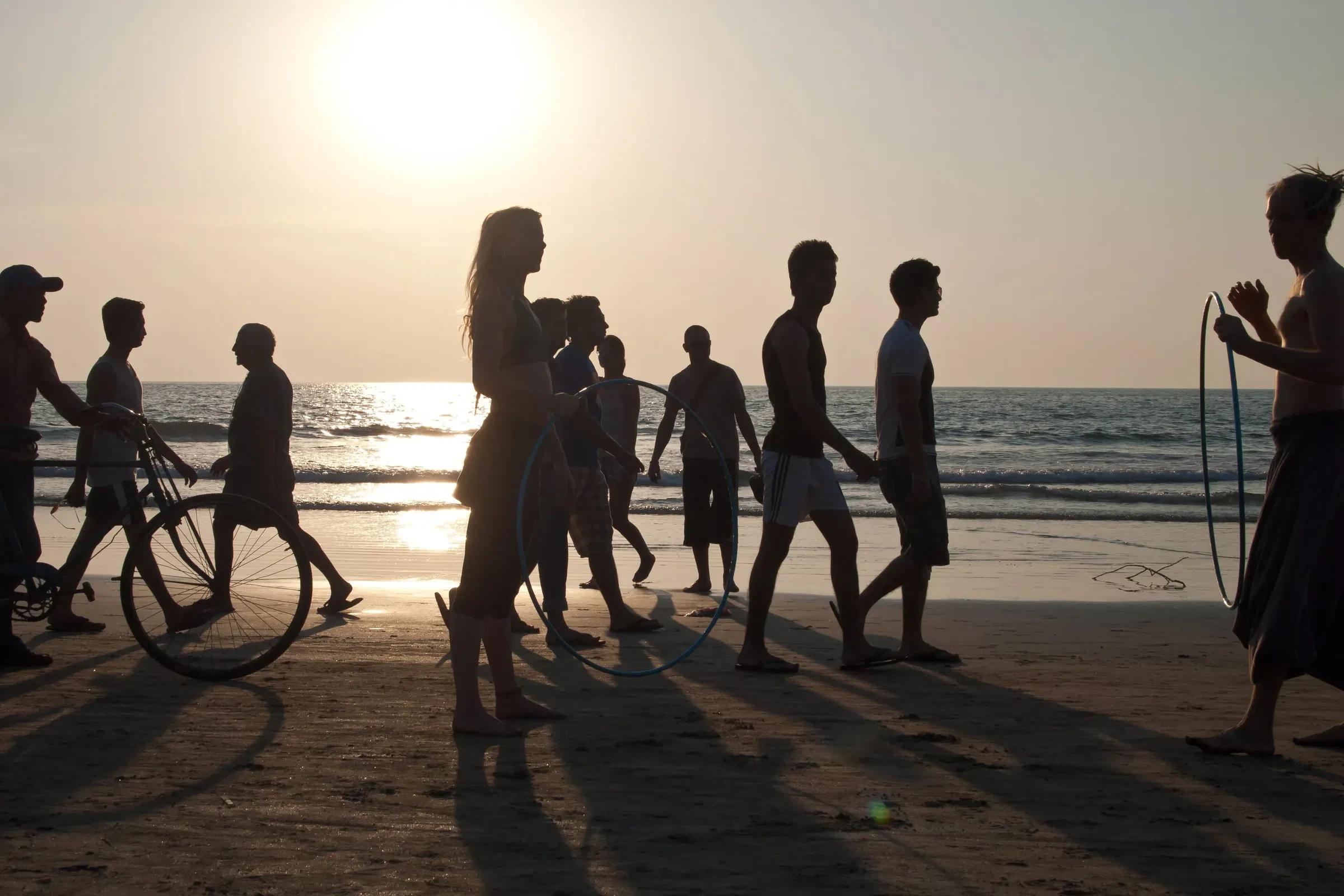
North Goa's density of hostels does a lot of the work of making solo travel easy: dorm common rooms, pub crawls and organised beach days mean you're rarely short of company if you want it. Hostelworld's 2026 HOSCARs listed Dreams Hostel in Vagator among the most popular hostels in Asia and the Pacific, and The Bucket List Goa in Vagator and The Beachside Hostel in Anjuna are also rated 9.5 or higher. South Goa has fewer hostels overall, though Palolem's Bhakti Kutir and Bibhitaki Hostels were the top-rated places there on Hostelworld in September 2026, so it isn't hostel-free, just smaller in scale. See our India hostels guide for prices and areas by city. The trade-off cuts both ways: South Goa is easier if you'd rather travel and eat alone without constantly being pulled into a group.
The UK Foreign Office warns of sexual assault, including attacks on female foreign visitors, in tourist areas and cities across India, and doesn't name Goa. The advice applies to isolated stretches of both halves, so avoid empty beaches alone even in daylight and take a GoaMiles taxi rather than walking dark roads at night, wherever you're based.
Winner: North Goa, for the sheer number of other solo travellers around you, though South Goa is a fair pick if you'd rather set your own pace.
Which should you choose?
| Choose North Goa if... | Choose South Goa if... |
|---|---|
| You want hostels, bars and markets within walking distance | You want long stretches of empty sand and calm water |
| You're only in Goa for 3 to 5 days and want everything close together | You have a week or more and don't mind travelling a bit further between stops |
| You're flying into Mopa | You're flying into Dabolim |
| You want to meet other solo travellers quickly | You're happy travelling alone, or with one or two people you've already met |
| You want a scene after dark: Anjuna's flea market, Arpora's Saturday market, Vagator's bars | An early night suits you, or a headphone party is as loud as you want it (Palolem's Silent Noise) |
| You want yoga and wellness with some life around you (Mandrem, Ashwem) | You want yoga and wellness with total quiet (Agonda, Patnem, Cola) |
Why not both?
With a week or more, splitting your time is the realistic option, not a compromise. A workable week: fly into Mopa, spend three or four nights around Anjuna and Vagator (the flea market, Chapora Fort, the nightlife), then take a taxi or the Konkan Railway south for three or four nights around Palolem or Agonda, and fly home from Dabolim rather than backtracking north. With 10 days to two weeks, our Goa and Gokarna itinerary lays out a similar north-to-south route that continues over the state line to Gokarna's quieter cliff trail, or on to Hampi's ruins in the 10-day version.
Our Goa, Hampi & Kerala Backwaters trip already does this split for you: two nights on Anjuna's cliffs and cafes in the north, then one on Palolem's calm bay in the south, before the route carries on to Hampi and Kerala.
If you'd rather stay in Goa the whole time instead of crossing into Karnataka, our Goa travel guide covers how long to spend on a Goa-only trip. Our Goa vs Gokarna comparison covers the extra trip over the border for anyone weighing it up.