Bangkok and the centre
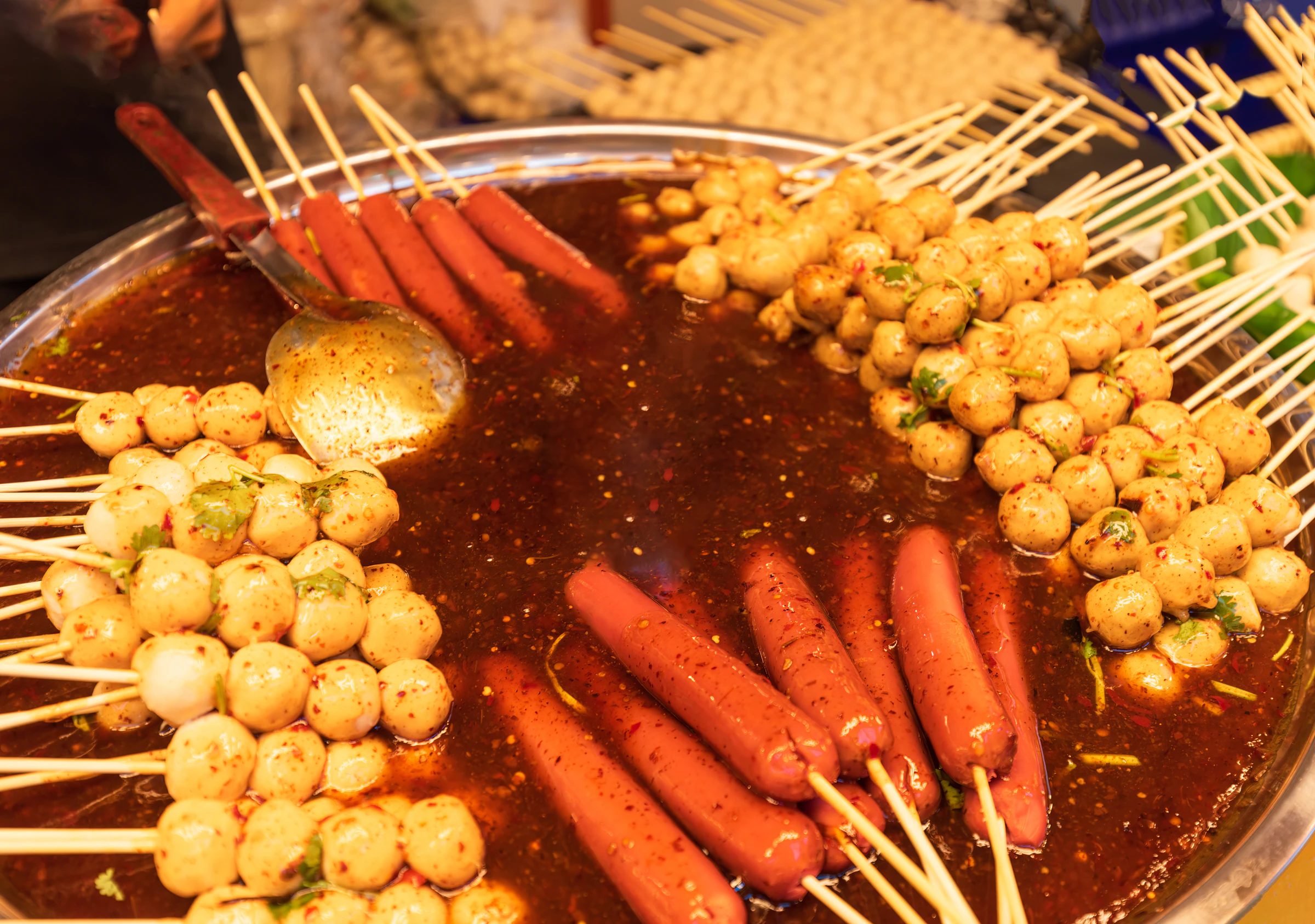
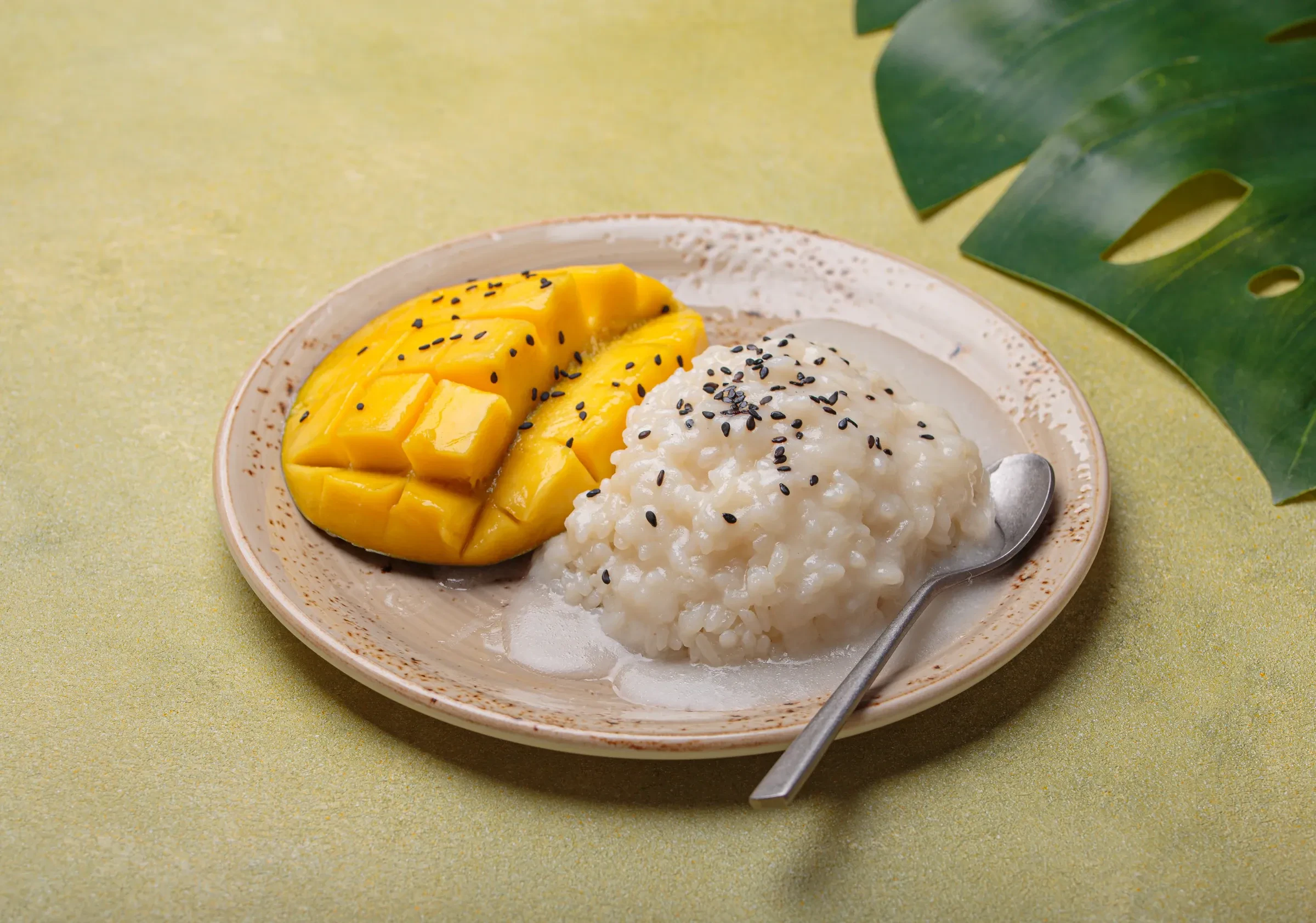
Bangkok is where Thailand's regional cooking meets in one city, so it's the easiest place to try a bit of everything before you specialise. Pad thai, stir-fried rice noodles with egg, tofu or prawns, tamarind, fish sauce and crushed peanuts, is the dish most visitors try first, and Thip Samai, on Maha Chai Road near Wat Ratchanatda, is a well-known address for it. It has been cooking pad thai over charcoal since 1966. Tom yum goong, the sour and spicy prawn soup, and a coconut-based green curry (gaeng keow wan) both turn up on nearly every menu, from a street cart to a proper restaurant. For something more specific to the city, look for boat noodles (kuay teow reua), a small, intensely flavoured bowl of noodles in a dark, slightly spiced broth, traditionally sold in single portions so you order several and stack the empty bowls to keep count; the stalls around Victory Monument are a well-known strip for it. Finish with mango sticky rice (khao niao mamuang), sweet sticky rice with coconut cream and ripe mango, best from April to June when the mangoes peak, though it's sold year round; Or Tor Kor Market, the produce and food market near Chatuchak, is another place to find it. Our Bangkok street food guide goes further into where to eat around the city, and the Bangkok things-to-do guide covers Chinatown's Yaowarat Road, the other big street food strip.
The north: Chiang Mai, Pai and Chiang Rai
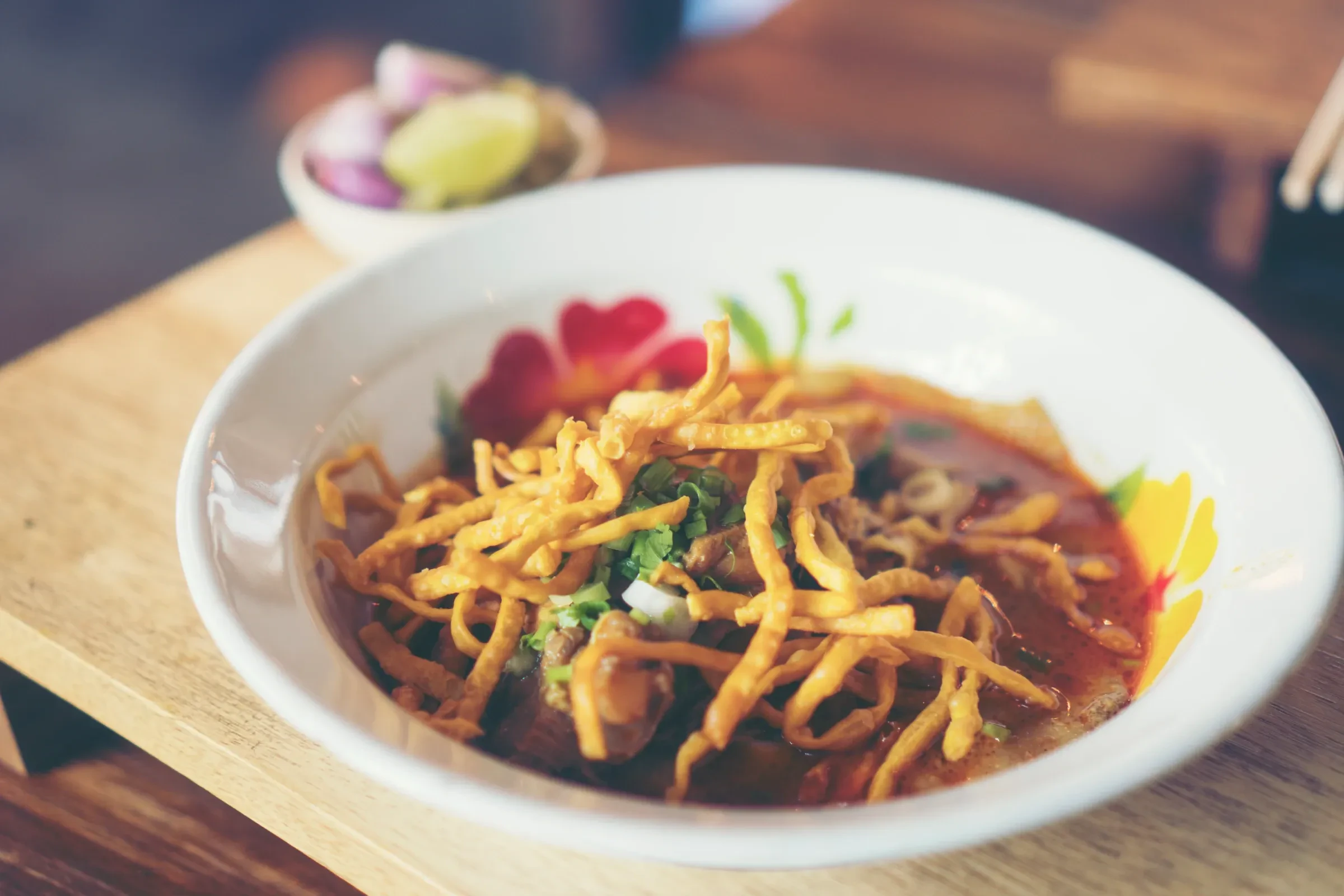
Northern Thai food, sometimes called Lanna food, uses less coconut milk and more herbs, fermented soybean and dried chilli than the centre or the south. Khao soi, a coconut-curry noodle soup topped with crispy fried noodles, is the dish to track from town to town, since Chiang Mai, Pai and Chiang Rai each cook a slightly different version, usually 45 to 90 baht a bowl at a local shop. Sai ua, a herb-packed grilled pork sausage, and nam prik noom, a green chilli and shallot dip eaten with sticky rice and raw or steamed vegetables, are both easy to find at Chiang Mai's markets, including the Sunday Walking Street. For a fuller taste of the region's food in one sitting, a khan tok dinner sets out several small dishes, often including nam prik ong (a tomato and pork chilli dip), on a low table with sticky rice, sometimes with a traditional dance show, for roughly 250 to 850 baht depending on the setting. Our Chiang Mai food guide covers where to find each dish in the city, and the northern Thailand itinerary has a route through Chiang Mai, Pai and Chiang Rai built around trying khao soi at each stop.
Isaan: the northeast
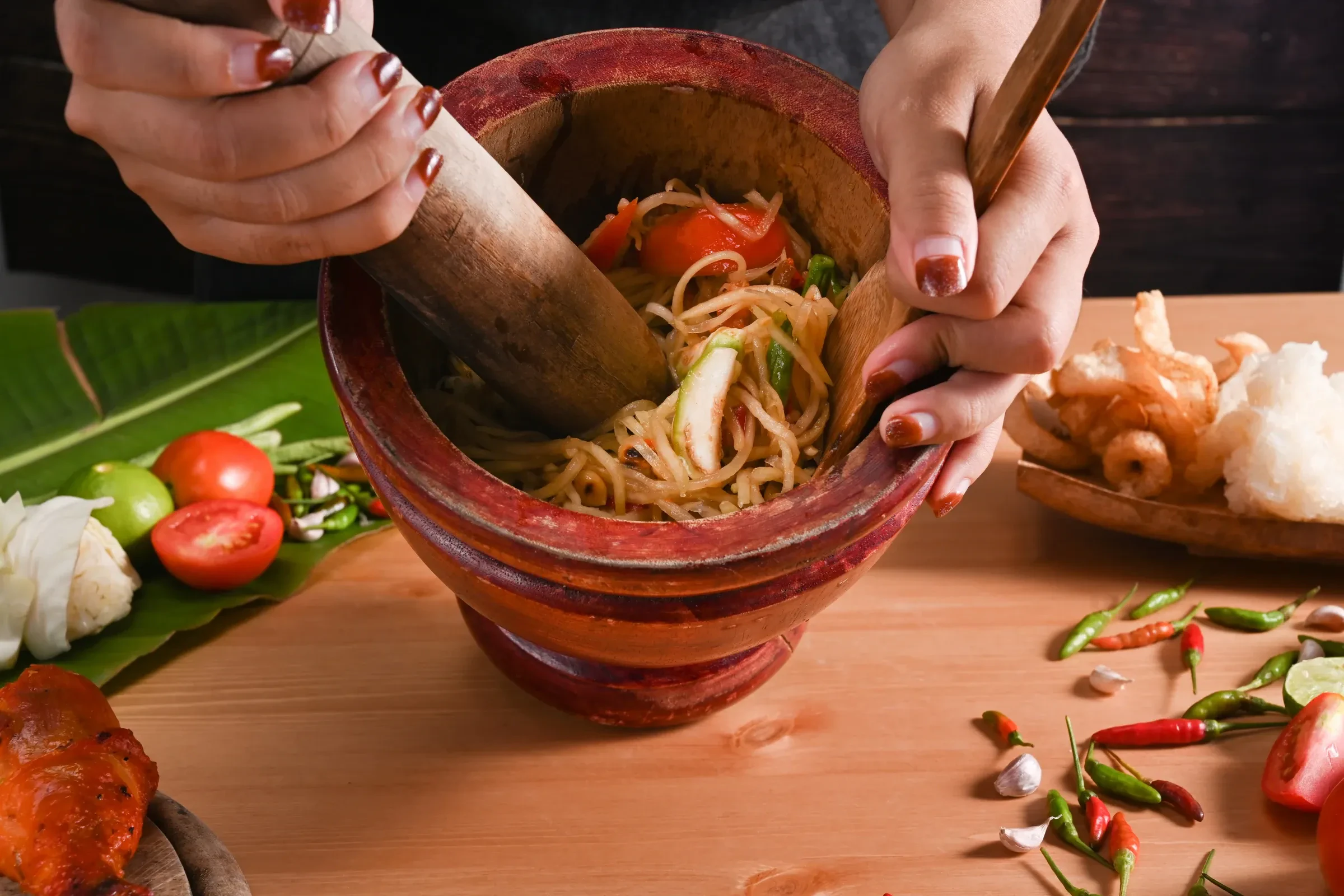
Isaan cooking is known for its heat. Som tam, a green papaya salad pounded with chilli, lime, fish sauce and palm sugar, is the dish to know, and it's cheap everywhere, usually 40 to 60 baht. Larb (also spelled laab), minced meat tossed with lime, fish sauce, herbs and toasted rice powder, and gai yang, grilled marinated chicken, usually come to the table together with a basket of sticky rice for scooping everything up by hand. A plate of larb or a portion of gai yang runs about 50 to 100 baht, so the three together with sticky rice make a full, cheap meal. Isaan food has spread well beyond the northeast itself, and you'll find it on menus in Bangkok and across the country, though it's at its best and cheapest closer to its home region.
The south: Phuket, Krabi and the Andaman coast
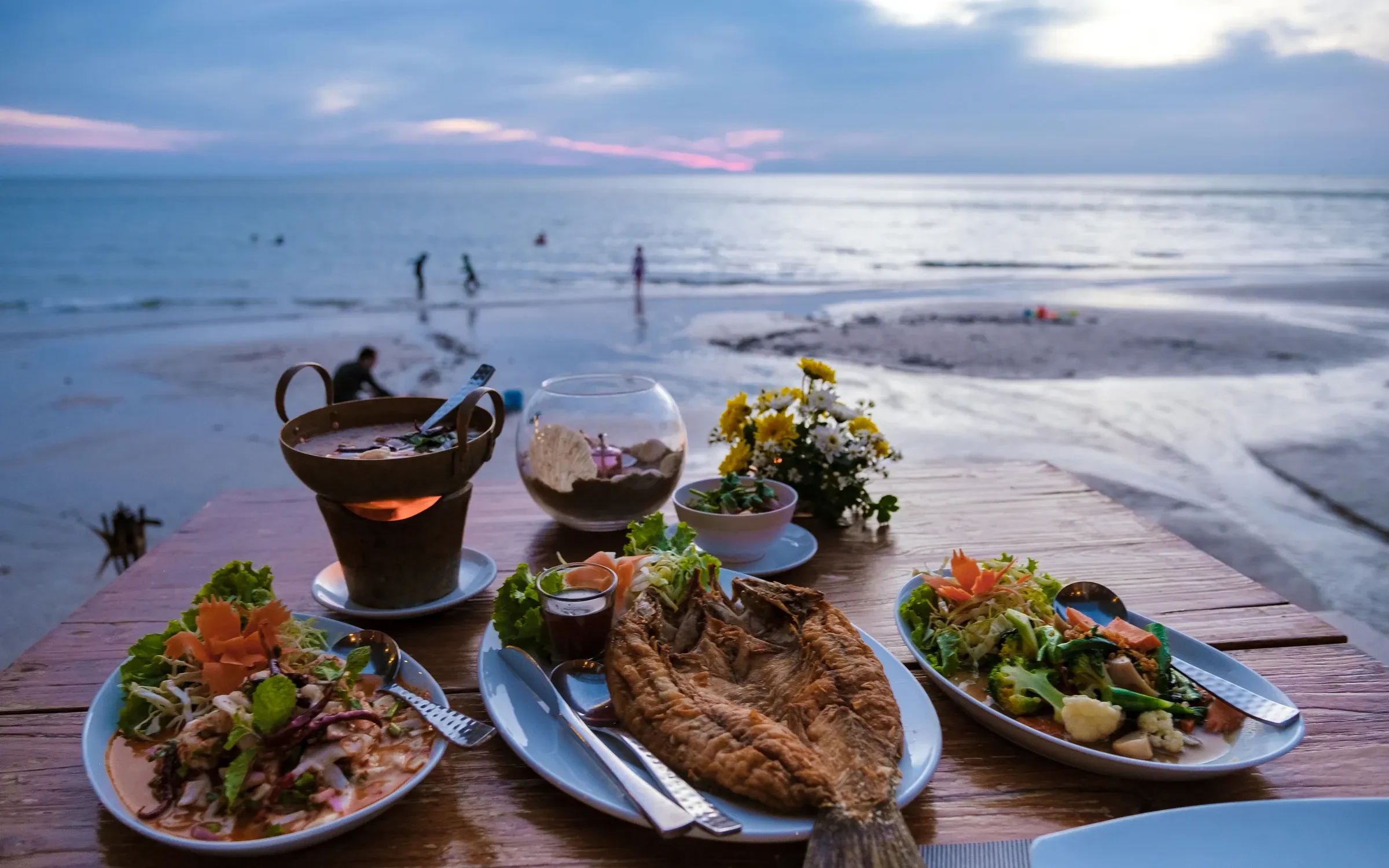
Southern Thai food leans richer and hotter, shaped by the coast's Muslim and Malay influence as much as by Thai cooking. Massaman curry, a milder, slightly sweet coconut curry usually made with beef or chicken, potato and peanuts, and khao mok gai, Thailand's take on chicken biryani with turmeric rice and crispy shallots, both trace back to the south's Thai Muslim communities. Gaeng som, a sour, orange-coloured curry made without coconut milk, using tamarind, fish and vegetables, is the dish to try if you want the south's food at its most intense. Roti, a fried flatbread served either savoury or, on the beach-town breakfast stalls, folded and drizzled with condensed milk, is a constant from Phuket to Krabi. And with the coast running the whole way, grilled or steamed seafood, sold by weight at beachfront restaurants, is the default dinner. Our Krabi guide covers where to find it along Ao Nang and Railay, and the Andaman coast itinerary links Phuket, Krabi, Koh Phi Phi and Koh Lanta if you want to eat your way down the coast.
How to eat street food well
Thai street food has a well-earned reputation, and eating it carefully mostly comes down to a few habits. Pick a stall with a queue of locals rather than an empty one: high turnover means the food doesn't sit around, and it's the single best sign a stall is worth trying. Watch what's cooked in front of you and go for anything fried, grilled or boiled to order, and be more cautious with anything pre-cut and left sitting out, like fruit or salads, especially in the hottest months. Carry small notes and coins, since most stalls expect cash, and don't expect an English menu everywhere: pointing at what looks good, or at someone else's plate, works fine.
Spice levels: what "mai phet" means
Thai food's heat varies a lot by dish and by region, and it's completely normal to ask for less. "Mai phet" means "not spicy" and is the phrase to use if you want the chilli left out or cut right back. "Phet nit noy" asks for a little heat, and "phet" or "phet maak" is spicy and very spicy. Bear in mind that some dishes, som tam and larb especially, are built around chilli, so a vendor can tone them down but not always remove the heat completely; a milder curry like massaman or a plain noodle soup is an easier order if you want to play it safe.
Vegetarian and vegan (jay) food
Vegetarian and vegan travellers eat well in Thailand once they know the word to look for. "Jay" food (เจ) is a stricter form of vegetarian eating, rooted in Chinese Buddhist and Taoist practice, that excludes all meat, fish, eggs and dairy as well as garlic, onion and other strong-smelling alliums, so it should be vegan by default. Stalls and restaurants serving it mark themselves with a yellow flag or sign carrying the red jay character, and once you know the symbol it's an easy way to order without a long conversation about ingredients. Jay food is sold everywhere, but it's easiest to find in the weeks around the Phuket Vegetarian Festival, when much of Phuket Town turns over to jay stalls and stands for nine days. The festival runs 10 to 18 October in 2026 and is expected from 30 September to 8 October in 2027. Our Phuket Vegetarian Festival guide has the details and what else to expect if you time a trip around it.
Keep planning
Our Thailand travel guide covers the whole country, the Thailand cost guide breaks down a daily budget, and the Thailand itineraries hub has routes from 1 week to 1 month. If you'd rather taste your way around the country with a group, our northern Thailand adventure eats its way through Chiang Mai, Pai and Chiang Rai with a cooking class along the route.