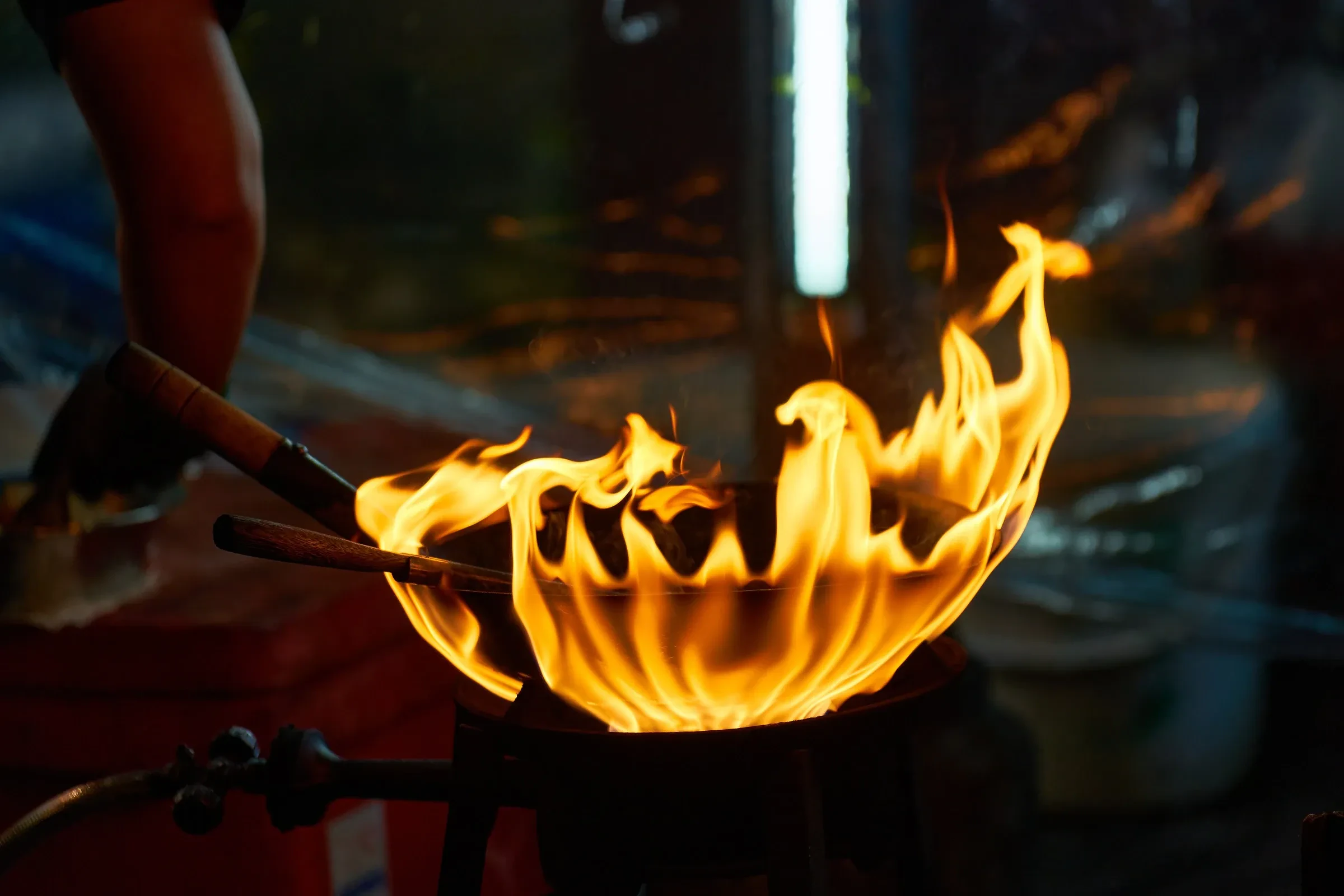
Bangkok eats on the pavement more than almost any other capital city, and the choice can be overwhelming on a first night: a wok on a cart, a folding table, a queue of office workers who clearly know something you don't. The good news is that the city's best stalls cluster into a handful of areas, so you don't need to wander far to eat well.
Yaowarat: Chinatown after dark
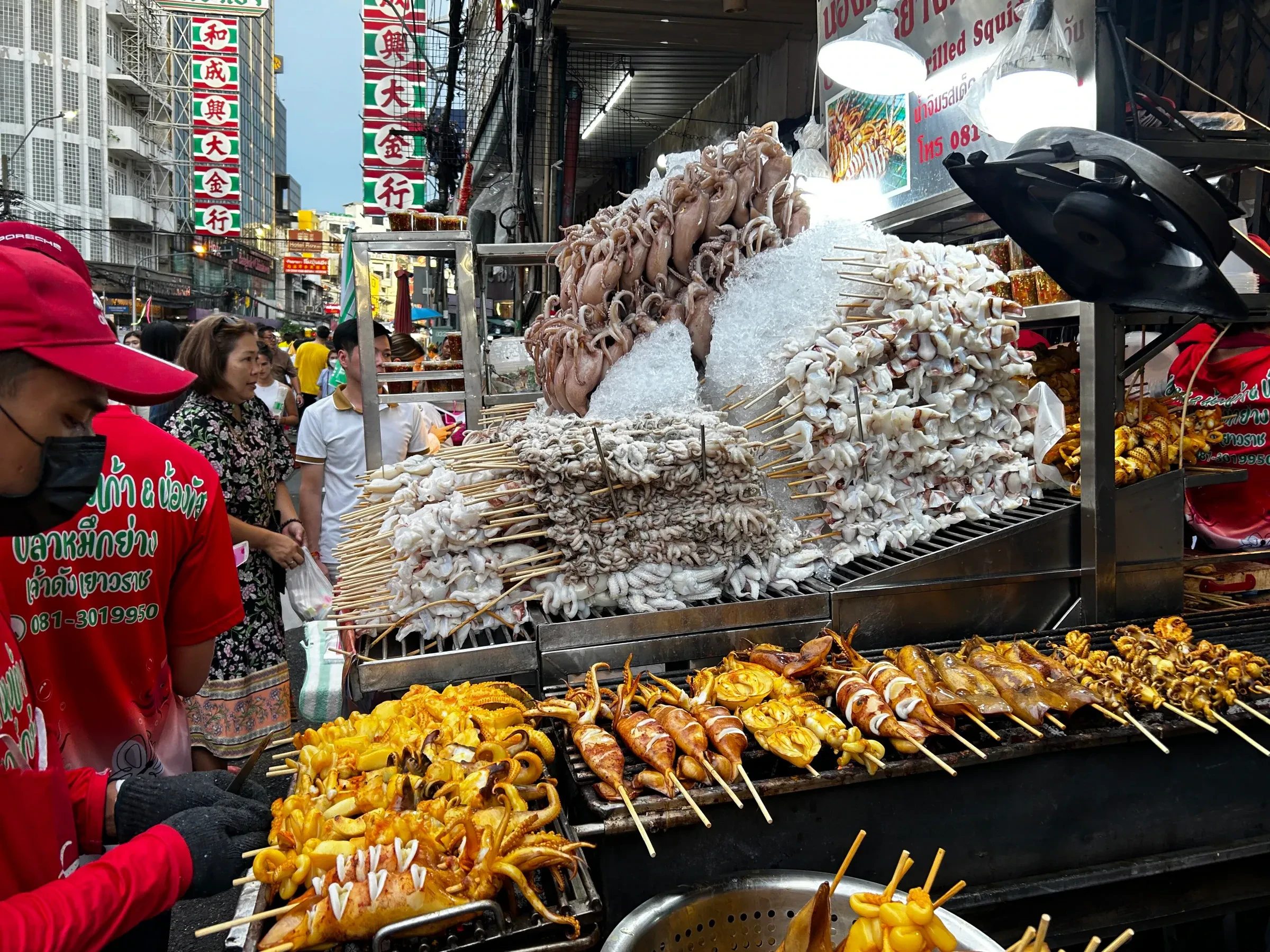
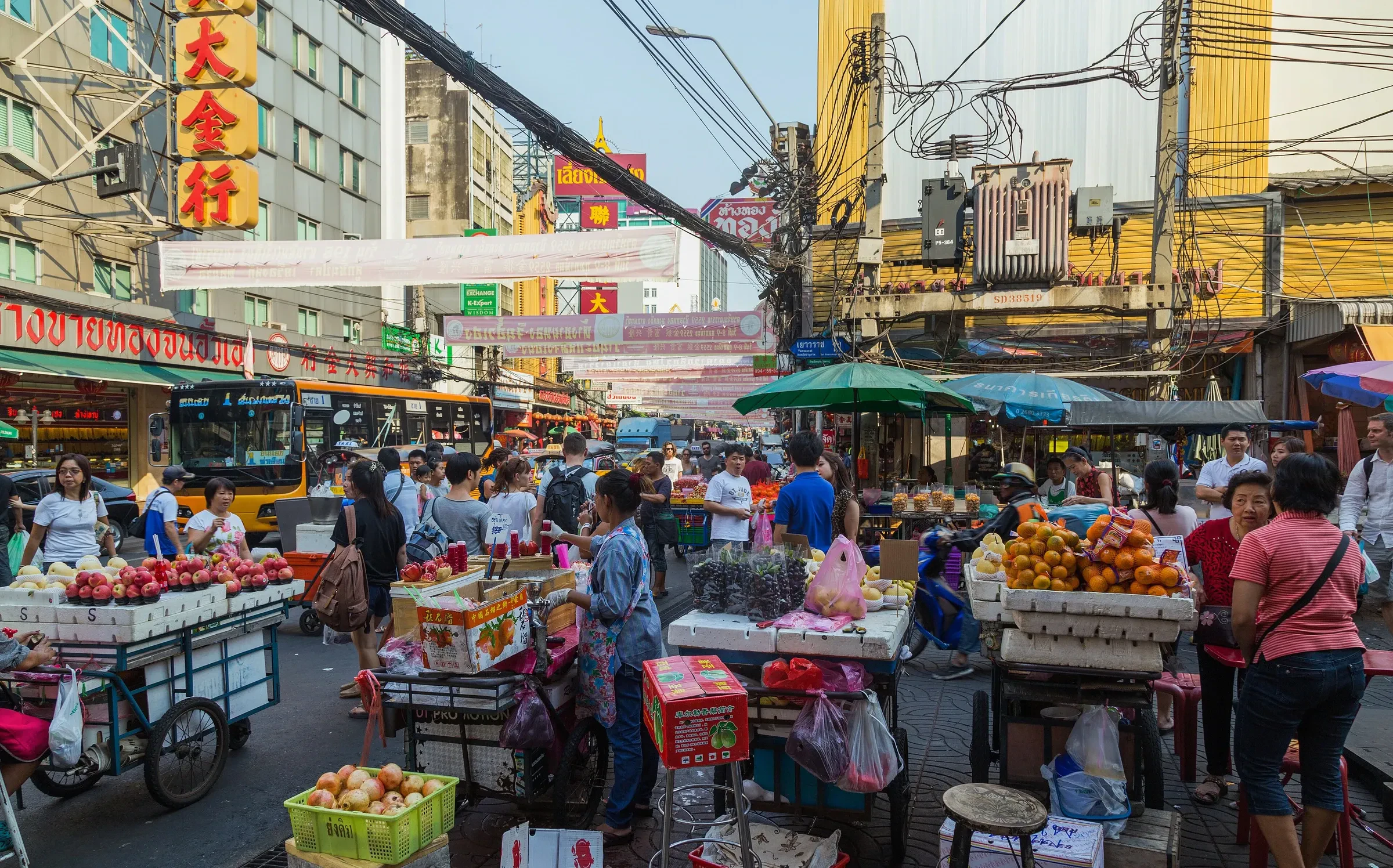
Yaowarat Road properly comes alive once the sun goes down, when stalls, gold shops and neon signs turn the street into Bangkok's best-known food strip. It's an easy add-on to a temple day, since the MRT's Wat Mangkon station opens directly onto it. Expect grilled seafood, bird's nest soup, dim sum and roast duck alongside more everyday noodle stalls, with new carts setting up as the evening goes on. Go on an empty stomach and share dishes between a few people if you can, since it's as much about grazing your way down the street as it is about any single meal. Our things to do in Bangkok guide has more on the area by day as well.
Victory Monument: boat noodles by the canal
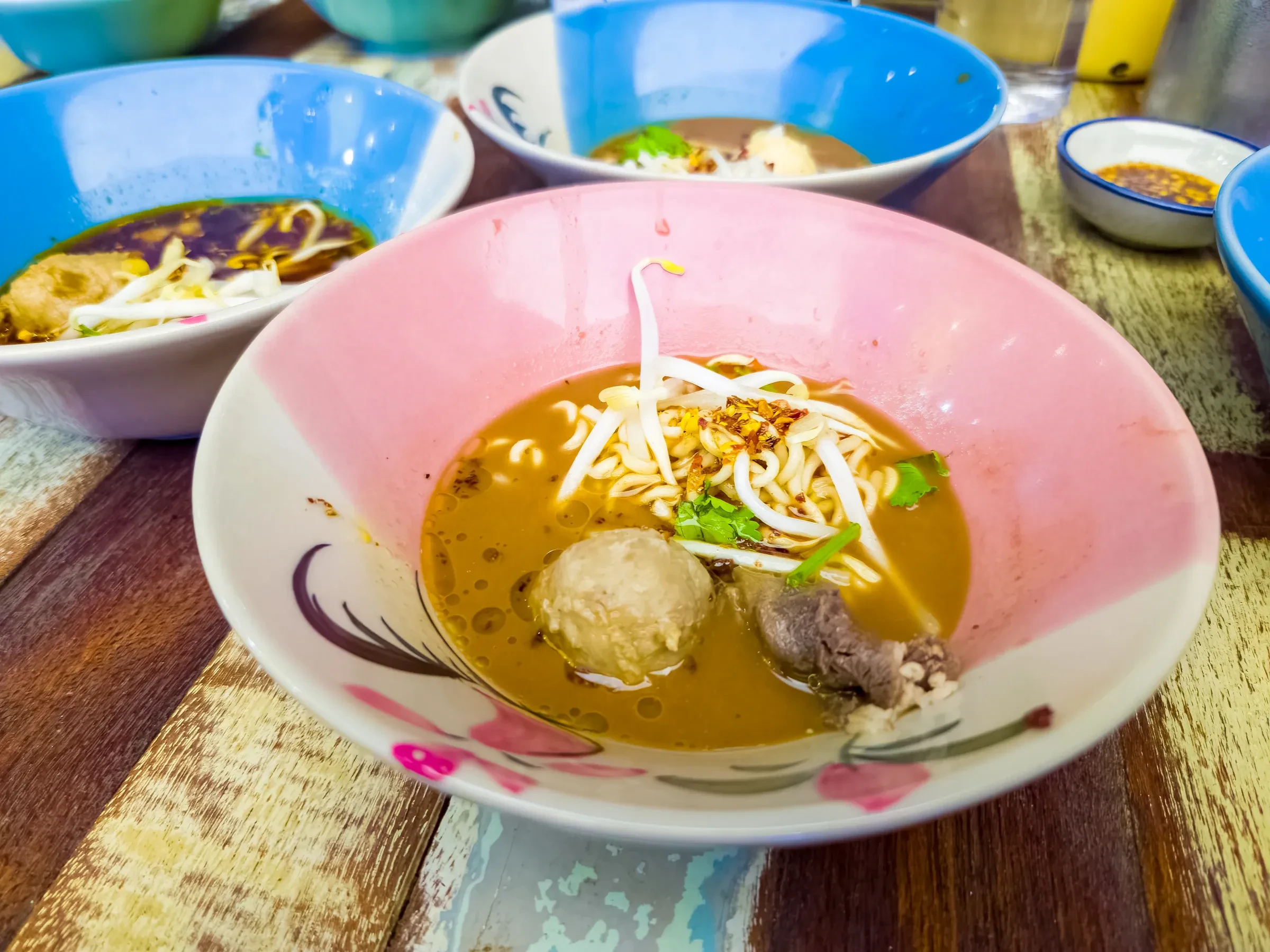
A strip of small shops along Soi Rangnam, just north of Victory Monument, is Bangkok's classic address for boat noodles (kuay teow reua): a small, intensely flavoured bowl of rice noodles in a dark, slightly spiced broth, traditionally sold in single portions so you order round after round and stack the empty bowls to keep count. The dish gets its name from the vendors who once paddled it out to customers along the city's canals, before most of them moved onto dry land. A single bowl is small and cheap (recent listings put most under 40 baht), so ordering four or five to make a meal is normal and expected rather than greedy.
Nang Loeng and Banglamphu: an older, quieter Bangkok
Nang Loeng market, near the Golden Mount, opened in 1900 and is described as Thailand's first market built on land rather than on the water, and its noodle and curry stalls still trade from the same vintage shophouses. It's a good stop if you'd rather eat somewhere unhurried and mostly local, without a crowd of other visitors.
Banglamphu, the old-town district around Khao San Road, is louder and squarely aimed at travellers: carts along the main strip turn out pad thai, grilled skewers, banana roti and mango sticky rice most of the evening, and a corner cart with its own wok and a line of people waiting is usually your best bet. For something a little more local, the parallel lanes around Soi Rambuttri run sit-down noodle stalls and papaya salad at calmer prices than the main road. See our Bangkok hostels guide for staying in the area.
The night markets: Jodd Fairs, Talad Rot Fai and Chatuchak
Jodd Fairs, on Ratchadaphisek Road near the Phra Ram 9 MRT station, is the newest and most organised of the big night markets: more than 700 stalls laid out in a grid rather than a maze, open daily from about 5pm until midnight or later. It's the easiest of the three to reach and to navigate, with converted shipping containers doubling as bars around the food stalls.
Talad Rot Fai Srinakarin, behind Seacon Square in the Suan Luang area, has more of a vintage flea-market feel, antiques and retro collectibles alongside the food, and it only runs Thursday to Sunday, from about 5pm until late. It's further out than Jodd Fairs, so it suits an evening when getting there is part of the trip.
Chatuchak Weekend Market's food section is a bonus rather than the main event: the market itself is better known for clothes, antiques and homewares, but its food stalls and small canal-side cafés are a decent lunch stop if you're already there shopping on a Saturday or Sunday. See our things to do in Bangkok guide for the market's hours and how to get there.
Or Tor Kor: the market for a sit-down feed
Or Tor Kor market, on Kamphaeng Phet Road opposite Chatuchak, is the calmer, cleaner alternative to a night market crawl: a covered produce and food market open daily from about 6am to 6pm, with most stalls up and running from around 8.30am. It has a strong reputation for the quality and cleanliness of what's on sale, and prices sit a little above street level as a result. It's also a reliable stop for mango sticky rice, sold from several stalls inside, especially good from April to June when the mangoes peak.
What to order
| Dish | What it is | Typical price (baht, 2026 listings) |
|---|---|---|
| Pad thai | Stir-fried rice noodles with egg, tofu or prawns, tamarind and crushed peanuts | 40 to 80, more with prawns or on Khao San Road |
| Khao man gai | Hainanese-style poached chicken over rice, with a ginger-chilli sauce | 45 to 65 |
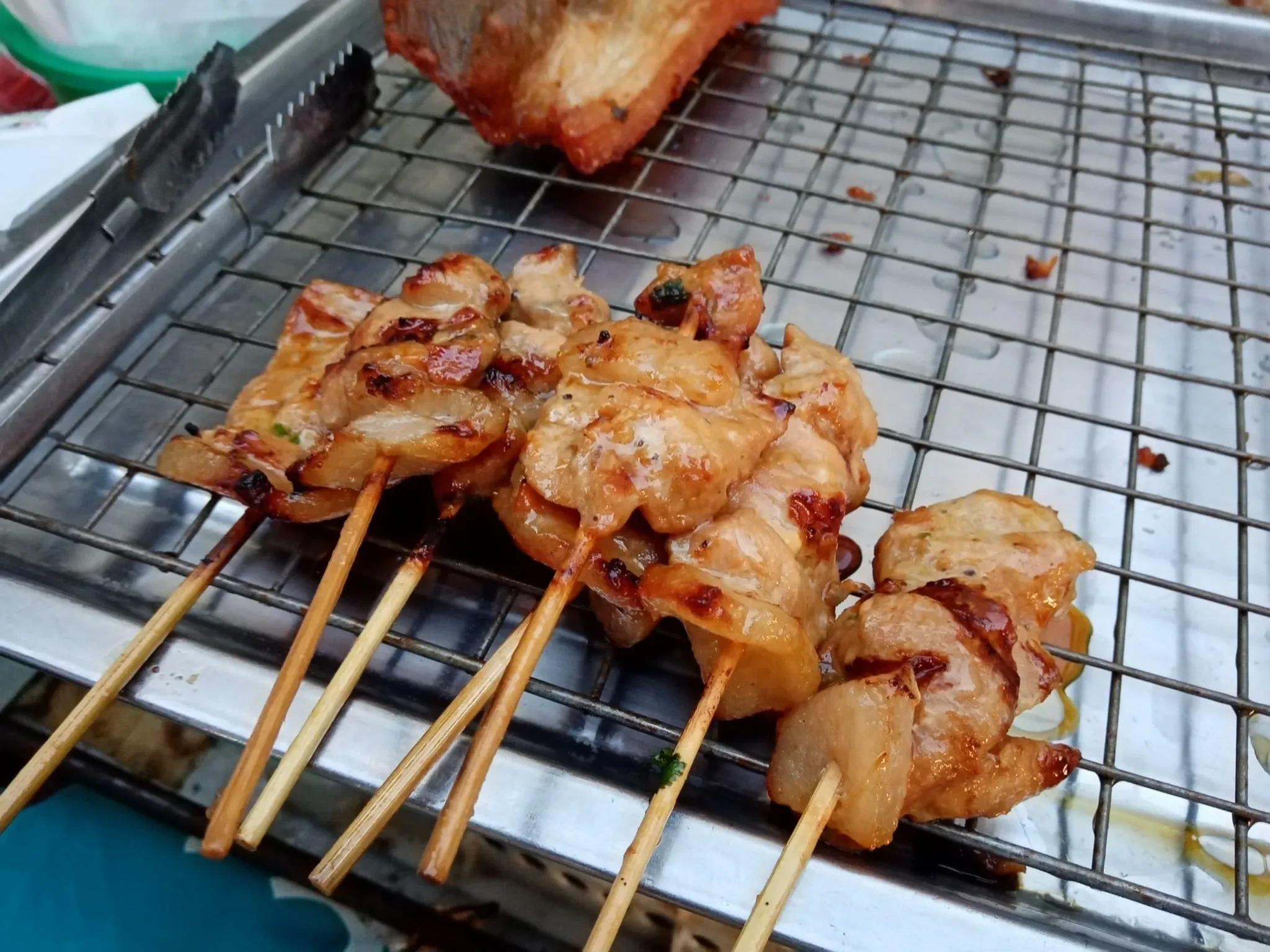
| Moo ping | Grilled pork skewers, marinated and cooked over charcoal | 10 to 25 per skewer |
| Som tam | Shredded green papaya salad, pounded with chilli, lime and fish sauce | 40 to 60 |
| Kuay teow | Everyday rice noodle soup, with pork, chicken or fish balls, sold at nearly every corner | 40 to 60 |
| Jok | Rice congee, often with minced pork and a soft egg, a common breakfast dish | 35 to 50 |
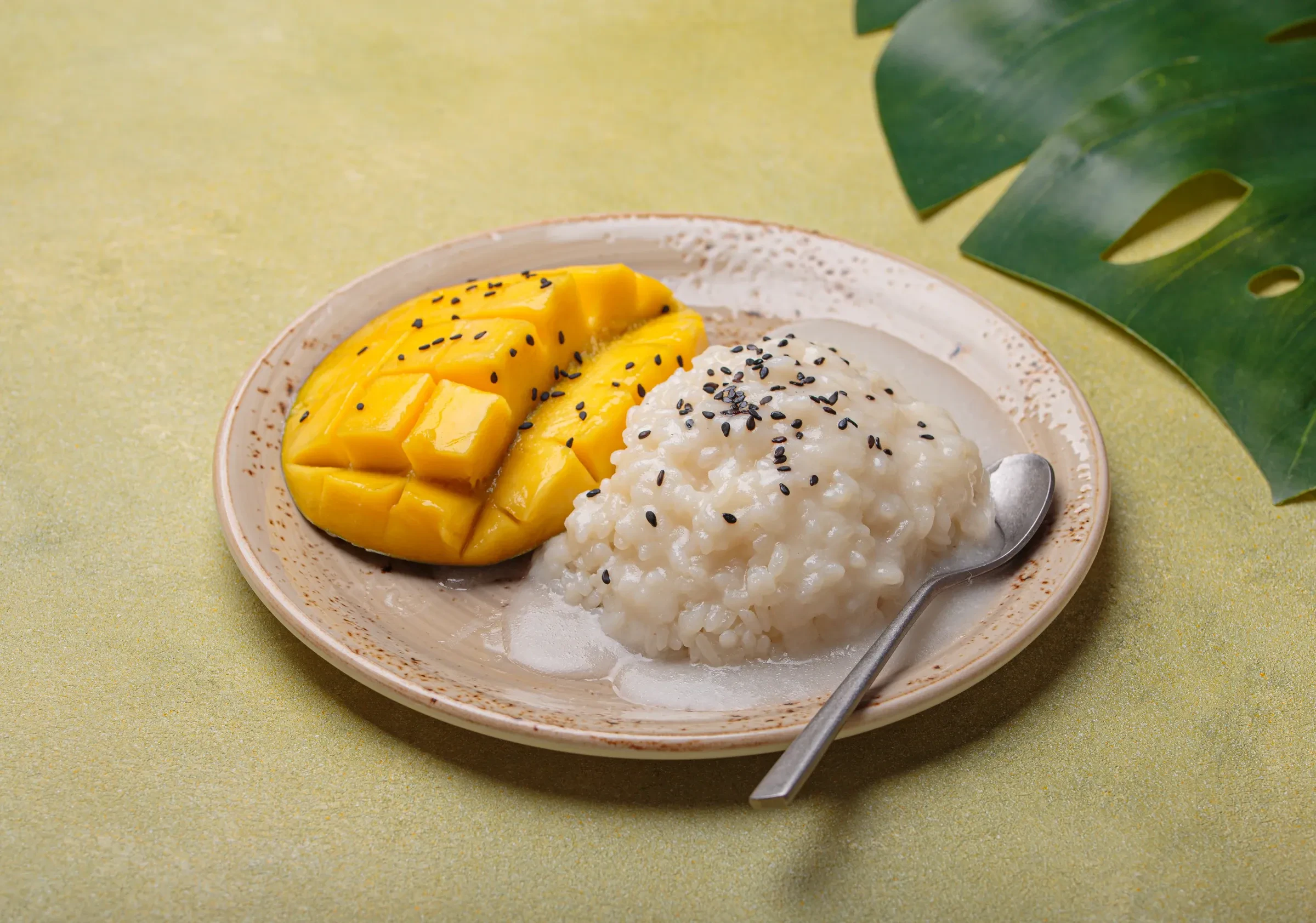
| Mango sticky rice | Sweet sticky rice with coconut cream and ripe mango | 50 to 80 |
| Oyster omelette (hoy tod) | Egg batter fried with oysters or mussels until crisp at the edges | 60 to 100 |
How to order and pay
Most stalls sell one or two dishes, so ordering is usually just naming the dish or holding up fingers for how many you want, rather than reading a full menu. Where prices aren't posted, ask before you sit down: a small number of stalls in the busiest tourist spots quietly charge more than locals pay. Payment is cash, in baht, handed to whoever's cooking once you've eaten, not to a separate till or waiter, and small notes help since a stall selling 40-baht bowls doesn't always have change for a large one. Card payment is rare at street level, so carry enough cash for the evening. For the wider country picture on prices and etiquette, see our Thai food guide.
Hygiene tips
Stick to bottled or filtered water, and be cautious with ice unless it's clearly come from a proper block or tube rather than sitting loose in an open container. Cooked food, including soups, rice and grilled meat, is generally fine, since the heat deals with anything picked up in the preparation. The best sign of a safe stall is turnover: a queue of locals, a wok or pot that's constantly moving, and food cooked in front of you rather than left sitting out for hours. If a dish has been sitting under a heat lamp for a while, it's worth choosing something cooked to order instead.
The Michelin-listed stalls: Jay Fai and the queue
A handful of Bangkok street stalls carry a Michelin star or a Bib Gourmand, and Jay Fai, in the Old Town near the Golden Mount, is the most famous of them: an open-fronted shophouse where the owner has cooked over charcoal for decades, best known for a crab omelette stuffed thick with crab meat. It has been Michelin-starred since the guide's first Bangkok edition in 2018, and that recognition has made it one of the hardest tables in the city to get: queues of several hours are common, forming well before the stall opens for the day, and a crab omelette costs well over 1,000 baht in recent listings, several times what you'd pay for the same dish elsewhere. It's worth doing with your eyes open: come with a group to share the wait, bring cash, and treat it as a one-off splurge rather than a typical Bangkok meal. If the queue isn't for you, Yaowarat and Victory Monument both offer excellent food for a fraction of the wait and the price.
For more on the city, see our Bangkok travel guide and things to do in Bangkok. Our Thai food guide covers how Bangkok's food fits into the rest of the country, and Bangkok hostels covers where to base yourself near the areas above.