Khao soi, and where it came from
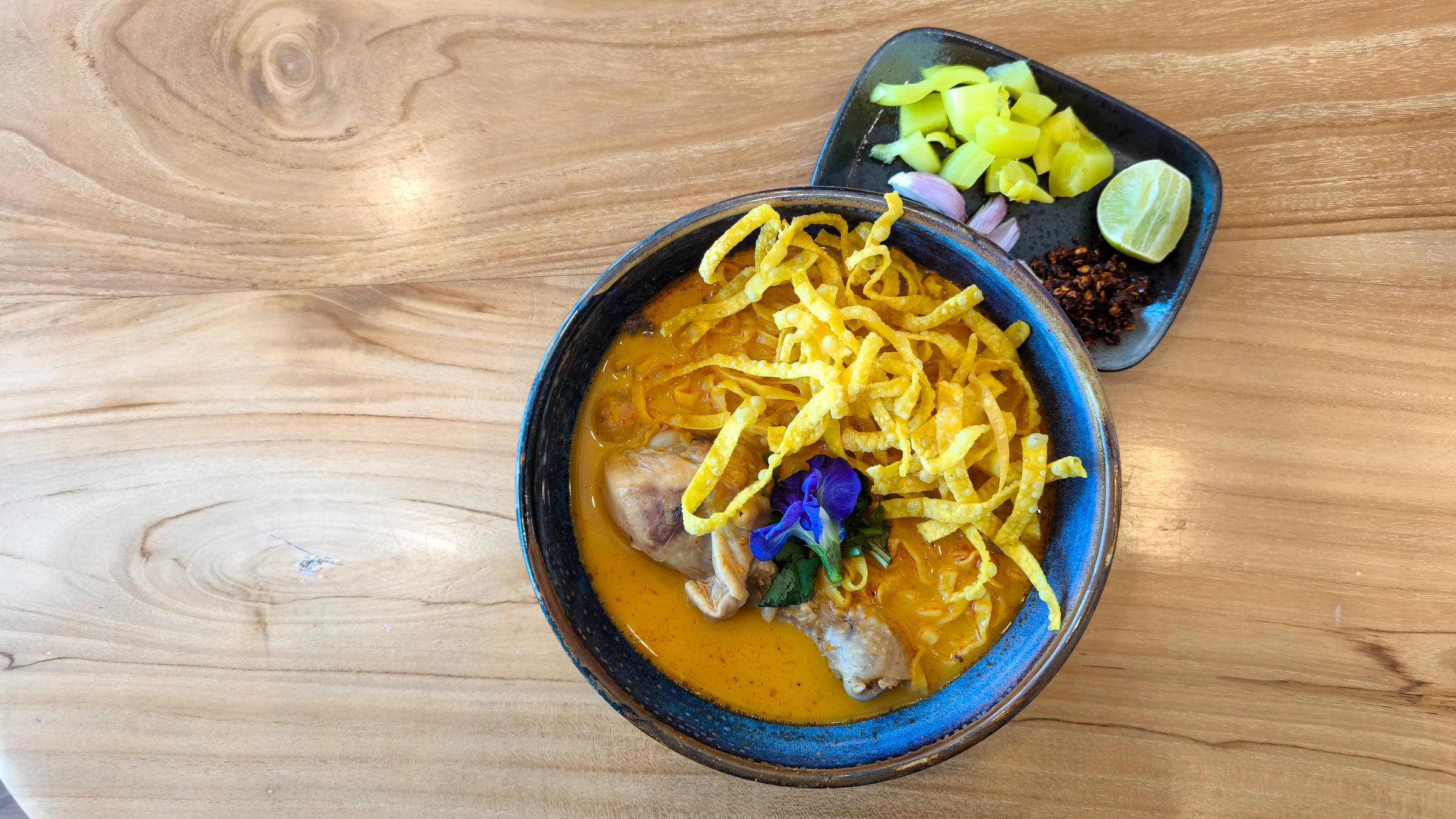
Khao soi is the dish most people come to Chiang Mai for: egg noodles in a coconut-curry broth, usually with chicken or beef, topped with a tangle of noodles fried until crisp, then served with pickled mustard greens, shallots, lime and a spoon of chilli oil. Most food writers trace it to Yunnanese Hui Muslim traders, who carried an earlier, clearer noodle soup south through Myanmar and Laos into northern Thailand, where it picked up coconut milk and curry spice along the way. That history is why the more traditional bowls use chicken or beef rather than pork.
Two shops turn up on almost every local's list, and both were still operating in a September 2026 listing. Khao Soi Mae Sai, on Ratchaphruek Road near Chang Phueak, is Michelin-listed and known for a whole chicken drumstick in its bowl. Khao Soi Khun Yai, "grandma's khao soi," is a small garden shop near Wat Kuan Kama and the old city's north moat with a family recipe. Both are simple, cheap shops rather than restaurants, and both tend to sell out by mid-afternoon, so go for lunch or earlier. Local shops like these charge about 45 to 90 baht a bowl in 2026 price guides, and touristy spots charge more. Pai and Chiang Rai each cook their own version too, so trying all three on a route through the north is part of the fun. Our northern Thailand itinerary is built around doing just that.
Sai ua, nam prik noom and nam prik ong
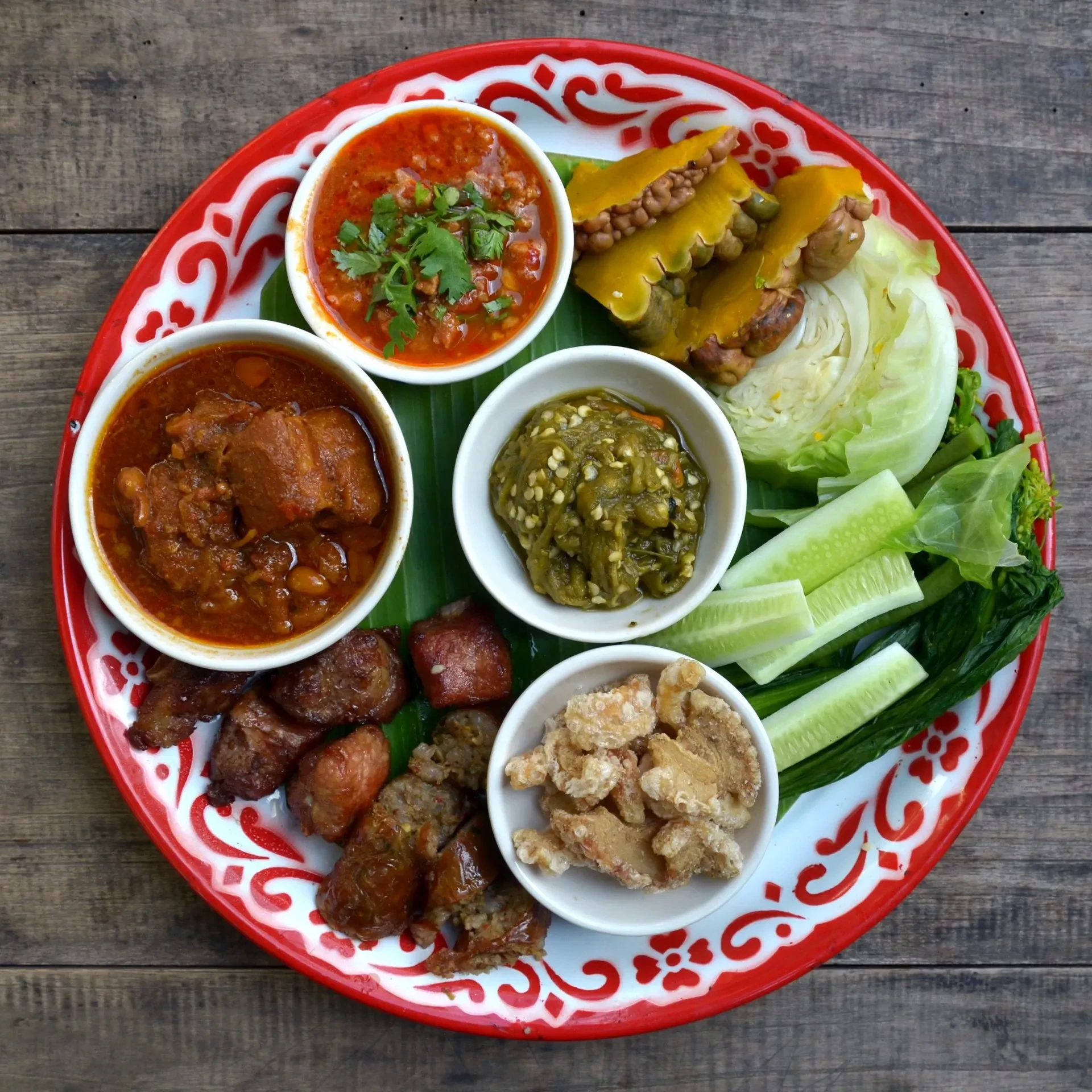
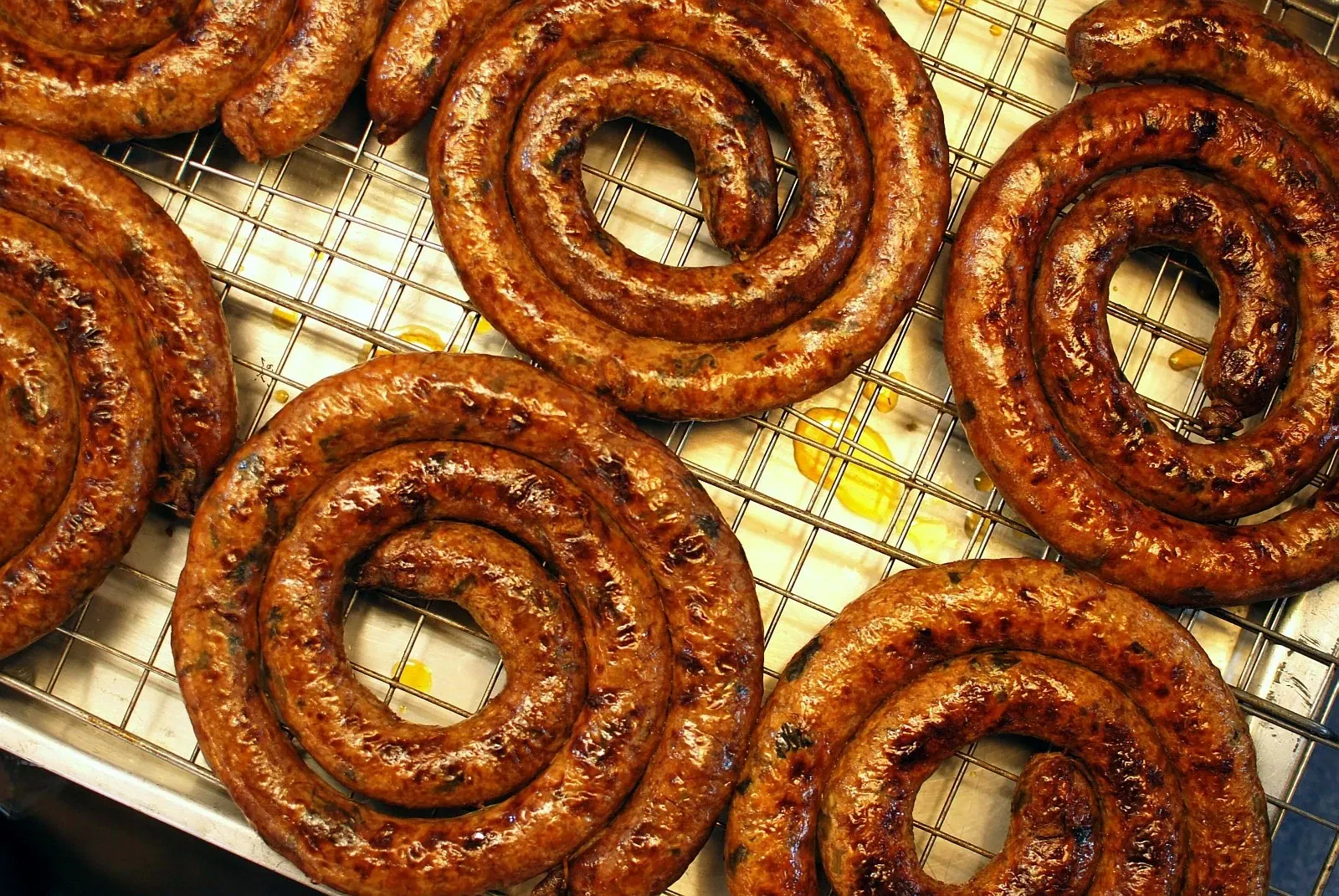
Sai ua is a coarse, herb-packed pork sausage, grilled over charcoal until the casing crisps. It's the other dish you'll see at nearly every market stall, sold by the length and cut into pieces. Alongside it sit the nam prik dips. Nam prik noom is a green chilli and shallot dip, blistered over a flame and pounded smooth, served with sticky rice and raw or steamed vegetables. Nam prik ong is a tomato and minced pork chilli dip, milder and a little sweeter, and the two dips often share a plate with a pile of vegetables to scoop them up with.
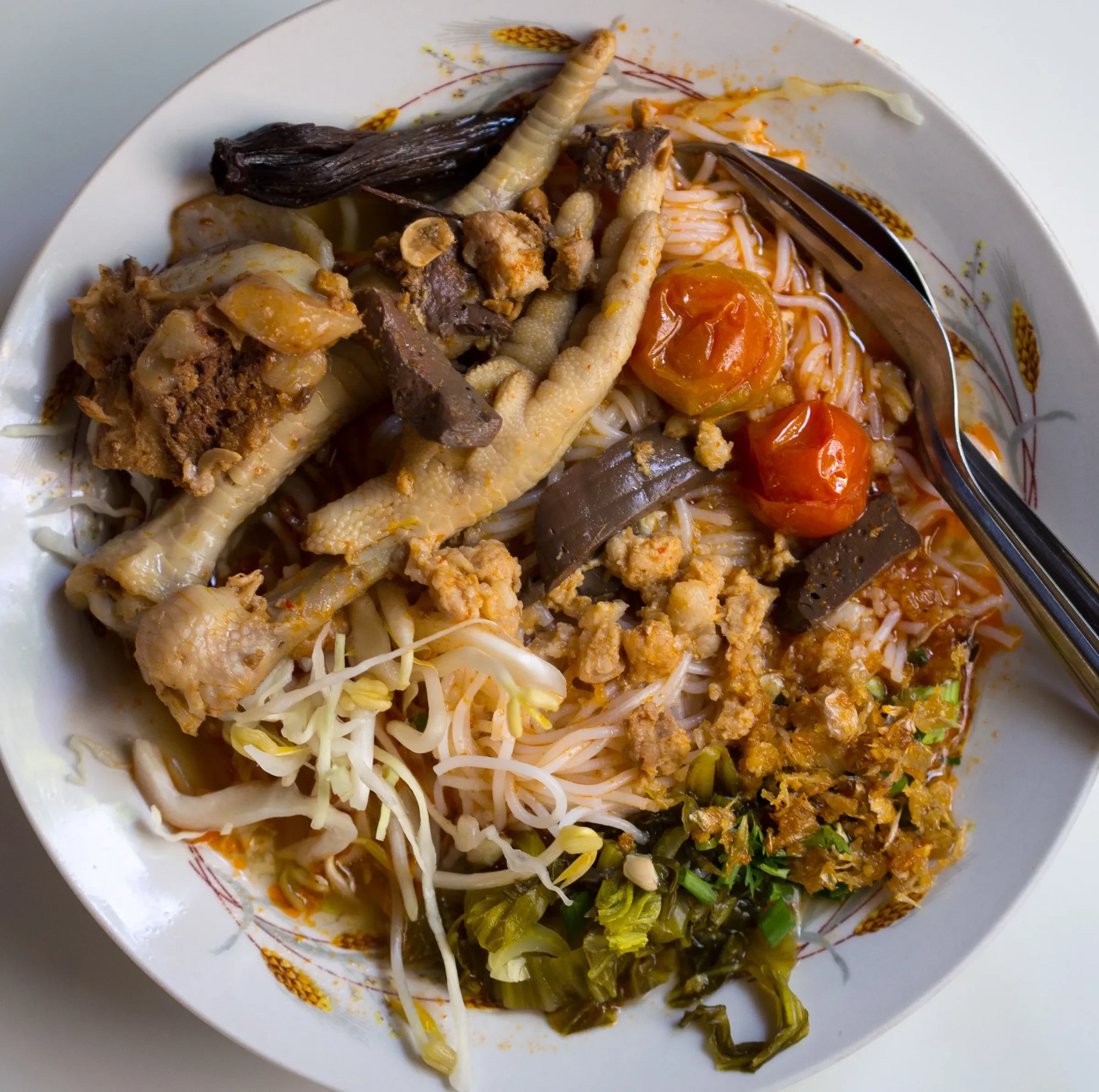
Two more dishes worth tracking down: kaeng hang le, a slow-cooked pork belly curry with ginger, garlic and tamarind and no coconut milk at all, a clear sign of Burmese influence; and khanom jeen nam ngiao, fermented rice noodles in a sour, tomato-based pork broth, one of the most traditional dishes in the northern kitchen. Both are cheap, and easier to find at a market than on an English-language menu. A February 2026 night market guide puts most dishes at the Chang Phueak market at about 40 to 70 baht.
Khan tok dinners
A khan tok dinner puts several of these dishes on the table at once, set out on a low table with sticky rice for scooping everything up by hand. A typical spread includes nam prik ong, sai ua, a curry such as kaeng hang le and a vegetable dish, and it's a good way to taste a proper range of northern food in one sitting, especially if you're travelling solo and would otherwise only order one thing at a time. In 2026 price guides, a basic khan tok set costs around 250 baht and a fuller dinner with a traditional dance show runs 550 to 850 baht.
The night markets
Sunday Walking Street. Every Sunday from about 4pm to 10pm, running from Tha Phae Gate along Ratchadamnoen Road through the Old City. This is the biggest of the food markets and gets packed after 6pm, with everything from khao soi and sai ua stalls to sweet snacks and fresh coconut ice cream.
Saturday Walking Street. On Wualai Road, just south of the Old City, from about 4pm to 10pm. Smaller and more local than the Sunday market, with fewer crowds and a similar spread of northern dishes alongside its silverwork stalls.
Chang Phueak (North Gate) night market. Open daily from about 5pm, this stretch of street food just outside the old city's north gate is where a lot of Chiang Mai locals actually eat. Its best-known stall is the khao kha moo cart (slow-braised pork leg over rice) run by the "Cowboy Hat Lady," listed as still serving there in a February 2026 night market guide, and known to sell out by mid-evening. Sai ua, laab khua (dry-fried minced pork) and nam prik ong are all easy to find along the same stretch.
Warorot Market. Down near the Ping River, Warorot is Chiang Mai's oldest market: an indoor market open daily from about 5am to 6pm, with a separate night market running from about 5pm to 11pm in the alley beside it. It's more of a working local market than a tourist stop, good for sai ua, moo tod (crispy fried pork) and a bowl of noodles from one of its long-running noodle shops, some of which have been run by the same family for decades.
A cooking class
Farm cooking schools set up outside the city, and many pick you up from your hotel. They walk you round a local market to choose ingredients, then teach you several dishes in an open-air kitchen. 2026 listings run from about 800 to 2,500 baht, depending on whether it's a half day or a full day and which school you pick, so compare a few and book direct. Khao soi, sai ua and a curry like kaeng hang le are typical dishes on the menu, so a class doubles as a good way to understand what you've been eating at the markets. See our things to do in Chiang Mai guide for how a cooking class fits alongside an elephant sanctuary morning and a day trip.
Vegetarian options
Chiang Mai is an easy city to eat vegetarian or vegan in. Most khao soi shops will swap in tofu, mushrooms or potato instead of chicken or beef, and vegetarian restaurants are easy to find around the Old City. Nam prik dips are naturally vegetable-based once the usual fish sauce or shrimp paste is left out, so it's worth asking for a jay (vegan) version at a market stall rather than assuming a dip isn't meat-free. Our Thai food guide covers the yellow jay flag to look for elsewhere in the country, which also turns up at some Chiang Mai stalls.
Keep planning
Read the full Chiang Mai travel guide for where to stay and how many days to spend, things to do in Chiang Mai for the rest of the sights, and the northern Thailand itinerary for a route through Chiang Mai, Pai and Chiang Rai built around trying khao soi at each stop. For food further afield, see our Thai food guide region by region.