New Sukhothai vs Old Sukhothai
There are two Sukhothais, and mixing them up trips up a lot of first-time visitors. New Sukhothai is the modern town, with the bus terminal, most guesthouses, restaurants and the airport road. Old Sukhothai is the historical park itself, about 12 kilometres west, and has almost nowhere to stay. Base yourself in New Sukhothai and head out to the park for the day.
Blue songthaews (shared pickup trucks) run between the two all day, leaving from near Jarodvithi Thong Road in New Sukhothai for about 30 baht and taking 20 to 25 minutes. A tuk-tuk or a rented scooter covers the same distance faster if you want to set your own schedule.
The Central Zone and Wat Mahathat
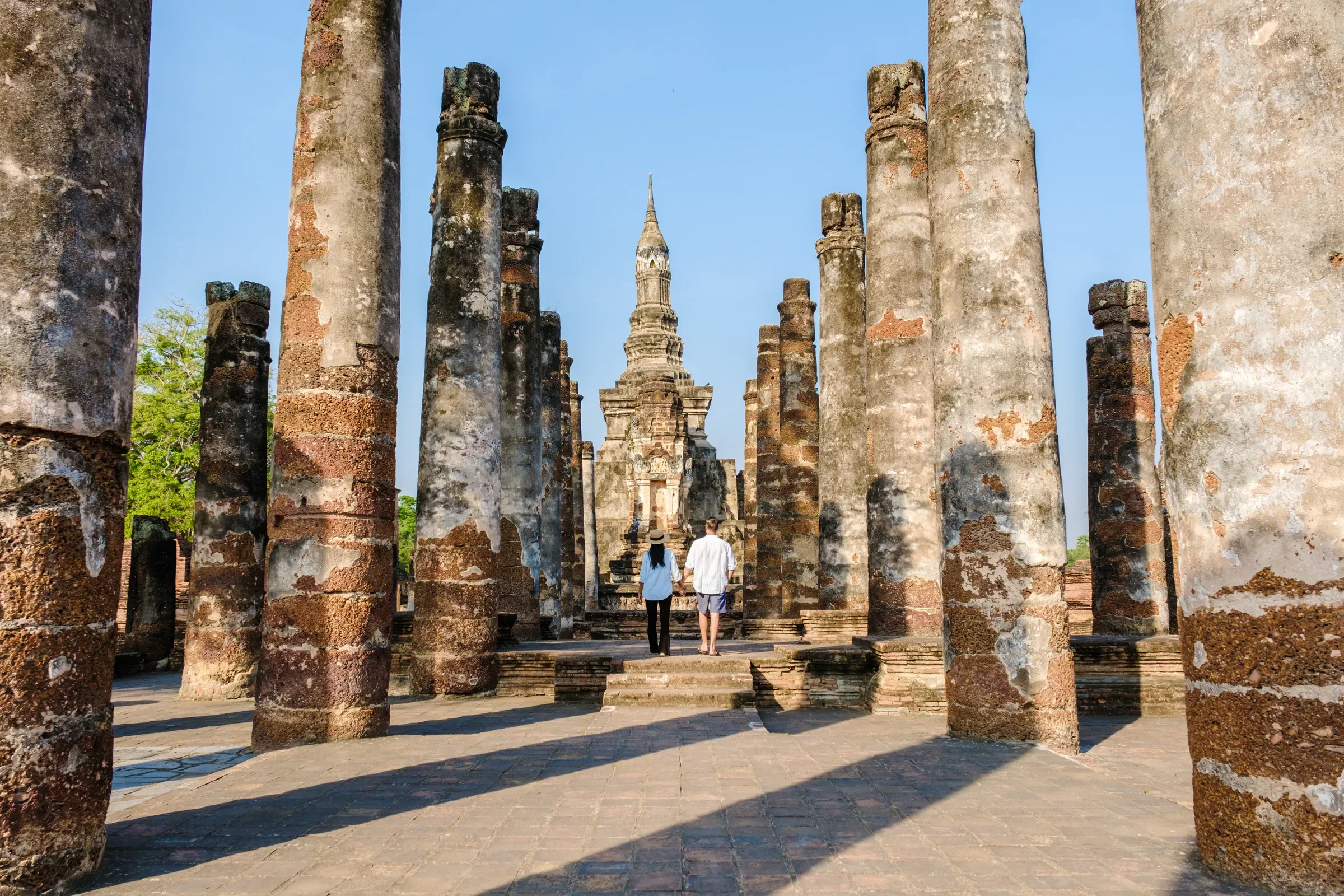
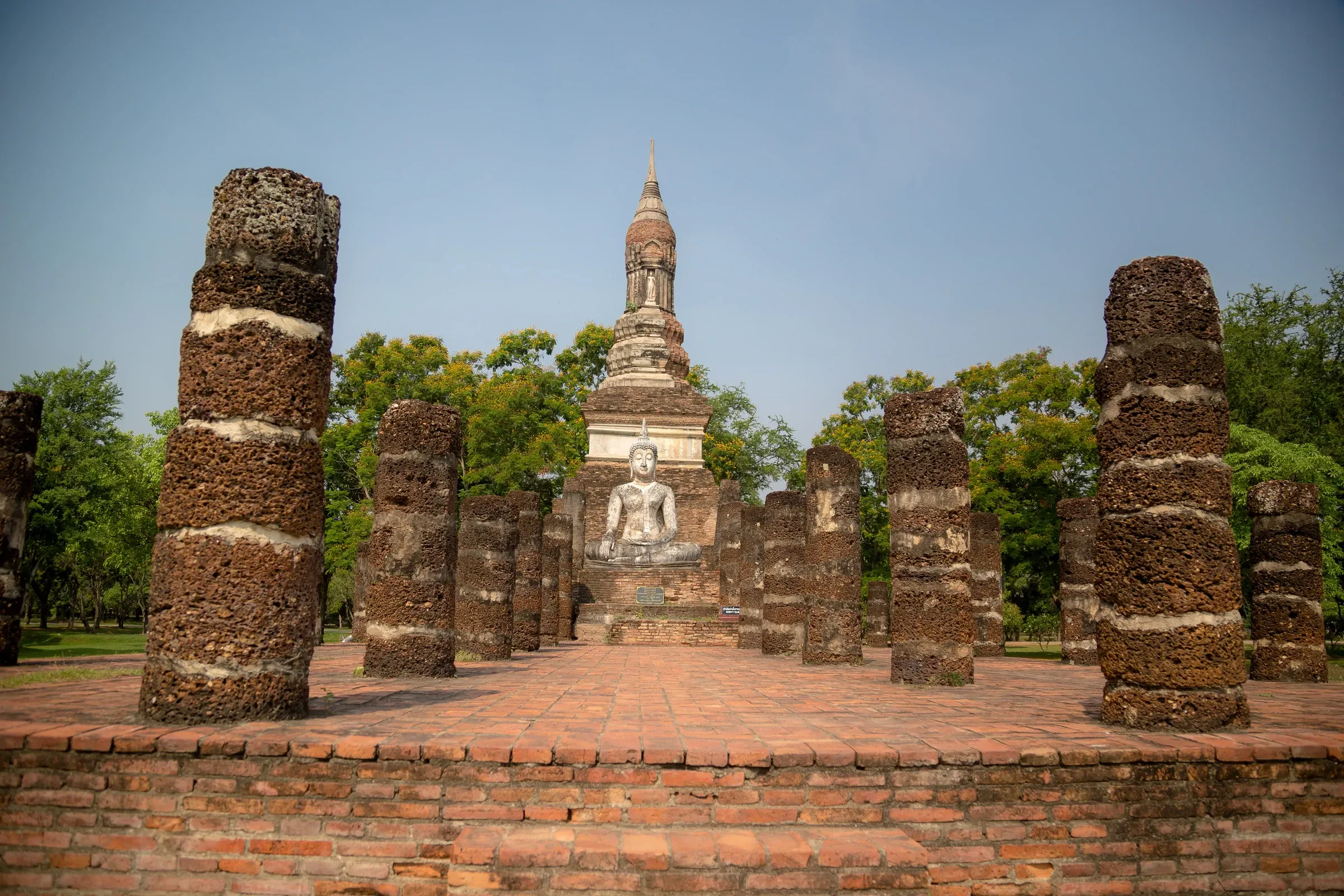
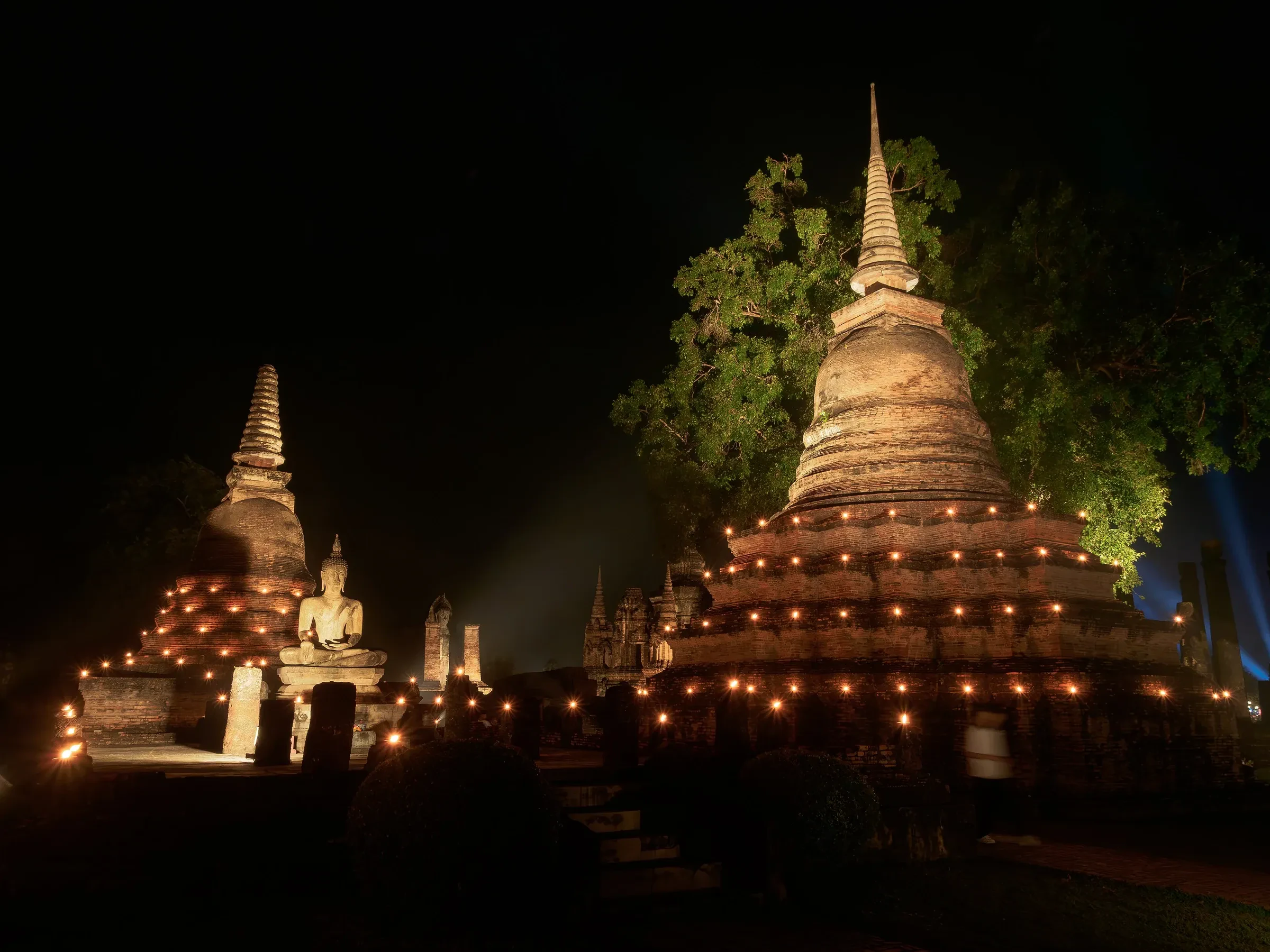
The Central Zone is the park's core, and worth the 200 baht ticket on its own. Wat Mahathat is the biggest and most photographed temple here: a lotus-bud chedi surrounded by rows of seated and standing Buddha images, with enough space to wander for an hour without retracing your steps. The moated grounds around it, laid out as the ceremonial heart of the old city, are what most people picture when they think of Sukhothai. Come early, before the heat and the tour buses build up, and budget two to three hours if you're taking your time with photos.
Wat Si Chum's seated Buddha
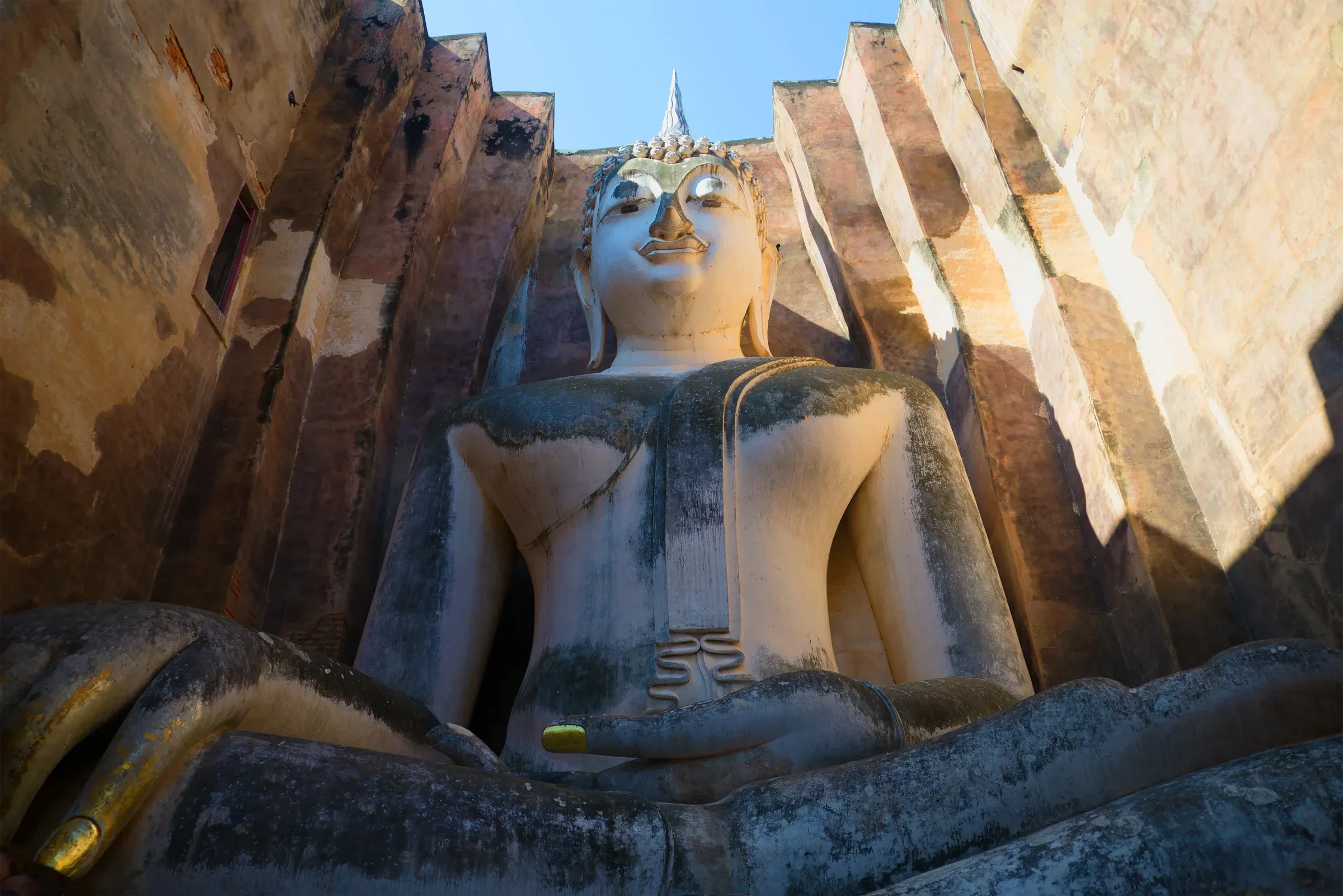
Wat Si Chum sits in the North Zone, a 120 baht ticket on top of the Central Zone fee. Its draw is Phra Achana, a seated Buddha image almost 15 metres high and 11 metres wide, squeezed into a mondop (a square shrine building) so tightly that only a narrow gap lets you see the whole face at once. The image's name means "the Buddha who is not afraid," and the tight fit between statue and walls is part of what makes it memorable rather than a flaw. It's a short bike ride from the Central Zone gate and worth the extra ticket.
The North and West zones
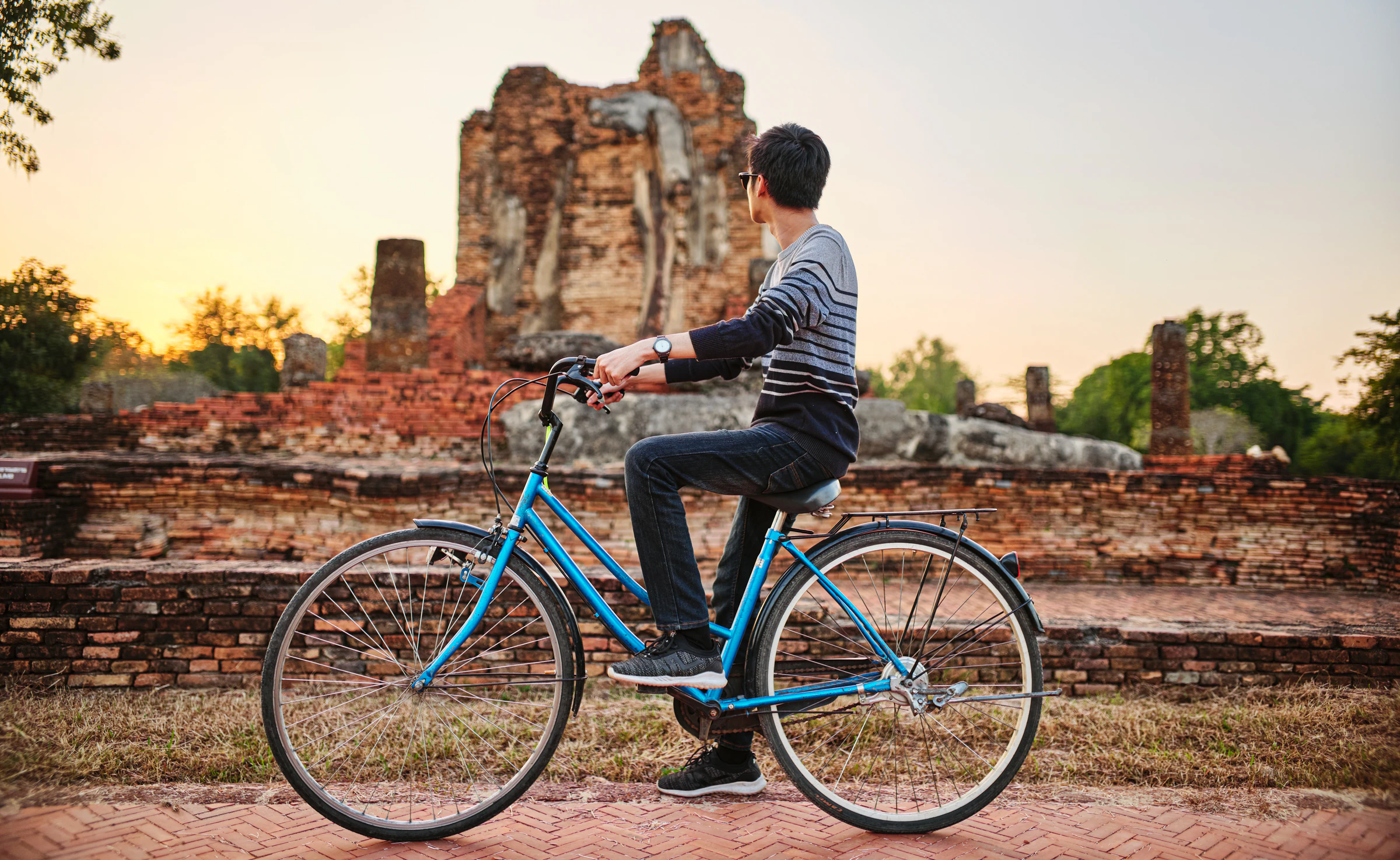
Beyond Wat Si Chum, the rest of the North Zone holds a scattering of smaller, quieter ruins that reward a slow bike ride rather than a single big set piece. The West Zone (also 120 baht) sits further out again, spread across wooded, hillier ground, and gets far fewer visitors than the Central Zone. It's the one to add if you have a full day and a bike, and the one to drop first if you're short on time. The South and East zones are free to enter and see less traffic again, useful if you want a quiet cycle without paying for another zone.
Cycling the park, zone fees and bike fees
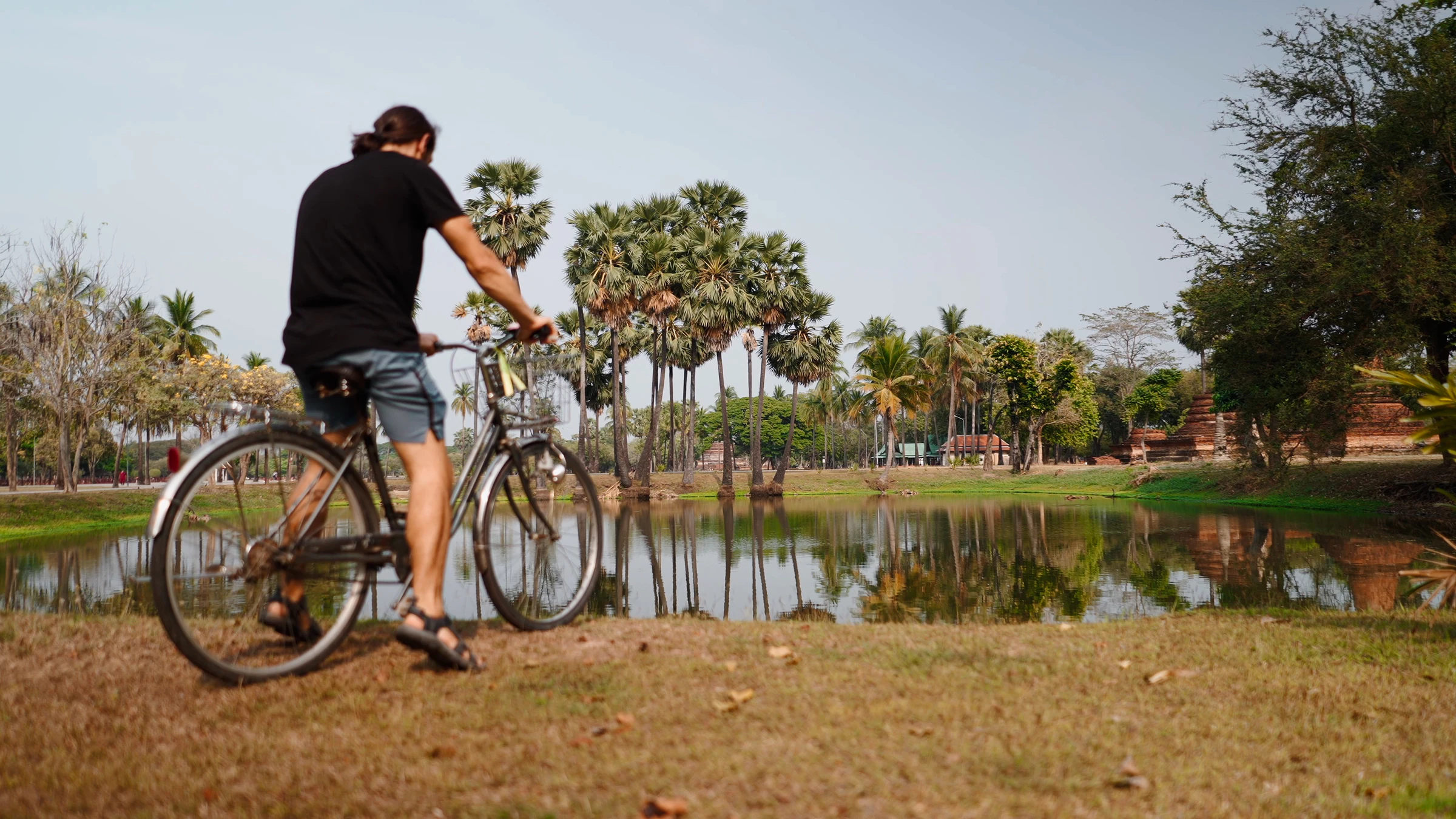
Sukhothai Historical Park is flat and spread out, and cycling is by far the easiest way to see it: much more pleasant than walking between temples in the heat.
- Bike rental: 30 to 50 baht a day from shops opposite the Central Zone entrance and along the main road in New Sukhothai (rental shops close by around 17:30 to 18:00)
- Central Zone: 200 baht, plus 10 baht to bring a bicycle in
- North Zone: 120 baht, plus the 10 baht bicycle fee
- West Zone: 120 baht, plus the 10 baht bicycle fee
- South and East zones: free
- A combined ticket for the three paid zones is on sale at the park (listings put it at about 400 baht), so ask at the ticket booth if you're doing all three
- The Ramkhamhaeng National Museum is a separate ticket
- Hours vary by listing: most give about 06:30 to 19:30, with later closing on Saturday evenings when the ruins are floodlit, and one lists 06:00 to 18:00, so check at the gate
Si Satchanalai as a day trip
Si Satchanalai Historical Park, a second, smaller UNESCO-listed Sukhothai-era city, sits about 56 kilometres north of New Sukhothai and makes a solid half-day-to-full-day trip if you have time to spare. Local buses run from New Sukhothai's bus station in the morning, take about an hour and cost around 45 baht, but the last bus back leaves mid-afternoon, so check the return time before you set off. A hired car with driver, about an hour each way, gives more flexibility. Entry to the main park is about 200 baht, and listings show Chaliang temple and the old Sawankhalok pottery kilns nearby on separate or combined tickets, so check prices at the ticket booth. Bikes can be rented at the entrance. It's quieter than Sukhothai's own park, and worth it if you've already done a full day in the Central and North zones and want more without the crowds.
Loy Krathong at Sukhothai
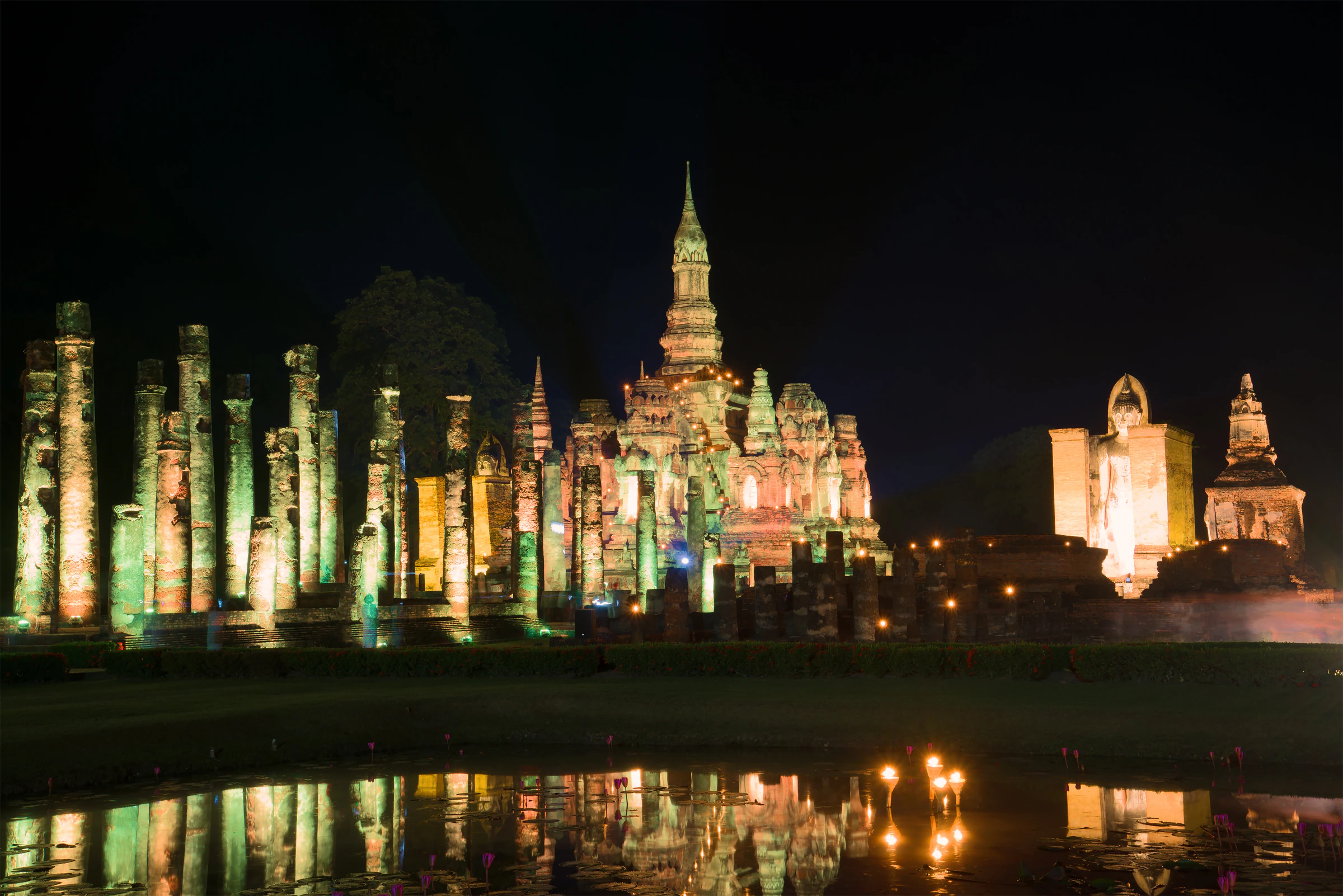
Loy Krathong 2026 falls on Tuesday 24 November, and Sukhothai is where the festival is said to have started, which makes it the most traditional place in Thailand to see it. The park runs its own Loy Krathong, Burning Candles and Playing with Fire festival from 15 to 24 November 2026, with the ruins lit by candles and a light and sound show among them at 7pm each night, plus an extra show at 8:30pm on the final night. Show tickets run 500, 900 and 1,200 baht depending on seating.
Sukhothai sits roughly between Bangkok and Chiang Mai, so it's an easy add to a trip heading north for the festival rather than a detour. If you want the full festival arc, our Loy Krathong festival guide covers dates, tips and where else to celebrate, and our Yi Peng guide covers Chiang Mai's lantern festival that follows a day or two later.
Best time to visit
November to February is the coolest, driest stretch and the obvious choice, especially if you're timing a visit around Loy Krathong. April brings serious heat that makes cycling between temples much less pleasant. Northern Thailand's burning season affects Sukhothai less than Chiang Mai, but haze still shows up some years, building from February and peaking over the following couple of months, so check conditions if you're travelling then. The rainy season, roughly June to October, brings green surroundings and thinner crowds, with the trade-off of afternoon downpours to plan around.
How long to spend, and which route to use
Half a day, with a bike, covers the Central Zone and Wat Si Chum comfortably. A full day lets you add the West Zone and cycle at a slower pace. Give it two days if you want to fold in Si Satchanalai as a separate outing rather than rushing it. Sukhothai works well as a stop between Bangkok and Chiang Mai rather than a standalone destination, so most visitors see it as part of a longer route: see our Thailand itineraries guide for how it fits into a 1-week, 10-day or 2-week trip north.
Getting there
From Bangkok: buses leave Mo Chit terminal roughly every few hours, taking about 7 hours and costing 365 to 500 baht. Bangkok Airways flies direct to Sukhothai Airport (the only carrier on the route) in about 1 hour 20 minutes, with one-way fares in 2026 listings from about US$50 to over US$100 depending on the date. It's the faster option if the schedule and price line up.
From Chiang Mai: buses from Chiang Mai Arcade terminal take about 5 to 6 hours and cost roughly 240 baht for a first-class seat, with a few departures a day.
From Ayutthaya: a direct bus takes around 6 hours. A cheaper but slower option is the train from Ayutthaya to Phitsanulok (about 5 hours), then a local bus on to Sukhothai (about 2 hours). Driving or a private van covers the distance in around 4.5 hours.
Once you're in New Sukhothai, songthaews to the historical park run all day, and a rented scooter is easy to arrange from most guesthouses if you'd rather set your own pace between the town, the park and Si Satchanalai.
Keep planning: our Ayutthaya guide covers Thailand's other, later capital, close to Bangkok and built around temple ruins on a river island. Our Chiang Mai guide and Chiang Rai guide cover the north's two main city bases if Sukhothai is one stop on a longer route. For the full festival calendar, see festivals in Thailand.