Chiang Mai is a small, easy city of old temples, night markets, cheap food and good coffee, with mountains on the doorstep. It's also the obvious base for the north: Pai, Chiang Rai, Doi Inthanon and the elephant sanctuaries are all day trips or short rides away.
This guide covers how to get there, how long to stay, where to base yourself, the main sights with current prices, the seasons and a realistic budget. For a longer list of sights, see things to do in Chiang Mai.
Where Chiang Mai is
Chiang Mai city sits in a valley on the Ping River, with the forested mountain of Doi Suthep rising right behind it to the west. It's the capital of Chiang Mai province, the largest city in the north, and it was founded in 1296 as the capital of the Lanna kingdom. The city itself is in Mueang Chiang Mai district, and when people say "Chiang Mai" they usually mean this central district: the walled Old City, the Night Bazaar area east of it and Nimman to the west.
The province is much bigger. It runs north to Chiang Dao and the Myanmar border, and south-west to Doi Inthanon, Thailand's highest mountain. Pai is in the next province, Mae Hong Son, but most people reach it from Chiang Mai.
Getting to Chiang Mai
Overnight train from Bangkok. Special Express 9 leaves Krung Thep Aphiwat Central Terminal at 18:40 and is due in Chiang Mai at about 07:15. It often runs 30 to 60 minutes late. Published 2nd-class sleeper fares are about 940 baht for an upper berth and about 1,040 baht for a lower one, so check the State Railway's D-Ticket site for today's price. Tickets go on sale up to 180 days ahead, and lower berths go fast. You save a night's accommodation and arrive in time for breakfast.
Flights. Flights from Bangkok take about 1 hour 15 minutes. Budget airlines fly from Don Mueang, and full-service airlines from Suvarnabhumi, roughly every hour from early morning to late evening. Fares vary with the airline and how far ahead you book, and budget airlines charge extra for checked bags. Chiang Mai airport is close to town: a Grab to the Old City takes about 15 minutes and costs about 80 to 180 baht.
Bus. Overnight VIP buses from Bangkok's Mo Chit terminal take 9 to 11 hours and cost about 500 to 900 baht. They're cheaper than the train, but less comfortable.
Onward from Chiang Mai. Minivans to Pai take 3 to 4 hours on a mountain road with about 762 bends (150 to 360 baht). Green Bus runs to Chiang Rai in about 3 hours 10 minutes to 3 hours 45 minutes (about 260 baht for the express, about 360 to 600 baht for VIP). There are direct flights to Koh Samui for the islands, and Lao Airlines flies direct to Luang Prabang in Laos. Days vary by season on that route, so check before you plan around it.
How many days in Chiang Mai?
Three or four days is right for most people. That gives you one day for the Old City temples, one for Doi Suthep and a market, one for an elephant sanctuary or a cooking class, and a spare day for a day trip or doing nothing much. It's an easy city to linger in, so leave some slack.
If you only have two nights, do the Old City and Doi Suthep on the first day and a half-day sanctuary visit on the second. Skip the long day tours.
Chiang Mai itineraries: 1 week to 1 month
Chiang Mai works as the hub for the whole north. These routes all start there and avoid backtracking where they can. For routes across the whole country, see the Thailand itinerary guide.
1 week: Chiang Mai and Pai
Spend four nights in Chiang Mai and three in Pai. In Chiang Mai: the Old City temples, Doi Suthep at sunset, a weekend walking street, a morning at an elephant sanctuary and a farm cooking class. Then take the minivan up to Pai for canyon sunsets, hot springs and a slower pace. Three nights matters there, because the drive takes it out of you. Come back down to Chiang Mai or fly out from there.
10 days: Chiang Mai, Pai and Chiang Rai
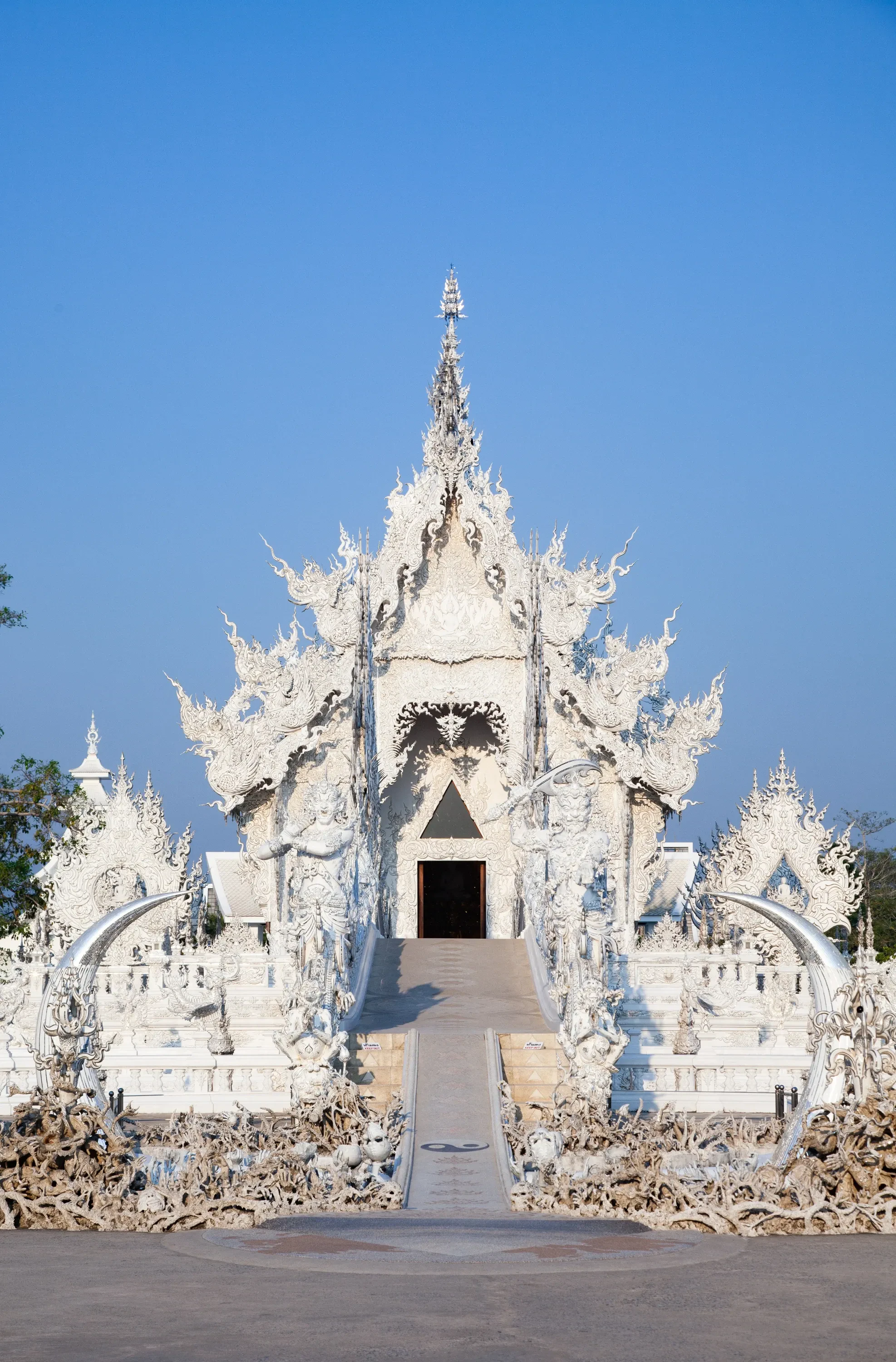
Do the week above, then head back through Chiang Mai and take the bus to Chiang Rai for two nights. The White Temple (Wat Rong Khun) costs 200 baht to enter and opens at 8am, so go early. You can fly home or back to Bangkok from Chiang Rai, so you don't need to go back to Chiang Mai again.
2 weeks: the north, then the islands
Two weeks is enough for Bangkok, Chiang Mai, Pai and a couple of Gulf islands if you take the overnight train north and the direct flight from Chiang Mai to Koh Samui. That's the shape of our Thailand in 2 Weeks trip. If you'd rather stay in the north, add Chiang Rai, a night near Doi Inthanon and a few more slow days in Chiang Mai.
1 month: northern Thailand and Laos
A month lets you do the north properly and cross into Laos. Spend a week or more between Chiang Mai, Pai and Chiang Rai, then fly from Chiang Mai to Luang Prabang for the temples, the morning alms giving and the Kuang Si waterfalls, and carry on south by train. Check your visa first: many passports now get 30 days visa-free in Thailand (it was 60 before 15 September 2026). The Thailand visa guide has the rules.
Where to stay in Chiang Mai
The Old City. The square of moat and old brick walls in the middle of town is where most first-timers stay. It's walkable and full of temples, guesthouses, massage shops and cheap places to eat, and the Sunday Walking Street runs right through it. It can feel touristy, but for a short stay it's the easiest base.
Tha Phae Gate and the Night Bazaar. Just east of the Old City, around Tha Phae Gate and towards the river, is busier and has more bars and hostels. It's handy for the Night Bazaar and the Sunday market.
Nimman. Nimmanhaemin Road, west of the Old City near the university, is the modern side of town: cafes, bars, the One Nimman and Maya malls, and co-working spaces full of remote workers. It's nicer for a long stay than a short one, and it's about 15 minutes from the Old City by songthaew or Grab.
For specific places, read the best hostels in Chiang Mai.
Hostels for solo travellers
These are the names that come up most in current ratings and awards. Prices change weekly, so check before you book.
- Mad Monkey Chiang Mai won several of Hostelworld's 2026 HOSCAR awards, including a place among the best large hostels in Asia, and was rated 9.8 on Hostelworld from about 3,000 reviews in September 2026 (Hostelworld HOSCARs). It's a party-leaning hostel with a pool, on Kamphaeng Din Road, a short walk from Tha Phae Gate and the Night Bazaar.
- The Yard Hostel also won a 2026 HOSCAR and was rated 9.7 on Hostelworld in September 2026. It has a garden and a calmer feel, which suits people who want to meet others without a nightly party (Hostelworld Chiang Mai listings).
- Family Home 2 was rated 9.7 from about 1,900 reviews on Hostelworld in September 2026, with some of the cheapest dorm beds on the list.
Things to do in Chiang Mai
Prices below are approximate and were checked in September 2026. The things to do in Chiang Mai guide goes into more detail.
Old City temples
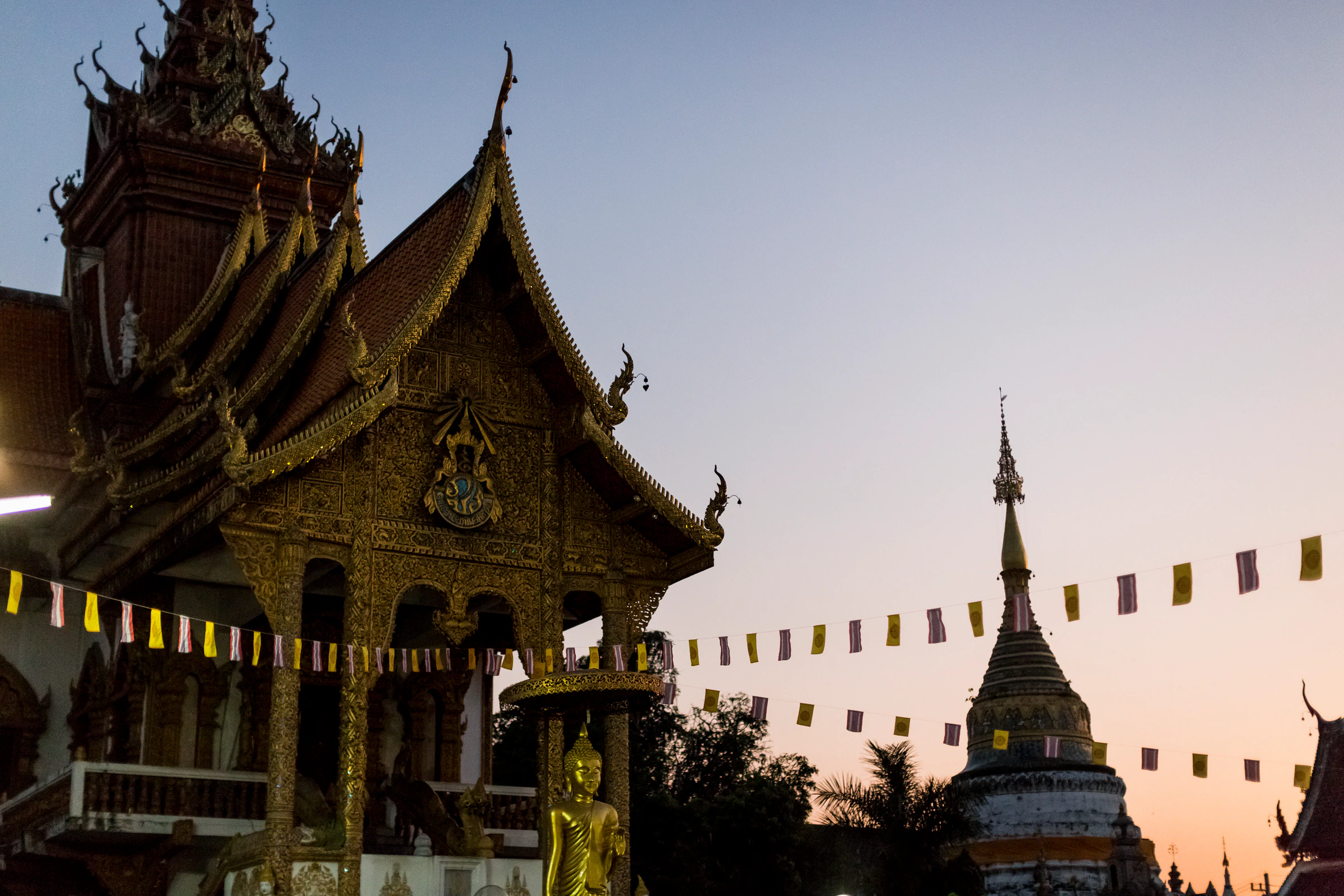
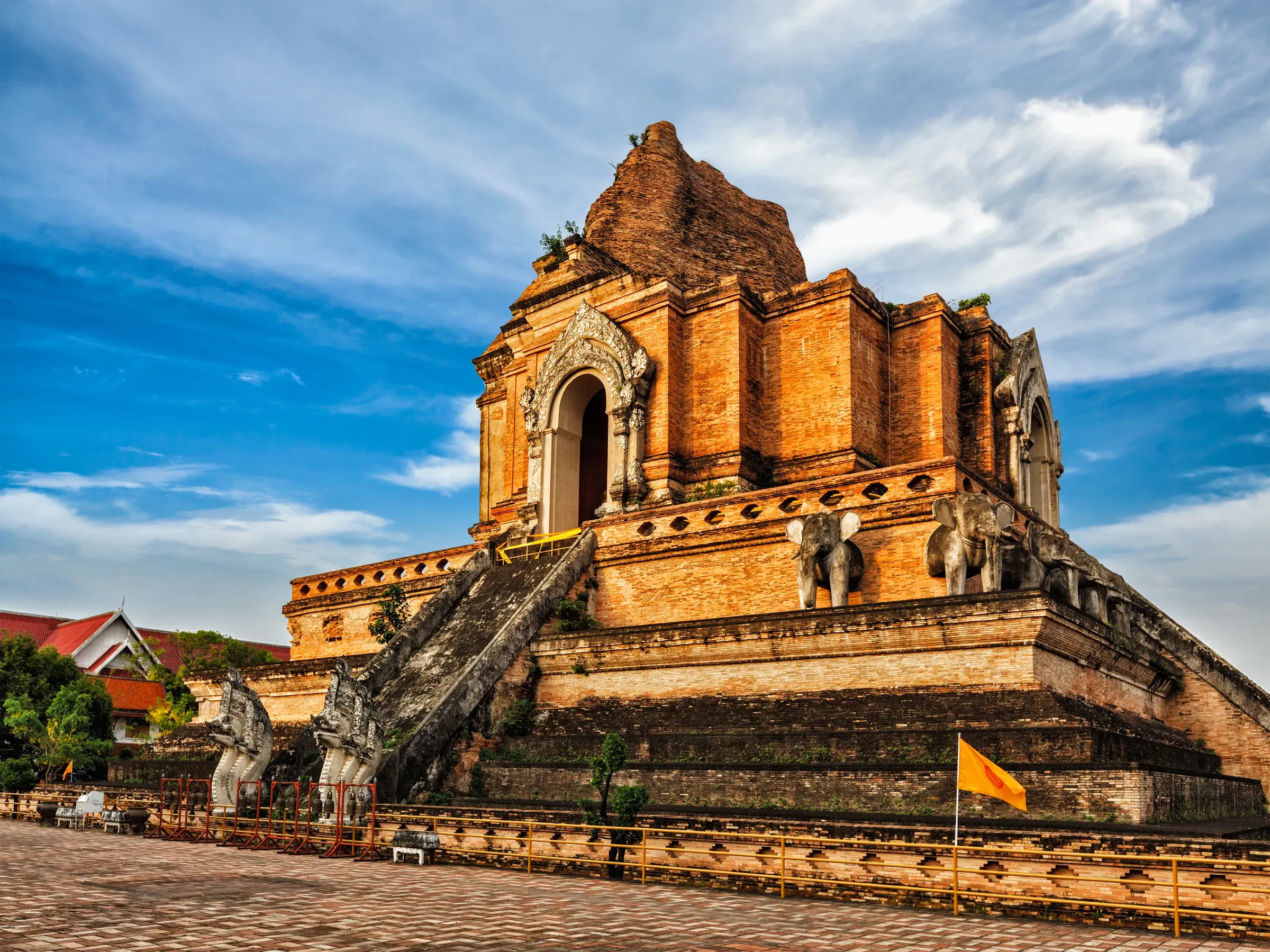
There are dozens of temples inside the moat, and three stand out. Wat Chedi Luang has a huge ruined brick chedi from the 14th and 15th centuries and costs about 40 to 50 baht for foreigners. Wat Phra Singh is one of the city's most revered temples and charges a small entry fee for some of its halls. Wat Chiang Man, in the north-east corner, is said to be the city's oldest temple and has a chedi ringed with stone elephants. Cover your shoulders and knees at all of them. Outside the walls, Wat Umong is a forest temple with tunnels, and it's free.
Doi Suthep
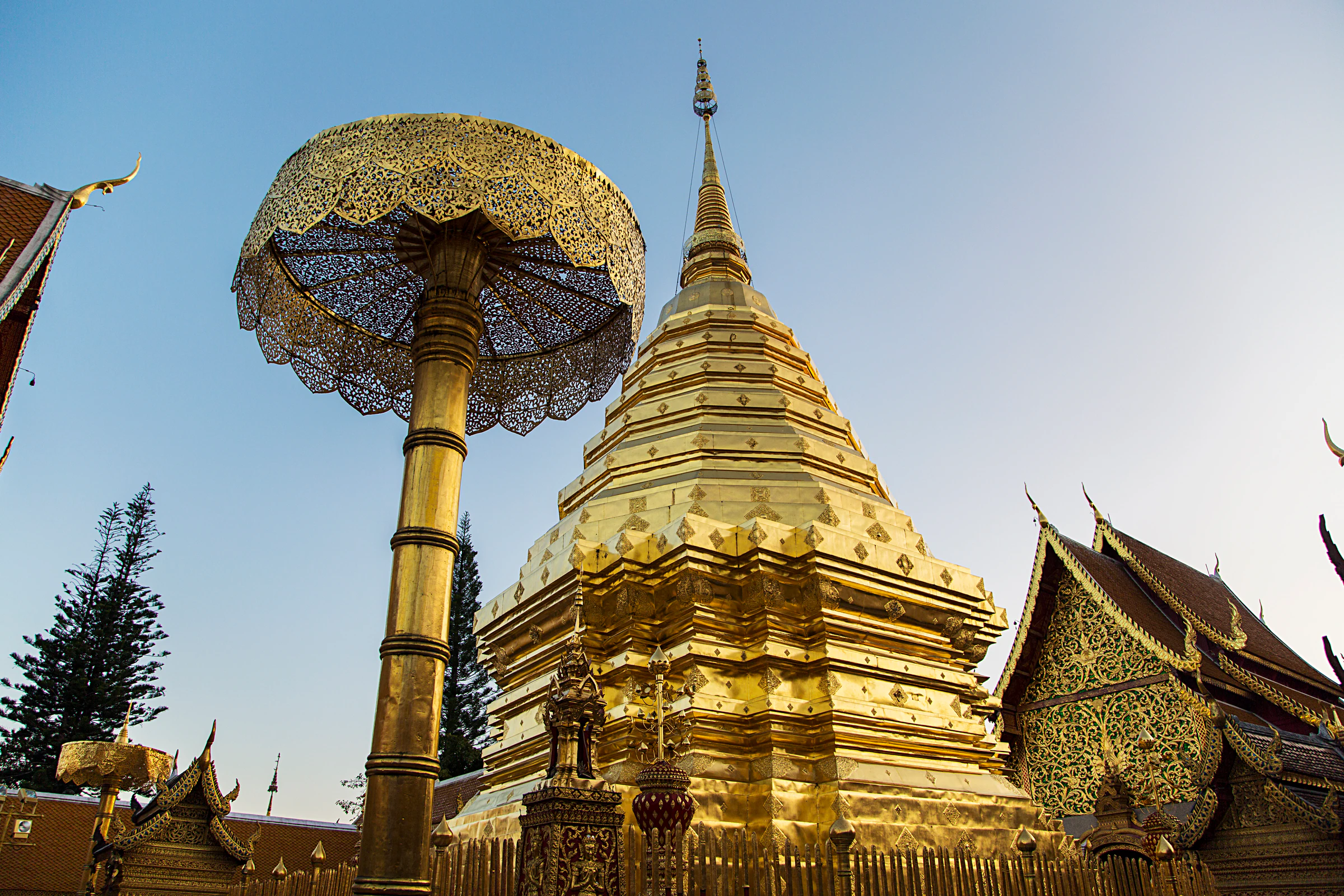
Wat Phra That Doi Suthep sits on the mountain above the city, with a gold chedi and a view back over Chiang Mai. Foreigners pay 30 baht to enter. Shared red songthaews leave from near Chang Phuak Gate and the zoo and cost about 40 to 50 baht each way once they fill up. At the top you can climb the long naga staircase or take the funicular for 20 baht.
Driving up the road to the temple doesn't cost anything extra. Since 1 October 2025, the national park charges foreigners 100 baht for its nature areas, including the Monk's Trail (Pha Lat trail), the Huai Kaew waterfall and Doi Pui village. The Monk's Trail is the best way up on foot: it starts at the edge of the city and passes Wat Pha Lat, a quiet temple in the forest.
Night markets
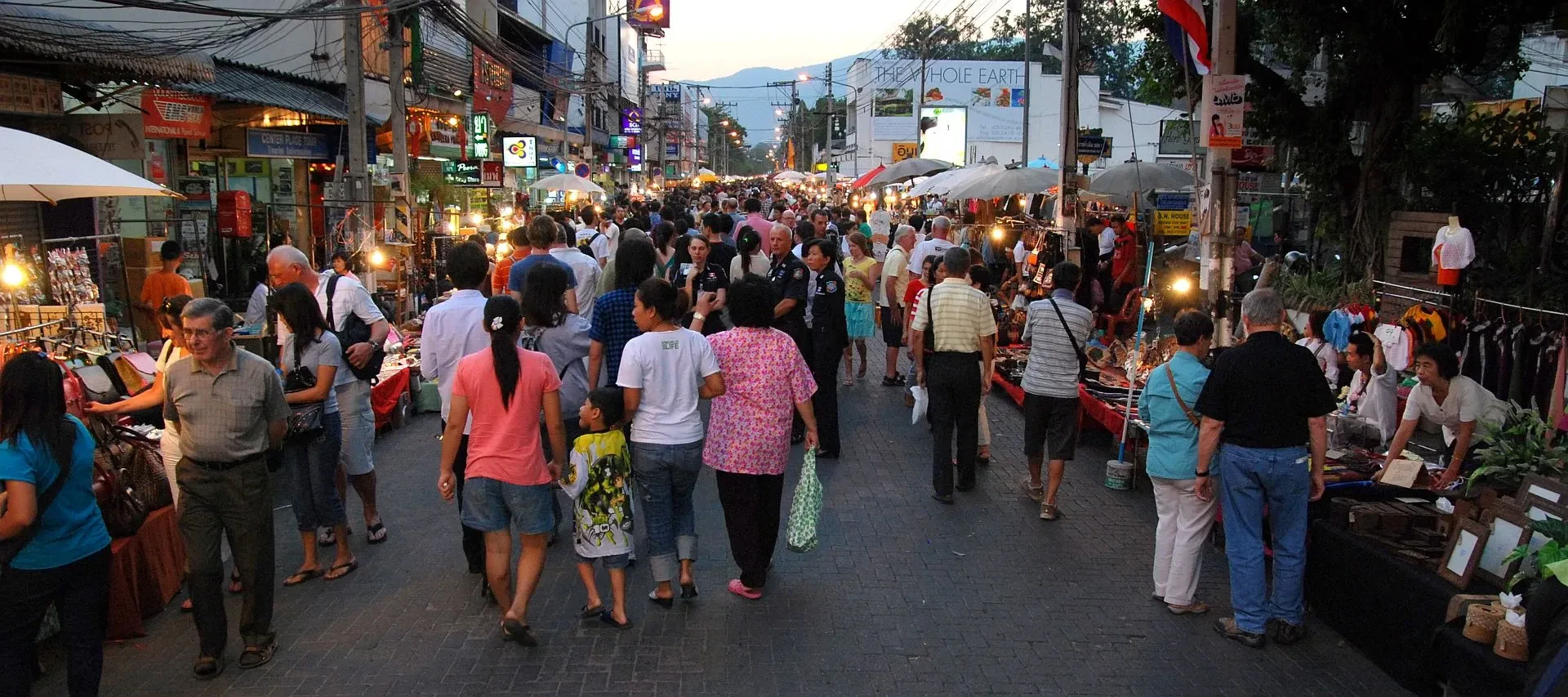
- Sunday Walking Street: Every Sunday from about 4pm to 10pm, from Tha Phae Gate along Ratchadamnoen Road through the Old City. Food, crafts and huge crowds after 6pm.
- Saturday Walking Street: On Wualai Road, just south of the Old City, from about 4 or 5pm to 10pm. Smaller and more local, known for silverwork.
- Night Bazaar: Every night from about 5pm until late on Chang Khlan Road. More souvenirs and fewer bargains, but it's open daily.
Elephant sanctuaries (choose carefully)
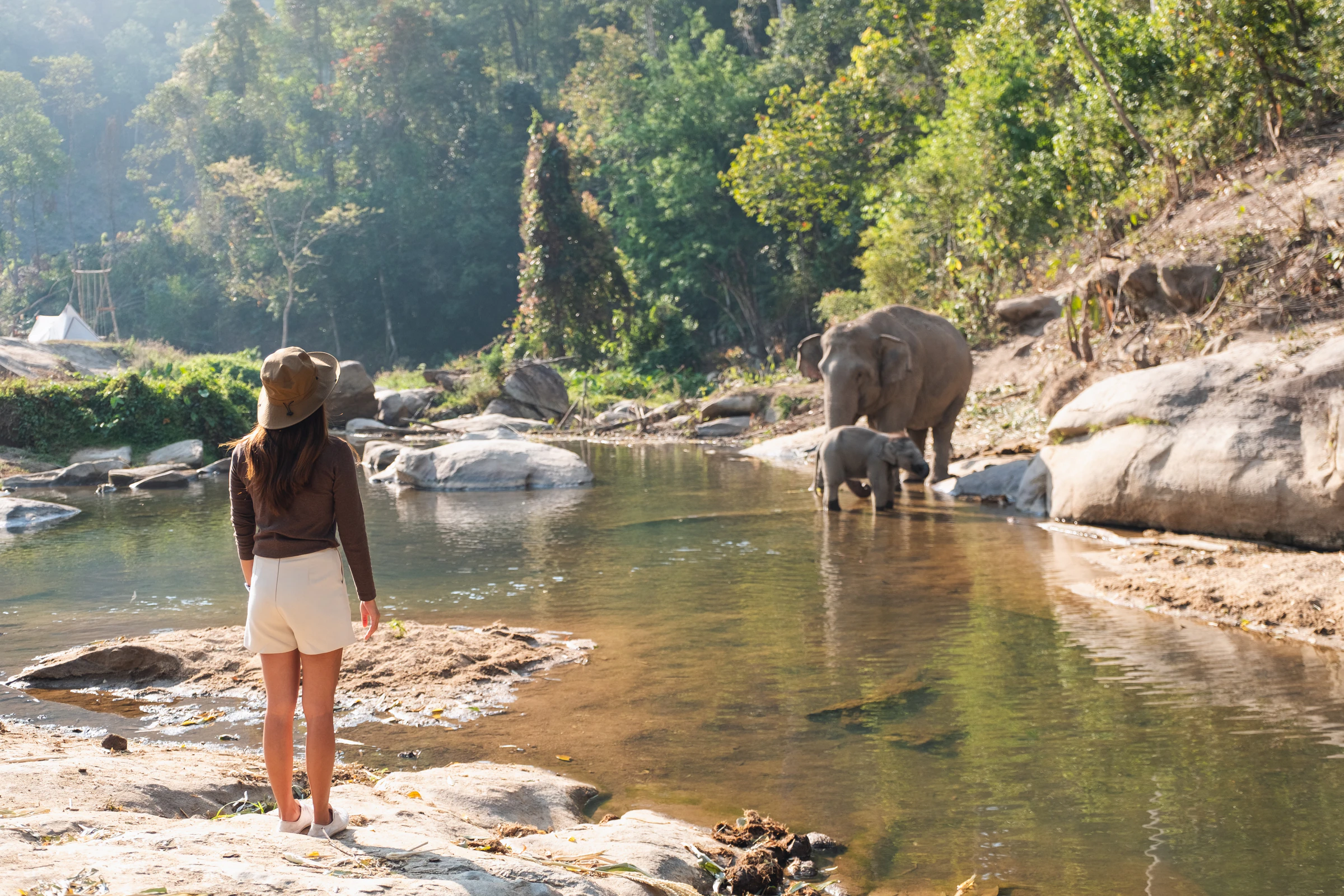
Pick carefully here. World Animal Protection's rule is to look and not touch: no riding, no bathing and no close contact. Many places that call themselves sanctuaries still offer bathing, which doesn't meet that standard.
Elephant Nature Park, about 60 km north in Mae Taeng, is the best-known rescue park and doesn't allow riding. Its half-day morning and afternoon visits cost about 2,500 baht. Full-day programmes cost more and vary, so check the park's booking page. Only its more expensive "Care for Elephants" day includes hands-on feeding (Elephant Nature Park booking page). ChangChill, in Mae Wang, is on World Animal Protection's list of elephant-friendly venues and runs observation-only visits, with a half day for about 1,900 baht including pickup and lunch.
Cooking classes
Farm cooking schools about 17 km outside the city pick you up, take you round a market and teach you five or six dishes in an outdoor kitchen. 2026 listings run from about 800 to 2,500 baht, depending on length and school. The evening class fits well after a morning with the elephants.
Nimman and the cafes
Chiang Mai takes coffee seriously, and Nimman is the centre of it. Spend an afternoon walking the side streets (sois) off Nimmanhaemin Road, then stay for dinner and a drink. It's where the city's students and remote workers go out.
Day tours from Chiang Mai
- Doi Inthanon: Thailand's highest mountain, with waterfalls, two royal chedis and a cool summit trail. The park fee is 300 baht for foreign adults, plus about 30 baht per car. It's a long day, so a tour or a hired driver is easiest.
- Chiang Rai: Day tours take in the White Temple (200 baht), the Blue Temple and often the Golden Triangle. Budget group tours cost about 1,200 to 1,600 baht, but the day lasts 11 to 13 hours and most of it is in a van. A night in Chiang Rai is more relaxed.
- Sticky Waterfall (Bua Tong): You can walk up the rocks of this waterfall because the limestone isn't slippery. It's free, about 60 km north of the city (about 1.5 hours), and makes a good half day with a hired songthaew.
- Grand Canyon Water Park: A flooded quarry with inflatables, kayaks and a zipline, about 1,200 baht for the day. Good for a lazy afternoon when it's hot.
- Trekking: One-day treks in the hills south-west of the city cost about 1,900 baht and usually include a waterfall and a village visit.
Best time to visit Chiang Mai
November to mid-February is the best time. It's dry, the sky is clear and the mornings are cool: January averages about 22°C, and nights in the hills get colder. It's also the busiest season, so book the train and popular hostels early.
Late February to April is the burning season. Farmers clear fields by fire, and the smoke gets trapped in the valley. In 2026, Chiang Mai ranked as the world's second most polluted city on 2 April, and on 4 April the government declared Chiang Mai, Lamphun and Phayao provinces disaster zones because of the air. April is also the hottest month, at up to about 36°C. If you have to go then, check the air quality before you book and bring a proper mask.
May to October is the rainy season. Everything turns green and prices drop, but August and September are the wettest months, and the mountain roads to Pai get slippery. Our Chiang Mai weather guide goes month by month.
Festivals
- Loy Krathong and Yi Peng: Loy Krathong falls on 24 November 2026, and Yi Peng's main lantern nights are 24 and 25 November. People float candle-lit baskets on the Ping River and release sky lanterns, but only at authorised venues outside the city centre. Releasing lanterns in the city is banned and can lead to a fine or prison. Flights are usually rescheduled around release nights, so avoid a late-evening arrival. Read our Yi Peng guide and Loy Krathong guide.
- Songkran: 13 to 15 April, and Chiang Mai starts a day or two early. The water fights centre on the Old City moat. It falls in the smoky, hot season. See the Songkran guide.
Getting around Chiang Mai
Red songthaews are shared pick-up trucks that work like a cheap bus with no fixed route. Flag one down, say where you're going and agree the price before you get in. Short trips around the city cost about 30 to 40 baht per person.
Grab works all over the city and is the easiest option at night or for getting to the airport or the bus station.
Scooters cost about 150 to 350 baht a day, but think before you rent one. To ride legally you need a motorbike licence from home plus an International Driving Permit that covers motorbikes. A car-only permit doesn't count, even for a small scooter. Police run checkpoints in Chiang Mai and Pai, with fines of up to about 2,000 baht. Most travel insurance policies also exclude riders without the right licence. Helmets are required by law, and the UK government advises never leaving your passport with a rental shop as a deposit.
How much Chiang Mai costs
Chiang Mai is one of the cheapest places in Thailand. Most people spend about 1,000 to 1,500 baht a day on food, drinks, transport and entry fees, plus their bed. At September 2026 rates, US$1 is about 33 baht.
| Item | Price (baht) | About (US$) |
|---|---|---|
| Hostel dorm bed | 100 to 200 | 3 to 6 |
| Street-food dish | 50 to 80 | 1.50 to 2.50 |
| Large beer at a bar | 80 to 120 | 2.50 to 3.50 |
| One-hour Thai massage | 250 to 350 | 7.50 to 10.50 |
| Songthaew ride in town | 30 to 40 | 1 to 1.20 |
| Doi Suthep temple entry | 30 | 1 |
| Half day at Elephant Nature Park | 2,500 | 76 |
| Farm cooking class | 800 to 2,500 | 24 to 75 |
Safety tips for solo travellers
Chiang Mai is one of the easier places in Thailand to travel alone. The UK government's travel advice has no specific warning for the city. The usual risks still apply:
- Roads. Traffic is the biggest danger. If you do ride, wear a helmet and have the right licence.
- Drinks. The UK government warns that drink spiking happens in tourist areas, and that methanol in fake or home-made spirits can kill. Watch your drink and stick to sealed bottles and busy, known bars.
- Air. In the burning season, check the air quality each day and take it seriously if you have asthma.
- Elephants. Riding and bathing are bad for the animals and can be dangerous for you. Choose an observation-only visit.
Our Thailand safety guide covers the rest of the country.
Chiang Mai on our trips
Three of our small-group trips for 18 to 40 year olds stop in Chiang Mai. Each one includes the elephant sanctuary morning and a farm cooking class, and your Trip Host is with the group the whole way.
We run these trips in the cool, dry months and in the green season. The one exception is our Songkran trip, which runs in April for the festival and so lands in the smoky, hottest weeks. Each trip page shows its dates.