Bangkok is a city of contradictions: gold-topped royal temples a few streets from tower blocks, canal boats sharing the water with river ferries, and street food stalls doing more business than the restaurants next to them. It's loud, hot and a bit overwhelming on day one, and most solo travellers end up liking it more than they expected once they've picked an area to work from.
This guide covers where to base yourself, how to get in and around, the sights worth your time with current fees, a day trip to Ayutthaya, and how to move on to Chiang Mai or the islands. For where to sleep, see the best hostels in Bangkok, and for the weather, see the best time to visit Bangkok.
Bangkok's neighbourhoods
Bangkok is spread out, so where you stay shapes your trip more than in most cities. These five areas cover almost everywhere solo travellers end up.
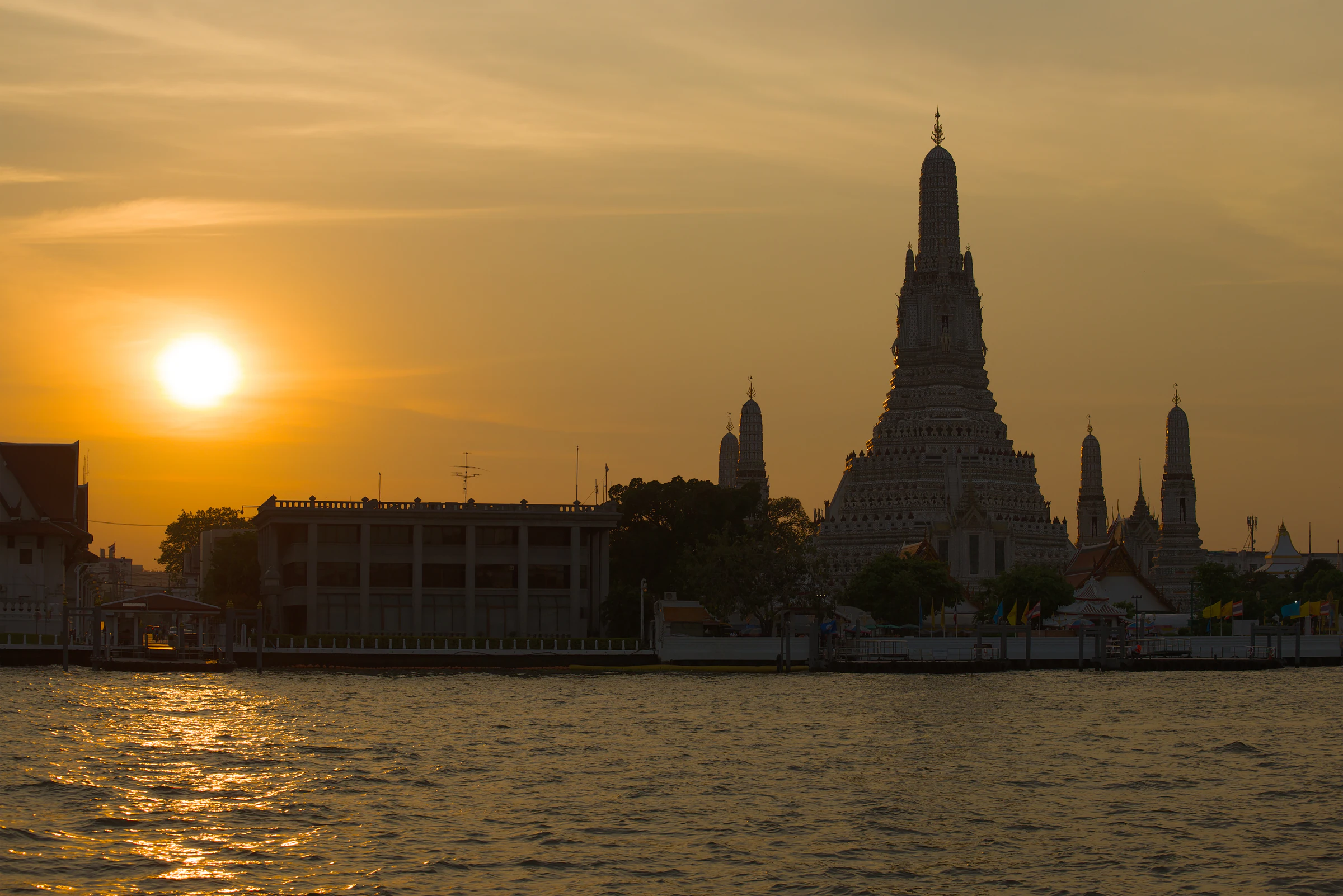
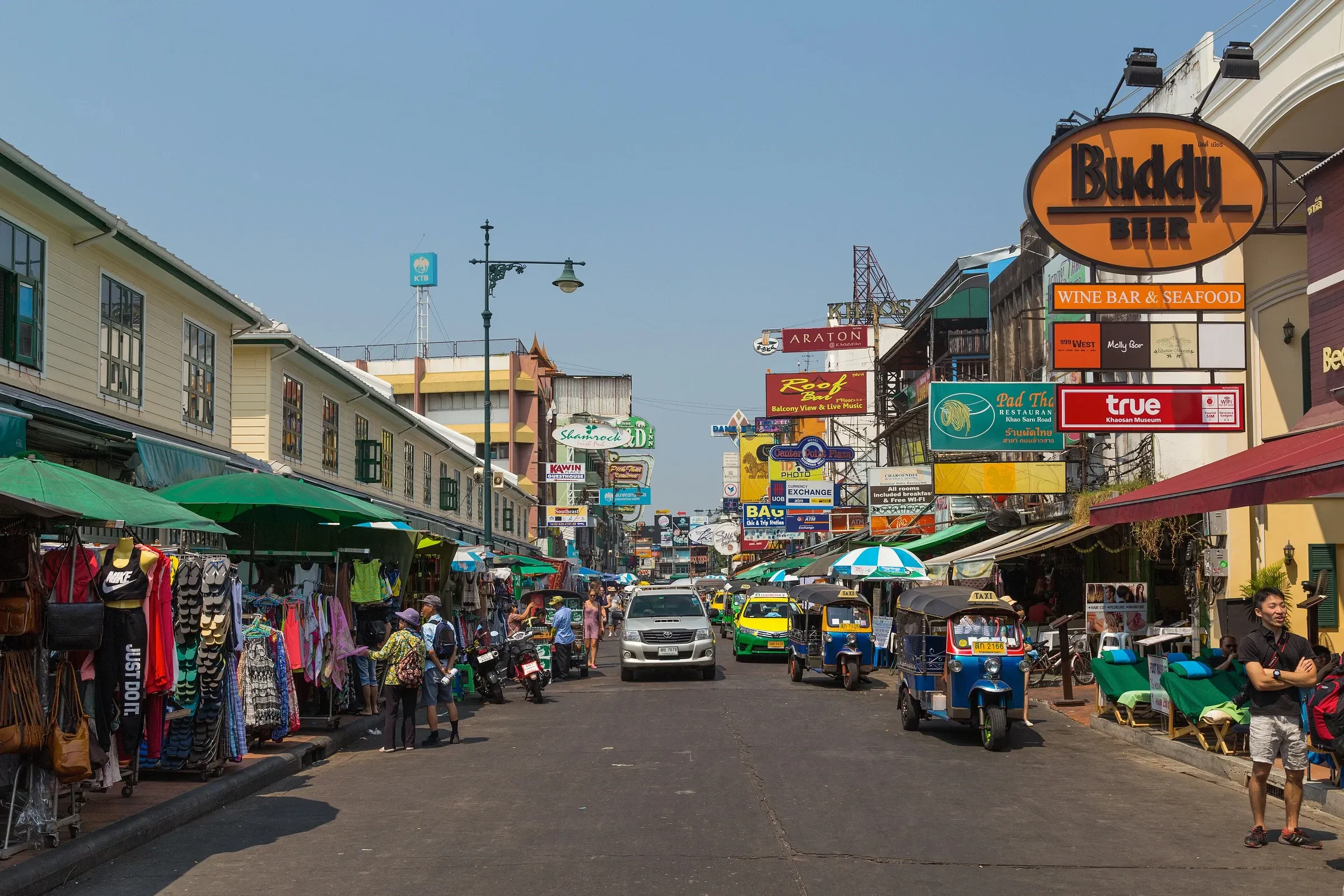
Old Town (Rattanakosin) and Khao San Road. The historic core, on a bend of the Chao Phraya River, holds the Grand Palace, Wat Pho and Wat Arun within walking distance of each other. Khao San Road, just north of it, is the backpacker strip: cheap hostels, street food, bars and the odd souvenir stall selling elephant-print trousers. It's the easiest first base for sightseeing, and the MRT's Sanam Chai station puts it on the rail network, a few minutes' walk from the palace.
Chinatown (Yaowarat). East of the Old Town, Chinatown is Bangkok's street food capital: gold shops, Chinese shrines and stalls that get going properly after dark. Yaowarat Road is the main strip, and the MRT's Wat Mangkon station opens right onto it.
Silom. A business district by day, with rooftop bars, Patpong's night market and Bangkok's main LGBTQ+ nightlife strip after dark. It's on the BTS Silom line and the MRT, both close to the river.
Sukhumvit. Bangkok's biggest hotel and nightlife district, running east from Siam along the BTS Sukhumvit line. It's modern, convenient and a bit anonymous, with malls, rooftop bars and a big spread of restaurants.
Ari. A quieter, leafier neighbourhood around Ari BTS station, known for its coffee shops and small boutiques rather than nightlife. It suits a longer stay or a break from the tourist areas, without losing the BTS connection.
For named hostels in each of these areas, see the best hostels in Bangkok.
Getting to Bangkok
Bangkok has two airports, and which one you land at affects your first move.
Suvarnabhumi (BKK) is the main international airport, about 30 km east of the centre. The Airport Rail Link runs to Phaya Thai station in under 30 minutes for about 45 baht (the fare listed for January 2026), and Phaya Thai connects to the BTS. A taxi from the airport rank costs about 350 to 600 baht once you add the meter fare, the 50 baht airport surcharge and tolls, and Grab costs roughly the same, about 350 to 500 baht plus tolls.
Don Mueang (DMK) is the older airport, used mostly by budget airlines flying domestic and regional routes, about 25 km north of the centre. There's no rail link, so it's a bus, taxi or Grab: buses cost 5 to 20 baht but take longer, while a taxi or Grab runs about 300 to 500 baht and takes 30 to 60 minutes depending on traffic. If you're flying in from Chiang Mai on a budget carrier, you'll likely land here rather than at Suvarnabhumi.
Getting around Bangkok
BTS Skytrain and MRT. The elevated BTS and underground MRT cover most of the areas tourists use, with distance-based fares that run from under 20 baht to roughly 65 baht a trip. They don't connect to a single ticket system, so you'll usually buy separate tickets or cards for each. Thailand's 20 baht fare-cap scheme is for registered Thai citizens, so as a visitor expect to pay the standard fare shown at the station. Since 2019, the MRT's Blue Line extension has reached the Old Town and Chinatown too: Sanam Chai station is a short walk from the Grand Palace and Wat Pho, and Wat Mangkon station opens onto Yaowarat Road.
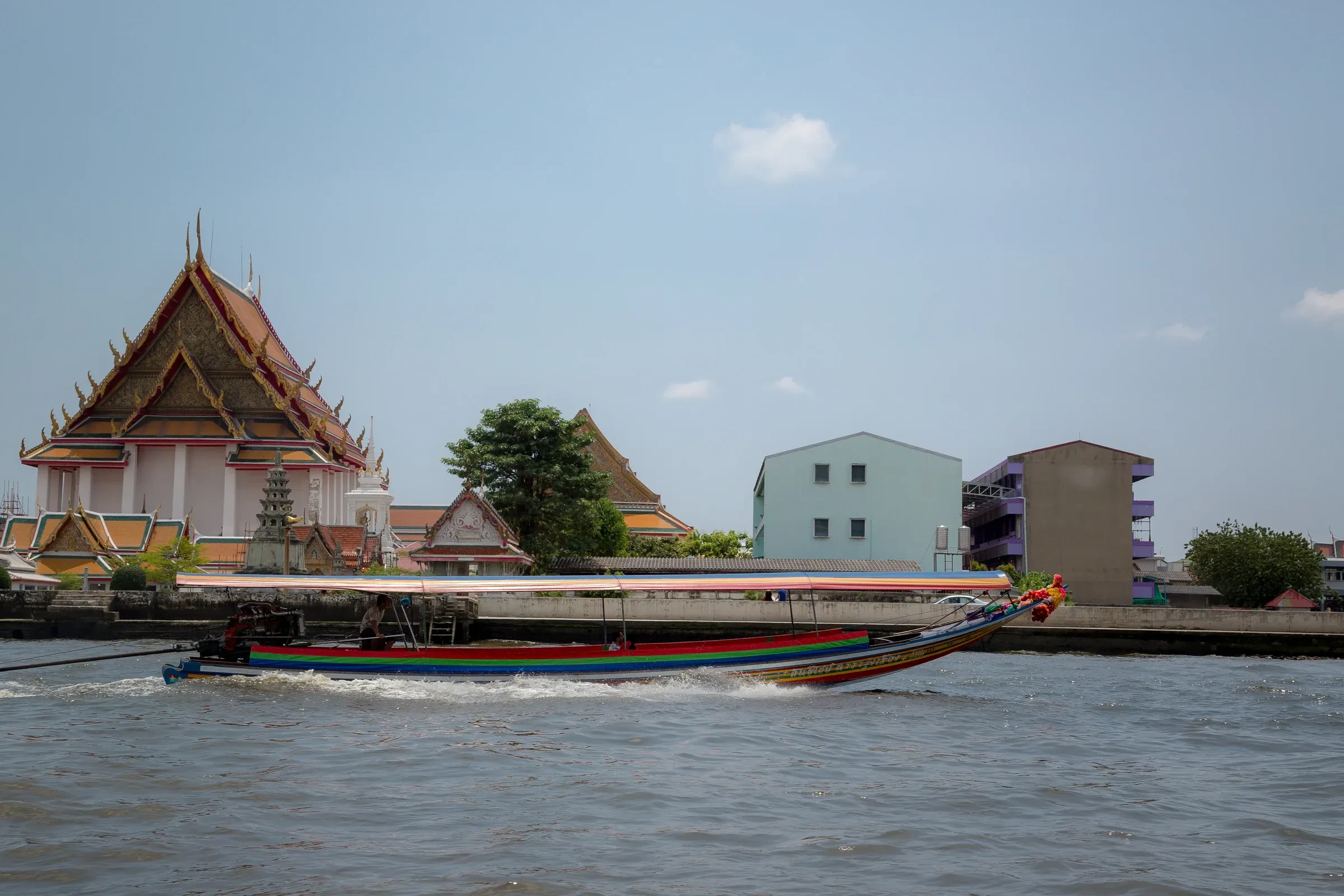
Chao Phraya river boats. The Chao Phraya Express Boat runs the length of the river, with the cheap orange-flag boats costing 18 baht a trip and covering most stops locals use. A tourist blue-flag boat with recorded commentary costs 150 baht for an all-day pass and stops at the main sights. Boats are a good way to reach Wat Arun and the riverside without sitting in traffic.
Grab. The easiest way to book a taxi, since you agree the price and route in the app before you get in, with no haggling and no risk of a meter "not working". It's the default choice at night or for anywhere the BTS and MRT don't reach.
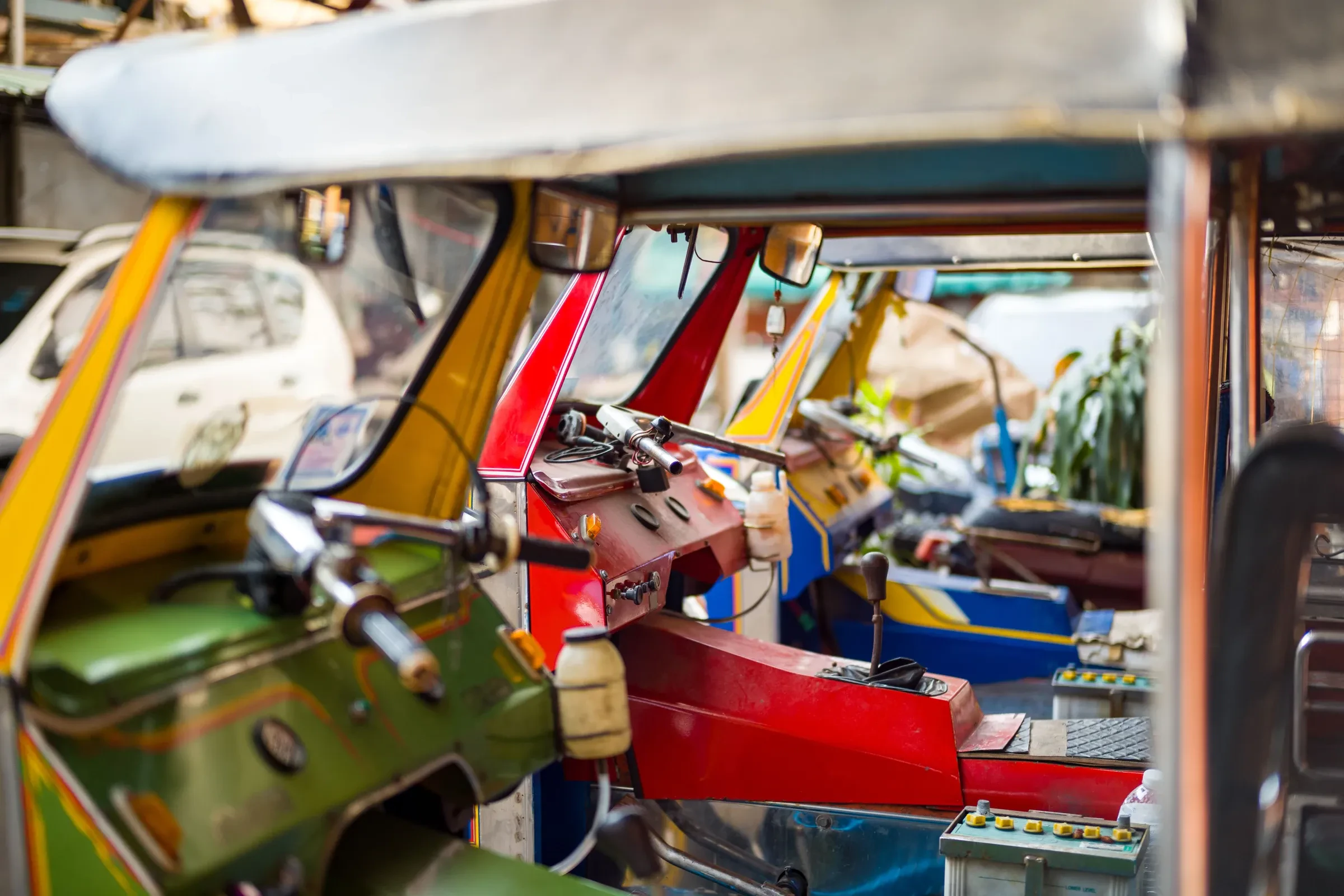
Tuk-tuks. Fun for a short ride, but agree the price before you get in, and expect to pay more than a metered taxi would cost for the same trip.
How many days do you need in Bangkok?
Two to three days is right for most people. Two days covers the Old Town's temples on one morning and Chinatown's street food that evening, with a rooftop bar or a massage filling the rest of the time. A third day gives you room for a day trip to Ayutthaya or a slower look at the markets. Few people spend longer than three or four days here before wanting to move on to the north or the coast, and the heat and traffic are a real factor in that.
Bangkok is also where most longer Thailand routes start. Our Thailand itinerary guide sets out how it fits into trips from one week to a month, and the Thailand travel guide covers the whole country.
Top sights in Bangkok
Fees below are for foreign visitors and were checked in October 2026; hours and prices can change, especially around royal ceremonies, so check on the day.
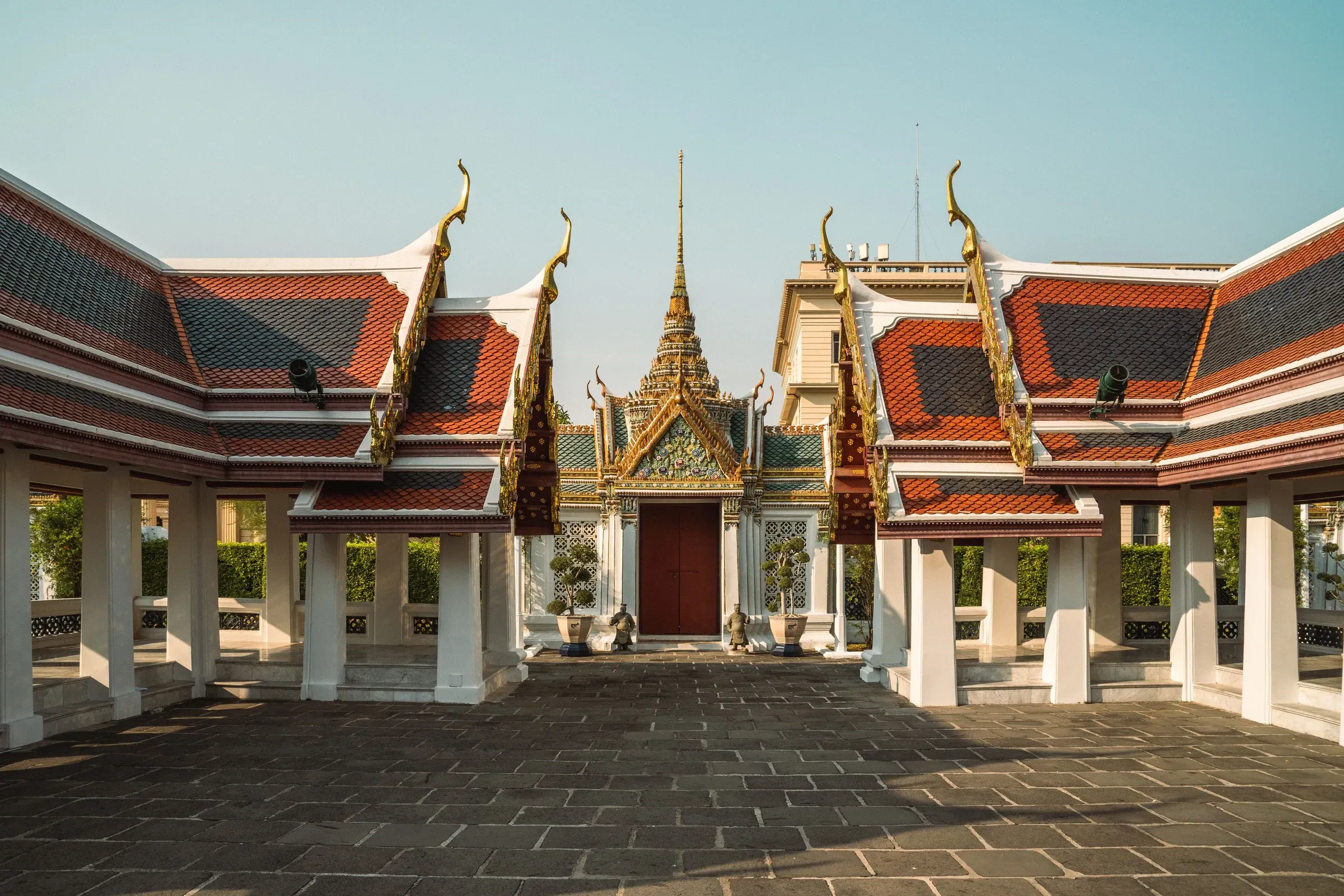
Grand Palace and Wat Phra Kaew. The former royal residence and the temple of the Emerald Buddha, both inside the same walled complex. Entry is 500 baht, open daily from 08:30 to 16:30, with tickets sold until 15:30. The dress code is strict: covered shoulders and knees, no ripped jeans, no vests or crop tops. Go right at opening to beat both the heat and the tour groups.
Wat Pho. Home to a 46-metre gold reclining Buddha, a short walk south of the Grand Palace. Entry is 300 baht, open daily from about 08:00 to 18:30. It's also home to a traditional massage school, and a one-hour Thai massage here is a popular way to end the visit.
Wat Arun. The Temple of Dawn, on the river's west bank, known for its porcelain-studded spires. Entry is 200 baht, open daily from about 08:30 to 18:00. Cross the river on the passenger ferry from Tha Tien pier, a few baht each way, right next to Wat Pho.
Doing all three in one morning works well, since they're a short ferry ride and a five-minute walk apart. Cover up before you leave your hostel to avoid queuing for a sarong at the gate.
Day trip from Bangkok: Ayutthaya
Ayutthaya was Thailand's capital for over 400 years until it was destroyed in 1767, and its brick temple ruins now make an easy day trip. Trains from Bangkok take about 1 to 2 hours depending on the service, with third-class fares of about 20 baht. Faster services leave from Krung Thep Aphiwat Central Terminal, while some slower ordinary trains still use Hua Lamphong, so check which station your train leaves from. The station sits across the river from most of the ruins; cross by a short ferry for a few baht, then get around by rented bicycle (about 50 to 100 baht a day) or hired tuk-tuk (about 200 to 400 baht an hour).
Main temples such as Wat Mahathat, known for the Buddha head grown into a tree's roots, and Wat Chaiwatthanaram, a riverside temple that's especially good at sunset, charge foreign visitors a per-temple fee (80 baht in 2026 listings), and a combined seven-temple ticket costs 300 baht. Prices are posted at each gate. It's a full but manageable day trip, and you're back in Bangkok in time for dinner.
Onward travel from Bangkok
To Chiang Mai. The overnight sleeper train is the classic route: Special Express 9 leaves Krung Thep Aphiwat Central Terminal at 18:40 and arrives around 07:15, with 2nd-class berths from about 940 baht. It saves a hotel night and drops you in the north in time for breakfast. Flights take about 1 hour 15 minutes from either airport. Our Chiang Mai travel guide covers what to do once you're there.
To Koh Tao. Koh Tao has no airport, so getting there from Bangkok means a joint bus and boat ticket, usually with Lomprayah or Songserm from the Khao San area: about 7 hours by bus to Chumphon, then a further 1.5 to 2.5 hours by catamaran, for roughly 700 to 1,150 baht in total, depending on the operator, and about 10 to 12 hours door to door. The faster way is to fly to Koh Samui or Chumphon and take a shorter boat from there. Our Koh Tao guide has the full breakdown of routes and diving on the island.
To Koh Phangan. The same Chumphon route continues on to Koh Phangan by ferry, or fly to Koh Samui and take a 30 to 45 minute boat across. There's no direct flight from Bangkok to Koh Phangan itself. See the Koh Phangan guide for what's there once you arrive.
Both routes get busier and less reliable from October to December, when the Gulf's monsoon season can delay or cancel boats for days. Our best time to visit Thailand guide has the full seasonal picture.
Where to stay in Bangkok
Social hostels cluster around Khao San Road and the Old Town, with Sukhumvit and Silom offering more BTS-connected options and Ari a quieter, more local base. The best hostels in Bangkok breaks these down by area and by type, including female-only dorms.
Bangkok on our trips
Most of our Thailand and multi-country trips start here, including Thailand Express, Thailand in 2 Weeks and Bangkok to Bali. The cycling, motorbike, diving and Andaman island trips start in Chiang Mai, Koh Samui or Ao Nang instead.