What makes Koh Phi Phi special
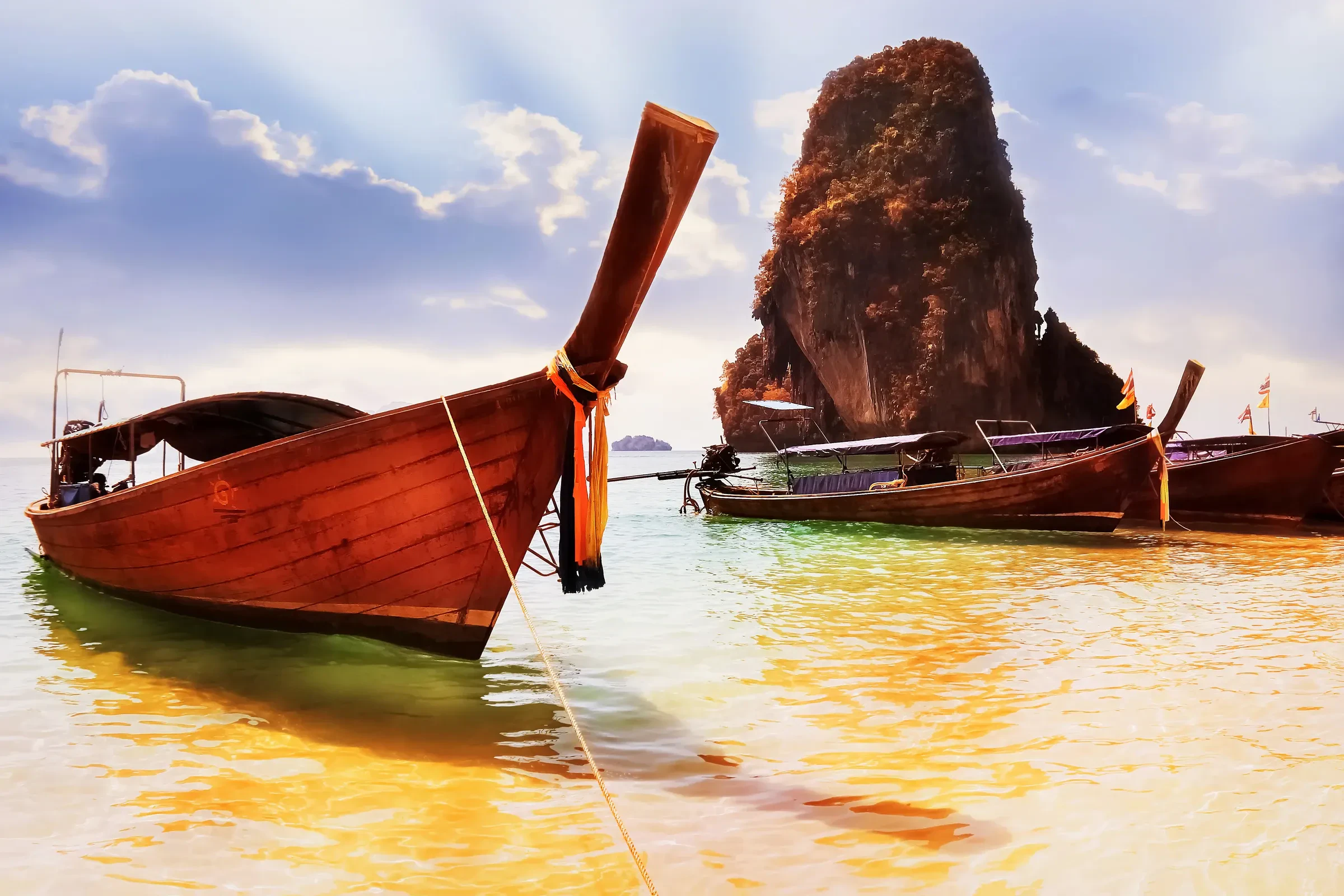
Koh Phi Phi is really two islands. Koh Phi Phi Don is the one you stay on, pinched into a narrow strip of sand between two bays, Tonsai and Loh Dalum, with limestone cliffs shooting straight up on either side. Koh Phi Phi Leh, uninhabited, holds Maya Bay and Pileh Lagoon. Don is the most recognisable island on Thailand's Andaman coast, the setting for the 2000 film The Beach, and both the busiest party island in the country and one of its better short hikes and snorkelling bases. Cliffs and clear water by day, bars and buckets by night: that mix is what pulls people here, and what sends others straight to Koh Lanta instead.
Where to go on Koh Phi Phi
Tonsai village and Loh Dalum Bay
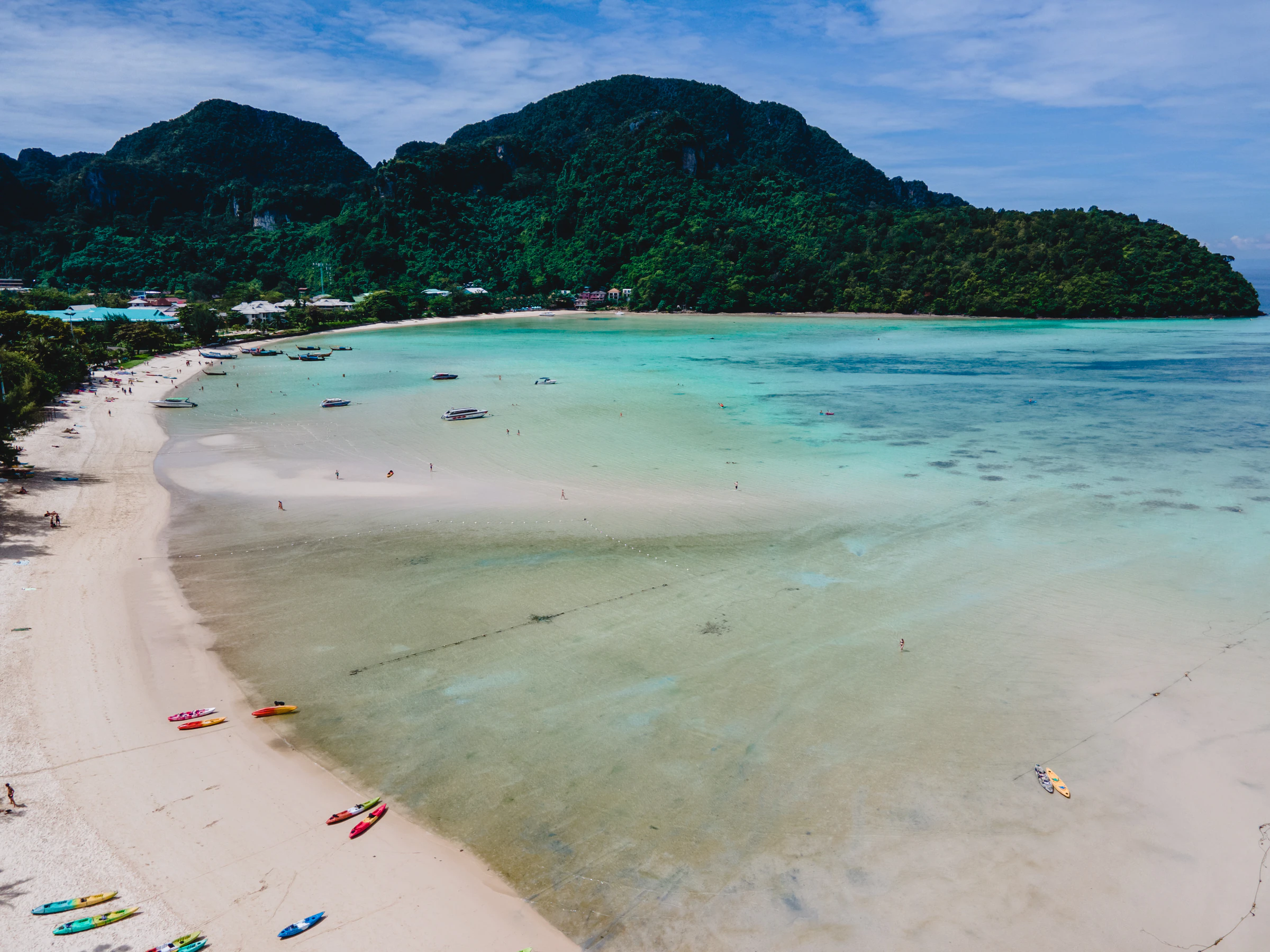
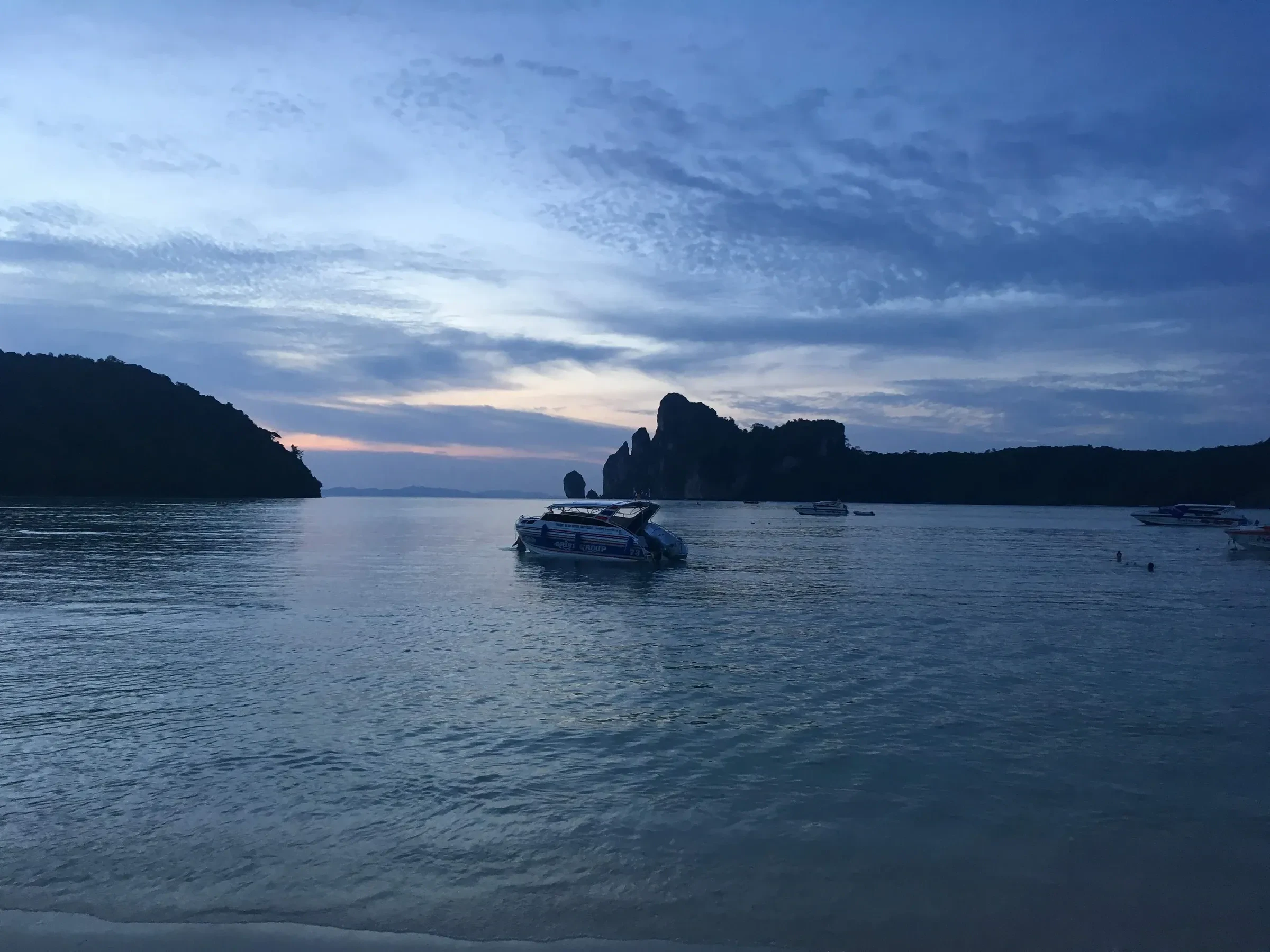
Tonsai village fills the narrow strip between the two bays: guesthouses, dive shops, 7-Elevens, restaurants and bars, no roads or cars, since you can cross the whole island on foot in ten minutes. Boats from the mainland dock at Tonsai Pier on the south side. Loh Dalum, the calm, shallow bay on the north side, is the better spot for a swim by day and where the beach parties happen after dark.
The viewpoint hike
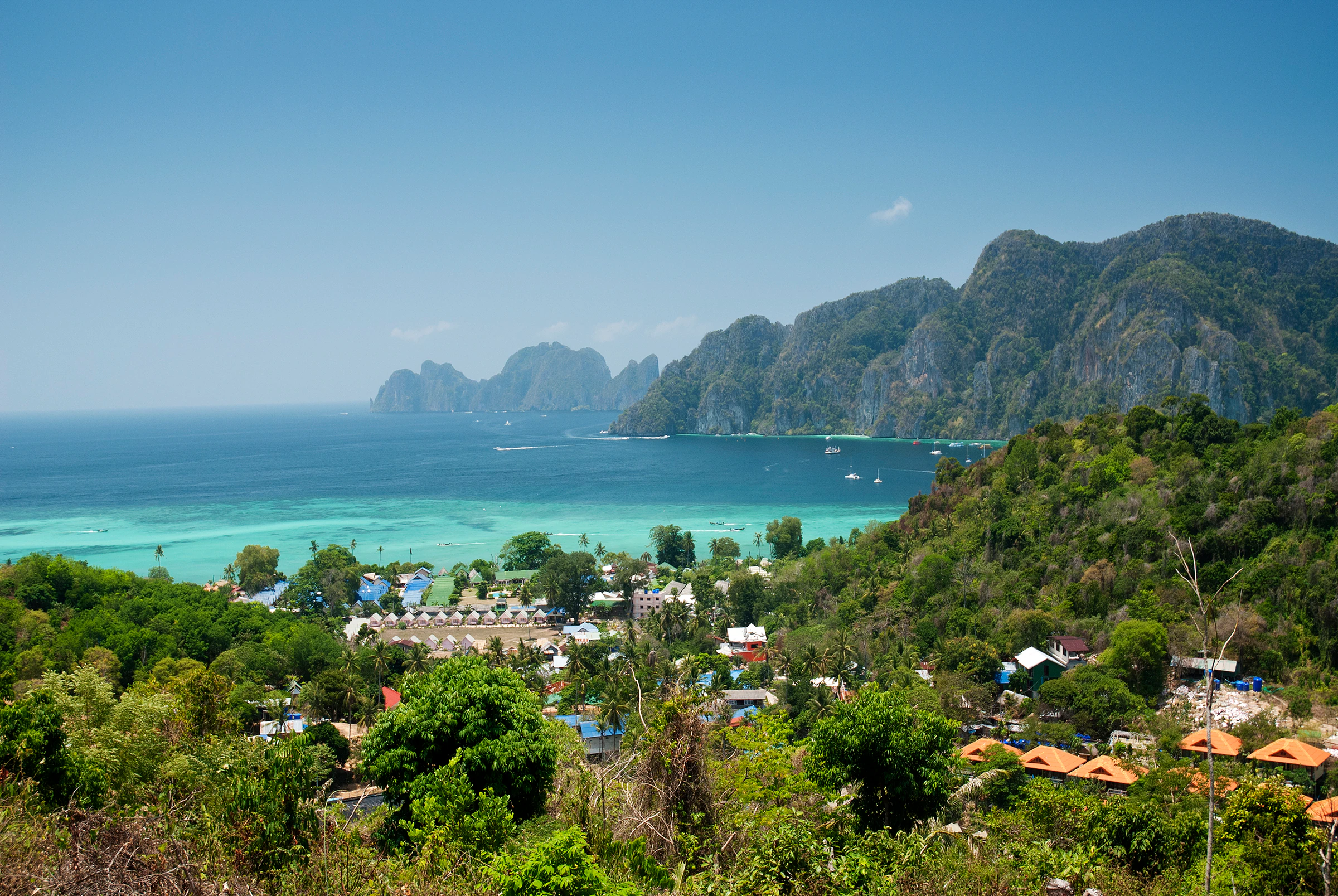
The Phi Phi viewpoint climbs a steep, well-maintained staircase above Tonsai, about 343 steps to the first lookout and 20 to 30 minutes depending on your pace. That's where the classic shot opens up: Tonsai's narrow waist between the two bays, Loh Dalum on one side, Tonsai Bay on the other. A second, higher viewpoint is a further climb of a few hundred metres with no steps, and a third adds a short walk past a small café. Entry costs roughly 30 to 50 baht for the first two viewpoints (listings differ), plus 20 baht more for the third. Go at sunrise or late afternoon. There's almost no shade on the way up, and midday sun turns it into a slog.
Maya Bay, Koh Phi Phi Leh
Maya Bay, on Koh Phi Phi Leh, is the cove from The Beach: a near-enclosed pocket of white sand and turquoise water walled in by cliffs. Overtourism nearly wrecked it, and Thailand shut it completely from 2018 to 2022 to let the coral recover. It reopened under rules that still apply: entry is by booked, timed slot with a cap on how many people are allowed on the beach at once, boats moor at neighbouring Loh Samah Bay rather than in the bay itself, and swimming in Maya Bay is banned, so you walk in over a boardwalk and view it from the sand rather than getting in the water. It also closes completely every August and September (1 August to 30 September in 2026, reopening on 1 October) for a rehabilitation programme that's brought coral and reef sharks back after years of damage. Most people see it as part of a half-day boat trip that also calls at Pileh Lagoon. Book the slot through your boat operator a day or two ahead in high season; walk-up tickets aren't guaranteed.
Pileh Lagoon
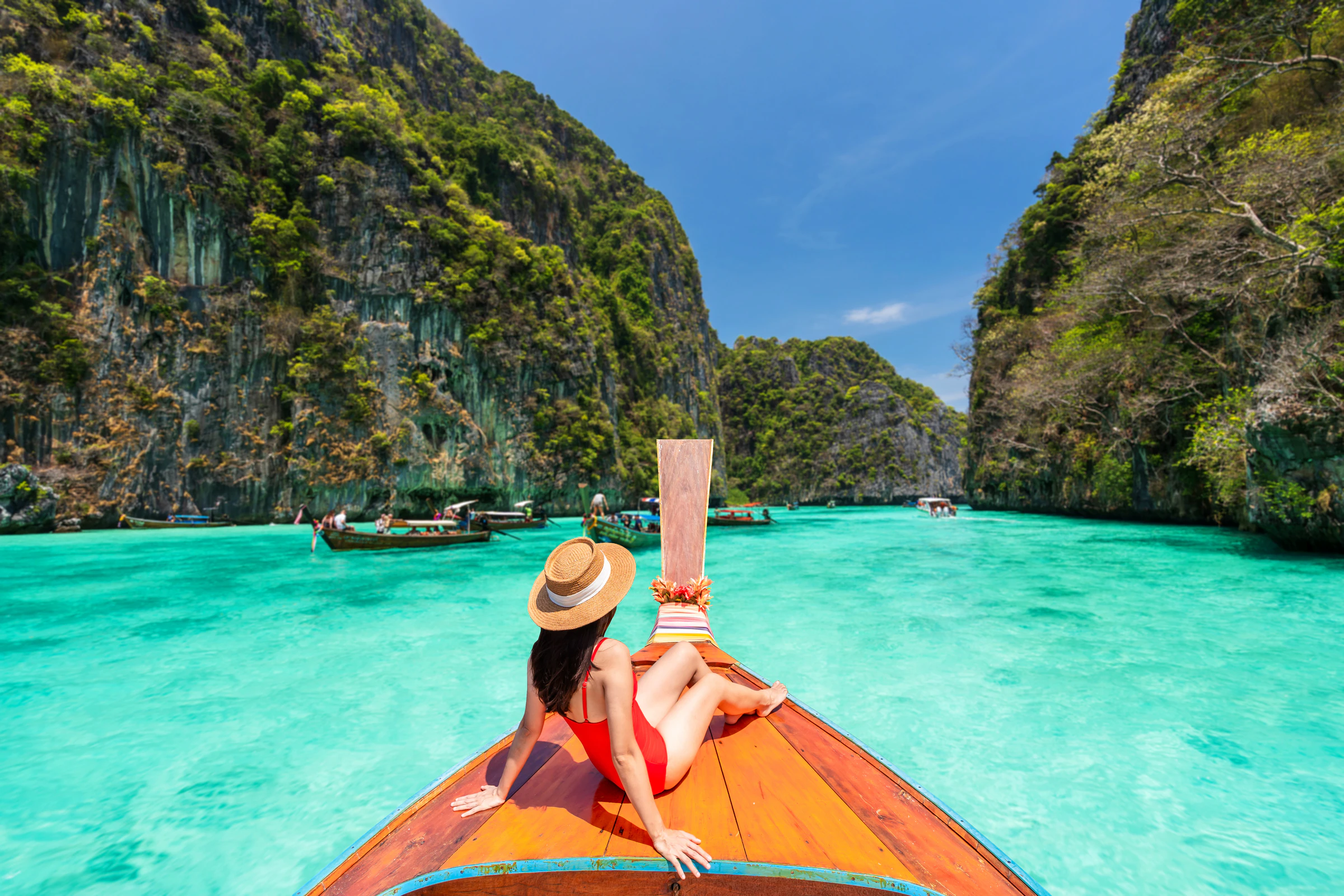
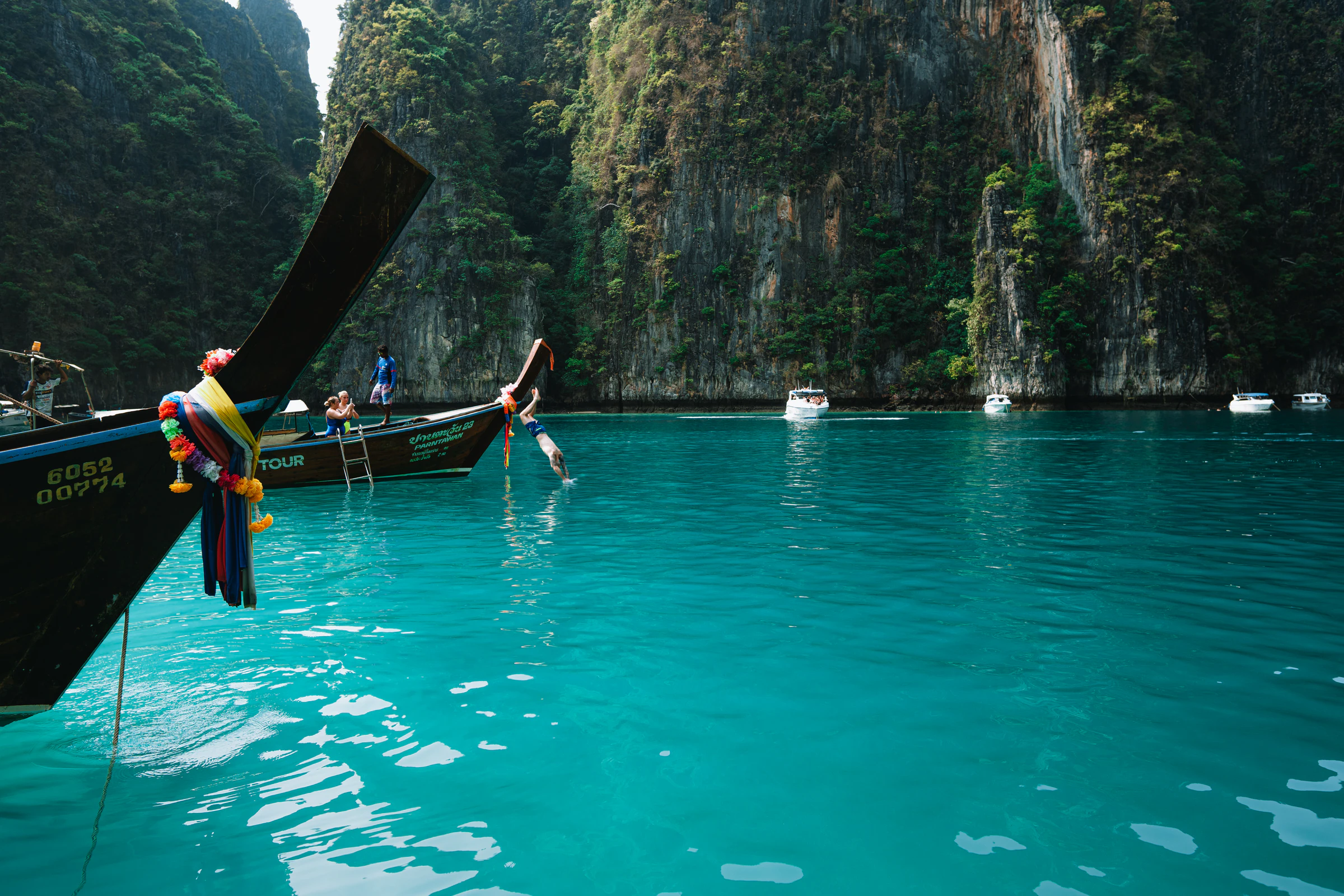
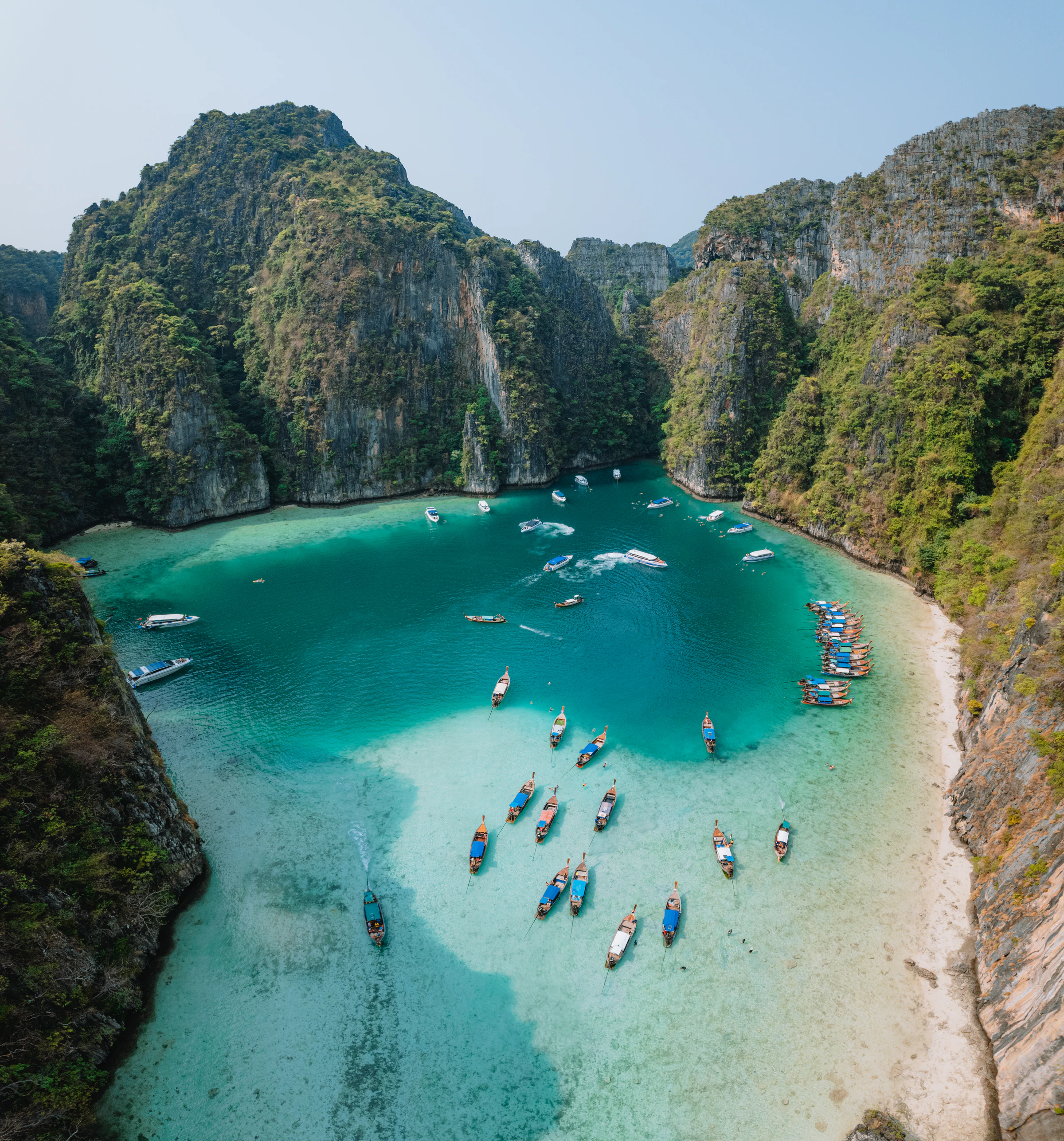
Pileh Lagoon is a short boat ride from Maya Bay: a smaller, near-circular pool ringed by sheer limestone cliffs, with water so clear it looks lit from below. Swimming is still allowed here, and most Maya Bay trips build in time to jump in. It gets busy with day boats around midday, so an early or late slot makes a real difference to how much of it you get to yourself.
Long Beach
Long Beach, a short longtail ride or a rougher walk south of Tonsai, is the quieter option: fewer bars, decent snorkelling straight off the sand, and some of the island's best sunsets. It's the obvious base if the party scene isn't why you're here.
Things to do
Snorkelling and diving
Koh Phi Phi sits close to some of the Andaman coast's best dive sites. Koh Bida Nok and Koh Bida Nai, off the southern tip of Phi Phi Leh, have walls dropping to around 28 metres, a shallow coral garden, and regular blacktip reef shark sightings, which makes Bida Nok worth a snorkel as much as a dive. Hin Bida (Shark Point), a submerged pinnacle further out, breaks the surface at low tide and snorkels well at slack water, with schools of snapper, moray eels and the occasional turtle. Most dive shops in Tonsai run day trips to both, and PADI courses are widely available; see our diving guide for how a course fits into a wider trip.
The party scene
Loh Dalum Bay is Phi Phi's party beach: fire shows, buckets of mixed spirits, and beach bars running competing sound systems well into the night, most turning the music down by around 2am. It's loud, and it's the reason some travellers only ever do Phi Phi as a day trip. If that's not your thing, Long Beach and the accommodation set back from Loh Dalum are noticeably quieter, and Koh Lanta, covered in our Koh Lanta guide, is the deliberate change of pace afterwards.
What to eat
Fresh seafood barbecued right on the beach is Phi Phi's default dinner, sold by the kilo at stalls along Tonsai and Loh Dalum. Khanom jeen, fermented rice noodles under a curry, turns up at the simpler local spots away from the tourist strip, a southern Thai staple you'll find the whole length of this coast. For the wider picture of regional Thai cooking, see the Thai food guide.
Best time to visit
November to April is really the only season that works here: calm seas, ferries at full frequency, and Maya Bay open outside its annual closure. May to October brings the southwest monsoon, and rough seas cause frequent ferry cancellations across this whole coast. Christmas, New Year and Chinese New Year are the busiest, priciest weeks to find a room in Tonsai.
Getting there and around
There's no airport and no road bridge to Koh Phi Phi. Every way in is by ferry, and once you're there, Tonsai is the base and your feet are the transport.
From Phuket
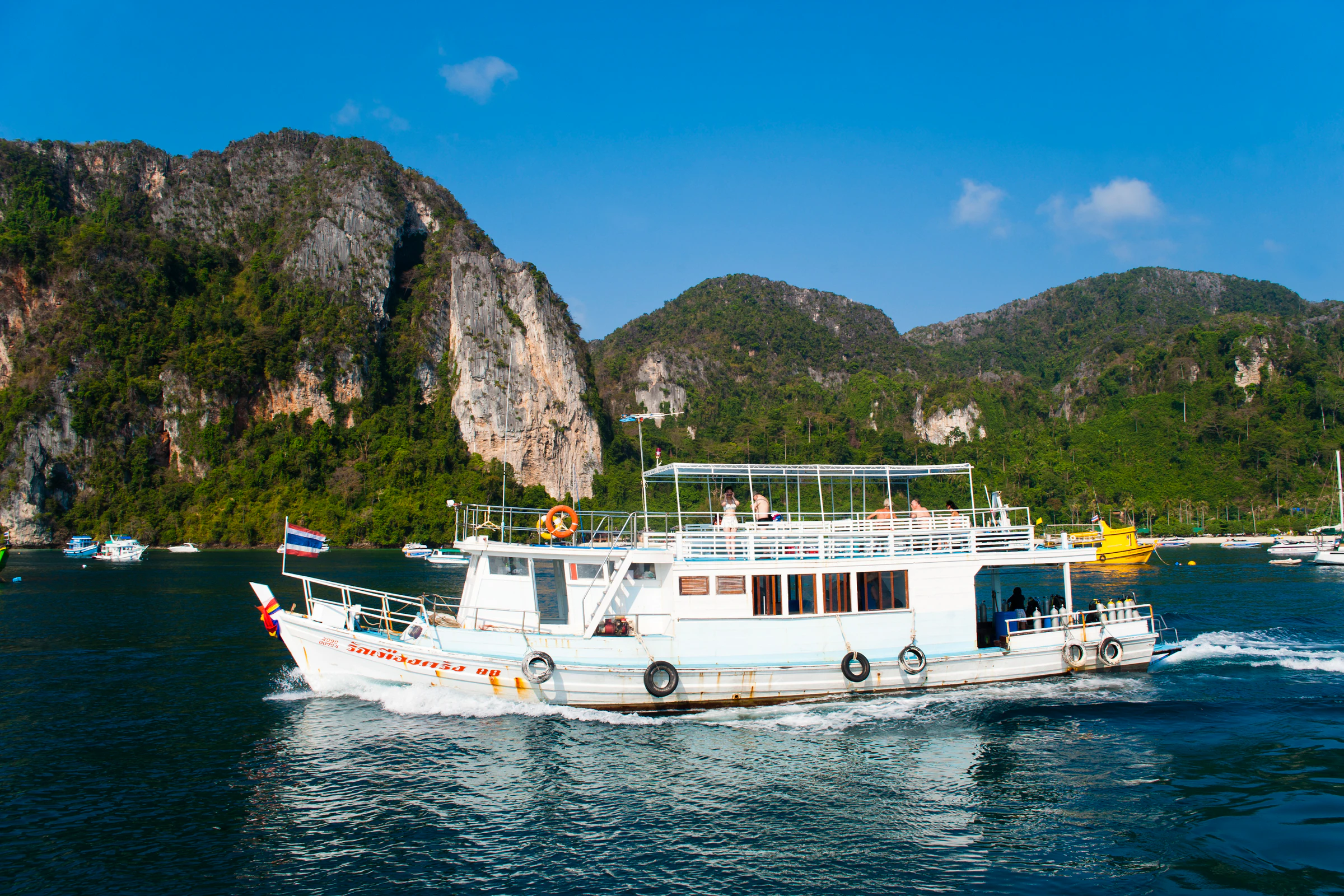
Ferries run from Rassada Pier to Tonsai Pier several times a day in high season, taking about 1 to 2 hours depending on the boat, with fares from roughly 450 baht. A 20 baht local pier fee is collected on arrival at Tonsai, separate from the 400 baht Mu Ko Phi Phi National Park fee, which covers Maya Bay and the other marine park sites and is usually paid as part of a boat trip rather than on arrival.
From Krabi and Ao Nang
Ferries from Ao Nang take 50 minutes to 2 hours depending on the boat, from roughly 400 to 650 baht; some call at Railay on the way. From Krabi Town's Klong Jilad pier, sailings run up to 11 times a day in high season, 1 to 2 hours, about 700 to 900 baht. See the Krabi guide for Ao Nang and Railay themselves.
From Koh Lanta
Ferries take about 30 minutes to 1.5 hours depending on the boat, from roughly 450 to 850 baht depending on the operator and season, with more sailings running November to April.
Schedules and operators shift between high and low season, so check the current timetable a day or two ahead rather than trusting last year's. The Thailand island hopping guide lays out how all the Andaman ferries connect.
How long to spend, and which guide to use
A day trip from Phuket, Ao Nang or Krabi covers Maya Bay, Pileh Lagoon and maybe the viewpoint, but you'll be on the last boat back before Loh Dalum comes alive. Stay a night or two and you get sunset on Long Beach, the viewpoint at a quieter hour, and the island once the day trippers have gone. If you're building Phi Phi into a longer route rather than visiting it on its own, our Andaman coast itinerary covers it as one leg of a 1 week, 10 day or 2 week trip through Phuket, Krabi and Koh Lanta.