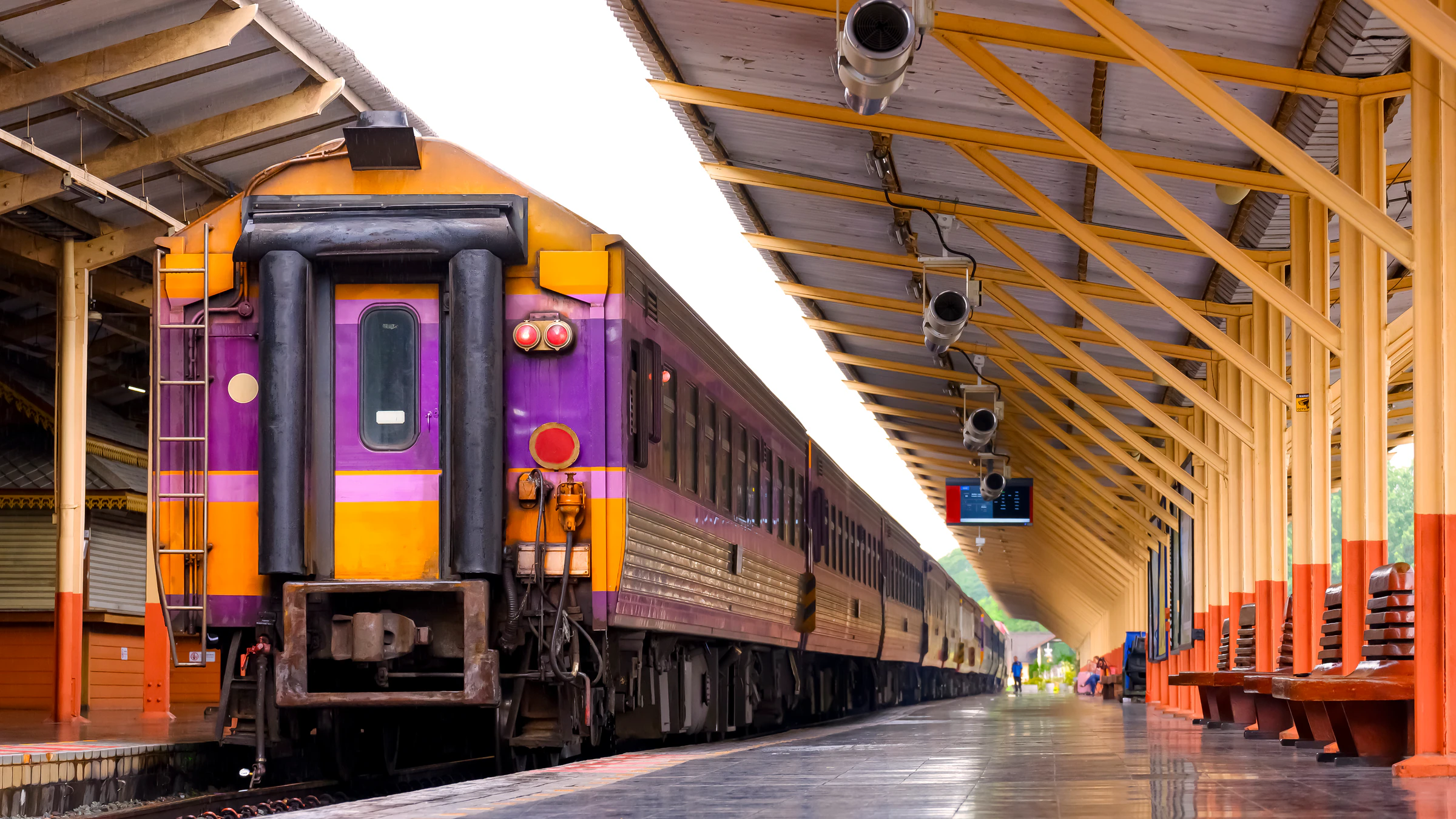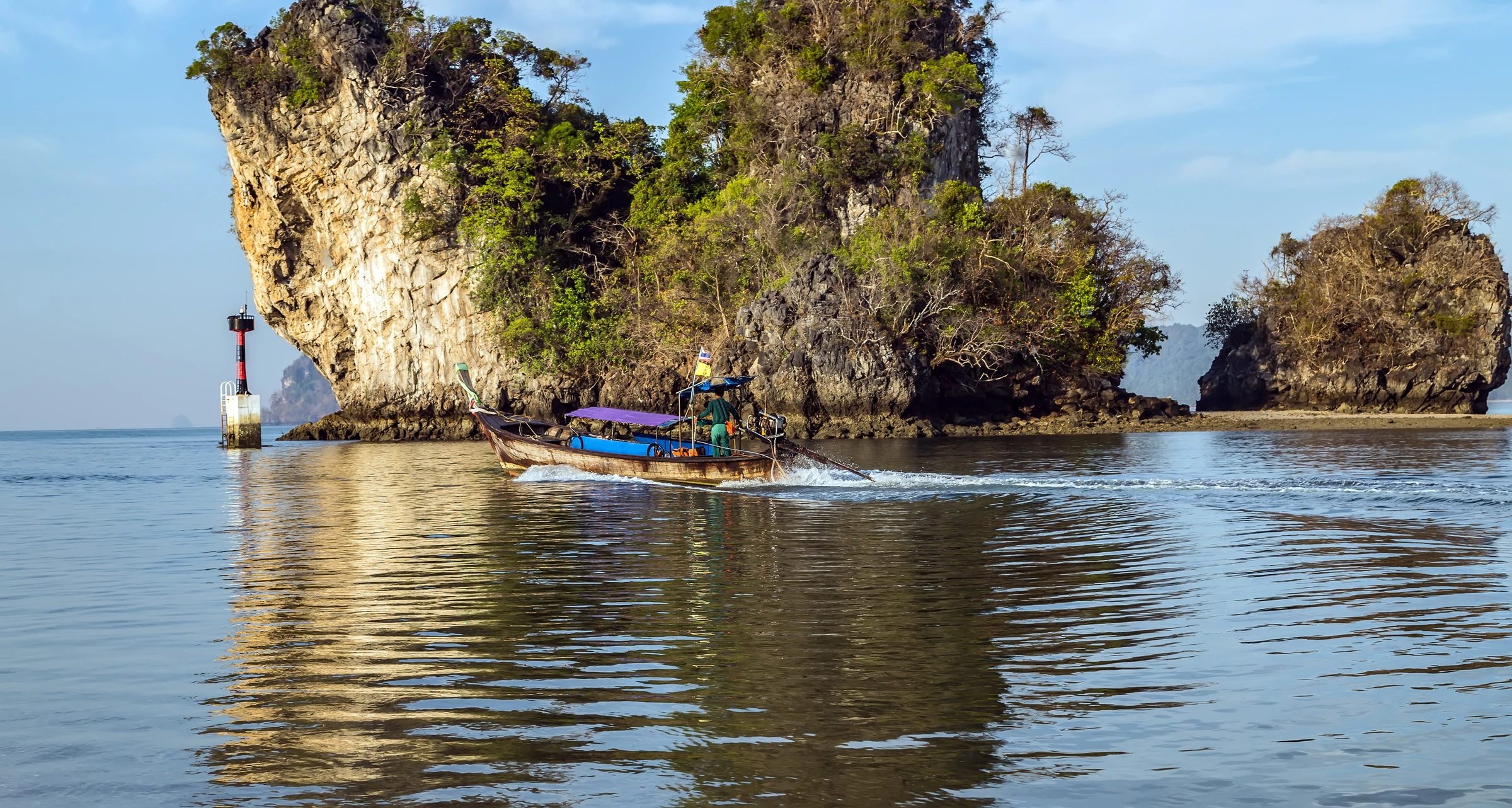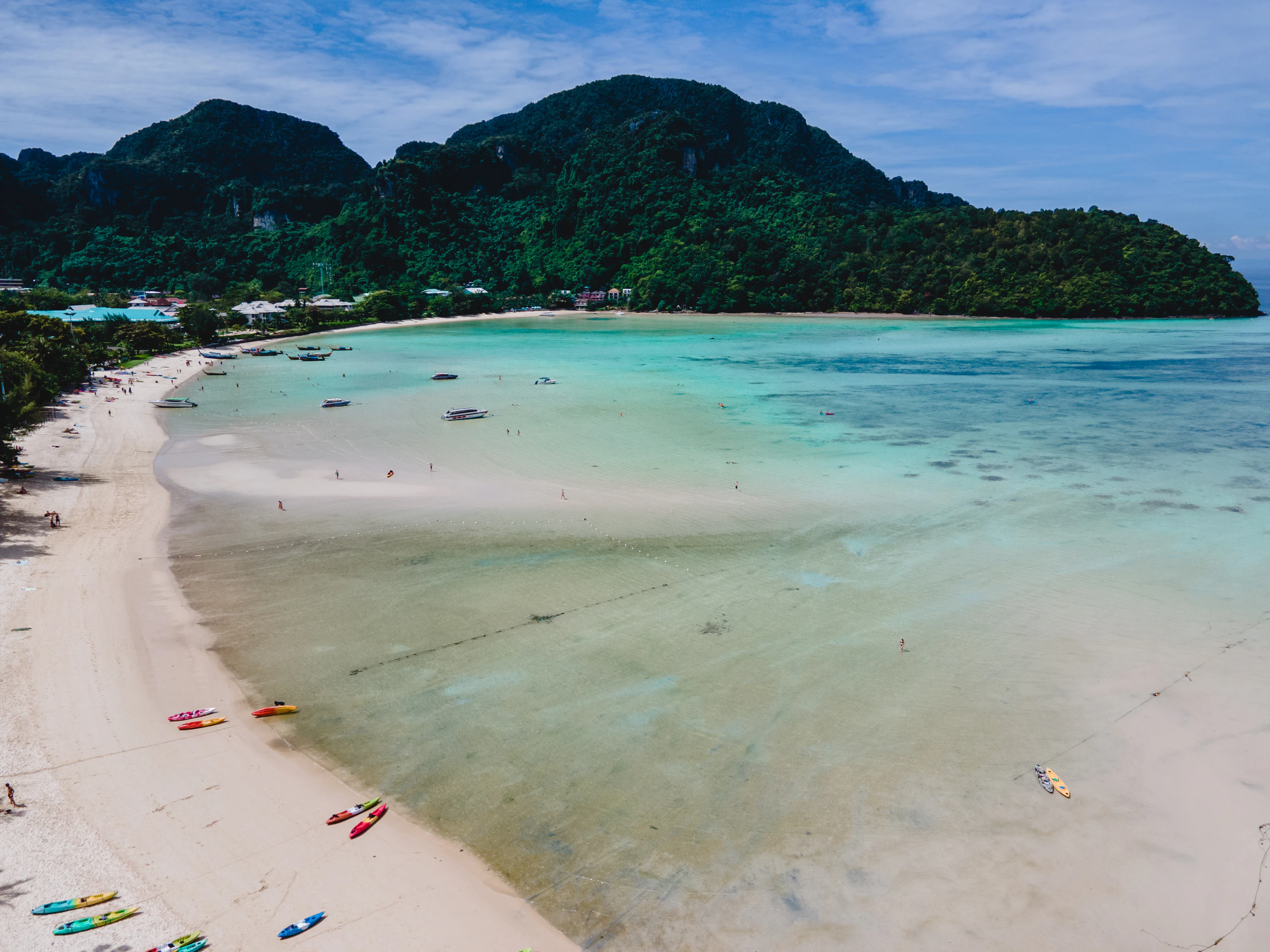
5 stops
- Ferry
Is this route for you?
This is Thailand's most familiar coastline: limestone karsts, longtail boats, turquoise water, Phi Phi's nightlife and Railay's climbing. It suits beach-and-party travellers, climbers and photographers first, and it's a solid pick for a first trip to Thailand's islands. Koh Lanta, if you have the days for it, is the deliberate comedown from Phi Phi: fewer bars, longer beaches, and a Muslim-Thai and Chao Ley fishing-village pace.
It's not the route for a proper PADI course (Koh Tao on the Gulf side is the dedicated dive-training island: see the Gulf islands itinerary), and it doesn't work outside November to April, when ferries thin out and the Similan Islands close by national park order. If mountains and temples matter more than beaches, put the same days into the Northern Thailand itinerary instead. And if you'd rather pick one base and day-trip from it than pack up every couple of days, the Krabi guide covers a single-base version of this coast.
Day by day
Arrival and Old Town
Phuket
Getting there Phuket International Airport (HKT) has direct flights from several Asian hubs; connecting via Bangkok, take a domestic flight from Suvarnabhumi or Don Mueang.
- Morning
- settle in and get your bearings.
- Afternoon
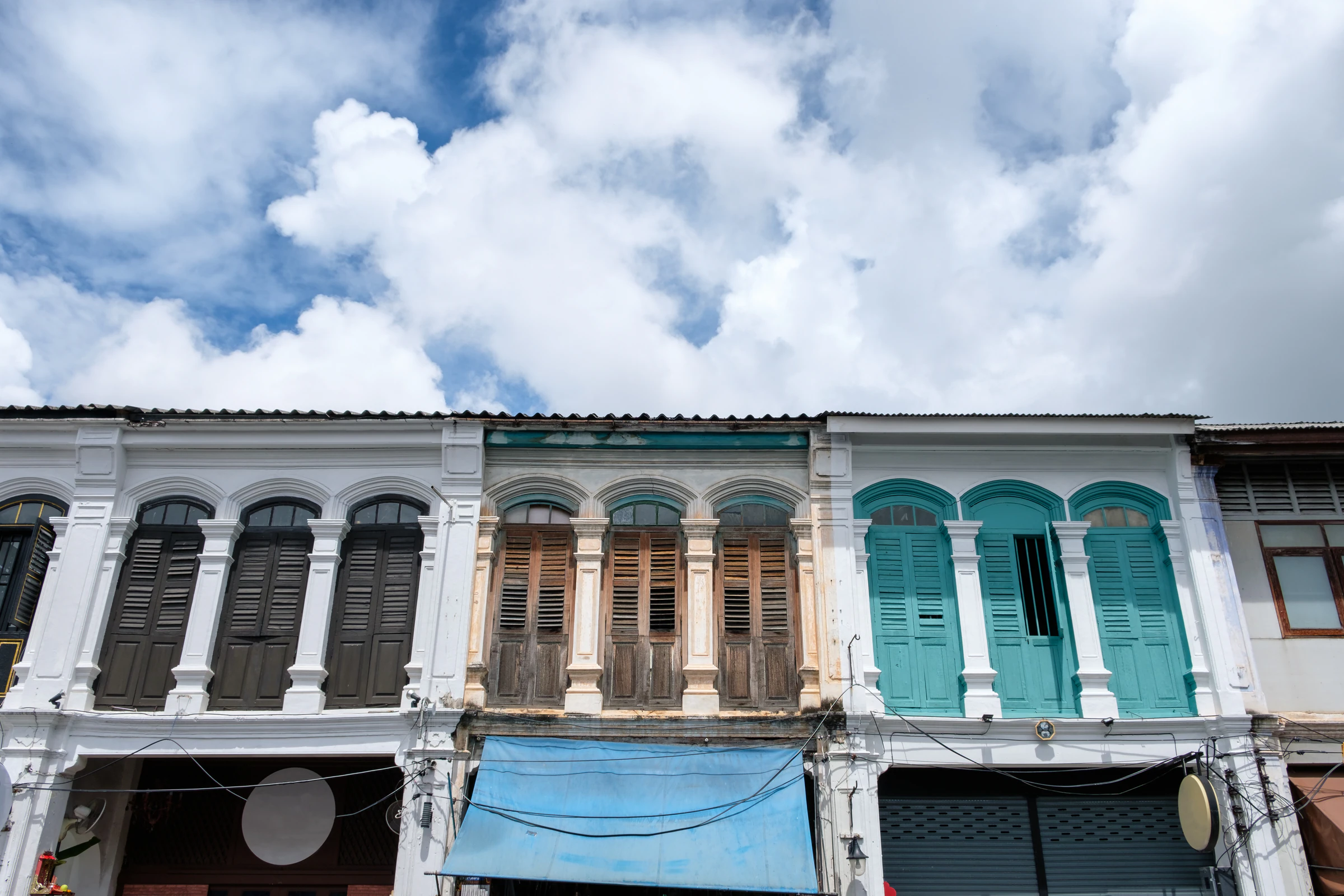
- Old Phuket Town's Sino-Portuguese shophouse streets, all pastel facades and old trading-house courtyards.
- Evening
- Patong or Kata beach for a first look at the coast.
Eat moo hong (Phuket-style braised pork, a legacy of the island's Hokkien tin-mining history) at an Old Town café.
Local tip Old Town is walkable in an evening; save the beaches for daylight tomorrow.
Beaches or a Phang Nga Bay day trip
Phuket
- Morning
- the Big Buddha viewpoint and Wat Chalong, Phuket's most-visited temple.
- Afternoon
- a beach afternoon at Kata, Karon or Freedom Beach, or a full-day boat trip round Phang Nga Bay to see James Bond Island's karst spire and the bay's sea caves.
- Evening
- Bangla Road for nightlife, or a quieter Old Town dinner if the boat trip ran long.
Eat fresh seafood grilled to order at a beachfront stall.
Local tip book the Phang Nga Bay trip the night before; it fills up in high season and takes most of the day.
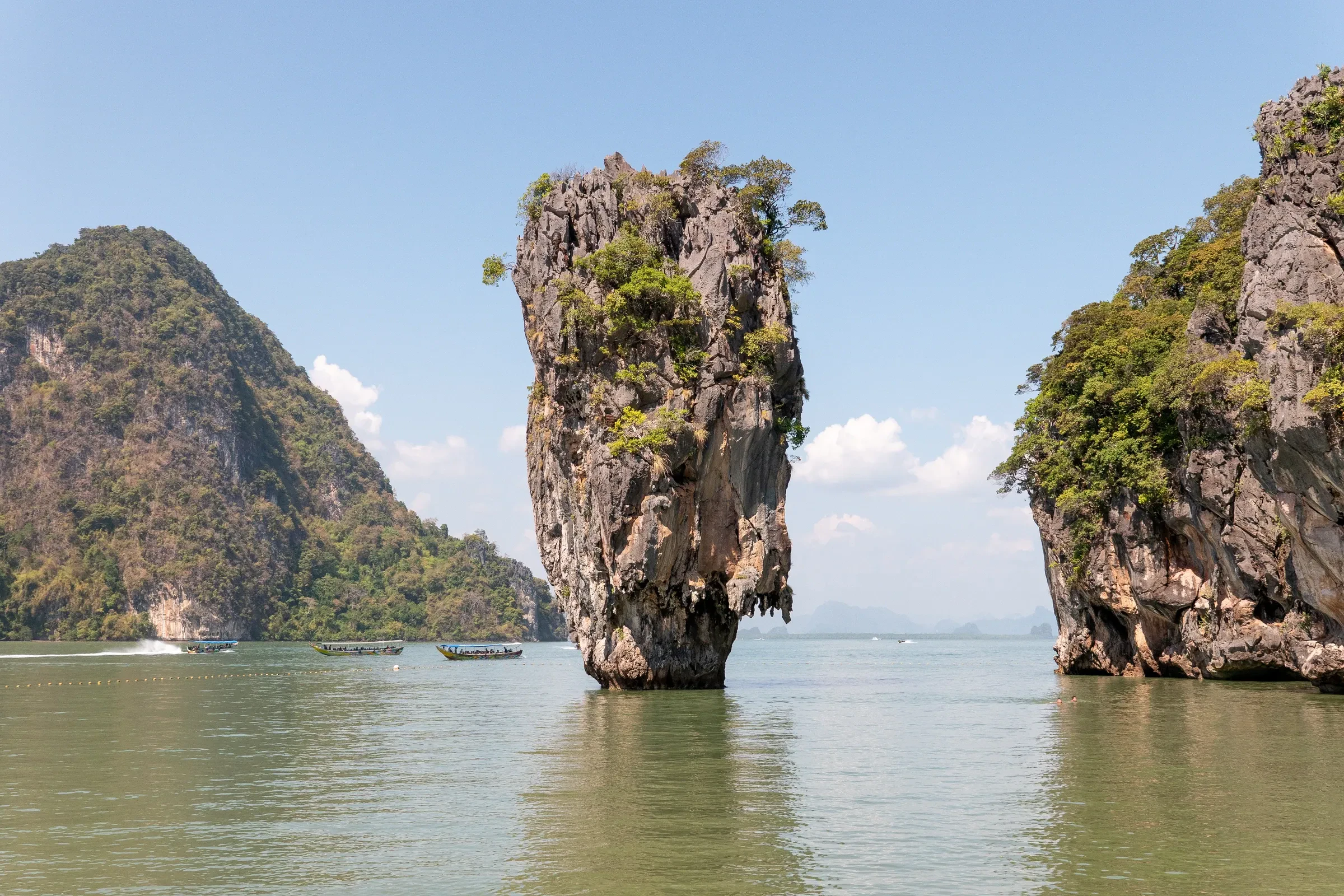
Travel day and Tonsai village
Koh Phi Phi
Getting there ferry from Phuket's Rassada Pier to Tonsai Pier, about 1 to 2 hours, roughly 450 to 600 baht, plus a 20 baht pier fee at Tonsai. The 400 baht Mu Ko Phi Phi National Park fee covers Maya Bay and is usually paid as part of a boat trip.
- Morning
- travel.
- Afternoon
- Tonsai village, then Long Beach for sunset.
- Evening
- Phi Phi's beach-bar strip, the busiest nightlife on this coast.
Eat a fresh-caught seafood barbecue laid out on the beach.
Local tip book a bungalow away from the main strip if you want any sleep before an early boat trip tomorrow.
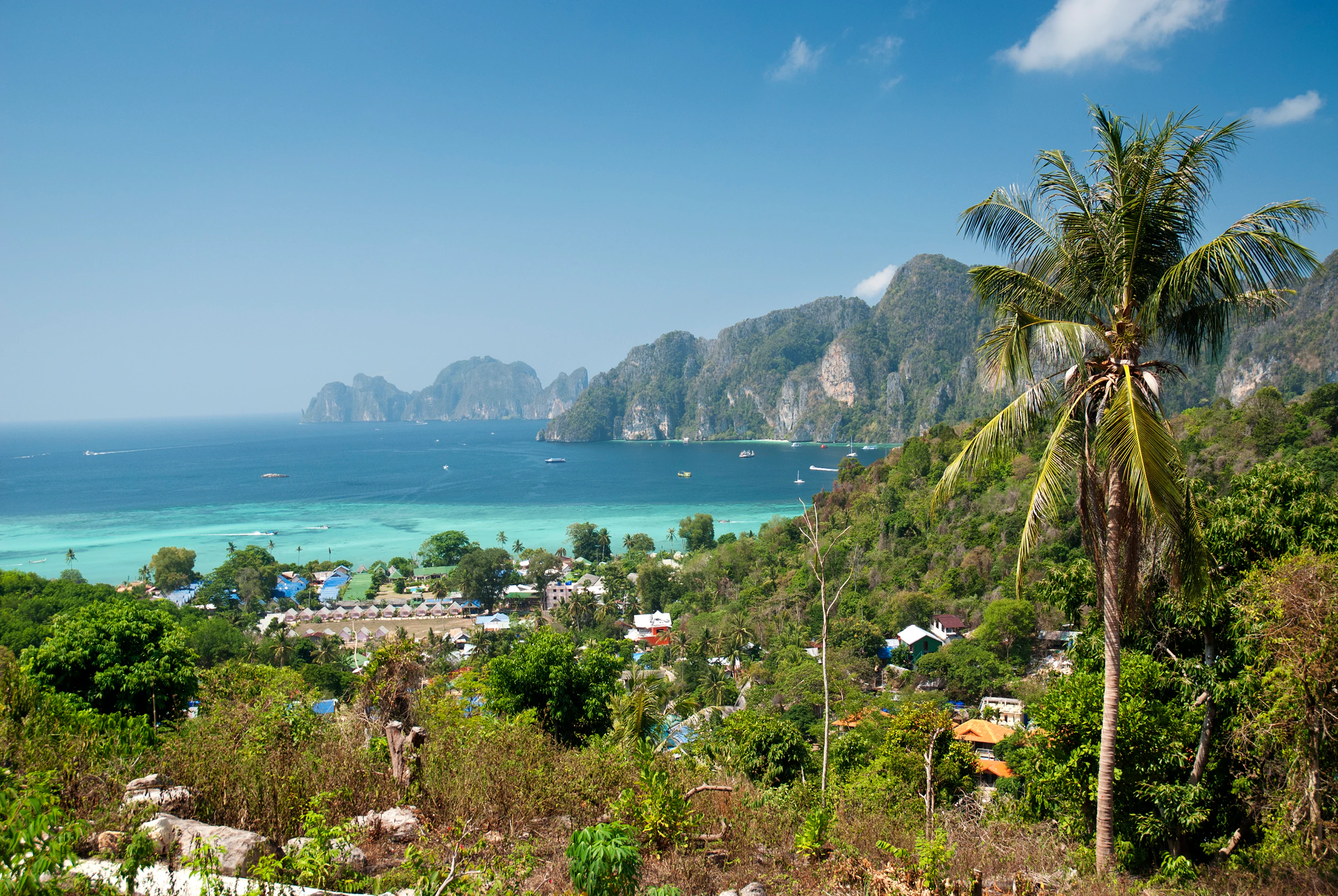
Maya Bay and the viewpoint
Koh Phi Phi
- Morning
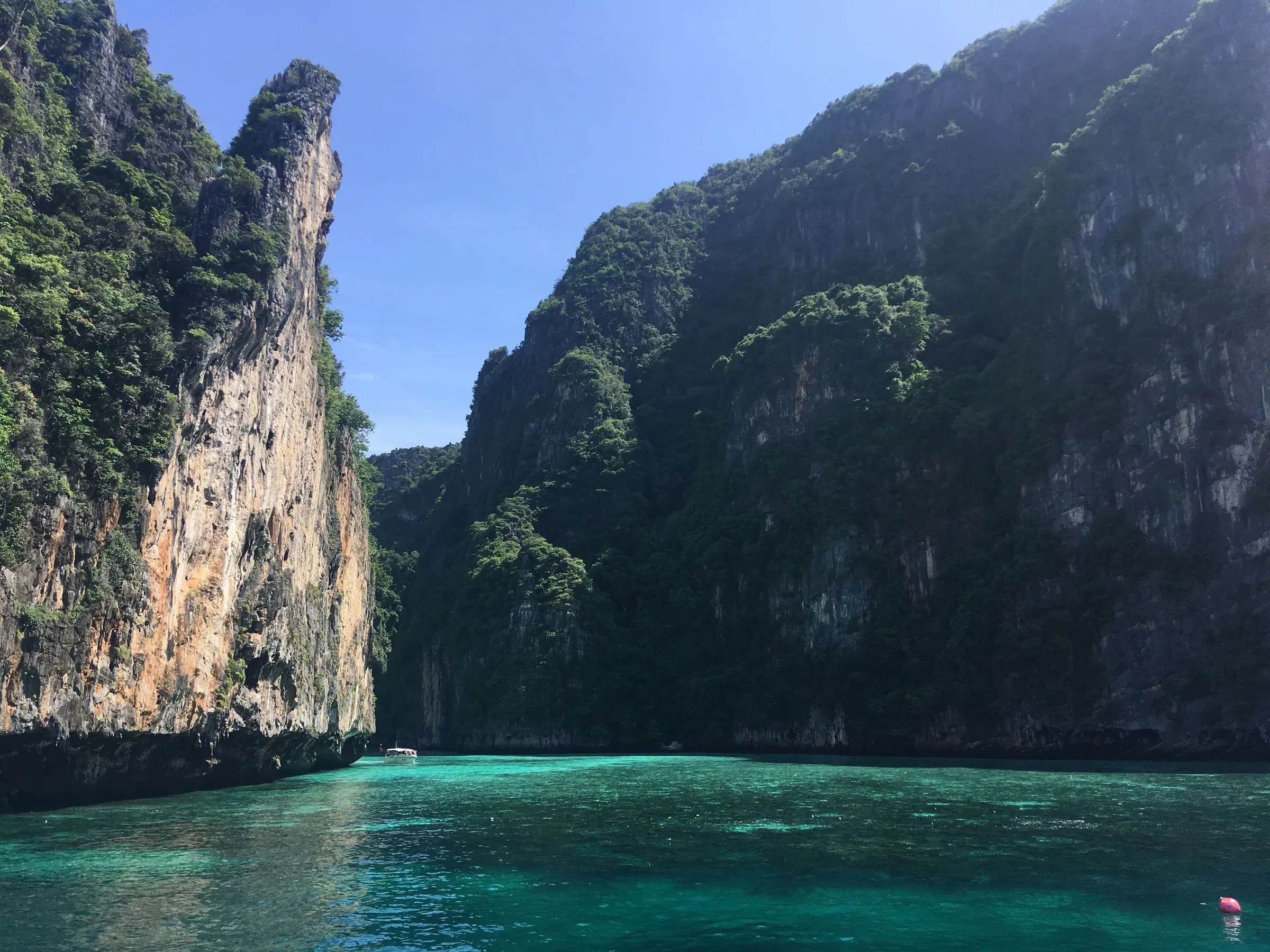
- a boat trip to Maya Bay ("The Beach") and Pileh Lagoon. Entry now runs on a booked, timed system with a cap on how many people are on the beach at once, and swimming there has been banned since the 2022 reopening; boats moor at Loh Samah Bay and walk in over a boardwalk. The bay closes every August and September, which falls outside this route's season.
- Afternoon
- the viewpoint hike above Tonsai for the classic twin-bay photo.
- Evening
- a last night on Phi Phi.
Eat khao soi's southern cousin, khanom jeen (fermented rice noodles under a curry), sold across the south.
Local tip book the Maya Bay slot through your boat operator in advance; walk-up tickets aren't guaranteed in high season.
Travel day and Railay West
Railay and Ao Nang
Getting there ferry from Phi Phi to Ao Nang or direct to Railay, about 50 minutes to 2 hours depending on the boat, roughly 400 to 650 baht.
- Morning
- travel.
- Afternoon
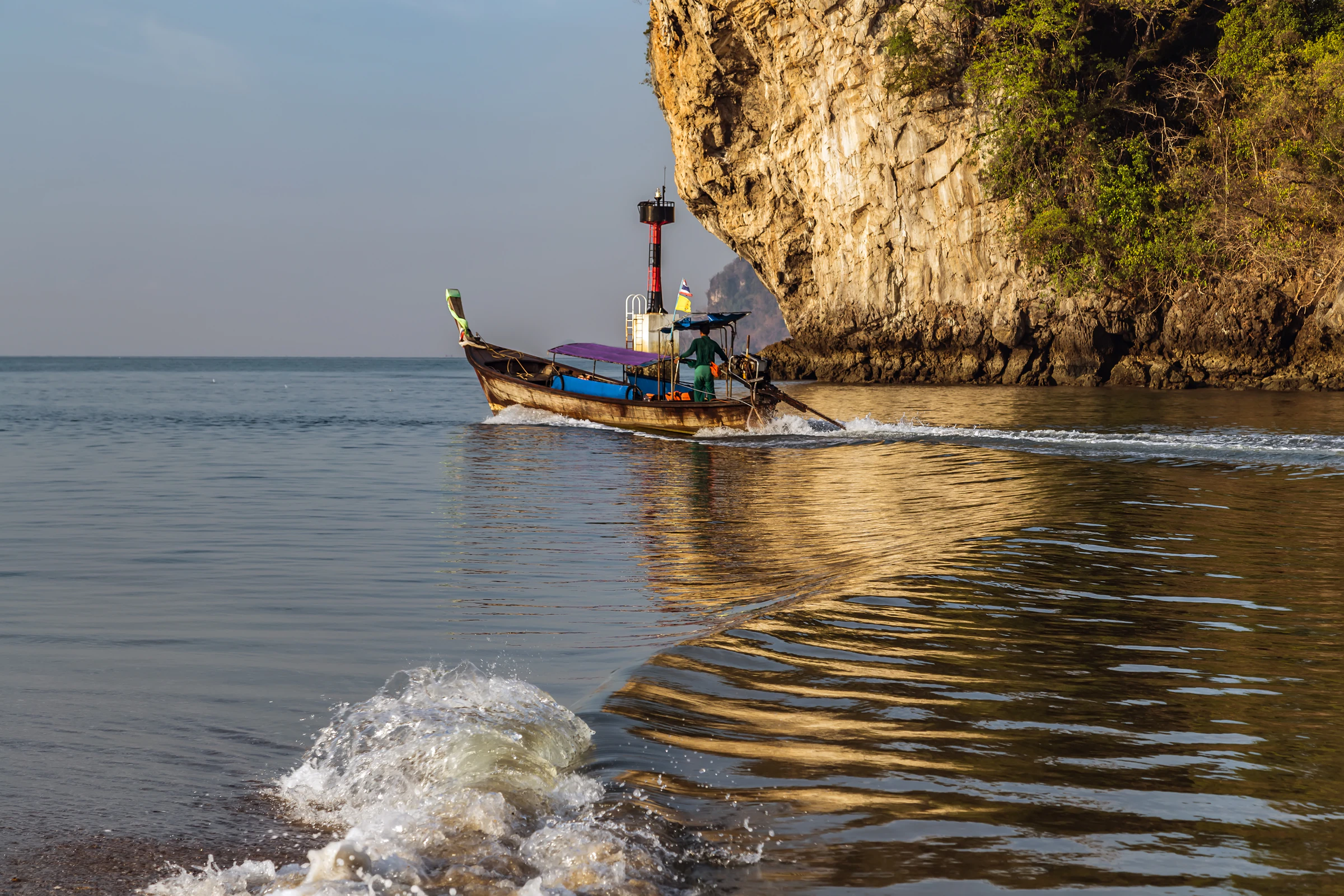
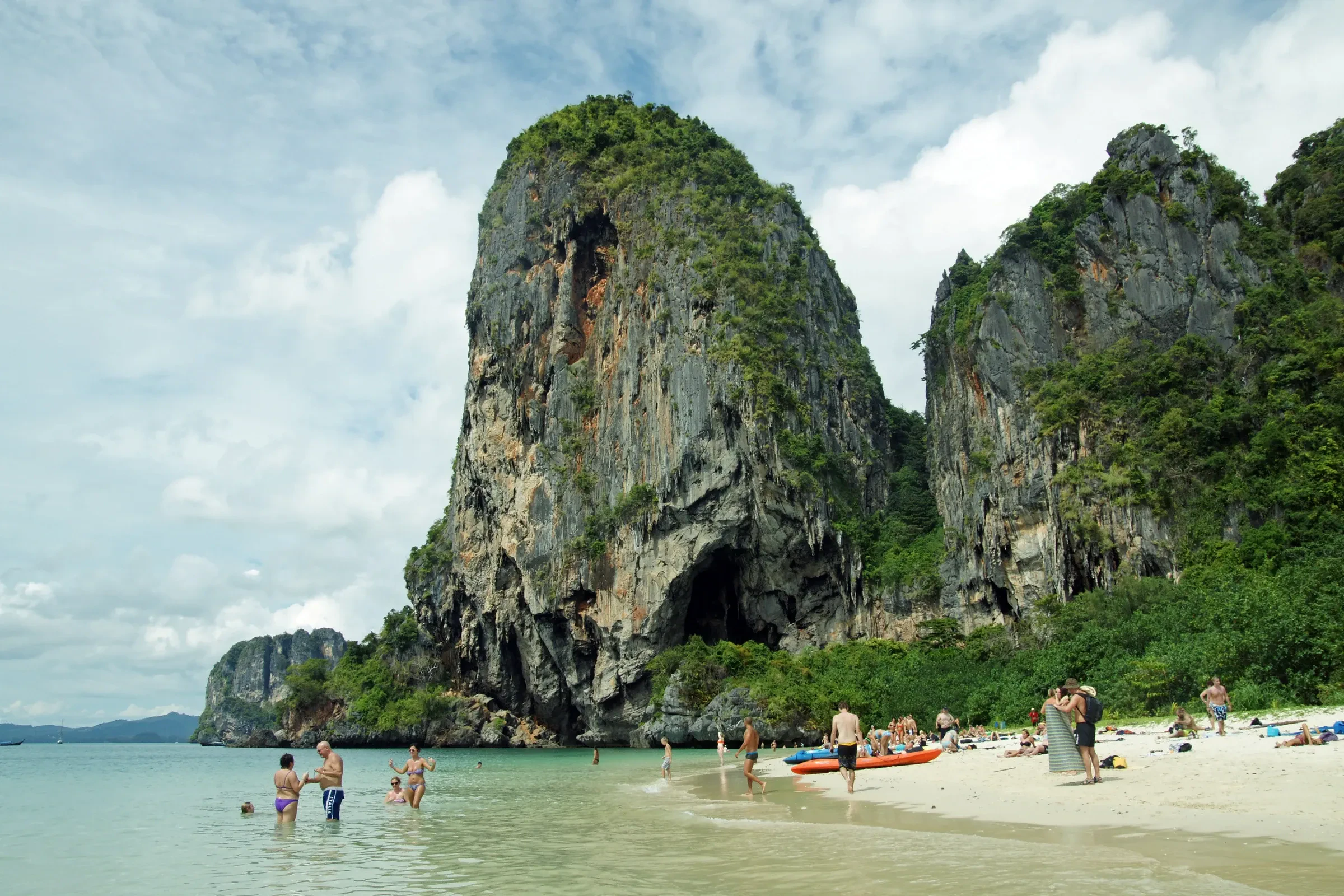
- settle into Railay, reachable only by longtail boat (there's no road in), and a first look at Railay West beach.
- Evening
- sunset from Railay West, with the limestone cliffs behind you.
Eat grilled seafood at a beachfront shack.
Local tip Railay and Ao Nang share the same stretch of coast, and a longtail boat between them takes minutes; base wherever your bungalow is and day-trip the rest.
Climbing, caves and an island boat trip
Railay and Ao Nang
- Morning
- Phra Nang Cave Beach and its shrine to a local sea goddess.
- Afternoon
- a half-day beginner climbing session on Railay's limestone walls, among the most famous sport-climbing in Asia, or a longtail trip from Ao Nang to Poda, Chicken Island and Tup Island.
- Evening
- Ao Nang's beachfront strip for dinner.
Eat a Thai green curry with fresh-caught fish.
Local tip no climbing experience is needed for a taster session; gear and instruction are included at any Railay climbing school.
Departure
Ao Nang
Getting there Krabi International Airport (KBV) is about 26 km and 30 to 40 minutes from Ao Nang by taxi or shared minivan.
- Morning
- a last swim or a slow breakfast, depending on your flight time.
- Afternoon
- transfer to Krabi Airport.
Eat one more plate of khao soi or khanom jeen before you go.
Local tip build in the 30 to 40 minute transfer plus buffer; Ao Nang's roads slow down around checkout time.
The 10 days version
This adds Koh Lanta as a slower, quieter finish after Ao Nang, and swaps the flight home for one from Krabi Airport instead.
| Day | Where | What | Eat |
|---|---|---|---|
| 1 | Phuket | Arrive, settle in, Old Town | Moo hong at an Old Town café |
| 2 | Phuket | Big Buddha, Wat Chalong, a Phang Nga Bay trip | Fresh seafood at a beachfront stall |
| 3 | Koh Phi Phi | Ferry in, Tonsai village, Long Beach sunset | Beach barbecue seafood |
| 4 | Koh Phi Phi | Maya Bay and Pileh Lagoon, the viewpoint hike | Khanom jeen |
| 5 | Railay and Ao Nang | Ferry in, Railay West at sunset | Grilled seafood |
| 6 | Railay and Ao Nang | Phra Nang Cave Beach, climbing or an island boat trip | Thai green curry |
| 7 | Koh Lanta | Ferry via Railay and Koh Jum, Saladan village, Long Beach | Chao Ley-style seafood curry |
| 8 | Koh Lanta | Mu Ko Lanta National Park, Laem Tanod viewpoint | Seafood at Lanta Old Town |
| 9 | Koh Lanta | A snorkelling day trip to Koh Rok or Koh Ha, or just the beach | A final seafood feast |
| 10 | Depart | Transfer to Krabi Airport | - |
The 2 weeks version
This continues past Koh Lanta to Koh Lipe, a further ferry hop south towards the Malaysian border. The leg is seasonal: outside November to April, many of Koh Lipe's resorts, restaurants and dive shops close or cut back, and sailings drop sharply.
| Day | Where | What | Eat |
|---|---|---|---|
| 1 to 9 | Phuket, Koh Phi Phi, Railay and Ao Nang, Koh Lanta | As the 10-day route above | As above |
| 10 | Transfer day | To Koh Lipe, via Pak Bara pier on the mainland (the one departure point with a year-round service) or a direct high-season speedboat from Phuket | Snacks on the road |
| 11 | Koh Lipe | Walking Street, Sunrise and Sunset beaches | Fresh seafood on Walking Street |
| 12 | Koh Lipe | Snorkelling off Koh Adang and Koh Rawi, or a beach day | Grilled fish |
| 13 | Transfer day | Back to the mainland via Pak Bara, on towards Hat Yai or Trang | - |
| 14 | Depart | Fly out from Hat Yai or Trang | - |
What it costs
| Item | Cost | Notes |
|---|---|---|
| Dorm bed | 350 to 600 baht | Lower on Koh Lanta and Ao Nang than on Phi Phi |
| A ferry leg | 400 to 700 baht | Roughly one a day on the move |
| Two meals from a local kitchen | 200 to 350 baht | Street food, beachfront cafés |
| National park and island fees | 400 baht, plus 20 baht at Tonsai pier | Mu Ko Phi Phi National Park fee (covers Maya Bay), paid once |
| Daily total | 1,200 to 1,800 baht (about £27 to £41) | Before boat trips, diving, climbing courses or nightlife |
Getting there, away and around
Fly into Phuket International Airport (HKT), which has direct international connections from several Asian hubs, or connect through Bangkok. From there, ferries link every stop on this route: Phuket to Koh Phi Phi (about 1 to 2 hours), Koh Phi Phi to Railay or Ao Nang (about 50 minutes to 2 hours), Ao Nang to Koh Lanta (about 1 h 30 min to 2 h), and, for the 2-week version, a further hop to Koh Lipe from Pak Bara pier or direct from Phuket in season. Schedules, and even the operators running them, shift between high and low season, so check the current timetable a day or two ahead rather than trusting last year's times. Fly out from Krabi International Airport (KBV) if you finish on Ao Nang or Koh Lanta, or from Hat Yai or Trang if you've pushed on to Koh Lipe.
Best time and festivals on this route
November to April is the only season that works well here: the Andaman Sea is calm, ferries run at full frequency, and the Similan Islands (a common Phuket day trip, not part of the core route) are open. The Similan and Surin parks close every year for roughly mid-May to mid-October, with the exact dates set by the park (fee sources conflict, so check before you pay), and the rest of the coast slows down badly outside the dry season, with rough seas causing frequent ferry cancellations. Christmas, New Year and Chinese New Year are the busiest and priciest weeks. If your dates land in mid-April, Songkran falls right at the tail of the good season and is worth planning around rather than avoiding.
What to eat on this route
Phuket's food carries a Sino-Portuguese accent from Hokkien Chinese tin-mining immigrants: try moo hong, a slow-braised pork dish, in Old Town. Further south, khanom jeen (fermented rice noodles under a curry) turns up at roadside stalls the whole length of the coast. Koh Lanta's kitchens lean on the island's Chao Ley (sea gypsy) and Muslim-Thai heritage, with seafood curries that taste different from anything on Phi Phi. Grilled seafood, and a beach-stall roti with condensed milk for breakfast, are constants everywhere. For the fuller picture of Thai regional cooking, see the Thai food guide.