"Thailand tour cost" covers a lot of ground, because a backpacker sleeping in dorms and cooking nothing spends very differently from someone flying between islands and diving every other day. This guide breaks the real 2026 costs down piece by piece: daily spending by region, where to sleep, transport, activities, entry costs, and a SIM. At the end, we compare a realistic independent budget with what one of our group trips costs, honestly, so you can see what the extra money on a group trip actually buys.
How much does a trip to Thailand cost in 2026?
For a two to three week trip covering Bangkok, the north and a couple of islands, plan on roughly 30,000 to 45,000 baht (about US$900 to $1,350, or £670 to £1,010) for everything except your international flight and your bed for the night, if you're travelling independently and keeping half an eye on cost. That figure covers food, drinks, local transport, the sleeper train, a domestic flight, ferries and a normal spread of activities. Add your accommodation on top: from about 150 baht a night for the cheapest dorm bed to several times that for a private room. The sections below break out where that money goes.
Daily budget by region
Thailand doesn't have one daily cost. The islands run 20 to 40% higher than the mainland, because most food and goods arrive by boat or ferry.
| Style | Per day (baht) | Per day (roughly) | What it covers |
|---|---|---|---|
| Frugal | 700 to 900 | US$21 to $27 / £16 to £20 | Street food for every meal, one or two beers, local transport only |
| Typical | 1,000 to 1,500 | US$30 to $45 / £22 to £34 | A mix of street and restaurant meals, a few drinks, the odd massage |
| Comfortable, or on a party night | 1,800 to 2,500+ | US$54 to $75+ / £40 to £56+ | Rooftop bars, a Full Moon night, cocktails, spa treatments |
By region, outside your bed:
| Region | Typical daily spend (baht) | Why |
|---|---|---|
| Bangkok | 800 to 1,300 | Cheap street food and the BTS/MRT keep costs down; rooftop bars and Muay Thai push it up |
| North (Chiang Mai, Pai) | 700 to 1,200 | The cheapest region: low food and activity prices, and songthaews and minivans instead of taxis |
| Gulf islands (Koh Samui, Koh Phangan, Koh Tao) | 1,000 to 1,800 | The 20 to 40% island premium, more again around the Full Moon Party |
| Andaman coast (Phuket, Krabi, Phi Phi, Koh Lanta) | 1,100 to 2,000 | Similar premium to the Gulf; Koh Phi Phi is the priciest single stop, since everything arrives by boat |
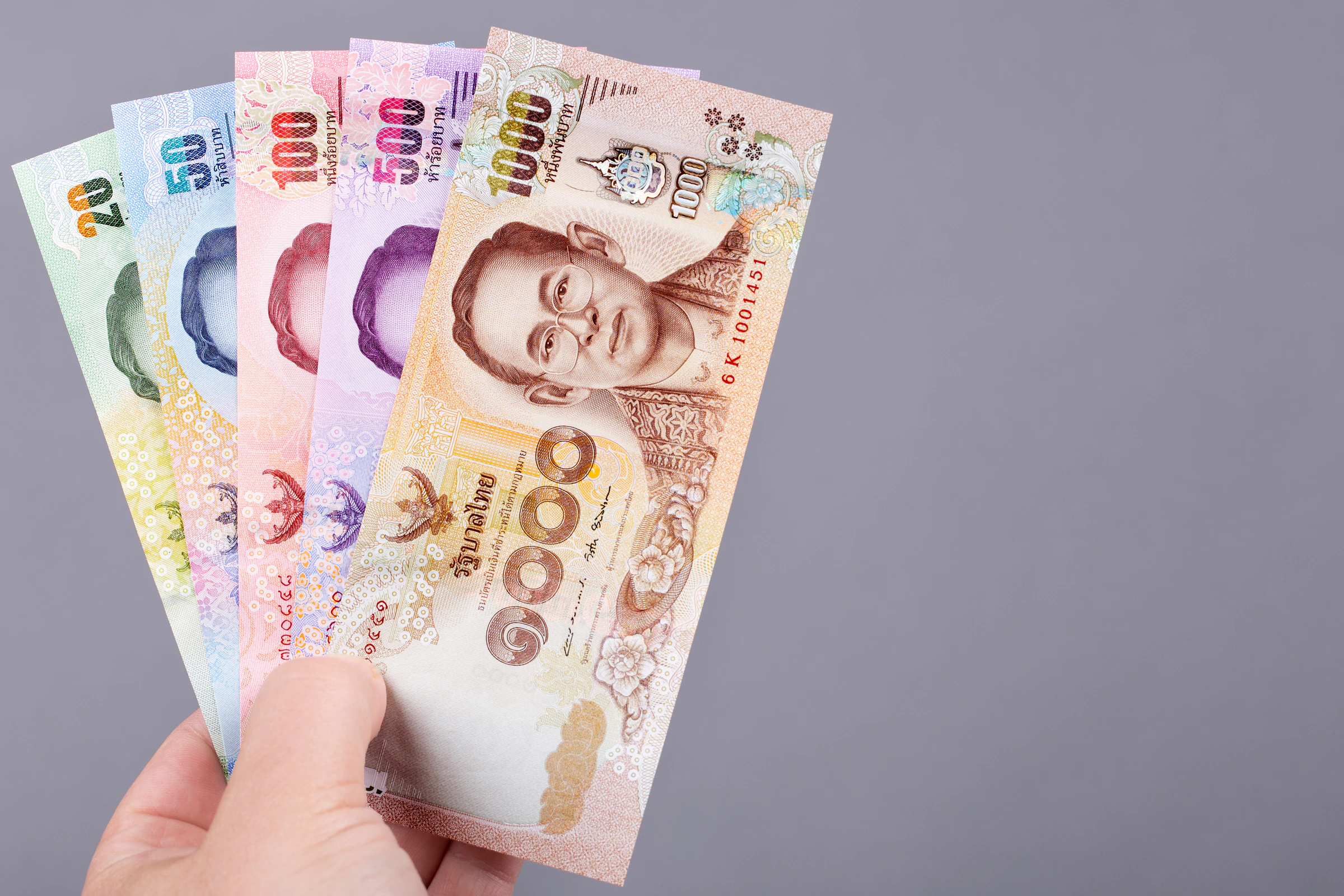
At the September 2026 average exchange rates (x-rates.com), US$1 was worth about 33 baht and £1 about 44.6 baht. All prices in this guide are ranges checked in September and October 2026, so confirm current ones before you book.
Where to stay: hostel costs
A dorm bed runs from about 150 baht at the cheapest hostels in Chiang Mai or the north up to 700 to 1,000 baht for a social hostel with a pool on the islands or in Bangkok. Private rooms and guesthouses cost more and vary widely. Our hostels in Thailand guide breaks this down by destination, with the Bangkok and Chiang Mai guides going into more detail on those two cities.
Food and drink costs
| Item | Typical price (baht) |
|---|---|
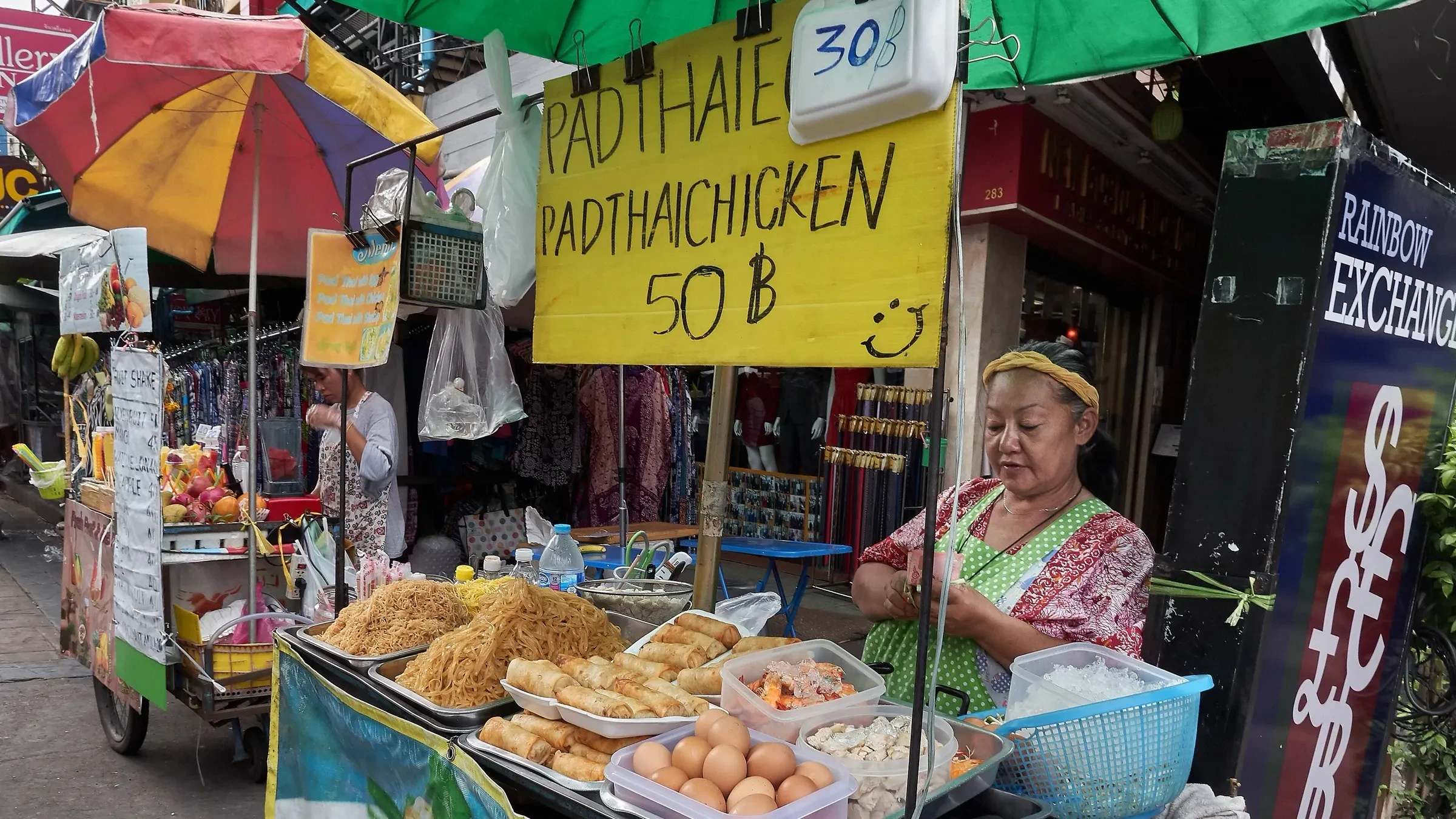
| Street-food dish (pad thai, noodle soup) | 50 to 80 |
| Meal in a tourist-area restaurant | 180 to 350 |
| Large Chang or Leo beer in a bar | 80 to 150 (islands, and Full Moon nights, at the top of that range) |
| One-hour Thai massage | 250 to 350 |
| 1.5 litre bottle of water | 15 to 20 |
Since 29 May 2026, alcohol can be sold from 11:00 to midnight with no afternoon gap, though sales are still banned on Buddhist holy days.
Getting around: transport costs
Sleeper train, Bangkok to Chiang Mai. The overnight Special Express 9 (18:40 to about 07:15) has published 2nd-class fares of about 940 baht for an upper berth and 1,040 baht for a lower berth, and it saves a hotel night. Those are older published prices, so check the current fare on the State Railway's D-Ticket site. Tickets go on sale up to 180 days ahead, and berths sell out quickly in busy months.
Domestic flights. Bangkok to Chiang Mai takes about 1 hour 15 minutes, with fares that vary by airline and how far ahead you book. Longer hops that skip a full day of buses and boats, such as Chiang Mai to Koh Samui or Krabi to Koh Samui, cost more: roughly 2,600 to 5,500 baht.
Minivans. Shorter mountain and coastal hops cost relatively little: Chiang Mai to Pai runs about 150 to 360 baht for 3 to 4 hours.
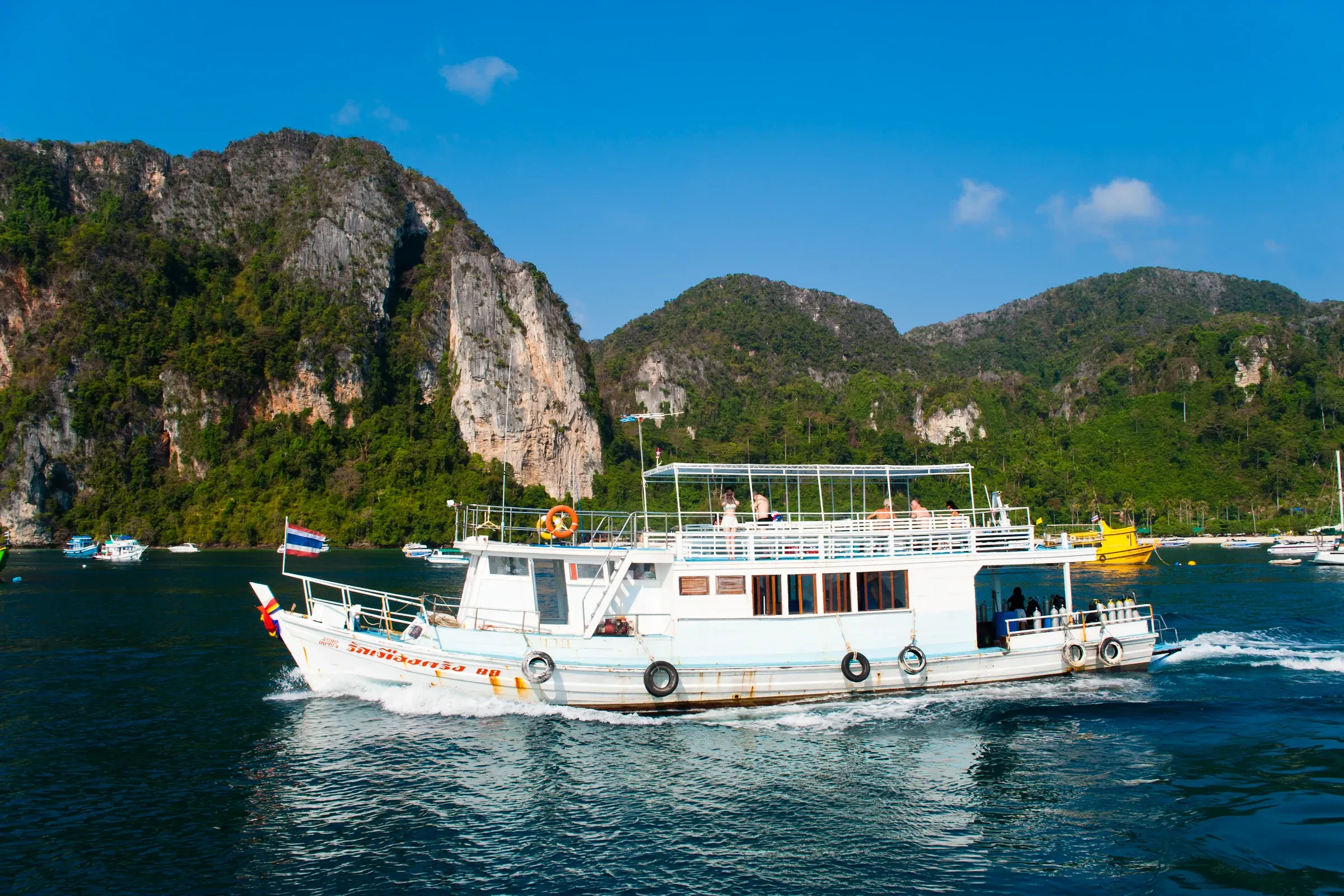
Ferries. On the Gulf side, Samui to Koh Phangan is about 250 to 370 baht (30 to 45 minutes), Koh Phangan to Koh Tao about 350 to 650 baht (1 to 2 hours), and Koh Tao to the Chumphon mainland about 600 to 750 baht. Koh Tao also charges a 20 baht visitor fee at the pier. On the Andaman side, Ao Nang to Koh Lanta runs about 700 baht, Koh Lanta to Koh Phi Phi about 450 to 850 baht, and Koh Phi Phi to Krabi about 700 to 900 baht. Our island hopping guide has the full route-by-route breakdown for both coasts.
Scooters. Rental runs about 150 to 350 baht a day, but you need a motorcycle-category licence from home plus an International Driving Permit that covers motorbikes to ride legally and stay covered by travel insurance. We don't arrange scooter rental on our trips.
Activities and entrance fees
| Activity | Typical price (baht) |
|---|---|
| Grand Palace, Bangkok | 500 |
| Wat Pho, Bangkok (including a 1-hour Thai massage at the temple school) | 300 |
| Muay Thai, Rajadamnern Stadium, Bangkok | from 1,500 |
| Observation-only elephant sanctuary, Chiang Mai (half day) | about 1,900 to 2,500 |
| Doi Suthep temple, Chiang Mai (sources vary; the national park's trails and waterfalls cost 100 more, the temple road doesn't) | about 30 to 50 |
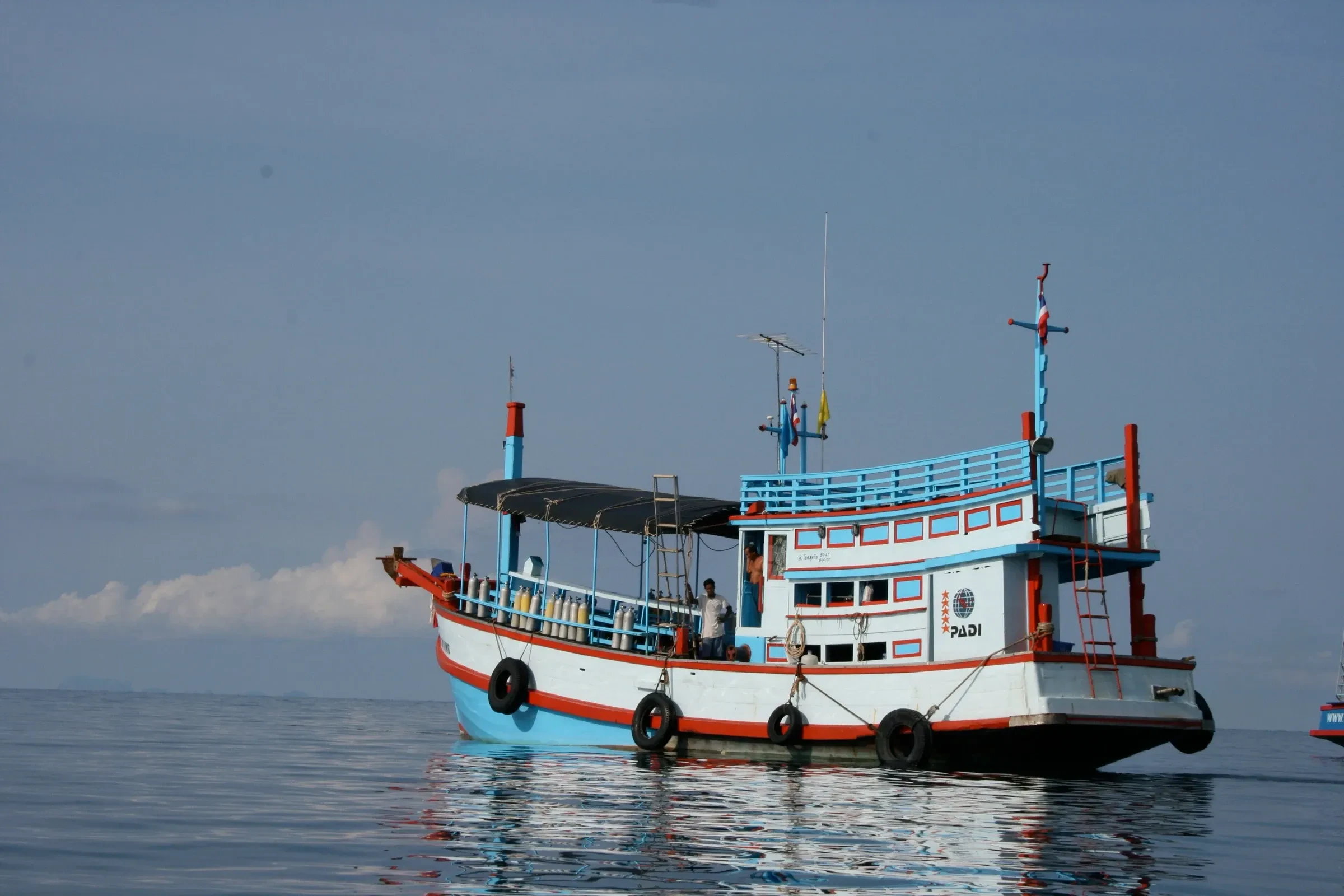
| Discover Scuba, Koh Tao (half day, 2 dives) | 2,500 to 4,000 |
| PADI Open Water course, Koh Tao (3 to 3.5 days) | 9,500 to 12,500 |
| Round-island snorkel boat plus Koh Nang Yuan entry, Koh Tao | about 500 to 750 |
| Ang Thong Marine Park day trip, Koh Samui or Koh Phangan (plus a 300 baht park fee; the park is usually closed about 1 November to mid-December) | from 1,200 |
| Krabi four-island longtail day (per person share) | about 1,100 |
| Maya Bay and Pileh Lagoon boat trip, Koh Phi Phi (plus a 400 baht park fee; Maya Bay closes each August and September) | about 1,700 to 2,200 |
Visa and entry costs in 2026
Most nationalities, including the UK, US, Canada, Australia, New Zealand, Ireland, every EU country and India, enter Thailand visa-free for 30 days at no cost, a change from the 60 days allowed before 15 September 2026. Extending once inside the country costs 1,900 baht at an immigration office. Everyone, regardless of nationality, must file the free Thailand Digital Arrival Card (TDAC) online in the 3 days before you arrive, at tdac.immigration.go.th; it costs nothing, and any site that asks you to pay for it is a scam.
There is no tourist entry fee yet. A fee has been proposed since 2023, first at around 300 baht. On 14 August 2026, Thailand's National Tourism Policy Committee approved a draft fee of 450 baht per foreign visitor, covering basic accident insurance, however you arrive. A public consultation ran to 28 September 2026, and the government aims to start collecting in the first quarter of 2027, with air arrivals first. It still needs final approval, so check before you travel. If you're charged this fee before it's officially collected, it isn't legitimate. Our Thailand visa guide covers the full rules by nationality, extensions and the e-Visa process for longer stays.
SIM cards and connectivity
A tourist SIM at the airport (AIS, TrueMove H or dtac) costs about 299 to 599 baht, and you'll need your passport to register it. Setting up a travel eSIM before you fly means it's working the moment you land.
Sample budget: an independent 2-week trip
Here's a rough total for someone travelling independently for two weeks through Bangkok, the north and two islands, similar to our Thailand in 2 Weeks route, staying mostly in dorms and keeping half an eye on cost. It excludes your international flight, travel insurance and any visa fee (most passports pay nothing).
| Item | Baht |
|---|---|
| 13 nights in dorms, averaging about 300 baht | 3,900 |
| Sleeper train, Bangkok to Chiang Mai | about 1,040 |
| Domestic flight to the islands | about 4,500 |
| Ferries and local transfers | about 2,500 |
| Activities (elephant sanctuary, cooking class, a snorkel trip, Discover Scuba) | about 5,000 |
| Food, drinks and local transport, 14 days at about 1,250 a day | 17,500 |
| SIM card | 400 |
| Total | about 34,800 baht (roughly US$1,050 / £790) |
Independent travel versus a group trip: an honest comparison
Travelling independently at the budget above costs roughly US$1,050, before your international flight. Our Thailand in 2 Weeks trip, covering a similar route through Bangkok, Chiang Mai, Pai, Koh Tao and Koh Phangan, comes as one upfront price that varies with the season, also excluding your international flight. The trip page has the current price.
The trip costs more than going independently. The extra money covers a bed in a hostel or guesthouse for 12 nights plus a sleeper-train berth, the train, the flight south and every ferry and transfer between stops already booked, a Trip Host travelling with the group the whole way, licensed local guides for the activities that need one, and the specific activities and park fees listed on the trip page, all pre-booked so nothing sells out on you. You also join a fixed group of other solo travellers aged 18 to 40, instead of meeting people by chance in hostels.
What you give up going independently: the sleeper train books up in busy months, so you have to buy early, you're responsible for every connection working, and you're on your own until you meet people along the way. Neither approach is wrong. You're either paying for someone else to remove the planning and add a host and a group, or doing that work yourself and pocketing the difference.