Phuket vs Koh Samui at a glance
| Phuket (Andaman coast) | Koh Samui (Gulf of Thailand) | |
|---|---|---|
| Cost per day | 1,100 to 2,000 baht | 1,000 to 1,800 baht |
| Best months | November to April | February to September |
| Avoid | May to October (monsoon) | October to December (November wettest) |
| Flight from the UK | Nonstop, about 12 hours out (Virgin Atlantic from 18 October 2026, Norse from December 2026, both seasonal), or via Bangkok | No nonstop; via Bangkok, then a domestic flight or the Surat Thani ferry |
| Flight from the US | No US nonstop to Thailand at all; via Bangkok, then a short domestic hop to Phuket | No US nonstop; via Bangkok, then a domestic flight or the ferry |
| Flight from Australia | Nonstop with Jetstar from Perth, Melbourne and Sydney | No nonstop; via Bangkok, then onward |
| Visa | Same Thailand entry rules apply to both islands: see the Thailand visa guide | Same |
| Beaches | Patong, Kata, Karon, Kamala, Nai Harn, Freedom Beach | Chaweng, Lamai, Bophut, Maenam, Choeng Mon |
| Food | Old Town's Sino-Portuguese shophouses, moo hong | Fisherman's Village night market, Samui-style seafood curry |
| Nightlife | Patong's Bangla Road | Chaweng's bar strip |
| Adventure | Similan Islands diving, Phang Nga Bay, a Railay climbing day trip | Ang Thong kayaking, a Sail Rock diving day trip |
| Ease for first-timers | Bigger airport, more transport backup | Smaller island, simpler ring-road layout |
| Getting around | Grab, Bolt or songthaews; skip the unmetered tuk-tuks | Songthaews on the ring road; taxis and patchy Grab |
| Solo-friendliness | Good, wide hostel choice across several beaches | Good, Chaweng is the easiest place to meet people |
The key difference: opposite seasons
Phuket sits on the Andaman coast, which is calm and dry from November to April and gets hit by the southwest monsoon from May to October, when rip currents and red flags close down swimming on the west-coast beaches. Koh Samui sits in the Gulf of Thailand, which runs on a different pattern: its own rainy season peaks around October to December, worst in November, but it's sheltered from the southwest monsoon that shuts down Phuket's summer. That's why Koh Samui's own guide gives February to September as a workable stretch, well inside the months when Phuket is at its wettest.
In practice: if your dates land in May to September, Koh Samui is the coast that still works reasonably well, while Phuket is at its rainiest and least safe for swimming. If your dates land in November, neither island is at its best, since that's the Gulf's single worst month and still on the tail end of Phuket's rains. January to April is the only stretch where both coasts are good at once, which is also why it's the only realistic window for doing both in one trip (more on that below).
Winner: neither, but knowing this pattern changes which one you should book. Check both coasts against your actual travel dates rather than picking on reputation alone, and see our best time to visit Phuket guide for the detail.
Beaches
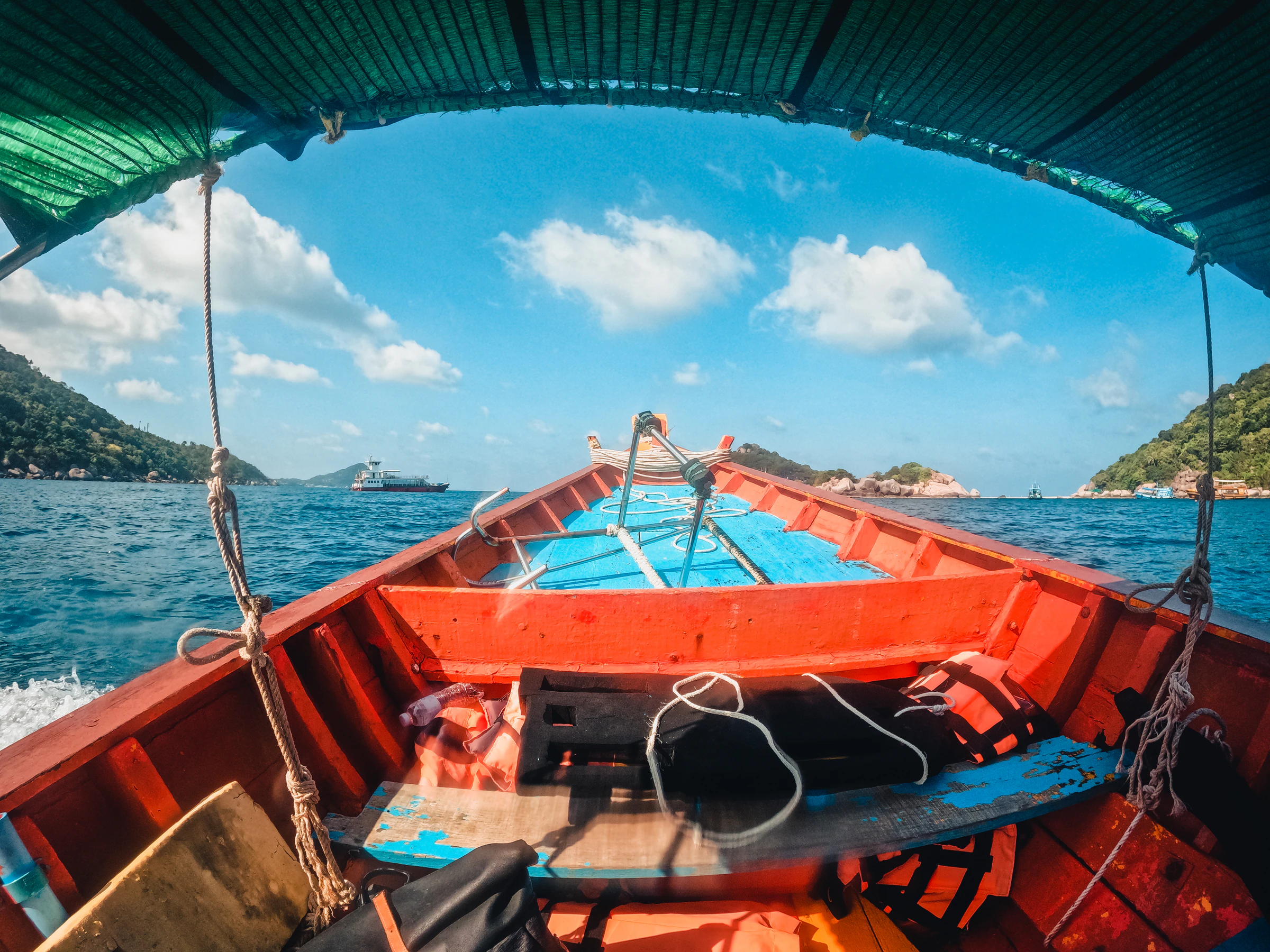
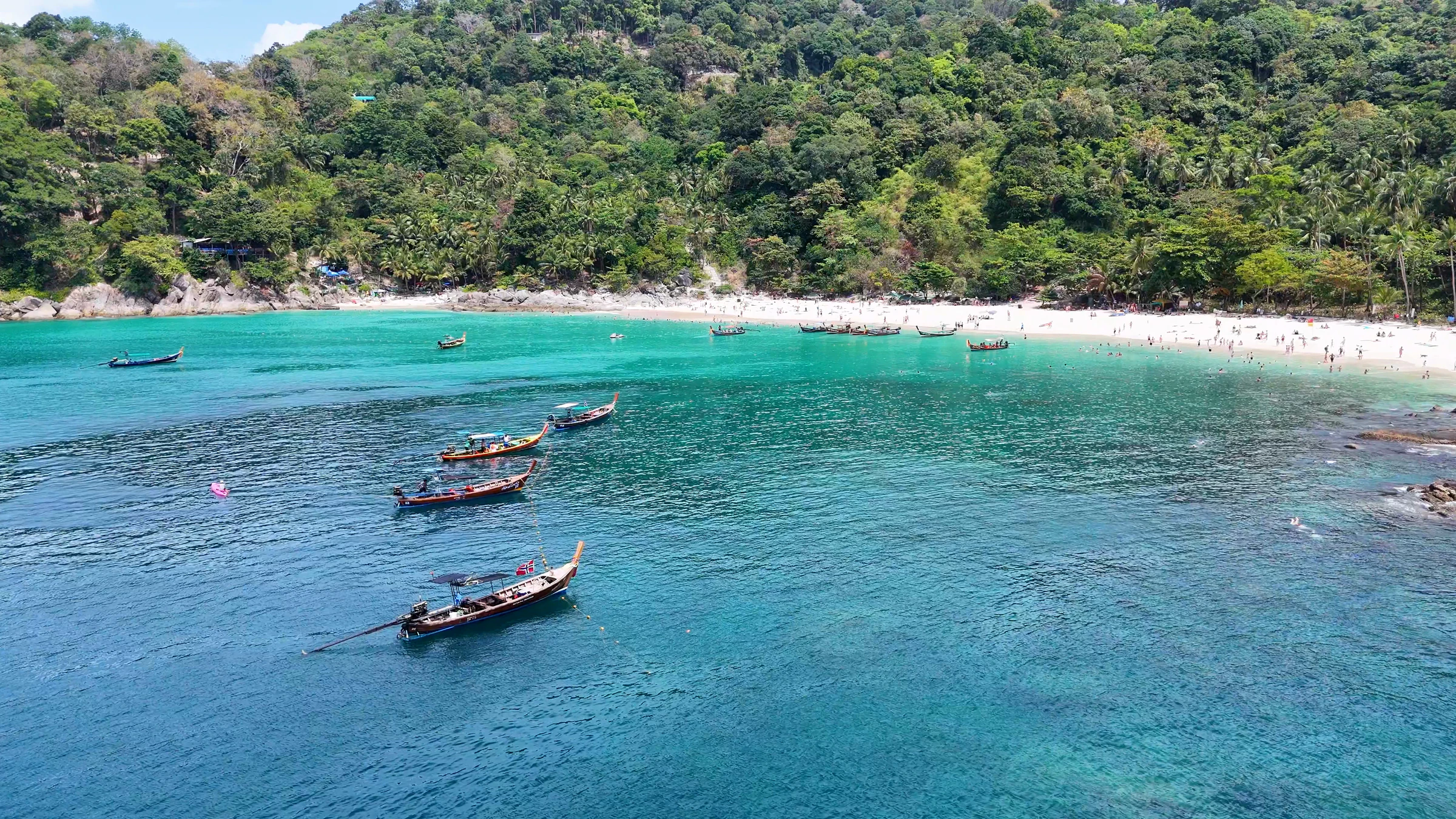
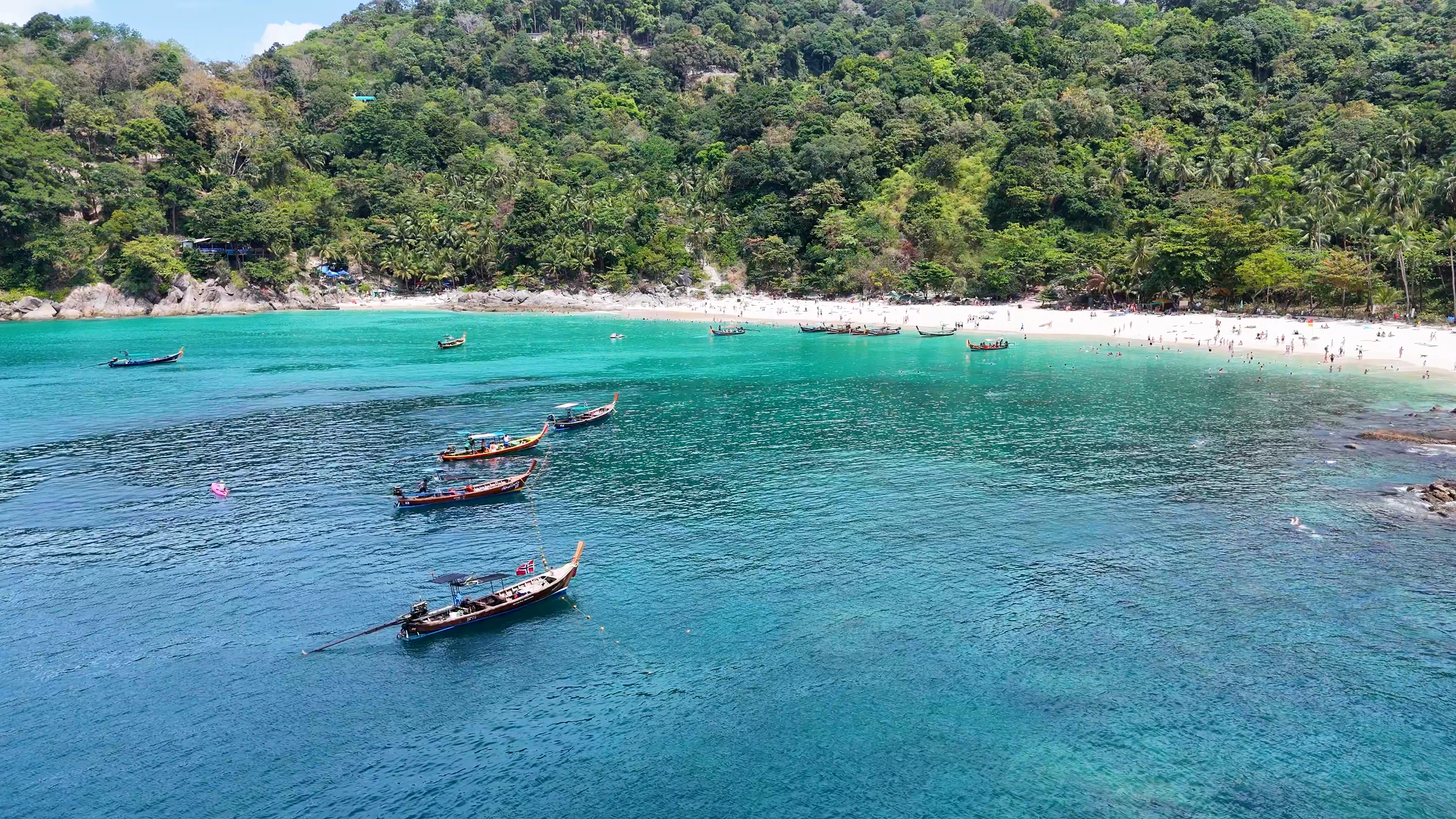
Phuket's west coast runs from Patong (built for nightlife, not for lying on the sand) down to Kata and Karon, calmer resort beaches with an easy walk to the water, then Kamala for something quieter still, and Nai Harn near the southern tip, kept undeveloped because a monastery owns the beachfront. Freedom Beach, reachable only by longtail boat or a steep hike, is the pick for a day away from the crowds. Full detail is in our Phuket things to do guide.
Koh Samui's beaches are gentler than Phuket's: Chaweng is the longest and busiest, Lamai a quieter and cheaper version of the same thing, Bophut's Fisherman's Village trades sand time for old shophouse cafes, and Maenam is the calm, budget end of the island. None of Samui's beaches carry Phuket's rip-current warnings in the same way, since the Gulf's swell is generally softer than the Andaman Sea's.
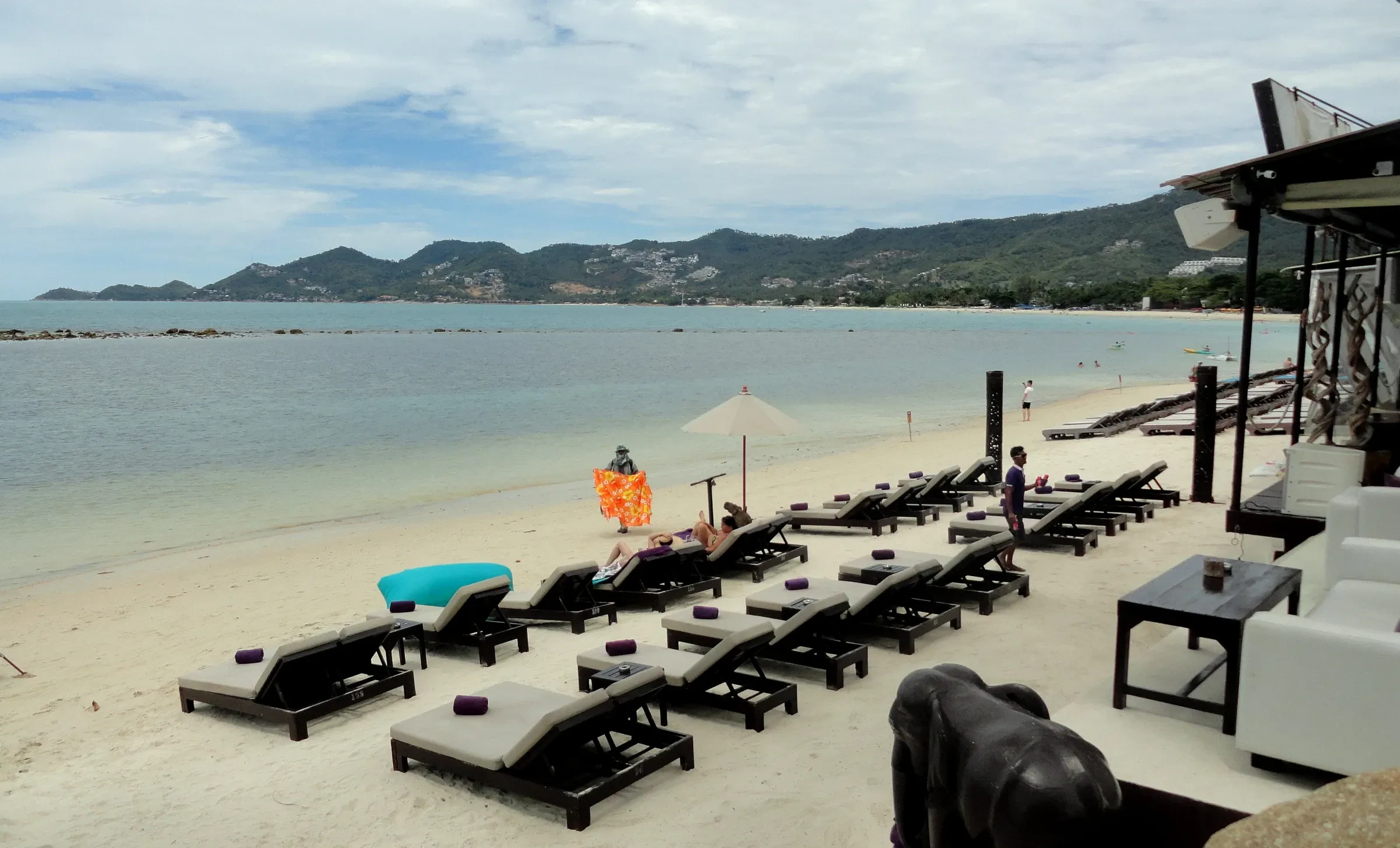
Winner: Phuket for range and postcard sand, Koh Samui for calmer, easier swimming.
Nightlife
Patong's Bangla Road is Thailand's best-known strip of bars, clubs and touts, running at full volume most nights of the week. It's Phuket's nightlife centre by a wide margin; Kata and Karon stay quiet by comparison. Chaweng has Koh Samui's equivalent bar strip, busier and later than Lamai or Bophut, but smaller in scale and a step down in intensity from Patong.
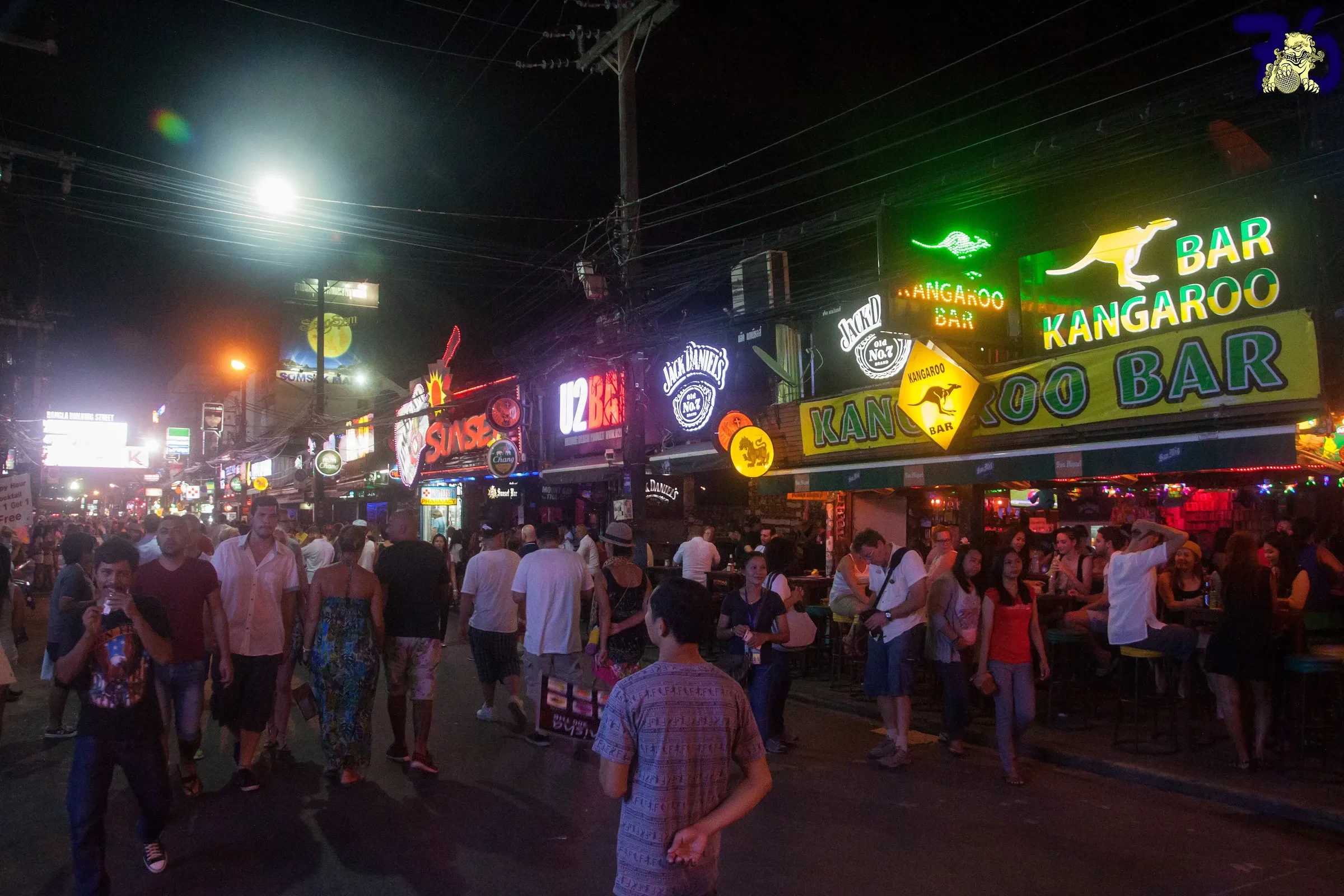
Winner: Phuket, for anyone who wants the biggest night out on offer; Koh Samui if you want a livelier evening without going full Patong.
Day trips
Phuket's pier sends boats out to Koh Phi Phi, Phang Nga Bay and James Bond Island, and, in season, the Similan Islands, on top of a slower run of fishing-village islands (Koh Yao Yai and Koh Yao Noi) in between. Koh Samui's main day trip is Ang Thong Marine Park, a national park of limestone islands with kayaking, snorkelling and a viewpoint climb, plus the option of a shorter hop to Koh Phangan or Koh Tao rather than a day trip. The park closes for a stretch each rainy season, from about November to mid-December (1 November to 15 December in 2025), so check the dates before you plan around it.
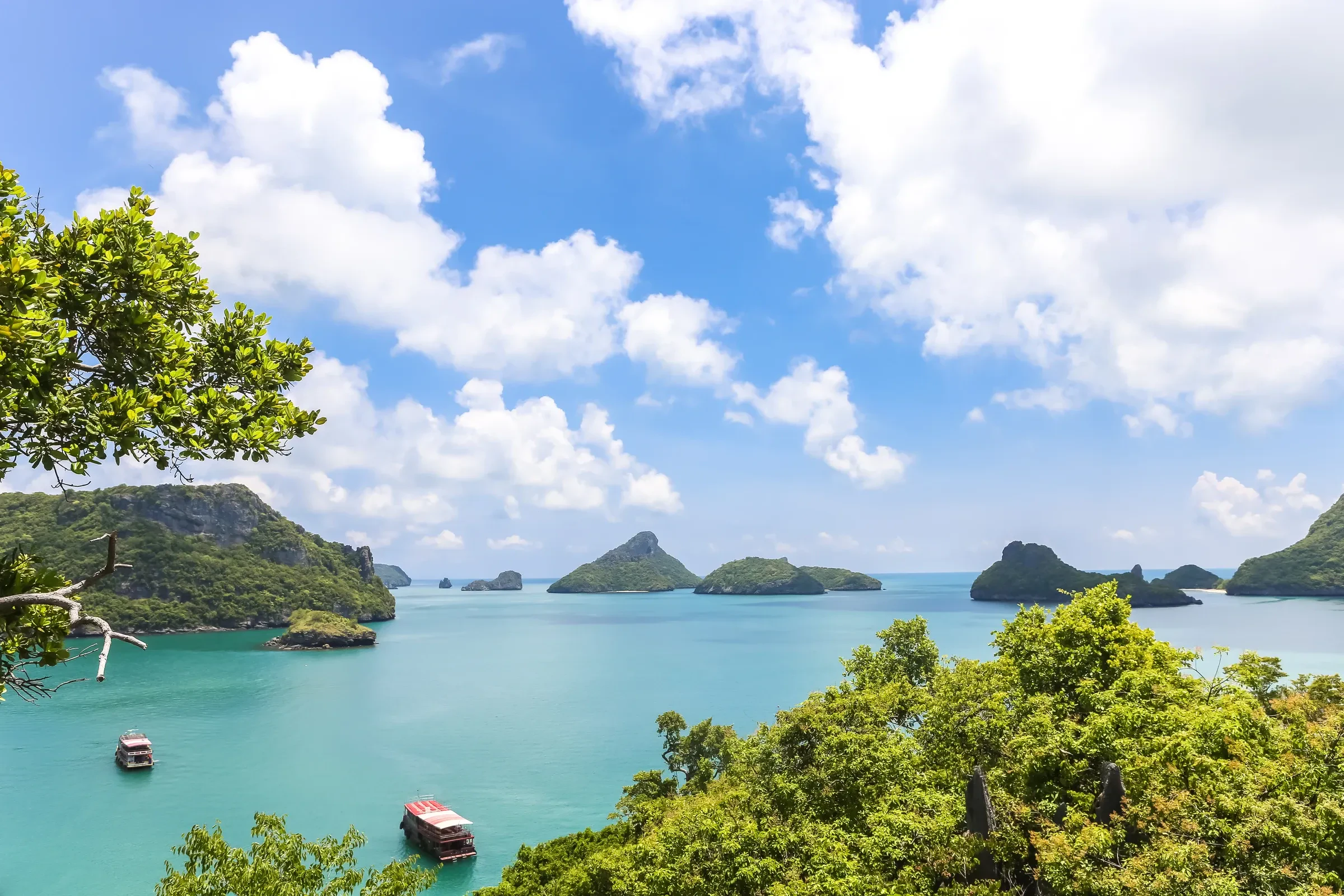
Winner: Phuket, for sheer number and variety of day trips leaving from one pier.
Diving
Phuket's own reefs (Racha Islands, Phi Phi, Shark Point) run from about 2,200 baht for a try-dive to 4,400 baht, and the Similan Islands are one of the best liveaboard destinations in Southeast Asia when they're open (roughly mid-October to mid-May; the park announces the dates each year). Koh Samui has a handful of dive schools but far fewer sites of its own than nearby Koh Tao, so most Samui-based diving is a day trip out to Sail Rock, a granite pinnacle with a swim-through chimney, from about 4,650 baht, or an Open Water course that may bus and boat you across to Koh Tao for the actual dives. See our full Thailand diving guide for both coasts.
Winner: Phuket, for dive sites on its own doorstep; Koh Samui is really a base for diving somewhere else, at Sail Rock or Koh Tao.
Food
Phuket's food identity comes from Phuket Town's Sino-Portuguese Old Town, where moo hong, a slow-braised pork dish handed down from the island's Hokkien tin-mining community, turns up at the Sunday Walking Street market. Koh Samui's version is Bophut's Fisherman's Village Friday market, with grilled seafood, noodle stalls and hoy tod (oyster omelette) served among old shophouses, plus a Samui-style seafood curry that shows up on menus island-wide.
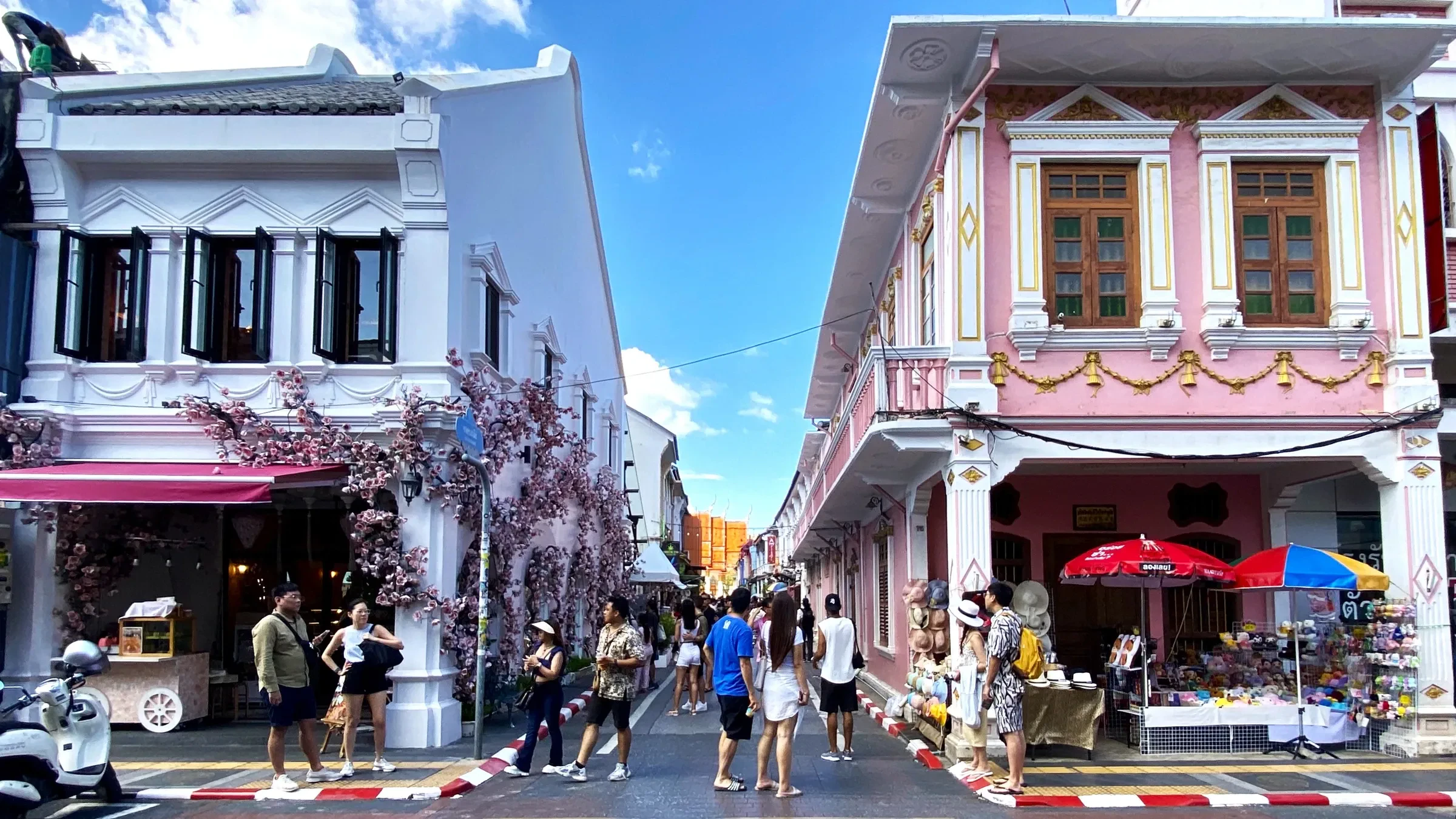
Winner: a draw. Both have one dish worth planning a market evening around, and neither beats the other.
Cost
Phuket runs about 1,100 to 2,000 baht a day, and Koh Samui about 1,000 to 1,800 baht, per our Thailand cost guide. Both carry the usual island premium over the mainland, and Koh Phi Phi, an easy Phuket day trip, is actually the priciest single stop on either coast.
Winner: Koh Samui, by a narrow margin.
Getting there and the airports
Phuket International Airport (HKT) is one of Thailand's biggest, with direct flights from Bangkok and other Thai cities plus a long list of international routes: nonstop from Frankfurt (Condor), Paris (Air France), Stockholm (Norse, seasonal), Copenhagen (SAS, from 9 December 2026) and Zurich (Edelweiss, seasonal) in Europe; from London, Virgin Atlantic flies Heathrow to Phuket nonstop (from 18 October 2026, about 12 hours out), alongside seasonal Norse flights from Gatwick (from 4 December 2026); and Jetstar flies nonstop from Perth, Melbourne and Sydney. There's still no nonstop flight from the US to any Thai airport, so US travellers connect through Bangkok either way.
Koh Samui Airport (USM) is privately owned and run by Bangkok Airways, which flies the main nonstop routes: from Bangkok (about 1 hour 5 minutes), Chiang Mai (about 1 hour 30 minutes) or Krabi (about 50 minutes). Those fares run noticeably higher than a comparable domestic hop elsewhere in Thailand. The budget workaround is to fly into Surat Thani on the mainland instead, then take a combined bus and ferry transfer to Samui, about 2 to 5 hours door to door depending on the connection. Our Koh Samui guide covers both routes in full.
Winner: Phuket, for anyone flying in from outside Thailand. It's the easier, usually cheaper airport to land at.
Getting around
Phuket has no cheap tuk-tuks: they're unmetered and priced for tourists, so use Grab or Bolt instead, or a songthaew radiating out from Phuket Town for roughly 20 to 50 baht until the early evening. A scooter gets you further, but checkpoint fines run up to about 2,000 baht if you don't have the right licence and International Driving Permit. See getting around Phuket for the full breakdown.
Koh Samui's songthaews circle the island's ring road for roughly 30 to 80 baht, running from about 6am to 9pm. Taxis fill the gap after that, but they're unmetered too, often starting at 300 to 500 baht for a short trip, so agree the fare before you get in. Grab operates on the island, but coverage thins out away from Chaweng and Bophut, so treat it as a backup rather than your main way around.
Winner: close either way. Both islands reward using Grab where it works and agreeing taxi fares upfront.
Who each suits
Phuket suits a first solo trip built around a bigger airport, more transport backup, and a genuine choice of nightlife or quiet beaches within the same island. Koh Samui suits travellers whose dates don't fit the Andaman's dry season, or who'd rather have a calmer, gentler beach scene and don't mind paying more for the flight, or spending a few extra hours on the Surat Thani ferry, to get there.
Which should you choose?
| Traveller type | Choose Phuket if | Choose Koh Samui if |
|---|---|---|
| Dates | You're travelling November to April | Your dates fall outside that window, especially May to September |
| First solo trip | You want the bigger airport and more transport options | You want a smaller island that's simple to get around |
| Nightlife | You want Patong's scale | You want a livelier night out without going full Patong |
| Diving | You want dive sites on your own doorstep, plus Similan liveaboards in season | You're happy day-tripping to Sail Rock or Koh Tao instead |
| Budget | - | You want the slightly cheaper day-to-day cost |
| Continuing your trip | You're combining with Khao Sok, Krabi or Koh Lanta on the Andaman coast | You're continuing to Koh Phangan or Koh Tao in the Gulf |
Why not both?
Doing both coasts in one trip really only works from January to April, when the Andaman is dry and the Gulf's own rains, October to December, have passed. The link between them is a short flight from Krabi to Koh Samui, about 50 minutes, rather than any road or ferry, since the two coasts don't connect by sea. A realistic 10-day version: 3 to 4 days around Phuket or Ao Nang and Krabi on the Andaman side, then fly to Koh Samui for 2 to 3 days, then a ferry on to Koh Phangan or Koh Tao for the rest. Stretch it to 2 weeks and there's room for Koh Lanta or Koh Phi Phi on the Andaman leg too. Our Andaman coast itinerary and Gulf islands itinerary cover each half in full, and our Thailand island hopping guide lays out the combined route in more detail.
Keep planning
Read the full Phuket and Koh Samui guides, or see how Phuket stacks up against its closer Andaman neighbour in Krabi vs Phuket. For the wider country, start with our Thailand travel guide.