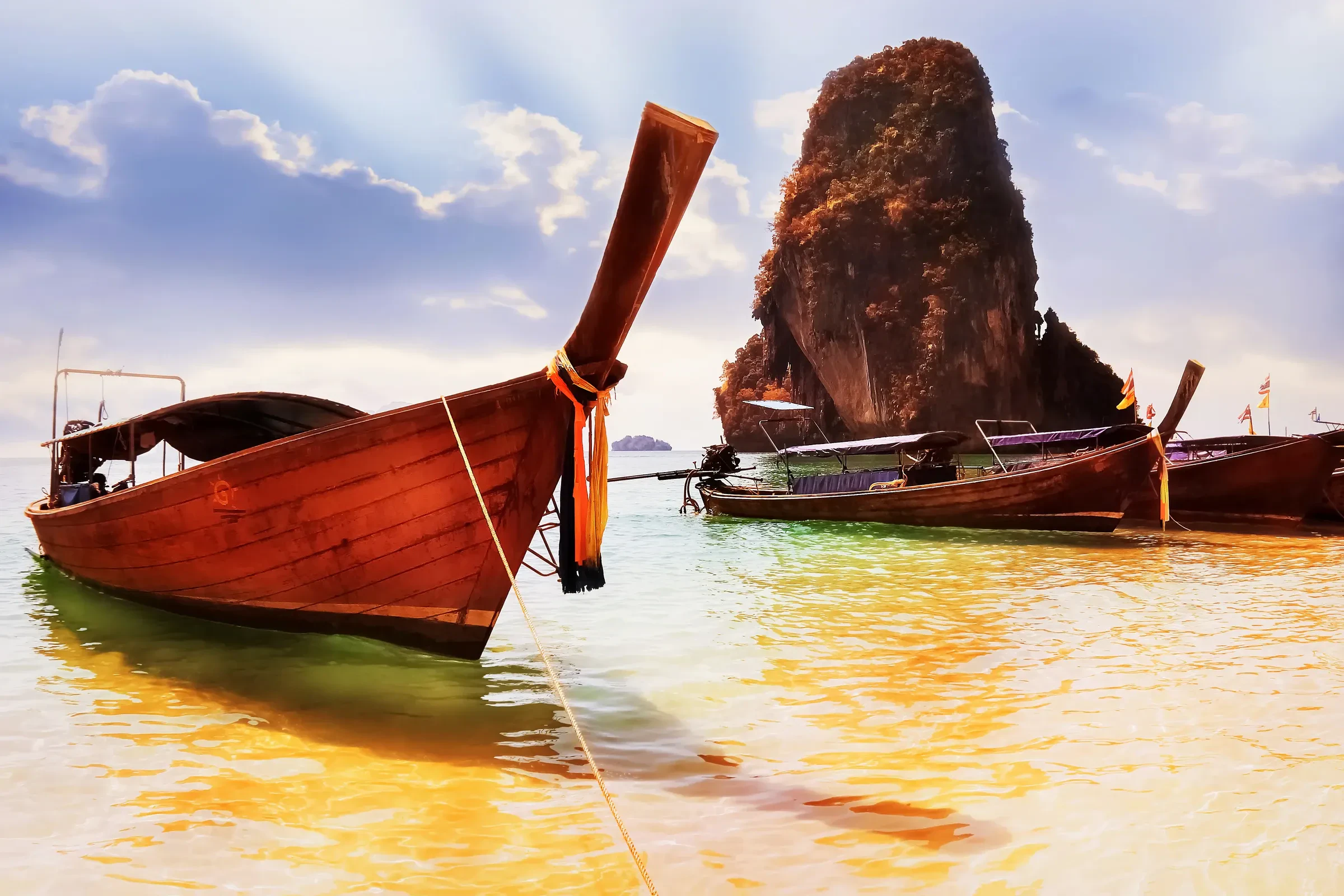
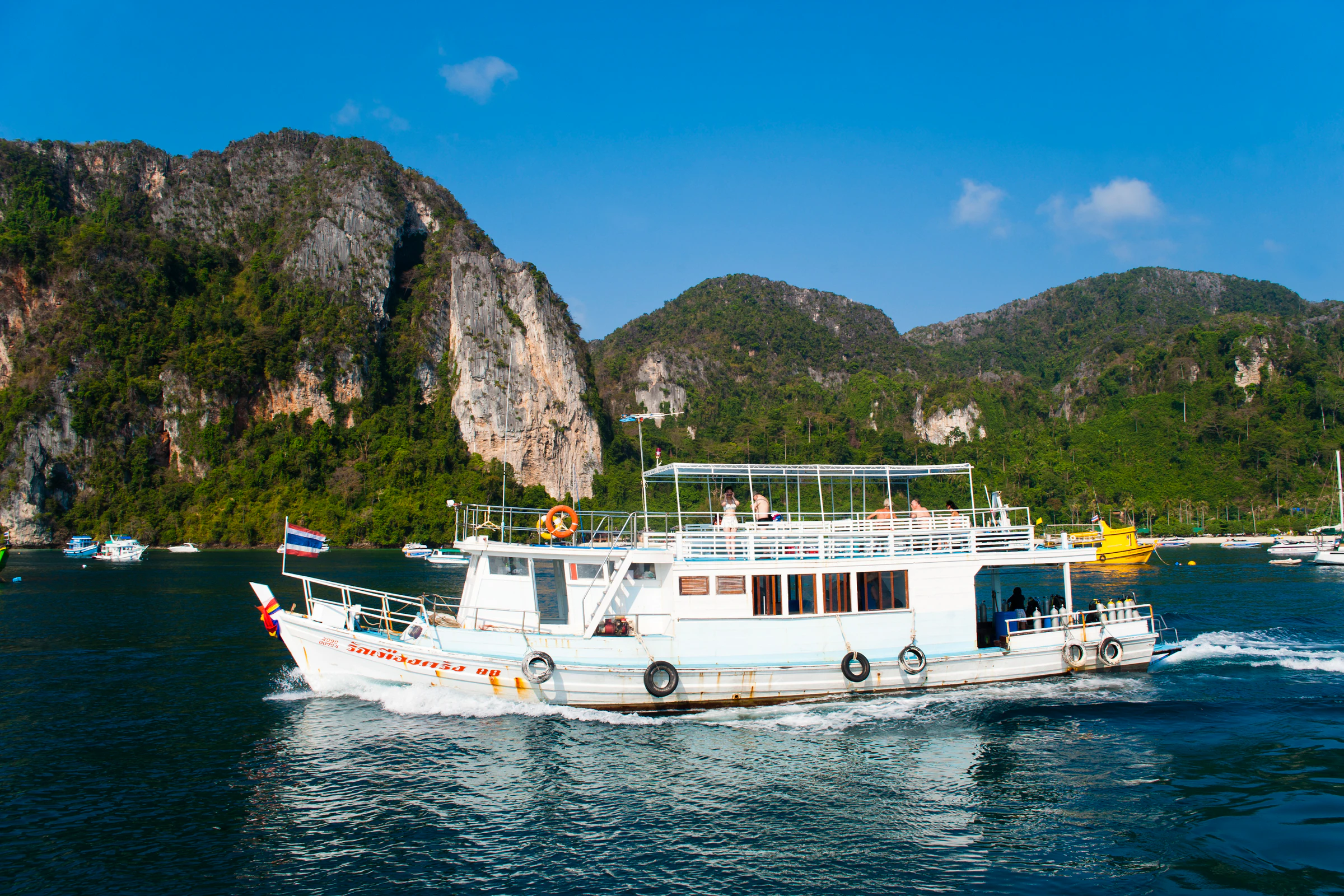
Phuket gets a mixed reputation among backpackers, and some of it is fair: the tuk-tuks are a rip-off, Patong at full volume isn't for everyone, and it's busier and more built-up than Krabi or Koh Lanta across the water. It's also an easy place to land on your own: more flights, more choice of area, and more day trips leaving from one pier than almost anywhere else on the Andaman coast. Pick the right beach for what you want, use Grab instead of a tuk-tuk, and Phuket works well as a base for the islands and bays around it.
This guide covers the areas, getting there and around, the day trips worth doing, and the ferries onward to the rest of the Andaman coast. For the wider country, see our Thailand travel guide.
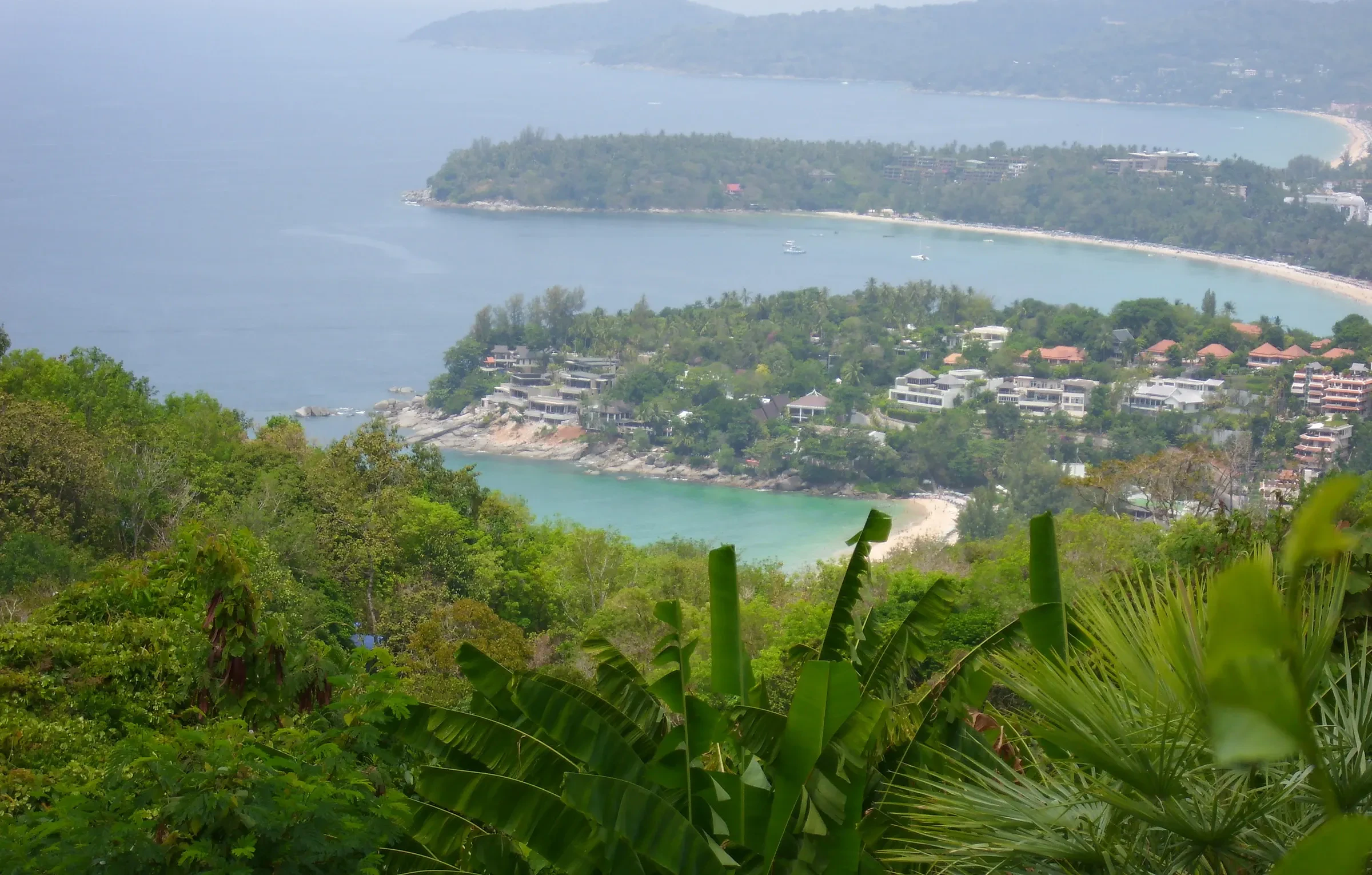
Phuket at a glance
- Where: the Andaman Sea, off Thailand's south-west coast, joined to the mainland by two bridges
- Getting in: Phuket International Airport (HKT), with direct international and domestic flights
- Known for: Patong's nightlife, Kata and Karon's beaches, day trips to Phi Phi and Phang Nga Bay, and the Vegetarian Festival in October
- Best months: November to April, when the sea is calm; avoid May to October if you want to swim
- How long: three to five nights if you're using Phuket as a base for day trips; longer if you're island-hopping onward
Where to stay in Phuket
Phuket is big enough (about 550 km²) that the area you pick matters more than it does on a small island like Koh Phangan. Each beach has its own character, and they're spread down the west coast rather than clustered together.
| Area | Best for | Good to know |
|---|---|---|
| Patong | Nightlife, the widest choice of bars, hostels and activity desks | Phuket's busiest beach and party strip, centred on Bangla Road. Loud most nights; a good base if that's what you want |
| Kata | A calmer first stay with a good beach | A compact resort town with restaurants, a market and an easy walk to the sand, without Patong's intensity |
| Karon | Space and a longer beach | Quieter than Patong and Kata, with one of the island's longest beaches, and still a short ride from Patong's nightlife |
| Kamala | A quieter, more local base | North of Patong, a former fishing village that's calmer and less built-up than the beaches south of it |
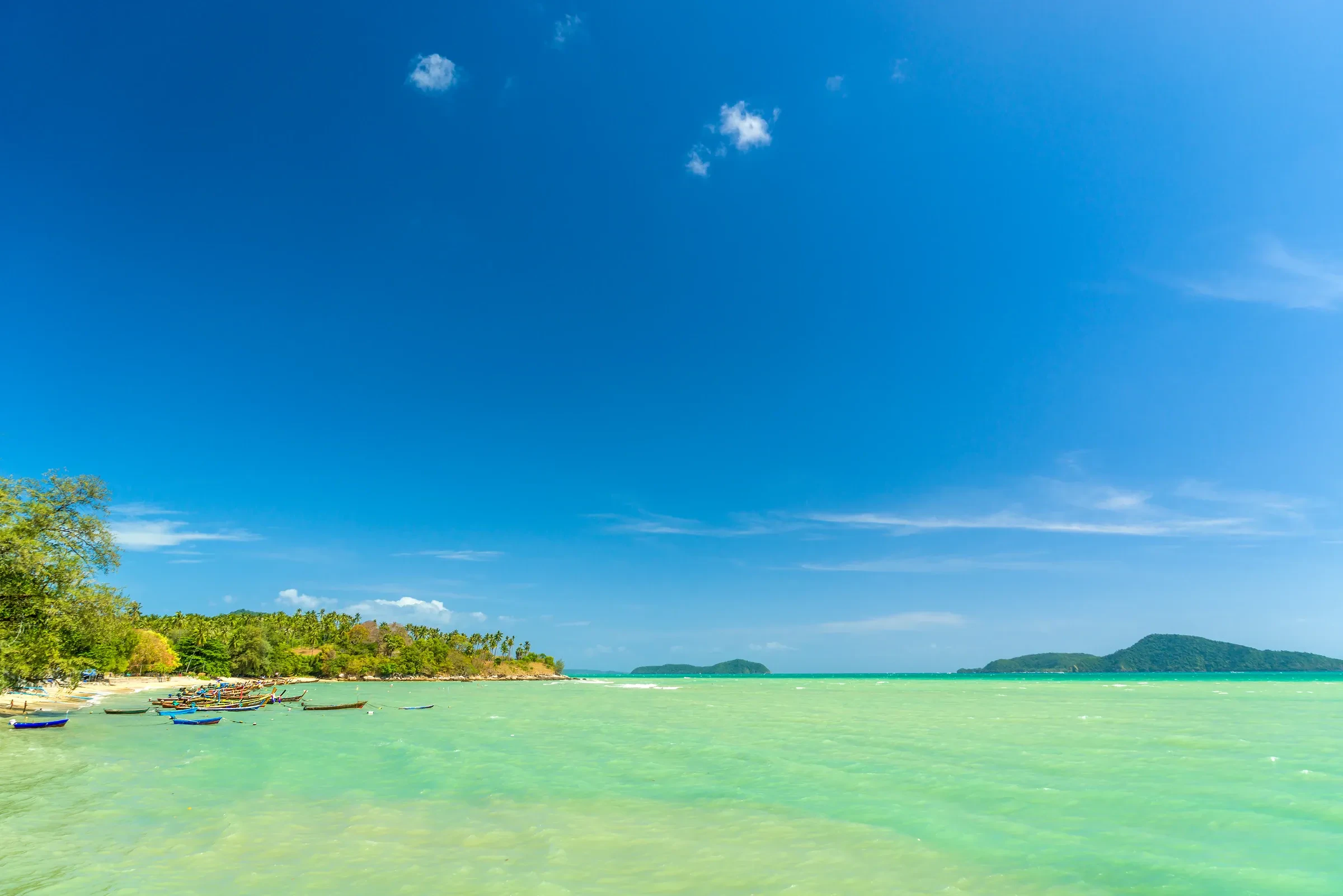
| Rawai | A local, working feel | A fishing village on the southern tip, with longtail boats, seafood shacks and several Muay Thai camps nearby |
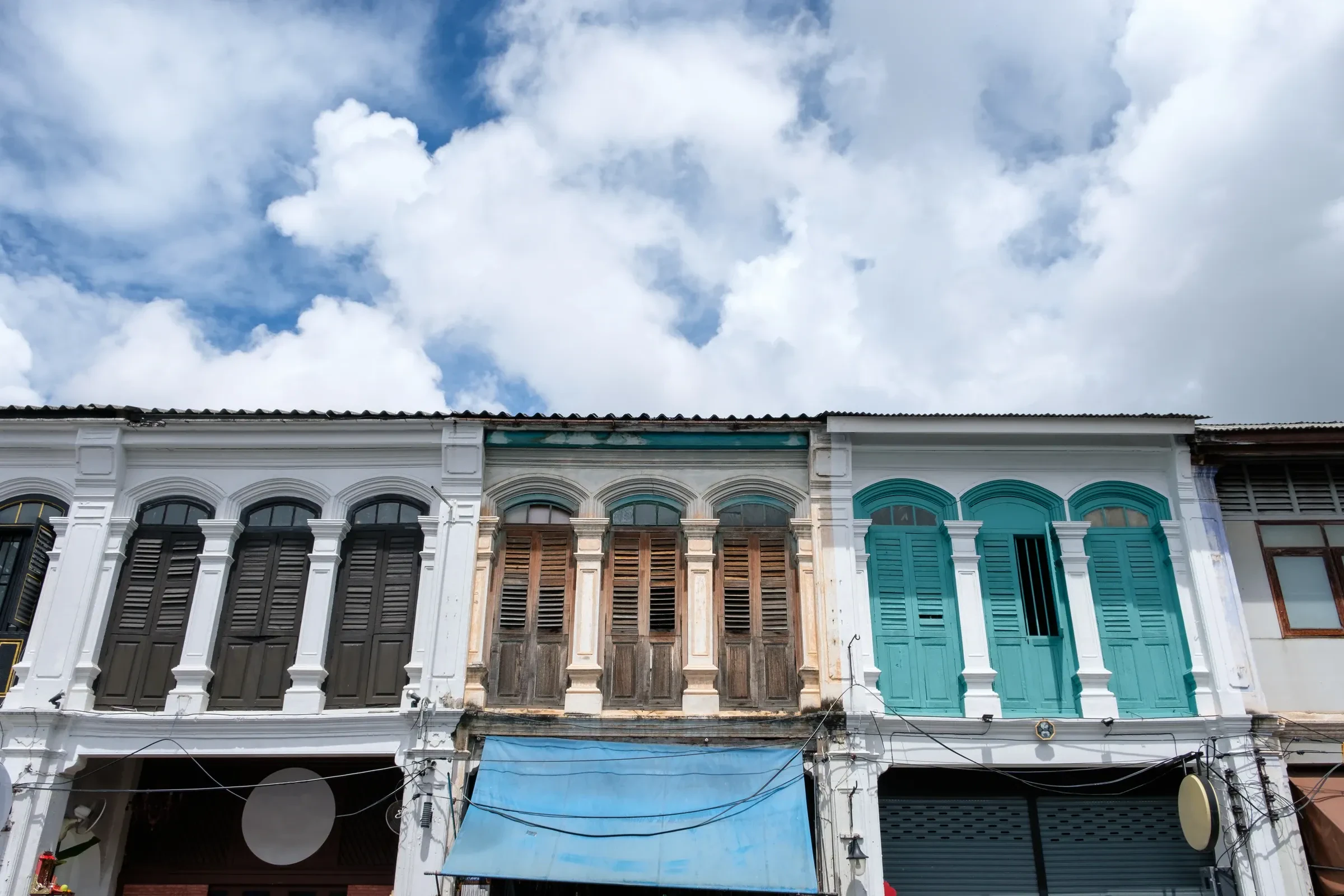
| Old Town (Phuket Town) | Culture, food and the Vegetarian Festival | Inland, not on the beach. Sino-Portuguese shophouses, the Sunday night market on Thalang Road, and Phuket's best local food |
For a first visit, Kata or Karon give you a good beach without Patong's noise, with an easy songthaew ride into Patong on nights you want it. If you'd rather be in the middle of things, Patong has the most hostels and the easiest nightlife to walk to. Old Town is worth a night on its own, especially around the Sunday Walking Street market on Thalang Road, held every week from about 4pm to 10pm among Sino-Portuguese shophouses and street food stalls.
Getting to Phuket
Phuket International Airport (HKT) has direct flights from Bangkok, other Thai cities and a long list of international destinations, so it's often the easiest entry point to the Andaman coast. From the airport:
- Airport bus: the cheapest option. The Phuket Smart Bus charges a flat 100 baht on its airport to Patong, Karon, Kata and Rawai route (the operator's July 2026 fare; check the timetable on the day). Allow 90 minutes or more to reach the beaches, since the bus stops along the way.
- Grab or Bolt: the easiest door-to-door option, from around 570 to 950 baht to Patong depending on demand and the app.
- Metered or fixed-price taxi: a metered taxi to Patong costs roughly 750 to 1,000 baht in total, including a 100 baht airport surcharge; the airport's official fixed-price taxi and limousine desks charge closer to 800 to 1,000 baht for the same trip.
If you're coming from elsewhere in Thailand by road, most people fly. Overland from Bangkok is a long bus or train-and-bus combination of well over 12 hours, and isn't how most travellers reach Phuket.
Getting around Phuket
Phuket doesn't have the cheap short-hop tuk-tuks you'll find in Bangkok or Chiang Mai.
- Grab and Bolt cover Phuket well and are the easiest way to move between beaches or into Patong for the evening. Bolt tends to run 20 to 30% cheaper than Grab, though it has fewer drivers on the road.
- Songthaews (shared blue trucks) run from Phuket Town's Ranong Road out to each beach, including Patong, Karon, Kata, Kamala, Rawai and Surin. Fares run roughly 20 to 50 baht depending on distance. The catch: routes radiate from Phuket Town, so getting from one beach to another usually means changing songthaews in town rather than going directly. They stop running by about 5pm or 6pm, so they're a daytime option only.
- Scooters are everywhere, but the same rules apply as on the rest of the mainland: you need a motorcycle licence from home plus an International Driving Permit that covers motorcycles. Police checkpoints operate on Phuket, and fines for riding without the right paperwork run up to about 2,000 baht. Without both documents, most travel insurance won't pay out if you crash. Never leave your passport as a deposit for a scooter or a jet ski. We don't arrange scooter rental on our trips.
Day trips from Phuket
Phuket's own pier network makes it one of the best bases on the Andaman coast for a day on the water.
Phi Phi
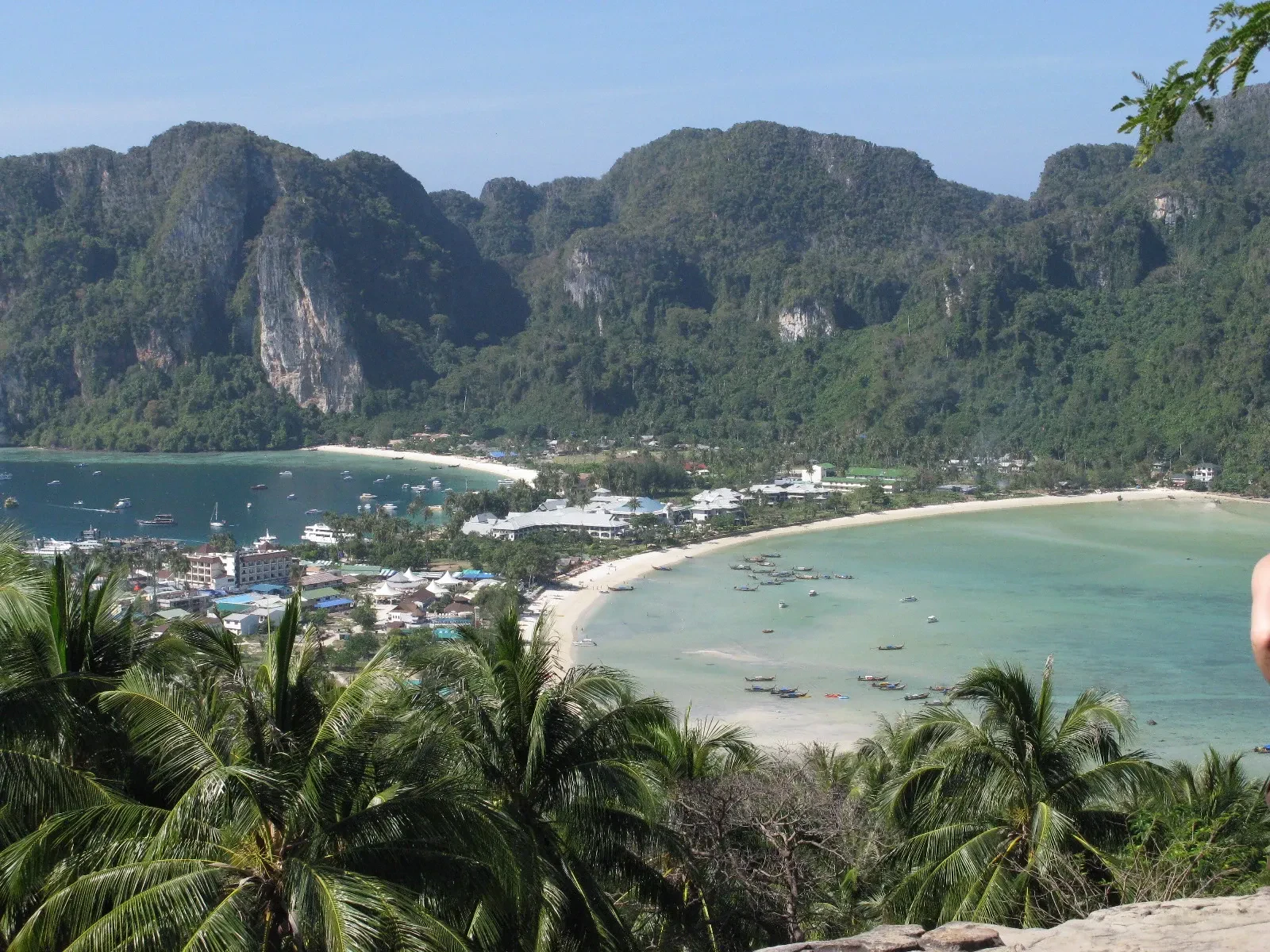
A day trip to the Phi Phi islands, including Maya Bay, runs by speedboat from Phuket's piers, with the crossing itself taking about 45 minutes to an hour each way. A full day, door to door, usually runs 7 to 8 hours. Group tours with lunch start from around 1,600 baht for a budget operator, up to 3,000 to 4,000 baht for a more comfortable speedboat, plus the Phi Phi national park fee (listed at 400 baht for a foreign adult). Maya Bay is on the standard route. It closes each year for the monsoon and reopened on 1 October 2026. Boats no longer anchor on its beach and swimming in the bay isn't allowed (visitors wade no deeper than the knee), so plan your swim stop elsewhere. If you'd rather stay a night or two on Phi Phi itself instead of a day trip, see the onward ferries below.
Phang Nga Bay and James Bond Island
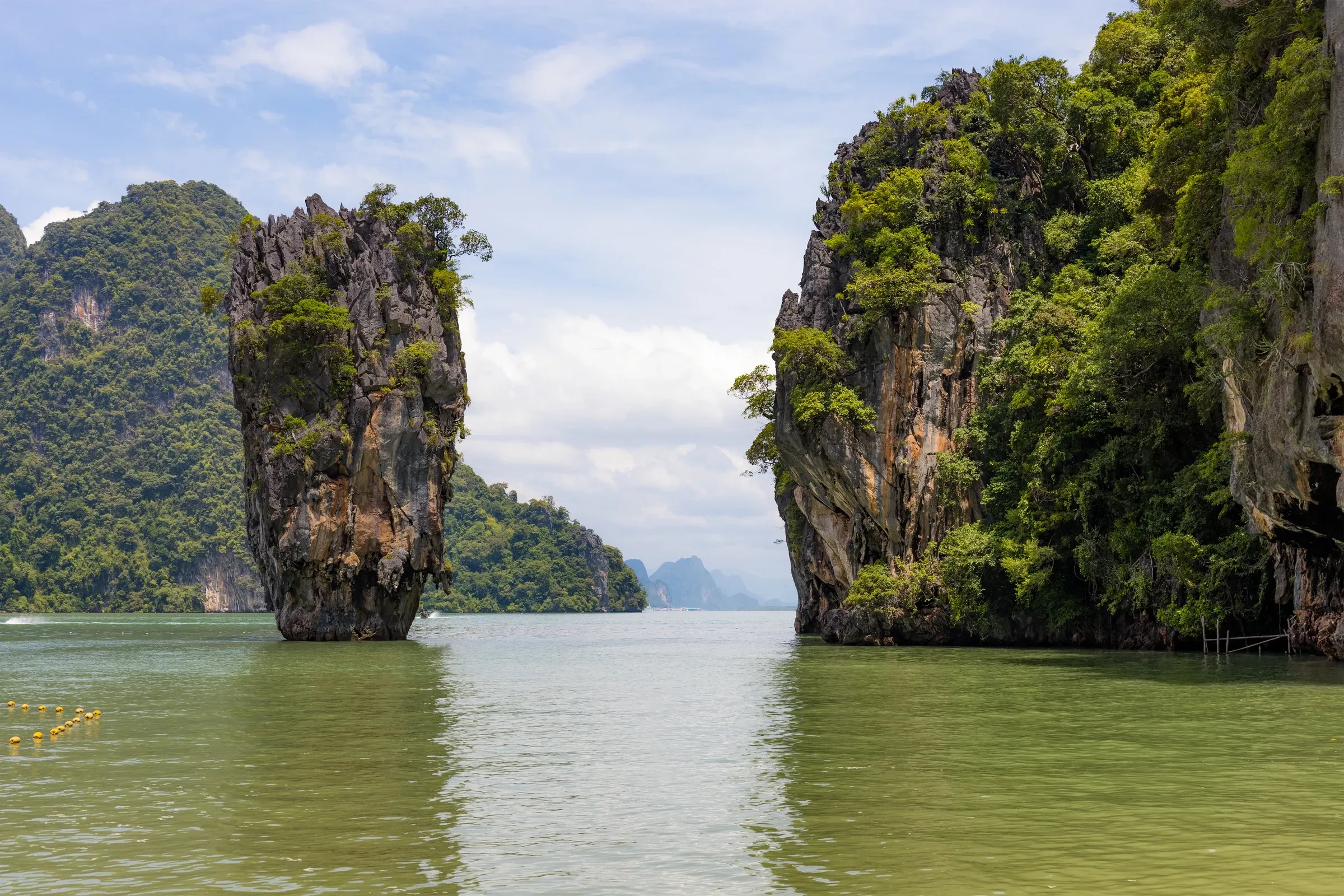
Phang Nga Bay's limestone karsts, the floating village of Koh Panyi and the small island used in the 1974 Bond film The Man with the Golden Gun (still known locally as James Bond Island) are a half or full day out from Phuket, usually with sea kayaking and lunch included. Budget longtail tours from about 1,200 to 1,800 baht; faster speedboat tours that add a few more islands cost roughly 1,500 to 2,400 baht.
The Similan Islands, in season
The Similan Islands are a national park of granite islands about 60 to 65 km north-west of Phuket, best known for diving and clear water, and they close completely for the monsoon, roughly mid-May to mid-October. The park sets the dates each year (in 2026 it closed from 16 May to 15 October), so check before you book. Most boats leave from a pier near Khao Lak, itself about 2 hours or more from Phuket by road, so a Similan day trip is a long one: expect to be travelling or on the water for most of the day. A two-dive diving day trip from Phuket costs from about 4,900 baht plus the park fee; our Thailand diving guide has more on courses and prices. If diving isn't the plan, a snorkelling or sightseeing day trip covers the same islands at a similar price. Given the distance, a lot of divers prefer a multi-day liveaboard out of Phuket or Khao Lak instead of a single long day trip.
The Phuket Vegetarian Festival
For nine days every autumn, mostly in Old Town, Phuket's Chinese community marks the Vegetarian Festival with processions, pierced-cheek mediums in a trance, and yellow-flagged food stalls selling vegan "jay" food. In 2026 it runs from 10 to 18 October. Our Phuket Vegetarian Festival guide covers the dates, what happens and how to watch respectfully. It falls right at the tail end of the rainy season on this coast, so bring a rain jacket if you're going.
Onward ferries from Phuket
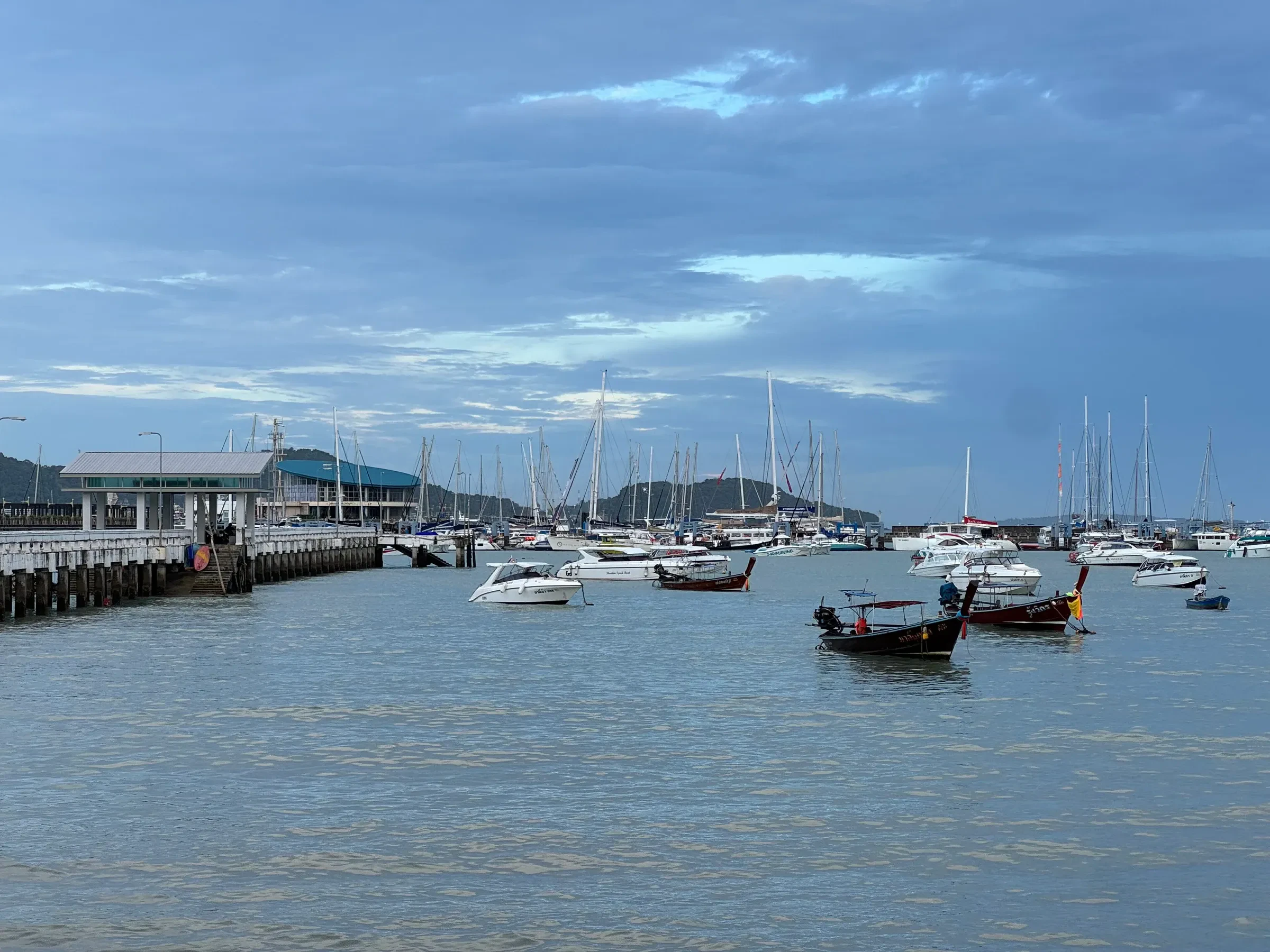
Phuket's Rassada Pier is a hub for ferries down the Andaman coast, mostly running from November to April, when the sea is calmest:
| To | About | Frequency |
|---|---|---|
| Krabi (Ao Nang / Railay piers) | About 1.5 to 2.5 hours | Several times daily in high season |
| Koh Phi Phi | About 1 to 2 hours | Several departures daily; speedboat fares are listed at roughly 350 to 500 baht, slower ferries less |
| Koh Lanta (Saladan Pier) | About 1.5 to 2.5 hours | Daily in high season |
Book a few weeks ahead in the busiest months (roughly December to February). From June to September, many of these routes run far less often, or stop altogether, because of the southwest monsoon, so check current sailings rather than assuming a route runs.
Best time to visit Phuket
Phuket is best from November to April, calmest and clearest from December to March. From May to October the southwest monsoon brings rough seas, red flags on the beaches and much heavier rain. Our best time to visit Phuket guide goes month by month, including the specific dates the Similan Islands are open.
Is Phuket safe for solo travellers?
Mostly, yes, with one risk worth taking seriously: the sea itself. Phuket's west-coast beaches, especially Karon, Kata, Patong and Kamala, see tourist drownings every monsoon, from May to October, when rip currents run strong and red flags fly. In June 2025, three people drowned within two days at Kata, Karon and Bang Tao (Khaosod English, 11 June 2025). A red flag means swimming is banned, not "be careful", even if the water looks calm from the sand. Stay out of the water on a red-flag day, whatever it looks like.
The other everyday risks are the same as the rest of the country: scooter crashes are common on the island's hillier roads, and the FCDO warns about drink spiking and unmetered transport scams in tourist areas. Our Thailand safety guide has more.
Phuket and our trips
None of our current Thailand trips spend the night in Phuket. Southern Thailand: Khao Sok & Andaman, Thailand Islands Hopper and our Railay rock climbing trip all use Ao Nang, Krabi and Phi Phi as their Andaman bases instead, and the routes that cross to the Gulf side do it with a direct flight from Krabi rather than through Phuket's airport. If Phuket's day trips are what you're after, Phi Phi and Phang Nga Bay's islands are the same ones these trips visit from the Krabi side.