Backpacking Thailand means moving through the same country more slowly and more cheaply than a set-length trip, with room to change your plans once you're there. If you already know exactly how many days you have, our 1-week, 10-day, 2-week and 3-week itineraries give you a fixed day-by-day plan. This guide is for a longer, looser trip: how much time to give it, one route that works well, what it costs, and how to get around.

How long do you need to backpack Thailand?
Three weeks covers the north and one coast properly. A month is the sweet spot for most backpackers, since it adds a second coast, a diving course, or a border run into Laos without rushing. Six weeks or more starts to feel like living somewhere rather than travelling through it, and at that point a lot of people settle into one island or city for a stretch instead of moving every few days.
A sample month-long route
This isn't a fixed itinerary, since the point of backpacking is changing it as you go, but it's a solid shape to start from.
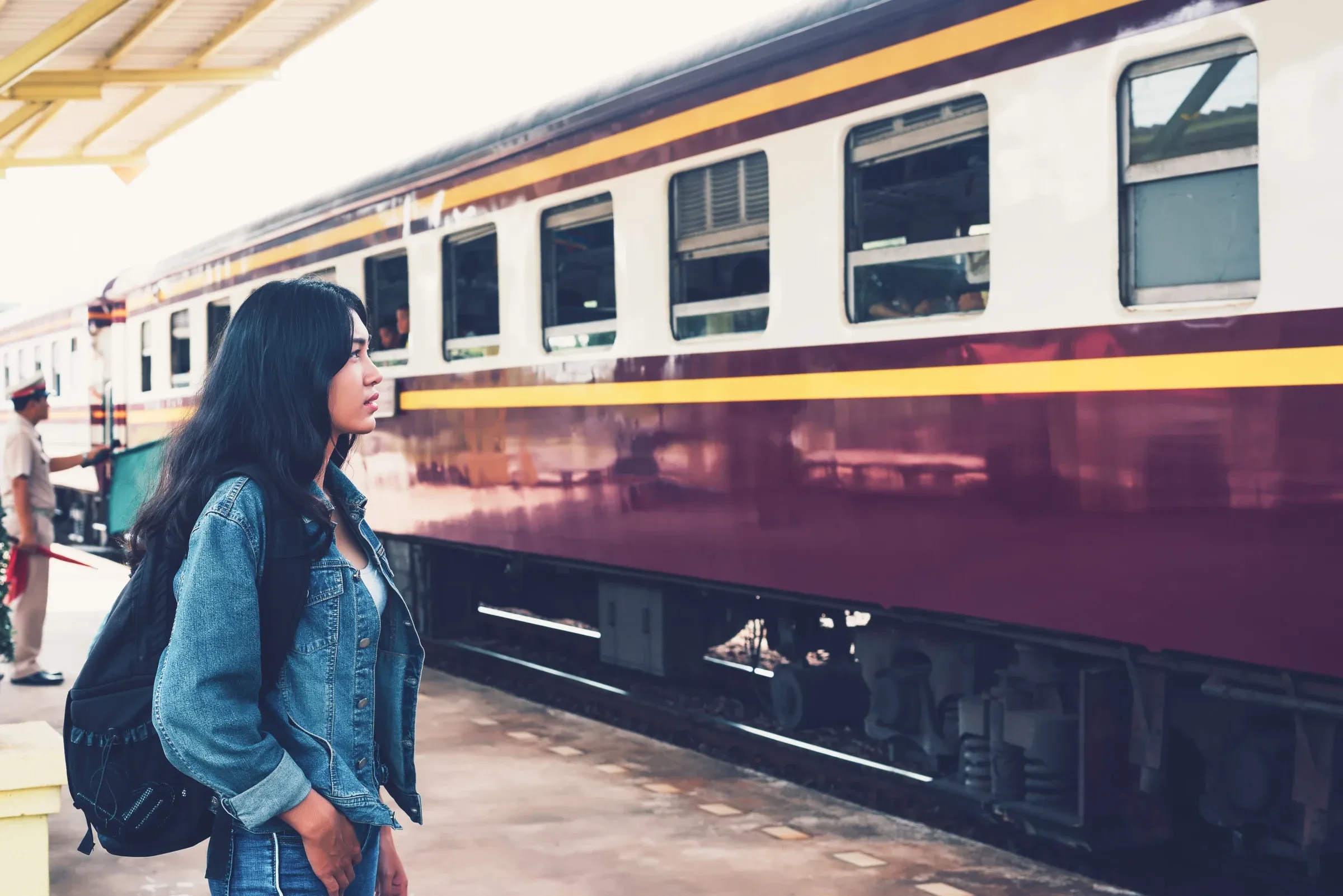
Week 1: Bangkok and the north. A couple of days in Bangkok, then the overnight sleeper train to Chiang Mai (about 940 to 1,040 baht for a 2nd-class berth, so check D-Ticket for today's fare; tickets go on sale up to 180 days ahead) for the Old City, an observation-only elephant sanctuary and a cooking class.
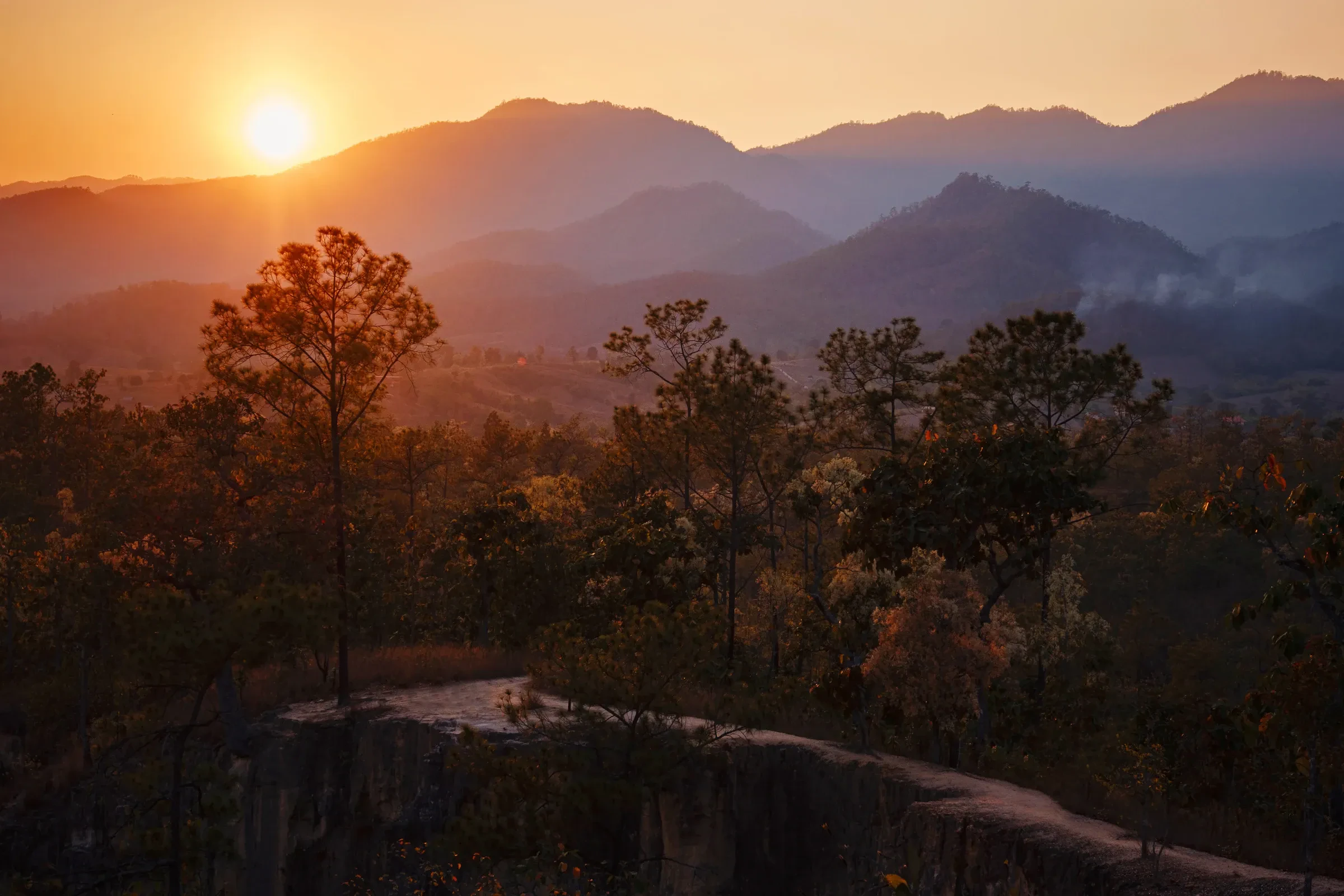
Week 2: Pai, and Chiang Rai if you have time. A shared minivan up to Pai (about 150 to 360 baht, 3 to 4 hours) for canyon sunsets and hot springs, then either loop back to Chiang Mai or push on to Chiang Rai for the White and Blue Temples before heading south.
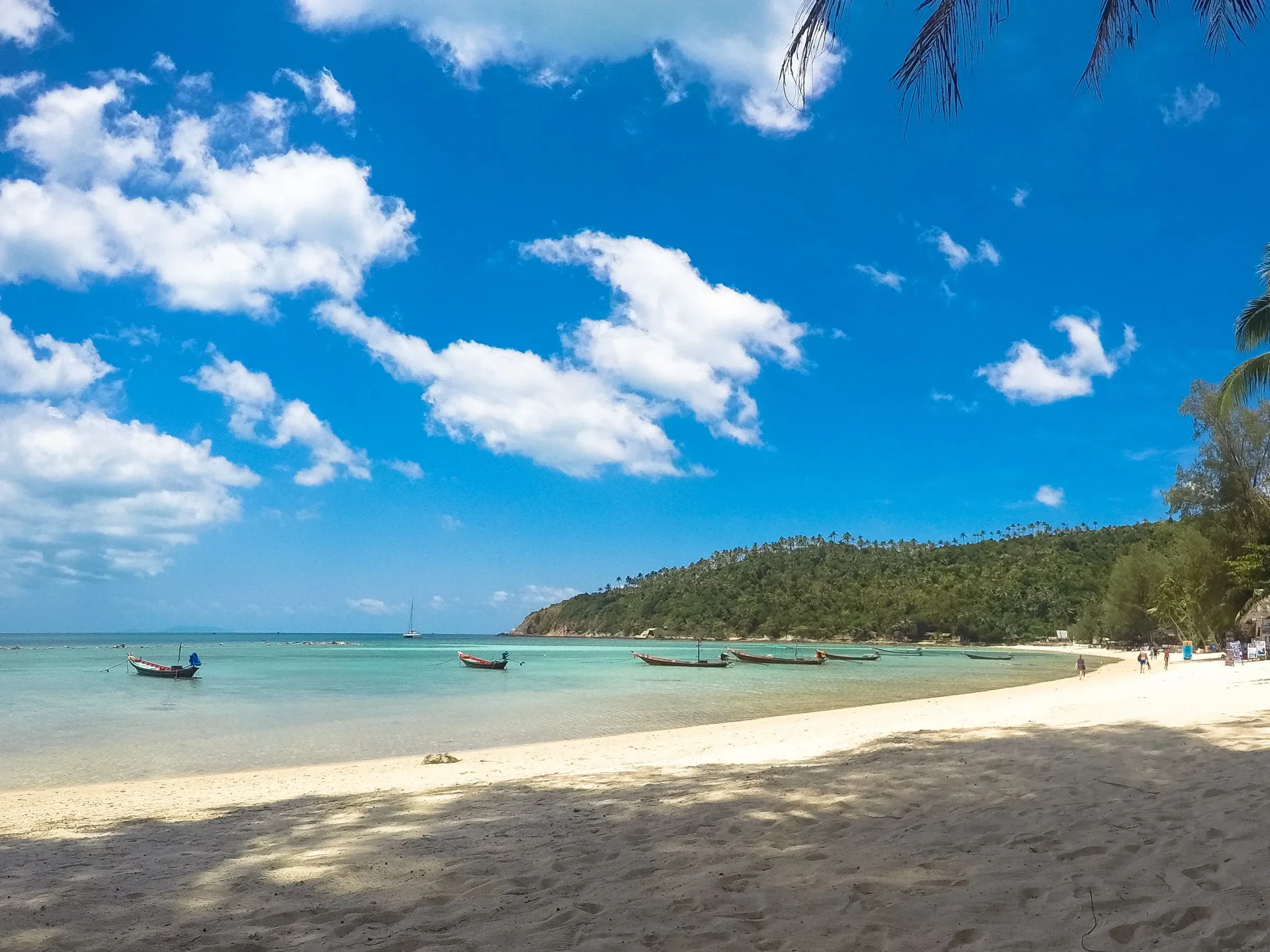
Week 3: pick a coast. Fly south to the Gulf islands (Koh Tao for diving, Koh Phangan for beaches and the Full Moon Party) or the Andaman coast (Krabi, Koh Lanta, Phi Phi). From January to April, when both coasts are dry at once, our island hopping guide covers combining them in one trip.
Week 4: go further, or slow down. Popular options: a PADI Open Water course on Koh Tao (about 3 to 3.5 days), a second island you didn't get to, or a border run. Passport holders from the UK, US, Canada, Australia, New Zealand, Ireland, every EU country and India get 30 days visa-free (cut from 60 on 15 September 2026), so a trip longer than a month needs a one-time extension (1,900 baht at any immigration office) or a Laos add-on: fly Chiang Mai to Luang Prabang, which has direct flights on Lao Airlines and Bangkok Airways, and come back down through the country by land. Our Laos guide has more on that crossing.
What backpacking Thailand costs
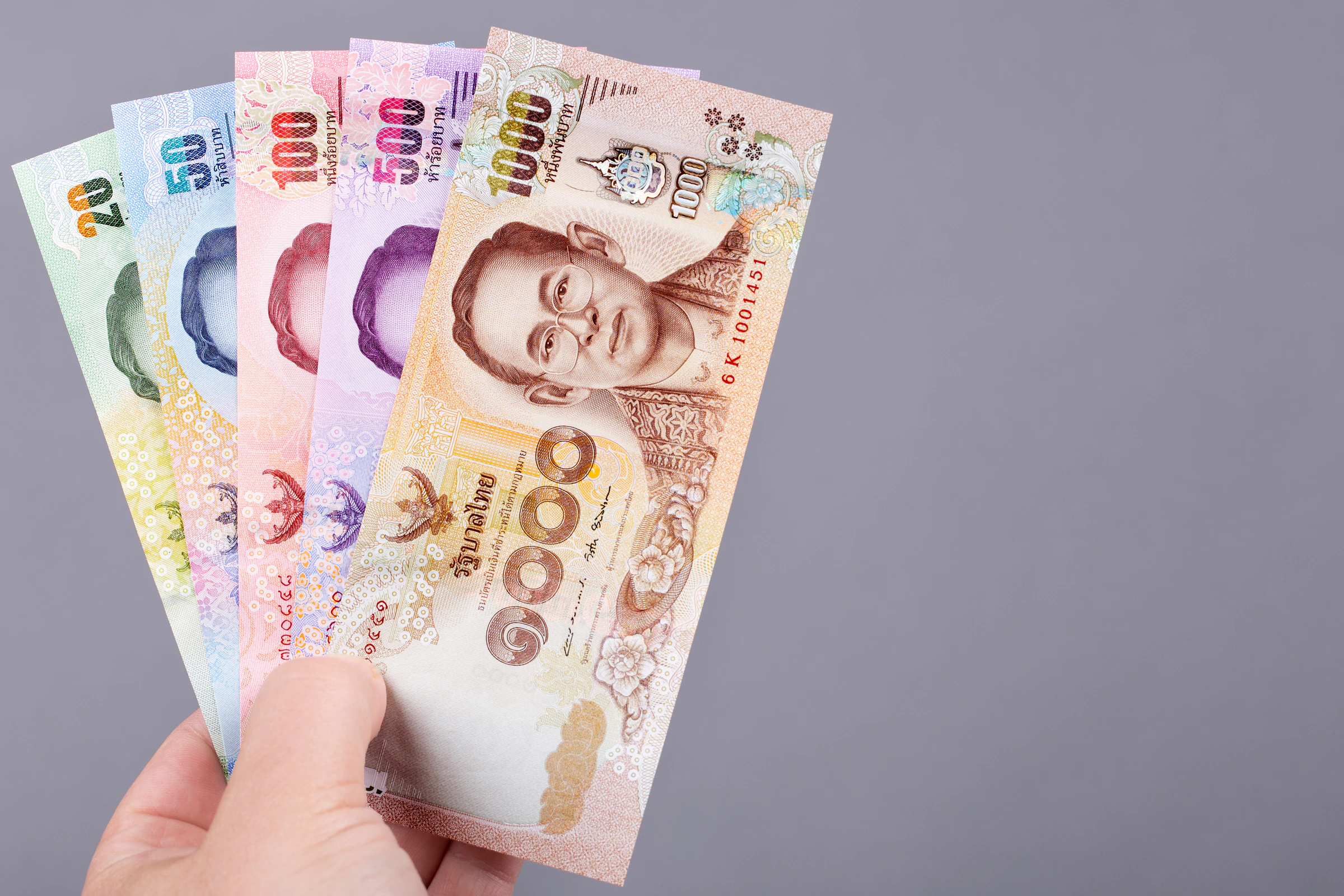
Outside your bed, most backpackers spend about 1,000 to 1,500 baht a day on food, drinks and local transport, and dorm beds run from about 150 baht at the cheapest hostels up to 700 baht or more at social hostels on the islands and in Bangkok. Add your big transport legs (the sleeper train, any domestic flights, ferries) and activities (a dive course, Ang Thong Marine Park, which usually closes from about 1 November to mid-December, Muay Thai) on top. Our Thailand cost guide breaks the whole budget down by region.
Getting around
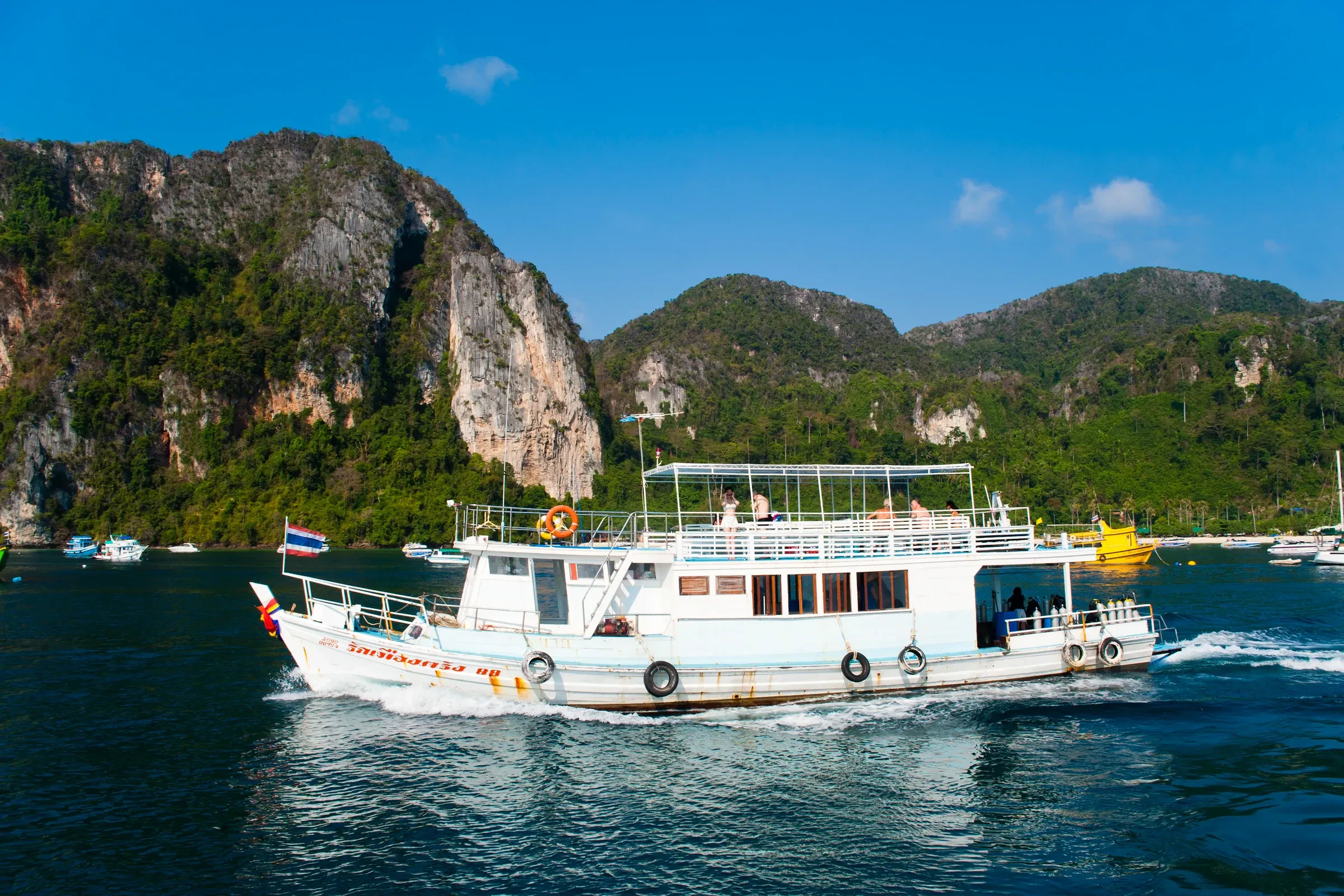
The sleeper train from Bangkok to Chiang Mai is worth building a route around, since it saves a hotel night and is comfortable in its own right. Minivans cover the shorter mountain routes. Budget airlines (AirAsia, Nok Air, Thai Lion Air) connect the regions fast when a bus would eat a whole day, and ferries link the main islands. Our Thailand travel guide has the detail on times and prices for each leg.
Where to stay
Social hostels are the backbone of a backpacking trip, both for the price and for meeting people on the same route. Book ahead in peak months (mid-December to February, and July and August on the islands); elsewhere you can usually turn up and find a bed. Our hostels in Thailand guide covers where to stay area by area.
Staying safe
The ordinary risks of Thailand apply on a longer trip too: scooter crashes are the biggest one, followed by spiked or methanol-laced drinks around parties. Ride legally if you rent a scooter, and buy sealed drinks. Our Thailand safety guide covers the rest.
What to pack
Pack light and pack for hot, humid weather with a few cool nights in the mountains. Our Southeast Asia packing list covers what to bring and what to leave at home.
Best time to backpack Thailand
Mid-December to about 20 February is the best window for a route that mixes the north and the islands. June to August is a good second choice if you're pairing the north with the Gulf islands. The trickiest months are about February to April (smoke in the north) and November (monsoon on the Gulf islands). Our best time to visit Thailand guide goes month by month.
Prefer it planned, not backpacked
If you like this kind of route but would rather not book every train, flight and ferry yourself, our 21-day Thailand Complete trip runs a similar loop through the north and both coasts with a Trip Host and every connection sorted. Carrying on to Indonesia afterwards? Bangkok to Bali links Thailand and Bali in one 21-day booking.