What makes Chiang Rai special
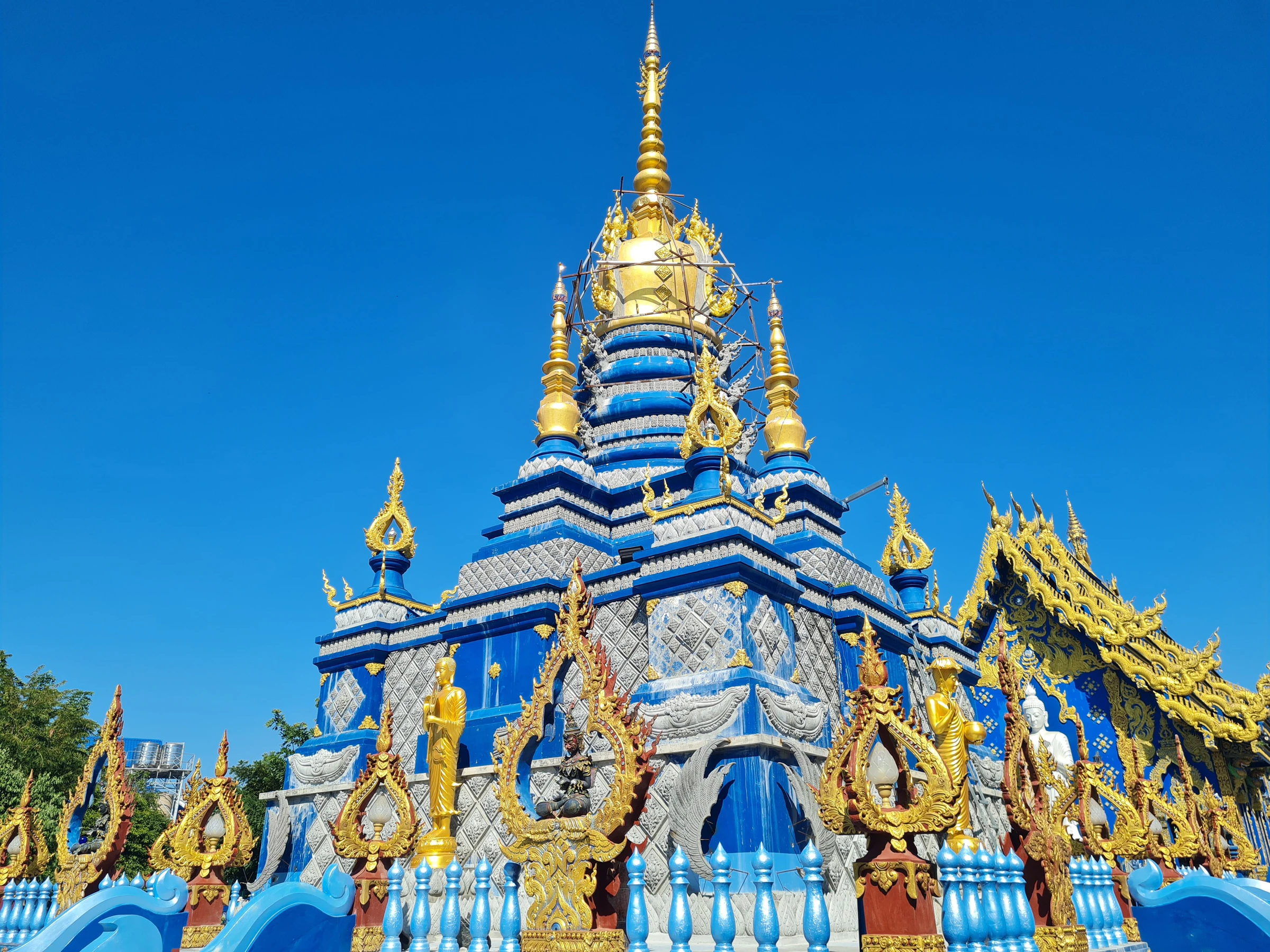
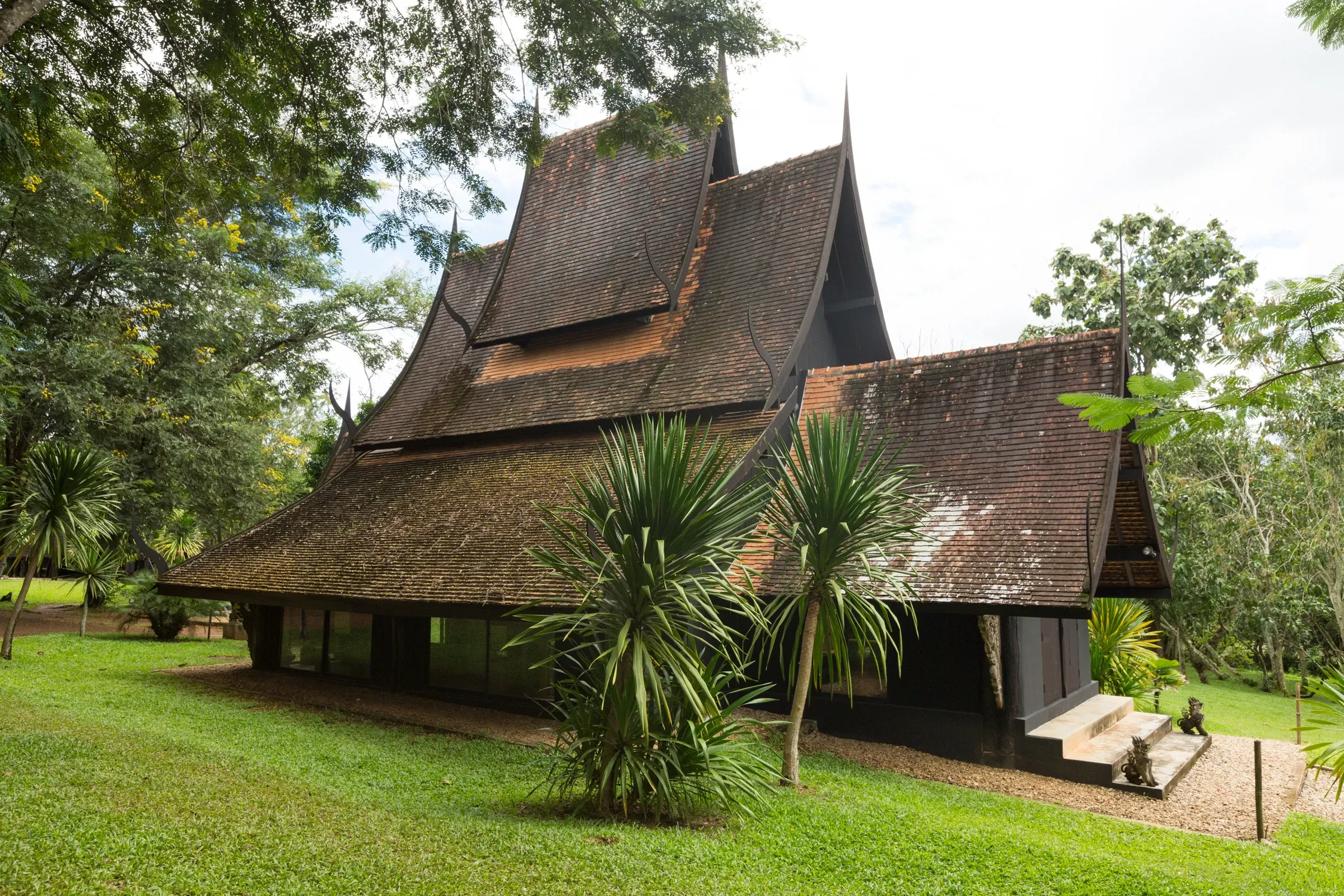
Chiang Rai gets lumped in with Chiang Mai as a stop on the same northern loop, but its temples are a different thing entirely: contemporary work by living artists rather than centuries-old Lanna wats. Wat Rong Khun's mirrored white plasterwork, Wat Rong Suea Ten's sapphire-blue interior and the late Thawan Duchanee's dark, bone-and-horn Black House are all 20th and 21st-century artist projects, and Wat Rong Khun is still being added to. North of town, the Golden Triangle marks the spot where Thailand, Laos and Myanmar meet along the Mekong, once a hub of the regional opium trade and now visited for river boat rides and its border market. The hills further out hold Doi Mae Salong, a Yunnanese village settled by Chinese Nationalist soldiers after 1949, and the tea plantations that grow in its cooler air.
Where to go within Chiang Rai
The White Temple (Wat Rong Khun)
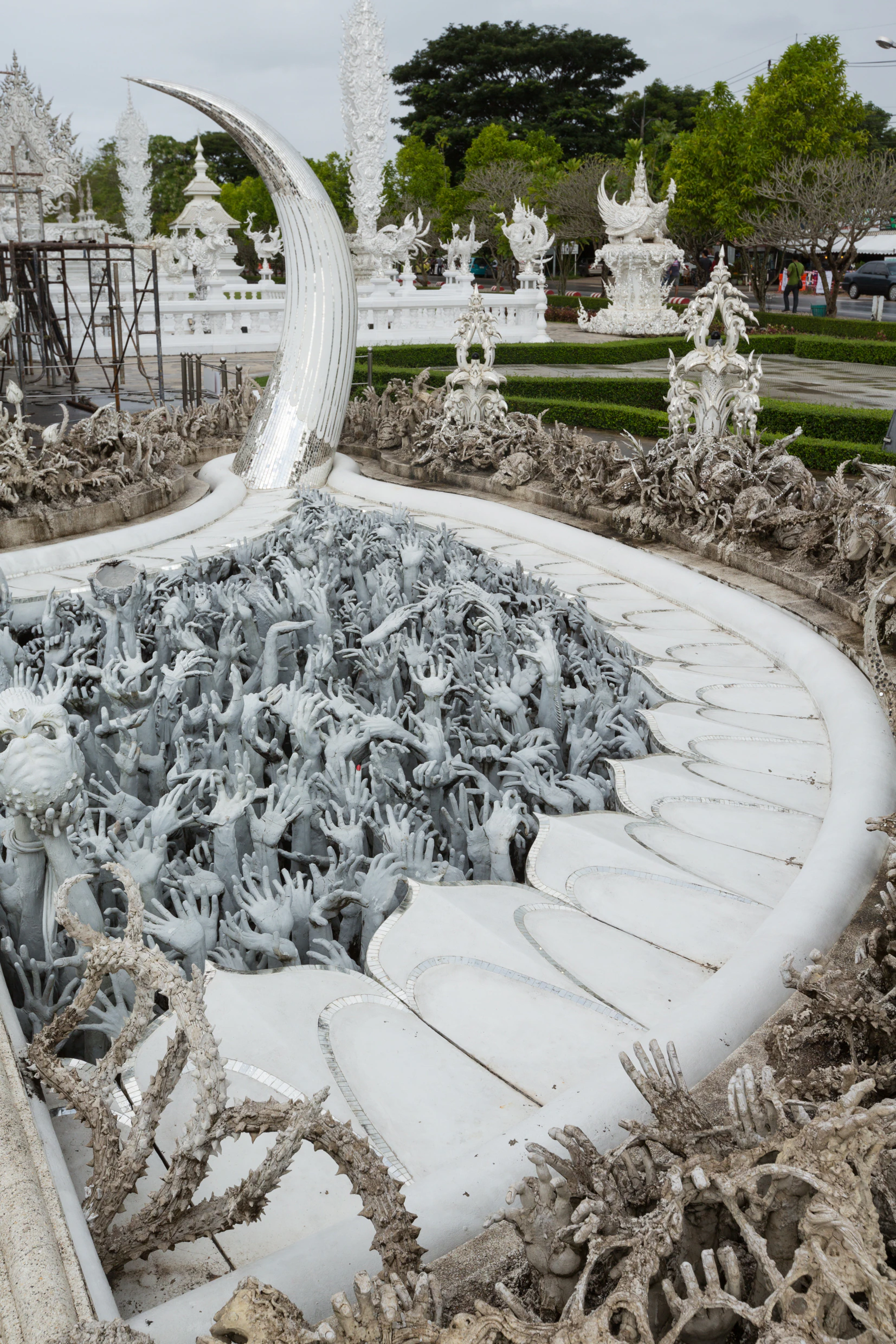
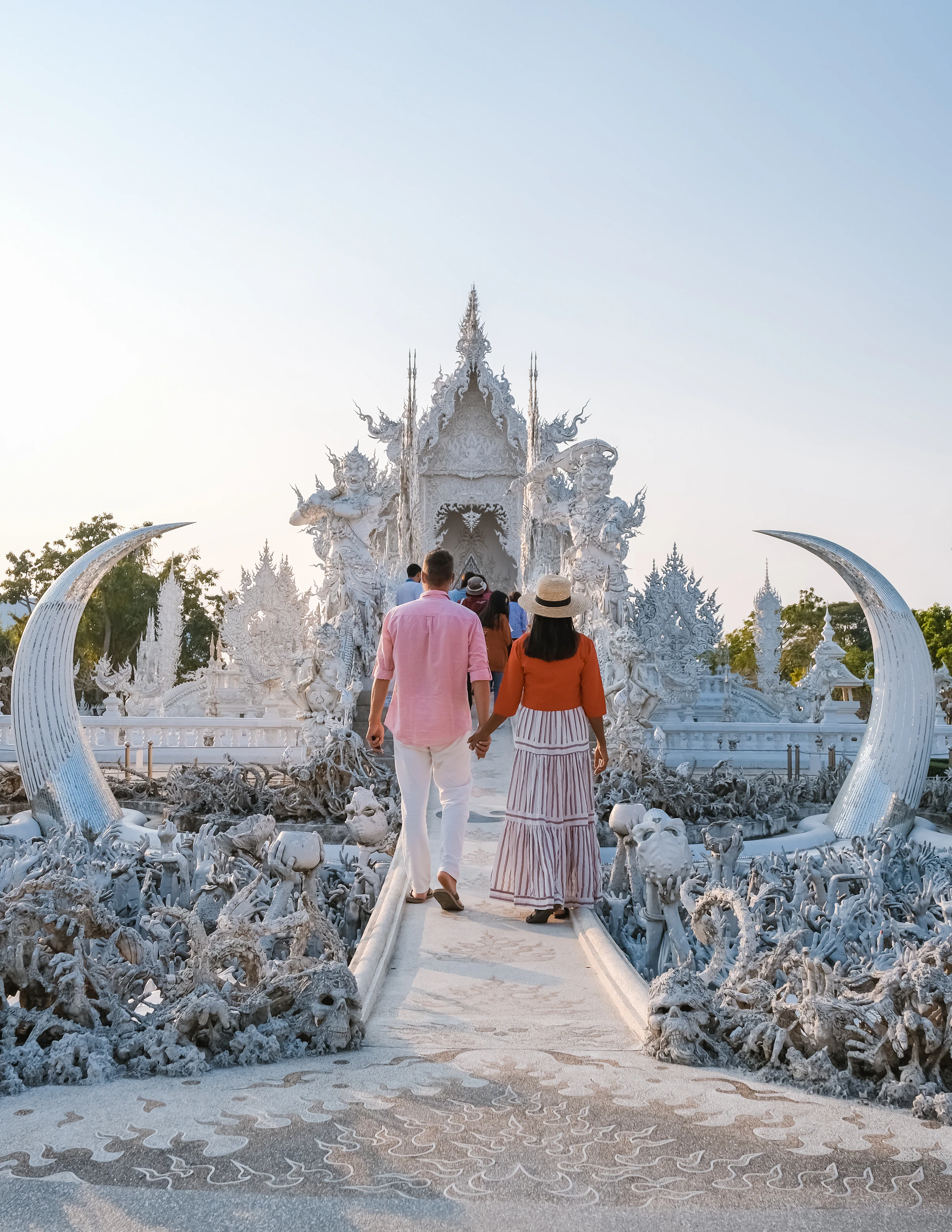
Chiang Rai's best-known sight is a working Buddhist temple, entirely reimagined in white plasterwork and mirrored glass by artist Chalermchai Kositpipat, who is still adding to it. The approach crosses a bridge over a field of reaching hands, meant to represent desire and human suffering. Entry is 200 THB (doubled from 100 THB on 1 January 2026), free for over-70s and children under 120cm tall. It's open daily from 8am to 5:30pm. The dress code is enforced: shoulders and knees covered, no vests, tank tops, shorts or short skirts, and shoes off before the main hall; sarongs can be rented at the gate if you turn up underdressed. Coach tours from Chiang Mai tend to land around 10am, so aim for opening time on a weekday if you want the grounds to yourself. Give it an hour to 90 minutes.
The Blue Temple (Wat Rong Suea Ten)
A short trip north of the centre, this temple is still under construction and relies on donations, so entry is free (though a donation is welcomed). It's open daily from 7am to 8pm, with a deep-blue exterior and interior meant to represent the Dharma, the Buddha's teachings. It's smaller and quicker to see than the White Temple: 30 to 45 minutes is enough.
The Black House (Baan Dam)
Not a temple but an artist's estate: the late Thawan Duchanee's property of around 40 dark timber and concrete buildings, filled with animal skulls, horns, hides and tribal artefacts he collected. It's a stranger, quieter counterpoint to the White Temple, a few minutes north of town. Entry is 80 THB, and it's open from 9am to 5pm with a break for lunch around midday. Sources disagree on whether it also closes on Mondays, so check ahead if that's the only day you have free. Give it an hour to 90 minutes.
The Golden Triangle and Chiang Saen
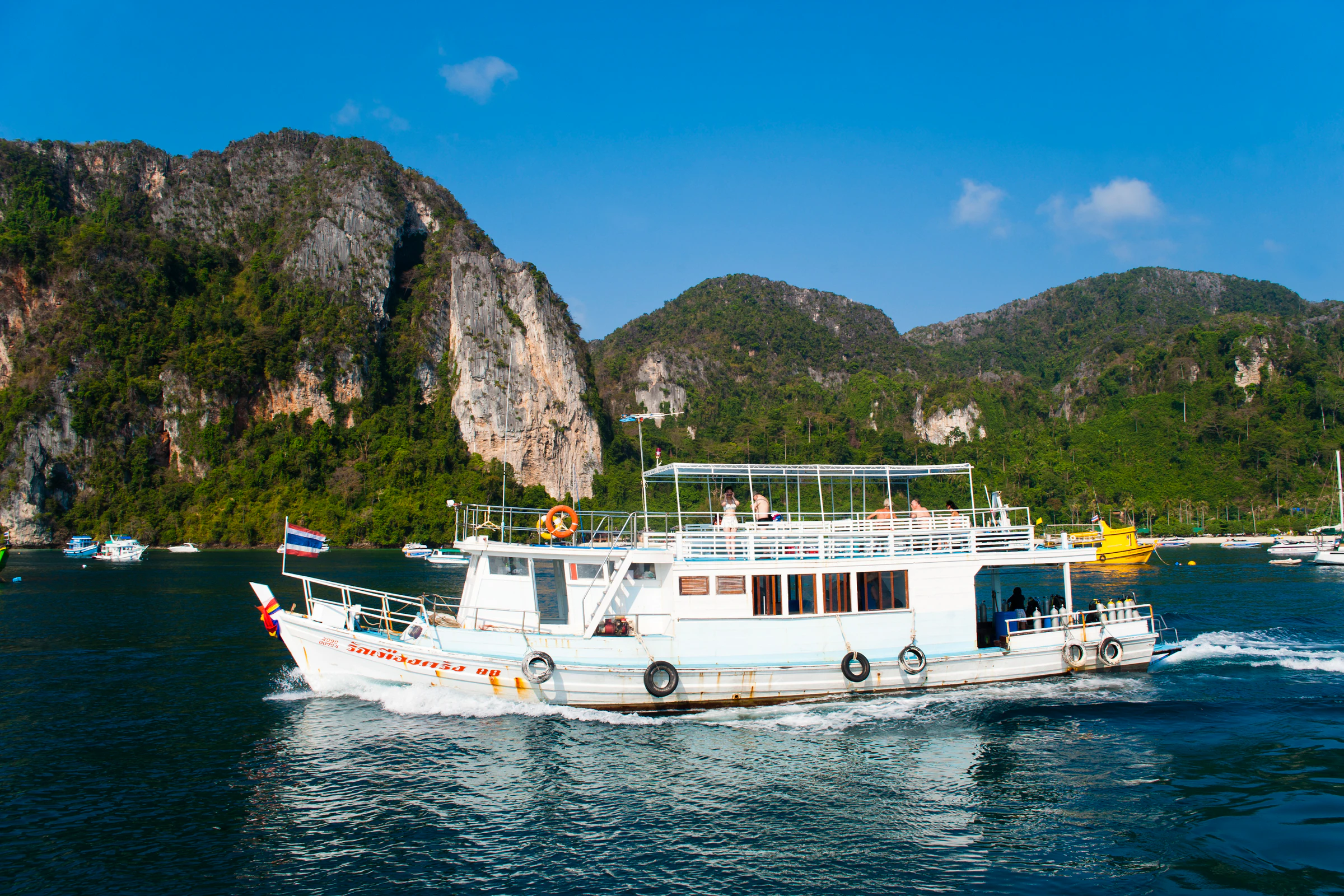
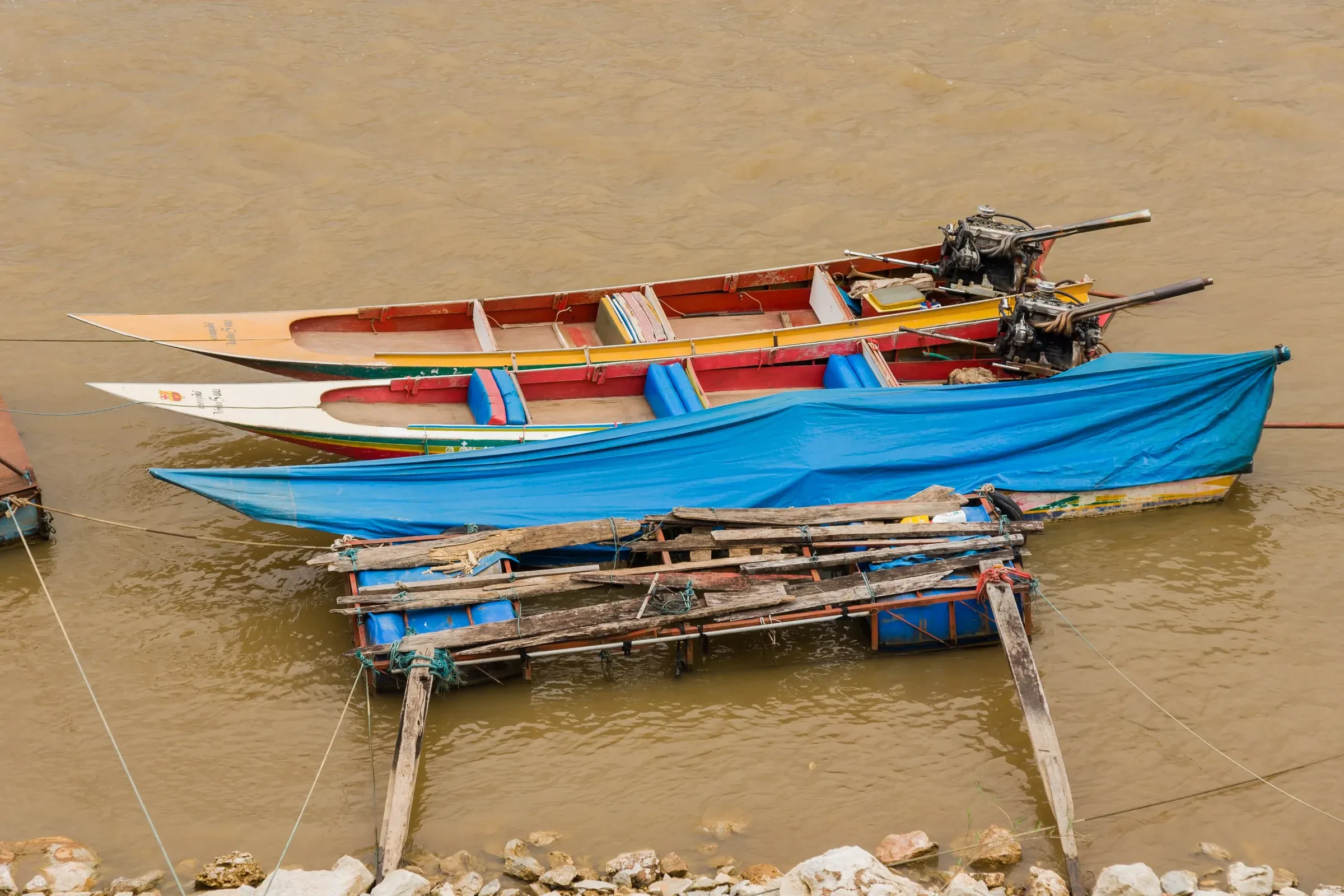
About 70km north of Chiang Rai (1 to 1.5 hours by road), the Golden Triangle is the point where Thailand, Laos and Myanmar meet along the Mekong, a name that comes from the region's opium-trading past rather than anything visible today. From the boat landing at Sop Ruak, longtail boats run short 20 to 30-minute loops past the riverbanks of all three countries, or a longer run of about 90 minutes up to the old walled town of Chiang Saen, with ruined temples dating back to its founding in the 13th century. It works as a half day on its own, or a full day combined with Chiang Saen.
Singha Park
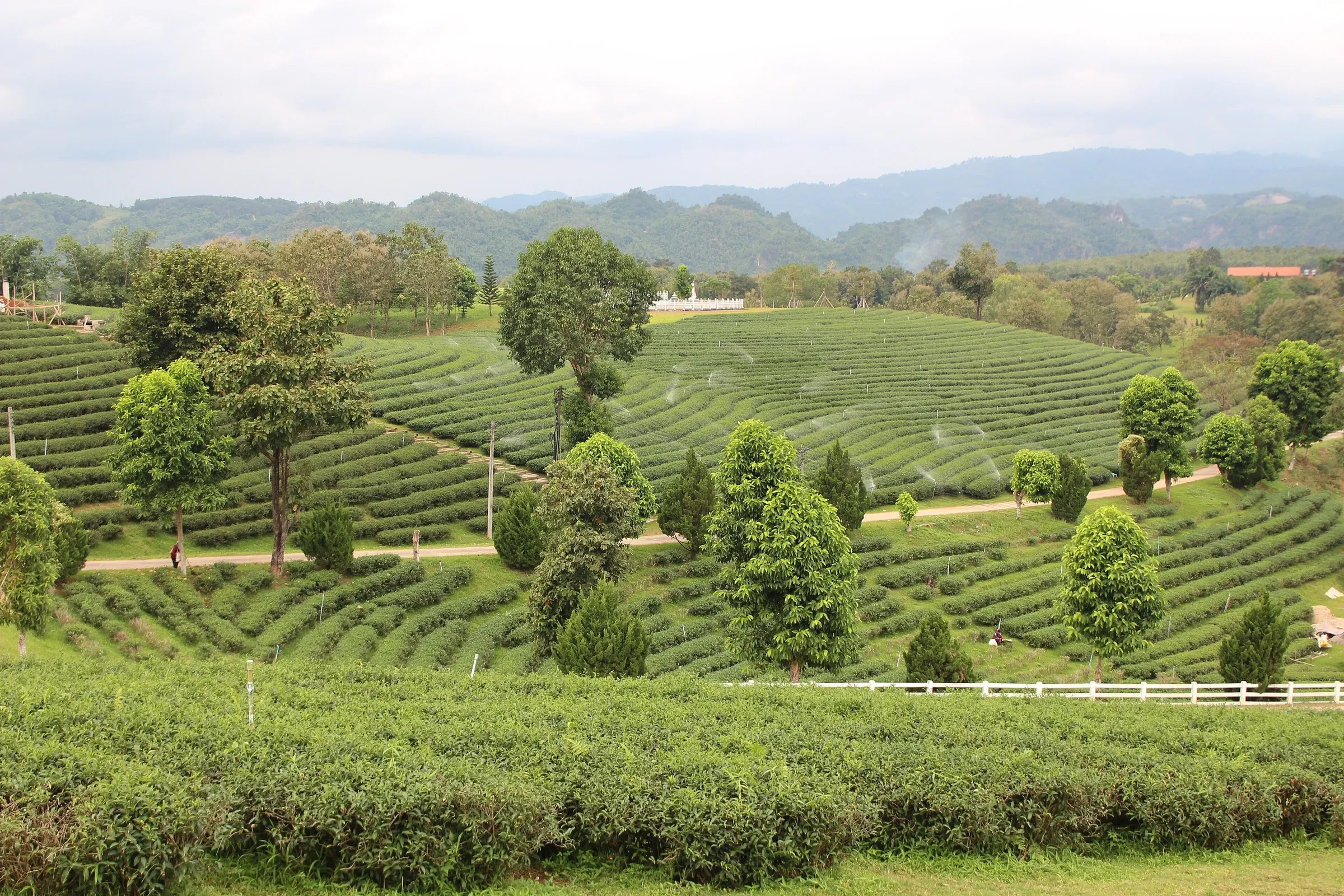
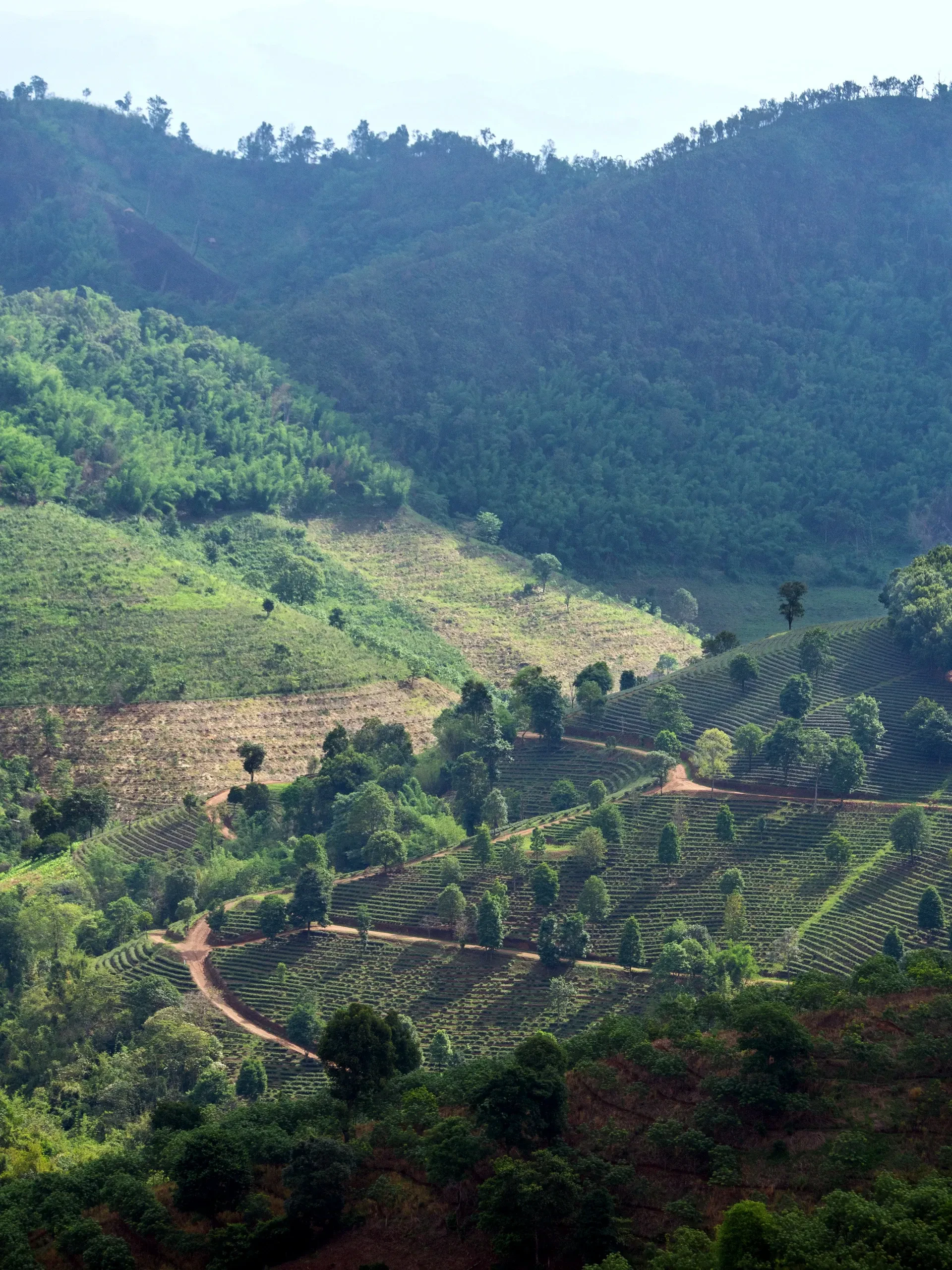
A working tea and strawberry farm turned visitor attraction on the edge of town, best known for the rolling green tea terraces that show up in most Chiang Rai photo sets. Entry to the park is free; the sightseeing tram that loops around the farm runs 9am to 4pm and costs 150 THB for adults, 50 THB for children under 110cm. Bike, e-bike, golf cart and ATV rental are also available if you'd rather explore at your own pace. Allow 2 to 3 hours.
Doi Mae Salong's tea plantations
A mountain village about 1.5 hours' drive from Chiang Rai, settled by soldiers from the Chinese Nationalist army after 1949 and still distinctly Yunnanese in its food and culture. The cool hills around it grow some of Thailand's best tea, with Choui Fong and the 101 Tea Plantation the two best-known estates for a walk through the rows and a tasting. By public transport, take a bus from Chiang Rai's terminal to the Mae Chan junction (about 45 minutes), then a shuttle or tuk-tuk for the climb up route 1130. It's far enough out that it works best as a half-day detour if you're driving, or an overnight if you want to linger in the cooler air.
What to eat
Look for nam prik ong, a northern Thai tomato and chilli dip eaten with raw vegetables and sticky rice, at any local restaurant in town. Chiang Rai's night bazaar, near the clock tower, is the easiest spot for a first taste alongside grilled meats and other northern Thai stalls.
Best time to visit
November to January is the clearest, coolest window, with the best visibility for the Golden Triangle's river views and Doi Mae Salong's hills. Avoid February to April, especially March, when agricultural and forest burning across the region sends smoke and PM2.5 into the hazardous range. Chiang Rai sits inside the same haze belt as Chiang Mai and Pai, and in March 2026 readings in parts of Chiang Rai province reached the very unhealthy range. The monsoon (June to October) brings green scenery and fewer crowds, with less effect here than on Pai's mountain roads.
Getting there and around
Chiang Rai is a day-trip distance from Chiang Mai. Green Bus runs frequent daily departures from Chiang Mai Bus Terminal 3 to Chiang Rai Bus Terminal 1, taking about 3 to 3.5 hours. Fares start at about 260 THB for the express and run to about 400 THB or more for VIP seats. Chiang Rai also has its own airport (Mae Fah Luang - Chiang Rai International) with flights back to Bangkok, useful if you'd rather not double back through Chiang Mai. Once there, the White Temple and the Black House sit south and north of the old town, a short songthaew or ride-hailing trip from the centre. The Golden Triangle and Doi Mae Salong are far enough out that a half or full-day tour, or a rented car, makes more sense than public transport.
How long to spend, and which route to use
A day trip from Chiang Mai covers the White Temple and Blue Temple comfortably, with the Black House if you start early, but it's a long day: about 7 hours on the road there and back. One night lets you add the Golden Triangle or Singha Park without the rush, and two nights fit in Doi Mae Salong as well. Our northern Thailand itinerary builds Chiang Rai in as an overnight stop after Chiang Mai and Pai, over 1 week or 10 days. If you'd rather ride there yourself, the Mae Hong Son Loop is a separate motorbike route that returns to Chiang Mai without passing through Chiang Rai at all.
Keep planning
Read our Chiang Mai guide and Pai guide for the rest of the northern loop, and the northern Thailand itinerary for how Chiang Rai fits into a 1-week or 10-day route. Riders looking for a different way back to Chiang Mai should see the Mae Hong Son Loop. For food across the region, see our Thai food guide, and check Thailand entry requirements before you book flights.