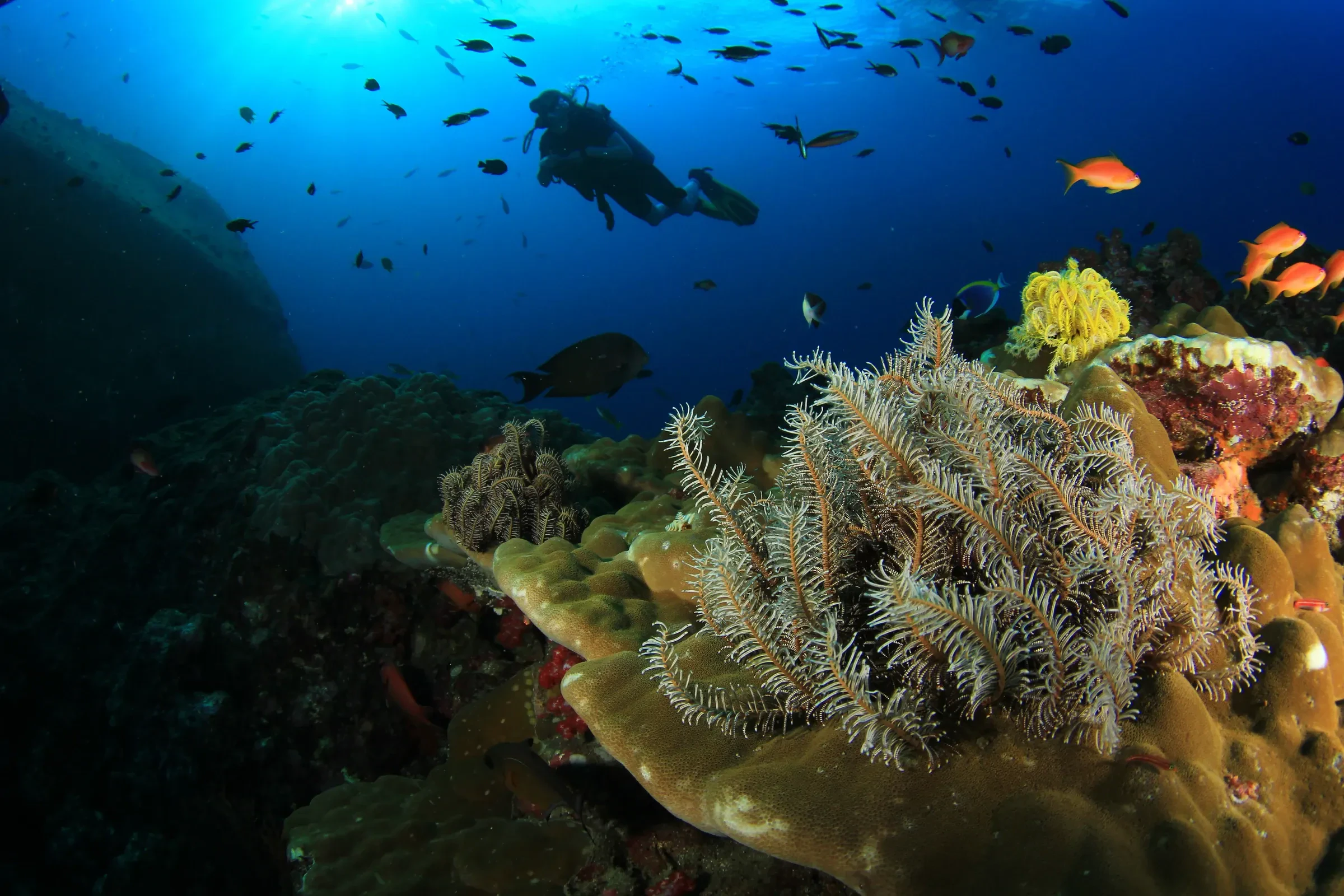
Thailand has two very different diving coasts, and the trick is matching the one you pick to the month you're travelling. The Gulf side has Koh Tao, one of the world's busiest and cheapest places to get certified, plus day trips to Sail Rock from Koh Samui. The Andaman side has Phuket's own reefs close by and, in season, liveaboards out to the Similan Islands and Hin Daeng and Hin Muang further south.
This guide covers both coasts: where to dive, what a course or a day of diving costs in 2026, and when to go. If you're set on Koh Tao specifically, our Koh Tao diving guide goes into the dive sites and course details for that island.
Which coast should you dive: the Gulf or the Andaman?
It depends on the month and what you want. The Gulf of Thailand (Koh Tao, Koh Samui, Koh Phangan) is calm from February to September, cheap, and the easiest place in the country to learn from scratch. The Andaman coast (Phuket, Krabi, the Similan Islands) is calm from November to April, and it's where the deeper, more dramatic sites and the liveaboards are. The two seasons barely overlap, so pick your coast around when you're travelling, not the other way round.
| Gulf of Thailand | Andaman coast | |
|---|---|---|
| Main bases | Koh Tao, Koh Samui | Phuket, Khao Lak, Koh Lanta |
| Best season | February to September | November to April |
| Good for | Learning to dive, cheap courses | Liveaboards, deeper and more remote sites |
| Signature sites | Chumphon Pinnacle, Sail Rock | Similan Islands, Hin Daeng and Hin Muang |
| Worst months | November (monsoon) | May to October (monsoon) |
Diving in the Gulf of Thailand: Koh Tao, Koh Samui and Koh Phangan
Koh Tao: the region's dive island
Koh Tao has dozens of dive schools, warm and usually calm water, and dive sites a short boat ride from the beach, which is why it's one of the world's busiest places to learn. A PADI Open Water course takes about three to three and a half days and costs roughly 9,500 to 12,500 baht, often with a few nights' accommodation thrown in. The best-known sites, Chumphon Pinnacle, Sail Rock (shared with Koh Phangan and Koh Samui, below), Japanese Gardens and Shark Island, all suit certified divers, while Japanese Gardens and the shallower bays are also used for the Open Water course itself. Read the full Koh Tao diving guide for course prices, dive sites and how to choose a school.
Koh Samui diving
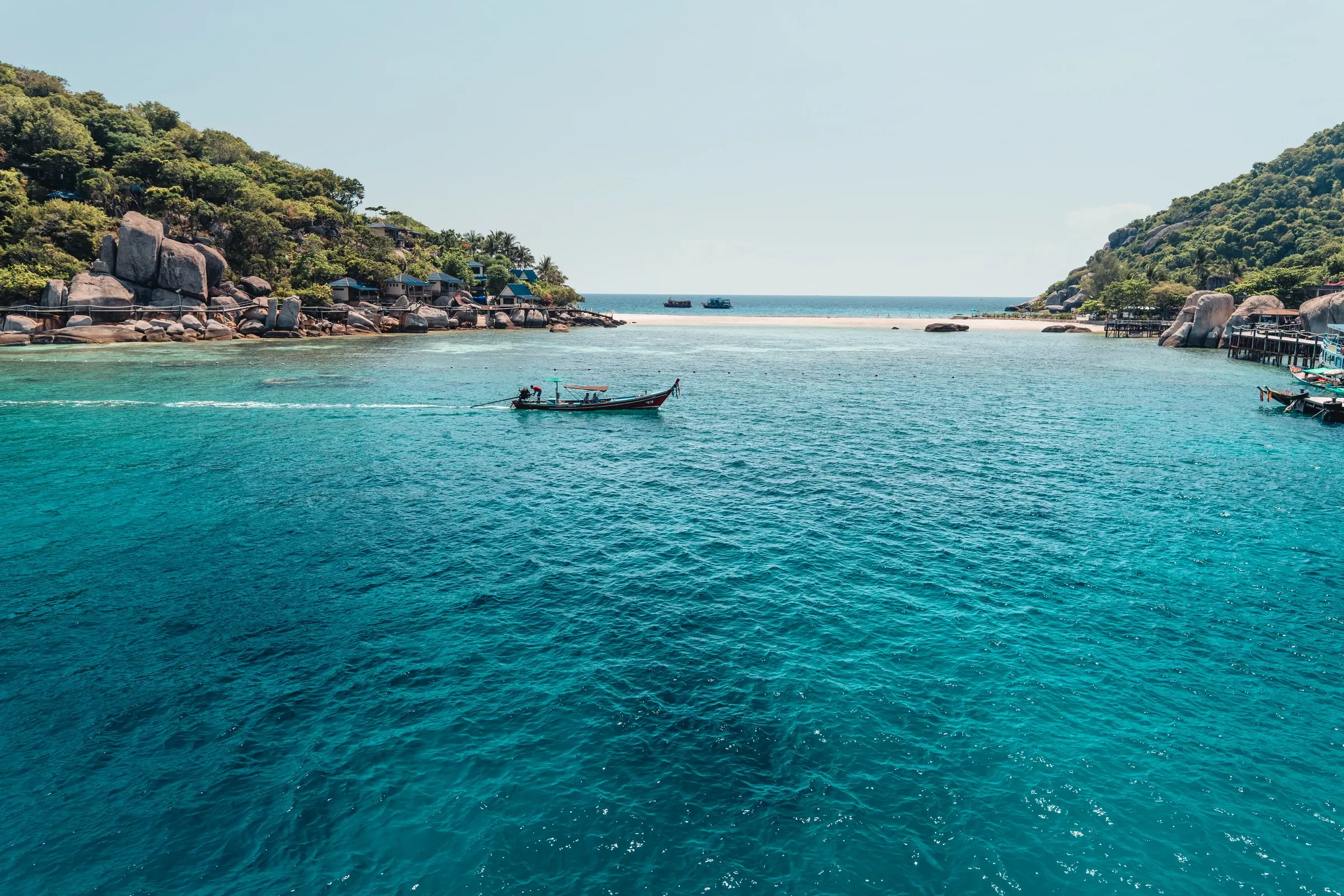
Koh Samui has a handful of dive schools, but far fewer dive sites of its own than Koh Tao, so most Samui-based diving is a day trip out to Sail Rock (Hin Bai), a granite pinnacle in open water between Koh Tao and Koh Phangan that rises to about 15 metres above the surface and drops to around 40 metres below it. Its "Chimney," a vertical swim-through you enter at about 16 metres and exit at 6, is the reason divers rate it as one of the best single sites in the Gulf, along with the barracuda. Whale sharks are seen here now and then, though no operator can promise one. A two-dive day trip from Samui costs from about 4,650 baht, including lunch and hotel transfers, though pickups from the west or south of the island often add a fee. Some Samui-based schools also run the Open Water course, from about 12,500 to 20,000 baht, sometimes by taking you across to Koh Tao for the confined water and sea dives, so ask exactly where you'll be training before you book. Our Koh Samui guide covers the rest of the island.
Koh Phangan and Ang Thong
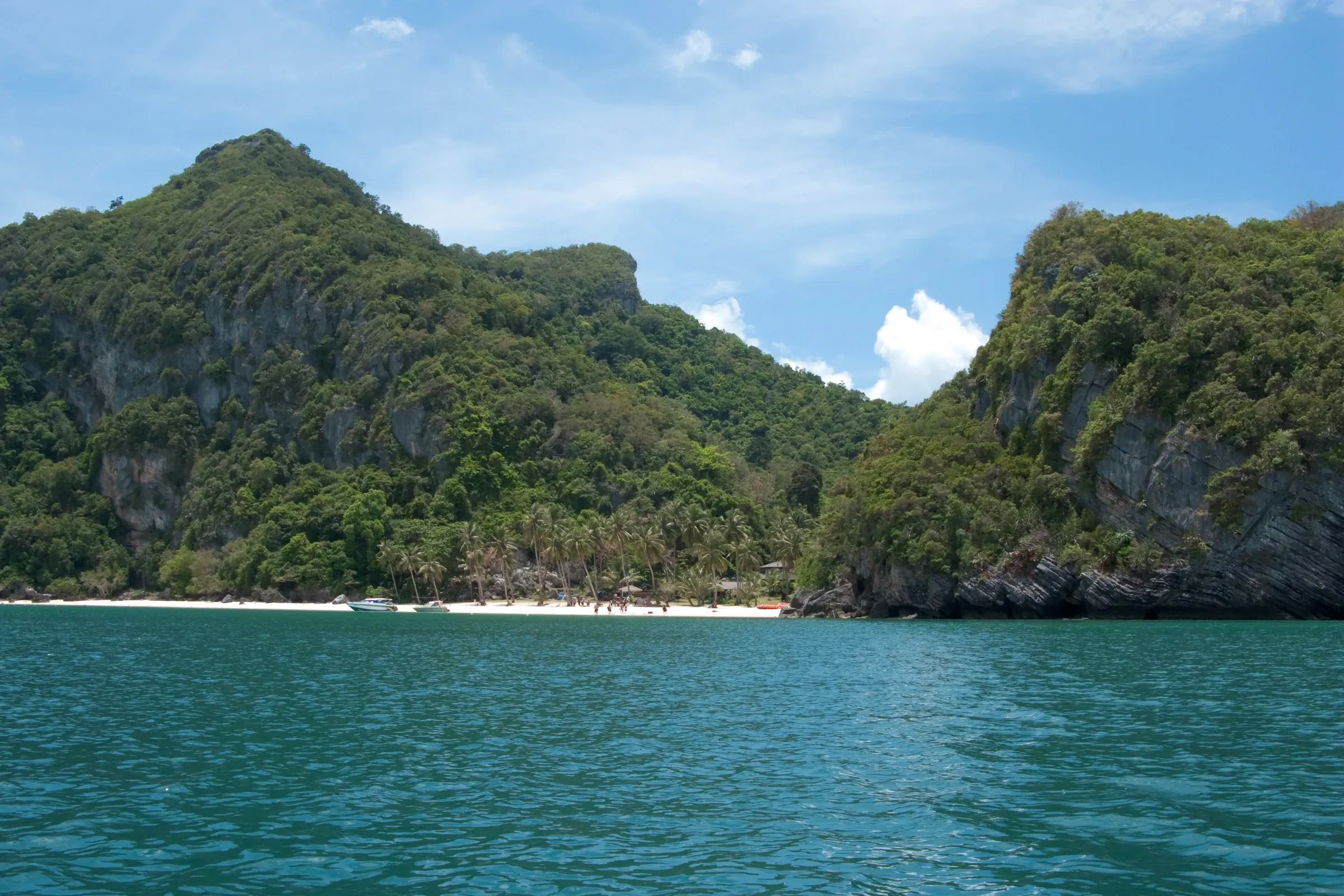
Koh Phangan sits between Koh Tao and Koh Samui and shares Sail Rock as its main dive site, reached by boat from Chaloklum or Thong Sala. It isn't set up for courses the way Koh Tao is, so most people dive here as a stop on the way between the two, or stick to snorkelling at Koh Ma and Ang Thong Marine Park. See the Koh Phangan guide for the snorkelling spots and Ang Thong's boat trips.
Diving on the Andaman coast: Phuket, the Similan Islands and Hin Daeng
Phuket day trips: Racha, Phi Phi and Shark Point
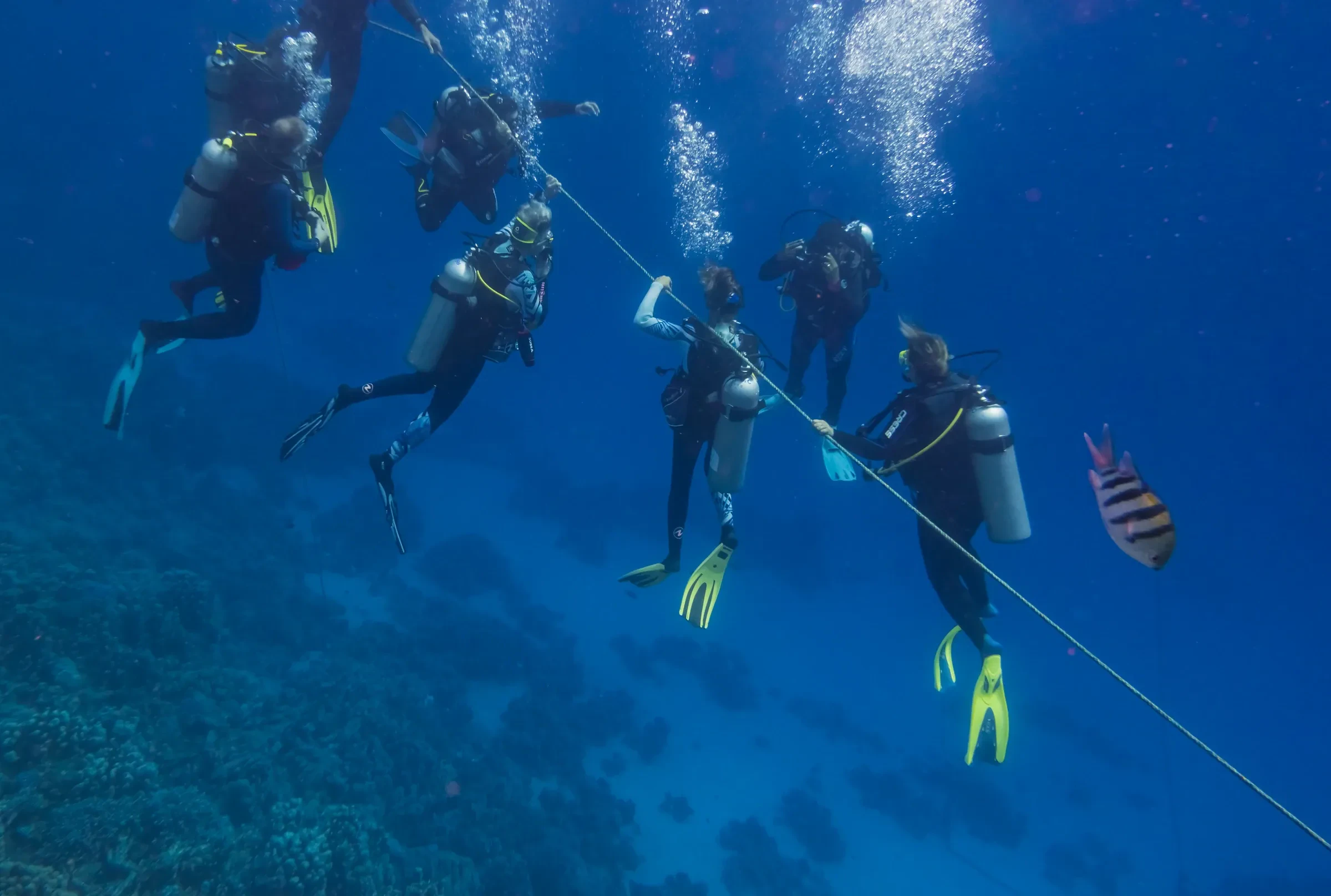
Phuket's own dive sites are close enough for a day trip year-round. Two dives at the Racha Islands, close reefs with good visibility and an easy, current-free profile, cost from about 4,000 to 4,300 baht. A day trip to Phi Phi and Shark Point, which adds swim-throughs and a chance of leopard sharks resting on the sand, costs around 4,400 baht plus a 600 baht national park fee for divers. Both suit newly certified divers as well as more experienced ones. A Discover Scuba try-dive from Phuket starts from about 2,200 baht. It is a supervised introduction to diving, not a certification: only the Open Water course earns you a card.
Similan and Surin Islands: liveaboards and day trips
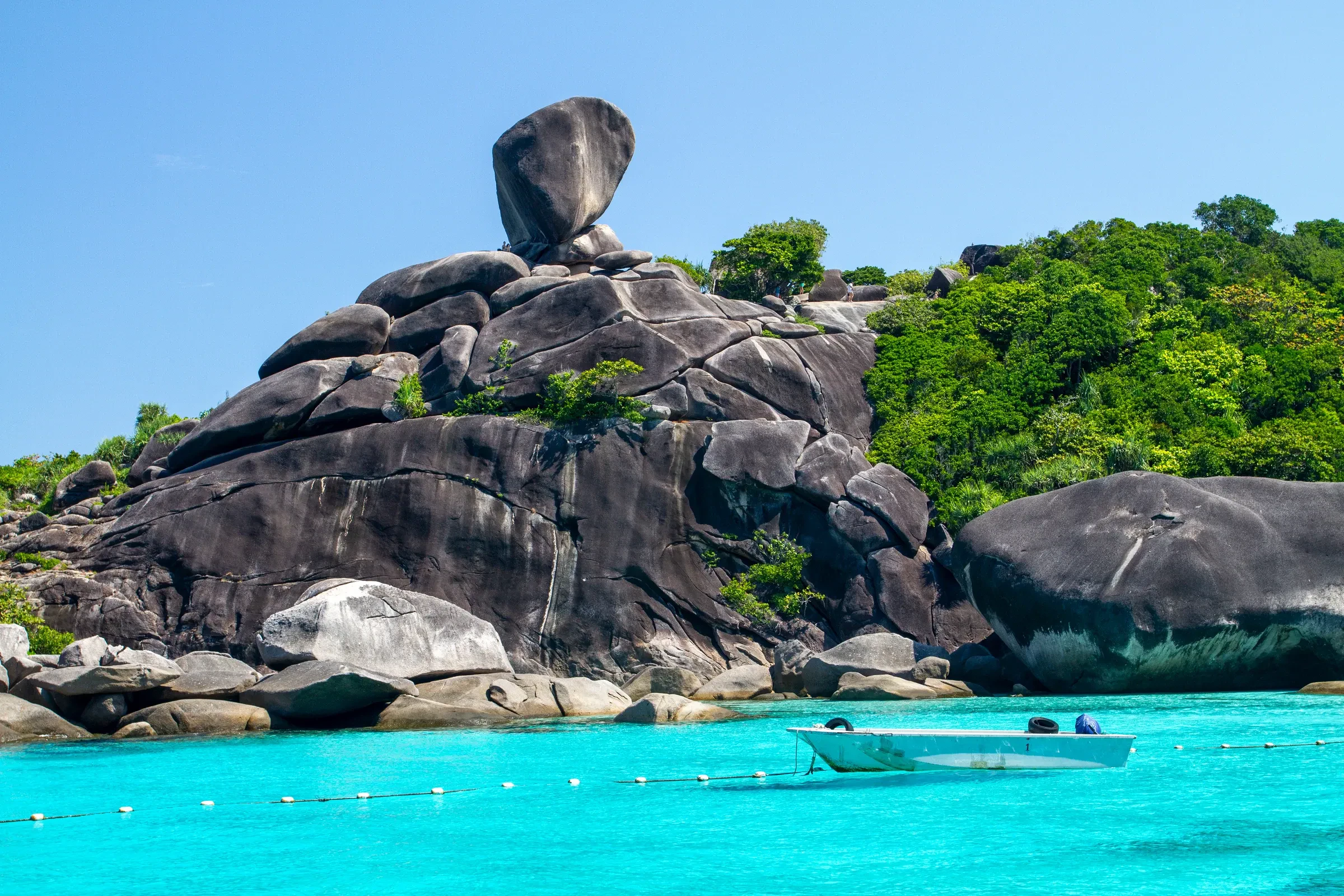
The Similan Islands, a national park of granite islands about 60 km off Khao Lak, have some of Thailand's clearest water and biggest granite boulder-scapes, both above and below the surface. The park (and the smaller Surin Islands further north) is only open from roughly mid-October to mid-May (the park sets the dates each year), and most liveaboards run from around November to April, since the sea either side of that window can still be rough. A two-dive day trip from Phuket costs from about 4,900 baht plus a 700 baht park fee. For more time on the water, a short liveaboard starts from about 13,900 baht for two days and one night from Phuket; longer three to six-night trips that reach Richelieu Rock, one of Thailand's best-rated single dive sites, are usually priced in US dollars or euros. Operator listings range from roughly US$400 on budget boats to US$2,000 or more for six nights on a higher-end boat, so compare what is included.
Hin Daeng and Hin Muang, near Koh Lanta
South of Koh Lanta, Hin Daeng ("red rock") and its neighbour Hin Muang ("purple rock") are two connected pinnacles rated among Thailand's best dive sites, with a wall dropping well past recreational depths, medium to strong currents, and a reputation for manta rays and whale sharks, which operators say turn up most often from February to April. Sightings are never guaranteed. They're a full-day speedboat trip from Koh Lanta or Phuket, or a stop on longer Similan liveaboards heading south. Because of the current, they suit divers who already have a few dives under their belt rather than someone fresh off their Open Water course.
How much does diving cost in Thailand in 2026?
| Where | PADI Open Water course | Fun diving (2 dives) |
|---|---|---|
| Koh Tao | about 9,500 to 12,500 baht | from about 1,800 to 2,500 baht locally |
| Koh Samui | varies by school, so ask for a quote | Sail Rock day trip from about 4,650 baht |
| Phuket | about 9,900 to 17,750 baht, depending on boat dives and transfers | Racha from about 4,000 baht; Phi Phi from about 4,400 baht plus park fee |
| Similan Islands | not usually taught here | day trip from about 4,900 baht plus park fee; liveaboards from about 13,900 baht for 2 days/1 night |
Check exactly what's included before you book: equipment, park or marine fees, lunch, and hotel transfers all vary between schools. Our cross-country diving guide compares Thailand's prices with the Gili Islands, Nusa Penida, Komodo and the Andamans in India.
Marine park and diving fees
Most of Thailand's best dive sites sit inside a national marine park, and the fees are on top of whatever the dive school charges:
- Similan and Surin Islands: 500 baht park entry for adults (250 baht for children), plus a 200 baht diving fee per day for divers, at 2026 rates.
- Phi Phi Islands: 600 baht a day for divers (400 baht park entry plus a 200 baht diving fee). Non-divers pay 400 baht.
- Racha Islands and most Phuket local sites: usually included in the trip price, but check.
Fees change fairly often, so treat these as a guide and confirm with your dive school when you book.
PADI or SSI, and how to choose a dive school
Most Thai dive schools teach PADI, though a few, especially on Phuket, teach SSI to the same international standard. Choose the school and the instructor over the brand or the cheapest price on the board:
- Small groups. Four students per instructor or fewer is ideal.
- Well-kept equipment that fits you properly, and a boat with oxygen and first aid on board.
- Recent reviews that mention instructors by name.
- Honesty about conditions. A good school cancels or reroutes a dive when the sea is too rough, rather than pushing on regardless.
Our PADI Open Water certification guide covers the course itself in detail: how it's structured, the swim test, the medical questionnaire and what Advanced Open Water adds.
Best time to dive in Thailand
| Coast | Best months | Avoid |
|---|---|---|
| Gulf (Koh Tao, Koh Samui, Koh Phangan) | February to September | November, the wettest month, when seas turn rough |
| Andaman (Phuket, Similan, Hin Daeng) | November to April | May to October, the southwest monsoon |
The two seasons are almost exact opposites, which is why a single trip usually means picking one coast rather than both. Our best time to visit Thailand guide has the month-by-month detail for the rest of the country.
Diving on our trips
Our Koh Tao Dive & Islands trip is built entirely around getting you certified: a full PADI Open Water course on Koh Tao with a spare day for bad weather, then two nights on Koh Phangan. Thailand in 2 Weeks spends two nights on Koh Tao as part of a longer route through the north and the Gulf islands, with an optional Discover Scuba session if you'd rather try a single dive than commit to the full course.