A lot of what you'll read online is now out of date. For two years Thailand let most Western visitors stay 60 days without a visa. That ended for anyone entering on or after 15 September 2026, but plenty of blogs still say 60. This page is built from Thai government announcements and current government travel advice, and we re-check it every quarter.
What changed on 15 September 2026
On 31 August 2026 the Royal Thai Government Gazette published four Interior Ministry announcements. Together they scrapped the 60-day visa exemption and replaced it with a 30-day exemption for 60 countries and territories, a 15-day exemption for Mauritius and Seychelles, and a much shorter visa-on-arrival list. The new rules apply to entries from 15 September 2026.
In practice:
- Visa-free stays are now 30 days, down from 60.
- The exemption is for tourism only. Business visitors need a Non-Immigrant "B" visa.
- Visa on arrival is now only for citizens of Azerbaijan, Belarus and Serbia (up to 15 days, 2,000 THB).
- 21 nationalities lost visa-free entry and now need an e-Visa. None of the countries on this page is among them.
- Visa-exempt entries over land (and, according to some official sources, sea) borders are capped at 2 per calendar year.
- What counts is your entry date. If you were admitted before 15 September, you keep the stay stamped in your passport. Booking your flight earlier doesn't protect you.
Sources don't agree on where that 2-entry cap applies. The Tourism Authority of Thailand applies it to land-border checkpoints; the Thai Embassy in Doha and Germany's Foreign Office say land and sea. None of the three caps arrivals by air, and Germany's Foreign Office says immigration decides those case by case. The UK Foreign Office and the Thai Embassy in London word it more broadly ("two entries per calendar year"), so if you plan to fly in and out of Thailand more than twice in one year, check with your Thai embassy before you book.
Visa rules by nationality
| Passport | Visa needed for a holiday? | Stay on arrival | Extension | More detail |
|---|---|---|---|---|
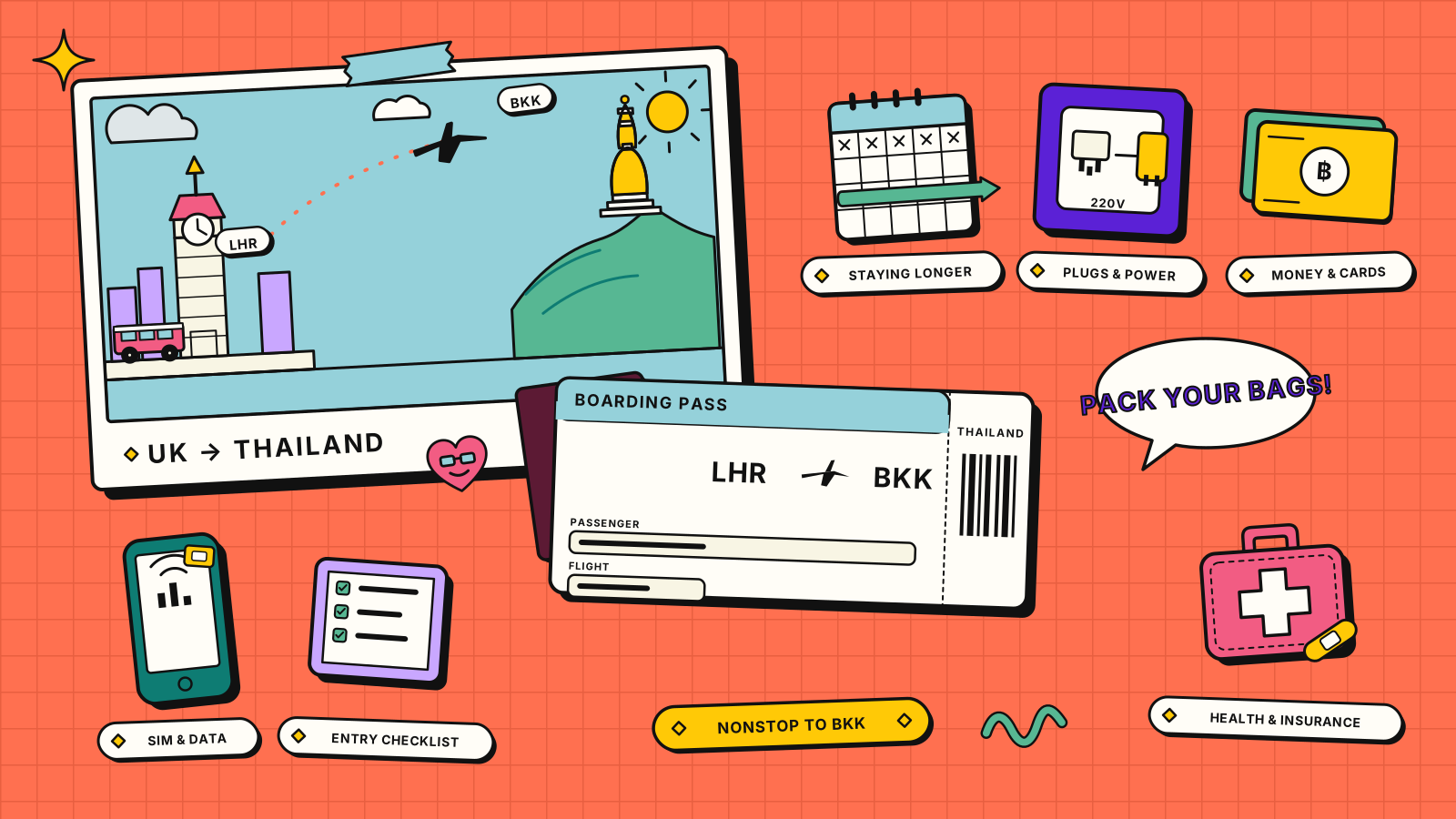
| UK | No (visa-exempt) | 30 days | Once, +30 days, 1,900 THB | Thailand from the UK |
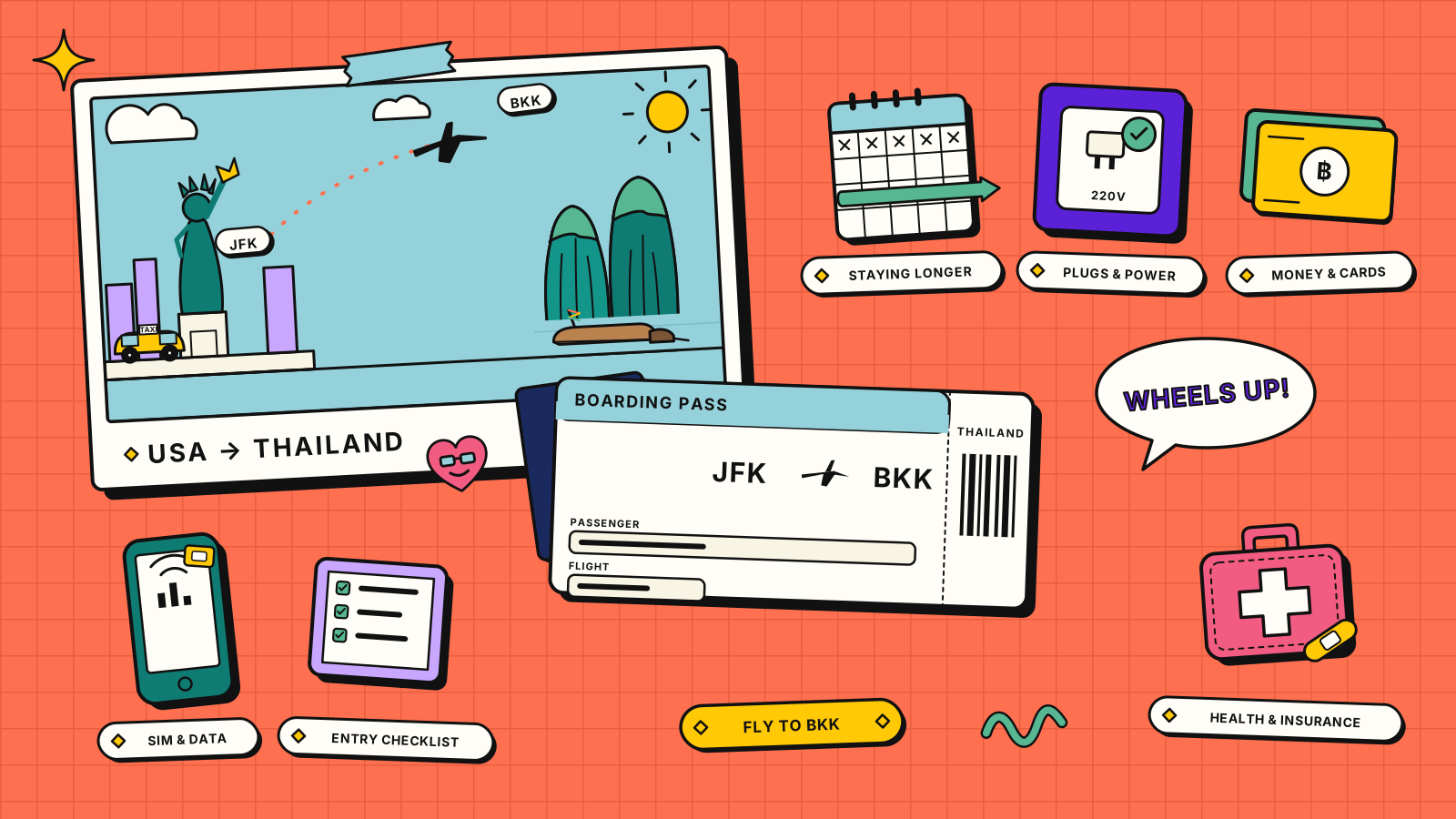
| US | No | 30 days | Same | Thailand from the US |
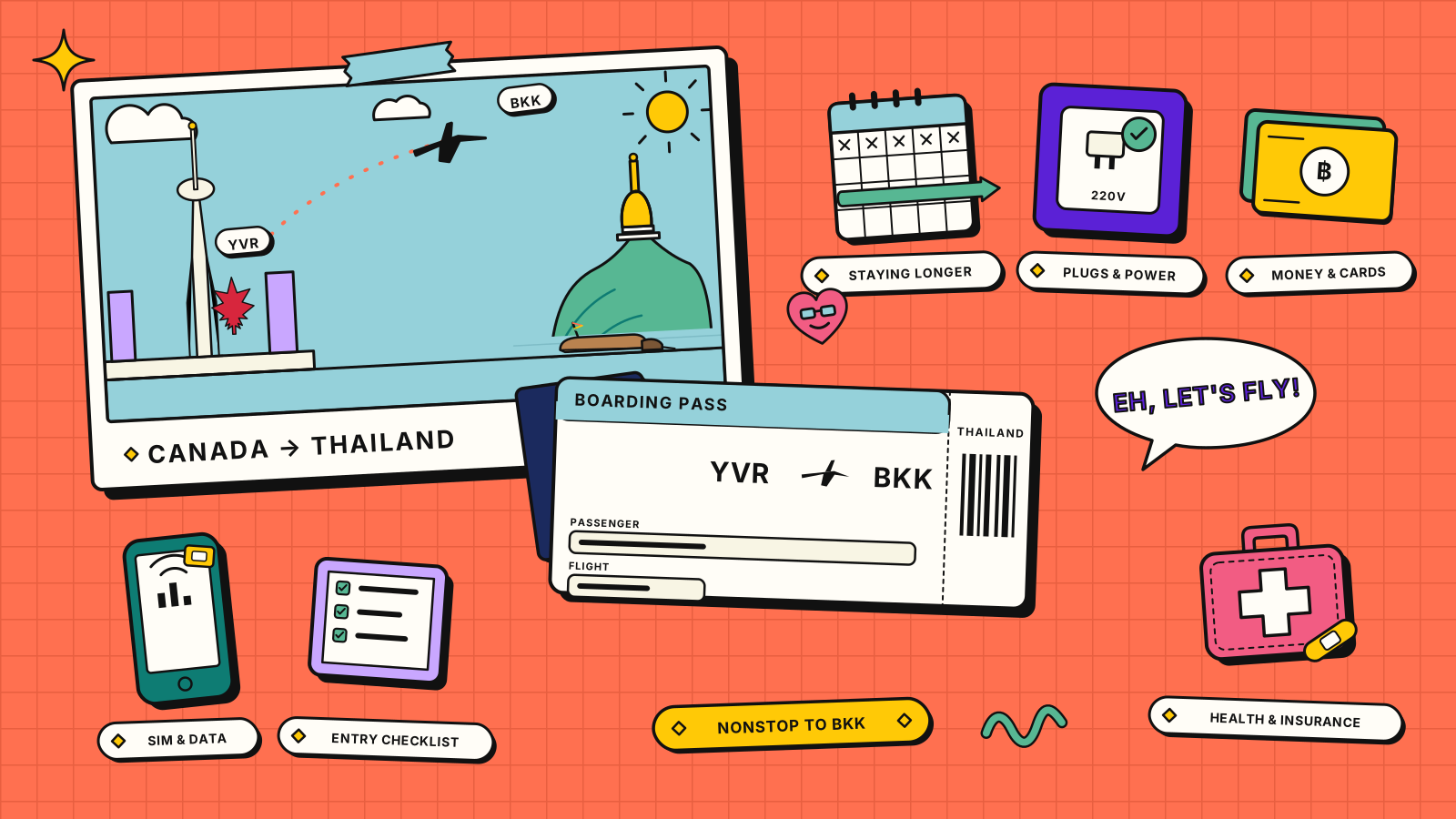
| Canada | No | 30 days | Same | Thailand from Canada |
| Australia | No | 30 days | Same | Thailand from Australia |
| New Zealand | No | 30 days | Same | See the Australia page |
| Ireland | No | 30 days | Same | Thailand from Europe |
| Germany | No | 30 days | Same | Thailand from Europe |
| France | No | 30 days | Same | Thailand from Europe |
| Netherlands | No | 30 days | Same | Thailand from Europe |
| Spain | No | 30 days | Same | Thailand from Europe |
| Italy | No | 30 days | Same | Thailand from Europe |
| Sweden | No | 30 days | Same | Thailand from Europe |
| India | No | 30 days | Same | Thailand from India |
Source: TAT Newsroom, 1 September 2026. The full 30-day list also covers every other EU country, Norway, Switzerland, Japan, Singapore, Malaysia, the UAE and others.
A note for Indian readers: a draft summary published in May 2026 put India on the visa-on-arrival list. That was reversed before the rules became law, and the final list puts India in the 30-day visa-exempt group. Some news sites still say India lost visa-free entry. It didn't.
Want longer than 30 days? Either extend once inside Thailand or get a tourist visa before you fly.
Don't count the days yourself. The immigration stamp shows the last date you're allowed to stay, and the Thai Embassy in London advises checking that date before you leave the immigration desk. Plan your departure around the stamped date.
Extending your stay
You can extend a visa-exempt stay once, by up to 30 more days, at a Thai immigration office. That gives you roughly 60 days in total per entry.
- Go to an immigration office before your permitted stay runs out. In Bangkok that's the Government Complex on Chaeng Watthana Road (Building B). Elsewhere, use the provincial immigration office, and check its opening hours and queue system before you go.
- Fill in form TM.7.
- Pay 1,900 THB.
- The officer decides. An extension is at their discretion, not a right.
The Thai embassies in London and Washington both say the new 30-day stay can still be extended this way, by up to 30 days, at the officer's discretion.
Don't overstay. The fine is 500 THB a day, up to 20,000 THB. On top of that you can be detained, deported at your own cost and banned from re-entering for up to 10 years.
Staying longer: the e-Visa, step by step
Since 1 January 2025 every Thai visa is applied for online at the official portal, thaievisa.go.th. Embassies no longer take paper applications. You must be outside Thailand for the whole application.
For a longer holiday you want the Tourist Visa (TR): single entry, valid for 3 months, with a 60-day stay that you can extend by 30 days in Thailand. A multiple-entry version (METV) is valid for 6 months with 60 days per entry.
- Register at thaievisa.go.th with an email address and password. The activation link expires after 30 minutes, so have your inbox open.
- Choose the embassy or consulate that covers your nationality or where you live, then the visa type.
- Enter your details. The site reads your passport photo page automatically.
- Upload your documents: a passport scan showing all four corners and the machine-readable zone, a photo (JPG, under 200 KB, white background, taken in the last 6 months), bank statements, your flight or itinerary, your accommodation, and proof of where you are now (a utility bill, residence permit or entry stamp).
- Sign the online declaration and pay by card.
- Your approval arrives by email as a PDF. Print it and show it at check-in and at immigration.
Processing times aren't guaranteed and vary by mission, so check your own embassy's current guidance. You can't apply more than 3 months before you travel, and most people apply three to four weeks ahead. The e-Visa portal asks tourist visa applicants for proof of at least 20,000 THB, for example bank statements for the last three months. Some missions set their own figure (the US missions ask for a balance of at least US$700 per person).
Each mission sets its own fee in local currency. These are the single-entry tourist visa fees on the missions' own pages (multiple-entry in brackets):
| Where you apply | Tourist visa, single entry (multiple entry) |
|---|---|
| UK and Ireland (London) | £30 (£150). Fee page last updated 2022 |
| US (all four missions) | US$40 (US$200) |
| Canada (Ottawa, Vancouver) | C$65 (C$325) |
| Australia (Sydney) | A$60 (A$300). Canberra doesn't publish its fee |
| New Zealand (Wellington) | NZ$300 (NZ$1,000) |
| Germany, France, Netherlands, Spain, Italy | €35 (€175) |
| Sweden (Stockholm) | 370 kr (1,850 kr) |
| India (all missions, from 27 April 2026) | ₹3,000 (₹13,500) |
The portal shows the fee before you pay, so check it there.
Use thaievisa.go.th and nothing else. Copycat visa sites charge extra for exactly the same thing.
Remote workers can look at the Destination Thailand Visa (DTV), with stays of up to 180 days per entry. Since 31 August 2026 you must apply where you hold nationality or permanent residence, with a police clearance certificate.
The TDAC arrival card, step by step
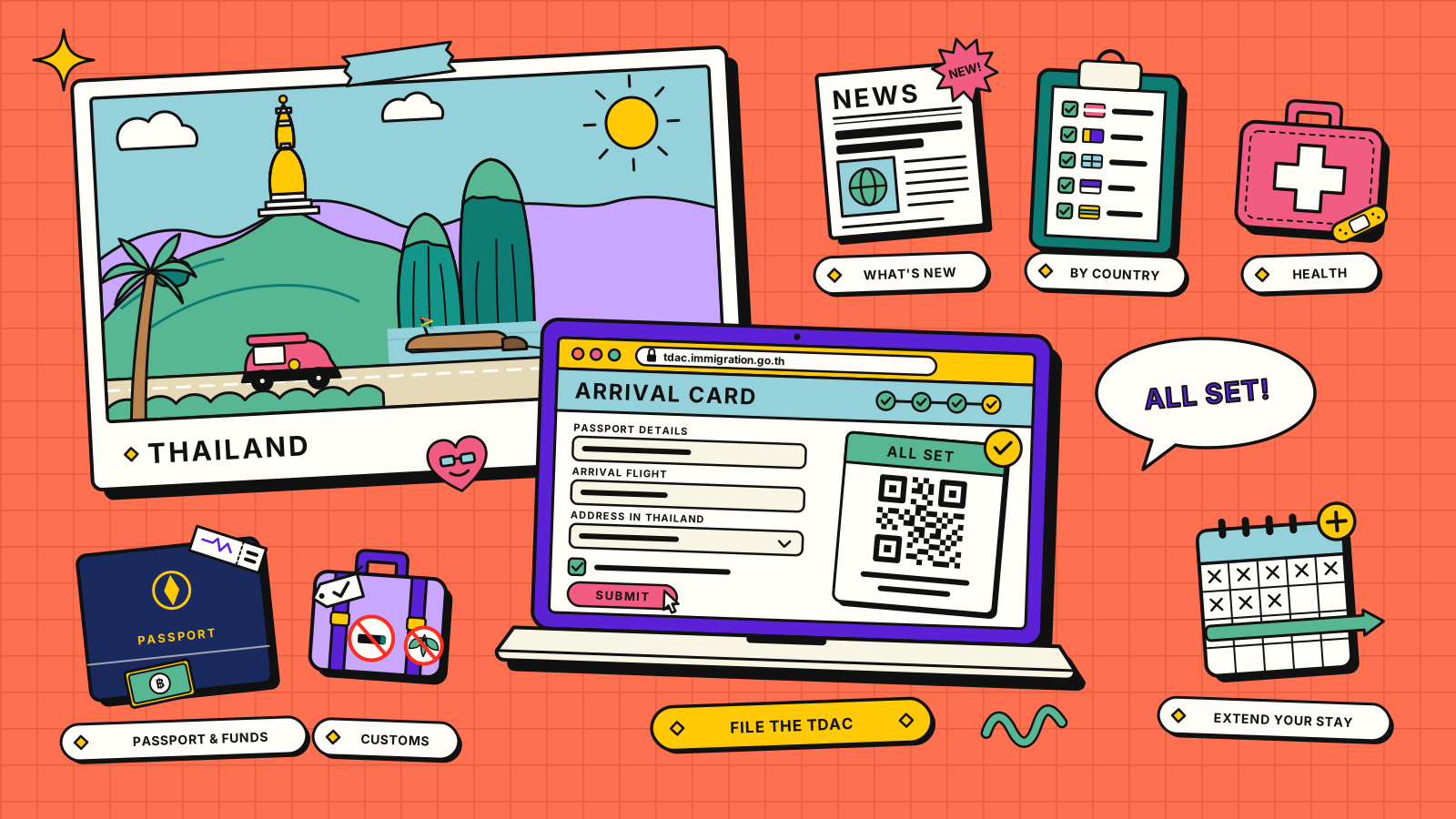
The paper TM6 arrival card is gone. Since 1 May 2025 every foreign visitor, children included, has to complete the Thailand Digital Arrival Card (TDAC) before arriving by air, land or sea.
It's free, and the official site is tdac.immigration.go.th.
- Open tdac.immigration.go.th within 3 days (72 hours) of your arrival. You can't file earlier than that.
- Enter your passport details.
- Add your flight or other transport into Thailand.
- Give the address where you'll stay in Thailand.
- List the countries you've been in over the previous 14 days.
- Complete the short health declaration.
- Submit. The TDAC is emailed to you with a QR code. You don't have to print it: download it and show it on your phone. If you won't have a phone with you, print a copy.
Transit passengers who don't pass through immigration don't need one.
Watch out for scams. Since mid-2025 Thai authorities have warned about fake TDAC websites that charge a fee. If a site asks you to pay, close it and type the address in yourself: tdac.immigration.go.th.
There is currently no ETA (electronic travel authorisation). One was planned, then postponed in late 2024, and the TDAC more or less took its place. Nobody has formally scrapped it, though, so it could come back.
Passport, onward ticket and funds
Your passport needs at least 6 months' validity from the day you arrive and at least one blank page.
You also need to be able to show an onward or return ticket. The UK Foreign Office reports people being refused entry without one. It doesn't have to be a flight: the Thai Embassy in Wellington and Germany's Foreign Office both list train and bus tickets as proof. If you're heading overland to Laos, keep that booking on your phone.
Proof of funds is where sources disagree. The UK Foreign Office says 10,000 THB per person (20,000 per family). The Thai embassies in London and Washington, and Germany's Foreign Office, say 20,000 THB per person (the Washington embassy and Germany add 40,000 per family). Checks are random. I'd carry about 20,000 THB or the equivalent in cash, or be ready to show a card or bank balance.
Is there a tourist entry fee?
Not yet. A 450-baht fee is proposed, from early 2027 at the earliest.
The idea has been around since 2023. On 14 August 2026 Thailand's National Tourism Policy Committee approved a draft 450 THB fee per foreign visitor, with a possible link to a period of insurance cover. The Ministry of Tourism and Sports then opened a public consultation, reported as running to 28 September 2026. The proposal now goes back to the committee, then to Cabinet, and it must be published in the Royal Gazette. Collection would start 180 days after that, with air arrivals first and land and sea arrivals later. If anyone asks you to pay it now, they aren't official.
Health and insurance
The US CDC recommends routine vaccines plus hepatitis A and typhoid for most travellers, and hepatitis B if you're under 60 and unvaccinated. Japanese encephalitis and rabies depend on your plans, so ask a travel clinic.
Malaria risk is mainly in forested border provinces. It's rare in Bangkok, Chiang Mai city and the main islands, where avoiding bites is enough for most trips. Dengue is present across the country and spread by mosquitoes that bite in the daytime, so bring DEET or picaridin repellent.
There is no yellow fever in Thailand. You only need a certificate if you arrive from a country with yellow fever risk.
You don't legally need travel insurance for visa-exempt or tourist visa entry. The health ministry has proposed making it mandatory, but that's still under review. I'd get it anyway, because the UK Foreign Office warns that private hospitals ask for a payment guarantee before treating you.
Customs, and what not to bring
Some things that are perfectly normal at home can get you fined or arrested in Thailand.
Vapes and e-cigarettes. Illegal to bring in, own or use, including pods, e-liquid and heat-not-burn devices. Fines typically run 5,000-30,000 THB, with possible detention and court. Germany's Foreign Office warns of up to 5 years in prison. Enforcement got much stricter in 2025, so leave your vape at home.
Cannabis. Since 25 June 2025 it is medical-only and needs a Thai prescription. Foreign prescriptions don't count. Taking any cannabis out of Thailand is illegal, and British travellers have been detained at airports, including in transit countries.
ADHD medication. Amphetamine-based drugs are banned outright, with no permit possible: Adderall, Vyvanse or Elvanse (lisdexamfetamine), Dexedrine and dexamfetamine. Methylphenidate (Ritalin) is allowed for up to 30 days' supply with a doctor's letter or prescription. Atomoxetine is the other legal option. Talk to your doctor well before you go.
Codeine, tramadol and other opioids. These need a permit from the Thai FDA at permitfortraveler.fda.moph.go.th. Apply at least 14 days before you arrive. It covers up to 30 days' supply. That includes over-the-counter codeine painkillers and cough syrups: the Thai FDA lists codeine as a Category 2 narcotic, and its traveller guidance makes no exception for low doses. Keep the medicine in its original packaging and go through the red channel to declare it.
Other medicines. Benzodiazepines follow the same 30-day rule as methylphenidate. Ordinary medicines are fine up to 30 days' personal supply.
Duty-free limits. 200 cigarettes or 250 g of cigars or tobacco, and 1 litre of alcohol. Customs actively checks at Suvarnabhumi, and fines can reach 10 times the value.
Cash. The Bank of Thailand says foreign currency over US$15,000 (or the equivalent) must be declared to customs, in or out. Some older pages still say US$20,000, but go by US$15,000. Taking Thai baht out is limited to 50,000 THB, or 2 million THB to neighbouring countries and Vietnam.
Drones. Anything over 250 g or with a camera must be registered with CAAT and NBTC, which needs third-party insurance of at least 1 million THB. Flying unregistered can cost up to 100,000 THB and/or 5 years in prison.
Sunscreen. Reef-harmful sunscreen (with oxybenzone, octinoxate, 4-MBC or butylparaben) is banned in marine national parks, with fines up to 100,000 THB. Bring a reef-safe one.
Two things to know once you're in. Criticising the monarchy is a serious crime, and that includes online posts and shares. And you should carry your passport or a photocopy.
Money, plugs and SIM cards
Money. The currency is the Thai baht (THB). ATMs charge foreign cards a flat 220-250 THB per withdrawal, and some charge up to 350 THB. AEON machines are cheaper, at about 150 THB. So take out larger amounts less often. When a machine or card terminal offers to charge you in your home currency, say no and pay in THB.
Plugs. Thailand uses types A, B, C and O, and many sockets are hybrids that take several shapes. The supply is 220 V, 50 Hz. Devices that only run on 110 V need a converter, not just an adaptor. Your country page below says which adaptor you need.
SIM and eSIM. AIS, TrueMove H and dtac have counters at Bangkok (BKK and DMK), Phuket, Chiang Mai and Koh Samui airports. Tourist SIMs cost about 299-599 THB and you need your passport. Since August 2025 registration includes an identity check. If you set up a travel eSIM before you fly, it works the moment you land.
Our Southeast Asia packing list covers the rest.
Recent changes: a timeline
| Date | What changed |
|---|---|
| 15 Jul 2024 | 60-day visa exemption for 93 countries and territories. DTV launched |
| 21 Sep 2024 | New Thai FDA rules for carrying narcotic and psychotropic medicines |
| 1 Jan 2025 | All Thai visas move to the thaievisa.go.th portal |
| 1 May 2025 | TDAC replaces the paper arrival card |
| 2025 | Thai-Cambodian border clashes. All land crossings to Cambodia close; the UK Foreign Office still lists them as closed on 28 Sep 2026 |
| 25 Jun 2025 | Cannabis becomes prescription-only |
| May 2026 | Cabinet approves ending the 60-day exemption |
| Jul 2026 | India moved into the 30-day exemption list |
| 14 Aug 2026 | 450 THB tourist fee draft approved by the tourism policy committee; public consultation to 28 Sep, target early 2027 |
| 31 Aug 2026 | New exemption rules published in the Royal Gazette. DTV rules tightened |
| 15 Sep 2026 | Visa-free stay cut from 60 to 30 days |
For 2027 I'm watching the tourist fee and whether Thailand brings back the ETA.
Rules for your country
The visa rule is the same for all these countries. Flights, plugs and money aren't, so each page covers direct flights, the cheapest months and what to pack from home.
- Thailand from the UK
- Thailand from the US
- Thailand from Canada
- Thailand from Australia (and New Zealand)
- Thailand from Europe: Germany, Netherlands, Ireland, France, Spain, Italy, Sweden
- Thailand from India
If you plan to travel on your own before or after a trip, add up the days. Anything beyond 30 in total needs an extension or a tourist visa.
Travel Thailand with a small group
Every SoloNomads Thailand trip is 21 days or shorter, so it fits inside the 30-day visa-free stay with room to spare. Ages 18 to 40, and I'm with the group the whole way as your Trip Host. Short on time: Thailand Express (8 days). The two-week route: Thailand in 2 Weeks. The lot: Thailand Complete (21 days). Also: Northern Thailand Adventure, Thailand Island Hopping Tour, Southern Thailand Jungle & Islands and Thailand & Vietnam.