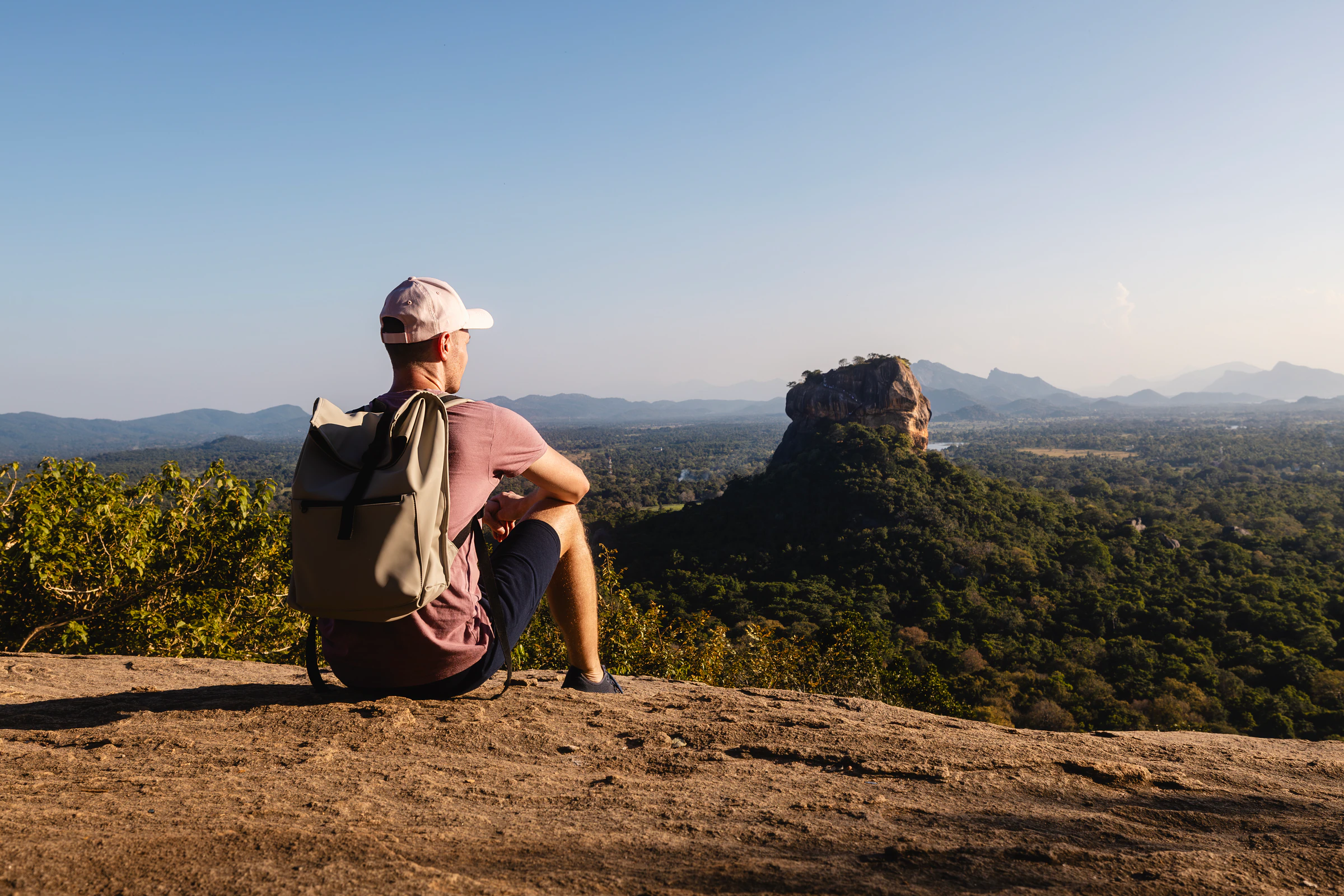
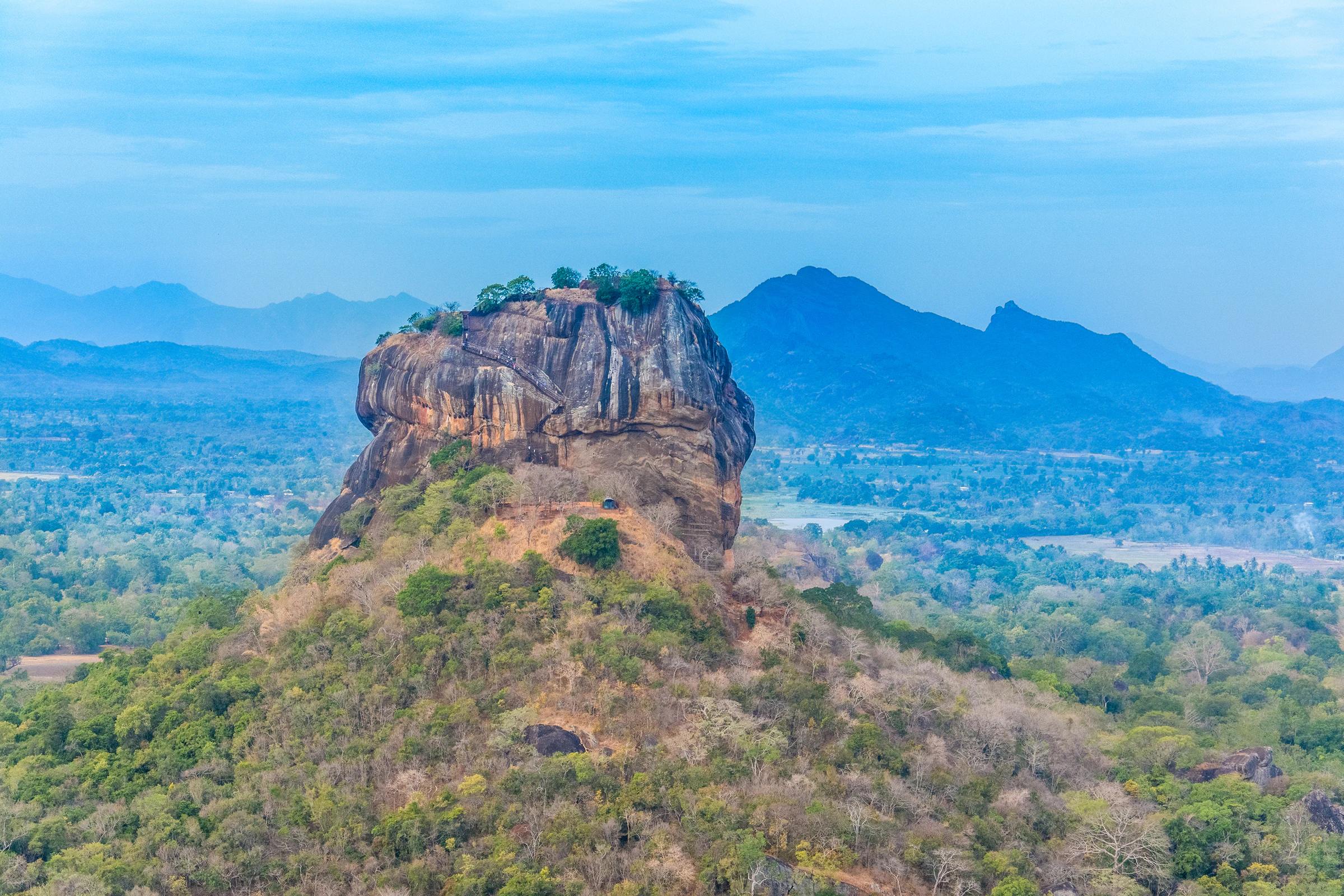
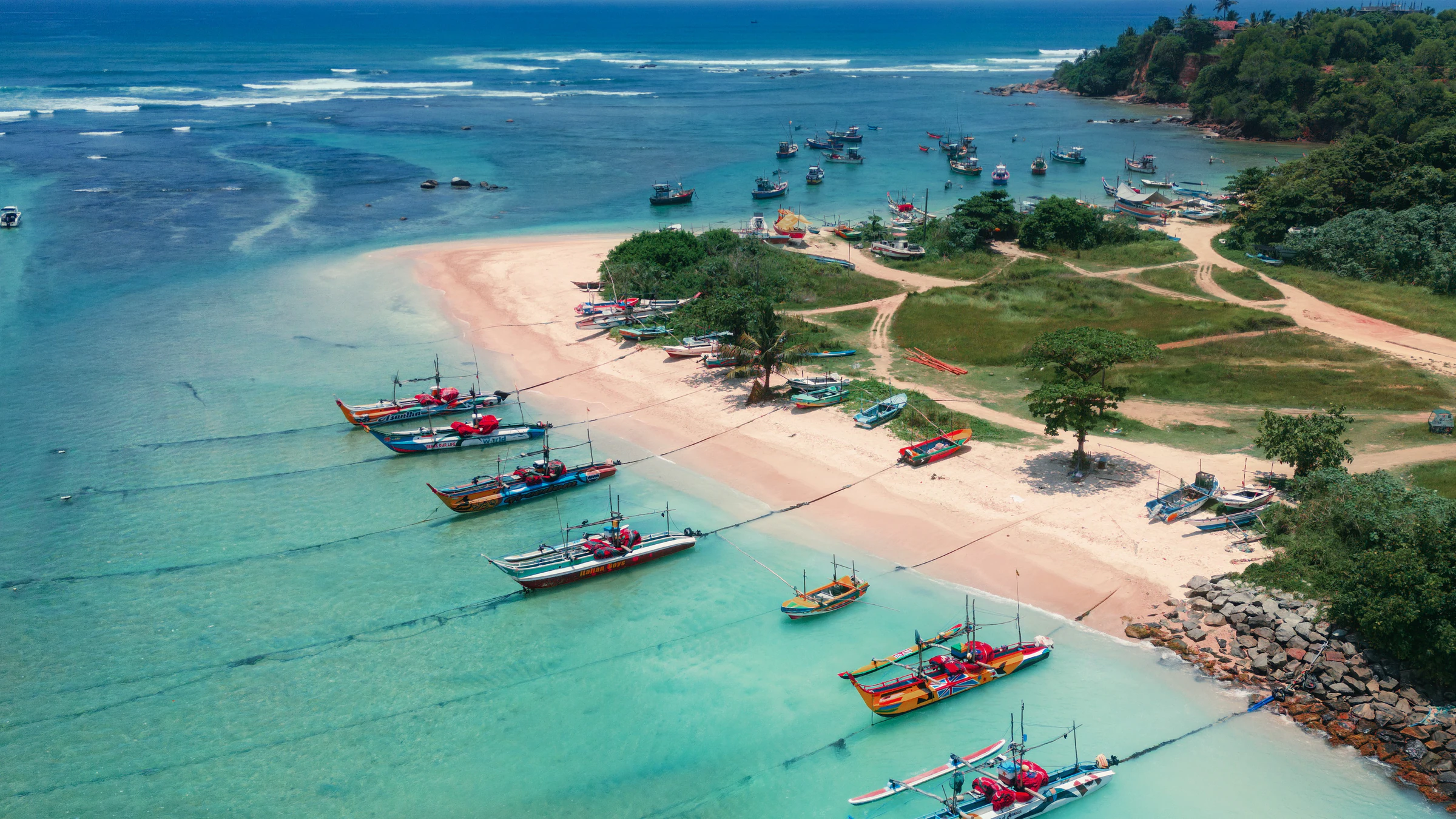
Weligama means "sandy village," and the name still fits: a broad, curving bay backed by a busy strip of guesthouses, surf shops and cafes, with a small offshore island you can wade out to at low tide. It's less about sights and more about spending a few days in the water, which is exactly why it's Sri Lanka's main learn-to-surf town rather than a stop people rush through. This guide covers the surf, the stilt fishermen nearby, where to stay, getting there and how it fits into a wider Sri Lanka trip. For the rest of the coast, see our Sri Lanka travel guide.
Weligama at a glance
- Where: Sri Lanka's south coast, about 145 km and 2.5 to 3 hours from Colombo
- Known for: learning to surf, a long sandy beginner break, and the stilt fishermen nearby
- How long: three to five nights if surfing is the goal, since the whole point is repeated sessions rather than one lesson
- Best months: roughly December to April, best December to March
- Getting there: the coastal train or the Southern Expressway, both from Colombo, with Weligama's own station and expressway interchange
Learning to surf at Weligama
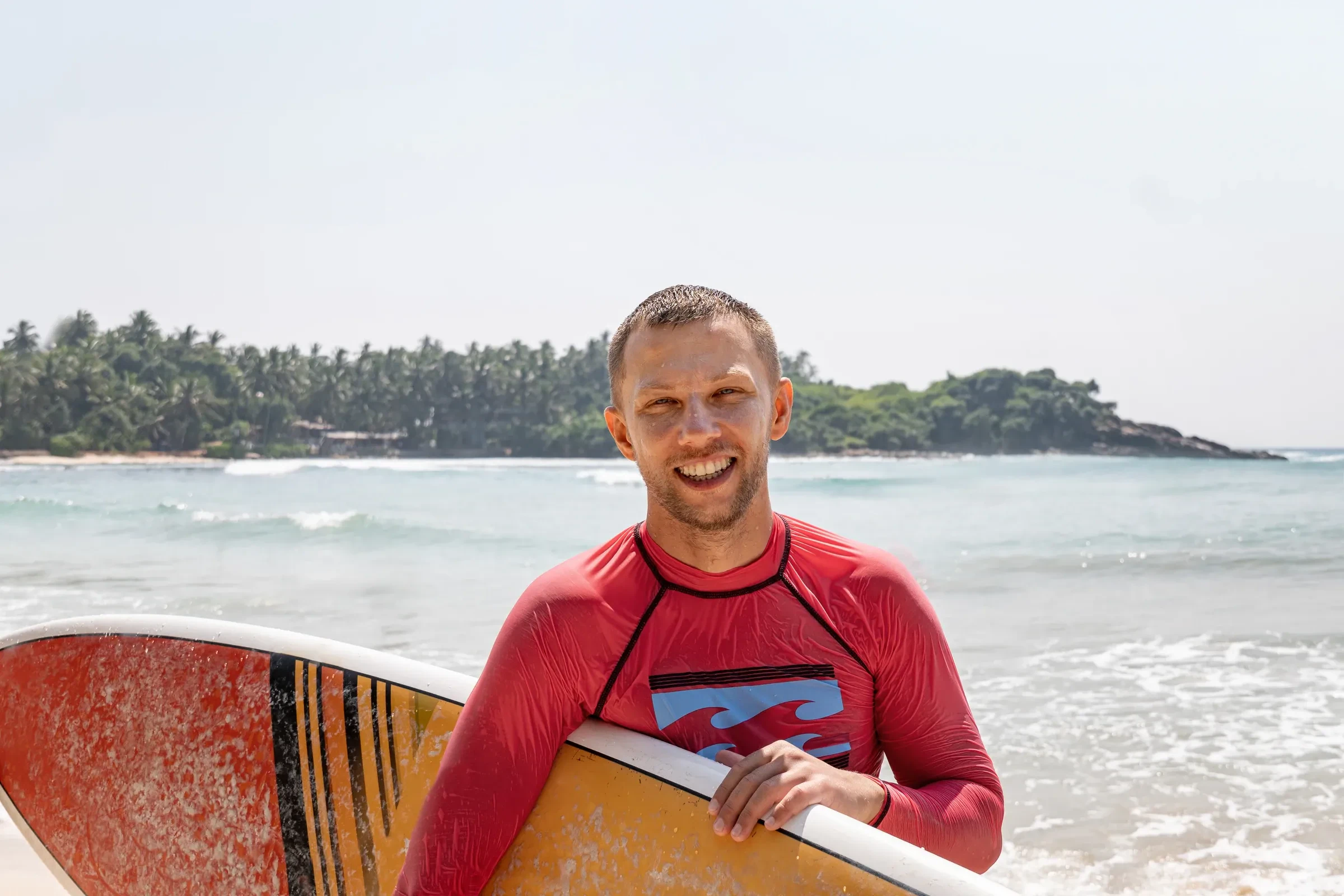
Weligama's bay has a long, sandy bottom and a wave that breaks gently and predictably, which is why it's the country's go-to spot for a first surf lesson rather than a spot for experienced surfers chasing a serious wave. A strip of surf schools runs along the beach, most offering group and private lessons with board and rash vest included in the price.
A typical 1 to 2 hour group lesson costs roughly US$20 to $30 in 2026. Board hire alone runs about US$4 to $5 an hour if you just want to practise between lessons. Several schools sell multi-lesson packages at a lower rate per session, worth asking about if you're staying more than a couple of days, since surfing takes repeated time in the water to click. Instructor ratios vary by school, so ask before booking if you want a smaller group.
If you've surfed a little before and want more of a challenge once the lessons are done, nearby breaks around Midigama and Ahangama get more consistent and slightly punchier waves, still well short of anything requiring real experience. Our surfing in Sri Lanka guide and the broader surf camps in Asia guide cover how Weligama compares with Sri Lanka's other coasts and with Bali and Lombok.
Stilt fishermen at Koggala and Ahangama
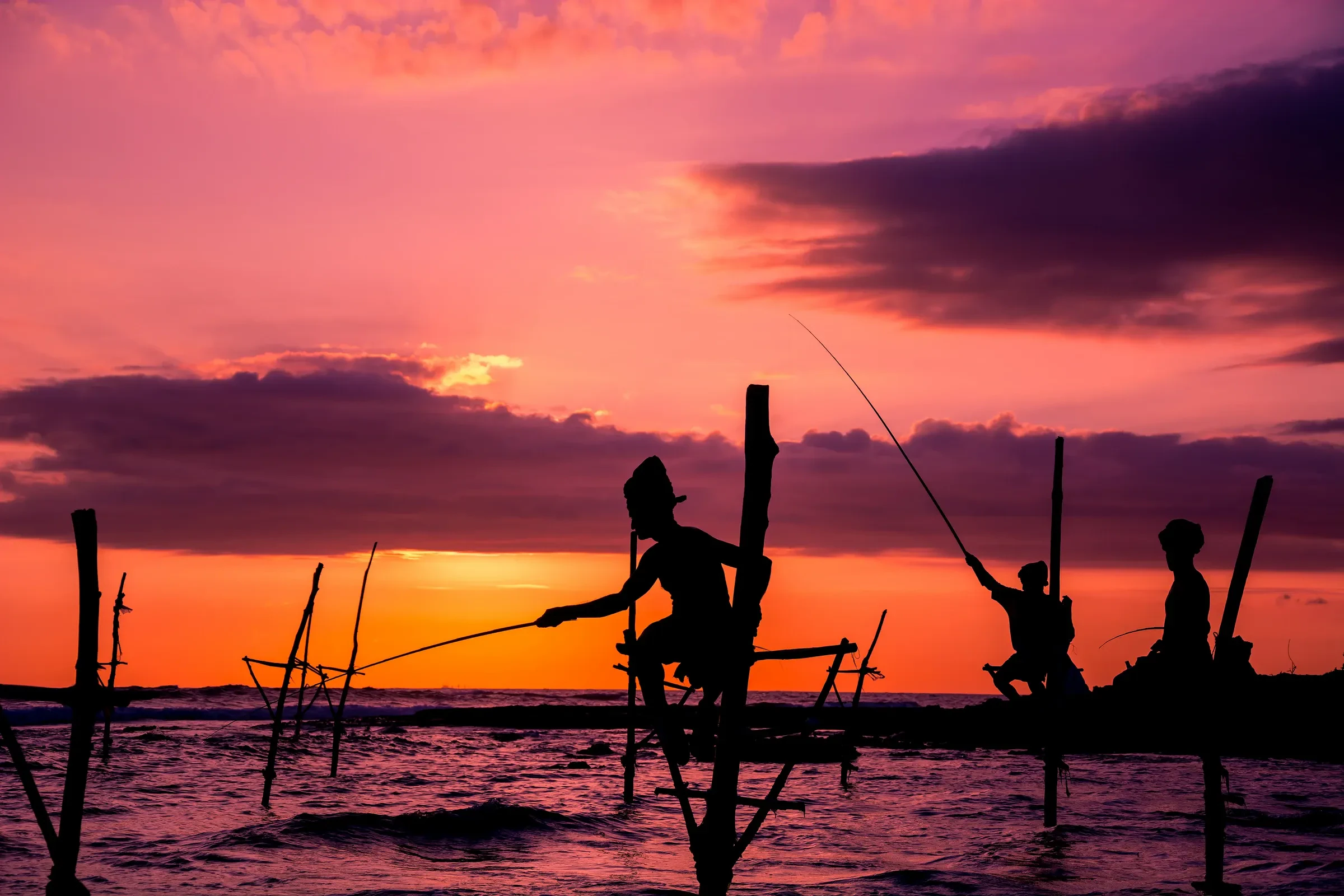
Stilt fishing, balancing on a single pole driven into the reef to cast a line, is one of Sri Lanka's most photographed traditions, and you'll see fishermen perched on their poles at several points along this stretch of coast, including in Koggala and Ahangama, a short way from Weligama itself.
The honest version of this story: stilt fishing has largely become a tourist attraction rather than a working fishery, and other fishermen now go out deep to sea in boats. What's left along this coast is mostly staged for tourists, with a few men keeping poles in place and asking a small fee to pose for photos, sometimes helping visitors climb up for their own picture. It's still a striking sight and a genuine part of the coast's recent history, but go in knowing you're paying for a photo opportunity rather than watching someone earn a living from the catch, and agree a price before you take out your camera.
Taprobane Island
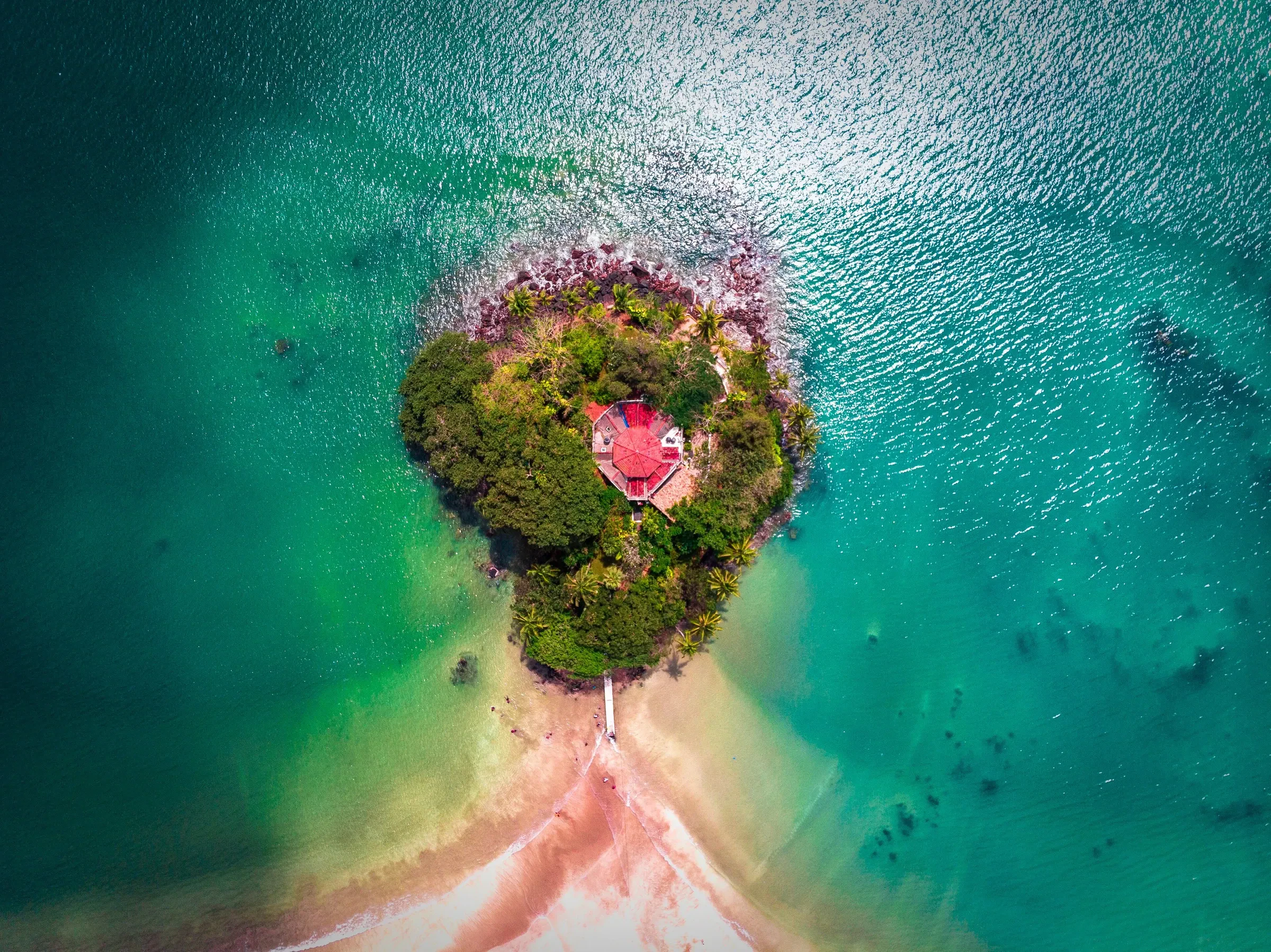
A small, privately owned island sits just off Weligama's southern end, close enough to wade to at low tide, with a single octagonal villa built in the 1920s that is now rented to guests. It isn't open to the public to walk around, but it's a distinctive landmark on the bay and a good reference point if you're getting your bearings or picking a spot to watch the surf from the beach.
Where to stay in Weligama
| Area | Best for | Good to know |
|---|---|---|
| Weligama Bay itself | First-timers, an easy walk to the surf schools | The busiest and most chaotic part of town, but the widest choice of guesthouses and the best value |
| Toward Ahangama | A quieter stay, still close to the water | More boutique guesthouses and co-living spots aimed at longer stays, a short tuk-tuk from the main break |
| Inland, off the coast road | Value | Cheaper, with a short walk or ride to the beach |
Guesthouses and small surf-focused stays are the norm here rather than big resorts. Book ahead for December to March, when Weligama is at its busiest.
How many days do you need in Weligama?
Three to five nights makes sense if learning to surf is the actual goal, since one lesson rarely gets anyone standing up consistently and a few days of repeated sessions makes a real difference. If you're just passing through on a wider south coast trip, one or two nights is enough to try a lesson and see the bay, with Mirissa, 6 to 7 km away, as an easy pairing for a beach stop or whale watching.
Getting to Weligama
From Colombo. Weligama has its own station on the coastal railway line, the same line that runs on to Mirissa and Matara. It is a separate railway from the hill-country line to Kandy and Ella, which Cyclone Ditwah damaged in November 2025. The journey takes roughly 3 to 4 hours by train, or about 2.5 to 3 hours by car or bus on the Southern Expressway, which has its own Weligama interchange.
From Mirissa or Galle. About 6 to 7 km to Mirissa, roughly 10 to 15 minutes by tuk-tuk, and roughly 45 minutes to an hour to Galle Fort, both easy half-day trips by tuk-tuk or local bus.
Best time to visit Weligama
Weligama follows the south coast's season: best from December to April, driest and calmest from December to March, which is also when the surf here is at its most consistent. The south-west monsoon, roughly May to September, brings rougher water and more onshore wind, so conditions are less reliable, though the bay's sheltered shape still gives gentle waves for beginners on many days. See our best time to visit Sri Lanka guide for the wider picture, and our surfing in Sri Lanka guide for how that season compares with the opposite-season east coast at Arugam Bay.
Our dedicated surf trip is built around Weligama's beginner-friendly break, with certified coaching rather than a single lesson bolted onto a sightseeing itinerary.