Arugam Bay earned its reputation as Sri Lanka's surf capital on the strength of one wave, Main Point, a long right-hand break that anchors a small strip of guesthouses, cafes and surf schools near Pottuvil on the east coast. It's a different trip from the south coast circuit most Sri Lanka itineraries follow, on the opposite season and a slower pace, and for most of the year outside its surf window, a lot quieter too. This guide covers the surf points and season, the town and its nightlife, the wildlife at nearby Kumana and Lahugala, getting here and where to stay.
Arugam Bay at a glance
- Where: Sri Lanka's east coast, near Pottuvil, about 320 km from Colombo
- Known for: Main Point, Sri Lanka's best-known surf break, plus a small, surf-focused town and two nearby wildlife parks
- Season: roughly May to September, peaking July and August, opposite the south coast's December to March window
- How long: 3 to 5 days covers the surf, the town and one wildlife park; longer if you're here to surf properly
Surfing at Arugam Bay: the points and the season
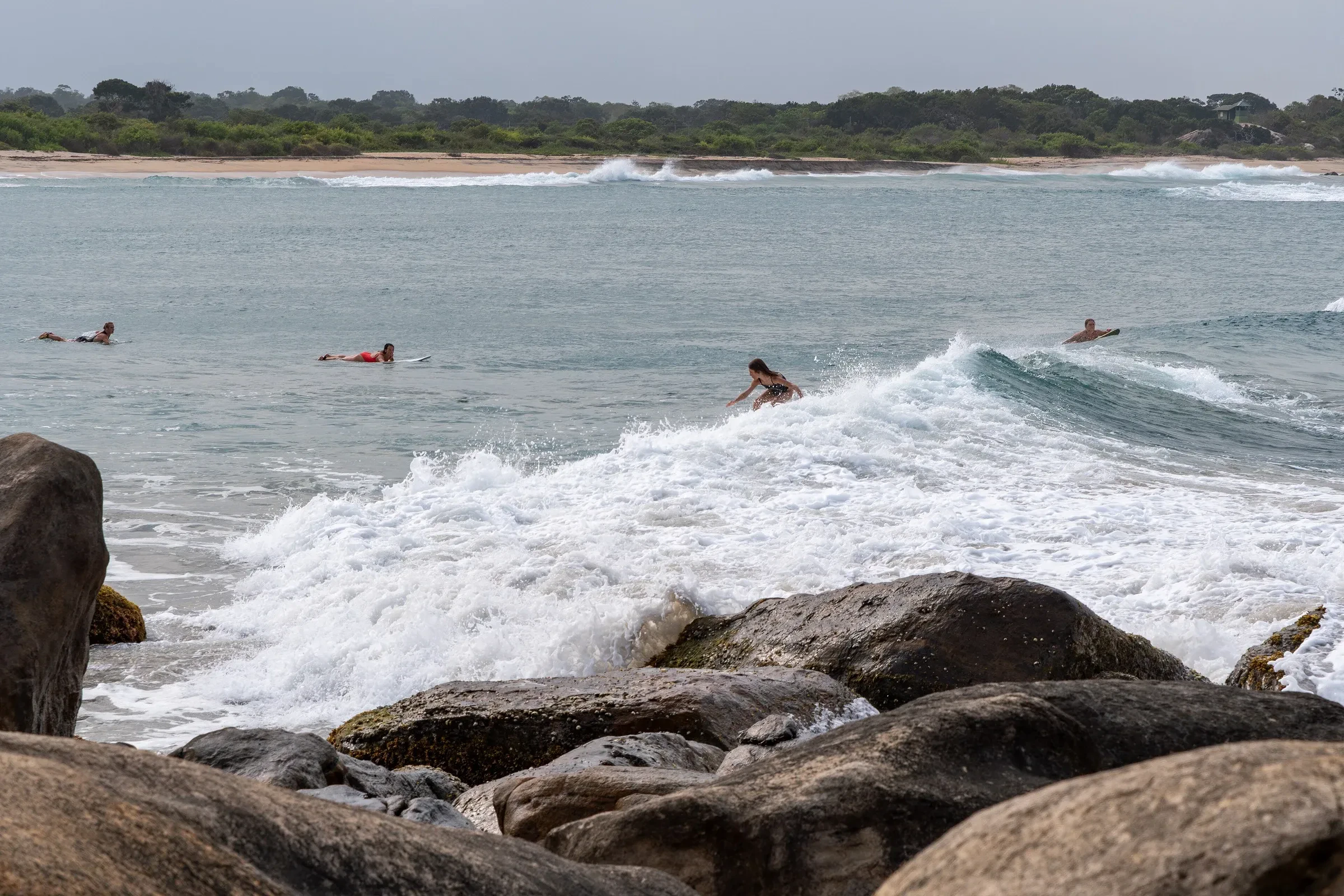
Arugam Bay's surf season runs roughly May to September, the mirror image of the south coast's December to March window, and it peaks in July and August, when the waves are at their most consistent. May and June are quieter, with smaller crowds, and by October the season is over: many guesthouses and surf camps close for the north-east monsoon, which hits this coast directly from roughly November to February. Outside May to September, most people surfing in Sri Lanka head to the south coast instead.
The bay holds several named points, each suiting a different level:
- Main Point, the headline break in front of town: the longest and busiest point, running for several hundred metres on a good day, best for confident intermediates and above.
- Whiskey Point, a shorter, more forgiving point with a gentler takeoff, often used for coaching sessions.
- Peanut Farm, with a mellow inside section for first-timers on a small day and an outside section that holds bigger swell.
- Elephant Rock, the softest wave of the group, a sand-bottomed right with a gentle takeoff.
- Pottuvil Point, further north, mellower and quieter than the points closer to town.
Arugam Bay has some options for beginners, mainly Elephant Rock and the inside at Peanut Farm, but most of its coaching is built around improvers and intermediates. Surf schools and board-hire shops line the main road. We found no dated rate card, so agree the price for a lesson or a board before you start. Our surfing in Sri Lanka guide compares the breaks on both coasts.
Arugam Bay town and nightlife
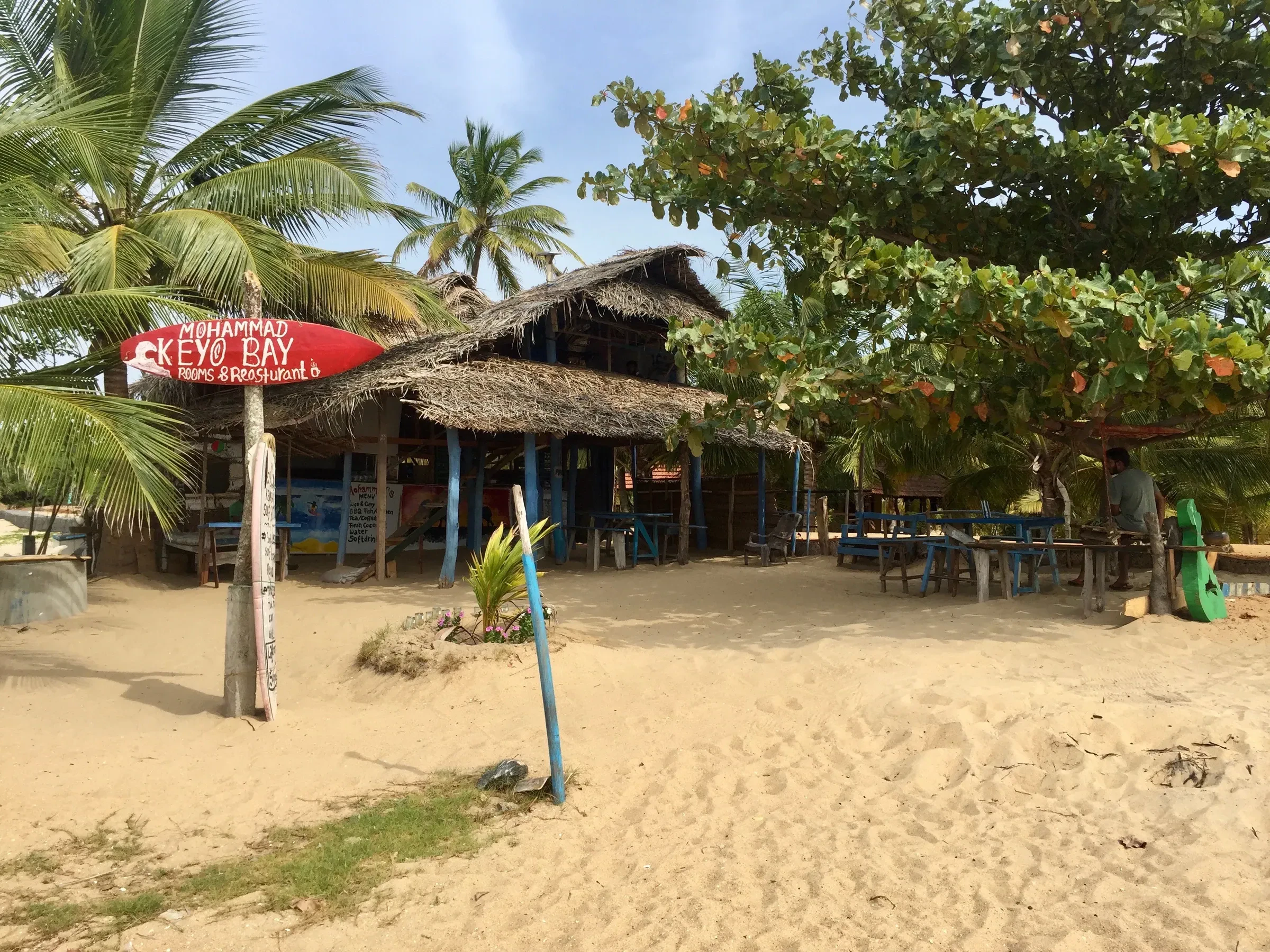
Arugam Bay itself is small, a strip of guesthouses, surf shops, cafes and restaurants strung along Panama Road behind the beach, easily walkable end to end. Its nightlife runs on an informal rotation rather than everything happening everywhere at once: on a given night one or two venues become the main draw while others stay quiet, so the town's visiting crowd tends to end up in the same place, and which venue it is changes from season to season. Expect beach bars with DJs and dancing on the sand, plus quieter spots for a drink and dinner. Full moon nights are different: it's illegal to buy alcohol on full moon (Poya) days in Sri Lanka, according to the Canadian government's travel advice, so don't count on a drinks-led night then. It's a young, surf-and-party town in peak season, and a much sleepier one outside it.
Wildlife near Arugam Bay: Kumana and Lahugala
Two national parks sit within reach for a half-day or full-day trip if you want a break from the beach.
Kumana National Park, about 1 to 1.5 hours south of Arugam Bay by jeep, covers roughly 357 sq km of dry forest, lagoons and wetlands, and is contiguous with Yala National Park. Wikipedia lists elephants and leopards among its wildlife, and says tens of thousands of birds arrive at the Kumana swamp from April to July. Park entry fees and safari prices vary by operator and season, so confirm the total before you book.
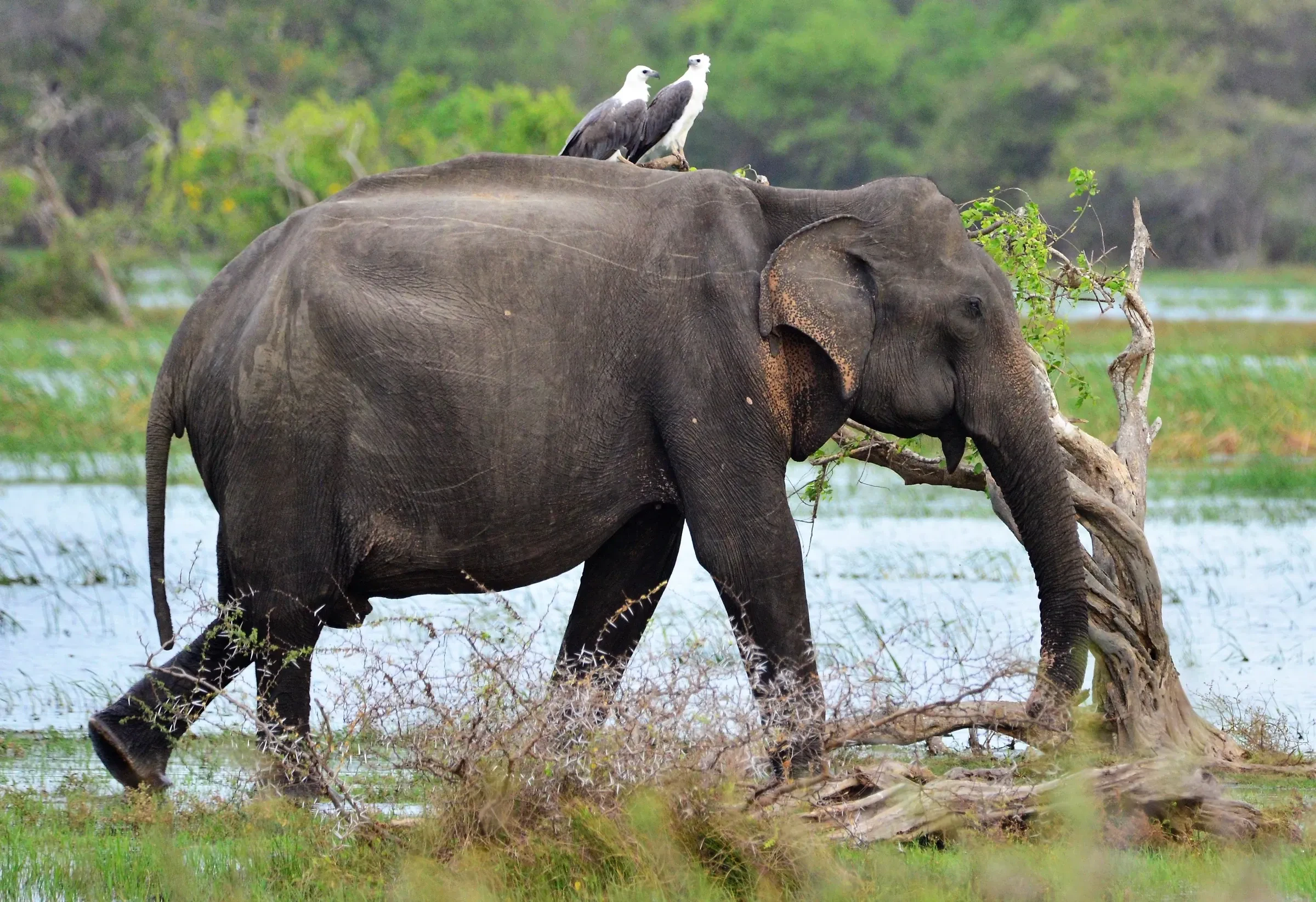
Lahugala Kitulana National Park, one of Sri Lanka's smallest, is near Pottuvil and known for elephants feeding on the grass around the Lahugala tank, most often in the hour or two before sunset. Sightings at either park depend on where the herds happen to be on the day.
You visit both parks by 4WD jeep with a park-registered driver or tracker, which your guesthouse or a local operator in Arugam Bay can arrange.
Getting to Arugam Bay
There's no direct train to Arugam Bay or the nearby town of Pottuvil, so most travellers arrive by road. The Colombo to Arugam Bay route is roughly 320 km.
From Colombo: by private car or van it's about 6 to 7 hours door to door. A direct bus takes 8 hours or more, and most run overnight.
From Ella: there's no direct bus, so the usual route strings together local buses, with changes at Wellawaya and Monaragala before the last stretch to Pottuvil, taking anywhere from about 4.5 hours with good connections to 8 hours without them. A private taxi or hired car does it in about 3 hours and is the more predictable option if your dates are tight.
Given the distances involved, most people treat Arugam Bay as a dedicated trip built around its May to September surf season, rather than an add-on to a south coast or hill country itinerary. Our east coast itinerary links it with Trincomalee.
Where to stay
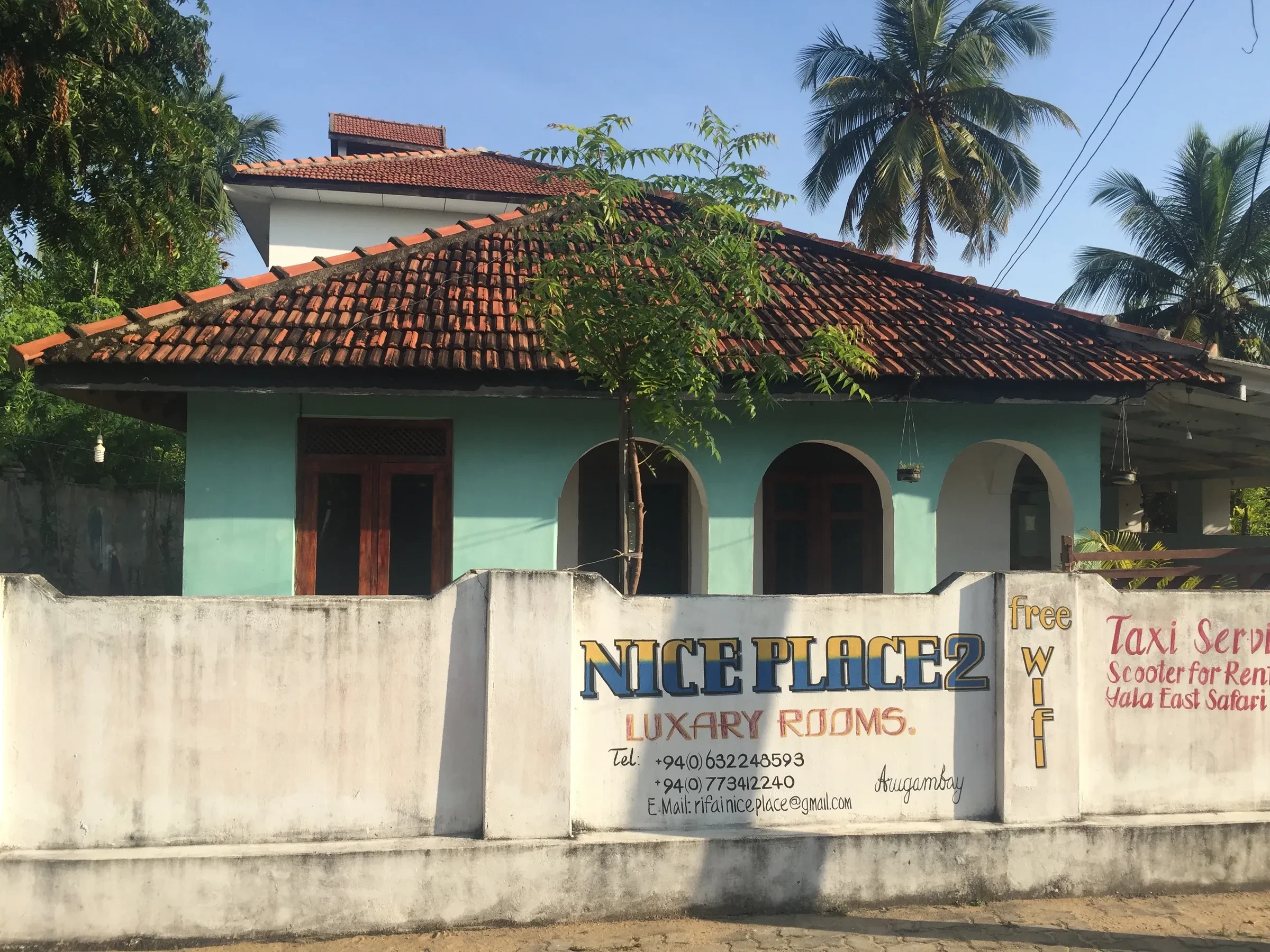
Accommodation in Arugam Bay is almost entirely small guesthouses and surf hostels strung along Panama Road, most within a short walk of Main Point. Budget dorm beds and simple private rooms are the norm, with a handful of pricier beachfront guesthouses at the top end; there's little in the way of large hotels. Surf-focused hostels often run their own lessons, board hire and group activities, and it's worth booking ahead in July and August, when the town is at its busiest.
Is Arugam Bay safe right now?
On 23 October 2024 the US Embassy in Colombo advised American citizens to avoid the Arugam Bay area because of credible information about a possible attack, and several other governments issued warnings at the time. The Embassy lifted that advisory in mid-November 2024, according to Sri Lankan press reports (Daily FT, 14 November 2024).
The current government pages don't single the town out. We read the UK's FCDO Sri Lanka advice on 6 October 2026, last updated 21 September 2026: it doesn't mention Arugam Bay and doesn't warn against travel to Sri Lanka, and its current notes cover heavy rain, flooding and landslides and travel disruption linked to the Middle East. Canada's advice page, updated 7 July 2026 and read the same day, says to exercise a high degree of caution across the country and, in the text we read, doesn't name Arugam Bay. It adds that marked and unmarked minefields may remain in parts of eastern Sri Lanka, so stay on established roads and tracks when exploring inland. Check both pages again close to your travel dates, since area-level alerts can appear at short notice.
How many days do you need in Arugam Bay?
Three to five days is enough to settle in, surf a few sessions and fit in one wildlife park, and it's the more common length for a first visit. If you're here to actually improve at surfing rather than just try it, a week or more gives you a realistic run of consecutive sessions to build on.
Arugam Bay isn't currently a stop on any SoloNomads trip. Our Sri Lanka Surf Camp runs coached lessons at Weligama and Hiriketiya on the south coast instead, on that coast's opposite season. For the routes we do run today, see our Sri Lanka travel guide or compare dates on our Sri Lanka group trips page.